I’d put everything on this competition, worked furiously for nine months to have a manuscript ready for its closing. This was the right publisher, the perfect opportunity. The shortlist came mercifully early – 6am, just as I woke – but I wasn’t on it. I wasn’t as devastated as last year’s big attempt. Suck it up, this is the way of the world now. Continue reading →
The quest to find out about Wandu, the house Katharine Susannah Prichard and Hugo Throssell lived in 1919, led to some interesting discoveries last month, some of which I wrote about for my column for KSP Writers’s Centre – it’s now up on their website.
I’ve been writing about Hugo Throssell’s infamous speech at Northam in July 1919 so I needed to visit the town. Newly married to Katharine Susannah Prichard, Hugo, a Victoria Cross winner, returned to his hometown as the guest of honour for the local celebration of the signing of the Treaty of Versailles. After the afternoon parade, he was one of five speakers in the evening and 1200 people witnessed him announce that the war had turned him into a socialist. There would keep being wars, he said, until we stopped people profiting from them.
I took my two-year-old son, Thomas. There were lots of diggers, buses, and trucks along the way to keep him interested until he suddenly fell asleep, just as I was going to call into the Greenmount Liquor Store on the way to talk about what I’d unearthed of the history of their shop. (It’s the last remnant of the Wandu Estate, where Katharine and Hugo first lived in WA.) So we kept driving without a stop, an hour and a half east of the city and into the Wheatbelt.
I’ve only visited Northam twice before but it’s familiar, reminding me of the town I grew up in, Collie. I stumbled on the Hugo Throssell statue and memorial before I even had my phone out to look for the Avon Street Mall, an unfinished space in the centre of town. It was hard to imagine 1200 people crowding in. The platform Hugo spoke from was meant to be outside the Fitzgerald Hotel, formerly Tattersall’s. The historical bin on the street gave a spiel on it, but the hotel was nowhere to be seen. Then I realised it’d been demolished a few years ago; the patch of green grass marked its spot. The statue was striking, oversized as statues need to be to have gravitas. It’s not a great likeness, but the ambiguous look of distress and determination on his face is appropriate for a veteran who was to suffer so much. He’s clutching his Victoria Cross. I’m glad the statue stands on the site he gave his speech; it means owning a difficult history.
It was an overcast day and as I walked Thomas up the hill from the statue occasional drops of rain came down in the moderate heat. I was amazed by several mansions along the way; I learned soon after that part of Northam was nicknamed ‘Nob Hill’. We came to the school built around the old Throssell mansion, Fermoy. Thomas was complaining by then and the rain seemed to be threatening heavier, and so being a less intrepid biographer than I should be, I took a photo from a distance which would not upset the security guard and turned around. I imagined Hugo taking Katharine up the hill and pointing out where he grew up; in 1919 it had been a hospital for a few years.
Near where I parked the car was a sun-faded train fort. This, for a toddler whose patience was at an end, was the highlight of Northam.
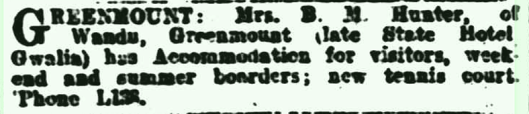
There was a grand old house in Greenmount called ‘Wandu’. A teenage girl accidentally shot the surveyor-general there in 1915. Katharine Susannah Prichard rented it in 1919. Then, for decades, it was a guest-house and social hub for the district. I wrote a piece on it for my monthly KSP Writers’ Centre column; I’d love to uncover a photo of it.
UPDATE 11 OCTOBER 2017
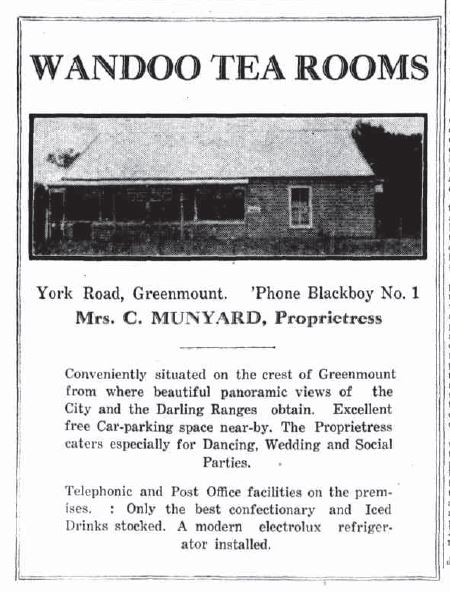
I’ve uncovered a photograph, under the alternative spelling ‘Wandoo’. It’s not quite as grand looking as I imagined, but here’s a 1931 ad for the house Katharine and Hugo lived in when they first moved to Perth.
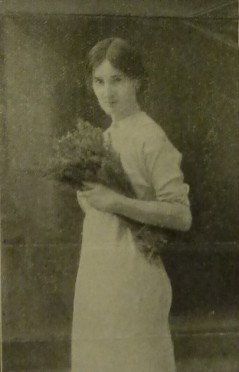
Katharine Susannah Prichard the lavender girl, 1915. A photo from a profile by Sumner Locke in Everylady’s Journal.
I sent my manuscript off two weeks ago. The publisher I think would be best for my biography now runs an annual competition for an unpublished manuscript, so it seemed a perfect goal. I’m catching my breath after eight intense months in which I wrote half of the book. (The first half took more than two years.) Continue reading →
I’m currently doing final revisions on my biography before I send it off for the first time. It’s 100,000 words long and twenty chapters – hopefully the first book of three covering Katharine Susannah Prichard’s life. I’m not certain of the title yet so maybe you can help me. Here’s a blurb for the book, to give you a sense of what the title needs to convey:
When Katharine Susannah Prichard’s father killed himself in 1907, her literary career was just starting to bloom. She was twenty-three, and she’d lived her life in the shadow of his depression, hoping for his approval. This biography is the story of Prichard’s restless early life as she overcame the deaths of her father and brother and many years of literary setbacks to break through as a novelist of the Australian land and people. It is also the story of her political transformation, as her quest for the answer to the world’s problems became urgent in the horrors of World War One and she decided that the only solution was revolution. All of it was tangled with her complicated love life, her long affair with an older man, a romance with a playboy activist that left her heartbroken, and finally her marriage to the Victoria Cross winner, Hugo Throssell. Precocious child, governess, journalist, and finally writer this is the engrossing story of one of Australia’s literary greats.
And the nominations for title are, in alphabetical order, with an explanation:
Astir: The Early Life of Katharine Susannah Prichard
“Astir” is a word which seems to capture the spirit of Katharine: “in a state of excited movement.” It’s not specific to any one strand of her life, but suggestive of them all. I was drawn to it by this passage from her, which I would use as an epigraph:
[S]o strenuously national is the spirit of today, so lively and vigorous the sense of our growing strength in intellectual and artistic life, that Australian literature is abandoning this “imitativeness,” these swaddling-clothes of its infancy, and adopting the toga virilis of originality. It has reached the adolescent stage—it is astir with great things; growing daily in power and freedom… But no-one has completely expressed the characteristic of our country, life and people. We await transfiguration at the hands of a great writer.
“Australian Literary Tendencies.” International 1, no. 3 (March 1908): 344–45.
Katharine Susannah Prichard: Before She Was Any of Those Things
This title comes from the prologue:
In Australia’s cultural memory, Katharine has become the aging, tenacious communist living in her cabin in the hills of Perth, widow of a Victoria Cross winner, author of Coonardoo. This biography is the story of Katharine before she was any of those things. If all of these things have antecedents, none of them were as inevitable as they now seem.
Katharine Susannah Prichard: Beginnings (or, Beginnings: A Biography of Katharine Susannah Prichard, 1883-1919)
This title speaks for itself! The plural is important, suggesting the different spheres of life.
A Rough Path: The Early Life of Katharine Susannah Prichard
In her grief over her brother killed in the war, Katharine wrote a poem called “For Alan”:
My way is like this way
Which goes through the hills—
A rough path—it seems to ascend, ascend:
But I know it will come to the sea,
And long day end.
It’s an image that conveys the pattern of her early life and would make a good epigraph.
Turning Red: The Early Life of Katharine Susannah Prichard
While politics was only one strand of Katharine’s life, it was an important strand and this title conveys the process of transformation.
If this book gets accepted by a publisher, I’m sure they’ll have an opinion on the title. But for the moment, I want to be sure the title captures the attention and respect of whoever is reading the manuscript. Please vote and tell me what you think. I’d also welcome other suggestions (leave a comment) and feedback on the subtitle (“The Early Life of Katharine Susannah Prichard”).
Lisa Hill of ANZ Litlovers has reviewed Katharine Susannah Prichard’s novel, Haxby’s Circus (1930). It’s a sympathetic and astute review, giving a good sense of its themes and characters.
It comes the same week I’ve been writing about Haxby’s Circus in my biography. In the comments on Lisa’s review, Fay Kennedy mentions the origins of the novel in an incident when Katharine was at her brother’s surgery comforting a trapeze artist with a broken back. She writes about it in her autobiography, Child of the Hurricane. The incident was reported in a number of newspaper digitised on Trove, including the last paragraph in this article “District News” Cohuna Farmer’s Weekly (Vic), 23 November 1917, 3:
It comes right in the middle of the second conscription campaign, and an intense time in Katharine’s life. So much happened in Katharine’s life in 1917 – two deaths, a broken heart, and political development. It’s been a big month trying to cover it all.
Alas, blogging is one of the things which have fallen by the wayside as I try to keep up a gruelling (for me!) chapter-a-month. So far I’m on track. It’s complicated by the fact that several chapters, including February’s, have divided into two. I’ve given Hugo Throssell VC his own chapter to introduce him and describe how he met Katharine, his future wife, in 1915 after Gallipoli. It means Guido Baracchi, the perpetual student Katharine met at the end of the year, gets his own (shorter) introductory chapter too.
My reading from the biography at the KSP Writers’ Centre was a couple of weeks ago now. There were over thirty people who came, braving the extreme heat and the drive out into the hills. There were many people I knew and many I didn’t; I was grateful to them all for coming. It was so encouraging to see so much interest in the biography. I love engaging in discussion after a reading, and there were some perceptive questions. I need to come up with a concise answer to the question: “Why Katharine?”; there are good reasons, if not necessarily obvious ones. Novelist Jenny Ackland was at KSPWC for a writing retreat ahead of Perth Writers’ Festival and I was chuffed that she wrote about my talk and the centre on her blog.
Katharine ca. 1904, from her autobiography, Child of the Hurricane, p. 42.
Governess – Katharine Susannah Prichard at Yarram, 1904: a reading by Nathan Hobby KSP Writers’ Centre Sunday Session 4:00pm – 5:30pm Sunday 19 February 2017 11 Old York Rd, Greenmount WA $10 general entry / $5 members (proceeds to KSP Writers’ Centre)
Refreshments provided https://www.facebook.com/events/709078175927574/
Patience is an important virtue in writing a biography—or any book—and realistically it’s going to be a couple of years before my biography of Katharine Susannah Prichard appears. In the meantime, I’m excited to have a chance to share a chapter at the KSP Writers’ Centre Sunday Session.
The writers’ centre is in the hills of Perth, in the house Katharine lived in from 1919 until her death in 1969. Being involved with the centre has put me in touch with a community of writers who care about Katharine and her legacy. It’s also given me the rare opportunity to spend time in my subject’s house. The centre has many writing groups across genres, demographics, and timeslots. If you are a Western Australian writer, I encourage you to join up and be involved in some way – it needs your support more than ever in these days of limited government funding.
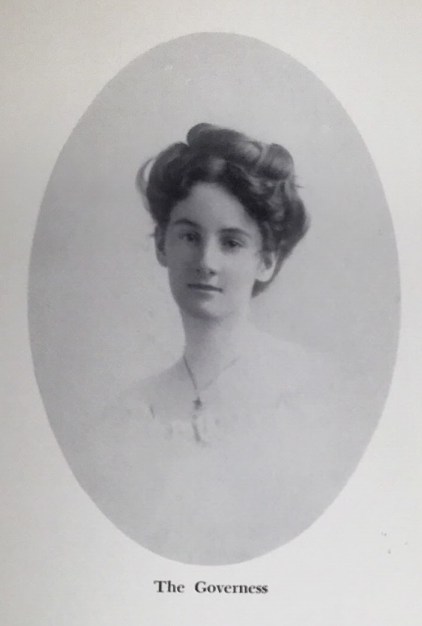
It’s chapter five I’ll be reading, “Governess,” the story of 1904 in Katharine’s life. I chose it because it’s a dramatic and largely unknown year of her life, as well as being quite self-contained as a narrative. Twenty-years-old and living away from home for the first time, Katharine set the tongues wagging in Yarram, a small country town in Gippsland. She beguiled several men, including a drug-addicted German doctor on the run from his wife. Starring in a play, she earned a new nickname. She gathered notes and impressions that she would turn into her first award-winning novel, The Pioneers, a decade later.
What better place to hear the story of this important year in Katharine’s life than at the house she lived in for fifty years? Tickets at the door.
The word count of my biography just hit 70,000, so I thought I’d pause to celebrate with this blog post. It’s a nice milestone, but it’s not altogether welcome. The paragraph I’m on concerns the outbreak of the Great War, so I’m in August 1914, which means I have 4.5 years to go, and the original aim was for an 80,000 word biography.
Back at the end of August I set a plan to write a chapter a month, taking me to the end of the biography during 2017. I’ve been meeting my targets, but I’ve become painfully aware of how naive my plan was. The years I’m writing about in Katharine’s life have proven to throw up far more intriguing stories, characters and events than I anticipated. A good problem to have, I realise. I’ve already added two chapters, and I expect to have to keep adding them.
Writers often get obsessed by word counts and I think it can be a trap; words are cheap, quality words are hard. But it’s a balancing act: measuring, celebrating output can be a necessary and powerful incentive along the way and I feel my ambitious and naive targets have energised me. So far. Most days.




 Nathan Hobby, a biographer in Perth