• About
  • The Red Witch: A Biography of Katharine Susannah Prichard
  • My novel: The Fur

Nathan Hobby, a biographer in Perth

~ The life of Katharine Susannah Prichard, the art of biography, and other things

Nathan Hobby, a biographer in Perth

Category Archives: Katharine Susannah Prichard

Australia Day reflections: the 1888 centenary

26 Monday Jan 2015

Posted by Nathan Hobby in history, Katharine Susannah Prichard

≈ Leave a comment

Tags

Australia Day, Melbourne

Katharine Susannah Prichard arrived with her family in Melbourne as a small child in 1888 or 1889 – I’m yet to pinpoint the date. I do hope it was 1888, as it is a symbolic year – the centenary of white settlement. I’ve been reading about the centenary celebrations this week, and they reveal much about Australian sense of identity at that point. Australia was wrestling with its still recent (in some places) convict past; ignoring the white displacement of Aborigines, and still very excited about gold.

It had been Queen Victoria’s jubilee celebrations the previous year, and that had exhausted much of the money that might have gone into celebrating the centenary in New South Wales. The richer and newer “little sister” to the south – Melbourne – offered to take the lead, putting on a great exhibition that ran from August 1888 to March 1889, with two million people passing through. If the Prichards had reached Melbourne by then, they were surely among that number. In Social Sketches of Australia, Humphrey McQueen notes “Melbourne’s leading role in the centenary celebrations confirmed that it was recent wealth and not early beginnings which was being reviewed, though not scrutinised.” (2) Richard Waterhouse notes that “when those commemorating 1788 referred to the colony’s founder it was Captain Cook the discoverer of New South Wales who was valorised, not Arthur Phillip the founder of a convict colony.” (“Commemoration, Celebration, and ‘the Crossing'”). This suggests the long confused association of James Cook with 26 January 1788 is not simply a recent mistake of the ignorant.

The references to Aborigines in 1888 in the two contemporary sources I’ve read both call attention to their failure to “use the land” productively, a convenient myth which is still being corrected today. One of these sources is “A Centenary Review”, which appeared in The Argus at the opening of the exhibition. It’s a little tedious when it’s not being outrageous by today’s understandings, but in between it is also quite fascinating, offering a history of the nation as it was perceived in 1888.

The article looks toward the hope of federation, and Katharine Susannah Prichard was truly to be a writer of the new nation which would formally begin a few weeks after her seventeenth birthday. Growing up in Melbourne and Launceston, living for fifty years in Perth with a stint in Sydney and regular visits to Canberra, she cared about the whole nation and depicted so many phases of its life – from miners to station workers to Aboriginals and even to the comfortable suburbanites most of us have become.

I am the stranger: reading through the letters of Katharine Susannah Prichard

09 Tuesday Dec 2014

Posted by Nathan Hobby in Katharine Susannah Prichard, psychological aspects of biography, research

≈ 2 Comments

Tags

letters, personality

1934-slnsw

I’m reading through twenty-six years of weekly letters from Katharine Susannah to her son, Ric Throssell. There’s thousands of pages of handwriting to decipher, and if I did nothing else for a whole day’s work, it would take two days to get through one year. I have made it from 1943 to the end of 1947 in the first few weeks of the endeavour. With so much of her correspondence lost or destroyed, these letters are Katharine at her most revealing. Continue reading →

Katharine Susannah’s 131st birthday: in colour at Random Phoughts

05 Friday Dec 2014

Posted by Nathan Hobby in Katharine Susannah Prichard, links

≈ Leave a comment

Tags

birthday, photography

I missed Katharine Susannah’s 131st birthday yesterday, although I did spend several hours of it in her company, deciphering her handwriting in her letters to her son, and feeling I was in her company. Thankfully Loredana at Random Phoughts marked it by selecting KSP for her remarkable daily colourisation project. Here is KSP, in colour! (It’s interesting what a distancing effect black and white photographs have. They make me so conscious of the gulf of time that separates me and the subject. Colour reminds us that the people of the past were as alive as we are.)

Loredana Isabella's avatarRandom Phoughts

Day 211 of Colourisation Project – December 4

Challenge: to publish daily a colourised photo that has some significance around the day of publication.

Born this day, 4 December in 1883, Katharine Susannah Prichard was an Australian author, journalist, political activist and co-founding member of the Communist Party of Australia (1920) as well as one of Australia’s greatest novelists and literary figures.

In spite of the strong anti-communist sentiment pervading Australian politics and society before and after the second world war, Prichard remained a committed member of the Communist Party up until her death in 1969. She worked tirelessly organising unemployed workers and writing speeches and articles on behalf of the party. She delivered many public addresses on world peace and socialism, always working tirelessly for the cause.  She founded left-wing women’s groups, and during the 1930s she campaigned in support of the Spanish Republic and later for nuclear disarmament.

View original post 318 more words

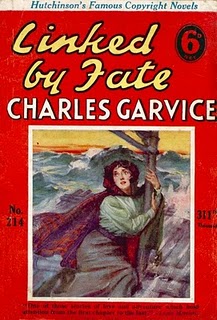
Katharine Susannah and the “fifteenth-rate” writer, Charles Garvice

20 Thursday Nov 2014

Posted by Nathan Hobby in biographical quests, Katharine Susannah Prichard

≈ 4 Comments

Tags

Charles Garvice, The Pioneers

Charles_Garvice_-_Linked_by_Fate

Katharine Susannah became instantly famous across the Commonwealth when she won the Australasian section of the great Hodder and Stoughton All-Empire Competition in April 1915 (the very month of Gallipoli) for her unpublished novel, The Pioneers. It was the big break she had been working hard towards for a decade. I think The Pioneers, for all its faults, is genuinely a very good novel, but at the time of the competition, a number of critics were unwilling to take the winning entry seriously because of the judge, British writer Charles Garvice.

The columnist in Wellington’s Dominion wrote, “…to foist such a fifteen-rate novelist as Mr Garvice upon Australasian writers as judge of their work was little short of an insult” (May 29, 1915, 14). Almost no-one remembers Garvice today, but at the time, he could claim to be the biggest-selling British author alive, having sold millions of the romances he produced many times a year. Among serious lovers of literature his name was a byword for dross. It seems that to have him judge a literary competition was a little like inviting Danielle Steel or Dan Brown to do so today. When his own books are so forgotten, it is a beautiful irony that one of his great legacies was to launch the career of such a significant Australian writer. Even if Garvice wasn’t a great writer, could he have been a good reader, able to discern something special in Katharine Susannah’s work? The Pioneers is a romance, melodramatic at times yet with characters more vivid and a plot more interesting than the genre usually produces.

I would love to know Katharine Susannah’s opinion of Garvice’s work, and the complicated feelings she would have felt at being awarded the prize by him. I think she would have been biting her tongue, and a little uneasy amidst the jubilation.

*

Garvice has fascinated at least two writers in recent years. In her fine essay “Pursuing the Great Bad Novelist”, Laura Sewell Matter tells of her quest for Garvice, after finding some pages of an Icelandic-language book wash up on a beach in Iceland and eventually tracking it down as a translation of one of Garvice’s novels. She flies to London to read one of only two copies held by libraries in the world. It is a classic biographical quest, the genre I researched for my MA, the quest for Garvice tied up to Laura’s quest to find herself. You can download the essay from her website. Steve of Bear-Alley blog wrote a post on Garvice in 2010, tracking down some biographical details for Garvice, as well as a long (and still incomplete!) bibliography of Garvice’s works.

“Tributes to writers who are dead always sadden me”

12 Wednesday Nov 2014

Posted by Nathan Hobby in Katharine Susannah Prichard

≈ Leave a comment

Tags

death, Miles Franklin, religion

Tributes to writers who are dead always sadden me. I know how much better it would have been to appreciate their work when they were alive. But, today, I am happy to be talking about Miles Franklin, whose novels are among the finest written in Australia, and who still lives and works among us – glory be!

It’s Katharine Susannah Prichard, in a 1944 ABC broadcast about her friend Franklin. Captured in print in the year 2000 in Delys Bird’s edited selection, KSP: Stories, Journalism and Essays, it sounds ghostly: the “today” is ghostly; the “lives and works among us” is ghostly. Franklin had ten years left to be celebrated before she died, and Prichard a whole twenty-five. I hope they felt appreciated enough in their lifetime, but I don’t think either of them did.

Did Prichard imagine the posthumous tributes the people of the future might pay her? Would these imagined tributes have been any comfort to her, or only a sadness?

The Christian tradition talks of the “great cloud of witnesses” observing the living. The cloud is a metaphor but the concept is meant quite literally – the dead await the resurrection in the New Testament; their story is not done, their awareness is not finished. Yet even the NT does not talk much of a duty to remember the dead, beyond remembering the example of their faith. We remember them for our sake, not for their sake.

Prichard didn’t believe in life after death; she regarded all supernatural beliefs as superstitious. I can’t be paying tribute to her, then, for her sake. Or not exactly. Not “her” as a living being, but possibly “her” as our cultural memory of her. I can pay tribute to her as a dead person, occupying that peculiar state all the dead occupy. (It’s overwhelming to start trying to conceptualise just what a dead person is.)

We pay tribute to the writers of the past for other reasons than how it makes them feel. We do it because it deepens us. It recognises the reach of the dead into the present. It recovers a piece of the past, the best we can hope for, snatches and scenes of stories from the rubble.

Singer girls dreaming big: Violet in The Roaring Nineties

25 Saturday Oct 2014

Posted by Nathan Hobby in Katharine Susannah Prichard, Katharine Susannah Prichard's writings

≈ Leave a comment

Tags

Goldfields Trilogy, Roaring Nineties, youth

Given my biography is confined to Prichard’s early years (1883-1919), I am contemplating if any light can be shone on her early years from The Roaring Nineties (1946). One potential illumination is in the depiction of a minor character, the young Violet, who appears as a bartender in Chapter 30. She has put on hold her ambitions to be a singer to support her family; her father is a drunk who does not provide. This is not too far removed from Prichard’s situation at the end of school, when she gave up going to university to look after her sick mother, and then later provided for her family during her father’s bouts of depression. Sally is worried for Violet – is she destined to be ground down by the hard life of the goldfields and not shine like she’s meant to? Prichard does let Violet escape to pursue her dream and receive singing lessons in Melbourne, only to shatter it cruelly in Chapter 65, when Violet’s mother pretends to be ill to summon her back. Sally wonders what will become of her:

Nothing touched the core of Violet’s being, Sally imagined. It was wrapped in her dream of being a singer. She had maintained herself apart from the demoralizing influences about her because of it. The tragedy was that she should have been forced back among them… Sally had a presentiment of the doom hanging over the girl. She would be caught in the hungry life force surging beneath the surface of this race-course crowd. But Violet – her spirit would always demand something more than ephemeral excitement. (439)

Prichard would sing to her father in his final illness, she tells us in her autobiography, but the song went out of her soul after his death. The next year (1908) she would meet with the famous singing teacher Mathilde Marchesi, who demanded she stay and receive singing lessons; she didn’t, perhaps something she always regretted. The young woman on the cusp of maturity with much potential but at risk of being dragged down by other forces recurs throughout her work, Sophie the singer in Black Opal being particularly close to Violet’s character here. Sophie had a happy ending; we wait to see what will befall Violet in the next two volumes.

Gold Fever: Katharine Susannah Prichard’s The Roaring Nineties

24 Friday Oct 2014

Posted by Nathan Hobby in book review, Katharine Susannah Prichard, Katharine Susannah Prichard's writings

≈ 5 Comments

Tags

Aboriginals, Australian literature, gold rush, Goldfields Trilogy, Kalgoorlie, Roaring Nineties

The Roaring Nineties (1946) is the first volume of Katharine Susannah Prichard’s magnum opus, her goldfields trilogy. She spent a decade on the trilogy, regarding it as her finest achievement, and was deeply hurt by the mixed reception she received from critics (especially for the third volume, Winged Seeds). The trilogy is an epic telling the story of the Western Australian goldfields from the discovery of gold and spanning the decades which followed.

The novel is haunted by the presence of displaced and mistreated Aborigines, and begins with a short, violent story of an abduction of two Aboriginal women by prospectors before gold had even been discovered. It is Prichard at her finest, writing in spare and evocative prose. It is a remarkable reorientation of her novel, throwing off-balance this story of whites and their gold; today it would almost be expected, but in 1946 it shows historical insight ahead of its time. From here, the novel tells of the initial gold rush in the 1890s and the establishment of Coolgardie and Kalgoorlie Boulder. Prichard brings the dust, tents, excitement, and desperation alive in a way that historical studies cannot do. She researched this novel thoroughly and it shows; sometimes to the detriment of narrative, but mostly to help her create an authentic story. The historical background is never far from the story, forming a spine which moves the story along through a series of incidents, with a large cast of characters moving on and off the stage. It is Sally Gough who is closest to a protagonist, as she makes a living running a boarding house to compensate for her ineffectual aristocratic gambler of a husband, Morrie. The struggle between them is an ongoing aspect of the plot, as he gradually accepts her egalitarian ethos, both in class and gender terms. Sally’s insistence that she and Morrie should not elevate themselves above the others contrasts with Alf and Laura’s move up the class rankings, as mining becomes commercialised and Alf betrays his prospector roots to become a mine manager. The class struggle of the alluvial prospectors against the mining companies and the political establishment occupies much of the last third of book, and is the least engaging, often losing sight of the characters.

The novel is, rather loosely, a frame narrative, with the whole novel presented as the yarns of prospector Dinny Quinn about the early days of the goldfields. This device is used frequently in the early chapters, peters out, and is then revived toward the end of the book. Dinny is rarely central to the action, more an observer who knows all the characters.

Having read about some of the reception history of The Roaring Nineties, and the critical preoccupation of the time with rating it against and comparing it with her earlier work, what surprised me most about the novel is how very typically Prichardian it is. This novel has elements of almost all of her previous novels; it seems far less of a departure than Coonardoo or Intimate Strangers were. The foundation and growth of a community echoes The Pioneers. The depiction of the prospectors with their strong code of ethics (such as “roll ups” where disputes are settled) and their struggle against big companies is similar to the concerns of Black Opal. The mistreatment of Aboriginal women as temporary sexual partners brings Coonardoo to mind. The struggle of Sally Gough for her right to earn money and define herself apart from her husband echoes Haxby’s Circus and Intimate Strangers.

Link: Katharine Susannah Prichard’s typewriter

27 Saturday Sep 2014

Posted by Nathan Hobby in Katharine Susannah Prichard, links

≈ Leave a comment

Tags

typewriters

I had a pleasant surprise finding a blog post – with photographs – of Prichard’s typewriter, currently being restored by Robert Messenger of Oz Typewriter. He has posted an overview of her life and work too. Robert’s enthusiasm for typewriters is rather infectious; I’m glad to see people caring for and celebrating this aspect of the past. I doubt there’ll be photos of Tim Winton or Peter Carey’s restored laptops in a century.

Ancestry and mythology in Child of the Hurricane

26 Friday Sep 2014

Posted by Nathan Hobby in Katharine Susannah Prichard

≈ 1 Comment

Tags

ancestors, autobiography, Child of the Hurricane, Who Do You Think You Are?

Often in biographies and autobiographies, ancestry is dealt with all at once, in a sometimes unpalatable dose at the beginning of the book. Sometimes an ancestor with some connection, some parallel to the subject is highlighted, their life story summarised. Some biographers are disdainful of this, thinking it based on a rather silly theory of hereditary genius, but I think they’re too quick to be dismissive. Humans have always looked to their ancestors to explain themselves. In the case of Katharine Susannah Prichard’s Child of the Hurricane, her ancestry forms a constellation of stories, myths and anecdotes around her entire childhood, and the book doesn’t throw these off until nine chapters in. It feels like Prichard is remembering for her own sake, not as a writer, but as if she were writing the family history as some people are wont to do in their retirement. She is descended from two inter-married clans who both came to Australia on the El Dorado in 1852, and the stories keep coming: the Prichards might be descended from the fifteenth century Princess Katharine, who makes an appearance in the play Henry V; her great-uncle who built the William Wallace monument in Scotland (true) was on his way to see his sister in Australia when he died at sea (not true); her father was shipwrecked – at some time, she doesn’t when – and swam ashore with a sea-chest and his dog; her mother’s godfather was shipwrecked also, and flagged down a ship with his shirt and it became known as Shirt Island – or so she was told. The mythology of her family was rich and romantic.

Yet for all the family tales, Prichard seems to have sympathy with her aunt’s verdict that ‘She did not regret not knowing more about her antecedents, or think it important to remember them.’ (56) Prichard’s concern with her ancestry seems more a fascination with the mythology itself than a desire to truly unpick and uncover the truth. She wouldn’t have necessarily liked being on the Who Do You Think You Are? show and have the myths critically examined – although, if she were alive today, perhaps her thinking would have shifted, just as the rest of society’s has.

Anguished Portrait of Marriage: Katharine Susannah Prichard’s Intimate Strangers

25 Thursday Sep 2014

Posted by Nathan Hobby in book review, Katharine Susannah Prichard, Katharine Susannah Prichard's writings

≈ 2 Comments

Tags

1930s, beach, Intimate Strangers, J. M. Harcourt, marriage, Upsurge!

intimate-strangers

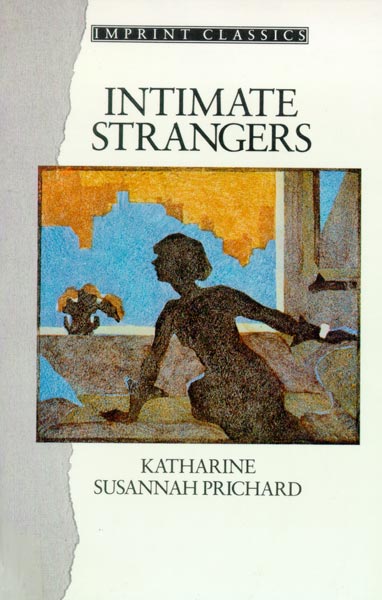
When Katharine Susannah Prichard set off from Perth for London and then a tour of the Soviet Union in May 1933, she left the manuscript of Intimate Strangers behind. It is the story of the troubled marriage of Elodie and Greg Blackwood, set in Perth during the Depression. The manuscript she left behind finished with the suicide of Greg after he has gambled their house away, and presumably before Elodie even has a chance to tell him she’s leaving him for the adventurous Jerome Hartog. While Prichard was somewhere in Sibera, war-damaged Hugo Throssell shot himself, having piled up huge debts from a failed ‘dude ranch’ venture at their home. She later expressed niggling doubt to her son, Ric, that perhaps part of his state of mind had been caused by reading the ending of the novel. Before publication in 1937, she altered the ending to set up a reconciliation between Greg and Elodie. The novel and the suicide will always be associated, and the issue has resurfaced often in the years since, including when the novel was turned into an ABC mini-series in 1981 and a magazine ran a sensationalised headline. In the introduction to the 1990 edition, Ric acknowledged parallels between Greg and Elodie and Katharine and Hugo, but emphasised the differences and the creative alchemy that amalgamates and transforms people and events beyond simple equivalencies; ‘the unknowable truth remains unknown.’

Intimate Strangers is a portrait of marriage as a concept and institution more than a portrait of a particular marriage. Elodie and Greg’s problems in their marriage of fifteen years are set against the troubled relationships of those around them, especially virginal tomboy, Dirk, who holds a line of suitors in her sway, not wanting to marry any of them, but eventually yielding to one for money. On the beaches of Calatta and then back in the suburbs of Perth, Elodie contemplates running away with Jerome as Greg continues his dalliances and fails as a provider. Over and over, the novel circles around the questions of finding sexual and personal fulfillment in marriage and out of it, with sexual attraction pulling people away from commitment. There is no clear message; the appeal and the problems of adultery are both presented. The resolution has Elodie and Greg recommit themselves to each other at the same time as they applaud Dirk’s escape from her marriage. In the moral world of the novel, Dirk’s escape is permissible because the marriage’s oppression mirrored that of the capitalist oppression of workers; as part of that, her husband Ted was violent, leaving her bruised. Greg is not as bad as Ted, but by today’s standards at least, he rapes Elodie in Chapter 6.

Intimate Strangers is distinct among Prichard’s novels. Most of her novels are researched, taking place among a particular occupation group – opal miners, timber workers, circus workers, station workers. Intimate Strangers is closer to the middle-class, urban world Prichard moved in. The urban setting is unusual for her, although as Throssell points out in the introduction, two of her lesser-known works, Windlestraws (1916) and Subtle Flame (1967) are also set in cities. Her other novels are also much more plotted; more than any other her other works, Intimate Strangers occurs within the characters’ consciousness, their inner conversations and impressions. However, just in case you were in doubt that you were really reading Prichard, in chapter 19 Dirk and Elodie turn up to a rally of unemployed workers in Fremantle to hear Tony speak, and the speeches of a number of the unemployed are reported. The tumult of the Great Depression is not foregrounded, but intrudes most here and when Greg loses his job in the downturn.

The novel is drenched in seawater and sand, lovingly evoking Perth beaches in the amalgam place of Calatta, part Rockingham, part Cottesloe. The characters begin on holiday there for the first half of the book, and return a couple of times, including for the final resolution. All the characters live to swim or sunbake or walk along the beach or fish. It is a valuable picture of Western Australian beach culture in the 1930s, sitting alongside J. M. Harcourt’s descriptions in Upsurge! (1934).

The novel enjoyed a brief renaissance in July 1981 with the broadcast of the two part mini-series adaptation. A review for the mini-series by Cul Cullen in The Women’s Weekly is one of the most hyperbolic hatchet jobs I’ve come across, describing it as ‘the silliest thing to flicker, unwatched, across our screens’; ‘aimless, stitled and utterly without relevance to a contemporary audience.’ Surely it couldn’t have been that bad; but the only way to know today is to watch the only copy I can see listed in the world at the National Archives. (In his introduction, Ric Throssell writes that it was also The Women’s Weekly which published the article at this time blaming the novel for his father’s suicide. However, The Women’s Weekly is now fully digitized for that year, and there is no trace of the article. It may have been a different magazine.)

While avoiding simplistic autobiographical readings of Intimate Strangers, it is an anguished book from an anguished period in Prichard’s life. The characters’ ponderings on how to find happiness and satisfaction in life and particularly marriage are themes which resonate today as well, even if the novel reads as a product of its age. It is not the Prichard novel I’d recommend readers start with, but it is a significant work in her corpus, demonstrating her versatility, and shedding light on its context.

← Older posts
Newer posts →

Enter your email address to follow this blog and receive notifications of new posts by email.

Join 287 other subscribers

Nathan on Twitter

My Tweets

Categories

  • academic (9)
  • archives and sources (9)
  • autobiographical (63)
  • biographers (10)
  • biographical method (26)
  • biographical quests (18)
  • biographies (21)
    • political biography (2)
  • biographies of living subjects (2)
  • biographies of writers, artists & musicians (12)
  • biographies of writers, artists and musicians (20)
  • biography as a literary form (9)
  • biography in fiction (2)
  • biography in the news (2)
  • books (236)
    • authors (19)
    • book review (173)
    • reading (23)
  • Covid (2)
  • creative nonfiction (11)
  • daily life (2)
  • Daily Prompt (2)
  • death (21)
  • digital humanities (3)
  • family history (1)
  • fiction (8)
  • film and television biographies (5)
  • film review (48)
  • found objects (3)
  • historical biographies (1)
  • history (20)
  • In the steps of KSP (4)
  • John Curtin (4)
  • Katharine Susannah Prichard (113)
    • Glimpses of KSP (7)
    • My KSP biography (31)
      • deleted scenes (1)
  • Katharine Susannah Prichard's associates and connections (17)
  • Katharine Susannah Prichard's writings (34)
  • libraries (5)
  • life (21)
  • link (22)
  • links (41)
  • lists (28)
  • local history and heritage (1)
  • media (4)
  • memes and urban myths (1)
  • memoirs (10)
  • meta (2)
  • music (18)
  • news (9)
  • news and events (43)
  • obituary (1)
  • Old writing found on a floppy disk (1)
  • poetry (5)
  • politics and current affairs (26)
    • climate change (1)
  • prologues and introductions (2)
  • psychological aspects of biography (3)
  • quotes (22)
  • R.I.P. (10)
  • reading report (3)
  • religion (1)
  • religious biography (1)
  • research (5)
  • role of the biographer within the biography (2)
  • Series: A-Z of Katharine Susannah Prichard (26)
  • Series: Corona Diary (1)
  • Series: Saturday 10am (14)
  • Series: Short Stories (2016) (6)
  • Series: The Tourist (2013) (6)
  • Series: Thursday 3pm feature posts (2009) (35)
  • structure of biographies (3)
  • technology and the digital world (2)
  • television (4)
  • the nature of biography (4)
  • this blog (10)
  • Uncategorized (32)
  • Western Australia (26)
  • writing (41)

Archives

Recent Comments

Nathan Hobby's avatarNathan Hobby on Life in chronic land
wadholloway's avatarwadholloway on Life in chronic land
Nathan Hobby's avatarNathan Hobby on Life in chronic land

Bookmarks

  • Adventures in Biography
  • ANZ LitLovers LitBlog
  • Bernice Barry
  • It only goes up to your knees
  • Jane Bryony Rawson
  • Jenn Plays Recorder
  • Katharine Susannah Prichard Writers' Centre
  • Laura Sewell Matter: Essayist and Biographer
  • Mutually said: Poets Vegan Anarchist Pacifist
  • Resident Judge
  • Speaking Thylacine
  • The Australian Legend
  • Timothy Parkin Poetry
  • Treefall Writing – Melinda Tognini
  • Whispering Gums
  • Wrapped up in books: the home of Guy Salvidge

Top Posts

  • The Joy of Knowledge Encyclopedia
  • The forgotten and the remembered: brief notes on the history of the Hodder & Stoughton £1000 Novel Competition
  • Link to my radio interview
  • RIP Mark Sandman, died 3 July 1999
  • Angst, class and racism in Possum Gully: some notes on Miles Franklin's My Brilliant Career

Blog Stats

  • 246,592 hits

Tag Cloud

9/11 19th century 33 1920s 1921 1930s 1950s 1970s 1971 1981 2000s 2004 2011 2015 2017 20000 Days on Earth A.S. Byatt Aboriginals activism Adam Begley Adrian Mole adultery afterlife Agatha Christie Alan Hollinghurst Alberto Manguel Alfred Deakin Amazing Grace Americana Amy Grant An American Romance Andre Tchaikowsky Andrew McGahan angela myers anne fadiman Anne Rice Arabian Nights archives art arts funding A Serious Man Ash Wednesday ASIO atheism Atonement Australia Australian film Australian literature Australian Short Story Festival autism autobiography autodidact Barbara Vine beach Belle Costa da Greene Bell Jar best best-of Bible Big Issue Bill Callahan biographical ethics biographical quest genre biographies birthday birthdays Black Opal Bleak House Blinky Bill blogging blogs Blue Blades Bodega's Bunch bog Booker book launch booksale Borges Brenda Niall Brian Matthews Brian McLaren Britney Spears Burial Rites Burke and Wills buskers C.S. Lewis C.S. Lewis canon capitalism Carol Shields Carson McCullers Catcher in the Rye Catholicism celebrities Charles Dickens Charlie Kaufman childhood Child of the Hurricane children's books Choir of Gravediggers Christianity Christian writing Christina Stead Christmas Christopher Beha Cinque Terra Claire Tomalin classics cliches climate change Coen brothers coincidence Collie Collyer coming of age Communism concert Condensed Books consumerism Coonardoo Cormac McCarthy Corrections cosy fiction Dara Horn David Copperfield David Ireland David Marr David Suchet death Death of a president definition demolition Dennis LeHane dentist diaries divorce doctorow Doctor Who documentaries donald shriver Don DeLillo Don DeLillo Donna Mazza Donna Tartt Don Watson Dostovesky doubt drama dreams of revolution Drusilla Modjeska E.M. Forster ebooks editing Eichmann Eisenstein Elizabeth Kostova email empathy ensmallification existentialism faith Falling Man fame families fantasy fiction film and television folk football Frank Barscombe Fremantle Press G.K. Chesterton Gabrielle Carey Gallipoli genealogical fiction Genesis Geoff Nicholson George W. Bush Gerald Glaskin Gilead Golden Miles Goldfields Trilogy Graham Greene grandad great novels Greenmount Guinness World Records Guy Salvidge Hannah Arendt Hannah Kent Hans Koning Hans Koningsberger Harper Lee Haxby's Circus Hazel Rowley He-Man headers heaven Heidegger hell Henrietta Lacks Henry Morton Stanley Herman Hesse heroes Hey Dad! historical fiction history Holden Caulfield holidays Homer & Langley Home Song Stories House of Cards House of Zealots house of zealots Hugo Throssell humour Ian McEwan In between the sheets Indonesia Infamous Inside Llewyn Davis interstellar interview Intimate Strangers Invisible Ireland ISBNs Ishiguro itunes J.D. Salinger J.M. Coetzee J.S. Battye Janet Malcolm Jennifer Egan JFK JFK assassination Joanna Rakoff Joel Schumacher John Burbidge John Fowles John Howard John Kinsella John Updike John Updike Jonathan Franzen journal writing JSB Judgment Day Julia Baird Julian Barnes Kafka Kalgoorlie Kate Grenville Katherine Mansfield Kevin Brockmeier King's Park KSP Writers' Centre language last ride Laurie Steed Left Behind Leonard Cohen Leo Tolstoy Libra Library of Babel Library of Babel Lila Lily and Madeleine links Lionel Shriver lionel shriver lists literary fiction literature Lleyton Hewitt lost book Louisa Louisa Lawson Louis Esson louis nowra love letter Lubbock Lytton Strachey Madelaine Dickie Man Booker man in the dark Margaret Atwood Margaret River Press Marilynne Robinson mark sandman meaning of life Melbourne Mel Hall meme memorialisation memory MH17 Michael Faber Mike Riddell Miles Franklin mining boom missionaries moleskine Moon Palace morphine Mother Teresa movies Music of Chance My Brilliant Career names Napoleon Narnia narrative Narrow Road to the Deep North Narziss and Goldmund Natalie Portman Nathaniel Hobbie national anthem Nick Cave Nina Bawden non-fiction nonfiction noughties novelists novels obituaries obscurity On Chesil Beach Parade's End Paris Hilton Passion of the Christ past patriotism Paul Auster Paul de Man Perth Perth Writers Festival Peter Ackroyd Peter Cowan Writers Centre phd Philip K. Dick Philip Seymour Hoffman pierpontmorgan poetry slam politics popular fiction popular science Possession postapocalyptic postmodernism Pride prophetic imagination publications Pulp Purity Queen Victoria Rabbit Angstrom radio Radio National Randolph Stow rating: 5/10 rating: 6/10 rating: 7/10 rating: 8/10 rating: 9/10 rating: 10/10 ratings reading fiction autobiographically reading report Rebecca Skloot recap red wine reincarnation juvenile fiction rejection review - music reviewing rewriting Richard Flanagan Richard Ford Rick Moody Roaring Nineties Robert Banks Robert Hughes Robert Silverberg Robert Wadlow Robinson Crusoe Rolf Harris romance Rome ruins Russell Crowe Ruth Rendell Sarah Murgatroyd scalpers science fiction Science of Sleep secondhand books Secret River sermon illustration sex short stories Silent Woman Simone Lazaroo Simpsons Siri Hustvedt slavery Smashing Pumpkins social interactions social justice some people i hate sources South Australia souvenirs speculation speech speeches sport status anxiety Stephen Lawhead Stranger's Child subtitles Subtle Flame Sue Townsend suicide Surprised By Hope Suzanne Falkiner Sylvia Plath Synecdoche TAG Hungerford Award tapes teabags Ted Hughes The Children Act The Cure The Fur The Imitation Game theology The Pioneers The Revolutionary Thomas Disch Thomas Hardy Thomas Henry Prichard Thomas Mann thriller time Tim La Haye Tim Winton Tolstoy Tom Wright top 10 Towering Inferno Tracy Ryan Trove Truman Capote tshirts TS Spivet Twelve Years a Slave underrated writers Underworld unwritten biographies urban myth USA vampires Venice Victoria Cross Victoriana Victorian era Victorianism Victoria Park video Voltron w Wake in Fright Walkabout Walter M. Miller war War and Peace war on terror Water Diviner Wellington St Bus Station Westerly Western Australia West Wing What Happened to Sophie Wilder? Whitlams wikipedia Wild Oats of Hans William Wilberforce Winston Churchill Witches of Eastwick Working Bullocks workshop World War One writers writing Writing NSW youth Zadie Smith Zeitgeist Zelig

Enter your email address to follow this blog and receive notifications of new posts by email.

Join 287 other subscribers

Pages

  • About
  • My novel: The Fur
  • The Red Witch: A Biography of Katharine Susannah Prichard

Categories

  • academic (9)
  • archives and sources (9)
  • autobiographical (63)
  • biographers (10)
  • biographical method (26)
  • biographical quests (18)
  • biographies (21)
    • political biography (2)
  • biographies of living subjects (2)
  • biographies of writers, artists & musicians (12)
  • biographies of writers, artists and musicians (20)
  • biography as a literary form (9)
  • biography in fiction (2)
  • biography in the news (2)
  • books (236)
    • authors (19)
    • book review (173)
    • reading (23)
  • Covid (2)
  • creative nonfiction (11)
  • daily life (2)
  • Daily Prompt (2)
  • death (21)
  • digital humanities (3)
  • family history (1)
  • fiction (8)
  • film and television biographies (5)
  • film review (48)
  • found objects (3)
  • historical biographies (1)
  • history (20)
  • In the steps of KSP (4)
  • John Curtin (4)
  • Katharine Susannah Prichard (113)
    • Glimpses of KSP (7)
    • My KSP biography (31)
      • deleted scenes (1)
  • Katharine Susannah Prichard's associates and connections (17)
  • Katharine Susannah Prichard's writings (34)
  • libraries (5)
  • life (21)
  • link (22)
  • links (41)
  • lists (28)
  • local history and heritage (1)
  • media (4)
  • memes and urban myths (1)
  • memoirs (10)
  • meta (2)
  • music (18)
  • news (9)
  • news and events (43)
  • obituary (1)
  • Old writing found on a floppy disk (1)
  • poetry (5)
  • politics and current affairs (26)
    • climate change (1)
  • prologues and introductions (2)
  • psychological aspects of biography (3)
  • quotes (22)
  • R.I.P. (10)
  • reading report (3)
  • religion (1)
  • religious biography (1)
  • research (5)
  • role of the biographer within the biography (2)
  • Series: A-Z of Katharine Susannah Prichard (26)
  • Series: Corona Diary (1)
  • Series: Saturday 10am (14)
  • Series: Short Stories (2016) (6)
  • Series: The Tourist (2013) (6)
  • Series: Thursday 3pm feature posts (2009) (35)
  • structure of biographies (3)
  • technology and the digital world (2)
  • television (4)
  • the nature of biography (4)
  • this blog (10)
  • Uncategorized (32)
  • Western Australia (26)
  • writing (41)

Archives

Recent Comments

Nathan Hobby's avatarNathan Hobby on Life in chronic land
wadholloway's avatarwadholloway on Life in chronic land
Nathan Hobby's avatarNathan Hobby on Life in chronic land

Bookmarks

  • Adventures in Biography
  • ANZ LitLovers LitBlog
  • Bernice Barry
  • It only goes up to your knees
  • Jane Bryony Rawson
  • Jenn Plays Recorder
  • Katharine Susannah Prichard Writers' Centre
  • Laura Sewell Matter: Essayist and Biographer
  • Mutually said: Poets Vegan Anarchist Pacifist
  • Resident Judge
  • Speaking Thylacine
  • The Australian Legend
  • Timothy Parkin Poetry
  • Treefall Writing – Melinda Tognini
  • Whispering Gums
  • Wrapped up in books: the home of Guy Salvidge

Top Posts

  • The Joy of Knowledge Encyclopedia
  • The forgotten and the remembered: brief notes on the history of the Hodder & Stoughton £1000 Novel Competition
  • Link to my radio interview
  • RIP Mark Sandman, died 3 July 1999
  • Angst, class and racism in Possum Gully: some notes on Miles Franklin's My Brilliant Career

Blog Stats

  • 246,592 hits

Tag Cloud

9/11 19th century 33 1920s 1921 1930s 1950s 1970s 1971 1981 2000s 2004 2011 2015 2017 20000 Days on Earth A.S. Byatt Aboriginals activism Adam Begley Adrian Mole adultery afterlife Agatha Christie Alan Hollinghurst Alberto Manguel Alfred Deakin Amazing Grace Americana Amy Grant An American Romance Andre Tchaikowsky Andrew McGahan angela myers anne fadiman Anne Rice Arabian Nights archives art arts funding A Serious Man Ash Wednesday ASIO atheism Atonement Australia Australian film Australian literature Australian Short Story Festival autism autobiography autodidact Barbara Vine beach Belle Costa da Greene Bell Jar best best-of Bible Big Issue Bill Callahan biographical ethics biographical quest genre biographies birthday birthdays Black Opal Bleak House Blinky Bill blogging blogs Blue Blades Bodega's Bunch bog Booker book launch booksale Borges Brenda Niall Brian Matthews Brian McLaren Britney Spears Burial Rites Burke and Wills buskers C.S. Lewis C.S. Lewis canon capitalism Carol Shields Carson McCullers Catcher in the Rye Catholicism celebrities Charles Dickens Charlie Kaufman childhood Child of the Hurricane children's books Choir of Gravediggers Christianity Christian writing Christina Stead Christmas Christopher Beha Cinque Terra Claire Tomalin classics cliches climate change Coen brothers coincidence Collie Collyer coming of age Communism concert Condensed Books consumerism Coonardoo Cormac McCarthy Corrections cosy fiction Dara Horn David Copperfield David Ireland David Marr David Suchet death Death of a president definition demolition Dennis LeHane dentist diaries divorce doctorow Doctor Who documentaries donald shriver Don DeLillo Don DeLillo Donna Mazza Donna Tartt Don Watson Dostovesky doubt drama dreams of revolution Drusilla Modjeska E.M. Forster ebooks editing Eichmann Eisenstein Elizabeth Kostova email empathy ensmallification existentialism faith Falling Man fame families fantasy fiction film and television folk football Frank Barscombe Fremantle Press G.K. Chesterton Gabrielle Carey Gallipoli genealogical fiction Genesis Geoff Nicholson George W. Bush Gerald Glaskin Gilead Golden Miles Goldfields Trilogy Graham Greene grandad great novels Greenmount Guinness World Records Guy Salvidge Hannah Arendt Hannah Kent Hans Koning Hans Koningsberger Harper Lee Haxby's Circus Hazel Rowley He-Man headers heaven Heidegger hell Henrietta Lacks Henry Morton Stanley Herman Hesse heroes Hey Dad! historical fiction history Holden Caulfield holidays Homer & Langley Home Song Stories House of Cards House of Zealots house of zealots Hugo Throssell humour Ian McEwan In between the sheets Indonesia Infamous Inside Llewyn Davis interstellar interview Intimate Strangers Invisible Ireland ISBNs Ishiguro itunes J.D. Salinger J.M. Coetzee J.S. Battye Janet Malcolm Jennifer Egan JFK JFK assassination Joanna Rakoff Joel Schumacher John Burbidge John Fowles John Howard John Kinsella John Updike John Updike Jonathan Franzen journal writing JSB Judgment Day Julia Baird Julian Barnes Kafka Kalgoorlie Kate Grenville Katherine Mansfield Kevin Brockmeier King's Park KSP Writers' Centre language last ride Laurie Steed Left Behind Leonard Cohen Leo Tolstoy Libra Library of Babel Library of Babel Lila Lily and Madeleine links Lionel Shriver lionel shriver lists literary fiction literature Lleyton Hewitt lost book Louisa Louisa Lawson Louis Esson louis nowra love letter Lubbock Lytton Strachey Madelaine Dickie Man Booker man in the dark Margaret Atwood Margaret River Press Marilynne Robinson mark sandman meaning of life Melbourne Mel Hall meme memorialisation memory MH17 Michael Faber Mike Riddell Miles Franklin mining boom missionaries moleskine Moon Palace morphine Mother Teresa movies Music of Chance My Brilliant Career names Napoleon Narnia narrative Narrow Road to the Deep North Narziss and Goldmund Natalie Portman Nathaniel Hobbie national anthem Nick Cave Nina Bawden non-fiction nonfiction noughties novelists novels obituaries obscurity On Chesil Beach Parade's End Paris Hilton Passion of the Christ past patriotism Paul Auster Paul de Man Perth Perth Writers Festival Peter Ackroyd Peter Cowan Writers Centre phd Philip K. Dick Philip Seymour Hoffman pierpontmorgan poetry slam politics popular fiction popular science Possession postapocalyptic postmodernism Pride prophetic imagination publications Pulp Purity Queen Victoria Rabbit Angstrom radio Radio National Randolph Stow rating: 5/10 rating: 6/10 rating: 7/10 rating: 8/10 rating: 9/10 rating: 10/10 ratings reading fiction autobiographically reading report Rebecca Skloot recap red wine reincarnation juvenile fiction rejection review - music reviewing rewriting Richard Flanagan Richard Ford Rick Moody Roaring Nineties Robert Banks Robert Hughes Robert Silverberg Robert Wadlow Robinson Crusoe Rolf Harris romance Rome ruins Russell Crowe Ruth Rendell Sarah Murgatroyd scalpers science fiction Science of Sleep secondhand books Secret River sermon illustration sex short stories Silent Woman Simone Lazaroo Simpsons Siri Hustvedt slavery Smashing Pumpkins social interactions social justice some people i hate sources South Australia souvenirs speculation speech speeches sport status anxiety Stephen Lawhead Stranger's Child subtitles Subtle Flame Sue Townsend suicide Surprised By Hope Suzanne Falkiner Sylvia Plath Synecdoche TAG Hungerford Award tapes teabags Ted Hughes The Children Act The Cure The Fur The Imitation Game theology The Pioneers The Revolutionary Thomas Disch Thomas Hardy Thomas Henry Prichard Thomas Mann thriller time Tim La Haye Tim Winton Tolstoy Tom Wright top 10 Towering Inferno Tracy Ryan Trove Truman Capote tshirts TS Spivet Twelve Years a Slave underrated writers Underworld unwritten biographies urban myth USA vampires Venice Victoria Cross Victoriana Victorian era Victorianism Victoria Park video Voltron w Wake in Fright Walkabout Walter M. Miller war War and Peace war on terror Water Diviner Wellington St Bus Station Westerly Western Australia West Wing What Happened to Sophie Wilder? Whitlams wikipedia Wild Oats of Hans William Wilberforce Winston Churchill Witches of Eastwick Working Bullocks workshop World War One writers writing Writing NSW youth Zadie Smith Zeitgeist Zelig

Blog at WordPress.com.

  • Subscribe Subscribed
    • Nathan Hobby, a biographer in Perth
    • Join 287 other subscribers
    • Already have a WordPress.com account? Log in now.
    • Nathan Hobby, a biographer in Perth
    • Subscribe Subscribed
    • Sign up
    • Log in
    • Report this content
    • View site in Reader
    • Manage subscriptions
    • Collapse this bar

Loading Comments...