• About
  • The Red Witch: A Biography of Katharine Susannah Prichard
  • My novel: The Fur

Nathan Hobby, a biographer in Perth

~ The lives of Katharine Susannah Prichard and John Curtin, the art of biography, and other things

Nathan Hobby, a biographer in Perth

Category Archives: biography

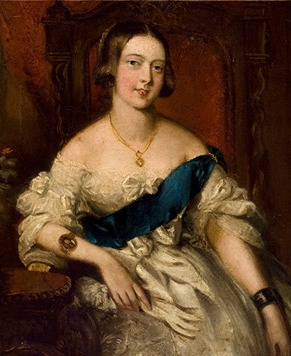
When to tell: Julia Baird shares her Queen Victoria scoop

20 Fri Mar 2015

Posted by Nathan Hobby in biographers, biography in the news, links

≈ Leave a comment

Tags

Julia Baird, Queen Victoria

Queen_Victoria_ca_1840_by_Herbert_Luther_Smith

I’m an admirer of Julia Baird, host of ABC TV’s The Drum. She has taken on the powerful Sydney Anglicans over their attitude toward women more effectively than most. She is an interesting and balanced presenter, quick-witted and incisive. If she shares the political affiliation of her brother (NSW’s premier) and her father (a former federal MP), maybe there’s hope yet for that party.  She’s also a biographer. I read that The Drum gig is what she’s doing because she used up her advance on her long-awaited biography of Queen Victoria.

Continue reading →

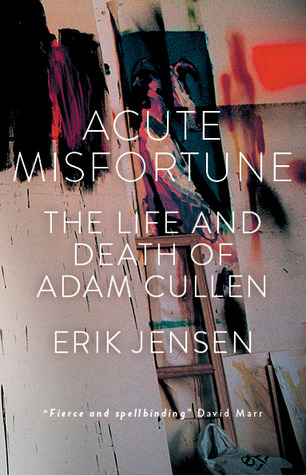
Acute Misfortune: a review of Erik Jensen’s biography of Adam Cullen

27 Fri Feb 2015

Posted by Nathan Hobby in biographies of writers, artists & musicians, book review

≈ 1 Comment

Tags

Acute Misfortune, Adam Cullen, Erik Jensen, Perth Writers Festival

acute-misfortune

Adam Cullen (1965-2012) was a controversial Australian artist who destroyed himself with alcohol and drugs. Six years ago, Cullen asked nineteen year-old journalist Erik Jensen to live with him for a year to write his biography. Last year, the book appeared – Acute Misfortune: The Life and Death of Adam Cullen, a story in which life and death do seem to have equal weight. Continue reading →

“Dear Kattie, I hope you will allow me to be so familiar”: first-name terms in biography

26 Thu Feb 2015

Posted by Nathan Hobby in biographical method, Katharine Susannah Prichard, links

≈ 2 Comments

Tags

names

The Guardian asks, “Should biographers be on first name terms with their subjects?” (hat-tip Tracy Ryan), which is very good timing, because it’s an ongoing question for me. Continue reading →

“So let us put him in the thick of it”: reconstructing the unknown

20 Fri Feb 2015

Posted by Nathan Hobby in biographical method

≈ 1 Comment

Tags

Hamish McDonald, Madonna King, Perth Writers Festival, referencing

Cook-tableau

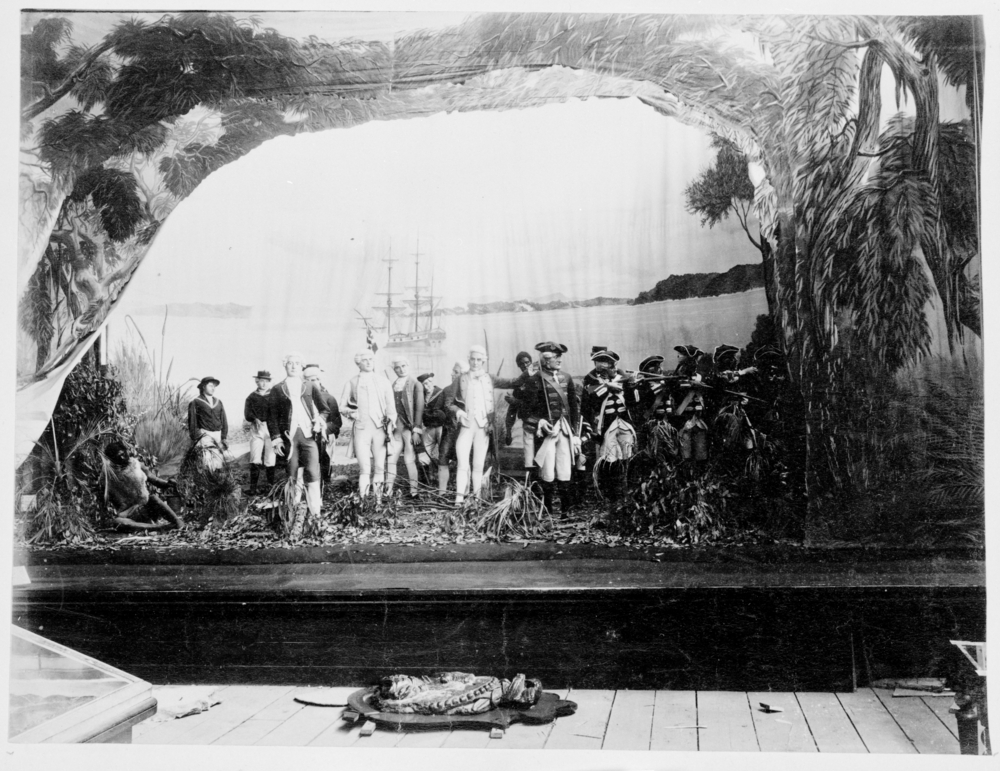
I’ve just been to a Perth Writers’ Festival talk by two biographers, Hamish McDonald and Madonna King. The conversation around the process of biography was interesting. McDonald’s latest book, War of Words is the biography of a Japanese-raised European, Charles Bavier, born in 1888, while King’s is a biography of Australian politician, Joe Hockey. They are both journalists, but King’s book seemed particularly a work of journalism from the way she spoke about it. She interviewed three hundred people and wrote it intensively, seven days a week, over the course of a year. McDonald started his in 1982, when there were still were people alive who knew Bavier well, but it is inevitably a historical enterprise. Despite this, he said at one point that he wasn’t pretending his was a footnoted history. In the literal sense this is completely true – indeed it is not referenced at all (there is a bibliography), which seems a terrible lack to me. I may be an unusual reader, but footnotes reveal much about method, and can be fascinating to me. But he also meant it in another sense – his insertion of several scenes of reconstructions, where he imagines what Bavier was doing during historical events McDonald knew he experienced. Continue reading →

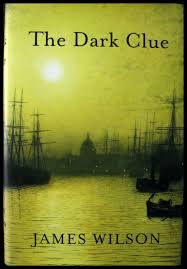
James Wilson’s The Dark Clue: A fictional biographer on the trail of J. M. W. Turner’s secrets

05 Thu Feb 2015

Posted by Nathan Hobby in biographical quests, biography in fiction

≈ Leave a comment

Tags

Dark Clue, J. M. W. Turner, Victorian era

dark-clue

Spoiler alert

In James Wilson’s The Dark Clue: A Novel of Suspense (2001), Walter Hartright and his sister-in-law, Marian Halcombe, set out to investigate the life of the British painter J. M. W. Turner a couple of decades after his death. Walter has been informally commissioned by Lady Eastlake, supposedly to provide a more acceptable account of Turner’s life than a muck-raking biographer named Thornbury, who we never actually meet. With its subject and setting in London at the height of Victorianism, as well as borrowing its protagonists from a Wilkie Collins’ novel, it is a deeply Victorian novel concerned with respectability and repression. Walter sets about interviewing people who remember Turner, and learns contradictory things about the painter. Marian tries to unearth Turner’s early life through letters and journals. They are led toward dark secrets in Turner’s life, only to begin to suspect they are actually being used for other people’s agenda. The mania Walter finds in Turner’s life infects his own, as he unleashes his repressed sexuality and becomes, a little unconvincingly, something of a sex fiend.

It is an intriguing premise, and seems well-researched. However, its epistolary narration works against it, and the whole novel feels as if it is relating events at too far a remove as characters diarise or correspond about things which have happened to them. The most engaging scenes are those which shake off the pretence of being letters or diaries and just directly narrate.

I was drawn to it as an example of the biographical quest novel made famous by A. S. Byatt’s Possession (1990). Many bioquest novels are set in the present with biographers unearthing the secrets of past ages, particularly the Victorian or Edwardian ages. Yet The Dark Clue has an intra-Victorian setting – the mid-Victorian era interrogating the early-Victorian era. The passages most typical of the bioquest are the ones in which Marian uncovers archival secrets. The novel has the quest structure, yet resists the romance conventions of the genre – it has a darker heart, with the quest leading not to personal redemption for Walter and Marian but near-destruction and misery.

The biographical project itself is left quite unresolved, abandoned because of the effect on the biographers. Walter and Marian end up fearing they are being tricked into producing a biography which condemns Turner as a paedophile and murderer in order to get around a stipulation in his will requiring that a gallery dedicated to his work be built if the nation wished to retain ownership of the paintings. This central premise seems slippery to me. Firstly, isn’t the rival biographer, Thornbury, supposed to be the muck-raker? Secondly, and more importantly, Victorian biography avoided scandal. Would there have even been muck-rakers like Thornbury, let alone a gentleman like Walter publishing shocking allegations about a well-known painter? The biographer Froude was heavily criticised in the period for merely suggesting Thomas Carlyle was impotent. The abandonment of the project, at least, is realistic for the period if such discoveries were made. Interestingly, it echoes another bioquest from the same year, Barbara Vine’s The Blood Doctor, in which the secret is too shocking for the present-day biographer (the subject’s descendant) to continue.

I haven’t yet seen the recent film, Mr Turner, so I can’t make the obvious comparison to it, but I do half intend to watch it.

Link: Review of The Quest for Corvo

03 Sat Jan 2015

Posted by Nathan Hobby in biographical quests, links

≈ Leave a comment

Tags

quest for corvo

Fellow biographer Laura Sewell Matter has been reading one of my favourite biographies, A. J. A. Symon’s Quest for Corvo. Her post intertwines a review of the book with reflections on writing biography. I identify with her thoughts on the personal relationship between the biographer and subject, and particularly like this:

Others have admired Rolfe’s work, but only Symons knows it comprehensively. There is, almost, possessiveness in this. Consider two meanings of “subject”: 1. the person or thing being described, 2. one placed under the authority or control of another, as a vassal. If Rolfe was Symons’ subject in the latter sense as well as the former–and arguably a writer is always in control of their subject–at least Symons was a benevolent ruler, who cast his subject in the most favorable light possible, given the life in question.

I hadn’t thought of the second meaning of “subject” in connection to biography, but it does shed light on one of the impulses in the relationship.

I, for one, am really looking forward to reading Laura’s biography of Charles Fisk one day.

Lessons from biopics: reflections on biography and The Imitation Game

03 Sat Jan 2015

Posted by Nathan Hobby in biography as a literary form, film and television biographies

≈ 4 Comments

Tags

Alan Turing, biopics, Lytton Strachey, The Imitation Game

imitation-game

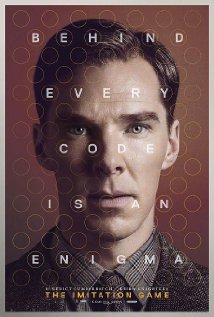
The Imitation Game adapts a 768 page biography, Andrew Hodge’s Alan Turing: The Enigma (1983). It does it very well, focusing on the years Turing spent at Bletchley Park in World War Two breaking the German Enigma code but intertwining it with a past and future strand – his doomed love for a fellow-boarder, Christopher, as a young teenager; and his arrest for indecency in the 1950s. In two hours we gain some sense of the span of his life, and the film succeeds as both a thrilling war drama and a biopic. Lytton Strachey would approve. When he set out to change biography, he believed that biography could be art by virtue of selection, the artfully arranged, representative scenes of a life. Today, “biopics” (think Iron Lady, Walk the Line) attempt this, and biographies, seeking to be comprehensive, generally do not.

Biopics have much to offer the biographer in methodological possibility. Surely there are other readers like me who want to read biography for interest, but not generally the comprehensive brick. We should look to biopics for inspiration for a form of biography which is not simply a condensed brick, but a more Stracheyean form. Perhaps a central drama in a subject’s life, intertwined with subplots from past and future points. There would be a suggestion of the whole, without the detail of the whole. It would be the length of a shortish novel, two to three hundred pages. It need not take on the biopic’s creative sins – the amalgamated characters, the invented dialogue – but rely on the best tradition of biographical storytelling without being shackled by comprehensiveness. It would not replace the comprehensive biography, which needs to be written, but it would supplement it so well, perhaps revitalise biography as a readers’ genre and as an art form.

(I say this, and yet my first comment coming out of the cinema was that there was so much to Imitation Game that really it required a long-form drama, a series of ten to twenty hours. The problem of scope and detail is a significant one in biography. Yet perhaps my point stands, because far more detail fits within a two hundred page book than a two hour film – it could be enough to tell the kind of representative story I have in mind.)

*

Speaking of the biopics’ “creative sins”, it’s actually a curious thing that biographies are adapted as biopics rather than documentaries. Biographies are not generally written in scenes (although this is something I want to attempt as much as possible, in a modified way), and biographers who invent dialogue are often heavily criticised. Biopics are given far more leeway – it’s usually acceptable to amalgamate characters or create them and to simplify chronology and turning points. Of course, there’s still pushback, with many viewers and critics expecting a high degree of historical accuracy; Imitation Game’s Wikipedia article currently has a lengthy section dedicated to perceived inaccuracies. A documentary would actually recreate the approach of a biography much more closely on film – a narrator takes the place of the author. Actors read portions of documents. Re-enactments have a certain tenuousness to them – it’s a mood or a setting rather than a full scene. Interviews are used. These conventions are able to convey the limits of the historical record, like biography does.

From white-washing to uncovering secrets: this week’s research quest for the history of biography

19 Fri Dec 2014

Posted by Nathan Hobby in academic, biography as a literary form

≈ Leave a comment

Tags

Charles Dickens, Freud, Lytton Strachey, Robert Skidelsky

My research quest this week has been to try to better explain the shift from respectful, white-washed biographies of the Victorian-era to the biographical preoccupation by the late-twentieth century with uncovering secrets. (It’s a question I have already addressed in my MA thesis, but I’m revisiting it as I revise a section of the thesis for publication.) As an example, Charles Dickens’ original 1870s biography by his friend John Forster did not mention Dickens’ long affair with the actor, Nelly Ternan. The secret was long out when the definitive story of Nelly was written in the 1990s, Claire Tomalin’s Invisible Woman. For some time now, the reading public has expected biographies to “tell the truth” about a person’s life, and not leave secrets out. My essay connects this shift to the rise of biographical quest fiction, such as A. S. Byatt’s Possession: A Romance (1990).

Not that much has been written on the history of biography. Those accounts which do trace its development over the twentieth century inevitably point to New Biography as the turning point – the triumvirate of Lytton Strachey, Virginia Woolf, and Harold Nicholson. Strachey’s Eminent Victorians appeared a few months before Armistice in 1918 and set about debunking the heroes of the Victorian age, and forging a new style of biography. While most scholars are perhaps too quick to label most biography since as post-Stracheyean, Robert Skidelsky (1988) makes a compelling contrarian case that contemporary biography does not resemble Strachey’s project at all. “What chiefly distinguishes the contemporary from the Victorian biography (apart from its greater professionalism) is its greater degree of explicitness about private life and its greater psychological penetration; neither of which, I think, were important aspects of Strachey’s original programme.” (9) Strachey himself wrote only from published sources, avoiding the problems of dealing with literary estates or the hard work of research. He called for brevity in biography, a few telling incidents, not the numbing accumulation of detail. A biography without archival research and of only a hundred or two hundred pages is not a common sight in today’s literary landscape. If Skidelsky is right, who can we look to in order to explain the biographical turn?

Freud is one candidate, but he was not someone for unearthing secret papers from the archives either. Long before The Da Vinci Code was Freud’s biography of Da Vinci, and it did not involve lost letters or diaries, but Freud re-intrepreting Da Vinci’s dreams and character. However, the mainstreaming of Freudian thought, of concepts like repression, is surely another piece of the puzzle.

Other candidates:

  • The rise of celebrity culture, and the expectation that we will know their private lives. The gossip pages spill over into even serious biographies.
  • Related to this, Skidelsky talks of a shift in motivation for writing biography – “not because they achieved great or unusual things, but because they led interesting or unusual lives.” (13).
  • A melding of Strachey’s interest in debunking heroes and other developments in culture and biography – the professionalisation (and increasing scholarliness) of biography; a return to the long biographies of the nineteenth century after a flirtation with Strachey’s brevity; the general tendency toward revisionism and suspicion.

It’s a pity Skidelsky pulled down Strachey as the model for contemporary biography so effectively without naming a replacement. But this is where I come in. Perhaps a clearer answer will emerge.

—

Skidelsky, Robert. “Only Connect: Biography and Truth.” In The Troubled Face of Biography, edited by Eric Homberger and John Charmley, 1–16. London: Macmillan, 1988.

I am the stranger: reading through the letters of Katharine Susannah Prichard

09 Tue Dec 2014

Posted by Nathan Hobby in Katharine Susannah Prichard, psychological aspects of biography, research

≈ 2 Comments

Tags

letters, personality

1934-slnsw

I’m reading through twenty-six years of weekly letters from Katharine Susannah to her son, Ric Throssell. There’s thousands of pages of handwriting to decipher, and if I did nothing else for a whole day’s work, it would take two days to get through one year. I have made it from 1943 to the end of 1947 in the first few weeks of the endeavour. With so much of her correspondence lost or destroyed, these letters are Katharine at her most revealing. Continue reading →

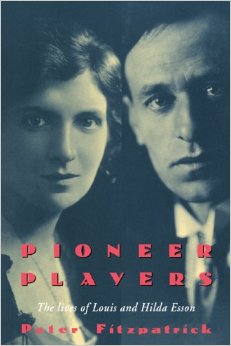
Louis and Hilda: Some thoughts on biographical method in Peter Fitzpatrick’s Pioneer Players

04 Thu Dec 2014

Posted by Nathan Hobby in biographical method, biographies of writers, artists and musicians, book review, Katharine Susannah Prichard's associates and connections

≈ Leave a comment

Tags

Australian literature, drama, dual biography, Hilda Esson, Louis Esson

pioneer-players

Peter Fitzpatrick, Pioneer Players: The Lives of Louis and Hilda Esson (Cambridge University Press, 1995)

Other times, she is a ghost in all the things I read: I know the people I’m reading about knew her. I know that if the “camera” panned just a little to the left or a little to the right, or if it moved back to take in the whole scene, Alice would be there.

Before I started writing a biography, I wrote a novel about biographers. (It’s how I do things – I imagine them, and then I become them.) I’m revising it at the moment, and I added those sentences to it the other day. I’m reminded of them reading Peter Fitzpatrick’s Pioneer Players: The Lives of Louis and Hilda Esson. Hilda was Katharine Susannah Prichard’s best friend; they lived next door to each other as children. The few surviving letters between them show an intimate friendship. Katharine is not exactly a ghost in this dual biography of Hilda and her first husband, Louis; rather, she is one of the major characters. But, naturally, she is out of focus. She is there to help us understand Louis and Hilda better. And I’m so glad for the existence of this and other works evoking the same world Katharine was moving through. Continue reading →

← Older posts
Newer posts →

Enter your email address to follow this blog and receive notifications of new posts by email.

Join 286 other subscribers.

Nathan on Twitter

My Tweets

Categories

  • academic (9)
  • archives and sources (10)
  • autobiographical (64)
  • biography (100)
    • biographers (10)
    • biographical method (27)
    • biographical quests (18)
    • biographies of living subjects (2)
    • biographies of writers, artists & musicians (12)
    • biographies of writers, artists and musicians (20)
    • biography as a literary form (9)
    • biography in fiction (2)
    • biography in the news (2)
    • film and television biographies (5)
    • historical biographies (1)
    • political biography (2)
    • prologues and introductions (2)
    • psychological aspects of biography (3)
    • religious biography (1)
    • role of the biographer within the biography (2)
    • structure of biographies (3)
    • the nature of biography (4)
  • books (236)
    • authors (19)
    • book review (173)
    • reading (23)
  • Covid (2)
  • creative nonfiction (11)
  • daily life (2)
  • Daily Prompt (2)
  • death (21)
  • digital humanities (3)
  • family history (1)
  • fiction (8)
  • film review (48)
  • found objects (3)
  • history (20)
  • John Curtin (8)
  • Katharine Susannah Prichard (144)
    • Glimpses of KSP (7)
    • In the steps of KSP (4)
    • Katharine Susannah Prichard's associates and connections (17)
    • Katharine Susannah Prichard's writings (34)
    • My KSP biography (31)
      • deleted scenes (1)
  • libraries (5)
  • life (21)
  • link (22)
  • links (41)
  • lists (28)
  • local history and heritage (1)
  • media (4)
  • memes and urban myths (1)
  • memoirs (10)
  • meta (2)
  • music (18)
  • news (9)
  • news and events (43)
  • obituary (1)
  • Old writing found on a floppy disk (1)
  • poetry (5)
  • politics and current affairs (26)
    • climate change (1)
  • quotes (22)
  • R.I.P. (10)
  • reading report (3)
  • religion (1)
  • research (5)
  • Series: A-Z of Katharine Susannah Prichard (26)
  • Series: Corona Diary (1)
  • Series: Saturday 10am (14)
  • Series: Short Stories (2016) (6)
  • Series: The Tourist (2013) (6)
  • Series: Thursday 3pm feature posts (2009) (35)
  • technology and the digital world (2)
  • television (4)
  • this blog (10)
  • Uncategorized (32)
  • Western Australia (26)
  • writing (41)

Archives

Recent Comments

Nathan Hobby's avatarNathan Hobby on Autographs
amphisbaenathoroughly79c20f19aa's avataramphisbaenathoroughl… on Autographs
Rae Kolb's avatarRae Kolb on Autographs

Bookmarks

  • Adventures in Biography
  • ANZ LitLovers LitBlog
  • Bernice Barry
  • It only goes up to your knees
  • Jane Bryony Rawson
  • Jenn Plays Recorder
  • Katharine Susannah Prichard Writers' Centre
  • Laura Sewell Matter: Essayist and Biographer
  • Mutually said: Poets Vegan Anarchist Pacifist
  • Resident Judge
  • Speaking Thylacine
  • The Australian Legend
  • Timothy Parkin Poetry
  • Treefall Writing – Melinda Tognini
  • Whispering Gums
  • Wrapped up in books: the home of Guy Salvidge

Top Posts

  • Angst, class and racism in Possum Gully: some notes on Miles Franklin's My Brilliant Career
  • The forgotten and the remembered: brief notes on the history of the Hodder & Stoughton £1000 Novel Competition
  • How To Live 200 Years
  • Interstellar: in the hands of a clever 15 year old with a $165 million budget
  • Biography in forty-five minutes: "The Mystery of Agatha Christie with David Suchet"

Blog Stats

  • 254,472 hits

Tag Cloud

9/11 19th century 33 1920s 1921 1930s 1950s 1970s 1971 1981 2000s 2004 2011 2015 2017 20000 Days on Earth A.S. Byatt Aboriginals activism Adam Begley Adrian Mole adultery afterlife Agatha Christie Alan Hollinghurst Alberto Manguel Alfred Deakin Amazing Grace Americana Amy Grant An American Romance Andre Tchaikowsky Andrew McGahan angela myers anne fadiman Anne Rice Arabian Nights archives art arts funding A Serious Man Ash Wednesday ASIO atheism Atonement Australia Australian film Australian literature Australian Short Story Festival autism autobiography autodidact Barbara Vine beach Belle Costa da Greene Bell Jar best best-of Bible Big Issue Bill Callahan biographical ethics biographical quest genre biography birthday birthdays Black Opal Bleak House Blinky Bill blogging blogs Blue Blades Bodega's Bunch bog Booker book launch booksale Borges Brenda Niall Brian Matthews Brian McLaren Britney Spears Burial Rites Burke and Wills buskers C.S. Lewis C.S. Lewis canon capitalism Carol Shields Carson McCullers Catcher in the Rye Catholicism celebrities Charles Dickens Charlie Kaufman childhood Child of the Hurricane children's books Choir of Gravediggers Christianity Christian writing Christina Stead Christmas Christopher Beha Cinque Terra Claire Tomalin classics cliches climate change Coen brothers coincidence Collie Collyer coming of age Communism concert Condensed Books consumerism Coonardoo Cormac McCarthy Corrections cosy fiction Dara Horn David Copperfield David Ireland David Marr David Suchet death Death of a president definition demolition Dennis LeHane dentist diaries divorce doctorow Doctor Who documentaries donald shriver Don DeLillo Don DeLillo Donna Mazza Donna Tartt Don Watson Dostovesky doubt drama dreams of revolution Drusilla Modjeska E.M. Forster ebooks editing Eichmann Eisenstein Elizabeth Kostova email empathy ensmallification existentialism faith Falling Man fame families fantasy fiction film and television folk football Frank Barscombe Fremantle Press G.K. Chesterton Gabrielle Carey Gallipoli genealogical fiction Genesis Geoff Nicholson George W. Bush Gerald Glaskin Gilead Golden Miles Goldfields Trilogy Graham Greene grandad great novels Greenmount Guinness World Records Guy Salvidge Hannah Arendt Hannah Kent Hans Koning Hans Koningsberger Harper Lee Haxby's Circus Hazel Rowley He-Man headers heaven Heidegger hell Henrietta Lacks Henry Morton Stanley Herman Hesse heroes Hey Dad! historical fiction history Holden Caulfield holidays Homer & Langley Home Song Stories House of Cards House of Zealots house of zealots Hugo Throssell humour Ian McEwan In between the sheets Indonesia Infamous Inside Llewyn Davis interstellar interview Intimate Strangers Invisible Ireland ISBNs Ishiguro itunes J.D. Salinger J.M. Coetzee J.S. Battye Janet Malcolm Jennifer Egan JFK JFK assassination Joanna Rakoff Joel Schumacher John Burbidge John Fowles John Howard John Kinsella John Updike John Updike Jonathan Franzen journal writing JSB Judgment Day Julia Baird Julian Barnes Kafka Kalgoorlie Kate Grenville Katherine Mansfield Kevin Brockmeier King's Park KSP Writers' Centre language last ride Laurie Steed Left Behind Leonard Cohen Leo Tolstoy Libra Library of Babel Library of Babel Lila Lily and Madeleine links Lionel Shriver lionel shriver lists literary fiction literature Lleyton Hewitt lost book Louisa Louisa Lawson Louis Esson louis nowra love letter Lubbock Lytton Strachey Madelaine Dickie Man Booker man in the dark Margaret Atwood Margaret River Press Marilynne Robinson mark sandman meaning of life Melbourne Mel Hall meme memorialisation memory MH17 Michael Faber Mike Riddell Miles Franklin mining boom missionaries moleskine Moon Palace morphine Mother Teresa movies Music of Chance My Brilliant Career names Napoleon Narnia narrative Narrow Road to the Deep North Narziss and Goldmund Natalie Portman Nathaniel Hobbie national anthem Nick Cave Nina Bawden non-fiction nonfiction noughties novelists novels obituaries obscurity On Chesil Beach Parade's End Paris Hilton Passion of the Christ past patriotism Paul Auster Paul de Man Perth Perth Writers Festival Peter Ackroyd Peter Cowan Writers Centre phd Philip K. Dick Philip Seymour Hoffman pierpontmorgan poetry slam politics popular fiction popular science Possession postapocalyptic postmodernism Pride prophetic imagination publications Pulp Purity Queen Victoria Rabbit Angstrom radio Radio National Randolph Stow rating: 5/10 rating: 6/10 rating: 7/10 rating: 8/10 rating: 9/10 rating: 10/10 ratings reading fiction autobiographically reading report Rebecca Skloot recap red wine reincarnation juvenile fiction rejection review - music reviewing rewriting Richard Flanagan Richard Ford Rick Moody Roaring Nineties Robert Banks Robert Hughes Robert Silverberg Robert Wadlow Robinson Crusoe Rolf Harris romance Rome ruins Russell Crowe Ruth Rendell Sarah Murgatroyd scalpers science fiction Science of Sleep secondhand books Secret River sermon illustration sex short stories Silent Woman Simone Lazaroo Simpsons Siri Hustvedt slavery Smashing Pumpkins social interactions social justice some people i hate sources South Australia souvenirs speculation speech speeches sport status anxiety Stephen Lawhead Stranger's Child subtitles Subtle Flame Sue Townsend suicide Surprised By Hope Suzanne Falkiner Sylvia Plath Synecdoche TAG Hungerford Award tapes teabags Ted Hughes The Children Act The Cure The Fur The Imitation Game theology The Pioneers The Revolutionary Thomas Disch Thomas Hardy Thomas Henry Prichard Thomas Mann thriller time Tim La Haye Tim Winton Tolstoy Tom Wright top 10 Towering Inferno Tracy Ryan Trove Truman Capote tshirts TS Spivet Twelve Years a Slave underrated writers Underworld unwritten biographies urban myth USA vampires Venice Victoria Cross Victoriana Victorian era Victorianism Victoria Park video Voltron w Wake in Fright Walkabout Walter M. Miller war War and Peace war on terror Water Diviner Wellington St Bus Station Westerly Western Australia West Wing What Happened to Sophie Wilder? Whitlams wikipedia Wild Oats of Hans William Wilberforce Winston Churchill Witches of Eastwick Working Bullocks workshop World War One writers writing Writing NSW youth Zadie Smith Zeitgeist Zelig

Enter your email address to follow this blog and receive notifications of new posts by email.

Join 286 other subscribers.

Pages

  • About
  • My novel: The Fur
  • The Red Witch: A Biography of Katharine Susannah Prichard

Categories

  • academic (9)
  • archives and sources (10)
  • autobiographical (64)
  • biography (100)
    • biographers (10)
    • biographical method (27)
    • biographical quests (18)
    • biographies of living subjects (2)
    • biographies of writers, artists & musicians (12)
    • biographies of writers, artists and musicians (20)
    • biography as a literary form (9)
    • biography in fiction (2)
    • biography in the news (2)
    • film and television biographies (5)
    • historical biographies (1)
    • political biography (2)
    • prologues and introductions (2)
    • psychological aspects of biography (3)
    • religious biography (1)
    • role of the biographer within the biography (2)
    • structure of biographies (3)
    • the nature of biography (4)
  • books (236)
    • authors (19)
    • book review (173)
    • reading (23)
  • Covid (2)
  • creative nonfiction (11)
  • daily life (2)
  • Daily Prompt (2)
  • death (21)
  • digital humanities (3)
  • family history (1)
  • fiction (8)
  • film review (48)
  • found objects (3)
  • history (20)
  • John Curtin (8)
  • Katharine Susannah Prichard (144)
    • Glimpses of KSP (7)
    • In the steps of KSP (4)
    • Katharine Susannah Prichard's associates and connections (17)
    • Katharine Susannah Prichard's writings (34)
    • My KSP biography (31)
      • deleted scenes (1)
  • libraries (5)
  • life (21)
  • link (22)
  • links (41)
  • lists (28)
  • local history and heritage (1)
  • media (4)
  • memes and urban myths (1)
  • memoirs (10)
  • meta (2)
  • music (18)
  • news (9)
  • news and events (43)
  • obituary (1)
  • Old writing found on a floppy disk (1)
  • poetry (5)
  • politics and current affairs (26)
    • climate change (1)
  • quotes (22)
  • R.I.P. (10)
  • reading report (3)
  • religion (1)
  • research (5)
  • Series: A-Z of Katharine Susannah Prichard (26)
  • Series: Corona Diary (1)
  • Series: Saturday 10am (14)
  • Series: Short Stories (2016) (6)
  • Series: The Tourist (2013) (6)
  • Series: Thursday 3pm feature posts (2009) (35)
  • technology and the digital world (2)
  • television (4)
  • this blog (10)
  • Uncategorized (32)
  • Western Australia (26)
  • writing (41)

Archives

Recent Comments

Nathan Hobby's avatarNathan Hobby on Autographs
amphisbaenathoroughly79c20f19aa's avataramphisbaenathoroughl… on Autographs
Rae Kolb's avatarRae Kolb on Autographs

Bookmarks

  • Adventures in Biography
  • ANZ LitLovers LitBlog
  • Bernice Barry
  • It only goes up to your knees
  • Jane Bryony Rawson
  • Jenn Plays Recorder
  • Katharine Susannah Prichard Writers' Centre
  • Laura Sewell Matter: Essayist and Biographer
  • Mutually said: Poets Vegan Anarchist Pacifist
  • Resident Judge
  • Speaking Thylacine
  • The Australian Legend
  • Timothy Parkin Poetry
  • Treefall Writing – Melinda Tognini
  • Whispering Gums
  • Wrapped up in books: the home of Guy Salvidge

Top Posts

  • Angst, class and racism in Possum Gully: some notes on Miles Franklin's My Brilliant Career
  • The forgotten and the remembered: brief notes on the history of the Hodder & Stoughton £1000 Novel Competition
  • How To Live 200 Years
  • Interstellar: in the hands of a clever 15 year old with a $165 million budget
  • Biography in forty-five minutes: "The Mystery of Agatha Christie with David Suchet"

Blog Stats

  • 254,472 hits

Tag Cloud

9/11 19th century 33 1920s 1921 1930s 1950s 1970s 1971 1981 2000s 2004 2011 2015 2017 20000 Days on Earth A.S. Byatt Aboriginals activism Adam Begley Adrian Mole adultery afterlife Agatha Christie Alan Hollinghurst Alberto Manguel Alfred Deakin Amazing Grace Americana Amy Grant An American Romance Andre Tchaikowsky Andrew McGahan angela myers anne fadiman Anne Rice Arabian Nights archives art arts funding A Serious Man Ash Wednesday ASIO atheism Atonement Australia Australian film Australian literature Australian Short Story Festival autism autobiography autodidact Barbara Vine beach Belle Costa da Greene Bell Jar best best-of Bible Big Issue Bill Callahan biographical ethics biographical quest genre biography birthday birthdays Black Opal Bleak House Blinky Bill blogging blogs Blue Blades Bodega's Bunch bog Booker book launch booksale Borges Brenda Niall Brian Matthews Brian McLaren Britney Spears Burial Rites Burke and Wills buskers C.S. Lewis C.S. Lewis canon capitalism Carol Shields Carson McCullers Catcher in the Rye Catholicism celebrities Charles Dickens Charlie Kaufman childhood Child of the Hurricane children's books Choir of Gravediggers Christianity Christian writing Christina Stead Christmas Christopher Beha Cinque Terra Claire Tomalin classics cliches climate change Coen brothers coincidence Collie Collyer coming of age Communism concert Condensed Books consumerism Coonardoo Cormac McCarthy Corrections cosy fiction Dara Horn David Copperfield David Ireland David Marr David Suchet death Death of a president definition demolition Dennis LeHane dentist diaries divorce doctorow Doctor Who documentaries donald shriver Don DeLillo Don DeLillo Donna Mazza Donna Tartt Don Watson Dostovesky doubt drama dreams of revolution Drusilla Modjeska E.M. Forster ebooks editing Eichmann Eisenstein Elizabeth Kostova email empathy ensmallification existentialism faith Falling Man fame families fantasy fiction film and television folk football Frank Barscombe Fremantle Press G.K. Chesterton Gabrielle Carey Gallipoli genealogical fiction Genesis Geoff Nicholson George W. Bush Gerald Glaskin Gilead Golden Miles Goldfields Trilogy Graham Greene grandad great novels Greenmount Guinness World Records Guy Salvidge Hannah Arendt Hannah Kent Hans Koning Hans Koningsberger Harper Lee Haxby's Circus Hazel Rowley He-Man headers heaven Heidegger hell Henrietta Lacks Henry Morton Stanley Herman Hesse heroes Hey Dad! historical fiction history Holden Caulfield holidays Homer & Langley Home Song Stories House of Cards House of Zealots house of zealots Hugo Throssell humour Ian McEwan In between the sheets Indonesia Infamous Inside Llewyn Davis interstellar interview Intimate Strangers Invisible Ireland ISBNs Ishiguro itunes J.D. Salinger J.M. Coetzee J.S. Battye Janet Malcolm Jennifer Egan JFK JFK assassination Joanna Rakoff Joel Schumacher John Burbidge John Fowles John Howard John Kinsella John Updike John Updike Jonathan Franzen journal writing JSB Judgment Day Julia Baird Julian Barnes Kafka Kalgoorlie Kate Grenville Katherine Mansfield Kevin Brockmeier King's Park KSP Writers' Centre language last ride Laurie Steed Left Behind Leonard Cohen Leo Tolstoy Libra Library of Babel Library of Babel Lila Lily and Madeleine links Lionel Shriver lionel shriver lists literary fiction literature Lleyton Hewitt lost book Louisa Louisa Lawson Louis Esson louis nowra love letter Lubbock Lytton Strachey Madelaine Dickie Man Booker man in the dark Margaret Atwood Margaret River Press Marilynne Robinson mark sandman meaning of life Melbourne Mel Hall meme memorialisation memory MH17 Michael Faber Mike Riddell Miles Franklin mining boom missionaries moleskine Moon Palace morphine Mother Teresa movies Music of Chance My Brilliant Career names Napoleon Narnia narrative Narrow Road to the Deep North Narziss and Goldmund Natalie Portman Nathaniel Hobbie national anthem Nick Cave Nina Bawden non-fiction nonfiction noughties novelists novels obituaries obscurity On Chesil Beach Parade's End Paris Hilton Passion of the Christ past patriotism Paul Auster Paul de Man Perth Perth Writers Festival Peter Ackroyd Peter Cowan Writers Centre phd Philip K. Dick Philip Seymour Hoffman pierpontmorgan poetry slam politics popular fiction popular science Possession postapocalyptic postmodernism Pride prophetic imagination publications Pulp Purity Queen Victoria Rabbit Angstrom radio Radio National Randolph Stow rating: 5/10 rating: 6/10 rating: 7/10 rating: 8/10 rating: 9/10 rating: 10/10 ratings reading fiction autobiographically reading report Rebecca Skloot recap red wine reincarnation juvenile fiction rejection review - music reviewing rewriting Richard Flanagan Richard Ford Rick Moody Roaring Nineties Robert Banks Robert Hughes Robert Silverberg Robert Wadlow Robinson Crusoe Rolf Harris romance Rome ruins Russell Crowe Ruth Rendell Sarah Murgatroyd scalpers science fiction Science of Sleep secondhand books Secret River sermon illustration sex short stories Silent Woman Simone Lazaroo Simpsons Siri Hustvedt slavery Smashing Pumpkins social interactions social justice some people i hate sources South Australia souvenirs speculation speech speeches sport status anxiety Stephen Lawhead Stranger's Child subtitles Subtle Flame Sue Townsend suicide Surprised By Hope Suzanne Falkiner Sylvia Plath Synecdoche TAG Hungerford Award tapes teabags Ted Hughes The Children Act The Cure The Fur The Imitation Game theology The Pioneers The Revolutionary Thomas Disch Thomas Hardy Thomas Henry Prichard Thomas Mann thriller time Tim La Haye Tim Winton Tolstoy Tom Wright top 10 Towering Inferno Tracy Ryan Trove Truman Capote tshirts TS Spivet Twelve Years a Slave underrated writers Underworld unwritten biographies urban myth USA vampires Venice Victoria Cross Victoriana Victorian era Victorianism Victoria Park video Voltron w Wake in Fright Walkabout Walter M. Miller war War and Peace war on terror Water Diviner Wellington St Bus Station Westerly Western Australia West Wing What Happened to Sophie Wilder? Whitlams wikipedia Wild Oats of Hans William Wilberforce Winston Churchill Witches of Eastwick Working Bullocks workshop World War One writers writing Writing NSW youth Zadie Smith Zeitgeist Zelig

Blog at WordPress.com.

  • Subscribe Subscribed
    • Nathan Hobby, a biographer in Perth
    • Join 286 other subscribers.
    • Already have a WordPress.com account? Log in now.
    • Nathan Hobby, a biographer in Perth
    • Subscribe Subscribed
    • Sign up
    • Log in
    • Report this content
    • View site in Reader
    • Manage subscriptions
    • Collapse this bar
Loading Comments...