Image: John Curtin in 1941, John Curtin Prime Ministerial Library, JCPML00376/133.
Recently I was writing the conclusion to a paper about John Curtin’s electioneering for his marginal seat from 1925 to 1934. I was jumping forward to 1940, when he nearly lost the seat of Fremantle despite being the opposition leader. He famously said, ‘I shall not chase my destiny. If Fremantle, which sent me to Federal Parliament, rejects me from the Federal Parliament, that will be the end of politics for me.’ It was ‘just’ a conclusion and the 1940 election was outside the main scope of my paper, so I thought for once I’d take a shortcut and not check the original quotation but instead reference one of the biographies which uses it. I looked up John Edwards’ comprehensive John Curtin’s War Volume 1 (2017), which uses the quote on page 193. But Edwards references an article from the following year, 1941 and I began to grow uneasy. Maybe I shouldn’t be taking a shortcut.
Hector Harrison (1902-1978) was a prominent Presbyterian minister who led St Andrew’s Church in Canberra from 1940 until his death. He was friendly with Prime Minister John Curtin and Fred Whitlam, father of Gough Whitlam, who was a member of his congregation. There’s a striking scene from Harrison’s oral history at the National Library recounted in Dr Margaret McLeod’s new biography: Harrison is giving Whitlam senior a lift home from the 4th July celebrations at the American Embassy in 1945 and Whitlam reveals that the editor of the Canberra Times had just told him John Curtin wouldn’t last the night. Harrison walked across the paddocks to the Lodge and was, eventually, admitted to see Curtin, hours before his death. At Curtin’s request, Harrison conducted the funeral.
My interview with Dr Gabriella Kelly-Davies about The Red Witch and the art of biography has just been released on the Biographers in Conversation podcast here. This podcast series is now in its third season and features Australian and international biographers. I am grateful to Gabriella for her commitment to biographers and her talents in drawing out insights about biographical choices, which extends the work she did in her PhD thesis and her own biography, Breaking Through the Pain Barrier: the extraordinary life of Dr Michael J. Cousins. If you’re interested in biography, I encourage you to subscribe to Biographers in Conversation.
I did a public speaking seminar last year at work, and I didn’t think it had made much difference – but listening to my interview, I eliminated my ‘ums’, which was a big focus of the seminar. Success!
Prime Minister John Curtin died 80 years ago on 5 July 1945 in an upstairs bedroom at the Lodge. He’d been taken up to the bedroom by stretcher on 22 May after leaving a small private hospital in Canberra. He never came back down those stairs. He died in his sleep at 4am with a nurse named Marjorie Sirl by his side. His wife Elsie was in an adjoining room, unable to sleep.
Or was she? The newspaper accounts of the time seem to have all used the same press release (I haven’t been able to find it in the archives though) which stated Elsie was also by his side when he died. But Elsie wrote a short memoir of Curtin as a series of articles published in Perth’s Daily News in 1950 and she states that the nurse came to her room to tell her he was dead. I trust her own account, five years after the event, over the reporting at the time which would not have come directly from her or Sirl. It’s a small detail but it dramatically changes the picture of Curtin’s last moment.
I’ve been writing my account of Curtin’s last months and death in my biography. Not because I’ve nearly finished – far from it – but I was working on an exhibition on this theme at work and so it seemed a good time to immerse myself in this period at home in my research.
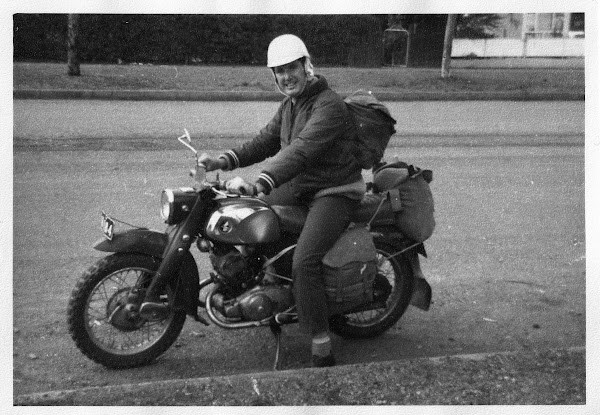
Griffith Watkins in Kalgoorlie, 1966. Courtesy Betty Brennan.
I came across Griff Watkins (1930-1969) for the first time in The Fremantle Press Anthology of WA Poetry, edited by John Kinsella and Tracy Ryan. It was a wonderful poem about a Perth heatwave in the 1960s which reminded me of W.H. Auden. The snippet of his biography intrigued me: he drowned himself in the Swan River at Claremont a couple of years after the publication of his debut novel, The Pleasure Bird. After that, I kept on running into him. I found out he’d taught at Collie Senior High School in the South-West, where I’d gone to school in the 1990s. I was visiting Murdoch University’s Special Collections and saw his papers on display. I read his novel and I loved it. I wondered if it would be possible to write a whole book about my quest for Griff, a book about posthumous obscurity, the more typical writerly life of moderate success and many failures, the hauntings of a literary ghost in Perth. But there wasn’t enough material and there wouldn’t be enough interest.
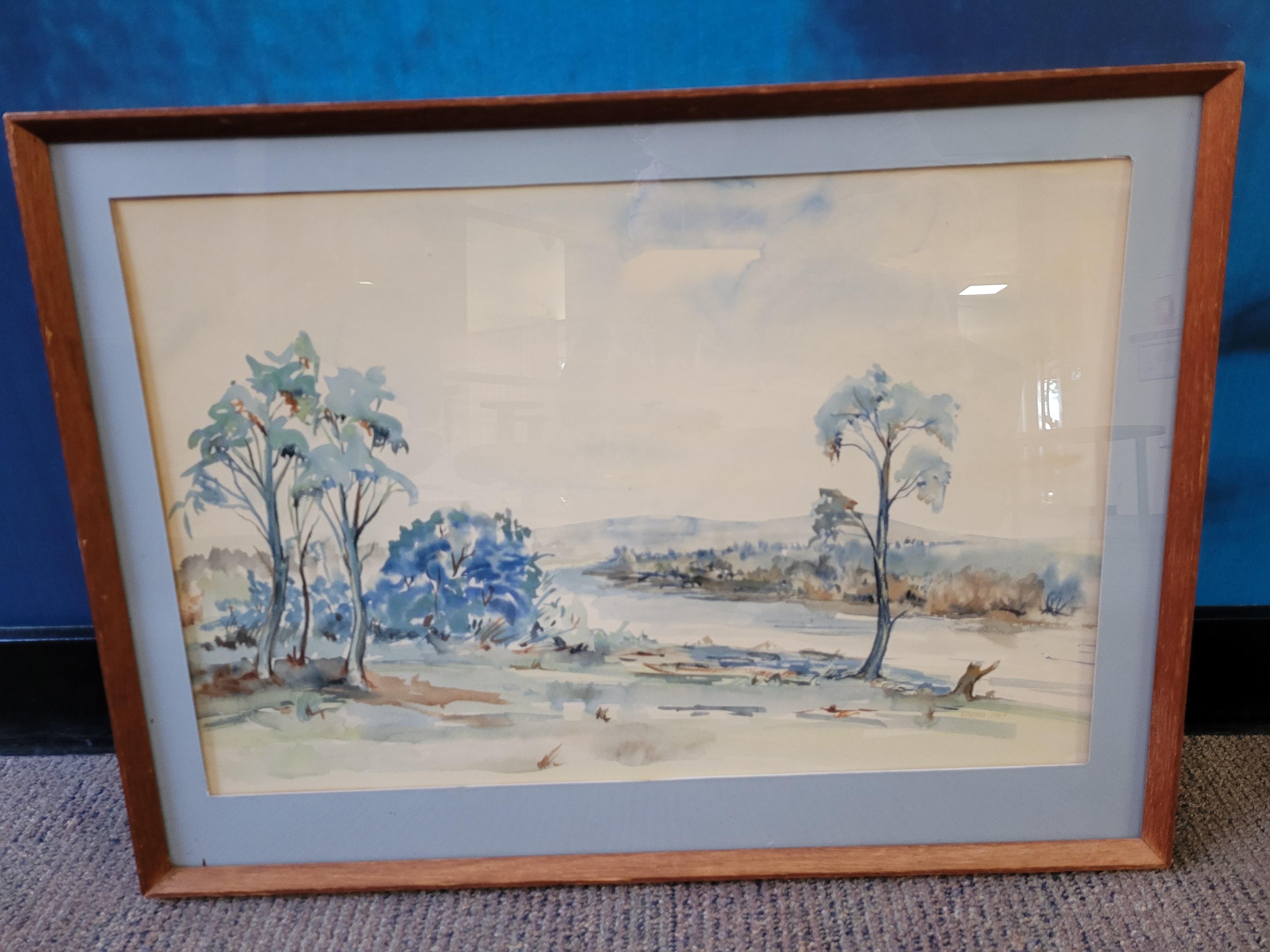
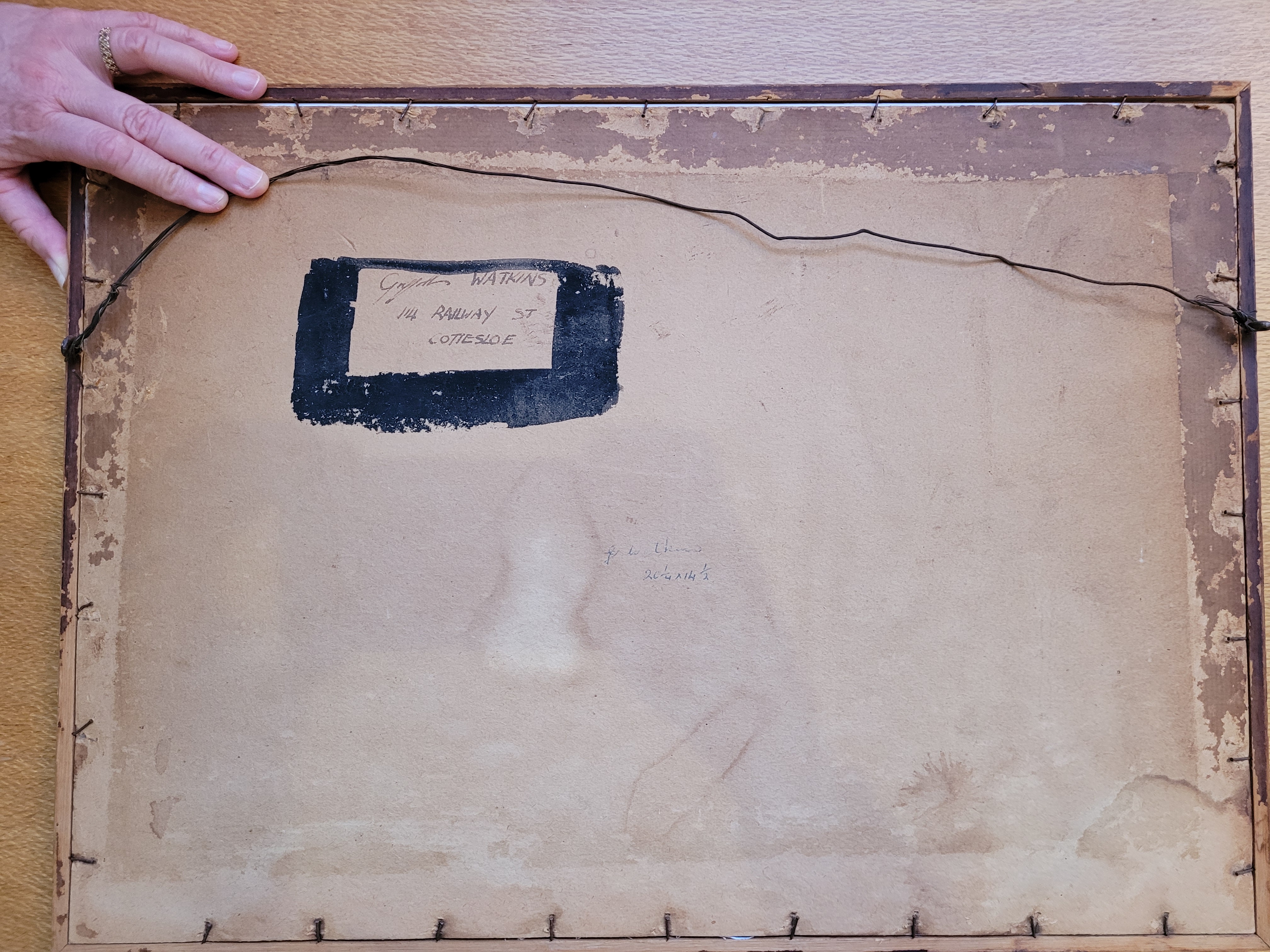
I was thinking of abandoning the project altogether when a PhD student named Mary asked me what I was working on. It turned out her mother, Betty, now in her late 90s, had taught with Griff in Collie. (Coincidentally, Mary’s sister, Pip, was also my mentee in the Four Centres Writing Program.) It was a sign. I interviewed Betty over the phone; she remembered Griff so sharply and insightfully. She had the beautiful photo, above, of Griff on a motorbike from his last visit in Kalgoorlie, and this painting of his (below) he had given her as a wedding present. The scale of my piece shifted: I would tell of my quest for Griff in a single creative non-fiction essay. It was published last year in Westerly 69.1 – my great achievement of 2024!
Some postscripts:
Mary read the piece to Betty, and said she enjoyed it. I was sad to hear of Betty’s death soon after.
I found out after I’d published that my great uncle, John Stanlake, going strong at 94 and an exact contemporary of Griff’s, had known him at Claremont Teachers’ College. I think the connections would keep piling up the longer I spent with Griff.
You can purchase Westerly 69.1 here. And you can read the manuscript version of ‘A Memorial Trail for Griff Watkins’ below.
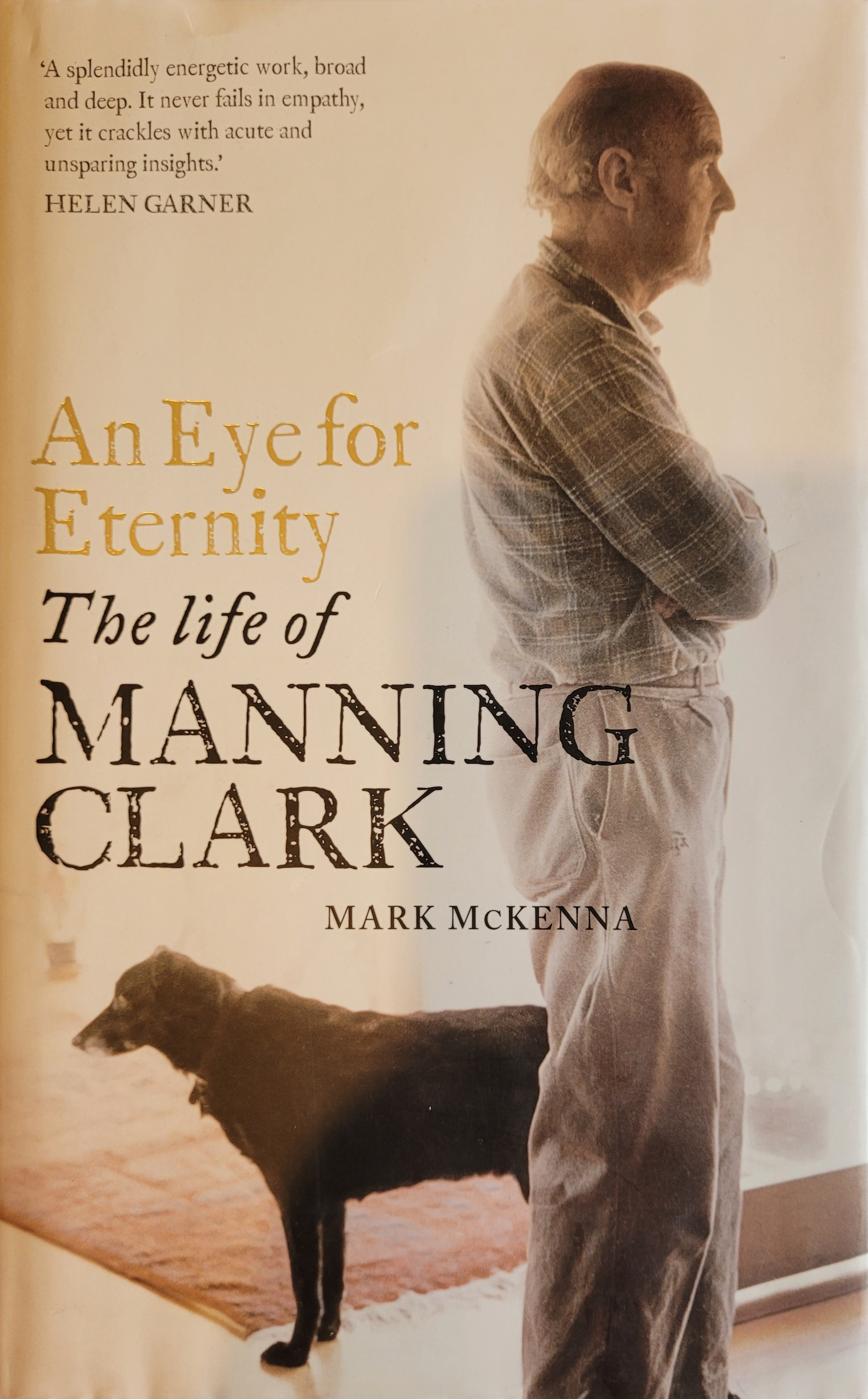
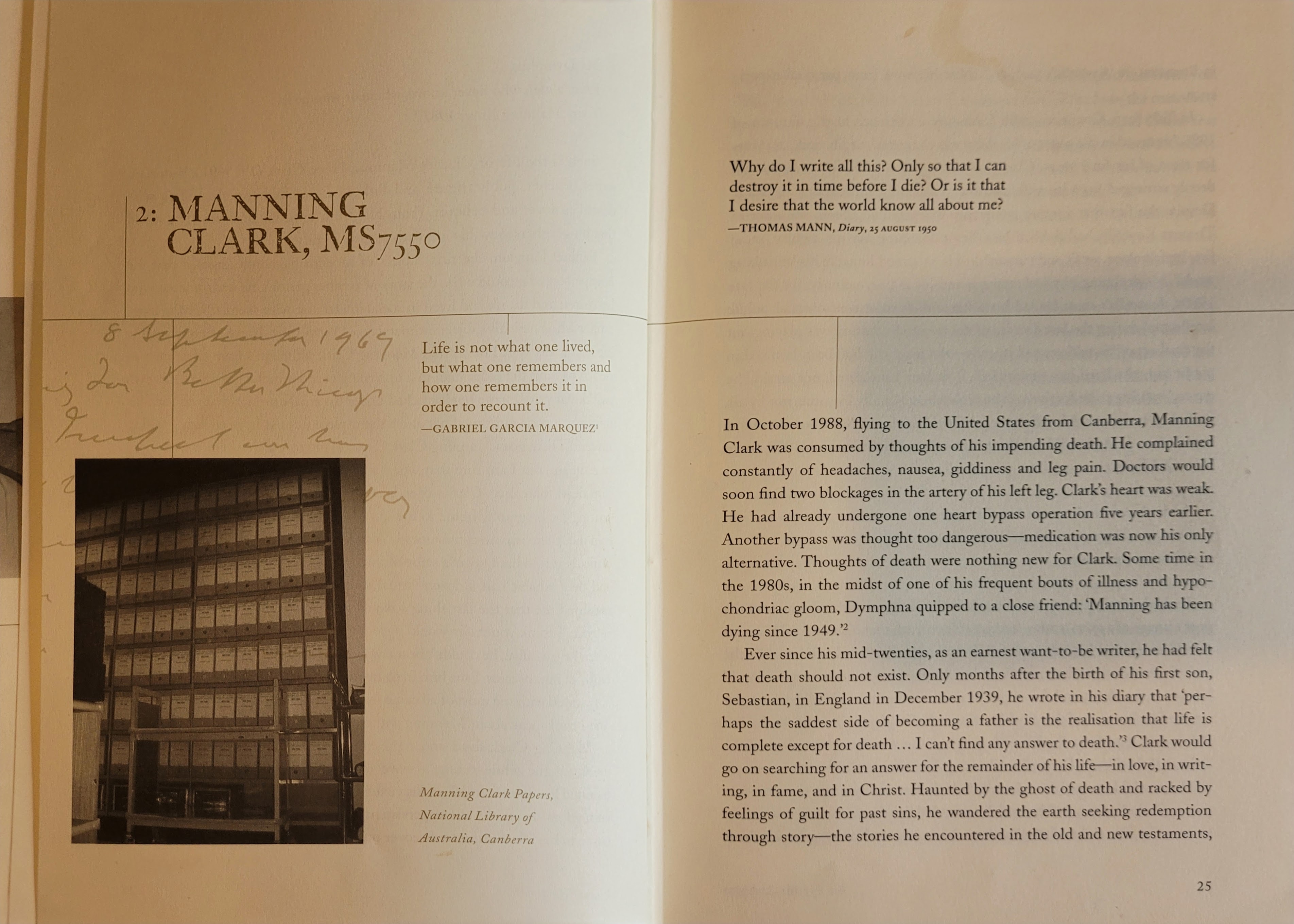
Mark McKenna opens his 2011 biography of the Australian historian Manning Clark (1915-1991) with a beautiful section describing Clark’s voice. ‘His voice sounded the entire person.’ We read accounts of what Clark sounded like from different people who knew him, weaving snippets of quotes, ranging over his whole life. It’s such a wonderful way to introduce Clark, giving a sense of his character and some landmarks of his life. It shifts subtly into a discussion of his appearence and then onto his personality. It’s a brilliant opening chapter.
Another thing I love: the photographs are integrated into the text. They’re right next to the relevant text. I wanted this for my KSP biography but wasn’t allowed it, alas. I think I’ll try again next time!
I’ve started writing a new biography but I still have some doubts, so I’m not ready to announce it yet. But I’ve re-read Nigel Hamilton’s How To Do Biography: A Primer (2008) as part of my process. I first read it just as I began writing the Katharine Prichard biography and it’s been a great refresher a decade later. One of the joys of this book is his dedication to the art of biography and his strong rebuttal of the criticisms which are made of the genre. There’s a sense of having a well-armed ally on my side.
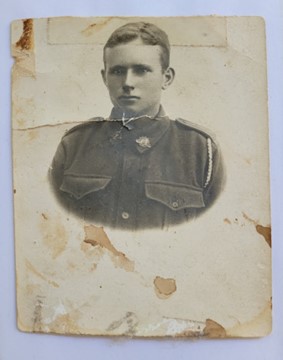
When I was fifteen, my grandmother sent me a photo of her father, Bert Sewell, in military uniform during the Great War. He was twenty but he looks younger. She was offering it to me because she thought I resembled him. Her attention was unpredictable and her true thoughts and feelings inscrutable; I felt honoured to have been chosen like this out of six grandsons. I placed the photo in the concertina folder I had for important documents, which also put it out of sight and out of mind for many years. I don’t remember my grandmother ever talking about him again. But when she died we found a correction she’d made in biro to Bert’s entry in a family history book.
Bert died on 9 December 1967 in Perth’s Hollywood Repatriation Hospital. Ten days later, his wife, Iris, died too. Their entry in the family history book claims, ‘An unfortunate accident followed by prolonged litigation brought about their hastened deaths’ (Sewell 167). My grandmother scribbled those lines out and wrote that Bert died of bladder cancer and Iris died ‘following a third stroke’. What my grandmother wrote is technically closer to the truth. But just before he died, Bert shot a man in the thigh and spent nine days in the Meekathara lockup. Although it wasn’t actually an accident and the litigation wasn’t prolonged, its proximity connects it to his death and Iris’s death. My dad was thirteen at the time; he was told about their deaths but not about the shooting.
My Australian Dictionary of Biography entry for Ric Throssell (1922-1999) has been published on the ADB website: https://adb.anu.edu.au/biography/throssell-ric-prichard-32379. Ric was the only child of Katharine Susannah Prichard and Hugo Throssell and lived with their legacy while leading a life of interest in its own right as a diplomat and author. The entry was really a collaboration with the research editor, Michelle Staff, who had the task of rewriting it to fit the house style and added to my portrait of Ric with some additional research. Thanks to Aiden Coleman who sent this opportunity my way.
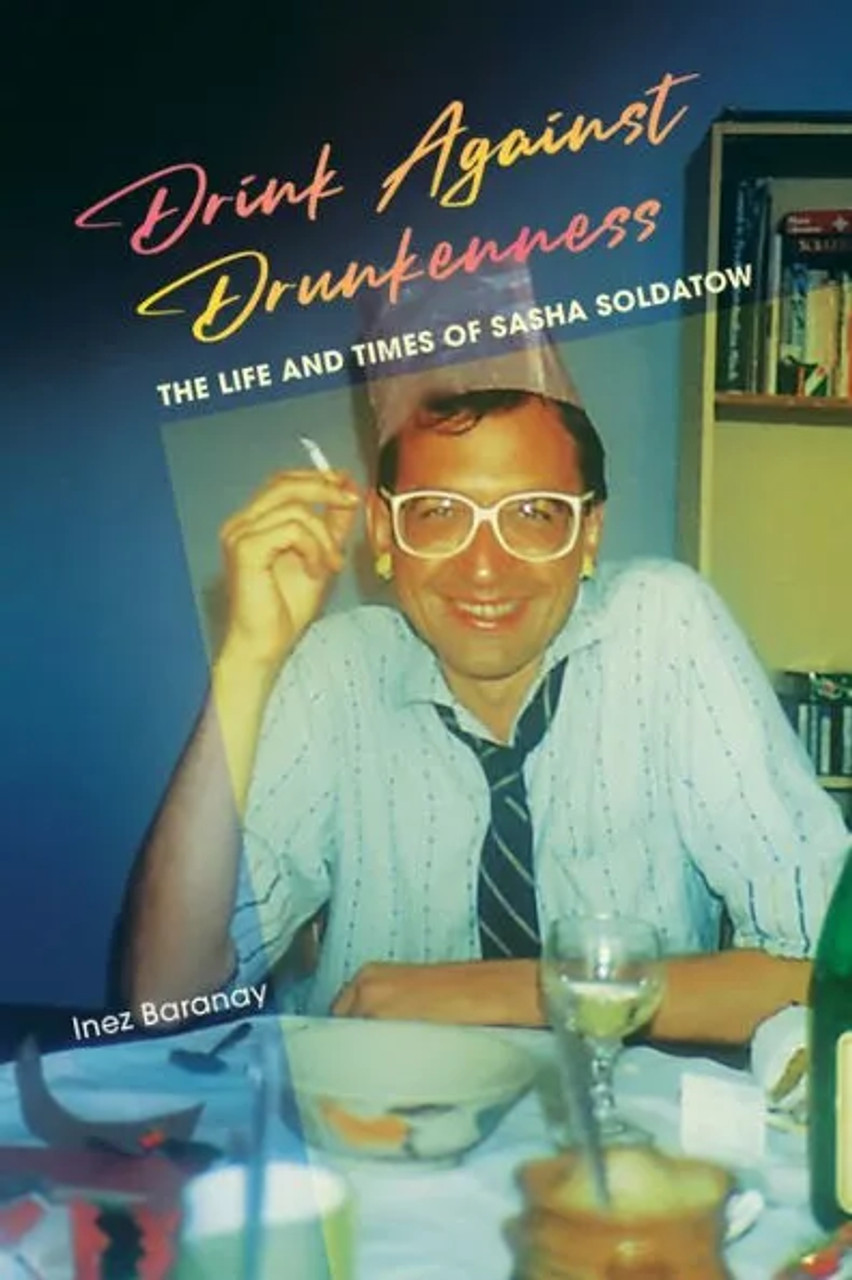
Drink Against Drunkenness: The Life and Times of Sasha Soldatow Inez Baranay 2022, 508pp, RRP $39.99.
Last year I chanced upon a newspaper clipping from 1990 about the writer and activist Sasha Soldatow (1947-2006) suing the Australia Council over him not being awarded a fellowship despite many applications. It led me to David Marr’s intriguing obituary for the man. ‘To fall in with Sasha at this time was a life-shaking experience. He marched and drank under the banner of Liberty… The deal he offered was this: place yourself in my hands, and I will set you free.’ I commented on Twitter that someone should write Soldatow’s biography. It turns out someone had been! Drink Against Drunkenness: The Life and Times of Sasha Soldatow is a labour of love by his friend, the writer Inez Baranay, author of 14 previous books.