• About
  • The Red Witch: A Biography of Katharine Susannah Prichard
  • My novel: The Fur

Nathan Hobby, a biographer in Perth

~ The lives of Katharine Susannah Prichard and John Curtin, the art of biography, and other things

Nathan Hobby, a biographer in Perth

Category Archives: biography

Louis and Hilda: Some thoughts on biographical method in Peter Fitzpatrick’s Pioneer Players

04 Thu Dec 2014

Posted by Nathan Hobby in biographical method, biographies of writers, artists and musicians, book review, Katharine Susannah Prichard's associates and connections

≈ Leave a comment

Tags

Australian literature, drama, dual biography, Hilda Esson, Louis Esson

pioneer-players

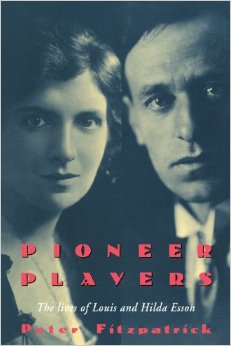
Peter Fitzpatrick, Pioneer Players: The Lives of Louis and Hilda Esson (Cambridge University Press, 1995)

Other times, she is a ghost in all the things I read: I know the people I’m reading about knew her. I know that if the “camera” panned just a little to the left or a little to the right, or if it moved back to take in the whole scene, Alice would be there.

Before I started writing a biography, I wrote a novel about biographers. (It’s how I do things – I imagine them, and then I become them.) I’m revising it at the moment, and I added those sentences to it the other day. I’m reminded of them reading Peter Fitzpatrick’s Pioneer Players: The Lives of Louis and Hilda Esson. Hilda was Katharine Susannah Prichard’s best friend; they lived next door to each other as children. The few surviving letters between them show an intimate friendship. Katharine is not exactly a ghost in this dual biography of Hilda and her first husband, Louis; rather, she is one of the major characters. But, naturally, she is out of focus. She is there to help us understand Louis and Hilda better. And I’m so glad for the existence of this and other works evoking the same world Katharine was moving through. Continue reading →

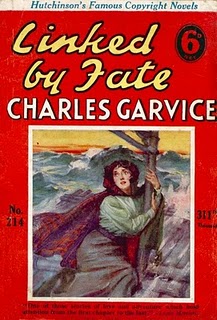
Katharine Susannah and the “fifteenth-rate” writer, Charles Garvice

20 Thu Nov 2014

Posted by Nathan Hobby in biographical quests, Katharine Susannah Prichard

≈ 4 Comments

Tags

Charles Garvice, The Pioneers

Charles_Garvice_-_Linked_by_Fate

Katharine Susannah became instantly famous across the Commonwealth when she won the Australasian section of the great Hodder and Stoughton All-Empire Competition in April 1915 (the very month of Gallipoli) for her unpublished novel, The Pioneers. It was the big break she had been working hard towards for a decade. I think The Pioneers, for all its faults, is genuinely a very good novel, but at the time of the competition, a number of critics were unwilling to take the winning entry seriously because of the judge, British writer Charles Garvice.

The columnist in Wellington’s Dominion wrote, “…to foist such a fifteen-rate novelist as Mr Garvice upon Australasian writers as judge of their work was little short of an insult” (May 29, 1915, 14). Almost no-one remembers Garvice today, but at the time, he could claim to be the biggest-selling British author alive, having sold millions of the romances he produced many times a year. Among serious lovers of literature his name was a byword for dross. It seems that to have him judge a literary competition was a little like inviting Danielle Steel or Dan Brown to do so today. When his own books are so forgotten, it is a beautiful irony that one of his great legacies was to launch the career of such a significant Australian writer. Even if Garvice wasn’t a great writer, could he have been a good reader, able to discern something special in Katharine Susannah’s work? The Pioneers is a romance, melodramatic at times yet with characters more vivid and a plot more interesting than the genre usually produces.

I would love to know Katharine Susannah’s opinion of Garvice’s work, and the complicated feelings she would have felt at being awarded the prize by him. I think she would have been biting her tongue, and a little uneasy amidst the jubilation.

*

Garvice has fascinated at least two writers in recent years. In her fine essay “Pursuing the Great Bad Novelist”, Laura Sewell Matter tells of her quest for Garvice, after finding some pages of an Icelandic-language book wash up on a beach in Iceland and eventually tracking it down as a translation of one of Garvice’s novels. She flies to London to read one of only two copies held by libraries in the world. It is a classic biographical quest, the genre I researched for my MA, the quest for Garvice tied up to Laura’s quest to find herself. You can download the essay from her website. Steve of Bear-Alley blog wrote a post on Garvice in 2010, tracking down some biographical details for Garvice, as well as a long (and still incomplete!) bibliography of Garvice’s works.

Advice to new biographers: interview with a biographer part 4

03 Fri Oct 2014

Posted by Nathan Hobby in biographers, biographical method, biographies of writers, artists and musicians

≈ Leave a comment

Tags

Gerald Glaskin, interview, John Burbidge


dare-me-cover

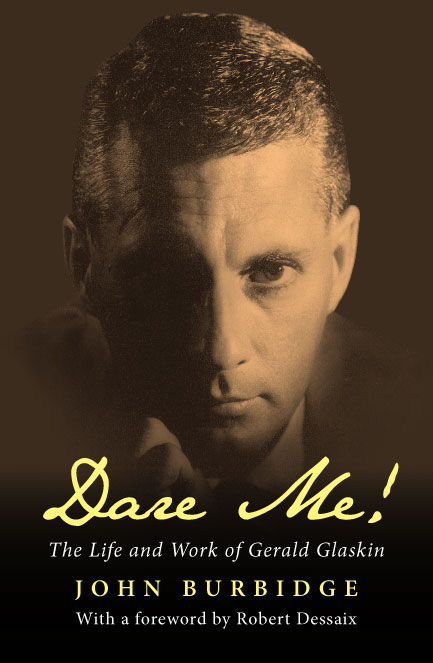
(This is the fourth and final in an interview series with John Burbidge, author of Dare Me! The Life and Work of Gerald Glaskin.)

Biographer-in-Perth: Any advice for a biographer starting out on the journey you’ve just taken?

John Burbidge: A few miscellaneous thoughts-

  • Try to secure a publisher and agent up front. I succeeded in neither, but not without trying. I had twelve rejections from publishers, including two from the same company but under different managements, before I struck gold. Finally, it was someone whom I had contacted in the course of my research who was interested in Glaskin and who had read my manuscript who introduced me to his publisher, who then became mine also. Lesson: Never underestimate the value of friends, associates and others who can open doors for you. Sometimes, you just need to ask them. Such people have been pivotal in my having two books published.
  • Try to secure funding up front or have some way of supporting yourself. Biographies can take years of work (this one took 13 off and on) and sometimes much travel (poor Nicholas Shakespeare went everywhere in the world that the peripatetic Chatwin did!). Again, I tried but didn’t succeed in getting any grants but I did have a partner who was a flight attendant so managed to get discounted air fares to cut costs, which helped a lot, especially with international travel.
  • Spread out your research as widely as possible, mixing interviews with a broad cross-section of people who knew your subject in various capacities, with library research, online research, etc. Don’t discount anything you come across but also don’t feel obliged to use it all either. There are always other places (other books, articles, interviews, etc.) where some fascinating tidbit might come in handy.
  • Once you’ve embarked on your literary biography, if you discover someone else is doing exactly the same, don’t be disenchanted. This happened to me and I nearly gave up on the whole enterprise. But others convinced me to stay with it. No two writers, even if they used the exact same material, will come up with the same biography.
  • Get feedback on your work as it progresses to help you fine tune it as much as you can. I did this several times with different people before I had manuscript ready to send to a publisher, and even after I did. Some people I paid and some did it gratis.
  • Try to have someone with some influence write a foreword, especially if you don’t have a very high profile. I was lucky in getting Robert Dessaix to play this role for me. My relationship with him was built over a number of years but once he read the manuscript and was excited about it, he was quite willing to do this, and more.
  • Get interviewees to sign releases at the time of the interviews or soon after. It is often difficult to go back later and secure these, especially if the interviewee has died!

Biographer-in-Perth: It’s been interesting and valuable for me to learn about John’s journey as a biographer. Thank you so much to John for sharing his thoughts. I know they will be of value to other biographers, as well as offering fascinating insights into a biographer’s work for readers of literary biography.

The works and the life: interview with a biographer part 3

02 Thu Oct 2014

Posted by Nathan Hobby in biographers, biographical method, biographies of writers, artists and musicians, structure of biographies

≈ Leave a comment

Tags

Gerald Glaskin, interview, John Burbidge


dare-me-cover

(This is the third of four in an interview series with John Burbidge, author of Dare Me! The Life and Work of Gerald Glaskin.)

Biographer-in-Perth: What was your experience dealing with that perpetual dilemma of the literary biographer: deciding how to relate your subject’s writing to their life?

John Burbidge: Actually, it was not so difficult to relate his writing to his life because so much of it is quite autobiographical. He tended to write his fiction based on real-life experiences and locate his stories in places in which lived (Henrietta Drake-Brockman admonished him as a young boy for not doing this in his early short stories, and he never forgot it.). No End to the Way is perhaps the classic example of this, but it is also true of books like A Lion in the Sun, The Beach of Passionate Love, The Man Who Didn’t Count, A Bird in my Hands and others.

I decided to let theme guide me and tried to relate particular books to certain themes. When I did this, some works fell more easily into certain chapters than others, e.g. his trilogy on lucid dreaming clearly belonged in the chapter on dreams and Glaskin’s fascination with the paranormal. Of course, reading all his published and unpublished works was a prerequisite for this and took some time (Glaskin had more than 100 short stories published, as well as 20 books and a number of unpublished manuscripts as well.)

To help me manage this complex task, I created a chart that was a cross between a timeline and a matrix. Across the top of the page I listed all the chapters (as they emerged) that roughly corresponded to a chronology of his life. The side categories were Opening Quotation, Basic Premise, Key Elements and Related Books. Naturally, I moved things around a bit, merged columns, deleted others, and so on. Although it might appear to be a highly structured way of coming at a biography, I found it to be a useful framework that allowed for a lot of fluidity and kept me from drowning in the sea of data, opinions and ideas that swamp you when tackling another’s life and work.

I also created a life timeline for Glaskin to which I kept adding information as I came across it. Across the top, by year, was his age and place of residence and down the side were Events, People, Books Written, Books Published, and Other. It allowed me to keep the big picture in front of me as the details kept adding.

 Part 4 tomorrow: Advice for New Biographers.

Dealing with ‘Glaskinitis’: interview with a biographer part 2

01 Wed Oct 2014

Posted by Nathan Hobby in biographers, biographical method, biographies of writers, artists and musicians, psychological aspects of biography

≈ Leave a comment

Tags

Gerald Glaskin, interview, John Burbidge


dare-me-cover

(This is the second of four in an interview series with John Burbidge, author of Dare Me! The Life and Work of Gerald Glaskin.)

Biographer-in-Perth: I felt I could perceive your struggle to know what to do with the anger and bitterness in Gerald Glaskin’s personality. Did you find it difficult trying to keep on the right side of all the people you’d interviewed, and their varying opinions of him?

John Burbidge: I sometimes wonder if I gave undue emphasis to Glaskin’s more negative traits, but having talked with dozens of people and read hundreds of letters (his and others), I found it was something that came through very strongly and repeatedly, so I couldn’t ignore it.

One early reader of the manuscript and a close friend of Glaskin’s thought I had overplayed this aspect of his personality, at the expense of his more endearing and positive qualities. I took this advice to heart and tried to ensure that I presented a fair and balanced appraisal of the man. (I later deleted an entire chapter because it was essentially just another example of his belligerent nature, so it seemed redundant.) At the same time, I did not wish to downplay something that seemed to be a critical factor in answering a primary question of this biography, namely, what contributed to Glaskin’s poor reception as a writer in his home country?

During interviews, naturally I tried to remain impartial and let people say what they wanted, regardless of whether it was pro or con Glaskin. I had no axe to grind or theory to prove, but was simply trying to paint the most honest and comprehensive portrait of the man and his work that I could. One way I attempted to do this was to reach out to a broad cross-section of people who knew him in various capacities and at different times in his life, then put together the pieces of the puzzle as they revealed themselves. Most people came across as honest and upfront, but I sensed a few held back from revealing aspects of Glaskin’s life they didn’t wish me to know about. I accepted that as one of the limitations of interviewing and trusted that further research would help fill in the blanks, which it usually did.

When I came across the paradigm of ‘Glaskinitis’, I felt it was a breakthrough because it not only confirmed what I had perceived from many other sources but it put Glaskin’s more antagonistic traits in the wider context of a family behavioural pattern.

 Part 3 tomorrow: The Works and the Life.

Capturing life: interview with a biographer part 1

30 Tue Sep 2014

Posted by Nathan Hobby in biographers, biographical method, biographies of writers, artists and musicians, structure of biographies

≈ 1 Comment

Tags

Gerald Glaskin, interview, John Burbidge


dare-me-cover

At the Perth Writers’ Festival in February, I discovered John Burbidge’s Dare Me! The Life and Work of Gerald Glaskin,  the biography of a significant Perth writer often overlooked in his home country. I had the chance to introduce myself to John at the book-signing and he has generously agreed to answer my questions about literary biography to share on this blog. John’s answers – a series of four over the next four days – are splendid reflections on the theory and praxis of writing a biography. You can find more about Dare Me! on John’s website about Glaskin; find out about John’s other work as an editor and writer at http://www.wordswallah.com, including a page on his memoir, The Boatman, to be published in Australia later this year.

*

Biographer-in-Perth: I was struck by the way you opened with a thematic treatment of the beach in Glaskin’s life as a way of introducing him – a good choice, I believe. (Did you mention you borrowed the technique from Nicholas Shakespeare?) I think it an approach with much to commend it, but obviously has its challenges, too, in separating events in the subject’s life which were actually close together. In my reading of your book, there is a loose chronology, but each chapter covers a theme across the whole of his life. What persuaded you to make the choice of this over a more conventional chronology?

John Burbidge: A life is such a sprawling, complicated, messy thing to try to capture in the few pages of a book that I felt it would be helpful if I could find something that could be a metaphor or sustaining symbol around which I could weave the narrative, to give the reader something to hold onto and return to. My model for this was Nicholas Shakespeare in his magnificent biography of Bruce Chatwin, in which he chose a cabinet in Chatwin’s grandmother’s house to play this kind of role in his book, as it did in Chatwin’s life. I found this a useful technique and when I tried to emulate it for Glaskin, I came up with his love of the beach, and one particular beach, Cottesloe, that played such a pivotal part in his life. I decided to start my biography there and return to it at the end, to give the story a sense of completion.

Regarding my approach, it is a blend of the chronological and thematic. I’m not sure how conscious a decision this when I started writing, but it emerged as I went along. With a biography, readers like to know how a person grows, absorbs from those influences around him, and responds to life’s challenges as they present themselves, which calls for a certain degree of chronology. In addition, with a writer, there will no doubt be a progression from his early works to his later ones, so this feeds that approach. But as I did my research (over a number of years), I found certain themes began to emerge and demand attention, so I decided to focus my chapters around those, while maintaining a basic chronological progression. It was a balancing and weaving act, with a few changes and false starts along the way.

Perhaps what cemented my choice to use this two-pronged approach was the fact that as I researched Glaskin’s life, I began to see threads that ran through it and I wanted to see if I could connect the dots over time. For example, his encounters with Aboriginal Australians and Asians from an very early age laid the groundwork for his later experiences with them as an adult and the inclusion of them as characters (usually heroes) in his novels. Or his knee-jerk reaction to threats, which exhibited themselves in his early run-ins with authority at Catholic schools and reappeared throughout his life in his aggressive behaviour whenever he felt poorly done by.

Finally, a biography is a story and needs to hold the reader’s interest like any good tale. Highly chronological biographies run the risk of becoming tedious. I decided to focus primarily on those aspects of Glaskin’s life that really grabbed me, and to mine those, on the assumption that readers, too, would be similarly affected by them.

Part 2 tomorrow – ‘Dealing with Glaskinitis’

The other Winston Churchill

14 Sun Sep 2014

Posted by Nathan Hobby in biographies of writers, artists and musicians

≈ Leave a comment

Tags

unwritten biographies, Winston Churchill

Winston_Churchill

I’m collecting in my head all the intriguing figures I would possibly like to write a biography about. I nominate to myself the Other Winston Churchill (1871-1947), the American writer. He was better known at the turn of the twentieth century than his namesake (who is three years younger), such that he apparently requested that the British Churchill use the ‘S’ between his names. He was one of the world’s best selling novelists, but according to William C. Chase ‘a crisis of faith and values causes Churchill to abandon his pursuit of popular success and influence and devote himself to self-understanding. One result will ultimately be the appearance two decades later of The Uncharted Way, a meditation on religion…Churchill desires no popular acclaim, and receives none.’

Introducing an online reader of Chase’s works, Chase mentions that ‘sentimental moral drama cum juvenile romance’ was ‘typical of most of Churchill’s novels, helped him achieve “best seller” status in the early twentieth century, and accounts for the collapse of his reputation after 1920.’ It’s ironic that the same thing that would make someone so very popular would also make them so quickly forgotten – but it rings true of much mediocre or middlebrow literature, film and music. Not just sentimentality or moralising but sticking to the expectations and limits of a genre and an audience.

Of course, a biography has already been written of this Churchill – Robert W. Schneider, Novelist to a Generation: The Life and Thought of Winston Churchill (1976); one may well be enough, and perhaps we do not have the space to remember him further. But in the right hands, I suspect his life could make a fascinating book.

A Long Trudge: Peter Ackroyd’s Dickens

01 Mon Sep 2014

Posted by Nathan Hobby in biographies of writers, artists and musicians, book review

≈ Leave a comment

Tags

Charles Dickens, Peter Ackroyd

There is, perhaps, little new to say about Ackroyd’s biography of Dickens (1990). Heavily promoted on release (along the lines of the ‘the great living novelist on the great novelist’), it was widely reviewed and polarising. It is often referenced as a landmark in biography, and yet it is now out of print. Or the original 1200 page volume is out of print; more recently Ackroyd released a new, abridged edition, as well as other books on Dickens. The original serves as the source of some streams still flowing out to us today.

As many lengthy tomes have done, the book took me through the gamut of reading experiences, from moments of insight and exhilaration to long trudges of boredom. That almost seems par for the course for biography, which in conveying the scope of a life, can’t help but bring in some of the drudgery – would be neglectful not to, perhaps. James Kincaid, reviewing it for the New York Times, writes, ‘Worst of all is that he won’t go away, droning on for so long that the reader may start to root for death to come to Dickens just to get it over with.’

The biography begins with a prologue describing Dickens’ corpse and the reaction to his death, but for the rest is conventionally chronological, taking us through each year and, indeed, most months of Dickens’ life, including the circumstances of the writing of all his novels and the ways the themes interacted with and reflected his life. Perhaps the harshest and most thorough critique of Ackroyd’s take on Dickens, that of John Sutherland in the London Review of Books, takes the issue of the opening of biographies as a fruitful point of contrast between Ackroyd’s approach and that of ‘real’ literary biographers—that is to say, academics. Kaplan’s biography of Dickens opens with Dickens burning all his letters, a scene which helps us realise that, ‘We may speculate, but we will never know the inner Dickens which those burned papers would have revealed. The biographer must remain for ever fenced-off.’ Ackroyd’s mistake or hubris, according to Sutherland, is to ignore that fence and claim to know Dickens as one genius to another. Sutherland finds some key examples of Ackroyd overreaching and doing just this, as well as a telling passage in which Ackroyd is disparaging of academic conventions like footnotes. Ironically, Ackroyd is hardly speculative by the standard of popular biography, with its psychologising and mind-reading. It is also a well-researched biography by comparison to these. Ackroyd seems to have made two mistakes—writing a biography that resembles academic biography enough to invite judgement by academic standards (Kincaid writes that ‘the work seems unsure of its audience’); and to have overreached with some Dickensian flourishes (such as the descriptions in the prologue as well as the quaint interludes), when the substance of the book is not as ‘hubristic’ as these flourishes might suggest.

Ackroyd chose to eschew not only subheadings but chapter titles, only numbering chapters. Perhaps the desired effect is to make the biography appear more like a novel. The irony is that novelists, when writing anything approaching a fictional biography, will tend to at least borrow this apparatus from biographers and give the chapters titles. Biography is more difficult to give form to than a novel—it’s less focused, is far less plotted. With all its inevitable detours and somewhat loose ends, chapter titles and subheadings give readers some structure to make better sense of their reading experience. The details and chapters blur into one another so much more without this, and I think it a significant shortcoming for this biography—especially considering Ackroyd seems clear in his own mind about which period and topics each chapter covers. It is a very closely structured work, and yet Ackroyd doesn’t wish to give too much away by letting readers see the map of the long journey he is taking them on. (On a similar note, Kincaid’s review mentions how infrequently Ackroyd even informs us which year he is talking about.)

The seven fictional interludes are notorious and receive a lot of critical attention. Dickens appears as a fictional character in these short passages, talking to the biographer or to other literary figures. Perhaps they seemed transgressive or innovative in their time; they speak, of course, of the limits of the conventional biography form and the biographer’s attempt to bridge the gaps into the past. Yet for me, there are not enough of them to make the technique feel whole-hearted as part of the project.

This biography has its great fans and great detractors. I am neither. While seeing some of its merit, I’m disappointed by it as literature; for me, it didn’t soar or enchant.

 

Biography in the course of a day: the story of Nick Cave’s life in 20,000 Days on Earth

23 Sat Aug 2014

Posted by Nathan Hobby in film and television biographies

≈ Leave a comment

Tags

20000 Days on Earth, Nick Cave

The new film about the musician Nick Cave, 20,000 Days on Earth, is an interesting experiment in biography. I would say it’s not a completely successful experiment, but I’m in the minority (it’s sitting at 94% positive reviews on Rotten Tomatoes), and this is despite my long passion for Cave and my interest in biography.

The film depicts a staged, somewhat surreal day in the life of Nick Cave – his 20,000th day. It’s an inspired concept, and gives an opportunity to offer a film which sits between a behind-the-scenes documentary and a ‘This-Is-Your-Life’ concept. The ‘This-Is-Your-Life’ aspect emerges in a couple of ways. Firstly, two scenes with professionals forcing him to confront his past – one with a counsellor; the other with some archivists bringing out photos and objects from his past. Secondly, several figures from his present and past appear in his car and he talks to them. I wish the surreal aspects of this were pushed further. Both are interesting ways to convey some of the story of Cave’s life amidst the somewhat banal tasks of the everyday life of a musician, tapping away at a typewriter and a piano.

There are three scenes in the film which show its potential, scenes in which the film comes fully alive. The first is the opening credits, as a counter runs through 20,000 days of life with a fascinating montage representing the different phases of Cave’s life, evoking the sense of a life flashing before our eyes. The second is about three-quarters through the film when Cave’s first meeting with his present wife, Suzie, is ‘dramatised’. The ‘dramatisation’ uses the visual prop of a reel-to-reel recording of Cave telling of his erotic awakening at seeing her; the reel-to-reel is taken over by a montage of the women Cave is talking about, all the women he’s ever lusted after. The scene has an energy much of the film lacks. The third is the finale, as the day is capped with a concert. As Cave sings about how he’s evolving, transforming, the present day footage is intercut with footage from other concerts throughout his career, and the moves, the charisma, the presence, even if it’s changing, is the same. It’s a beautiful depiction of change and constancy in the life of one person.

What then do I have to criticise? The film idles too long over rehearsal scenes and conversations which, if scripted, are particularly uninteresting. At his best, Cave is poetic and insightful, but at his worst, he is insufferably self-important – and both are in evidence in this film in the sermonising monologues and the conversations. There’s also some critical issues about biography. The film explores a few points of Cave’s life, and it couldn’t, of course, have hoped to explore all of his long and extreme life. But it tends to anecdotise, without pushing him where it needs to. Anita Lane is given three seconds in all, appearing in a photo, the woman who Cave became involved with in high-school and was his muse, on and off, for a couple of decades. Then there’s Mick Harvey, who also gets less than a minute; Harvey was Cave’s right hand man from high school until a couple of years ago. When he left the band, he said cutting things about the performances having lost all edge and no longer pushing any boundaries. Yet all we hear about in the documentary is what a genius Cave is, and how he shines on the stage.

And this is indeed the central problem: either the film-makers have allowed Cave to shape this film so much it has become autobiography, and an unself-aware one, or it is a hagiography, an ode to his genius – probably both.

Reviews of biographies: downplaying biography and the biographer

13 Sun Jul 2014

Posted by Nathan Hobby in book review, the nature of biography

≈ Leave a comment

Tags

Adam Begley, John Updike, reviewing

There’s a review of Adam Begley’s biography of John Updike in this weekend’s Australian. It’s a biography which I felt relied far too heavily on Updike’s stories for insight into his life, unpicking the fictionalisation of each piece Updike wrote in an exhaustive and unilluminating way.

Yet, typically, in this review we get so little engagement with the biography itself. Instead, in this case as in many others, a review of a literary biography is a chance for the reviewer to reassess or recap the significance of the biographical subject. A review will draw on the portrait offered in the biography, and give some quick assessment on how good a biography it is, but it will not tend to properly discuss the book as biography. The concept of biography as a literary form is short-changed, and the significance of the biographer downplayed.

It’s understandable why this happens; it reflects the status of biography. Yet reviewing biographies as biography could be a major step forward in the development and recognition of the riches and potential of the genre.

← Older posts
Newer posts →

Enter your email address to follow this blog and receive notifications of new posts by email.

Join 284 other subscribers.

Nathan on Twitter

My Tweets

Categories

  • academic (9)
  • archives and sources (10)
  • autobiographical (67)
  • biography (101)
    • biographers (10)
    • biographical method (27)
    • biographical quests (18)
    • biographies of living subjects (2)
    • biographies of writers, artists & musicians (12)
    • biographies of writers, artists and musicians (20)
    • biography as a literary form (9)
    • biography in fiction (2)
    • biography in the news (2)
    • film and television biographies (5)
    • historical biographies (1)
    • political biography (3)
    • prologues and introductions (2)
    • psychological aspects of biography (3)
    • religious biography (1)
    • role of the biographer within the biography (2)
    • structure of biographies (3)
    • the nature of biography (4)
  • books (237)
    • authors (19)
    • book review (173)
    • reading (23)
  • Covid (2)
  • creative nonfiction (11)
  • daily life (2)
  • Daily Prompt (2)
  • death (21)
  • digital humanities (3)
  • family history (1)
  • fiction (8)
  • film review (48)
  • found objects (3)
  • history (20)
  • John Curtin (9)
  • Katharine Susannah Prichard (144)
    • Glimpses of KSP (7)
    • In the steps of KSP (4)
    • Katharine Susannah Prichard's associates and connections (17)
    • Katharine Susannah Prichard's writings (34)
    • My KSP biography (31)
      • deleted scenes (1)
  • libraries (5)
  • life (21)
  • link (22)
  • links (41)
  • lists (28)
  • local history and heritage (1)
  • media (4)
  • memes and urban myths (1)
  • memoirs (10)
  • meta (2)
  • music (18)
  • news (9)
  • news and events (43)
  • obituary (1)
  • Old writing found on a floppy disk (2)
  • poetry (5)
  • politics and current affairs (26)
    • climate change (1)
  • quotes (22)
  • R.I.P. (10)
  • reading report (3)
  • religion (1)
  • research (5)
  • Series: A-Z of Katharine Susannah Prichard (26)
  • Series: Alphabet Memoir (3)
  • Series: Corona Diary (1)
  • Series: Saturday 10am (14)
  • Series: Short Stories (2016) (6)
  • Series: The Tourist (2013) (6)
  • Series: Thursday 3pm feature posts (2009) (35)
  • technology and the digital world (2)
  • television (4)
  • this blog (10)
  • Uncategorized (33)
  • Western Australia (26)
  • writing (42)

Archives

Recent Comments

amphisbaenathoroughly79c20f19aa's avataramphisbaenathoroughl… on ‘I shall not chase my de…
Nathan Hobby's avatarNathan Hobby on Life in chronic land
brigidmagner's avatarbrigidmagner on Life in chronic land
Nathan Hobby's avatarNathan Hobby on ‘I shall not chase my de…

Bookmarks

  • Adventures in Biography
  • ANZ LitLovers LitBlog
  • Bernice Barry
  • It only goes up to your knees
  • Jane Bryony Rawson
  • Jenn Plays Recorder
  • Katharine Susannah Prichard Writers' Centre
  • Laura Sewell Matter: Essayist and Biographer
  • Mutually said: Poets Vegan Anarchist Pacifist
  • Resident Judge
  • Speaking Thylacine
  • The Australian Legend
  • Timothy Parkin Poetry
  • Treefall Writing – Melinda Tognini
  • Whispering Gums
  • Wrapped up in books: the home of Guy Salvidge

Top Posts

  • The Joy of Knowledge Encyclopedia
  • Getting Hugo Throssell a little wrong
  • Anger and Love by Justina Williams
  • Flood the city: notes from a nervous Perth climate protestor
  • Brutal and compassionate: Richard Flanagan's Narrow Road to the Deep North

Blog Stats

  • 264,130 hits

Tag Cloud

9/11 19th century 33 1920s 1921 1930s 1950s 1970s 1971 1981 2000s 2004 2011 2015 2017 20000 Days on Earth A.S. Byatt Aboriginals activism Adam Begley Adrian Mole adultery afterlife Agatha Christie Alan Hollinghurst Alberto Manguel Alfred Deakin Amazing Grace Americana Amy Grant An American Romance Andre Tchaikowsky Andrew McGahan angela myers anne fadiman Anne Rice Arabian Nights archives art arts funding A Serious Man Ash Wednesday ASIO atheism Atonement Australia Australian film Australian literature Australian Short Story Festival autism autobiography autodidact Barbara Vine beach Belle Costa da Greene Bell Jar best best-of Bible Big Issue Bill Callahan biographical ethics biographical quest genre biography birthday birthdays Black Opal Bleak House Blinky Bill blogging blogs Blue Blades Bodega's Bunch bog Booker book launch booksale Borges Brenda Niall Brian Matthews Brian McLaren Britney Spears Burial Rites Burke and Wills buskers C.S. Lewis C.S. Lewis canon capitalism Carol Shields Carson McCullers Catcher in the Rye Catholicism celebrities Charles Dickens Charlie Kaufman childhood Child of the Hurricane children's books Choir of Gravediggers Christianity Christian writing Christina Stead Christmas Christopher Beha Cinque Terra Claire Tomalin classics cliches climate change Coen brothers coincidence Collie Collyer coming of age Communism concert Condensed Books consumerism Coonardoo Cormac McCarthy Corrections cosy fiction Dara Horn David Copperfield David Ireland David Marr David Suchet death Death of a president definition demolition Dennis LeHane dentist diaries divorce doctorow Doctor Who documentaries donald shriver Don DeLillo Don DeLillo Donna Mazza Donna Tartt Don Watson Dostovesky doubt drama dreams of revolution Drusilla Modjeska E.M. Forster ebooks editing Eichmann Eisenstein Elizabeth Kostova email empathy ensmallification existentialism faith Falling Man fame families fantasy fiction film and television folk football Frank Barscombe Fremantle Press G.K. Chesterton Gabrielle Carey Gallipoli genealogical fiction Genesis Geoff Nicholson George W. Bush Gerald Glaskin Gilead Golden Miles Goldfields Trilogy Graham Greene grandad great novels Greenmount Guinness World Records Guy Salvidge Hannah Arendt Hannah Kent Hans Koning Hans Koningsberger Harper Lee Haxby's Circus Hazel Rowley He-Man headers heaven Heidegger hell Henrietta Lacks Henry Morton Stanley Herman Hesse heroes Hey Dad! historical fiction history Holden Caulfield holidays Homer & Langley Home Song Stories House of Cards House of Zealots house of zealots Hugo Throssell humour Ian McEwan In between the sheets Indonesia Infamous Inside Llewyn Davis interstellar interview Intimate Strangers Invisible Ireland ISBNs Ishiguro itunes J.D. Salinger J.M. Coetzee J.S. Battye Janet Malcolm Jennifer Egan JFK JFK assassination Joanna Rakoff Joel Schumacher John Burbidge John Fowles John Howard John Kinsella John Updike John Updike Jonathan Franzen journal writing JSB Judgment Day Julia Baird Julian Barnes Kafka Kalgoorlie Kate Grenville Katherine Mansfield Kevin Brockmeier King's Park KSP Writers' Centre language last ride Laurie Steed Left Behind Leonard Cohen Leo Tolstoy Libra Library of Babel Library of Babel Lila Lily and Madeleine links Lionel Shriver lionel shriver lists literary fiction literature Lleyton Hewitt lost book Louisa Louisa Lawson Louis Esson louis nowra love letter Lubbock Lytton Strachey Madelaine Dickie Man Booker man in the dark Margaret Atwood Margaret River Press Marilynne Robinson mark sandman meaning of life Melbourne Mel Hall meme memorialisation memory MH17 Michael Faber Mike Riddell Miles Franklin mining boom missionaries moleskine Moon Palace morphine Mother Teresa movies Music of Chance My Brilliant Career names Napoleon Narnia narrative Narrow Road to the Deep North Narziss and Goldmund Natalie Portman Nathaniel Hobbie national anthem Nick Cave Nina Bawden non-fiction nonfiction noughties novelists novels obituaries obscurity On Chesil Beach Parade's End Paris Hilton Passion of the Christ past patriotism Paul Auster Paul de Man Perth Perth Writers Festival Peter Ackroyd Peter Cowan Writers Centre phd Philip K. Dick Philip Seymour Hoffman pierpontmorgan poetry slam politics popular fiction popular science Possession postapocalyptic postmodernism Pride prophetic imagination publications Pulp Purity Queen Victoria Rabbit Angstrom radio Radio National Randolph Stow rating: 5/10 rating: 6/10 rating: 7/10 rating: 8/10 rating: 9/10 rating: 10/10 ratings reading fiction autobiographically reading report Rebecca Skloot recap red wine reincarnation juvenile fiction rejection review - music reviewing rewriting Richard Flanagan Richard Ford Rick Moody Roaring Nineties Robert Banks Robert Hughes Robert Silverberg Robert Wadlow Robinson Crusoe Rolf Harris romance Rome ruins Russell Crowe Ruth Rendell Sarah Murgatroyd scalpers science fiction Science of Sleep secondhand books Secret River sermon illustration sex short stories Silent Woman Simone Lazaroo Simpsons Siri Hustvedt slavery Smashing Pumpkins social interactions social justice some people i hate sources South Australia souvenirs speculation speech speeches sport status anxiety Stephen Lawhead Stranger's Child subtitles Subtle Flame success Sue Townsend suicide Surprised By Hope Suzanne Falkiner Sylvia Plath Synecdoche TAG Hungerford Award tapes teabags Ted Hughes The Children Act The Cure The Fur The Imitation Game theology The Pioneers The Revolutionary Thomas Disch Thomas Hardy Thomas Henry Prichard Thomas Mann thriller time Tim La Haye Tim Winton Tolstoy Tom Wright top 10 Towering Inferno Tracy Ryan Trove Truman Capote tshirts TS Spivet Twelve Years a Slave underrated writers Underworld unwritten biographies urban myth USA vampires Venice Victoria Cross Victoriana Victorian era Victorianism Victoria Park video Voltron w Wake in Fright Walkabout Walter M. Miller war War and Peace war on terror Water Diviner Wellington St Bus Station Westerly Western Australia West Wing What Happened to Sophie Wilder? Whitlams wikipedia Wild Oats of Hans William Wilberforce Witches of Eastwick Working Bullocks workshop World War One writers writing Writing NSW youth Zadie Smith Zeitgeist Zelig

Enter your email address to follow this blog and receive notifications of new posts by email.

Join 284 other subscribers.

Pages

  • About
  • My novel: The Fur
  • The Red Witch: A Biography of Katharine Susannah Prichard

Categories

  • academic (9)
  • archives and sources (10)
  • autobiographical (67)
  • biography (101)
    • biographers (10)
    • biographical method (27)
    • biographical quests (18)
    • biographies of living subjects (2)
    • biographies of writers, artists & musicians (12)
    • biographies of writers, artists and musicians (20)
    • biography as a literary form (9)
    • biography in fiction (2)
    • biography in the news (2)
    • film and television biographies (5)
    • historical biographies (1)
    • political biography (3)
    • prologues and introductions (2)
    • psychological aspects of biography (3)
    • religious biography (1)
    • role of the biographer within the biography (2)
    • structure of biographies (3)
    • the nature of biography (4)
  • books (237)
    • authors (19)
    • book review (173)
    • reading (23)
  • Covid (2)
  • creative nonfiction (11)
  • daily life (2)
  • Daily Prompt (2)
  • death (21)
  • digital humanities (3)
  • family history (1)
  • fiction (8)
  • film review (48)
  • found objects (3)
  • history (20)
  • John Curtin (9)
  • Katharine Susannah Prichard (144)
    • Glimpses of KSP (7)
    • In the steps of KSP (4)
    • Katharine Susannah Prichard's associates and connections (17)
    • Katharine Susannah Prichard's writings (34)
    • My KSP biography (31)
      • deleted scenes (1)
  • libraries (5)
  • life (21)
  • link (22)
  • links (41)
  • lists (28)
  • local history and heritage (1)
  • media (4)
  • memes and urban myths (1)
  • memoirs (10)
  • meta (2)
  • music (18)
  • news (9)
  • news and events (43)
  • obituary (1)
  • Old writing found on a floppy disk (2)
  • poetry (5)
  • politics and current affairs (26)
    • climate change (1)
  • quotes (22)
  • R.I.P. (10)
  • reading report (3)
  • religion (1)
  • research (5)
  • Series: A-Z of Katharine Susannah Prichard (26)
  • Series: Alphabet Memoir (3)
  • Series: Corona Diary (1)
  • Series: Saturday 10am (14)
  • Series: Short Stories (2016) (6)
  • Series: The Tourist (2013) (6)
  • Series: Thursday 3pm feature posts (2009) (35)
  • technology and the digital world (2)
  • television (4)
  • this blog (10)
  • Uncategorized (33)
  • Western Australia (26)
  • writing (42)

Archives

Recent Comments

amphisbaenathoroughly79c20f19aa's avataramphisbaenathoroughl… on ‘I shall not chase my de…
Nathan Hobby's avatarNathan Hobby on Life in chronic land
brigidmagner's avatarbrigidmagner on Life in chronic land
Nathan Hobby's avatarNathan Hobby on ‘I shall not chase my de…

Bookmarks

  • Adventures in Biography
  • ANZ LitLovers LitBlog
  • Bernice Barry
  • It only goes up to your knees
  • Jane Bryony Rawson
  • Jenn Plays Recorder
  • Katharine Susannah Prichard Writers' Centre
  • Laura Sewell Matter: Essayist and Biographer
  • Mutually said: Poets Vegan Anarchist Pacifist
  • Resident Judge
  • Speaking Thylacine
  • The Australian Legend
  • Timothy Parkin Poetry
  • Treefall Writing – Melinda Tognini
  • Whispering Gums
  • Wrapped up in books: the home of Guy Salvidge

Top Posts

  • The Joy of Knowledge Encyclopedia
  • Getting Hugo Throssell a little wrong
  • Anger and Love by Justina Williams
  • Flood the city: notes from a nervous Perth climate protestor
  • Brutal and compassionate: Richard Flanagan's Narrow Road to the Deep North

Blog Stats

  • 264,130 hits

Tag Cloud

9/11 19th century 33 1920s 1921 1930s 1950s 1970s 1971 1981 2000s 2004 2011 2015 2017 20000 Days on Earth A.S. Byatt Aboriginals activism Adam Begley Adrian Mole adultery afterlife Agatha Christie Alan Hollinghurst Alberto Manguel Alfred Deakin Amazing Grace Americana Amy Grant An American Romance Andre Tchaikowsky Andrew McGahan angela myers anne fadiman Anne Rice Arabian Nights archives art arts funding A Serious Man Ash Wednesday ASIO atheism Atonement Australia Australian film Australian literature Australian Short Story Festival autism autobiography autodidact Barbara Vine beach Belle Costa da Greene Bell Jar best best-of Bible Big Issue Bill Callahan biographical ethics biographical quest genre biography birthday birthdays Black Opal Bleak House Blinky Bill blogging blogs Blue Blades Bodega's Bunch bog Booker book launch booksale Borges Brenda Niall Brian Matthews Brian McLaren Britney Spears Burial Rites Burke and Wills buskers C.S. Lewis C.S. Lewis canon capitalism Carol Shields Carson McCullers Catcher in the Rye Catholicism celebrities Charles Dickens Charlie Kaufman childhood Child of the Hurricane children's books Choir of Gravediggers Christianity Christian writing Christina Stead Christmas Christopher Beha Cinque Terra Claire Tomalin classics cliches climate change Coen brothers coincidence Collie Collyer coming of age Communism concert Condensed Books consumerism Coonardoo Cormac McCarthy Corrections cosy fiction Dara Horn David Copperfield David Ireland David Marr David Suchet death Death of a president definition demolition Dennis LeHane dentist diaries divorce doctorow Doctor Who documentaries donald shriver Don DeLillo Don DeLillo Donna Mazza Donna Tartt Don Watson Dostovesky doubt drama dreams of revolution Drusilla Modjeska E.M. Forster ebooks editing Eichmann Eisenstein Elizabeth Kostova email empathy ensmallification existentialism faith Falling Man fame families fantasy fiction film and television folk football Frank Barscombe Fremantle Press G.K. Chesterton Gabrielle Carey Gallipoli genealogical fiction Genesis Geoff Nicholson George W. Bush Gerald Glaskin Gilead Golden Miles Goldfields Trilogy Graham Greene grandad great novels Greenmount Guinness World Records Guy Salvidge Hannah Arendt Hannah Kent Hans Koning Hans Koningsberger Harper Lee Haxby's Circus Hazel Rowley He-Man headers heaven Heidegger hell Henrietta Lacks Henry Morton Stanley Herman Hesse heroes Hey Dad! historical fiction history Holden Caulfield holidays Homer & Langley Home Song Stories House of Cards House of Zealots house of zealots Hugo Throssell humour Ian McEwan In between the sheets Indonesia Infamous Inside Llewyn Davis interstellar interview Intimate Strangers Invisible Ireland ISBNs Ishiguro itunes J.D. Salinger J.M. Coetzee J.S. Battye Janet Malcolm Jennifer Egan JFK JFK assassination Joanna Rakoff Joel Schumacher John Burbidge John Fowles John Howard John Kinsella John Updike John Updike Jonathan Franzen journal writing JSB Judgment Day Julia Baird Julian Barnes Kafka Kalgoorlie Kate Grenville Katherine Mansfield Kevin Brockmeier King's Park KSP Writers' Centre language last ride Laurie Steed Left Behind Leonard Cohen Leo Tolstoy Libra Library of Babel Library of Babel Lila Lily and Madeleine links Lionel Shriver lionel shriver lists literary fiction literature Lleyton Hewitt lost book Louisa Louisa Lawson Louis Esson louis nowra love letter Lubbock Lytton Strachey Madelaine Dickie Man Booker man in the dark Margaret Atwood Margaret River Press Marilynne Robinson mark sandman meaning of life Melbourne Mel Hall meme memorialisation memory MH17 Michael Faber Mike Riddell Miles Franklin mining boom missionaries moleskine Moon Palace morphine Mother Teresa movies Music of Chance My Brilliant Career names Napoleon Narnia narrative Narrow Road to the Deep North Narziss and Goldmund Natalie Portman Nathaniel Hobbie national anthem Nick Cave Nina Bawden non-fiction nonfiction noughties novelists novels obituaries obscurity On Chesil Beach Parade's End Paris Hilton Passion of the Christ past patriotism Paul Auster Paul de Man Perth Perth Writers Festival Peter Ackroyd Peter Cowan Writers Centre phd Philip K. Dick Philip Seymour Hoffman pierpontmorgan poetry slam politics popular fiction popular science Possession postapocalyptic postmodernism Pride prophetic imagination publications Pulp Purity Queen Victoria Rabbit Angstrom radio Radio National Randolph Stow rating: 5/10 rating: 6/10 rating: 7/10 rating: 8/10 rating: 9/10 rating: 10/10 ratings reading fiction autobiographically reading report Rebecca Skloot recap red wine reincarnation juvenile fiction rejection review - music reviewing rewriting Richard Flanagan Richard Ford Rick Moody Roaring Nineties Robert Banks Robert Hughes Robert Silverberg Robert Wadlow Robinson Crusoe Rolf Harris romance Rome ruins Russell Crowe Ruth Rendell Sarah Murgatroyd scalpers science fiction Science of Sleep secondhand books Secret River sermon illustration sex short stories Silent Woman Simone Lazaroo Simpsons Siri Hustvedt slavery Smashing Pumpkins social interactions social justice some people i hate sources South Australia souvenirs speculation speech speeches sport status anxiety Stephen Lawhead Stranger's Child subtitles Subtle Flame success Sue Townsend suicide Surprised By Hope Suzanne Falkiner Sylvia Plath Synecdoche TAG Hungerford Award tapes teabags Ted Hughes The Children Act The Cure The Fur The Imitation Game theology The Pioneers The Revolutionary Thomas Disch Thomas Hardy Thomas Henry Prichard Thomas Mann thriller time Tim La Haye Tim Winton Tolstoy Tom Wright top 10 Towering Inferno Tracy Ryan Trove Truman Capote tshirts TS Spivet Twelve Years a Slave underrated writers Underworld unwritten biographies urban myth USA vampires Venice Victoria Cross Victoriana Victorian era Victorianism Victoria Park video Voltron w Wake in Fright Walkabout Walter M. Miller war War and Peace war on terror Water Diviner Wellington St Bus Station Westerly Western Australia West Wing What Happened to Sophie Wilder? Whitlams wikipedia Wild Oats of Hans William Wilberforce Witches of Eastwick Working Bullocks workshop World War One writers writing Writing NSW youth Zadie Smith Zeitgeist Zelig

Blog at WordPress.com.

  • Subscribe Subscribed
    Nathan Hobby, a biographer in Perth
    Join 284 other subscribers.

    Have a WordPress.com account? Log in now.

  • Nathan Hobby, a biographer in Perth
    View site in Reader
    Manage subscriptionsSign upLog in
    Report this content
    Collapse this bar
Loading Comments...