The reel world: film in fiction

Tags

, , ,

It’s taken me four weeks, but I’ve reached the halfway point of Don DeLillo’s massive Underworld, and I feel I’ve been dragged across significant parts of the post-WW2 American psyche.

I’ve just read the chapter where Klara Sax and friends go to see the first ever screening of Eisentein’s newly discovered secret silent masterpiece, Unterwelt. (He shoots it secretly as he supposedly works on propaganda films for the Soviets. The idea of a secret film is compelling and I wonder if it inspired DeLillo’s friend, Paul Auster, to write Book Of Illusions, which centres on a fictional filmmaker’s secret films.)

I think he describes the experience of watching a film very well. Here’s some of it:

… images poured from the projection booth, patchy and dappled with age.

Of course the film was strange at first, elusive in its references and filled with baroque apparations and hard to adapt to – you wouldn’t want it any other way.

Overcomposed close-ups, momentous gesturing, actors trailing their immense bended shadows, and there was something to study in every frame, the camera placement, the shapes and planes and then the juxtaposed shots, the sense of rhythmic contradiction, it was all spaces and volumes, it was tempo, mass and stress.

In Eisenstein you note that the camera angle is a kind of dialectic. Arguments are raised and made, theories drift across the screen and instantly shatter – there’s a lot of opposition and conflict. (429)

DeLillo has immersed himself in the visual experience of film, and got to some of the beauty and experience and precisenss of it. This is something that I as a writer have not yet achieved. My flaw is to get bogged in plot.

Film is central to my new novel, The House of Zealots. At first I had a lengthy scene describing Fight Club as the housemates sit drunkenly watching it. The themes of Fight Club resonate with the housemates’ ambitions, particularly Leo. But at the suggestion of my editor, I broke it up, with scenes playing at different times in different chapters. I’m not sure if it works yet or not.

Later, Leo and Phoebe begin going to the cinema together, and it is where their awkward romance blossoms.

They get off in the city centre and walk over to the shabby Piccadilly Cinema. Memento starts and layer upon layer of memory unpeels on the screen as the amnesiac man keeps coming to. He can’t remember anything; can he trust the people around him?

The man reminds Phoebe of Leo. His loneliness, his intensity, his inability to relax. He has to get to the bottom of it all. Tears come into Phoebe’s eyes. She feels an urge to protect Leo. He’s next to her, breathing and thinking in his own head. They are seeing the same things and yet thinking and feeling different things. It’s so strange, she thinks, to watch a movie with someone.

Afterwards, they sit in the Art Deco foyer drinking complimentary tea. Staring into her cup, snatches of the film come back to her. They say nothing, letting the film sink in, allowing each other to return to the real world. She is glad he understands that, glad he cares enough that he goes into that film world too and needs time to come out of it. When she saw a film with Zac and Samantha, before the credits were even up Zac was saying to Samantha in his dominating voice, ‘What did you think of that?’

In the first draft of the sequel to The Fur, Michael finally gets to see a movie. (They don’t have much technology in his Western Australia.) It’s been cut from the subsequent draft, so here it is in its satirical and fictional failure, an attempt to create my own fictional film:

The novelty of moving pictures. The sound. The two connecting, if you allowed them to, if you didn’t think about it too much. Little people on a screen. It was something your grandparents were meant to describe in these awed terms, I understand, not someone born in the 1980s!
A black screen. A label comes up: SECRET AMERICAN MILITARY BASE IN THE PACIFIC OCEAN: TEST FLIGHT OF EXPERIMENTAL NEW MODEL. It is followed by initial credits fading in and out at the bottom of the screen. The music is a soft rock ballad. A young woman, Jules, with real attitude played by an actor – the cover told us – named Angelina Jolie is washing her face. She pops pain killers. She swears. She’s feeling off colour. The camera follows her as she races out the door. She’s in air force barracks. People run up behind her, remonstrating with her. She brushes them off. She goes through restricted areas to a room with technicians who strap gadgets on her back, a helmet on her head, communications equipment, her large breasts still showing through it all.

The credits stop. There is the huge rumble of her plane taking off. The screen goes black and then lights up in slimy green letters THE FUR, a pause, and then a second blast, WARRIORS appears.

The music goes heavier as she speeds over oceans, camera goes from her face to a shot of the plane from the side to front on, to the pilot’s view. The ocean gives way to land. An Australian wheat farmer looks up and points at the aircraft. It passes over Uluru.

She’s sweating. She’s sick again. She tries to regain her composure.
Cut to an evil looking woman, Anna, in a colonel’s uniform rubbing her hands in glee. She has a photo of Jules in a handsome man’s arms. She tears the photo.

Switch to aircraft. Something is very loose. Jules radios for help. The plane is out of control.
Try not to crash in Western Australia! the base told her. Try not to crash in Western Australia.

She crashes in Western Australia. She passes out. Time lapse photography, night going over the desert crash scene, huge fur plumes looking more like slimy cactuses. She comes to. Two furry men are shaking her awake. She screams and pushes them away. They knock her out with a club. Drag her back to the camp.

And then she sits enthroned amongst the savages. Some of them think she is a god. The huts are made out of road-signs, dewheeled cars and trucks, corrugated iron, all tied together with great ropes of fur.

Next we have a montage as the goddess from the sky shows the savages all sorts of wonders – she works on the car they have, trying to get it to work; she uses a can opener to open cans of food; the shooting of the guns they have stacked up in a hut; the fact that the trucks passing on the highway are not demons or anything of the kind but trucks; she has another go on the car and this time gets it to lurch forward a bit; she shows them how to plant vegetables so that they don’t just live on mushrooms and roo meat; and at last triumphantly as the music fades out she gets the car to work.

Cut back to the secret United States air base in the Pacific Ocean. The man we saw in the photo with Jules is Hank and he’s very upset. Anna tries to comfort him but without any success. Her evil plan is backfiring.
‘I’m going in!’ he shouts, ‘I’m going in to find her if it’s the last thing I do!’

He steals a plane from the runway and flies it over the Pacific Ocean across Australia – the same wheat farmer looking up astonished – to roughly where Jules was last heard from.
Cut to shots of the Wealth Compound, a veritable palace of wonders, and behind its panelled doors, torture dungeons to make every civil libertarian shudder. Scavengers strung up and beaten; howling in filthy conditions at the smartly dressed evil looking guards.

Pan back out to the Compound Palace. Once again UN Human Rights Inspectors are denied access to the prisons by an overweight, heavily accented Australian named Barry.

I stopped following it so closely about here, my attention wandered and you’ve probably already seen it anyway. But basically, he eventually finds Jules and her tribe and together they launch an attack on the Compound and free the prisoners. The closing scene has Jules and Hank hugging as they fly the plane back toward the USA, Hank joking that he’d kill for a cheeseburger and some civilisation.
I decided I didn’t like America much at that moment.
We sort of missed out on the popular cultural imperialism of America, living here in Western Australia – or we have in the past. But things are changing. Soon we will be as American as the rest of Australia and the world.

And the thing is, I caught more of a glimpse in that movie that the enemy wasn’t just the Wealth and Warriors, that there were bigger players involved. Now, three years later, I can finally recognise that to most of the world the Commonwealth of Australia was only a minor novelty of injustice; that the bully to be feared was the US of A, even though growing up they had been nominally on the side of us Western Australians. It makes me look back on myself as provincial, so naive.
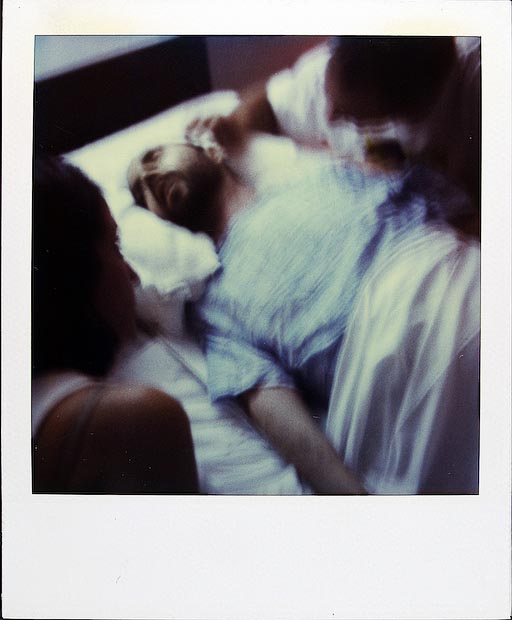
Some photos of that day

Tags

A series of poloarid photos of everyday life, indeed one for EVERY day from March 1979 to October 1997. No explanations, no words but the dates themselves. If you like a mystery, go straight to http://photooftheday.hughcrawford.com/ and see if you can piece together the story yourself. I wish I’d done that, instead of googling to find out more.

Still here?

The fascinating story of one person’s unravelling of the story behind ‘Some Photos of That Day’ is here on the Mental Floss blog.

Basically, a New Yorker named Jamie Livingston took a photo for every day of the last eighteen years of his life. Right up to the day he died.

His death haunts me. The last series of photos have so much gravity and sadness even when people are smiling. I saw them without knowing what was going on, but I sensed it was something important and sad.

I can taste death in the series of photos running into this final blurred one, which seems as close as we can get to a picture of what death feels like.

In 2001, I attempted the same project, but I only lasted nine months. I wish I’d kept it up. The shopkeeper in Paul’s Auster film, Smoke, does it too, but he takes a picture of the same street corner each day.

The final effect of Jamie Livingston’s art is a portrait of life which can’t be achieved through any shortcut.  Some novels try to do something like what he has done, but they cannot. It is a gradual, steady, banal masterpiece.

Strange memories of death : an update on the comments on Tom Disch’s blog after his suicide

Tags

Some more moving and strange and banal comments have appeared on Tom Disch’s blog, now six weeks since he killed himself. Including one comment urging people to tell someone who’s not yet killed themselves how great they are. And this one, bringing Phil Dick into the picture:

Well, you depressing bastard, as if writing The Genocides (and boy did that book get under my skin, buddy! What a masterpiece; first time out the gate and a tour-de-force! Makes me jealous as hell) wasn’t enough, you had to go and do this.

I’ve got to admit I’m a little pissed off at you about it. But God knows (and that’s you, right? So YOU know) I understand where you were coming from, so I’ll cut you some slack. Listen: granted, there’s no afterlife, and you and me and Sam Clemens all know it, but let’s just pretend there is for one second so I can ask you this one favor in return: cut Phil some slack too when you run into him him, would you? He was just another poor slob who made some stupid mistakes, like we all did, (okay so some of his were worse, but its not like the FBI actually read any of that crazy bastard’s letters, right?) so I’ll forgive you if you forgive him, okay?

And this beautiful paragraph from Jerry:

And finally, after running this and letting it run, for days, through my mind and heart and spirit, and with my younger son telling me he wants to remember you from the often happy times of the ’60s and ’70s and that he has been sharing some of his memories of you from then with some of his friends, and my older boy mailing me links to he few photographs he has up a on private site of you (and Charlie too) visiting us, as you often did, on West 87th Street when we were all young, still under 30, I can stop by here and say something.

Slow stories: the discipline of writing for print journals

Tags

,

For the first time in six years, I’ve had a short story accepted for publication. It’s called ‘A week in the Library of Babel’ and will appear in Studio: a journal of christians writing sometime next year.

When I started concentrating on novels, I stopped writing short stories and stopped submitting them. But there was something sustaining about the constant submissions, the rejects and the occasional thrill of an acceptance. It’s a long process, but still a much shorter cycle than spending several years on a novel and then casting it out on the waters.

The other factor in the decline of submitting shorter work was that I started blogging in 2003. Suddenly I could get fifty visitors a day and instant feedback. (It’s less common to get feedback from a piece in a journal; it goes out and you might never know what it does to people, which is really what happens for most writing.)

But perfecting a piece for print publication is a good discipline, further removed from the demands of right now which blogging often puts on me.

I think I might be doing some more submitting and focus some more on shorter pieces. But I have to finish with the confession that ‘A week in the Library of Babel’ is but a self-contained piece from a novel I started last year. (And for the record, the last story I had accepted was ‘Across the River’, an extract from The Fur, for Voiceworks in 2002!)

Book review: The post-birthday world / Lionel Shriver (2007)

Tags

Irina McGovern, expatriate American illustrator in London, is tempted to kiss Ramsey Acton, a passionate snooker player. The narrative splits in two, one strand following a life in which she does kiss him, and one following her as she stays with her long term ‘safe’ partner, Lawrence Trainer.

At 515 pages, it’s a long novel, and despite covering almost a decade from the mid-nineties, it doesn’t feel epic in a way that would justify that length. Instead, at times, the narrative seems to lack direction as we follow the minutaie of Irina’s life in its two manifestations. Perhaps a brave enough editor could have convinced Shriver to pare and focus it.

Yet it’s a novel which in detail contains so much brilliant insight into the fabric of everyday life and relationships. Shriver is wise, thoughtful and interesting. She describes so well what it’s like to stay at a hotel, cook dinner, go shopping, attend an award ceremony.

As you might expect, Irina’s two lives contain (sometimes unexpected) parallels (and contrasts). So, for example, in one chapter she will rail against the routine of everyday life, while in the other she will reflect on how great they are. In one chapter, Ramsey will buy her mother a car; in its parallel, Lawrence buys Irina a car. It’s a device which is interesting yet sometimes contrived. My biggest disappoinment – SPOILER ALERT – is that the final chapter has her two lives converging at Ramsey’s funeral; in both she ends up back with Lawrence, even though in one she left him and in the other he ends up leaving her.

My  favourite part of the book are the two children’s books which Irina creates in her two parallel lives, each book reflecting an aspect of the novel we are reading. In one, a young boy becomes a snooker player and always wonders what he could have been if he stayed at school. In the other, a boy gives up a blossoming friendship to be loyal to his best friend, only to have his best friend leave him for the third boy. The intertextuality and dramatic irony are delightful, as well as the vividness with which Shriver creates these cryptobooks.

7.5/10

R.I.P. Thomas Disch 1940-2008

Tags

Last Friday I felt compelled to look up Thomas Disch, my third favourite science fiction writer. I found a link to his livejournal account. He’d written on it just two days earlier, 2 July 2008. I thought up what I could say to him about how great his work is. I couldn’t think of what to write; he’s a bitter, cynical man and I didn’t want to be cut down for liking him.

Then yesterday he shows up on the Wikipedia’s recent deaths list. He’d killed himself that same day I found his blog. I feel pretty sad about that. The worst way to die.

There’s now 111 comments on his last entry, with people telling him how good he was, or how they miss him. But of course he’s not there to read it. I thought of adding to it, but instead I’ve written this. I can’t claim to be as much as a fan of some of them, but I really liked his work.

People seem immortal when they have a blog. They can’t be blogging, and so immediately visible, and then die. It just can’t happen.

334 is the best novel of his I’ve read. I can’t remember too much, but for the bleak wittiness of it, and the droll way he wrote horrific things. I liked the interconnections between the novellas that make it up too. And I liked the irony of the spaceship on the front, when none of it’s set in space. Poor pulp writers.

I read Camp Concentration and The Genocides earlier this decade and liked them as well. It’s only the Puppies of Terra I didn’t like.

His more recent horror books are the best horror books I’ve ever read (I haven’t read many, I must say) – The M.D. and the Businessman.

A penchant for dissatisfaction and Lionel Shriver’s brilliance

Tags

, ,

I will need to elaborate on Lionel Shriver’s brilliance at some time. She’s about the most quotable writer I’ve ever read. After being very impressed by We need to talk about Kevin, Post-birthday world has lines on almost every page that I feel like writing down. She has this acute insight into the details of life, and it’s this which can truly set a writer apart.

Not just the details either – an ability to observe and describe emotional states. To see what we all experience but don’t realise.

A couple of weeks ago she wrote an excellent column about her father for the Guardian where she talks of their mutual penchant for dissatisfaction – ‘great when you’re young; at 80, it’s self-destructive’. How true. How disturbing. (Maybe it’s half my problem. I need to get over the dissatisfaction that drove me through my teens and early twenties. Because IT DOESN’T WORK when you hit late twenties.)

I wonder how her father feels about her writing so candidly about him while he’s still alive. Ten years ago I would have written with this openness. Maybe even five years ago. But I’ve become much more guarded the last few years.

I don’t think she’s candid out of naivety, like I was. I genuinely thought that if I was open and honest to the world, they’d repay me with my kindness. Then I met some formidable people who taught me otherwise.

I’m fascinated by Lionel Shriver’s father because he’s a theology scholar. One of these few places where my polarity of interests – theology and literature – meet, besides in me.

The Joy of Knowledge Encyclopedia

Tags

I had a strange impulse to browse the Hamlyn Illustrated Encyclopedia tonight. A one volume three column encyclopedia with black and white pictures at the top of the page. This edition was published in 1986, with the previous title being the Joy of Knowledge Encyclopedia (what a wonderful and comforting title). It’s my wife’s, not mine, but I know if I’d grown up with it I would have a strong attachment to it, offering as it does the whole world in one book.

I love Wikipedia, because it has lengthy articles on Spiderman 2099 and daily updates on recent deaths. But I remembered one thing it doesn’t have – the pleasure of browsing. On the way to check the entry on ‘Anabaptists’, my eye was caught by a photo of ‘Agnew, Spiro’ and I learnt some brief facts about this man I only really knew about from Mad Magazine. (So much of what I know about American politics and popular culture has come from Mad Magazine!). The ‘Anabaptists’ article was laughable – according to this, they were a Middle Age movement (about two hundred years out!) preoccupied only with believers’ baptism by immersion, and contributing nothing beyond being the ancestors of modern day Baptists, a very contestable suggestion indeed.

Then on the way to ‘Wycliffe, John’ I saw, for the first time in living memory, a picture of a ‘Wolverine’ and I was dragged pleasurably into a field outside theology / literature / history.

Long live the browsable encyclopedia!

Film review: Infamous

Tags

, ,

I’ve read Truman Capote’s In Cold Blood, seen the film adaptation, and now also seen two films about Capote’s writing of it. The murders of the Clutter family and the characters of the two murderers, Dick and Perry, have taken on a mythical hue.

But Infamous didn’t gel with me, and I think it’s because I was too annoyed by Capote’s character (‘a talking brussel sprout’, a character playing Gore Vidal calls him) and jolted by the unexpected mix of genres this film presents – mock documentary, comedy, drama, romance.

An interesting theme is Capote’s friend Harper Lee struggling with her writing. As she helps Capote collate facts on the murders, she is waiting for To Kill A Mockingbird to come out. But she’s already impatient, and wanting to get started on her second novel. The novel which was never written.

I was thinking of her, co-incidentally, on the weekend. I think about her often, and what it means when a writer of her evident talent and with all the time to write in the world never publishes another book. I struggle against seeing it as the worst thing that could happen to a writer. (Maybe as a writer, but not as a human being.)

Capote goes through something similar; you could take it different ways – he exploited the Perry and Dick or he was shattered by the experience of writing about them. Whatever the case, he never finished another full length work in the twenty odd years he was to live.

Just before the end, Sandra Bullock’s Harper Lee delivers these poignant words:

It’s true for writers too who hope to create something lasting. They die a little getting it right. And then the book comes out. And there’s a dinner, maybe they give you a prize and then comes the inevitable and very American question : ‘What’s next?’ But the next thing can be so hard because now you know what it demands.

The best scene in the film is the execution scene and it disturbed me deeply. There was the chaplain piously reading out Psalm 23, an agent of the state, as Dick and Perry are hung.

The prisoners are shown as deeply scared by their impending death. No bravery, they’re crying out and vulnerable. It makes it so much more horrific than the stoic macho hero going to his death.

There’s another scene I like a lot, where a local offers his opinion on the Clutter murders, in a soliloquy that sits somewhere between Cormac McCarthy and the Coen brothers:

I’ve always believed that whenever you do something right it gives you a little bit of weight, you come to feel rooted to this Earth, secure. What scares me is, well sometimes, I don’t know where, a bad wind blows up. Could be cancer, could be drink, could be some woman who don’t belong to you. And despite the weight holding you to the ground, when that wind comes, it picks you up light as a leaf, and takes you where it wants. We’re in control until we’re not. Then we’re helpless.