Biographical contradictions: Drusilla Modjeska Vs Victoria Glendinning

Tags

,

A key moment in the history of Australian literary biography was a panel on biography at the 1988 Adelaide Writers’ Week. On the panel were Australians Brian Matthews and Drusilla Modjeska and Britons Victoria Glendinning and Andrew Motion. Glendinning was already an established traditional literary biographer; Matthews had just published the postmodern Louisa and Modjeska was about to publish the hybrid fiction/biography of her mother, Poppy. In 1996 Graeme Turner used the panel as a starting point for exploring the state of Australian literary biography in his essay “Reviving the Author”. The Southern Review collected the papers in one of the more substantial statements on biography in Australia. Now Drusilla Modjeska has returned to that panel and her dislike of Glendinning’s approach to biography in her memoir (out last month), Second Half First. At the time, Modjeska made the comment the Australian biographers (well, particularly her and Matthews) were interested in exploring the lives of those not usually considered worthy subjects for a biography. “How extraordinary,” Glendinning said, apparently condescendingly. Continue reading

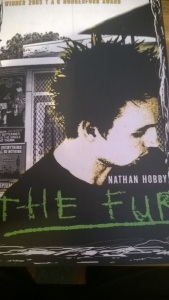
The Fur, Nathan Hobby

My blogging neighbour, Bill, at The Australian Legend has reviewed my novel The Fur – a nice surprise this many years on.

wadholloway's avatarThe Australian Legend

WP_20151111_002I follow Nathan’s blog A Biographer in Perth and thought I would check out his maiden novel of a few years ago now, The Fur. It must be in stock in a warehouse somewhere as my no. 1 favourite bookseller, Crow Books (Victoria Park, WA), had no trouble getting it in for me.

Interestingly it doesn’t have a copyright page but I see in WikipediaThe Fur … is a science fiction novel by author Nathan Hobby, published in 2004 after winning the 2002 T. A. G. Hungerford Award for unpublished new writers.” I would further categorise it as for Young Adults, probably 16 and over.

I assume Nathan is from ‘down south’, as the setting for the novel is first Collie, in the jarrah forested hills south of Perth, then the provincial city of Bunbury on the coast, and finally Murdoch Uni in Perth’s southern suburbs.

View original post 456 more words

The Book of Strange New Things by Michel Faber

Tags

, ,

bookstrange

In Michel Faber’s The Book of Strange New Things (2014), a minister named Peter is sent to a distant planet, Oasis, as a missionary to humanoid aliens – the Oasans. The drama on the planet is muted – a proportion of the Oasans have become committed “Jesus Lovers” and require only pastoring and preaching; Peter’s job is not the stuff of nineteenth-century missionary adventure books in which the bearer of God’s word must endure cannibals. Life for the humans on Oasis is a little boring but not particularly dangerous or terrible. Yet Peter can communicate with his wife, Bea, through a kind of email system and from her he learns of the growing tide of disasters besetting his home planet. As the Earth fall apart, he feels disconnected from it and from his wife. Continue reading

Publication of Many Hearts One Voice by Melinda Tognini

Tags

,

many-hearts-one-voice1

It’s Non-Fiction November, at least for children in Britain. (I think it’ll be hard to wrest November from the growing momentum of NaNoWriMo.) A decade ago, I was in a writing group for a season with Melinda Tognini; like me, she went on to do a master’s in creative writing, but unlike me, she tackled a non-fiction topic – the history of the War Widows’ Guild of WA. It was the first time I’d encountered someone writing non-fiction within creative writing, and it was one of the seeds that would eventually lead to me writing a biography for my creative writing PhD. It’s been a long road to publication, but Melinda has got there! On the weekend, WA’s governor launched the book she began for that master’s: Many Hearts, One Voice, published by Fremantle Press. I’m thrilled for Melinda and the great press she’s receiving for the book. She’s written an interesting post on the genesis of her book on her blog. Melinda brings a novelist’s eye to the writing of history, and as she writes on her site, “I am particularly passionate about telling ‘invisible’ stories – those stories absent from or sidelined in the dominant narratives of our history – and empowering others to find their voice.”

Now digitised: Sandra Burchill’s thesis on Katharine Susannah Prichard

Tags

Imagine the thousands of years of work put into theses in the pre-digital era, only a copy or two ever printed. Last year, one university library told me they do not copy or lend theses, not even to other university libraries. Thankfully, most new PhD theses are now digitised and available online, and there’s even some digitising of older theses going on. Indeed, the thesis most important to my own work has just been digitised – Sandra Burchill’s “Katharine Susannah Prichard: Romance, Romanticism and Politics” (ADFA, 1988). It’s now available from UNSW’s institutional repository. Continue reading

Deep Water

Tags

,

Deep Water (2006) is one of the finest documentaries I’ve seen. It narrates the story of Donald Crowhurst, the unlikely competitor in the 1968-1969 UK Sunday Times Golden Globe Race to circumnavigate the world solo and non-stop. It’s a bizarre and tragic story, told with exactly the right tone. The interviewers expertly bring out insights from many of the key players. The intercutting of these interviews with archival footage and graphics is amazing. I felt I was with Crowhurst on that vast ocean in his terrible existential predicament. It’s inspiring to see such great biographical storytelling. The film can be seen on ABC Iview for another couple of weeks.

“Lips of My Love”: Katharine’s not-so-lost poem of passion from 1914

Tags

, ,

1915-12-03 Petersburg Times SA p1

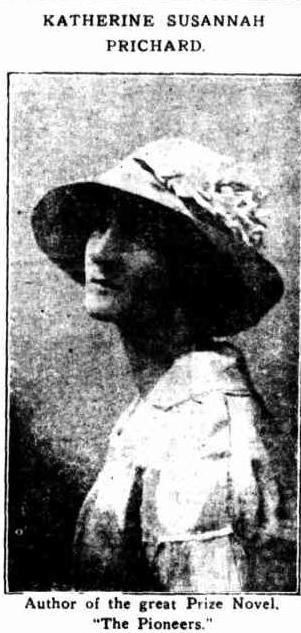
Today I thought I’d discovered a lost poem of Katharine Susannah Prichard’s, a sensual, slightly shocking poem which could be one of the great scoops of my biography. It’s called “Lips of My Love,” and it was mentioned in a 1914 Australian newspaper as having being published in English Review. This is the year before she won the Hodder and Stoughton Novel Competition and met her future husband, Hugo. It’s a sensual and frank poem about sexual enthrallment from a time Katharine was, by the vague account in her autobiography, still involved with the “Preux Chevalier,” a much-older journalist with three daughters who’d romanced her in Paris in 1908 and became increasingly possessive, threatening to kill himself if she ever married. Continue reading

Walkabout: my favourite film of the year

Tags

, ,

walkabout

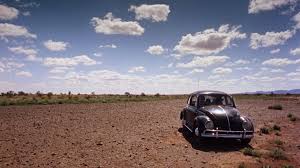
It’s incredible that two of the greatest Australian films – Walkabout and Wake in Fright – were both released in 1971. What a year it must have been, for those who were alive and cinema-goers. Both films are ambitious explorations of Australian identity directed by non-Australians. I watched Walkabout for the first time this week after watching Wake in Fright last month. Walkabout is truly astonishing, a film that is visually captivating, engrossing as a narrative, complex, and still so fresh over forty years later. Continue reading

One Life by Kate Grenville

Tags

,

one-life

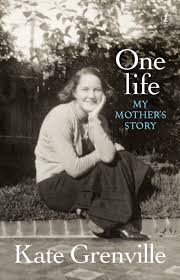
One Life is Kate Grenville’s account of the life of Nance Gee, her mother. The project began when she found the fragments of her mother’s own attempts at autobiography and put them alongside the hours of interviews she recorded with her before she died in 2002. She ended up going far beyond these primary sources to write a book which would have wider appeal than the family. As I listened to the book, I found myself curious about the writing of it. I was grateful to find Grenville give this insight on her website:

There were several problems. One was the cautious biographical voice of the early drafts: writing full of things like “she probably thought” and “she must have felt”. In the absence of definite knowledge, a biographer is stuck with that caution, but it saps the energy of the writing and the vividness of the moments. Another problem was that in these drafts, two voices were competing to tell the story: Mum’s voice, quoted verbatim, and my own, filling in the gaps. …

The book that’s now between covers is my attempt to find a path between all these obstacles. My mother’s voice appears both nowhere and everywhere: the verbatim voice has gone but phrases and often whole sentences from her memoirs appear on every page, almost in every paragraph. Where it enriches the texture of her story, I’ve added material that I found in research. …

This book, then, isn’t a biography or a memoir. It isn’t history, nor is it fiction. It has elements of all of these without being any of them. Like most of the tales we tell ourselves and each other, it’s that compendious and loose-limbed thing: a story.

From <http://kategrenville.com/node/82>

Continue reading

The forgotten and the remembered: brief notes on the history of the Hodder & Stoughton £1000 Novel Competition

Tags

, ,

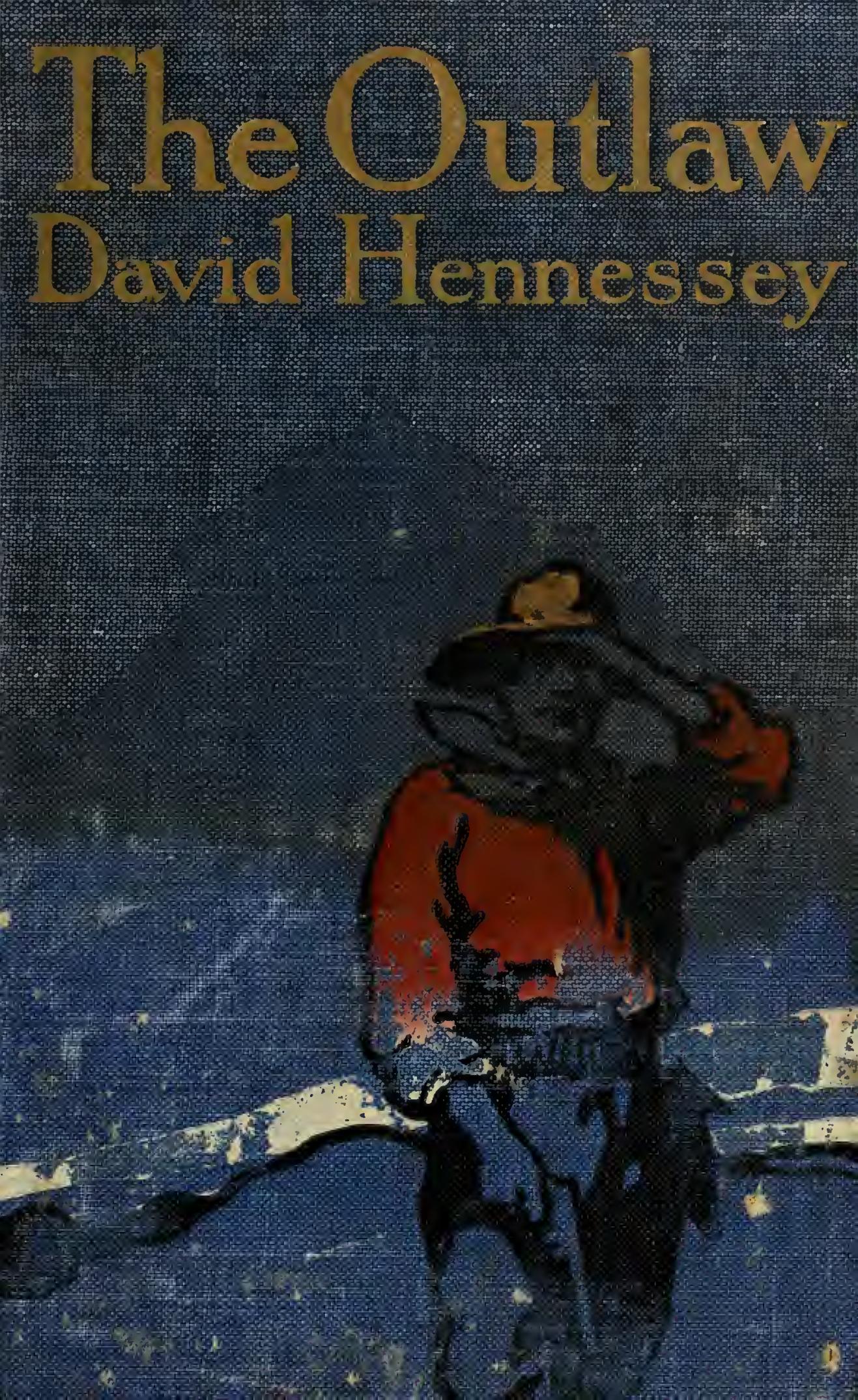
Outlaw cover

Katharine Susannah Prichard, the subject of my biography, became famous in March 1915. She was a journalist living in London and she’d been announced as the Australasian winner of the Hodder & Stoughton £1000 Novel Competition for The Pioneers.  I’m jumping forward in my research to 1915 for a talk I’m giving later in the year, and today I’ve been “troving” this competition. Continue reading