• About
  • The Red Witch: A Biography of Katharine Susannah Prichard
  • My novel: The Fur

Nathan Hobby, a biographer in Perth

~ The lives of John Curtin & Katharine Susannah Prichard, the art of biography, and other things

Nathan Hobby, a biographer in Perth

Category Archives: books

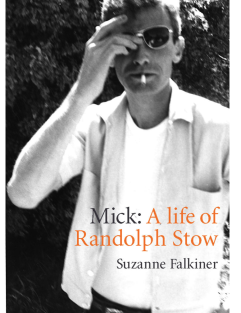
My Review of Suzanne Falkiner’s ‘Mick: A Life of Randolph Stow’ | Westerly Magazine

18 Monday Jul 2016

Posted by Nathan Hobby in book review, links

≈ 3 Comments

Tags

Randolph Stow, Suzanne Falkiner, Westerly

Mick-cover-241x350-241x313

Mick fits very much at the ‘documentary biography’ end of the spectrum. It is a restrained, detailed biography, avoiding not just speculation but also, largely, interpretation, instead collating and arranging sources into a chronological account.

Source: A Review of Suzanne Falkiner’s ‘Mick: A Life of Randolph Stow’ | Westerly Magazine

If I start to feel I’ve not done enough this year at the halfway point, I can at least remind myself that I have read and reviewed Suzanne Falkiner’s 900 page biography of Randolph Stow – and now you can click the link above to see my review on the Westerly website! The actually amazing feat is that Falkiner wrote it in four years. (At least that’s what I wrote down from her speech at the beginning of the year.)

Probably every Western Australian whose ancestors arrived in the nineteenth century can claim a connection to Stow. I discovered a new one from reading the biography which did not make it into the review: he and I are from the same clan. My paternal grandmother was a  Sewell, and so was his mother, both descended from the two Sewell brothers who came out from England in the 1830s. I think Stow and my grandmother were fourth cousins. She wouldn’t have liked his books; she may well have been aware of the connection, as she knew more family history than she told.

On the other side of my family, as I’ve mentioned before, his grandmother boarded with my maternal grandmother’s family in Subiaco around the time of World War Two. I asked my (still living) Granny what she remembered of Stow’s grandmother, and she said that Mrs Stow would keep feeding the chickens rhubarb leaves, which really upset my Granny’s mother. (Oh, that’s getting confusing.) I’m afraid that’s the closest to a literary anecdote I can offer.

My colleague Heather Delfs responded to my tweet about my review of this 900 page book with “I hope the gist is ‘just no’. 900 pages seems excessive.” I’m torn on this issue. Stow is interesting and important enough to warrant 900 pages of the right kind, though 900 page biographies are enough to put me off, too. My KSP biography will run to 900 pages if I get to the end of her life. Crucially, I want to see it published in three volumes of about 300 pages, each with their own narrative trajectory. It’s the way I would prefer to read long biographies.

An Unsentimental Bloke: The Life and Work of C.J. Dennis by Philip Butterss

15 Friday Jul 2016

Posted by Nathan Hobby in book review, Katharine Susannah Prichard's associates and connections, Uncategorized

≈ 8 Comments

Tags

C.J. Dennis, Philip Butterss, Sentimental Bloke

IMG_0499

One of the few books – or objects of any sort – to come down to me from my great-grandparents is this battered copy of C.J. Dennis’s Songs of the Sentimental Bloke. Why did it survive when nothing else did? It’s not a signed copy, it’s not even a first printing, but an eighteenth impression from 1918. Like many Australians, my great-grandparents  would have loved this book during the war and perhaps that’s why it survived. As a kid, I remember my bewilderment at the cupid drawings and the impenetrable slang it is written in.

I dug it out from my bookshelf for the first time in many years because I’ve been reading Philip Butterss’s An Unsentimental Bloke: The Life and Work of C.J. Dennis. Published in 2014, it won the 2015 National Biography Award. I’ve just returned from Canberra where I had the chance to hear Butterss speak at a National Centre for Biography seminar.

Butterss’s biography covers the whole of Dennis’s life with a careful briskness and an admirable clarity. It’s a different kind of biography to what I’m attempting, perhaps more concerned with setting his work in the context of life and conveying information than weaving a narrative and creating scenes. That’s partly a consequence of its conciseness and scope; the author also mentioned to me the limited number of personal papers to draw on. The discussion of Dennis’s literary works are well integrated and gave me a good sense of his poetry. Butterss argues convincingly for Dennis’s significance to Australian literature while also demonstrating the limitations of Dennis’s work.

C.J. Dennis (1876-1938) was contemporaneous with Katharine Susannah Prichard, who was seven years younger. I was struck by some parallels and points of comparison.

  • Both had their first big success in 1915 during World War One, Dennis with the publication of Sentimental Bloke and Katharine with The Pioneers. Both books were popular works a long way removed from the war. Both writers had tribute dinners organised for them at Cafe Francais in Melbourne to celebrate their success a few months apart. It would be fair to say Dennis never developed far beyond what he achieved with that book, returning to the same characters and milieu in subsequent works with diminishing returns. Although Katharine’s breakthrough book sold well, it wasn’t nearly as successful as Sentimental Bloke, and it left her more incentive to develop as a writer.
  • While World War One radicalised Katharine, moving her to embrace communism, it shifted Dennis the other way. He’d been a radical and worked for Labor politicians, but he became quite conservative in his later years. In Butterss’ account, it was wealth and success more than the war which affected him. If The Pioneers had made Katharine a fortune, would it have affected her politics?
  • Both wrote in the Dandenongs east of Melbourne during the war. Dennis worked on Sentimental Bloke in Kallista in the early part of the war, while in 1918 Katharine wrote Black Opal 10km south of there in Emerald. This is why they appear together on this writers’ monument in Emerald. 20160115_125644
  • Both were journalists with strong ties to the Herald and Weekly Times – but while Katharine worked for the paper before the war, Dennis worked for it after the war.

I don’t yet know if they ever met, but they probably did. They at least had a number of associates in common, including Louis Esson, Furnley Maurice, and E.J. Brady.

I found particularly interesting the chapters in the biography on Dennis’s posthumous reception – his ‘afterlives’. I hadn’t realised that he is actually marginal in the Australian canon, his popular poetry not generally embraced by critics. His popularity has had its ups and downs over the decades, but more downs in recent years, light verse just not resonating with the reading public. However, the biography itself, the first full-length critical study, has ensured he is now better remembered a century on from his great success.


Review: Potch and Colour by Katharine Susannah Prichard

19 Sunday Jun 2016

Posted by Nathan Hobby in book review, Katharine Susannah Prichard's writings

≈ 4 Comments

Tags

1944, Aboriginals, Potch and Colour, short stories

Here’s my slightly tatty copy of Potch and Colour, Katharine Susannah Prichard’s 1944 collection of short stories. It’s the only copy I’ve ever seen – it’s not particularly rare or valuable, but it shows up less often than her better known books. I found this copy serendipitously in a secondhand booksale run by the library where I work. I wish it had the beautiful dust cover I have glimpsed at low-resolution in an antiquarian bookdealer’s catalogue (right).Potch and Colour 2

Katharine wrote some incredible short stories. I would go as far as to say that I think the form suited her better than the novel, even if she is not as remembered for it. This collection mainly includes stories originally published in journals after her first collection, Kiss On the Lips (1932), but the first appearance of some of them still needs to be established. One story, at least, is quite early – “The Bridge”; I found a newspaper copy of it on Trove from 1917 (unfortunately, it’s not one of her “incredible” stories; but it’s here, if you’re interested).

This collection divides into two types of story – goldfields “yarns” and the more substantial, realist stories, several of them about Aboriginal characters. The yarns are old-fashioned and entertaining enough with flashes of inspiration. They point the way to The Roaring Nineties, the first novel of the goldfields trilogy, which Katharine was already writing when Potch and Colour was published.  But it’s the other stories which impressed me.

There’s three particularly worth commenting on.

The first is “The Siren of Sandy Gap,” which manages to be both humorous and an astute critique of marriage. Susan, “a little woman, well over fifty,”  leaves her tight-fisted husband  George for the more jolly Dave. She “lives in sin” with Dave unapologetically but talks fondly to her ex-husband when he comes to beg her to return to him. When her new lover becomes morose and fights with her ex-husband over her, she runs off with a third, younger man. “‘I want to go away and have some peace and happiness in my life,’ Susan said. ‘They’ve no right to think I must just do what they say.'”

The second is “Flight,” a story which begins with a police officer charged with removing three “half-caste” (sic) Aboriginal children from their families. He doesn’t particularly agree with their removal, but his strongest feeling is not about the injustice so much as the embarrassment in the eyes of the locals as they watch him ride his horse with the girls. When he arrives at his house, the point of view shifts to his wife, who feels compassion for the girls, but of a very narrow kind – she feels strongly they shouldn’t have their hands tied for the night and sneaks out to untie them, telling them she’ll come back first thing in the morning to retie them. And then the point of view shifts to the girls themselves and the options that face them, untied as they are. It’s a traditional, beautifully crafted story which is devastating and prescient in its critique of the Stolen Generations policy.

The third is “Christmas Tree,” a poignant portrait of failed wheat farmers in Western Australia in the Depression. It’s one of the occasions Katharine gets the balance right between her politics and aesthetics, as she reveals the injustice of the banking system not didactically but through the eyes of one of its victims. Perhaps her husband Hugo’s failure as a farmer before World War One fed into her account. My supervisor Tony Hughes-D’Aeth tells me this story gets a mention in his literary history of the WA wheatbelt, forthcoming from UWA Publishing.

Katharine’s stories are not in print at the moment, though several “best-of” collections have been published – the ones containing just her short stories are Happiness, published in 1967, two years before she died, and Tribute (1988), selected and edited by her son Ric Throssell. Rather than a new selection or a reprint of one of the old collections, I think the best thing for the future would be a collected stories edition.  It could showcase her development as a writer and the themes which preoccupied her over different periods and show how substantial her body of short fiction is.

Review – How to Survive the Titanic: or The Sinking of Bruce Ismay by Frances Watson

11 Saturday Jun 2016

Posted by Nathan Hobby in book review, creative nonfiction

≈ 6 Comments

Tags

Bruce Ismay, Frances Watson, Titanic

survive-titanic-watson.jpg

Thanks partly to James Cameron’s film, our cultural memory of the sinking of the Titanic in 1912 is one of a linear narrative. There’s a clear chronology; we “remember” it as if looking through a camera, able to pan out from the experience of the individuals to the ship as a whole. There is a clarity to the disaster.

Frances Wilson’s How To Survive the Titanic (2011) has undone these things for me. Instead, she captures so well the uncertainty, the fact that for anyone in 1912 trying to understand what happened – even for survivors – there was a mess of contradictory reports, eyewitness statements which diverged as much as they converged. (The first report received over the radio was that the Titanic was being towed back to port, with no loss of life.) J. Bruce Ismay, former owner of White Star Lines and the managing director of the shipping company, was on board the Titanic and jumped into a lifeboat as it was lowered. After contributing greatly to the confusion about what happened, he spent the rest of his life as a pariah.

This is a biography focused on a single incident in a man’s life. Watson’s book begins with that critical moment when Ismay decides to save his life;  the rest of the book moves backward to explain how Ismay became the man who made that decision, and forward to tell the story of the long consequences. I greatly admire Watson’s handling of her material; she shows a mastery of creative non-fiction in her control of time, scene, and detail. An example: in chapter one she weaves survivors’ accounts of watching the Titanic sink to contrast them with Ismay turning away; she finds three quotes from three different survivors which use the word “Fascinated,” and she begins each quote with that word, creating a kind of poetry and heightening the effect of the contrast.  How to Survive the Titanic is a witty and profound biography of a man’s ordinariness in extraordinary circumstances. The reversal of the survivor genre is refreshing: the story of a man who failed to be a hero.

The uncanny parallel of the Titanic disaster to the 1898 novella Futility (retitled Wreck of the Titan) is a well-known factoid. (As a child, pre-internet, I think I first read of it in the ubiquitous Reader’s Digest Strange Stories, Amazing Facts.) But the more subtle literary parallel Watson pursues in her book is that between Ismay and the titular character of Conrad’s Lord Jim, who similarly fails to be heroic when he jumps ship. She makes a convincing case for it to be the text with which to illuminate and compare Ismay. It’s a bold and interesting biographical technique, even if I found myself impatient with the lengthy exploration of it. In every other way, I found this book unputdownable.


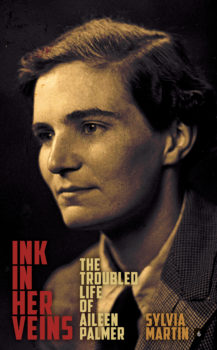
Now on Westerly blog – my review of Sylvia Martin’s Ink in her Veins: The Troubled Life of Aileen Palmer

20 Friday May 2016

Posted by Nathan Hobby in book review, Katharine Susannah Prichard's associates and connections, links

≈ 10 Comments

Tags

Aileen Palmer, Sylvia Martin, UWAP, Westerly

Sylvia-Martin-Ink-in-her-veins-217x350

Sylvia Martin’s new biography of Palmer reveals, unsurprisingly, a woman who lived in the shadow of her parents, Nettie and Vance Palmer, Australia’s literary power-couple of the first half of the twentieth century. Toward the end of the biography, Martin quotes the verdict of David Martin (presumably no relation) on Palmer’s life: ‘Her attempt to write from within the Palmer constellation, her failure to escape. Chain-smoking her life away in Sunbury mental hospital, felled by her sexuality. Aileen was the poet’ (246). Sylvia Martin’s accomplished biography largely confirms this verdict while adding the important dimension of her political activism and war service.

Source: A Review of Sylvia Martin’s ‘Ink in her Veins: The Troubled Life of Aileen Palmer – Westerly

My review of this recent biography has just been published on the Westerly blog. Aileen Palmer is a fascinating subject and Martin is an elegant biographer. She achieves a balance of narrative and research I’m striving for in my own biography. Reviewing it was a fruitful exercise for my own thinking about the art of biography.

Bill also reviewed this book last month – https://theaustralianlegend.wordpress.com/2016/04/22/ink-in-her-veins-sylvia-martin/


A Visit from the Goon Squad by Jennifer Egan

25 Monday Apr 2016

Posted by Nathan Hobby in book review, fiction

≈ 3 Comments

Tags

Jennifer Egan

Compulsory reads can be a chore but just as often they lead to wonderful discoveries. I’m so glad I’ve been pushed to read  American writer Jennifer Egan’s A Visit From the Goon Squad (2010), a set text for the first-year fiction unit I’m tutoring this semester. It’s a brilliant novel about youth and middle age, success and failure. It’s spread across a canvas of American characters between the 1970s and 2020s, all of them with some connection (or two degrees of separation) to music publicist Bennie. In the first chapter, focused on Sasha, her friend Rob who drowned in college is mentioned in passing. I thought nothing of it at that point, but chapters later we read his story, this character who is just a sentence in the first chapter. In ways like this the novel gives a sense of the poignancy of all the remembered (and forgotten) people and events in any one’s life. It’s a novel which expands our appreciation of life, going beyond initial viewpoint characters and their present to reveal the past and future and inner lives of other characters. The title might have put me off reading it, but it turns out to be so appropriate – a character reflects midway through that time is a goon who comes along and beats you up. The narrative voice reminds me of Jonathan Franzen; its also the same milieu. The approach itself – linked, self-contained stories – must be emerging as a genre in its own right; off the top of my head, two other works I love have used it – Tim Winton’s The Turning (2005) and Kevin Brockmeier’s The Illumination (2011) – and my friend Laurie Steed has a manuscript which will join this club when it’s published. (I remember some earlier examples – Ray Bradbury’s Martian Chronicles and Thomas M. Disch’s 334, John Updike’s work – but I’m wondering if it’s becoming more common, and also feel there’s an increased element of design and effect of the whole in these recent examples.)

Road to Ruin

20 Sunday Mar 2016

Posted by Nathan Hobby in book review

≈ 8 Comments

Tags

David Marr, polit-lit, politics

In the textual equivalent of a late-night junk food binge, after baby Thomas woke me when I’d just got to sleep at 10pm, I bought Niki Savva’s Road to Ruin: how Tony Abbott and Peta Credlin destroyed their own government on my Kindle. (I’d resisting doing so for a couple of weeks – I have much more important things to read, like Suzanne Falkiner’s 900 page Stow biography!) I have been ashamedly engrossed in reading about just how dysfunctional the Abbott government was, and Savva’s source-gathering is impressive, but it’s a badly written book. David Marr drew me into polit-lit, and I stupidly assumed that it would tend to be written as well as he writes. Instead, I suspect he’s the high watermark and most of the genre has little literary merit. In this case, the narrative is shambolic, jumping all over the place without the sense of quiet control and ordering the best non-fiction writers show. It’s also repetitive and veers between a journalistic style and chatty, cringing prose. But I grant it had to be written in a hurry and it’s horribly fascinating.

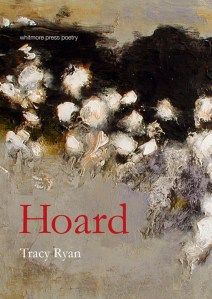
Thirty-three ways of looking at the boglands: Tracy Ryan’s Hoard

29 Monday Feb 2016

Posted by Nathan Hobby in book review, poetry

≈ 2 Comments

Tags

bog, Ireland, Tracy Ryan

hoard

I like poetry collections with a strong thematic unity which hold together as a book. My friend Tracy Ryan’s latest collection Hoard (Whitmore Press, 2015) is a beautiful example, as she examines the Irish boglands and the hoards hiding within from different angles, different times, different voices.

The collection begins with “The changeling addresses Ireland,” a long poem which gives a sense of the patchwork of styles and voices which compose the book as a whole. Thematically, the poem is on a larger scale than the rest of the collection, situating bogs and hoards in the context of the poet as an Australian of Irish descent returning to a place of origin. A century ago, the relationship of Australians to Britain and Ireland was a pressing concern; even if this is no longer the case for most Australians, time has only complicated the dimmed ties:

diverged from your
conflicted history

which even so tries
to persist in me

The perspective in the poems which follow shifts from that of “Hoard hider” to “Hoard finder” to the ‘experience’ of the hoard itself in “Orphaned hoard” – “wrenched out of context / finds itself split and separated”. All these people, all these objects connected across time and consciousness by this landscape. The narrator makes a welcome return, too, providing some sense of the quest through the boglands which are generating these poems in a couple of poems like “Bog conversation”:

I sip from a hot mug big as a chalice
and where we stop is arbitrary
because with bogs we are barely
ever more than scratching the surface

Searching for a comparison point in my limited knowledge of poetry, it’s one of my favourite poems, Auden’s “The Quest”, which comes to mind. The twenty parts of that poem offer a similarly shifting, multi-perspective view of the subject, adding up to a composite narrative that is different – and in certain ways superior – to the more consistent narratives fiction tends to demand. In this multiplicity of ways of looking at the bog and the hoard, the subject begins to turn into a lens for looking at the whole world anew, reimagining things like memory, the passage of time, legacy, belief, identity. It’s this sustained attention to one subject which allows Tracy to drag from it and hide in it so many treasures.

Biography and wisdom: Hermione Lee’s Virginia Woolf #1

13 Wednesday Jan 2016

Posted by Nathan Hobby in book review, the nature of biography

≈ 2 Comments

Tags

Hermione Lee, Virginia Woolf, wisdom

lee-woolf

It’s rather unfashionable to look to biographies to influence how we live. It’s the sort of impulse behind nineteenth century hagiographies, for one thing. But reading through a friend’s proposal for her work in progress, she spoke about the hope for her biography to be stimulate the reader into thinking about their life choices and what made for a good life. And she was right – biography can and sometimes should do this. I found Hermione Lee’s Virginia Woolf (1996) doing it to me, whether that was Lee’s intention or not. (I finally finished this 920 page tome last week, many months after beginning it.)

Woolf’s seriousness about reading was the most definable thing which comes to mind. “Reading, quite as much as writing, is her life’s pleasure and her life’s work. It is separated from the rest of her activities by its solitude and withdrawal, but she is always comparing it to other forms of behaviour and experience – relationships, walking, travelling, dreaming; desire, memory, illness.” (loc 9223) She lived to read, it meant as much to her as anything. People sometimes joke about how much books mean to me, yet I’m not nearly as serious a reader as Woolf. Reading Lee’s excellent account of Woolf’s reading (she has a thematic chapter on it) provoked me to think about the role of reading in my own life, and gave me permission to allow it to be meaningful without feeling apologetic.

There were many other ways this biography had me thinking about my own life in areas like decisions, friendships, home. Wise biographies can be instructional in a subtle way . I’m sure it’s one of the pleasures of biography, but it bears no resemblance to the didacticism of nineteenth century biography. And this is one of the wisest biographies I’ve read; perhaps I can add “wisdom” to my checklist of requirements of the great biographer. It’s not the most obvious thing to say about this book, but for some reason it’s where I’ll start.

Wrap-up of a year’s reading in biography

21 Monday Dec 2015

Posted by Nathan Hobby in book review

≈ 11 Comments

Tags

2015, lists

the-returned

I wanted to read as much of a particular kind of literary biography as possible – heavily researched but gripping narratives of writers who have been in their graves a while. But I found myself reading well outside the boundaries I’d set myself, gravitating also to memoirs and hybrid life-writing which mixes biography and fiction. I don’t regret these digressions; even as an advocate and practitioner of that certain kind of literary biography, my diet must be more varied. Continue reading →

← Older posts
Newer posts →

Enter your email address to follow this blog and receive notifications of new posts by email.

Join 287 other subscribers

Nathan on Twitter

My Tweets

Categories

  • academic (9)
  • archives and sources (10)
  • autobiographical (62)
  • biographers (10)
  • biographical method (28)
  • biographical quests (18)
  • biographies (21)
    • political biography (2)
  • biographies of living subjects (2)
  • biographies of writers, artists & musicians (12)
  • biographies of writers, artists and musicians (20)
  • biography as a literary form (9)
  • biography in fiction (2)
  • biography in the news (2)
  • books (236)
    • authors (19)
    • book review (173)
    • reading (23)
  • Covid (2)
  • creative nonfiction (11)
  • daily life (2)
  • Daily Prompt (2)
  • death (21)
  • digital humanities (3)
  • family history (1)
  • fiction (8)
  • film and television biographies (5)
  • film review (48)
  • found objects (3)
  • historical biographies (1)
  • history (20)
  • In the steps of KSP (4)
  • John Curtin (12)
  • Katharine Susannah Prichard (114)
    • Glimpses of KSP (7)
    • My KSP biography (31)
      • deleted scenes (1)
  • Katharine Susannah Prichard's associates and connections (16)
  • Katharine Susannah Prichard's writings (34)
  • libraries (5)
  • life (20)
  • link (23)
  • links (41)
  • lists (28)
  • local history and heritage (1)
  • media (4)
  • memes and urban myths (1)
  • memoirs (10)
  • meta (2)
  • music (18)
  • news (9)
  • news and events (43)
  • obituary (1)
  • Old writing found on a floppy disk (1)
  • poetry (5)
  • politics and current affairs (26)
    • climate change (1)
  • prologues and introductions (2)
  • psychological aspects of biography (3)
  • quotes (22)
  • R.I.P. (10)
  • reading report (3)
  • religion (1)
  • religious biography (1)
  • research (5)
  • role of the biographer within the biography (2)
  • Series: A-Z of Katharine Susannah Prichard (26)
  • Series: Corona Diary (1)
  • Series: Saturday 10am (14)
  • Series: Short Stories (2016) (6)
  • Series: The Tourist (2013) (6)
  • Series: Thursday 3pm feature posts (2009) (35)
  • structure of biographies (3)
  • technology and the digital world (2)
  • television (4)
  • the nature of biography (4)
  • this blog (10)
  • Uncategorized (33)
  • Western Australia (26)
  • writing (41)

Archives

Recent Comments

Nathan Hobby's avatarNathan Hobby on Katharine’s birthday tou…
Nathan Hobby's avatarNathan Hobby on Review – The Good Fight:…
Nathan Hobby's avatarNathan Hobby on Katharine’s birthday tou…
David J. Gilchrist's avatarDavid J. Gilchrist on Katharine’s birthday tou…

Bookmarks

  • Adventures in Biography
  • ANZ LitLovers LitBlog
  • Bernice Barry
  • It only goes up to your knees
  • Jane Bryony Rawson
  • Jenn Plays Recorder
  • Katharine Susannah Prichard Writers' Centre
  • Laura Sewell Matter: Essayist and Biographer
  • Mutually said: Poets Vegan Anarchist Pacifist
  • Resident Judge
  • Speaking Thylacine
  • The Australian Legend
  • Timothy Parkin Poetry
  • Treefall Writing – Melinda Tognini
  • Whispering Gums
  • Wrapped up in books: the home of Guy Salvidge

Top Posts

  • The Little Free Library
  • '1940 handwritten diary / unknown female / New York'
  • Liking Tim Winton
  • Two years in: an update on my Katharine Susannah Prichard biography
  • Book review: The merry-go-round in the sea by Randolph Stow

Blog Stats

  • 208,952 hits

Tag Cloud

9/11 19th century 33 1920s 1921 1930s 1950s 1970s 1971 1981 2000s 2004 2011 2015 2017 20000 Days on Earth A.S. Byatt Aboriginals activism Adam Begley Adrian Mole adultery afterlife Agatha Christie Alan Hollinghurst Alberto Manguel Alfred Deakin Amazing Grace Americana Amy Grant An American Romance Andre Tchaikowsky Andrew McGahan angela myers anne fadiman Anne Rice Arabian Nights archives art arts funding A Serious Man Ash Wednesday ASIO atheism Atonement Australia Australian film Australian literature Australian Short Story Festival autism autobiography autodidact Barbara Vine beach Belle Costa da Greene Bell Jar best best-of Bible Big Issue Bill Callahan biographical ethics biographical quest genre biographies birthday birthdays Black Opal Bleak House Blinky Bill blogging blogs Blue Blades Bodega's Bunch bog Booker book launch booksale Borges Brenda Niall Brian Matthews Brian McLaren Britney Spears Burial Rites Burke and Wills buskers C.S. Lewis C.S. Lewis canon capitalism Carol Shields Carson McCullers Catcher in the Rye Catholicism celebrities Charles Dickens Charlie Kaufman childhood Child of the Hurricane children's books Choir of Gravediggers Christianity Christian writing Christina Stead Christmas Christopher Beha Cinque Terra Claire Tomalin classics cliches climate change Coen brothers coincidence Collie Collyer coming of age Communism concert Condensed Books consumerism Coonardoo Cormac McCarthy Corrections cosy fiction Dara Horn David Copperfield David Ireland David Marr David Suchet death Death of a president definition demolition Dennis LeHane dentist diaries divorce doctorow Doctor Who documentaries donald shriver Don DeLillo Don DeLillo Donna Mazza Donna Tartt Don Watson Dostovesky doubt drama dreams of revolution Drusilla Modjeska E.M. Forster ebooks editing Eichmann Eisenstein Elizabeth Kostova email empathy ensmallification existentialism faith Falling Man fame families fantasy fiction film and television folk football Frank Barscombe Fremantle Press G.K. Chesterton Gabrielle Carey Gallipoli genealogical fiction Genesis Geoff Nicholson George W. Bush Gerald Glaskin Gilead Golden Miles Goldfields Trilogy Graham Greene grandad great novels Greenmount Guinness World Records Guy Salvidge Hannah Arendt Hannah Kent Hans Koning Hans Koningsberger Harper Lee Haxby's Circus Hazel Rowley He-Man headers heaven Heidegger hell Henrietta Lacks Henry Morton Stanley Herman Hesse heroes Hey Dad! historical fiction history Holden Caulfield holidays Homer & Langley Home Song Stories House of Cards House of Zealots house of zealots Hugo Throssell humour Ian McEwan In between the sheets Indonesia Infamous Inside Llewyn Davis interstellar interview Intimate Strangers Invisible Ireland ISBNs Ishiguro itunes J.D. Salinger J.M. Coetzee J.S. Battye Janet Malcolm Jennifer Egan JFK JFK assassination Joanna Rakoff Joel Schumacher John Burbidge John Fowles John Howard John Kinsella John Updike John Updike Jonathan Franzen journal writing JSB Judgment Day Julia Baird Julian Barnes Kafka Kalgoorlie Kate Grenville Katherine Mansfield Kevin Brockmeier King's Park KSP Writers' Centre language last ride Laurie Steed Left Behind Leonard Cohen Leo Tolstoy Libra Library of Babel Library of Babel Lila Lily and Madeleine links Lionel Shriver lionel shriver lists literary fiction literature Lleyton Hewitt lost book Louisa Louisa Lawson Louis Esson louis nowra love letter Lubbock Lytton Strachey Madelaine Dickie Man Booker man in the dark Margaret Atwood Margaret River Press Marilynne Robinson mark sandman meaning of life Melbourne Mel Hall meme memorialisation memory MH17 Michael Faber Mike Riddell Miles Franklin mining boom missionaries moleskine Moon Palace morphine Mother Teresa movies Music of Chance My Brilliant Career names Napoleon Narnia narrative Narrow Road to the Deep North Narziss and Goldmund Natalie Portman Nathaniel Hobbie national anthem Nick Cave Nina Bawden non-fiction nonfiction noughties novelists novels obituaries obscurity On Chesil Beach Parade's End Paris Hilton Passion of the Christ past patriotism Paul Auster Paul de Man Perth Perth Writers Festival Peter Ackroyd Peter Cowan Writers Centre phd Philip K. Dick Philip Seymour Hoffman pierpontmorgan poetry slam politics popular fiction popular science Possession postapocalyptic postmodernism Pride prophetic imagination publications Pulp Purity Queen Victoria Rabbit Angstrom radio Radio National Randolph Stow rating: 5/10 rating: 6/10 rating: 7/10 rating: 8/10 rating: 9/10 rating: 10/10 ratings reading fiction autobiographically reading report Rebecca Skloot recap red wine reincarnation juvenile fiction rejection review - music reviewing rewriting Richard Flanagan Richard Ford Rick Moody Roaring Nineties Robert Banks Robert Hughes Robert Silverberg Robert Wadlow Robinson Crusoe Rolf Harris romance Rome ruins Russell Crowe Ruth Rendell Sarah Murgatroyd scalpers science fiction Science of Sleep secondhand books Secret River sermon illustration sex short stories Silent Woman Simone Lazaroo Simpsons Siri Hustvedt slavery Smashing Pumpkins social interactions social justice some people i hate sources South Australia souvenirs speculation speech speeches sport status anxiety Stephen Lawhead Stranger's Child subtitles Subtle Flame Sue Townsend suicide Surprised By Hope Suzanne Falkiner Sylvia Plath Synecdoche TAG Hungerford Award tapes teabags Ted Hughes The Children Act The Cure The Fur The Imitation Game theology The Pioneers The Revolutionary Thomas Disch Thomas Hardy Thomas Henry Prichard Thomas Mann thriller time Tim La Haye Tim Winton Tolstoy Tom Wright top 10 Towering Inferno Tracy Ryan Trove Truman Capote tshirts TS Spivet Twelve Years a Slave underrated writers Underworld unwritten biographies urban myth USA vampires Venice Victoria Cross Victoriana Victorian era Victorianism Victoria Park video Voltron w Wake in Fright Walkabout Walter M. Miller war War and Peace war on terror Water Diviner Wellington St Bus Station Westerly Western Australia West Wing What Happened to Sophie Wilder? Whitlams wikipedia Wild Oats of Hans William Wilberforce Winston Churchill Witches of Eastwick Working Bullocks workshop World War One writers writing Writing NSW youth Zadie Smith Zeitgeist Zelig

Enter your email address to follow this blog and receive notifications of new posts by email.

Join 287 other subscribers

Pages

  • About
  • My novel: The Fur
  • The Red Witch: A Biography of Katharine Susannah Prichard

Categories

  • academic (9)
  • archives and sources (10)
  • autobiographical (62)
  • biographers (10)
  • biographical method (28)
  • biographical quests (18)
  • biographies (21)
    • political biography (2)
  • biographies of living subjects (2)
  • biographies of writers, artists & musicians (12)
  • biographies of writers, artists and musicians (20)
  • biography as a literary form (9)
  • biography in fiction (2)
  • biography in the news (2)
  • books (236)
    • authors (19)
    • book review (173)
    • reading (23)
  • Covid (2)
  • creative nonfiction (11)
  • daily life (2)
  • Daily Prompt (2)
  • death (21)
  • digital humanities (3)
  • family history (1)
  • fiction (8)
  • film and television biographies (5)
  • film review (48)
  • found objects (3)
  • historical biographies (1)
  • history (20)
  • In the steps of KSP (4)
  • John Curtin (12)
  • Katharine Susannah Prichard (114)
    • Glimpses of KSP (7)
    • My KSP biography (31)
      • deleted scenes (1)
  • Katharine Susannah Prichard's associates and connections (16)
  • Katharine Susannah Prichard's writings (34)
  • libraries (5)
  • life (20)
  • link (23)
  • links (41)
  • lists (28)
  • local history and heritage (1)
  • media (4)
  • memes and urban myths (1)
  • memoirs (10)
  • meta (2)
  • music (18)
  • news (9)
  • news and events (43)
  • obituary (1)
  • Old writing found on a floppy disk (1)
  • poetry (5)
  • politics and current affairs (26)
    • climate change (1)
  • prologues and introductions (2)
  • psychological aspects of biography (3)
  • quotes (22)
  • R.I.P. (10)
  • reading report (3)
  • religion (1)
  • religious biography (1)
  • research (5)
  • role of the biographer within the biography (2)
  • Series: A-Z of Katharine Susannah Prichard (26)
  • Series: Corona Diary (1)
  • Series: Saturday 10am (14)
  • Series: Short Stories (2016) (6)
  • Series: The Tourist (2013) (6)
  • Series: Thursday 3pm feature posts (2009) (35)
  • structure of biographies (3)
  • technology and the digital world (2)
  • television (4)
  • the nature of biography (4)
  • this blog (10)
  • Uncategorized (33)
  • Western Australia (26)
  • writing (41)

Archives

Recent Comments

Nathan Hobby's avatarNathan Hobby on Katharine’s birthday tou…
Nathan Hobby's avatarNathan Hobby on Review – The Good Fight:…
Nathan Hobby's avatarNathan Hobby on Katharine’s birthday tou…
David J. Gilchrist's avatarDavid J. Gilchrist on Katharine’s birthday tou…

Bookmarks

  • Adventures in Biography
  • ANZ LitLovers LitBlog
  • Bernice Barry
  • It only goes up to your knees
  • Jane Bryony Rawson
  • Jenn Plays Recorder
  • Katharine Susannah Prichard Writers' Centre
  • Laura Sewell Matter: Essayist and Biographer
  • Mutually said: Poets Vegan Anarchist Pacifist
  • Resident Judge
  • Speaking Thylacine
  • The Australian Legend
  • Timothy Parkin Poetry
  • Treefall Writing – Melinda Tognini
  • Whispering Gums
  • Wrapped up in books: the home of Guy Salvidge

Top Posts

  • The Little Free Library
  • '1940 handwritten diary / unknown female / New York'
  • Liking Tim Winton
  • Two years in: an update on my Katharine Susannah Prichard biography
  • Book review: The merry-go-round in the sea by Randolph Stow

Blog Stats

  • 208,952 hits

Tag Cloud

9/11 19th century 33 1920s 1921 1930s 1950s 1970s 1971 1981 2000s 2004 2011 2015 2017 20000 Days on Earth A.S. Byatt Aboriginals activism Adam Begley Adrian Mole adultery afterlife Agatha Christie Alan Hollinghurst Alberto Manguel Alfred Deakin Amazing Grace Americana Amy Grant An American Romance Andre Tchaikowsky Andrew McGahan angela myers anne fadiman Anne Rice Arabian Nights archives art arts funding A Serious Man Ash Wednesday ASIO atheism Atonement Australia Australian film Australian literature Australian Short Story Festival autism autobiography autodidact Barbara Vine beach Belle Costa da Greene Bell Jar best best-of Bible Big Issue Bill Callahan biographical ethics biographical quest genre biographies birthday birthdays Black Opal Bleak House Blinky Bill blogging blogs Blue Blades Bodega's Bunch bog Booker book launch booksale Borges Brenda Niall Brian Matthews Brian McLaren Britney Spears Burial Rites Burke and Wills buskers C.S. Lewis C.S. Lewis canon capitalism Carol Shields Carson McCullers Catcher in the Rye Catholicism celebrities Charles Dickens Charlie Kaufman childhood Child of the Hurricane children's books Choir of Gravediggers Christianity Christian writing Christina Stead Christmas Christopher Beha Cinque Terra Claire Tomalin classics cliches climate change Coen brothers coincidence Collie Collyer coming of age Communism concert Condensed Books consumerism Coonardoo Cormac McCarthy Corrections cosy fiction Dara Horn David Copperfield David Ireland David Marr David Suchet death Death of a president definition demolition Dennis LeHane dentist diaries divorce doctorow Doctor Who documentaries donald shriver Don DeLillo Don DeLillo Donna Mazza Donna Tartt Don Watson Dostovesky doubt drama dreams of revolution Drusilla Modjeska E.M. Forster ebooks editing Eichmann Eisenstein Elizabeth Kostova email empathy ensmallification existentialism faith Falling Man fame families fantasy fiction film and television folk football Frank Barscombe Fremantle Press G.K. Chesterton Gabrielle Carey Gallipoli genealogical fiction Genesis Geoff Nicholson George W. Bush Gerald Glaskin Gilead Golden Miles Goldfields Trilogy Graham Greene grandad great novels Greenmount Guinness World Records Guy Salvidge Hannah Arendt Hannah Kent Hans Koning Hans Koningsberger Harper Lee Haxby's Circus Hazel Rowley He-Man headers heaven Heidegger hell Henrietta Lacks Henry Morton Stanley Herman Hesse heroes Hey Dad! historical fiction history Holden Caulfield holidays Homer & Langley Home Song Stories House of Cards House of Zealots house of zealots Hugo Throssell humour Ian McEwan In between the sheets Indonesia Infamous Inside Llewyn Davis interstellar interview Intimate Strangers Invisible Ireland ISBNs Ishiguro itunes J.D. Salinger J.M. Coetzee J.S. Battye Janet Malcolm Jennifer Egan JFK JFK assassination Joanna Rakoff Joel Schumacher John Burbidge John Fowles John Howard John Kinsella John Updike John Updike Jonathan Franzen journal writing JSB Judgment Day Julia Baird Julian Barnes Kafka Kalgoorlie Kate Grenville Katherine Mansfield Kevin Brockmeier King's Park KSP Writers' Centre language last ride Laurie Steed Left Behind Leonard Cohen Leo Tolstoy Libra Library of Babel Library of Babel Lila Lily and Madeleine links Lionel Shriver lionel shriver lists literary fiction literature Lleyton Hewitt lost book Louisa Louisa Lawson Louis Esson louis nowra love letter Lubbock Lytton Strachey Madelaine Dickie Man Booker man in the dark Margaret Atwood Margaret River Press Marilynne Robinson mark sandman meaning of life Melbourne Mel Hall meme memorialisation memory MH17 Michael Faber Mike Riddell Miles Franklin mining boom missionaries moleskine Moon Palace morphine Mother Teresa movies Music of Chance My Brilliant Career names Napoleon Narnia narrative Narrow Road to the Deep North Narziss and Goldmund Natalie Portman Nathaniel Hobbie national anthem Nick Cave Nina Bawden non-fiction nonfiction noughties novelists novels obituaries obscurity On Chesil Beach Parade's End Paris Hilton Passion of the Christ past patriotism Paul Auster Paul de Man Perth Perth Writers Festival Peter Ackroyd Peter Cowan Writers Centre phd Philip K. Dick Philip Seymour Hoffman pierpontmorgan poetry slam politics popular fiction popular science Possession postapocalyptic postmodernism Pride prophetic imagination publications Pulp Purity Queen Victoria Rabbit Angstrom radio Radio National Randolph Stow rating: 5/10 rating: 6/10 rating: 7/10 rating: 8/10 rating: 9/10 rating: 10/10 ratings reading fiction autobiographically reading report Rebecca Skloot recap red wine reincarnation juvenile fiction rejection review - music reviewing rewriting Richard Flanagan Richard Ford Rick Moody Roaring Nineties Robert Banks Robert Hughes Robert Silverberg Robert Wadlow Robinson Crusoe Rolf Harris romance Rome ruins Russell Crowe Ruth Rendell Sarah Murgatroyd scalpers science fiction Science of Sleep secondhand books Secret River sermon illustration sex short stories Silent Woman Simone Lazaroo Simpsons Siri Hustvedt slavery Smashing Pumpkins social interactions social justice some people i hate sources South Australia souvenirs speculation speech speeches sport status anxiety Stephen Lawhead Stranger's Child subtitles Subtle Flame Sue Townsend suicide Surprised By Hope Suzanne Falkiner Sylvia Plath Synecdoche TAG Hungerford Award tapes teabags Ted Hughes The Children Act The Cure The Fur The Imitation Game theology The Pioneers The Revolutionary Thomas Disch Thomas Hardy Thomas Henry Prichard Thomas Mann thriller time Tim La Haye Tim Winton Tolstoy Tom Wright top 10 Towering Inferno Tracy Ryan Trove Truman Capote tshirts TS Spivet Twelve Years a Slave underrated writers Underworld unwritten biographies urban myth USA vampires Venice Victoria Cross Victoriana Victorian era Victorianism Victoria Park video Voltron w Wake in Fright Walkabout Walter M. Miller war War and Peace war on terror Water Diviner Wellington St Bus Station Westerly Western Australia West Wing What Happened to Sophie Wilder? Whitlams wikipedia Wild Oats of Hans William Wilberforce Winston Churchill Witches of Eastwick Working Bullocks workshop World War One writers writing Writing NSW youth Zadie Smith Zeitgeist Zelig

Blog at WordPress.com.

  • Subscribe Subscribed
    • Nathan Hobby, a biographer in Perth
    • Join 287 other subscribers
    • Already have a WordPress.com account? Log in now.
    • Nathan Hobby, a biographer in Perth
    • Subscribe Subscribed
    • Sign up
    • Log in
    • Report this content
    • View site in Reader
    • Manage subscriptions
    • Collapse this bar
 

Loading Comments...