• About
  • The Red Witch: A Biography of Katharine Susannah Prichard
  • My novel: The Fur

Nathan Hobby, a biographer in Perth

~ The lives of John Curtin & Katharine Susannah Prichard, the art of biography, and other things

Nathan Hobby, a biographer in Perth

Author Archives: Nathan Hobby

Katharine Susannah’s 131st birthday: in colour at Random Phoughts

05 Friday Dec 2014

Posted by Nathan Hobby in Katharine Susannah Prichard, links

≈ Leave a comment

Tags

birthday, photography

I missed Katharine Susannah’s 131st birthday yesterday, although I did spend several hours of it in her company, deciphering her handwriting in her letters to her son, and feeling I was in her company. Thankfully Loredana at Random Phoughts marked it by selecting KSP for her remarkable daily colourisation project. Here is KSP, in colour! (It’s interesting what a distancing effect black and white photographs have. They make me so conscious of the gulf of time that separates me and the subject. Colour reminds us that the people of the past were as alive as we are.)

Loredana Isabella's avatarRandom Phoughts

Day 211 of Colourisation Project – December 4

Challenge: to publish daily a colourised photo that has some significance around the day of publication.

Born this day, 4 December in 1883, Katharine Susannah Prichard was an Australian author, journalist, political activist and co-founding member of the Communist Party of Australia (1920) as well as one of Australia’s greatest novelists and literary figures.

In spite of the strong anti-communist sentiment pervading Australian politics and society before and after the second world war, Prichard remained a committed member of the Communist Party up until her death in 1969. She worked tirelessly organising unemployed workers and writing speeches and articles on behalf of the party. She delivered many public addresses on world peace and socialism, always working tirelessly for the cause.  She founded left-wing women’s groups, and during the 1930s she campaigned in support of the Spanish Republic and later for nuclear disarmament.

View original post 318 more words
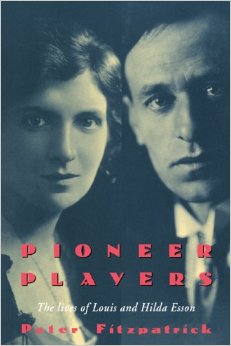
Louis and Hilda: Some thoughts on biographical method in Peter Fitzpatrick’s Pioneer Players

04 Thursday Dec 2014

Posted by Nathan Hobby in biographical method, biographies of writers, artists and musicians, book review, Katharine Susannah Prichard's associates and connections

≈ Leave a comment

Tags

Australian literature, drama, dual biography, Hilda Esson, Louis Esson

pioneer-players

Peter Fitzpatrick, Pioneer Players: The Lives of Louis and Hilda Esson (Cambridge University Press, 1995)

Other times, she is a ghost in all the things I read: I know the people I’m reading about knew her. I know that if the “camera” panned just a little to the left or a little to the right, or if it moved back to take in the whole scene, Alice would be there.

Before I started writing a biography, I wrote a novel about biographers. (It’s how I do things – I imagine them, and then I become them.) I’m revising it at the moment, and I added those sentences to it the other day. I’m reminded of them reading Peter Fitzpatrick’s Pioneer Players: The Lives of Louis and Hilda Esson. Hilda was Katharine Susannah Prichard’s best friend; they lived next door to each other as children. The few surviving letters between them show an intimate friendship. Katharine is not exactly a ghost in this dual biography of Hilda and her first husband, Louis; rather, she is one of the major characters. But, naturally, she is out of focus. She is there to help us understand Louis and Hilda better. And I’m so glad for the existence of this and other works evoking the same world Katharine was moving through. Continue reading →

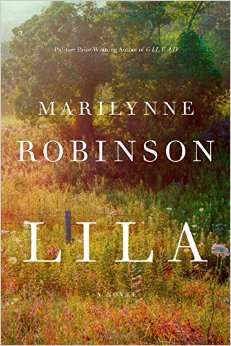
‘Existence – they had to call it something’: Marilynne Robinson’s Lila

03 Wednesday Dec 2014

Posted by Nathan Hobby in book review

≈ 3 Comments

Tags

Lila, Marilynne Robinson, meaning of life

lila

Each of Marilynne Robinson’s Gilead trilogy has a different protagonist, but if there is one central character, it would be John Ames. He has spent his life in the town of Gilead, devoting himself as a minister to the people of the town. Robinson has a similar devotion to the town, insisting that in the small lives of the people of this non-descript Iowan town can be found much of what we can hope to know about existence. As well as beautiful literature. Robinson has created a landmark in American literature with this triptych, and it will be remembered in a century’s time.

Lila (2014) is the story of Ames’s eponymous much younger wife, an itinerant woman brought up on the road by an adopted mother, Dolly. She is haunted by her time in a prison-like brothel in St Louis. She is full of shame of her background, her ignorance, and her poverty. She is drawn to the lonely Ames, tending the graves of his wife and child, listening to his sermons, while always on the verge of running. She cannot let go of the shame; her past takes the form of the knife she carries everywhere, Dolly’s knife. Even after she is baptised by Ames and then married to him and carrying his child, the knife sits in the kitchen, and she wonders when she will need it again.

The novel is steeped in the Christian story. Like Gilead, it narrates grace, making plausible a world where a loving Creator can be glimpsed in sacramental moments. If some atheist readers will find this off-putting, it is still amazing that many (judging from reviews) do not.

One of Lila‘s great accomplishments is to sustain a novel so deeply concerned with the meaning of existence solely through the narrative voice of a woman with limited education and a narrow experience of the world.

She knew a little about existence. That was pretty well the only thing she knew about, and she had learned the word for it from him. It was like the United States of America – they had to call it something. The evening and the morning, sleeping and waking. Hunger and loneliness and weariness and still wanting more of it. Existence. Why do I bother? He couldn’t tell her that, either. But he knows, she could see it in him. Why does he want more of it, with his house so empty, his wife and child so long in the ground. The evening and the morning, the singing and the praying. The strangeness of it. (75)

Lila ponders what is life for, and the largely educated, elite readers of her story will find new clues and a new angle on existence for seeing these things through her eyes. And that is something the best fiction does.


Film review: The Young and Prodigious TS Spivet

23 Sunday Nov 2014

Posted by Nathan Hobby in film review

≈ Leave a comment

Tags

TS Spivet

Watching a great film, or an interesting but flawed film, leaves me feeling excited about the world and about life – even when the mood of the film is bleak. Bad films, on the other hand, leave me feeling depressed – even when their mood is optimistic. Jean-Pierre Jeunet, director of the delightful Amelie (2001) has now made two dud but sunny films in a row – Micmacs and this year’s The Young and Prodigious TS Spivet. A ten year-old genius sets off across America on his own to receive a prize at the Smithsonian Institute for his perpetual motion machine. It has all the ingredients for a quirky, profound exploration of childhood, genius, and the meaning of America (road movies tend to be about the meaning of the places they pass through, and this one is to some extent). Yet from the beginning, it’s confused in plot and tone. It has trouble establishing its scenario, introducing the characters on the eccentric Montana ranch badly. Its picaresque structure doesn’t work, as TS encounters various characters on his journey to little real effect. The actors – including Helena Bonham-Carter and Judy Davis – are trying to inhabit characters that are two-dimensional with dialogue that just misfires in every scene. The finale has that most doomed of set-ups, a showdown between the protagonists on live television. At this point, the host says, “But there’s still another nine minutes to go!”; watching from Montana, TS’s sister slumps down in her seat groaning, as I did too.  I wanted to like TS Spivet, I really did, but it’s a mess of a film. It feels like a Disney kids’ movie with a few flourishes. But I should also say it’s completely watchable, with a number of charming moments, and I’m sure many will find it a pleasant couple of hours.

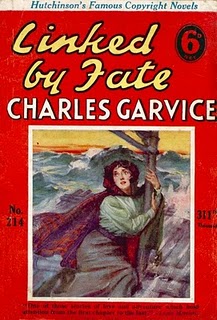
Katharine Susannah and the “fifteenth-rate” writer, Charles Garvice

20 Thursday Nov 2014

Posted by Nathan Hobby in biographical quests, Katharine Susannah Prichard

≈ 4 Comments

Tags

Charles Garvice, The Pioneers

Charles_Garvice_-_Linked_by_Fate

Katharine Susannah became instantly famous across the Commonwealth when she won the Australasian section of the great Hodder and Stoughton All-Empire Competition in April 1915 (the very month of Gallipoli) for her unpublished novel, The Pioneers. It was the big break she had been working hard towards for a decade. I think The Pioneers, for all its faults, is genuinely a very good novel, but at the time of the competition, a number of critics were unwilling to take the winning entry seriously because of the judge, British writer Charles Garvice.

The columnist in Wellington’s Dominion wrote, “…to foist such a fifteen-rate novelist as Mr Garvice upon Australasian writers as judge of their work was little short of an insult” (May 29, 1915, 14). Almost no-one remembers Garvice today, but at the time, he could claim to be the biggest-selling British author alive, having sold millions of the romances he produced many times a year. Among serious lovers of literature his name was a byword for dross. It seems that to have him judge a literary competition was a little like inviting Danielle Steel or Dan Brown to do so today. When his own books are so forgotten, it is a beautiful irony that one of his great legacies was to launch the career of such a significant Australian writer. Even if Garvice wasn’t a great writer, could he have been a good reader, able to discern something special in Katharine Susannah’s work? The Pioneers is a romance, melodramatic at times yet with characters more vivid and a plot more interesting than the genre usually produces.

I would love to know Katharine Susannah’s opinion of Garvice’s work, and the complicated feelings she would have felt at being awarded the prize by him. I think she would have been biting her tongue, and a little uneasy amidst the jubilation.

*

Garvice has fascinated at least two writers in recent years. In her fine essay “Pursuing the Great Bad Novelist”, Laura Sewell Matter tells of her quest for Garvice, after finding some pages of an Icelandic-language book wash up on a beach in Iceland and eventually tracking it down as a translation of one of Garvice’s novels. She flies to London to read one of only two copies held by libraries in the world. It is a classic biographical quest, the genre I researched for my MA, the quest for Garvice tied up to Laura’s quest to find herself. You can download the essay from her website. Steve of Bear-Alley blog wrote a post on Garvice in 2010, tracking down some biographical details for Garvice, as well as a long (and still incomplete!) bibliography of Garvice’s works.

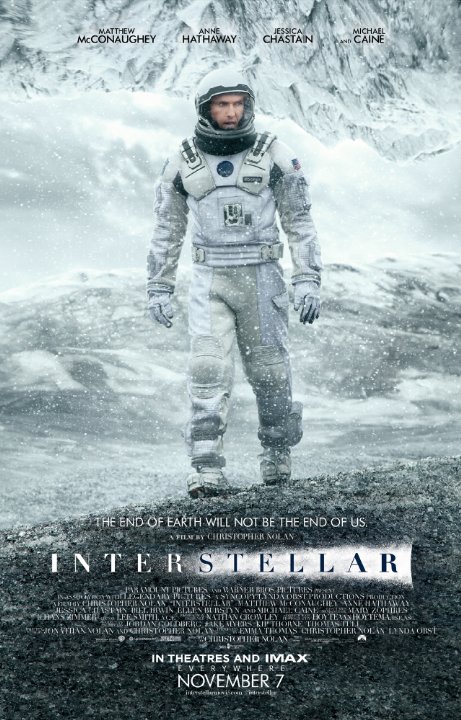
Interstellar: in the hands of a clever 15 year old with a $165 million budget

17 Monday Nov 2014

Posted by Nathan Hobby in film review

≈ 3 Comments

Tags

interstellar

interstellar

All the crops are failing on a future Earth when a former astronaut leaves on a secret mission to check inhabitable planets on the other side of a wormhole, knowing if he ever sees his children again it will be decades away. There’s an ambivalence to many of the reviews of Interstellar, and I share it. The plot unfolded like the sort of plot I would expect to read from a talented fifteen year old science-fiction obsessive – clumsy, derivative, refreshingly ambitious, with flashes of excellence. The opening is particularly amateurish, as Cooper the astronaut stumbles on the secret NASA base, only for them to decide he’s really the one they need to lead their mission leaving in a few days. (Granted, we learn later the reason behind all this, but it still feels like a scene from a B-movie.) The most dramatic and interesting section occurs when the team must land on a planet that will cause seven Earth years to pass for every hour they spend on it. The tension of this dilemma is played for all its worth, and it is a truly gripping sequence.

Interstellar is a film of big questions; most of all, whether humankind (or as it keeps saying “mankind” – what is wrong with people that they are using such a word in the year 2014?) is capable of acting for the good of the species, or only as individuals seeking the survival of themselves and their direct descendents. I found it moving and frightening; it made me ponder death and space and time, and lose myself in its world. It is also visually and aurally spectacular.

*

Some random thoughts:

  • Filmmakers have the perpetual challenge of representing scientists solving some great problem. In this film, as in so many, Nolan resorts to a blackboard filled with chalk. Groan! (But I do appreciate how hard it is.)
  • The star, Matthew McConaughey, became one of my favourite actors after his performance in True Detective; at times, it almost feels like he’s channeling that character, Cole, in the more existential moments of this film. But not enough. I would have been quite happy for him to be fully Cole in this film.
  • Jessica Chastain should be in more films. Maybe she’s the reason I thought of Tree of Life a few times.
  • Just like in Nolan’s previous film, The Dark Knight, one of the central themes is the “noble lie”: we can’t tell people the truth, because it’s not good for them. The sort of thinking which the neo-cons used to justify war on Iraq in 2003.
  • (Spoiler alert for the final point:) Continue reading →

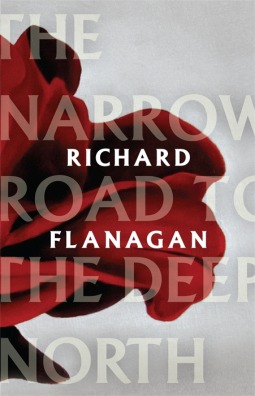
Brutal and compassionate: Richard Flanagan’s Narrow Road to the Deep North

14 Friday Nov 2014

Posted by Nathan Hobby in book review

≈ 5 Comments

Tags

Australian literature, Man Booker, Narrow Road to the Deep North, Richard Flanagan, war

narrow-road

Richard Flanagan’s Narrow Road to the Deep North has immense scope. Perhaps some readers will avoid it, thinking it a war novel, but it is actually a novel about all of life. At its centre – literally and metaphorically – is a lengthy account of the characters’ lives and deaths on the Burma Railway during World War Two, but it extends before and after that period to show the full impact of war. One of its significant achievements is to show how living and dying in a prisoner of war camp is an intensification of the drives and dilemmas all of us live with.

Appropriately, in telling of torture, starvation and cruelty, it’s a brutal novel. The novel’s brutality means it earns its kindnesses and moments of love so much more than other novels. One particular scene shines with love, and that is the generous hospitality of the Greek fish and chip shop owner; to describe it would give too much away, when I do hope you read it. In the world of this novel, it’s these moments of light which are the best one can hope for in life.

Despite its brutality, it’s also a novel of compassion, and an important source of this are the convincing chapters from the point of view of Japanese officers and a Korean guard who were overseeing the camp. Flanagan performs a remarkable feat of empathy to make their worldview and behaviour explicable, to give us a sense of what it might have been like to have been inside their minds, and in this to re-humanise them and remind us that we may not have been as heroic as we think in the same circumstances.

It is a narrative unusually driven by co-incidence. I think it works; it reinforces the novel’s random universe. While the co-incidences often drive the plot forward, it’s not in a convenient way. Instead, the co-incidences make the characters think there must be some meaning when there is not. Dorrigo happens to run into Amy in the bookshop, before he knows that she’s the new wife of his uncle. It helps draw them into an affair this time, but the next time he runs into her by chance, giving an opportunity to resolve so much, nothing is resolved. Instead, the cruelty of life is reinforced.

It’s a powerful novel, and I found it compulsive, if not brilliant. Why do I feel it falls short of brilliance? Perhaps it takes on more than it can accomplish in its length, and its attempt to convey the whole course of so many characters’ lives means none of them are conveyed fully enough. Even with Dorrigo Evans, I felt I was only beginning to see him fully painted when the novel ended. But that’s an initial judgement – I may need to let the dust settle on this one.

Blue Blades, the song in my head this week

12 Wednesday Nov 2014

Posted by Nathan Hobby in music

≈ Leave a comment

Tags

Blue Blades, Lily and Madeleine

My song of the week is Lily and Madeleine’s “Blue Blades”. It’s a haunting, slow pulsing thrall,  a patient melancholy voice over beautiful electronic shudders. It sounds like it could be from Air’s soundtrack to The Virgin Suicides, only sung by PJ Harvey or MS MR. “This heavy sleep will never cease to be / The earth is still / The chill does not affect me.” It’s hard to believe it’s the work of two teenagers, and easy to envy. I only wish I liked the rest of the album as much, but perhaps it will grow on me.

“Tributes to writers who are dead always sadden me”

12 Wednesday Nov 2014

Posted by Nathan Hobby in Katharine Susannah Prichard

≈ Leave a comment

Tags

death, Miles Franklin, religion

Tributes to writers who are dead always sadden me. I know how much better it would have been to appreciate their work when they were alive. But, today, I am happy to be talking about Miles Franklin, whose novels are among the finest written in Australia, and who still lives and works among us – glory be!

It’s Katharine Susannah Prichard, in a 1944 ABC broadcast about her friend Franklin. Captured in print in the year 2000 in Delys Bird’s edited selection, KSP: Stories, Journalism and Essays, it sounds ghostly: the “today” is ghostly; the “lives and works among us” is ghostly. Franklin had ten years left to be celebrated before she died, and Prichard a whole twenty-five. I hope they felt appreciated enough in their lifetime, but I don’t think either of them did.

Did Prichard imagine the posthumous tributes the people of the future might pay her? Would these imagined tributes have been any comfort to her, or only a sadness?

The Christian tradition talks of the “great cloud of witnesses” observing the living. The cloud is a metaphor but the concept is meant quite literally – the dead await the resurrection in the New Testament; their story is not done, their awareness is not finished. Yet even the NT does not talk much of a duty to remember the dead, beyond remembering the example of their faith. We remember them for our sake, not for their sake.

Prichard didn’t believe in life after death; she regarded all supernatural beliefs as superstitious. I can’t be paying tribute to her, then, for her sake. Or not exactly. Not “her” as a living being, but possibly “her” as our cultural memory of her. I can pay tribute to her as a dead person, occupying that peculiar state all the dead occupy. (It’s overwhelming to start trying to conceptualise just what a dead person is.)

We pay tribute to the writers of the past for other reasons than how it makes them feel. We do it because it deepens us. It recognises the reach of the dead into the present. It recovers a piece of the past, the best we can hope for, snatches and scenes of stories from the rubble.

Revolutionary Tourists

07 Friday Nov 2014

Posted by Nathan Hobby in links

≈ 2 Comments

Marion at Historians are Past Caring has a splendid post on “Revolutionary Tourists” – Wordsworth and Byron, drawn to other people’s wars and revolutions. The long history of this phenomenon is often ignored in discussing current ISIS tourism.
It’s different, but it intersects with Katharine Susannah Prichard’s tour of the Soviet Union in 1933; she tried to see it as the utopia she wanted it to be, and wrote a book to that effect.

learnearnandreturn's avatarHistorians are Past Caring

In the summer of 1790 William Wordsworth was 20 years old, and half way through a fairly undistinguished Cambridge degree, when he and a friend, Robert Jones, set out to walk across France from Calais to the Alps. It was to be a gap year, an opportunity to postpone the serious business of growing up and settling down. Each of them had just £20 to pay their way, and most of their journey was on foot, walking 12 to 15 miles before breakfast.

The French Revolution had broken out a year before – they reached Calais on 13 July, the eve of the anniversary of the fall of the Bastille – but the revolution was still largely a constitutional affair, and in the countryside they weren’t seriously affected by the political changes going on around them.

More than a year later, Wordsworth went back to France, reaching Paris at the…

View original post 894 more words

← Older posts
Newer posts →

Enter your email address to follow this blog and receive notifications of new posts by email.

Join 287 other subscribers

Nathan on Twitter

My Tweets

Categories

  • academic (9)
  • archives and sources (10)
  • autobiographical (62)
  • biographers (10)
  • biographical method (28)
  • biographical quests (18)
  • biographies (21)
    • political biography (2)
  • biographies of living subjects (2)
  • biographies of writers, artists & musicians (12)
  • biographies of writers, artists and musicians (20)
  • biography as a literary form (9)
  • biography in fiction (2)
  • biography in the news (2)
  • books (236)
    • authors (19)
    • book review (173)
    • reading (23)
  • Covid (2)
  • creative nonfiction (11)
  • daily life (2)
  • Daily Prompt (2)
  • death (21)
  • digital humanities (3)
  • family history (1)
  • fiction (8)
  • film and television biographies (5)
  • film review (48)
  • found objects (3)
  • historical biographies (1)
  • history (20)
  • In the steps of KSP (4)
  • John Curtin (13)
  • Katharine Susannah Prichard (114)
    • Glimpses of KSP (7)
    • My KSP biography (31)
      • deleted scenes (1)
  • Katharine Susannah Prichard's associates and connections (16)
  • Katharine Susannah Prichard's writings (34)
  • libraries (5)
  • life (20)
  • link (23)
  • links (41)
  • lists (28)
  • local history and heritage (1)
  • media (4)
  • memes and urban myths (1)
  • memoirs (10)
  • meta (2)
  • music (18)
  • news (9)
  • news and events (43)
  • obituary (1)
  • Old writing found on a floppy disk (1)
  • poetry (5)
  • politics and current affairs (26)
    • climate change (1)
  • prologues and introductions (2)
  • psychological aspects of biography (3)
  • quotes (22)
  • R.I.P. (10)
  • reading report (3)
  • religion (1)
  • religious biography (1)
  • research (5)
  • role of the biographer within the biography (2)
  • Series: A-Z of Katharine Susannah Prichard (26)
  • Series: Corona Diary (1)
  • Series: Saturday 10am (14)
  • Series: Short Stories (2016) (6)
  • Series: The Tourist (2013) (6)
  • Series: Thursday 3pm feature posts (2009) (35)
  • structure of biographies (3)
  • technology and the digital world (2)
  • television (4)
  • the nature of biography (4)
  • this blog (10)
  • Uncategorized (33)
  • Western Australia (26)
  • writing (41)

Archives

Recent Comments

amphisbaenathoroughly79c20f19aa's avataramphisbaenathoroughl… on John Curtin’s vision…
Nathan Hobby's avatarNathan Hobby on John Curtin’s vision…
karenlee thompson's avatarkarenlee thompson on John Curtin’s vision…
Nathan Hobby's avatarNathan Hobby on John Curtin’s vision…

Bookmarks

  • Adventures in Biography
  • ANZ LitLovers LitBlog
  • Bernice Barry
  • It only goes up to your knees
  • Jane Bryony Rawson
  • Jenn Plays Recorder
  • Katharine Susannah Prichard Writers' Centre
  • Laura Sewell Matter: Essayist and Biographer
  • Mutually said: Poets Vegan Anarchist Pacifist
  • Resident Judge
  • Speaking Thylacine
  • The Australian Legend
  • Timothy Parkin Poetry
  • Treefall Writing – Melinda Tognini
  • Whispering Gums
  • Wrapped up in books: the home of Guy Salvidge

Top Posts

  • Paul Auster's Moon Palace : an overview
  • The Joy of Knowledge Encyclopedia
  • The 28th, 29th, and 30th prime ministers: a memoir
  • Thornton McCamish's Our Man Elsewhere
  • Closing down: a walk along Albany Highway

Blog Stats

  • 235,167 hits

Tag Cloud

9/11 19th century 33 1920s 1921 1930s 1950s 1970s 1971 1981 2000s 2004 2011 2015 2017 20000 Days on Earth A.S. Byatt Aboriginals activism Adam Begley Adrian Mole adultery afterlife Agatha Christie Alan Hollinghurst Alberto Manguel Alfred Deakin Amazing Grace Americana Amy Grant An American Romance Andre Tchaikowsky Andrew McGahan angela myers anne fadiman Anne Rice Arabian Nights archives art arts funding A Serious Man Ash Wednesday ASIO atheism Atonement Australia Australian film Australian literature Australian Short Story Festival autism autobiography autodidact Barbara Vine beach Belle Costa da Greene Bell Jar best best-of Bible Big Issue Bill Callahan biographical ethics biographical quest genre biographies birthday birthdays Black Opal Bleak House Blinky Bill blogging blogs Blue Blades Bodega's Bunch bog Booker book launch booksale Borges Brenda Niall Brian Matthews Brian McLaren Britney Spears Burial Rites Burke and Wills buskers C.S. Lewis C.S. Lewis canon capitalism Carol Shields Carson McCullers Catcher in the Rye Catholicism celebrities Charles Dickens Charlie Kaufman childhood Child of the Hurricane children's books Choir of Gravediggers Christianity Christian writing Christina Stead Christmas Christopher Beha Cinque Terra Claire Tomalin classics cliches climate change Coen brothers coincidence Collie Collyer coming of age Communism concert Condensed Books consumerism Coonardoo Cormac McCarthy Corrections cosy fiction Dara Horn David Copperfield David Ireland David Marr David Suchet death Death of a president definition demolition Dennis LeHane dentist diaries divorce doctorow Doctor Who documentaries donald shriver Don DeLillo Don DeLillo Donna Mazza Donna Tartt Don Watson Dostovesky doubt drama dreams of revolution Drusilla Modjeska E.M. Forster ebooks editing Eichmann Eisenstein Elizabeth Kostova email empathy ensmallification existentialism faith Falling Man fame families fantasy fiction film and television folk football Frank Barscombe Fremantle Press G.K. Chesterton Gabrielle Carey Gallipoli genealogical fiction Genesis Geoff Nicholson George W. Bush Gerald Glaskin Gilead Golden Miles Goldfields Trilogy Graham Greene grandad great novels Greenmount Guinness World Records Guy Salvidge Hannah Arendt Hannah Kent Hans Koning Hans Koningsberger Harper Lee Haxby's Circus Hazel Rowley He-Man headers heaven Heidegger hell Henrietta Lacks Henry Morton Stanley Herman Hesse heroes Hey Dad! historical fiction history Holden Caulfield holidays Homer & Langley Home Song Stories House of Cards House of Zealots house of zealots Hugo Throssell humour Ian McEwan In between the sheets Indonesia Infamous Inside Llewyn Davis interstellar interview Intimate Strangers Invisible Ireland ISBNs Ishiguro itunes J.D. Salinger J.M. Coetzee J.S. Battye Janet Malcolm Jennifer Egan JFK JFK assassination Joanna Rakoff Joel Schumacher John Burbidge John Fowles John Howard John Kinsella John Updike John Updike Jonathan Franzen journal writing JSB Judgment Day Julia Baird Julian Barnes Kafka Kalgoorlie Kate Grenville Katherine Mansfield Kevin Brockmeier King's Park KSP Writers' Centre language last ride Laurie Steed Left Behind Leonard Cohen Leo Tolstoy Libra Library of Babel Library of Babel Lila Lily and Madeleine links Lionel Shriver lionel shriver lists literary fiction literature Lleyton Hewitt lost book Louisa Louisa Lawson Louis Esson louis nowra love letter Lubbock Lytton Strachey Madelaine Dickie Man Booker man in the dark Margaret Atwood Margaret River Press Marilynne Robinson mark sandman meaning of life Melbourne Mel Hall meme memorialisation memory MH17 Michael Faber Mike Riddell Miles Franklin mining boom missionaries moleskine Moon Palace morphine Mother Teresa movies Music of Chance My Brilliant Career names Napoleon Narnia narrative Narrow Road to the Deep North Narziss and Goldmund Natalie Portman Nathaniel Hobbie national anthem Nick Cave Nina Bawden non-fiction nonfiction noughties novelists novels obituaries obscurity On Chesil Beach Parade's End Paris Hilton Passion of the Christ past patriotism Paul Auster Paul de Man Perth Perth Writers Festival Peter Ackroyd Peter Cowan Writers Centre phd Philip K. Dick Philip Seymour Hoffman pierpontmorgan poetry slam politics popular fiction popular science Possession postapocalyptic postmodernism Pride prophetic imagination publications Pulp Purity Queen Victoria Rabbit Angstrom radio Radio National Randolph Stow rating: 5/10 rating: 6/10 rating: 7/10 rating: 8/10 rating: 9/10 rating: 10/10 ratings reading fiction autobiographically reading report Rebecca Skloot recap red wine reincarnation juvenile fiction rejection review - music reviewing rewriting Richard Flanagan Richard Ford Rick Moody Roaring Nineties Robert Banks Robert Hughes Robert Silverberg Robert Wadlow Robinson Crusoe Rolf Harris romance Rome ruins Russell Crowe Ruth Rendell Sarah Murgatroyd scalpers science fiction Science of Sleep secondhand books Secret River sermon illustration sex short stories Silent Woman Simone Lazaroo Simpsons Siri Hustvedt slavery Smashing Pumpkins social interactions social justice some people i hate sources South Australia souvenirs speculation speech speeches sport status anxiety Stephen Lawhead Stranger's Child subtitles Subtle Flame Sue Townsend suicide Surprised By Hope Suzanne Falkiner Sylvia Plath Synecdoche TAG Hungerford Award tapes teabags Ted Hughes The Children Act The Cure The Fur The Imitation Game theology The Pioneers The Revolutionary Thomas Disch Thomas Hardy Thomas Henry Prichard Thomas Mann thriller time Tim La Haye Tim Winton Tolstoy Tom Wright top 10 Towering Inferno Tracy Ryan Trove Truman Capote tshirts TS Spivet Twelve Years a Slave underrated writers Underworld unwritten biographies urban myth USA vampires Venice Victoria Cross Victoriana Victorian era Victorianism Victoria Park video Voltron w Wake in Fright Walkabout Walter M. Miller war War and Peace war on terror Water Diviner Wellington St Bus Station Westerly Western Australia West Wing What Happened to Sophie Wilder? Whitlams wikipedia Wild Oats of Hans William Wilberforce Winston Churchill Witches of Eastwick Working Bullocks workshop World War One writers writing Writing NSW youth Zadie Smith Zeitgeist Zelig

Enter your email address to follow this blog and receive notifications of new posts by email.

Join 287 other subscribers

Pages

  • About
  • My novel: The Fur
  • The Red Witch: A Biography of Katharine Susannah Prichard

Categories

  • academic (9)
  • archives and sources (10)
  • autobiographical (62)
  • biographers (10)
  • biographical method (28)
  • biographical quests (18)
  • biographies (21)
    • political biography (2)
  • biographies of living subjects (2)
  • biographies of writers, artists & musicians (12)
  • biographies of writers, artists and musicians (20)
  • biography as a literary form (9)
  • biography in fiction (2)
  • biography in the news (2)
  • books (236)
    • authors (19)
    • book review (173)
    • reading (23)
  • Covid (2)
  • creative nonfiction (11)
  • daily life (2)
  • Daily Prompt (2)
  • death (21)
  • digital humanities (3)
  • family history (1)
  • fiction (8)
  • film and television biographies (5)
  • film review (48)
  • found objects (3)
  • historical biographies (1)
  • history (20)
  • In the steps of KSP (4)
  • John Curtin (13)
  • Katharine Susannah Prichard (114)
    • Glimpses of KSP (7)
    • My KSP biography (31)
      • deleted scenes (1)
  • Katharine Susannah Prichard's associates and connections (16)
  • Katharine Susannah Prichard's writings (34)
  • libraries (5)
  • life (20)
  • link (23)
  • links (41)
  • lists (28)
  • local history and heritage (1)
  • media (4)
  • memes and urban myths (1)
  • memoirs (10)
  • meta (2)
  • music (18)
  • news (9)
  • news and events (43)
  • obituary (1)
  • Old writing found on a floppy disk (1)
  • poetry (5)
  • politics and current affairs (26)
    • climate change (1)
  • prologues and introductions (2)
  • psychological aspects of biography (3)
  • quotes (22)
  • R.I.P. (10)
  • reading report (3)
  • religion (1)
  • religious biography (1)
  • research (5)
  • role of the biographer within the biography (2)
  • Series: A-Z of Katharine Susannah Prichard (26)
  • Series: Corona Diary (1)
  • Series: Saturday 10am (14)
  • Series: Short Stories (2016) (6)
  • Series: The Tourist (2013) (6)
  • Series: Thursday 3pm feature posts (2009) (35)
  • structure of biographies (3)
  • technology and the digital world (2)
  • television (4)
  • the nature of biography (4)
  • this blog (10)
  • Uncategorized (33)
  • Western Australia (26)
  • writing (41)

Archives

Recent Comments

amphisbaenathoroughly79c20f19aa's avataramphisbaenathoroughl… on John Curtin’s vision…
Nathan Hobby's avatarNathan Hobby on John Curtin’s vision…
karenlee thompson's avatarkarenlee thompson on John Curtin’s vision…
Nathan Hobby's avatarNathan Hobby on John Curtin’s vision…

Bookmarks

  • Adventures in Biography
  • ANZ LitLovers LitBlog
  • Bernice Barry
  • It only goes up to your knees
  • Jane Bryony Rawson
  • Jenn Plays Recorder
  • Katharine Susannah Prichard Writers' Centre
  • Laura Sewell Matter: Essayist and Biographer
  • Mutually said: Poets Vegan Anarchist Pacifist
  • Resident Judge
  • Speaking Thylacine
  • The Australian Legend
  • Timothy Parkin Poetry
  • Treefall Writing – Melinda Tognini
  • Whispering Gums
  • Wrapped up in books: the home of Guy Salvidge

Top Posts

  • Paul Auster's Moon Palace : an overview
  • The Joy of Knowledge Encyclopedia
  • The 28th, 29th, and 30th prime ministers: a memoir
  • Thornton McCamish's Our Man Elsewhere
  • Closing down: a walk along Albany Highway

Blog Stats

  • 235,167 hits

Tag Cloud

9/11 19th century 33 1920s 1921 1930s 1950s 1970s 1971 1981 2000s 2004 2011 2015 2017 20000 Days on Earth A.S. Byatt Aboriginals activism Adam Begley Adrian Mole adultery afterlife Agatha Christie Alan Hollinghurst Alberto Manguel Alfred Deakin Amazing Grace Americana Amy Grant An American Romance Andre Tchaikowsky Andrew McGahan angela myers anne fadiman Anne Rice Arabian Nights archives art arts funding A Serious Man Ash Wednesday ASIO atheism Atonement Australia Australian film Australian literature Australian Short Story Festival autism autobiography autodidact Barbara Vine beach Belle Costa da Greene Bell Jar best best-of Bible Big Issue Bill Callahan biographical ethics biographical quest genre biographies birthday birthdays Black Opal Bleak House Blinky Bill blogging blogs Blue Blades Bodega's Bunch bog Booker book launch booksale Borges Brenda Niall Brian Matthews Brian McLaren Britney Spears Burial Rites Burke and Wills buskers C.S. Lewis C.S. Lewis canon capitalism Carol Shields Carson McCullers Catcher in the Rye Catholicism celebrities Charles Dickens Charlie Kaufman childhood Child of the Hurricane children's books Choir of Gravediggers Christianity Christian writing Christina Stead Christmas Christopher Beha Cinque Terra Claire Tomalin classics cliches climate change Coen brothers coincidence Collie Collyer coming of age Communism concert Condensed Books consumerism Coonardoo Cormac McCarthy Corrections cosy fiction Dara Horn David Copperfield David Ireland David Marr David Suchet death Death of a president definition demolition Dennis LeHane dentist diaries divorce doctorow Doctor Who documentaries donald shriver Don DeLillo Don DeLillo Donna Mazza Donna Tartt Don Watson Dostovesky doubt drama dreams of revolution Drusilla Modjeska E.M. Forster ebooks editing Eichmann Eisenstein Elizabeth Kostova email empathy ensmallification existentialism faith Falling Man fame families fantasy fiction film and television folk football Frank Barscombe Fremantle Press G.K. Chesterton Gabrielle Carey Gallipoli genealogical fiction Genesis Geoff Nicholson George W. Bush Gerald Glaskin Gilead Golden Miles Goldfields Trilogy Graham Greene grandad great novels Greenmount Guinness World Records Guy Salvidge Hannah Arendt Hannah Kent Hans Koning Hans Koningsberger Harper Lee Haxby's Circus Hazel Rowley He-Man headers heaven Heidegger hell Henrietta Lacks Henry Morton Stanley Herman Hesse heroes Hey Dad! historical fiction history Holden Caulfield holidays Homer & Langley Home Song Stories House of Cards House of Zealots house of zealots Hugo Throssell humour Ian McEwan In between the sheets Indonesia Infamous Inside Llewyn Davis interstellar interview Intimate Strangers Invisible Ireland ISBNs Ishiguro itunes J.D. Salinger J.M. Coetzee J.S. Battye Janet Malcolm Jennifer Egan JFK JFK assassination Joanna Rakoff Joel Schumacher John Burbidge John Fowles John Howard John Kinsella John Updike John Updike Jonathan Franzen journal writing JSB Judgment Day Julia Baird Julian Barnes Kafka Kalgoorlie Kate Grenville Katherine Mansfield Kevin Brockmeier King's Park KSP Writers' Centre language last ride Laurie Steed Left Behind Leonard Cohen Leo Tolstoy Libra Library of Babel Library of Babel Lila Lily and Madeleine links Lionel Shriver lionel shriver lists literary fiction literature Lleyton Hewitt lost book Louisa Louisa Lawson Louis Esson louis nowra love letter Lubbock Lytton Strachey Madelaine Dickie Man Booker man in the dark Margaret Atwood Margaret River Press Marilynne Robinson mark sandman meaning of life Melbourne Mel Hall meme memorialisation memory MH17 Michael Faber Mike Riddell Miles Franklin mining boom missionaries moleskine Moon Palace morphine Mother Teresa movies Music of Chance My Brilliant Career names Napoleon Narnia narrative Narrow Road to the Deep North Narziss and Goldmund Natalie Portman Nathaniel Hobbie national anthem Nick Cave Nina Bawden non-fiction nonfiction noughties novelists novels obituaries obscurity On Chesil Beach Parade's End Paris Hilton Passion of the Christ past patriotism Paul Auster Paul de Man Perth Perth Writers Festival Peter Ackroyd Peter Cowan Writers Centre phd Philip K. Dick Philip Seymour Hoffman pierpontmorgan poetry slam politics popular fiction popular science Possession postapocalyptic postmodernism Pride prophetic imagination publications Pulp Purity Queen Victoria Rabbit Angstrom radio Radio National Randolph Stow rating: 5/10 rating: 6/10 rating: 7/10 rating: 8/10 rating: 9/10 rating: 10/10 ratings reading fiction autobiographically reading report Rebecca Skloot recap red wine reincarnation juvenile fiction rejection review - music reviewing rewriting Richard Flanagan Richard Ford Rick Moody Roaring Nineties Robert Banks Robert Hughes Robert Silverberg Robert Wadlow Robinson Crusoe Rolf Harris romance Rome ruins Russell Crowe Ruth Rendell Sarah Murgatroyd scalpers science fiction Science of Sleep secondhand books Secret River sermon illustration sex short stories Silent Woman Simone Lazaroo Simpsons Siri Hustvedt slavery Smashing Pumpkins social interactions social justice some people i hate sources South Australia souvenirs speculation speech speeches sport status anxiety Stephen Lawhead Stranger's Child subtitles Subtle Flame Sue Townsend suicide Surprised By Hope Suzanne Falkiner Sylvia Plath Synecdoche TAG Hungerford Award tapes teabags Ted Hughes The Children Act The Cure The Fur The Imitation Game theology The Pioneers The Revolutionary Thomas Disch Thomas Hardy Thomas Henry Prichard Thomas Mann thriller time Tim La Haye Tim Winton Tolstoy Tom Wright top 10 Towering Inferno Tracy Ryan Trove Truman Capote tshirts TS Spivet Twelve Years a Slave underrated writers Underworld unwritten biographies urban myth USA vampires Venice Victoria Cross Victoriana Victorian era Victorianism Victoria Park video Voltron w Wake in Fright Walkabout Walter M. Miller war War and Peace war on terror Water Diviner Wellington St Bus Station Westerly Western Australia West Wing What Happened to Sophie Wilder? Whitlams wikipedia Wild Oats of Hans William Wilberforce Winston Churchill Witches of Eastwick Working Bullocks workshop World War One writers writing Writing NSW youth Zadie Smith Zeitgeist Zelig

Blog at WordPress.com.

  • Subscribe Subscribed
    • Nathan Hobby, a biographer in Perth
    • Join 287 other subscribers
    • Already have a WordPress.com account? Log in now.
    • Nathan Hobby, a biographer in Perth
    • Subscribe Subscribed
    • Sign up
    • Log in
    • Report this content
    • View site in Reader
    • Manage subscriptions
    • Collapse this bar
 

Loading Comments...