• About
  • The Red Witch: A Biography of Katharine Susannah Prichard
  • My novel: The Fur

Nathan Hobby, a biographer in Perth

~ The life of Katharine Susannah Prichard, the art of biography, and other things

Nathan Hobby, a biographer in Perth

Author Archives: Nathan Hobby

The works and the life: interview with a biographer part 3

02 Thursday Oct 2014

Posted by Nathan Hobby in biographers, biographical method, biographies of writers, artists and musicians, structure of biographies

≈ Leave a comment

Tags

Gerald Glaskin, interview, John Burbidge


dare-me-cover

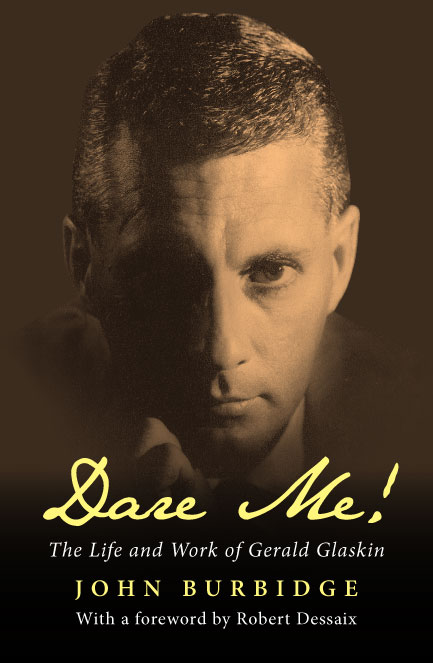
(This is the third of four in an interview series with John Burbidge, author of Dare Me! The Life and Work of Gerald Glaskin.)

Biographer-in-Perth: What was your experience dealing with that perpetual dilemma of the literary biographer: deciding how to relate your subject’s writing to their life?

John Burbidge: Actually, it was not so difficult to relate his writing to his life because so much of it is quite autobiographical. He tended to write his fiction based on real-life experiences and locate his stories in places in which lived (Henrietta Drake-Brockman admonished him as a young boy for not doing this in his early short stories, and he never forgot it.). No End to the Way is perhaps the classic example of this, but it is also true of books like A Lion in the Sun, The Beach of Passionate Love, The Man Who Didn’t Count, A Bird in my Hands and others.

I decided to let theme guide me and tried to relate particular books to certain themes. When I did this, some works fell more easily into certain chapters than others, e.g. his trilogy on lucid dreaming clearly belonged in the chapter on dreams and Glaskin’s fascination with the paranormal. Of course, reading all his published and unpublished works was a prerequisite for this and took some time (Glaskin had more than 100 short stories published, as well as 20 books and a number of unpublished manuscripts as well.)

To help me manage this complex task, I created a chart that was a cross between a timeline and a matrix. Across the top of the page I listed all the chapters (as they emerged) that roughly corresponded to a chronology of his life. The side categories were Opening Quotation, Basic Premise, Key Elements and Related Books. Naturally, I moved things around a bit, merged columns, deleted others, and so on. Although it might appear to be a highly structured way of coming at a biography, I found it to be a useful framework that allowed for a lot of fluidity and kept me from drowning in the sea of data, opinions and ideas that swamp you when tackling another’s life and work.

I also created a life timeline for Glaskin to which I kept adding information as I came across it. Across the top, by year, was his age and place of residence and down the side were Events, People, Books Written, Books Published, and Other. It allowed me to keep the big picture in front of me as the details kept adding.

 Part 4 tomorrow: Advice for New Biographers.

Dealing with ‘Glaskinitis’: interview with a biographer part 2

01 Wednesday Oct 2014

Posted by Nathan Hobby in biographers, biographical method, biographies of writers, artists and musicians, psychological aspects of biography

≈ Leave a comment

Tags

Gerald Glaskin, interview, John Burbidge


dare-me-cover

(This is the second of four in an interview series with John Burbidge, author of Dare Me! The Life and Work of Gerald Glaskin.)

Biographer-in-Perth: I felt I could perceive your struggle to know what to do with the anger and bitterness in Gerald Glaskin’s personality. Did you find it difficult trying to keep on the right side of all the people you’d interviewed, and their varying opinions of him?

John Burbidge: I sometimes wonder if I gave undue emphasis to Glaskin’s more negative traits, but having talked with dozens of people and read hundreds of letters (his and others), I found it was something that came through very strongly and repeatedly, so I couldn’t ignore it.

One early reader of the manuscript and a close friend of Glaskin’s thought I had overplayed this aspect of his personality, at the expense of his more endearing and positive qualities. I took this advice to heart and tried to ensure that I presented a fair and balanced appraisal of the man. (I later deleted an entire chapter because it was essentially just another example of his belligerent nature, so it seemed redundant.) At the same time, I did not wish to downplay something that seemed to be a critical factor in answering a primary question of this biography, namely, what contributed to Glaskin’s poor reception as a writer in his home country?

During interviews, naturally I tried to remain impartial and let people say what they wanted, regardless of whether it was pro or con Glaskin. I had no axe to grind or theory to prove, but was simply trying to paint the most honest and comprehensive portrait of the man and his work that I could. One way I attempted to do this was to reach out to a broad cross-section of people who knew him in various capacities and at different times in his life, then put together the pieces of the puzzle as they revealed themselves. Most people came across as honest and upfront, but I sensed a few held back from revealing aspects of Glaskin’s life they didn’t wish me to know about. I accepted that as one of the limitations of interviewing and trusted that further research would help fill in the blanks, which it usually did.

When I came across the paradigm of ‘Glaskinitis’, I felt it was a breakthrough because it not only confirmed what I had perceived from many other sources but it put Glaskin’s more antagonistic traits in the wider context of a family behavioural pattern.

 Part 3 tomorrow: The Works and the Life.

Capturing life: interview with a biographer part 1

30 Tuesday Sep 2014

Posted by Nathan Hobby in Uncategorized

≈ Leave a comment

I’m excited to have a recently published biographer, John Burbidge, share his thoughts on literary biography in a four-part interview on A Biographer in Perth. Part 1 today.

Nathan Hobby's avatarA Biographer in Perth

dare-me-cover

At the Perth Writers’ Festival in February, I discovered John Burbidge’s Dare Me! The Life and Work of Gerald Glaskin,  the biography of a significant Perth writer often overlooked in his home country. I had the chance to introduce myself to John at the book-signing and he has generously agreed to answer my questions about literary biography to share on this blog. John’s answers – a series of four over the next four days – are splendid reflections on the theory and praxis of writing a biography. You can find more about Dare Me! on John’s website about Glaskin; find out about John’s other work as an editor and writer at http://www.wordswallah.com, including a page on his memoir, The Boatman, to be published in Australia later this year.

*

Biographer-in-Perth: I was struck by the way you opened with a thematic treatment of the beach in Glaskin’s life…

View original post 565 more words

Capturing life: interview with a biographer part 1

30 Tuesday Sep 2014

Posted by Nathan Hobby in biographers, biographical method, biographies of writers, artists and musicians, structure of biographies

≈ 1 Comment

Tags

Gerald Glaskin, interview, John Burbidge


dare-me-cover

At the Perth Writers’ Festival in February, I discovered John Burbidge’s Dare Me! The Life and Work of Gerald Glaskin,  the biography of a significant Perth writer often overlooked in his home country. I had the chance to introduce myself to John at the book-signing and he has generously agreed to answer my questions about literary biography to share on this blog. John’s answers – a series of four over the next four days – are splendid reflections on the theory and praxis of writing a biography. You can find more about Dare Me! on John’s website about Glaskin; find out about John’s other work as an editor and writer at http://www.wordswallah.com, including a page on his memoir, The Boatman, to be published in Australia later this year.

*

Biographer-in-Perth: I was struck by the way you opened with a thematic treatment of the beach in Glaskin’s life as a way of introducing him – a good choice, I believe. (Did you mention you borrowed the technique from Nicholas Shakespeare?) I think it an approach with much to commend it, but obviously has its challenges, too, in separating events in the subject’s life which were actually close together. In my reading of your book, there is a loose chronology, but each chapter covers a theme across the whole of his life. What persuaded you to make the choice of this over a more conventional chronology?

John Burbidge: A life is such a sprawling, complicated, messy thing to try to capture in the few pages of a book that I felt it would be helpful if I could find something that could be a metaphor or sustaining symbol around which I could weave the narrative, to give the reader something to hold onto and return to. My model for this was Nicholas Shakespeare in his magnificent biography of Bruce Chatwin, in which he chose a cabinet in Chatwin’s grandmother’s house to play this kind of role in his book, as it did in Chatwin’s life. I found this a useful technique and when I tried to emulate it for Glaskin, I came up with his love of the beach, and one particular beach, Cottesloe, that played such a pivotal part in his life. I decided to start my biography there and return to it at the end, to give the story a sense of completion.

Regarding my approach, it is a blend of the chronological and thematic. I’m not sure how conscious a decision this when I started writing, but it emerged as I went along. With a biography, readers like to know how a person grows, absorbs from those influences around him, and responds to life’s challenges as they present themselves, which calls for a certain degree of chronology. In addition, with a writer, there will no doubt be a progression from his early works to his later ones, so this feeds that approach. But as I did my research (over a number of years), I found certain themes began to emerge and demand attention, so I decided to focus my chapters around those, while maintaining a basic chronological progression. It was a balancing and weaving act, with a few changes and false starts along the way.

Perhaps what cemented my choice to use this two-pronged approach was the fact that as I researched Glaskin’s life, I began to see threads that ran through it and I wanted to see if I could connect the dots over time. For example, his encounters with Aboriginal Australians and Asians from an very early age laid the groundwork for his later experiences with them as an adult and the inclusion of them as characters (usually heroes) in his novels. Or his knee-jerk reaction to threats, which exhibited themselves in his early run-ins with authority at Catholic schools and reappeared throughout his life in his aggressive behaviour whenever he felt poorly done by.

Finally, a biography is a story and needs to hold the reader’s interest like any good tale. Highly chronological biographies run the risk of becoming tedious. I decided to focus primarily on those aspects of Glaskin’s life that really grabbed me, and to mine those, on the assumption that readers, too, would be similarly affected by them.

Part 2 tomorrow – ‘Dealing with Glaskinitis’

Waiting to Die: Hannah Kent’s Burial Rites

29 Monday Sep 2014

Posted by Nathan Hobby in book review, death

≈ 4 Comments

Tags

Burial Rites, Hannah Kent, narrative

burial-rites

Hannah Kent / Burial Rites (2013)

How does someone live, knowing they are to die? In Iceland in 1829, Agnes has been sentenced to death; the date has not been fixed and while she waits, she is sent to live with the family of the district officer on their farm. The story of the murder which led to her sentence is drawn out in stages by the priest and the district officer’s wife, as well as sections narrated directly to us by Agnes. My interest was in the tension of living in the shadow of execution, and carrying on with everyday life, working at chores each day and finding some comfort in relationships. Because, as extreme and foreshortened as Agnes’s situation is, we are all under a death sentence. We just have the luxury of not dying at others’ hands while we are still healthy. Kent conveys the drama of mortality well, with an assurance and insight beyond that of most first-time novelists.

As a narrative, the dual strands work well: the clock ticking down to her execution as we move through Agnes’s narration of the past as well. It is probably the best way to narrate it. But I was conscious in this novel of how neat most retellings within narratives are. The story of the past unfolds chronologically in the present. I’ve been watching True Detective at the same time – same technique, with the protagonists telling their story ‘right from the beginning’. I’m doing the same thing in my new novel. Readers probably don’t mind, but I understand the desire of some writers to disrupt the chronology – say DeLillo in Underworld. There’s better examples, I’m sure; just can’t think of them right now. In life, you get bits of the stories in chunks, usually, mixed up and random. But that’s the whole process of narrativisation, I suppose. Giving shape to life.

On blogging and this blog

27 Saturday Sep 2014

Posted by Nathan Hobby in this blog

≈ 2 Comments

Tags

blogging

It’s my 300th post on this blog. Many of those posts came in the early years after I started the blog in 2007. There was a stage I dried up altogether, and I felt I didn’t have anything more to say here. But that seems a stage many long term blogs go through, and I’ve come out the other end this year with some more things to say. (These days it’s my theology blog which lies fallow.)

The occasion has me reflecting on blogging itself. I like the way it’s instantaneous, instead of that great time lag (newspapers aside) between writing and being published in print. I like the interaction, the evidence that someone is reading when they comment – thank you so much to those who have, over the years. It’s easier not to, and yet it’s a good thing to join in the conversation. I like the strange genre of blogging, the mini-essay, with looser rules than more formal writing, and many possibilities. All that said, blogging’s strengths are its weakness, and most posts would benefit from the long gestation that writing for print has normally entailed.

I’m not altogether comfortable with the blog blaring out my name at all times. It started that way to replace the previous blog (2003-2006); my novel was still a recent memory then, and the site was the place to promote it. I changed the name, quietly, to ‘The Annotations of…’ earlier this year, because I wanted to give a better taste of what this blog was about. ‘Annotations’ seemed to capture it, words scribbled in the margins of other texts, notes on what’s going on. ‘Book reviews’ have been the most common category I’ve written in, followed by ‘film reviews’. These are never my favourite posts; I don’t get to writing what I intend to write in here often enough. I would like to be inspired to write more autobiographical posts, mini-memoirs like the one about the bus station and the houses I used to live in. I thought of some alternative names for this blog, but they didn’t sound quite right – ‘The Unlit World of Old’ (from the Morphine song) and ‘Messages in Bottles’.

I look back and see I was writing in quite a different voice for this blog in 2007, more informally, and more concerned to write about politics and religion. I can’t imagine what I might sound like in 2021, and what I might be caring to write about. Well, actually, let’s face it – it could be much the same as now.

Link: Katharine Susannah Prichard’s typewriter

27 Saturday Sep 2014

Posted by Nathan Hobby in Katharine Susannah Prichard, links

≈ Leave a comment

Tags

typewriters

I had a pleasant surprise finding a blog post – with photographs – of Prichard’s typewriter, currently being restored by Robert Messenger of Oz Typewriter. He has posted an overview of her life and work too. Robert’s enthusiasm for typewriters is rather infectious; I’m glad to see people caring for and celebrating this aspect of the past. I doubt there’ll be photos of Tim Winton or Peter Carey’s restored laptops in a century.

Ancestry and mythology in Child of the Hurricane

26 Friday Sep 2014

Posted by Nathan Hobby in Katharine Susannah Prichard

≈ 1 Comment

Tags

ancestors, autobiography, Child of the Hurricane, Who Do You Think You Are?

Often in biographies and autobiographies, ancestry is dealt with all at once, in a sometimes unpalatable dose at the beginning of the book. Sometimes an ancestor with some connection, some parallel to the subject is highlighted, their life story summarised. Some biographers are disdainful of this, thinking it based on a rather silly theory of hereditary genius, but I think they’re too quick to be dismissive. Humans have always looked to their ancestors to explain themselves. In the case of Katharine Susannah Prichard’s Child of the Hurricane, her ancestry forms a constellation of stories, myths and anecdotes around her entire childhood, and the book doesn’t throw these off until nine chapters in. It feels like Prichard is remembering for her own sake, not as a writer, but as if she were writing the family history as some people are wont to do in their retirement. She is descended from two inter-married clans who both came to Australia on the El Dorado in 1852, and the stories keep coming: the Prichards might be descended from the fifteenth century Princess Katharine, who makes an appearance in the play Henry V; her great-uncle who built the William Wallace monument in Scotland (true) was on his way to see his sister in Australia when he died at sea (not true); her father was shipwrecked – at some time, she doesn’t when – and swam ashore with a sea-chest and his dog; her mother’s godfather was shipwrecked also, and flagged down a ship with his shirt and it became known as Shirt Island – or so she was told. The mythology of her family was rich and romantic.

Yet for all the family tales, Prichard seems to have sympathy with her aunt’s verdict that ‘She did not regret not knowing more about her antecedents, or think it important to remember them.’ (56) Prichard’s concern with her ancestry seems more a fascination with the mythology itself than a desire to truly unpick and uncover the truth. She wouldn’t have necessarily liked being on the Who Do You Think You Are? show and have the myths critically examined – although, if she were alive today, perhaps her thinking would have shifted, just as the rest of society’s has.

Anguished Portrait of Marriage: Katharine Susannah Prichard’s Intimate Strangers

25 Thursday Sep 2014

Posted by Nathan Hobby in book review, Katharine Susannah Prichard, Katharine Susannah Prichard's writings

≈ 2 Comments

Tags

1930s, beach, Intimate Strangers, J. M. Harcourt, marriage, Upsurge!

intimate-strangers

When Katharine Susannah Prichard set off from Perth for London and then a tour of the Soviet Union in May 1933, she left the manuscript of Intimate Strangers behind. It is the story of the troubled marriage of Elodie and Greg Blackwood, set in Perth during the Depression. The manuscript she left behind finished with the suicide of Greg after he has gambled their house away, and presumably before Elodie even has a chance to tell him she’s leaving him for the adventurous Jerome Hartog. While Prichard was somewhere in Sibera, war-damaged Hugo Throssell shot himself, having piled up huge debts from a failed ‘dude ranch’ venture at their home. She later expressed niggling doubt to her son, Ric, that perhaps part of his state of mind had been caused by reading the ending of the novel. Before publication in 1937, she altered the ending to set up a reconciliation between Greg and Elodie. The novel and the suicide will always be associated, and the issue has resurfaced often in the years since, including when the novel was turned into an ABC mini-series in 1981 and a magazine ran a sensationalised headline. In the introduction to the 1990 edition, Ric acknowledged parallels between Greg and Elodie and Katharine and Hugo, but emphasised the differences and the creative alchemy that amalgamates and transforms people and events beyond simple equivalencies; ‘the unknowable truth remains unknown.’

Intimate Strangers is a portrait of marriage as a concept and institution more than a portrait of a particular marriage. Elodie and Greg’s problems in their marriage of fifteen years are set against the troubled relationships of those around them, especially virginal tomboy, Dirk, who holds a line of suitors in her sway, not wanting to marry any of them, but eventually yielding to one for money. On the beaches of Calatta and then back in the suburbs of Perth, Elodie contemplates running away with Jerome as Greg continues his dalliances and fails as a provider. Over and over, the novel circles around the questions of finding sexual and personal fulfillment in marriage and out of it, with sexual attraction pulling people away from commitment. There is no clear message; the appeal and the problems of adultery are both presented. The resolution has Elodie and Greg recommit themselves to each other at the same time as they applaud Dirk’s escape from her marriage. In the moral world of the novel, Dirk’s escape is permissible because the marriage’s oppression mirrored that of the capitalist oppression of workers; as part of that, her husband Ted was violent, leaving her bruised. Greg is not as bad as Ted, but by today’s standards at least, he rapes Elodie in Chapter 6.

Intimate Strangers is distinct among Prichard’s novels. Most of her novels are researched, taking place among a particular occupation group – opal miners, timber workers, circus workers, station workers. Intimate Strangers is closer to the middle-class, urban world Prichard moved in. The urban setting is unusual for her, although as Throssell points out in the introduction, two of her lesser-known works, Windlestraws (1916) and Subtle Flame (1967) are also set in cities. Her other novels are also much more plotted; more than any other her other works, Intimate Strangers occurs within the characters’ consciousness, their inner conversations and impressions. However, just in case you were in doubt that you were really reading Prichard, in chapter 19 Dirk and Elodie turn up to a rally of unemployed workers in Fremantle to hear Tony speak, and the speeches of a number of the unemployed are reported. The tumult of the Great Depression is not foregrounded, but intrudes most here and when Greg loses his job in the downturn.

The novel is drenched in seawater and sand, lovingly evoking Perth beaches in the amalgam place of Calatta, part Rockingham, part Cottesloe. The characters begin on holiday there for the first half of the book, and return a couple of times, including for the final resolution. All the characters live to swim or sunbake or walk along the beach or fish. It is a valuable picture of Western Australian beach culture in the 1930s, sitting alongside J. M. Harcourt’s descriptions in Upsurge! (1934).

The novel enjoyed a brief renaissance in July 1981 with the broadcast of the two part mini-series adaptation. A review for the mini-series by Cul Cullen in The Women’s Weekly is one of the most hyperbolic hatchet jobs I’ve come across, describing it as ‘the silliest thing to flicker, unwatched, across our screens’; ‘aimless, stitled and utterly without relevance to a contemporary audience.’ Surely it couldn’t have been that bad; but the only way to know today is to watch the only copy I can see listed in the world at the National Archives. (In his introduction, Ric Throssell writes that it was also The Women’s Weekly which published the article at this time blaming the novel for his father’s suicide. However, The Women’s Weekly is now fully digitized for that year, and there is no trace of the article. It may have been a different magazine.)

While avoiding simplistic autobiographical readings of Intimate Strangers, it is an anguished book from an anguished period in Prichard’s life. The characters’ ponderings on how to find happiness and satisfaction in life and particularly marriage are themes which resonate today as well, even if the novel reads as a product of its age. It is not the Prichard novel I’d recommend readers start with, but it is a significant work in her corpus, demonstrating her versatility, and shedding light on its context.

Amalgam Places: The Puzzle of ‘Calatta’ in Prichard’s Intimate Strangers

16 Tuesday Sep 2014

Posted by Nathan Hobby in Uncategorized

≈ Leave a comment

I wrote on my other blog about the merits of amalgam places, with reference to Tim Winton and Katharine Susannah Prichard

Nathan Hobby's avatarA Biographer in Perth

If a writer sets a novel in a world without any familiar reference points, it might be described as surreal, or placed in the fantasy or alternative reality genre – Paul Auster’s In The Country of Last Things comes to mind. Other times, familiar places are given new names and also possibly amalgamated, while within that reality other larger places remain the same (Australia is still Australia). In Tim Winton’s work, is Angelus simply Albany renamed? One could go mad trying to tie down the suburb of Cloudstreet; it’s West Leederville, but it’s also Subiaco, and other western suburbs. And this is surely the point: renaming a familiar place loosens the constraints on the novelist. The novelist can construct their own place like building Lego, taking bits which go together. The railway line can be closer to the river. In the same way that time is manipulated, memories from…

View original post 393 more words

← Older posts
Newer posts →

Enter your email address to follow this blog and receive notifications of new posts by email.

Join 287 other subscribers

Nathan on Twitter

My Tweets

Categories

  • academic (9)
  • archives and sources (9)
  • autobiographical (63)
  • biographers (10)
  • biographical method (26)
  • biographical quests (18)
  • biographies (21)
    • political biography (2)
  • biographies of living subjects (2)
  • biographies of writers, artists & musicians (12)
  • biographies of writers, artists and musicians (20)
  • biography as a literary form (9)
  • biography in fiction (2)
  • biography in the news (2)
  • books (236)
    • authors (19)
    • book review (173)
    • reading (23)
  • Covid (2)
  • creative nonfiction (11)
  • daily life (2)
  • Daily Prompt (2)
  • death (21)
  • digital humanities (3)
  • family history (1)
  • fiction (8)
  • film and television biographies (5)
  • film review (48)
  • found objects (3)
  • historical biographies (1)
  • history (20)
  • In the steps of KSP (4)
  • John Curtin (4)
  • Katharine Susannah Prichard (113)
    • Glimpses of KSP (7)
    • My KSP biography (31)
      • deleted scenes (1)
  • Katharine Susannah Prichard's associates and connections (17)
  • Katharine Susannah Prichard's writings (34)
  • libraries (5)
  • life (21)
  • link (22)
  • links (41)
  • lists (28)
  • local history and heritage (1)
  • media (4)
  • memes and urban myths (1)
  • memoirs (10)
  • meta (2)
  • music (18)
  • news (9)
  • news and events (43)
  • obituary (1)
  • Old writing found on a floppy disk (1)
  • poetry (5)
  • politics and current affairs (26)
    • climate change (1)
  • prologues and introductions (2)
  • psychological aspects of biography (3)
  • quotes (22)
  • R.I.P. (10)
  • reading report (3)
  • religion (1)
  • religious biography (1)
  • research (5)
  • role of the biographer within the biography (2)
  • Series: A-Z of Katharine Susannah Prichard (26)
  • Series: Corona Diary (1)
  • Series: Saturday 10am (14)
  • Series: Short Stories (2016) (6)
  • Series: The Tourist (2013) (6)
  • Series: Thursday 3pm feature posts (2009) (35)
  • structure of biographies (3)
  • technology and the digital world (2)
  • television (4)
  • the nature of biography (4)
  • this blog (10)
  • Uncategorized (32)
  • Western Australia (26)
  • writing (41)

Archives

Recent Comments

Nathan Hobby's avatarNathan Hobby on Life in chronic land
wadholloway's avatarwadholloway on Life in chronic land
Nathan Hobby's avatarNathan Hobby on Life in chronic land

Bookmarks

  • Adventures in Biography
  • ANZ LitLovers LitBlog
  • Bernice Barry
  • It only goes up to your knees
  • Jane Bryony Rawson
  • Jenn Plays Recorder
  • Katharine Susannah Prichard Writers' Centre
  • Laura Sewell Matter: Essayist and Biographer
  • Mutually said: Poets Vegan Anarchist Pacifist
  • Resident Judge
  • Speaking Thylacine
  • The Australian Legend
  • Timothy Parkin Poetry
  • Treefall Writing – Melinda Tognini
  • Whispering Gums
  • Wrapped up in books: the home of Guy Salvidge

Top Posts

  • The forgotten and the remembered: brief notes on the history of the Hodder & Stoughton £1000 Novel Competition
  • [Thursday 3pm #21] Belle Costa Da Greene : 'Girl Librarian'
  • Reader's Digest Condensed Books: 'as difficult to dispose of as bins of radioactive waste'
  • Review: Art Was Their Weapon
  • About

Blog Stats

  • 246,885 hits

Tag Cloud

9/11 19th century 33 1920s 1921 1930s 1950s 1970s 1971 1981 2000s 2004 2011 2015 2017 20000 Days on Earth A.S. Byatt Aboriginals activism Adam Begley Adrian Mole adultery afterlife Agatha Christie Alan Hollinghurst Alberto Manguel Alfred Deakin Amazing Grace Americana Amy Grant An American Romance Andre Tchaikowsky Andrew McGahan angela myers anne fadiman Anne Rice Arabian Nights archives art arts funding A Serious Man Ash Wednesday ASIO atheism Atonement Australia Australian film Australian literature Australian Short Story Festival autism autobiography autodidact Barbara Vine beach Belle Costa da Greene Bell Jar best best-of Bible Big Issue Bill Callahan biographical ethics biographical quest genre biographies birthday birthdays Black Opal Bleak House Blinky Bill blogging blogs Blue Blades Bodega's Bunch bog Booker book launch booksale Borges Brenda Niall Brian Matthews Brian McLaren Britney Spears Burial Rites Burke and Wills buskers C.S. Lewis C.S. Lewis canon capitalism Carol Shields Carson McCullers Catcher in the Rye Catholicism celebrities Charles Dickens Charlie Kaufman childhood Child of the Hurricane children's books Choir of Gravediggers Christianity Christian writing Christina Stead Christmas Christopher Beha Cinque Terra Claire Tomalin classics cliches climate change Coen brothers coincidence Collie Collyer coming of age Communism concert Condensed Books consumerism Coonardoo Cormac McCarthy Corrections cosy fiction Dara Horn David Copperfield David Ireland David Marr David Suchet death Death of a president definition demolition Dennis LeHane dentist diaries divorce doctorow Doctor Who documentaries donald shriver Don DeLillo Don DeLillo Donna Mazza Donna Tartt Don Watson Dostovesky doubt drama dreams of revolution Drusilla Modjeska E.M. Forster ebooks editing Eichmann Eisenstein Elizabeth Kostova email empathy ensmallification existentialism faith Falling Man fame families fantasy fiction film and television folk football Frank Barscombe Fremantle Press G.K. Chesterton Gabrielle Carey Gallipoli genealogical fiction Genesis Geoff Nicholson George W. Bush Gerald Glaskin Gilead Golden Miles Goldfields Trilogy Graham Greene grandad great novels Greenmount Guinness World Records Guy Salvidge Hannah Arendt Hannah Kent Hans Koning Hans Koningsberger Harper Lee Haxby's Circus Hazel Rowley He-Man headers heaven Heidegger hell Henrietta Lacks Henry Morton Stanley Herman Hesse heroes Hey Dad! historical fiction history Holden Caulfield holidays Homer & Langley Home Song Stories House of Cards House of Zealots house of zealots Hugo Throssell humour Ian McEwan In between the sheets Indonesia Infamous Inside Llewyn Davis interstellar interview Intimate Strangers Invisible Ireland ISBNs Ishiguro itunes J.D. Salinger J.M. Coetzee J.S. Battye Janet Malcolm Jennifer Egan JFK JFK assassination Joanna Rakoff Joel Schumacher John Burbidge John Fowles John Howard John Kinsella John Updike John Updike Jonathan Franzen journal writing JSB Judgment Day Julia Baird Julian Barnes Kafka Kalgoorlie Kate Grenville Katherine Mansfield Kevin Brockmeier King's Park KSP Writers' Centre language last ride Laurie Steed Left Behind Leonard Cohen Leo Tolstoy Libra Library of Babel Library of Babel Lila Lily and Madeleine links Lionel Shriver lionel shriver lists literary fiction literature Lleyton Hewitt lost book Louisa Louisa Lawson Louis Esson louis nowra love letter Lubbock Lytton Strachey Madelaine Dickie Man Booker man in the dark Margaret Atwood Margaret River Press Marilynne Robinson mark sandman meaning of life Melbourne Mel Hall meme memorialisation memory MH17 Michael Faber Mike Riddell Miles Franklin mining boom missionaries moleskine Moon Palace morphine Mother Teresa movies Music of Chance My Brilliant Career names Napoleon Narnia narrative Narrow Road to the Deep North Narziss and Goldmund Natalie Portman Nathaniel Hobbie national anthem Nick Cave Nina Bawden non-fiction nonfiction noughties novelists novels obituaries obscurity On Chesil Beach Parade's End Paris Hilton Passion of the Christ past patriotism Paul Auster Paul de Man Perth Perth Writers Festival Peter Ackroyd Peter Cowan Writers Centre phd Philip K. Dick Philip Seymour Hoffman pierpontmorgan poetry slam politics popular fiction popular science Possession postapocalyptic postmodernism Pride prophetic imagination publications Pulp Purity Queen Victoria Rabbit Angstrom radio Radio National Randolph Stow rating: 5/10 rating: 6/10 rating: 7/10 rating: 8/10 rating: 9/10 rating: 10/10 ratings reading fiction autobiographically reading report Rebecca Skloot recap red wine reincarnation juvenile fiction rejection review - music reviewing rewriting Richard Flanagan Richard Ford Rick Moody Roaring Nineties Robert Banks Robert Hughes Robert Silverberg Robert Wadlow Robinson Crusoe Rolf Harris romance Rome ruins Russell Crowe Ruth Rendell Sarah Murgatroyd scalpers science fiction Science of Sleep secondhand books Secret River sermon illustration sex short stories Silent Woman Simone Lazaroo Simpsons Siri Hustvedt slavery Smashing Pumpkins social interactions social justice some people i hate sources South Australia souvenirs speculation speech speeches sport status anxiety Stephen Lawhead Stranger's Child subtitles Subtle Flame Sue Townsend suicide Surprised By Hope Suzanne Falkiner Sylvia Plath Synecdoche TAG Hungerford Award tapes teabags Ted Hughes The Children Act The Cure The Fur The Imitation Game theology The Pioneers The Revolutionary Thomas Disch Thomas Hardy Thomas Henry Prichard Thomas Mann thriller time Tim La Haye Tim Winton Tolstoy Tom Wright top 10 Towering Inferno Tracy Ryan Trove Truman Capote tshirts TS Spivet Twelve Years a Slave underrated writers Underworld unwritten biographies urban myth USA vampires Venice Victoria Cross Victoriana Victorian era Victorianism Victoria Park video Voltron w Wake in Fright Walkabout Walter M. Miller war War and Peace war on terror Water Diviner Wellington St Bus Station Westerly Western Australia West Wing What Happened to Sophie Wilder? Whitlams wikipedia Wild Oats of Hans William Wilberforce Winston Churchill Witches of Eastwick Working Bullocks workshop World War One writers writing Writing NSW youth Zadie Smith Zeitgeist Zelig

Enter your email address to follow this blog and receive notifications of new posts by email.

Join 287 other subscribers

Pages

  • About
  • My novel: The Fur
  • The Red Witch: A Biography of Katharine Susannah Prichard

Categories

  • academic (9)
  • archives and sources (9)
  • autobiographical (63)
  • biographers (10)
  • biographical method (26)
  • biographical quests (18)
  • biographies (21)
    • political biography (2)
  • biographies of living subjects (2)
  • biographies of writers, artists & musicians (12)
  • biographies of writers, artists and musicians (20)
  • biography as a literary form (9)
  • biography in fiction (2)
  • biography in the news (2)
  • books (236)
    • authors (19)
    • book review (173)
    • reading (23)
  • Covid (2)
  • creative nonfiction (11)
  • daily life (2)
  • Daily Prompt (2)
  • death (21)
  • digital humanities (3)
  • family history (1)
  • fiction (8)
  • film and television biographies (5)
  • film review (48)
  • found objects (3)
  • historical biographies (1)
  • history (20)
  • In the steps of KSP (4)
  • John Curtin (4)
  • Katharine Susannah Prichard (113)
    • Glimpses of KSP (7)
    • My KSP biography (31)
      • deleted scenes (1)
  • Katharine Susannah Prichard's associates and connections (17)
  • Katharine Susannah Prichard's writings (34)
  • libraries (5)
  • life (21)
  • link (22)
  • links (41)
  • lists (28)
  • local history and heritage (1)
  • media (4)
  • memes and urban myths (1)
  • memoirs (10)
  • meta (2)
  • music (18)
  • news (9)
  • news and events (43)
  • obituary (1)
  • Old writing found on a floppy disk (1)
  • poetry (5)
  • politics and current affairs (26)
    • climate change (1)
  • prologues and introductions (2)
  • psychological aspects of biography (3)
  • quotes (22)
  • R.I.P. (10)
  • reading report (3)
  • religion (1)
  • religious biography (1)
  • research (5)
  • role of the biographer within the biography (2)
  • Series: A-Z of Katharine Susannah Prichard (26)
  • Series: Corona Diary (1)
  • Series: Saturday 10am (14)
  • Series: Short Stories (2016) (6)
  • Series: The Tourist (2013) (6)
  • Series: Thursday 3pm feature posts (2009) (35)
  • structure of biographies (3)
  • technology and the digital world (2)
  • television (4)
  • the nature of biography (4)
  • this blog (10)
  • Uncategorized (32)
  • Western Australia (26)
  • writing (41)

Archives

Recent Comments

Nathan Hobby's avatarNathan Hobby on Life in chronic land
wadholloway's avatarwadholloway on Life in chronic land
Nathan Hobby's avatarNathan Hobby on Life in chronic land

Bookmarks

  • Adventures in Biography
  • ANZ LitLovers LitBlog
  • Bernice Barry
  • It only goes up to your knees
  • Jane Bryony Rawson
  • Jenn Plays Recorder
  • Katharine Susannah Prichard Writers' Centre
  • Laura Sewell Matter: Essayist and Biographer
  • Mutually said: Poets Vegan Anarchist Pacifist
  • Resident Judge
  • Speaking Thylacine
  • The Australian Legend
  • Timothy Parkin Poetry
  • Treefall Writing – Melinda Tognini
  • Whispering Gums
  • Wrapped up in books: the home of Guy Salvidge

Top Posts

  • The forgotten and the remembered: brief notes on the history of the Hodder & Stoughton £1000 Novel Competition
  • [Thursday 3pm #21] Belle Costa Da Greene : 'Girl Librarian'
  • Reader's Digest Condensed Books: 'as difficult to dispose of as bins of radioactive waste'
  • Review: Art Was Their Weapon
  • About

Blog Stats

  • 246,885 hits

Tag Cloud

9/11 19th century 33 1920s 1921 1930s 1950s 1970s 1971 1981 2000s 2004 2011 2015 2017 20000 Days on Earth A.S. Byatt Aboriginals activism Adam Begley Adrian Mole adultery afterlife Agatha Christie Alan Hollinghurst Alberto Manguel Alfred Deakin Amazing Grace Americana Amy Grant An American Romance Andre Tchaikowsky Andrew McGahan angela myers anne fadiman Anne Rice Arabian Nights archives art arts funding A Serious Man Ash Wednesday ASIO atheism Atonement Australia Australian film Australian literature Australian Short Story Festival autism autobiography autodidact Barbara Vine beach Belle Costa da Greene Bell Jar best best-of Bible Big Issue Bill Callahan biographical ethics biographical quest genre biographies birthday birthdays Black Opal Bleak House Blinky Bill blogging blogs Blue Blades Bodega's Bunch bog Booker book launch booksale Borges Brenda Niall Brian Matthews Brian McLaren Britney Spears Burial Rites Burke and Wills buskers C.S. Lewis C.S. Lewis canon capitalism Carol Shields Carson McCullers Catcher in the Rye Catholicism celebrities Charles Dickens Charlie Kaufman childhood Child of the Hurricane children's books Choir of Gravediggers Christianity Christian writing Christina Stead Christmas Christopher Beha Cinque Terra Claire Tomalin classics cliches climate change Coen brothers coincidence Collie Collyer coming of age Communism concert Condensed Books consumerism Coonardoo Cormac McCarthy Corrections cosy fiction Dara Horn David Copperfield David Ireland David Marr David Suchet death Death of a president definition demolition Dennis LeHane dentist diaries divorce doctorow Doctor Who documentaries donald shriver Don DeLillo Don DeLillo Donna Mazza Donna Tartt Don Watson Dostovesky doubt drama dreams of revolution Drusilla Modjeska E.M. Forster ebooks editing Eichmann Eisenstein Elizabeth Kostova email empathy ensmallification existentialism faith Falling Man fame families fantasy fiction film and television folk football Frank Barscombe Fremantle Press G.K. Chesterton Gabrielle Carey Gallipoli genealogical fiction Genesis Geoff Nicholson George W. Bush Gerald Glaskin Gilead Golden Miles Goldfields Trilogy Graham Greene grandad great novels Greenmount Guinness World Records Guy Salvidge Hannah Arendt Hannah Kent Hans Koning Hans Koningsberger Harper Lee Haxby's Circus Hazel Rowley He-Man headers heaven Heidegger hell Henrietta Lacks Henry Morton Stanley Herman Hesse heroes Hey Dad! historical fiction history Holden Caulfield holidays Homer & Langley Home Song Stories House of Cards House of Zealots house of zealots Hugo Throssell humour Ian McEwan In between the sheets Indonesia Infamous Inside Llewyn Davis interstellar interview Intimate Strangers Invisible Ireland ISBNs Ishiguro itunes J.D. Salinger J.M. Coetzee J.S. Battye Janet Malcolm Jennifer Egan JFK JFK assassination Joanna Rakoff Joel Schumacher John Burbidge John Fowles John Howard John Kinsella John Updike John Updike Jonathan Franzen journal writing JSB Judgment Day Julia Baird Julian Barnes Kafka Kalgoorlie Kate Grenville Katherine Mansfield Kevin Brockmeier King's Park KSP Writers' Centre language last ride Laurie Steed Left Behind Leonard Cohen Leo Tolstoy Libra Library of Babel Library of Babel Lila Lily and Madeleine links Lionel Shriver lionel shriver lists literary fiction literature Lleyton Hewitt lost book Louisa Louisa Lawson Louis Esson louis nowra love letter Lubbock Lytton Strachey Madelaine Dickie Man Booker man in the dark Margaret Atwood Margaret River Press Marilynne Robinson mark sandman meaning of life Melbourne Mel Hall meme memorialisation memory MH17 Michael Faber Mike Riddell Miles Franklin mining boom missionaries moleskine Moon Palace morphine Mother Teresa movies Music of Chance My Brilliant Career names Napoleon Narnia narrative Narrow Road to the Deep North Narziss and Goldmund Natalie Portman Nathaniel Hobbie national anthem Nick Cave Nina Bawden non-fiction nonfiction noughties novelists novels obituaries obscurity On Chesil Beach Parade's End Paris Hilton Passion of the Christ past patriotism Paul Auster Paul de Man Perth Perth Writers Festival Peter Ackroyd Peter Cowan Writers Centre phd Philip K. Dick Philip Seymour Hoffman pierpontmorgan poetry slam politics popular fiction popular science Possession postapocalyptic postmodernism Pride prophetic imagination publications Pulp Purity Queen Victoria Rabbit Angstrom radio Radio National Randolph Stow rating: 5/10 rating: 6/10 rating: 7/10 rating: 8/10 rating: 9/10 rating: 10/10 ratings reading fiction autobiographically reading report Rebecca Skloot recap red wine reincarnation juvenile fiction rejection review - music reviewing rewriting Richard Flanagan Richard Ford Rick Moody Roaring Nineties Robert Banks Robert Hughes Robert Silverberg Robert Wadlow Robinson Crusoe Rolf Harris romance Rome ruins Russell Crowe Ruth Rendell Sarah Murgatroyd scalpers science fiction Science of Sleep secondhand books Secret River sermon illustration sex short stories Silent Woman Simone Lazaroo Simpsons Siri Hustvedt slavery Smashing Pumpkins social interactions social justice some people i hate sources South Australia souvenirs speculation speech speeches sport status anxiety Stephen Lawhead Stranger's Child subtitles Subtle Flame Sue Townsend suicide Surprised By Hope Suzanne Falkiner Sylvia Plath Synecdoche TAG Hungerford Award tapes teabags Ted Hughes The Children Act The Cure The Fur The Imitation Game theology The Pioneers The Revolutionary Thomas Disch Thomas Hardy Thomas Henry Prichard Thomas Mann thriller time Tim La Haye Tim Winton Tolstoy Tom Wright top 10 Towering Inferno Tracy Ryan Trove Truman Capote tshirts TS Spivet Twelve Years a Slave underrated writers Underworld unwritten biographies urban myth USA vampires Venice Victoria Cross Victoriana Victorian era Victorianism Victoria Park video Voltron w Wake in Fright Walkabout Walter M. Miller war War and Peace war on terror Water Diviner Wellington St Bus Station Westerly Western Australia West Wing What Happened to Sophie Wilder? Whitlams wikipedia Wild Oats of Hans William Wilberforce Winston Churchill Witches of Eastwick Working Bullocks workshop World War One writers writing Writing NSW youth Zadie Smith Zeitgeist Zelig

Blog at WordPress.com.

  • Subscribe Subscribed
    • Nathan Hobby, a biographer in Perth
    • Join 287 other subscribers
    • Already have a WordPress.com account? Log in now.
    • Nathan Hobby, a biographer in Perth
    • Subscribe Subscribed
    • Sign up
    • Log in
    • Report this content
    • View site in Reader
    • Manage subscriptions
    • Collapse this bar

Loading Comments...