
Tags
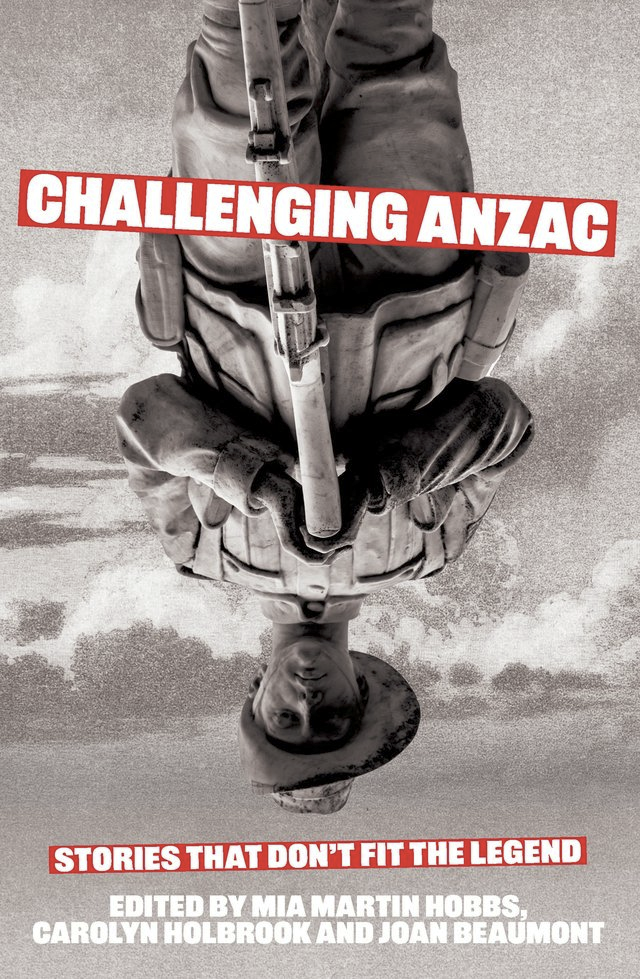
It turns out I can’t leave behind Katharine Susannah Prichard and her world. I am honoured to have contributed an essay about Prichard’s husband, Hugo Throssell, to Challenging Anzac: Stories That Don’t Fit the Legend. The book, edited by Mia Martin Hobbs, Carolyn Holbrook and Joan Beaumont, was published this month by NewSouth in time for Anzac Day.
My essay is called “Bolshevik Anzac: the politics, celebrity and mythology of Hugo Throssell VC’. The book’s blurb begins, ‘The Anzac legend has shaped Australia’s national identity for more than a century. Yet many experiences of war do not fit comfortably within this.’ Throssell is an uncomfortable fit with the legend in two ways. Firstly, he came back from the Great War with a Victoria Cross only to declare on Peace Day in July 1919 that the war had turned him into a socialist. Secondly, in 1933 in the face of financial ruin and the symptoms of PTSD, he killed himself. The biography of Throssell written by John Hamilton connects these two events, depicting Throssell as someone ostracised for his political beliefs, leading to to his suicide fourteen years later. I think this is too simplistic. Throssell’s political activism burnt out quickly as it became apparent capitalism was not about to collapse in Australia and he needed to focus on earning money for his family. After declaring he was a socialist, he wasn’t invited to give any more speeches but he was honoured in Anzac day commemorations and other ceremonies right up until his death. In writing this essay I came to a better understanding of Throssell’s brief activism and the nuanced way he was included but silenced in ceremonies after Peace Day.
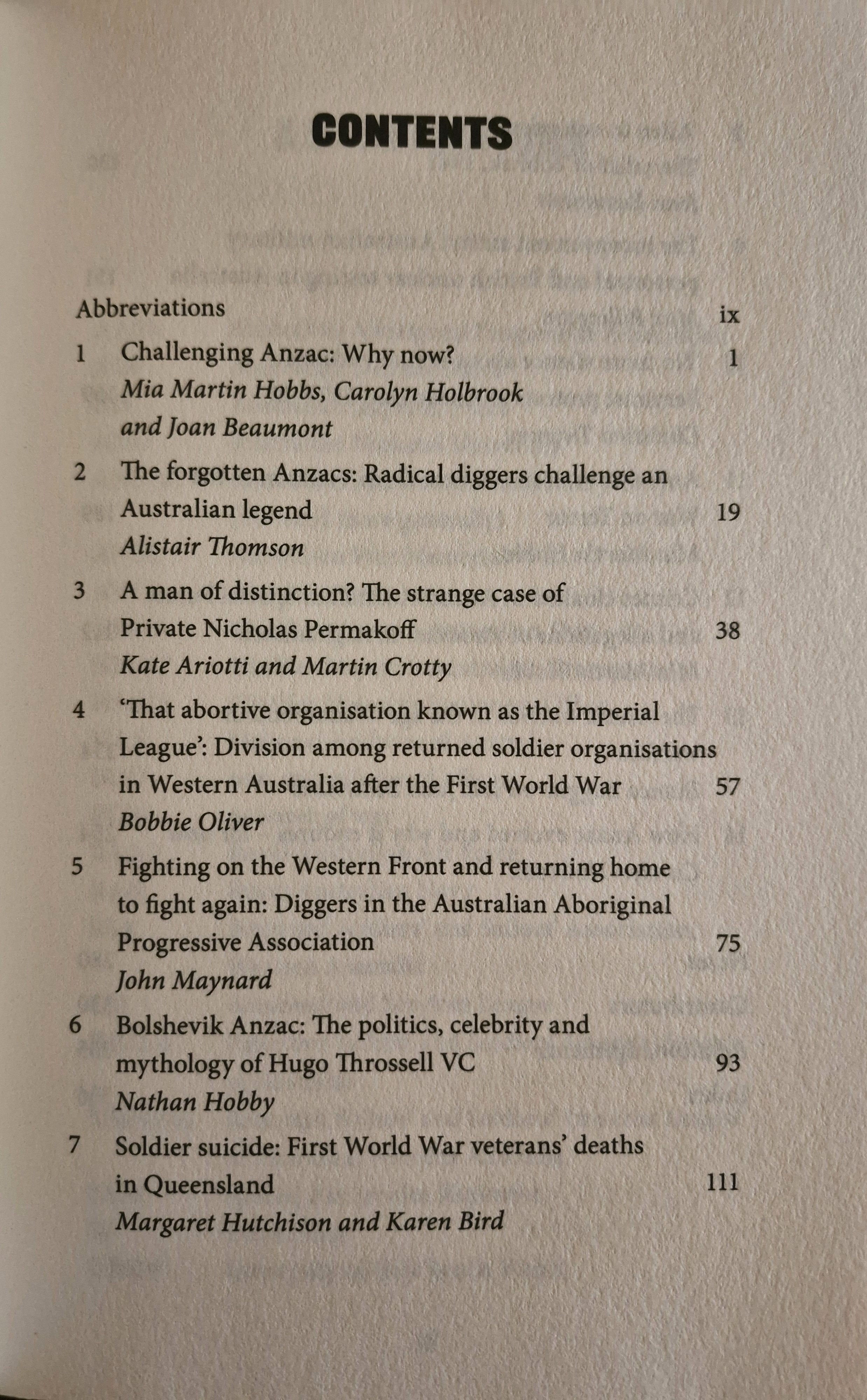
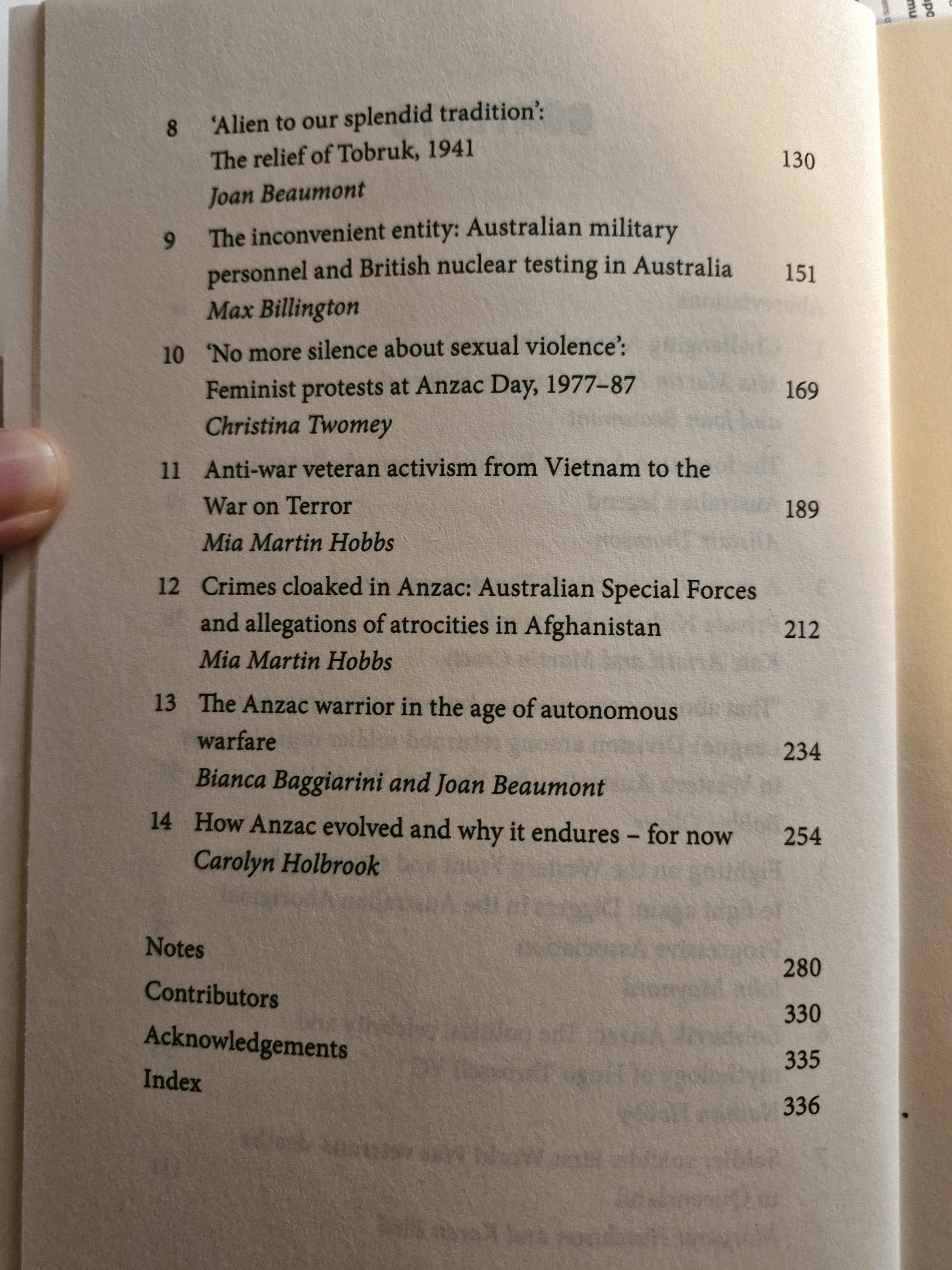
I was lucky enough to have my essay edited by Joan Beaumont, whose work on the world wars and the Depression I admire. She was a great editor and strengthened my work. I also enjoyed being part of the conversation with the other scholars in this book; we all gave feedback on each other’s work at a seminar in late 2024. There’s some fantastic essays on many different aspects of the theme, from veteran activism to autonomous warfare. The publisher’s page doesn’t list the chapters, so here’s a scan of the contents pages.


Just bought the book, Nathan. Can’t wait to read your essay! Denise
LikeLike
Thanks for your support, Denise, you’re very kind! Hope you enjoy it.
LikeLike
I’ve just reserved this at the library!
It’s interesting timing… I’ve just finished reading Beyond the Broken Years, Australian Military History in 1001 Books by Peter Stanley (of Honest History fame) and it’s not military history, it’s about Australia’s history of military history and how it has changed and adapted over time. (I hope to finish my review of it today.)
I’ve been interested in ‘the myth’ ever since I read Clare Wright’s You Daughter’s of Freedom, where she makes the case that Australia was a model of progressive government that we ought to be proud of, and then there was WW1 and all that was hijacked by history-making around the Anzacs. Schoolchildren have been learning about that, at the expense of the other ever since. And about ‘heroes’ rather than humanity.
I don’t want to say anything prejudicial to that prominent case of a war hero’s fall from grace because it’s before the courts, but it’s interesting to see how keyboard warriors in social media have been engaged in trying to shape public opinion about it. I was interested also to see, yesterday, the ABC screening a very old survivor of the bombing of Darwin, and what he seemed most upset about was that his experience didn’t have the same prominence in public discourse as Pearl Harbour. He appeared to be more resentful about ‘being forgotten’ than about the experience itself. That might, of course, just been what the ABC chose to screen rather than other aspects of what might have been a longer interview. They did not, I might add, put what he said in context at all. Those of us who’ve read Peter Grose’s An Awkward Truth might have expected better from the national broadcaster, but it’s another example of shaping opinion about our military history.
LikeLiked by 1 person
Very interesting, Lisa! How incredible to still have survivors of Darwin bombing around to tell their stories. I will take a look at the new Peter Stanley book you’ve been reading.
LikeLike