
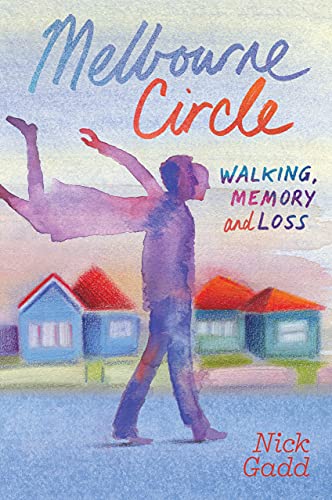
Nick Gadd’s Melbourne Circle: Walking, Memory and Loss (Arcadia 2020) is a tender and beautiful book about the traces of the past in the suburbs of today. Over many months Gadd walked in a circle (sort of) around Melbourne with his wife. She died soon after they completed the circle and the book, poignantly, is addressed to her, interweaving a memoir of their lives together.
He moves from suburb to suburb, focusing on an abandoned site, or a ghost sign visible on an old shop, and uncovers what can be uncovered of the small stories behind the traces, stories of fortunes made and lost, dimly remembered products, and changing customs. ‘The suburbs are places of layered stories,’ Gadd writes. ‘Most are forgotten, but traces linger for those who want to connect with lost lives.’ Yes, I do! I love Gadd’s reflections on the old Sands and McDougalls directories and the postcode system which preceded the current one.
Some quotes:
What is the significance of a ghost sign? I say it is a symbol of mortality, reminding us that everything solid is bound to disappear. You say no, it represents survival. These signs were meant to be transitory, but here they are, one hundred years later, proclaiming their message. Ghost signs are living paradoxes, presences that point to absences. Once a sign gradually fades into illegibility, or is hidden from sight, it ceases to be a sign of any kind. There is no protection for the vast majority of them: any day a familiar ghost sign might be gone, painted or bricked over or otherwise defaced. But even that is not the end of it. Images can be saved and duplicated online, and reproduced in the minds of those who saw them. They become a part of countless memories, a ghost of a ghost.
‘Ghost signs’ chapter.
What is the best way to remember someone we have lost? Some people set up foundations. Run marathons, climb mountains. Take up a cause. Raise funds for a hospital. Write a song. Find some way to derive meaning from what has happened. God’s finger touched him and he slept. Does any of that, in the end, make us feel any better? Is that even the point? I’m certain a marble monument to you would be of no comfort to me. But it’s as well not to judge what anyone else does in these situations.
‘Three Women of St Kilda’ chapter
But something remains, as long as there is someone to remember: memories of a gesture, a word, a smile, as when one turns a corner and comes across a faded sign, a pointing hand. In these moments the past is present, and you are next to me again.
‘Lost names of Emerald Hill’ chapter
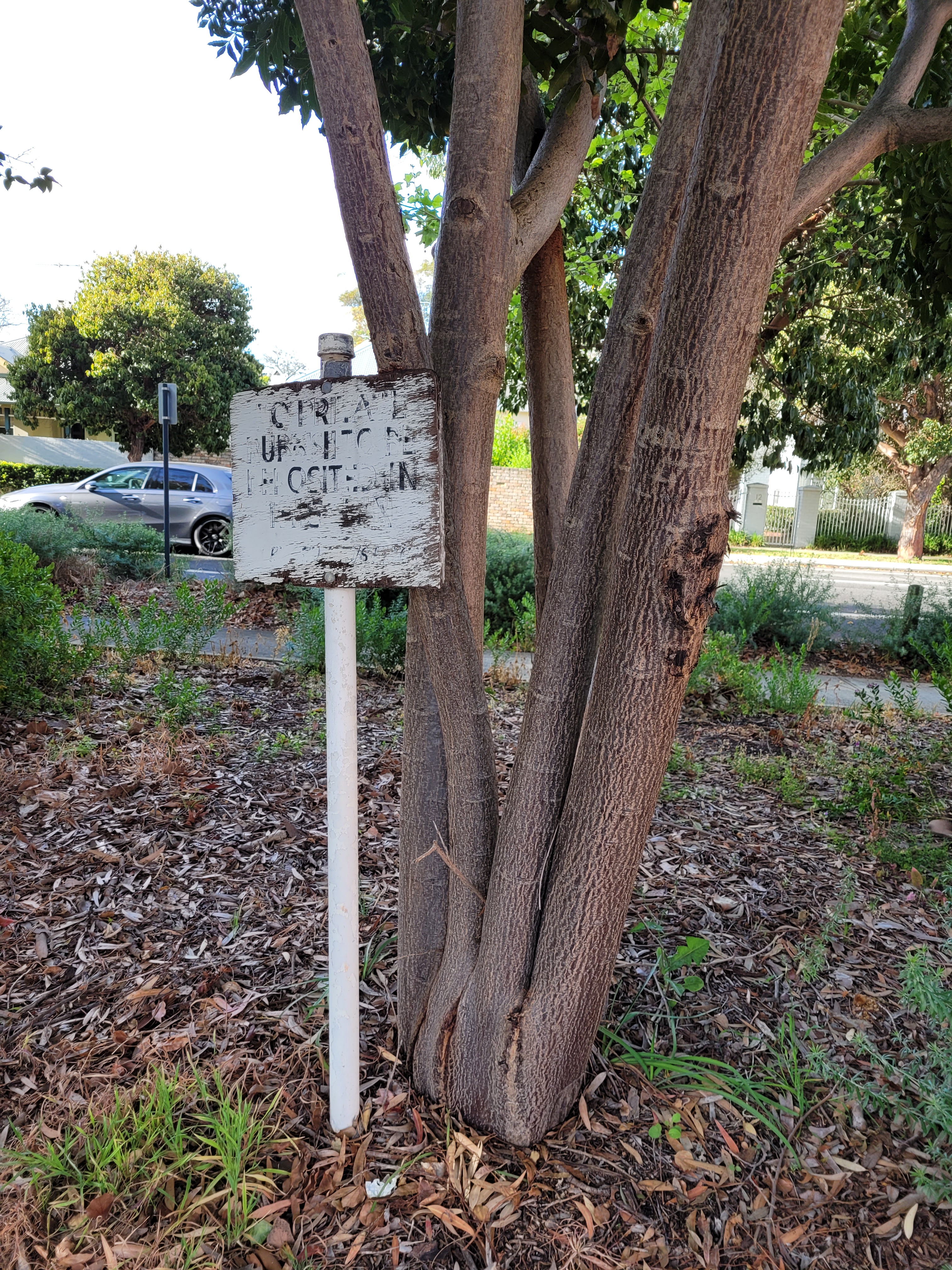
This ghost sign can be found at my children’s school. It sits on the edge of a busy carpark and no-one has noticed enough to have it removed or repainted. I deciphered it previously, but I’ve forgotten what it said. It’s not on the level of the ghost signs Gadd discusses in his book, but it’s a little peek into the past I go past several times a week and its mundane, continued existence gladdens my heart.
 Nathan Hobby, a biographer in Perth
Just lovely
LikeLike
I love ghost signs! There are several in my neighourhood (Haberfield) and loads throughout Sydney and surrounding areas. Will definitely read this book, thanks for the review, Nathan. Denise
LikeLike
My favourite ghost sign is Greys is Great which used to be on the side of all milk bars/corner shops, and of which you still sometimes see shadows.
LikeLike