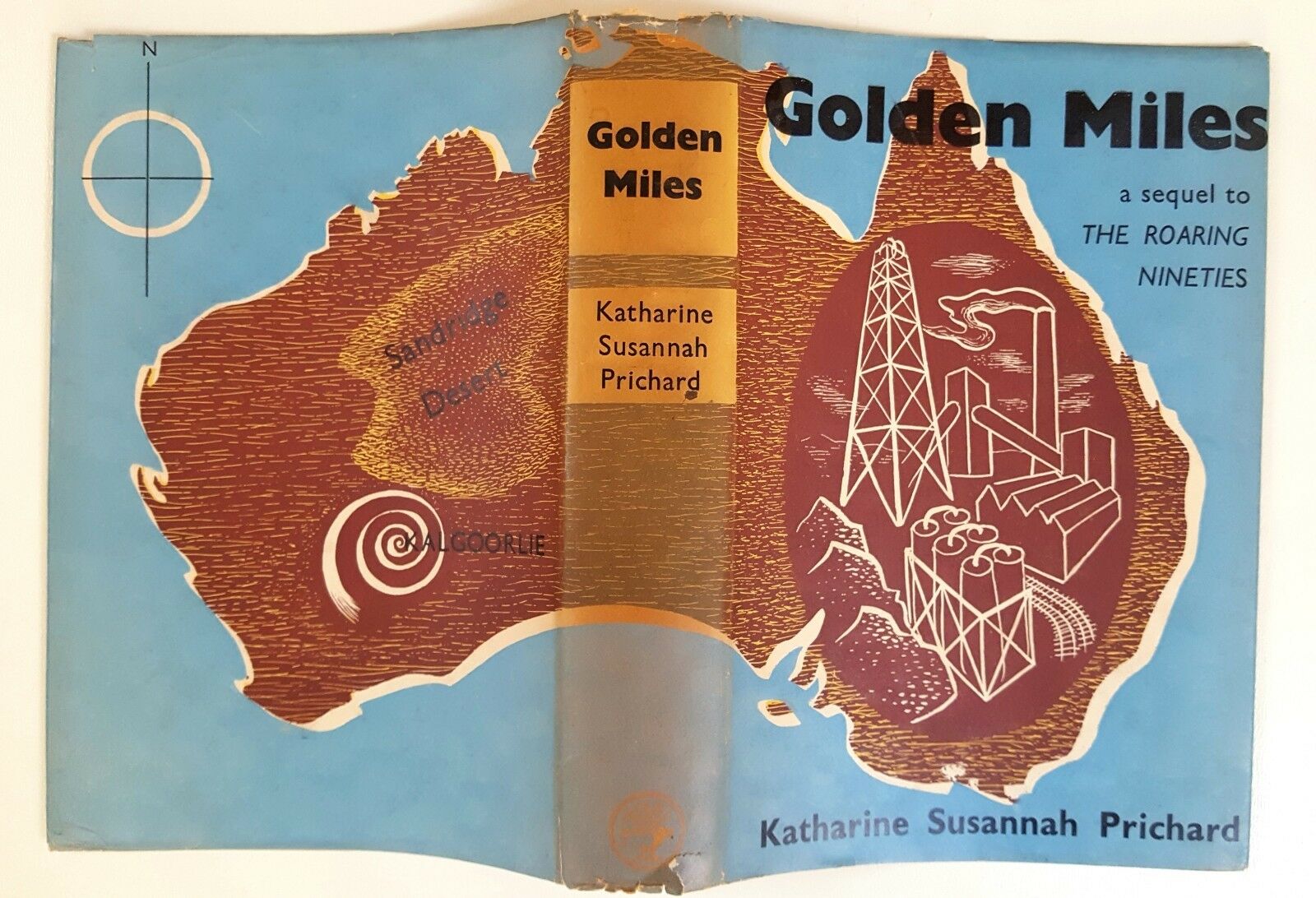
An A to Z of Katharine Susannah Prichard: A is for… AUSTRALIA

Katharine was actually born in Fiji, but both her parents had grown up in Australia. She loved Australia and spent her career trying to express its distinctiveness, seeking out the stories of the people and places of the country’s back-blocks.

She turned 18 in the year of Federation, 1901, and like many of her generation, saw Australia as the hope of the world – a newly-created nation which would leave behind the old hatreds and injustices of the old country and forge a more just society. Something changed for her in 1916-1917. She saw a country sending its young men off to die while the rich got richer. She fell in love with a socialist and endured the death of her beloved brother at the front. She came to see the hope of the world not in the gradual reform Australia had been undertaking but the revolution in Russia.

She never lost her love for Australia but for the rest of her life she carried a great disappointment in her country that only intensified as it moved further away from its early egalitarian impulses.

I started this A-Z of KSP on my Facebook author page to promote my forthcoming book. I thought I’d share it here too. You can find my Facebook page here

The Red Witch: A Biography of Katharine Susannah Prichard, by Nathan Hobby

This is a review I will always treasure! I have been so encouraged by Lisa Hill of ANZLitlovers along the way of researching and writing my biography and I’m thrilled she liked my book so much. I actually reference Lisa at a critical point in the book – her review of Coonardoo highlights a discussion of Aboriginal massacres that has been overlooked in some of the scholarship about the novel.

It means a lot to be put alongside Hazel Rowley’s Christina Stead (not to mention the other biographies Lisa lists!) – I found that biography in a secondhand bookshop in Glenelg in April 2014 a few months before I officially started and was so impressed by it I decided I had found a model to aspire to.

Lisa Hill's avatarANZ LitLovers LitBlog

Having come to the end of Nathan Hobby’s superb new biography of Katharine Susannah Prichard (1883-1969), I’ve come to the conclusion that I would have liked her very much — but I’m not sure that she would have liked me! Despite all the circumstances against her, she was brave in contesting the prevailing political climate, tenacious in pursuing her craft as an author and generous to a fault. But she fell out with longstanding friends who didn’t share her political views and I probably would have been one of those.
But I would still have bought KSP’s books.  Indeed, I still am.  Reading the bio prompted me to buy two more, so that in addition to those I’ve already reviewed, now I’ve added her last novel Subtle Flame (1967) and her second short story collection Potch and Colour (1944) to my existing Prichard TBR i.e. Working Bullocks (1926)…

View original post 1,096 more words

The larger-than-life subject?

I was underwhelmed by Janet Malcolm’s The Journalist and the Murderer; it wasn’t as profound as I hoped or as engaging. It was fine, just not great. But I was taken with her discussion of the problem for the journalist / nonfiction novelist – or, I would add, perhaps biographer – of needing to select a subject who is ‘a ready made literary figure’. She argues that journalist McGinniss chose a subject in murderer Jeffrey MacDonald who just wasn’t interesting enough:

Continue reading

Launch events for The Red Witch

My first copy of The Red Witch: A Biography of Katharine Susannah Prichard arrived in February and the book became a lot more real to me! We opened a good bottle of Cab Merlot from 2014, the year I began the biography, but alas it didn’t go well with packet sweet and sour chicken which had already been made. I’m so happy with how MUP have published it, from the design to the printing and not to forget the editing. The official publication date has been put back to 17 May due to delays at the ports, but I’ve been assured there were still be copies at my launch eight days earlier. Here’s details of some events taking place:

Continue reading

A death

My best friend, Jonathan, took his own life a week ago. I hate that his whole story now seems to lead up to his end. If he’d been saved somehow, most people would never know and his life would have gone on, apparently with a completely different arc. I think of that moment in the movie Match Point when the ball could fall on either side. There are so many different, better ways this should have gone.

Continue reading

Memory and Mortality in Gnomesville

Tags

,

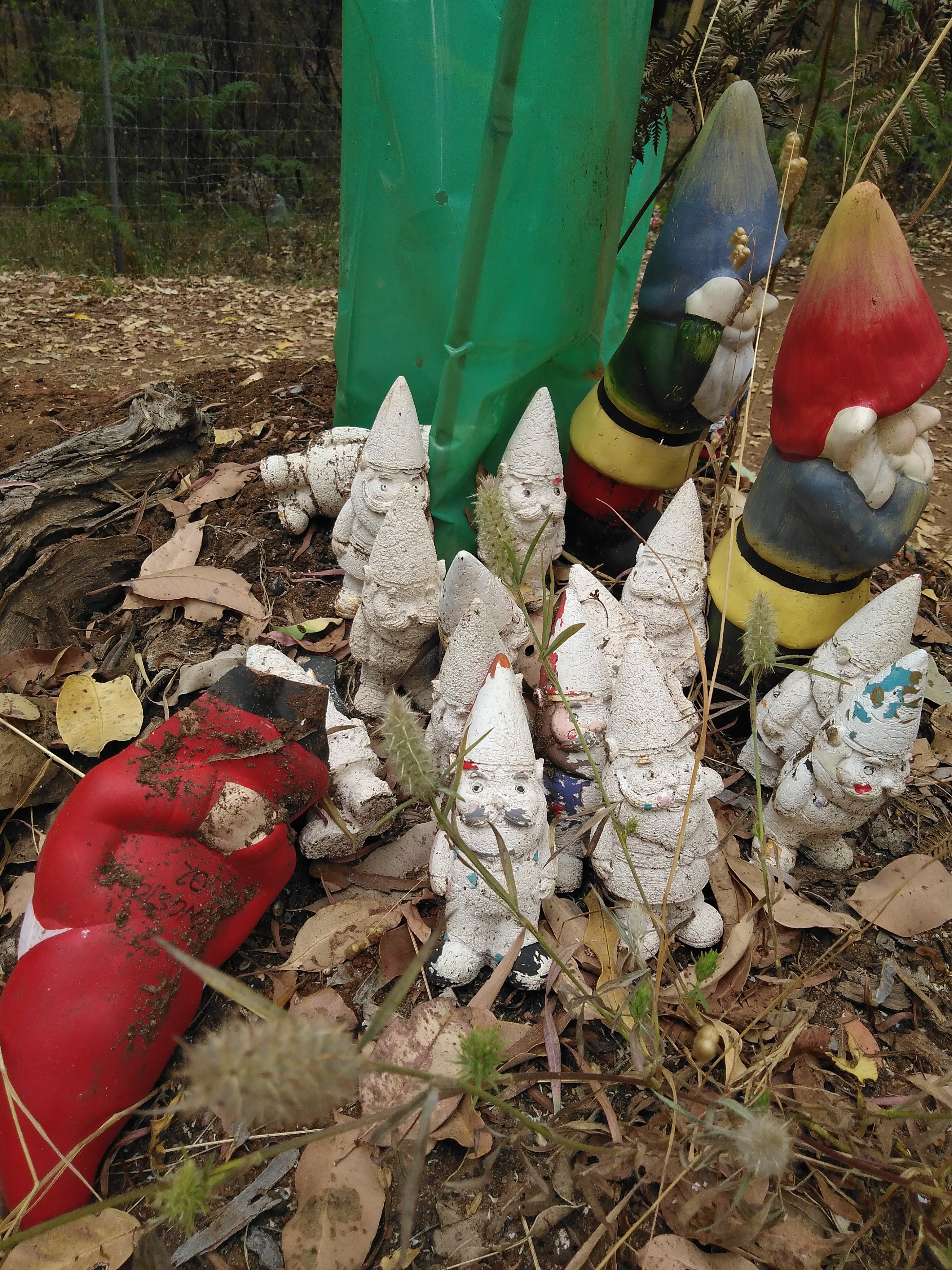
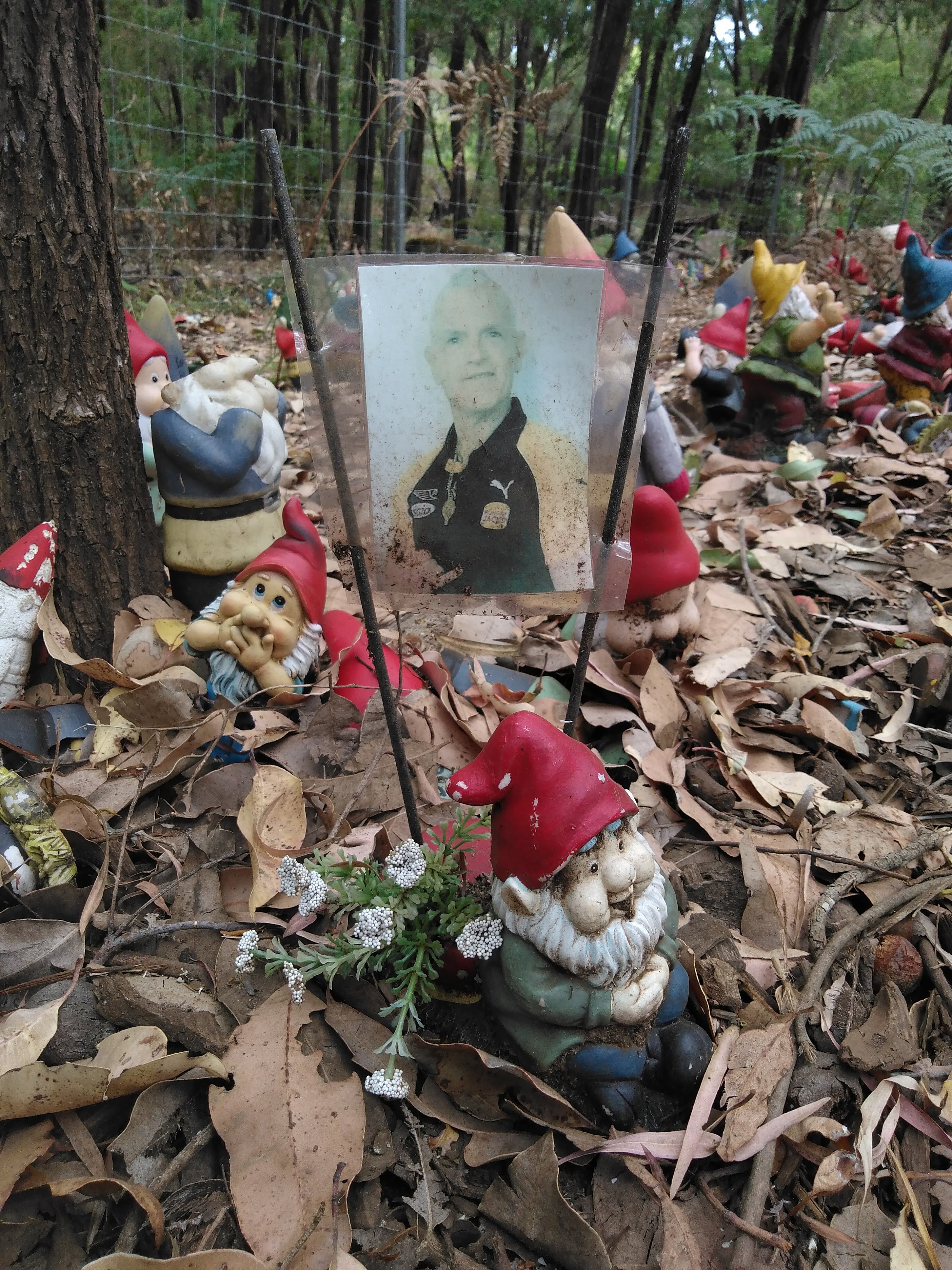
We were at Gnomesville the other day. Since the 1990s people have been leaving gnomes in the bush by the side of a round-about in a sparsely-populated corner of the Ferguson Valley. There’s thousands of gnomes spread around the trees and along the tracks. A few of the gnomes are broken but not many; I think the broken ones must be removed. One of the main stretches follows a seasonal creek-bed and the flat clear surface is filled with shiny new gnomes with dates from recent weeks written in texta. Perhaps, like me at first, they didn’t notice it was a creek. A good proportion of gnomes on higher ground are spattered with mud, survivors of at least one year of winter’s rains. Others were probably washed away.

Continue reading

Australian literature 2020: an introduction and bibliography

Tags

The annual literary wrap-ups of 2021 are about to start but I want to go all the way back in time to 2020. The fourth issue of The Journal of Commonwealth Literature each year includes an introduction to the previous year’s literature of selected Commonwealth nations accompanied by a bibliography. Since 1976, my PhD supervisor, Van Ikin, has been coordinating the Australian entry and I’ve been privileged to be a co-author for the last six years.

We give an overview of major works and their reception as well as themes, trends and controversies. It’s inevitably incomplete and skewed somewhat to our personal interests and biases! It’s also weighted by the format toward literary fiction, poetry, drama, and literary criticism with non-fiction and other fiction only covered selectively.

The official published version is now available on the journal’s website but requires a login; you can download our unpublished version for free as a pdf below.

For the historical record, here’s the compilers by years of publication:

Van Ikin and John Maddocks 1976-1984
Van Ikin and Brenda Walker 1984-1987
Van Ikin and Kieran Dolin 1988, 1990-1997
Van Ikin and David McCooey 1989
Van Ikin and Elizabeth Hardy 1998-2000
Van Ikin and Darren Jorgensen 2001-2006
Van Ikin and Keira McKenzie 2007-2013
Van Ikin, Keira McKenzie and Margaret Stevenson 2014-2015
Van Ikin, Nathan Hobby, Keira McKenzie, Margaret Stevenson 2016
Van Ikin, Nathan Hobby and Margaret Stevenson 2017-2018
Van Ikin and Nathan Hobby 2019—>

The Red Witch cover and pre-orders

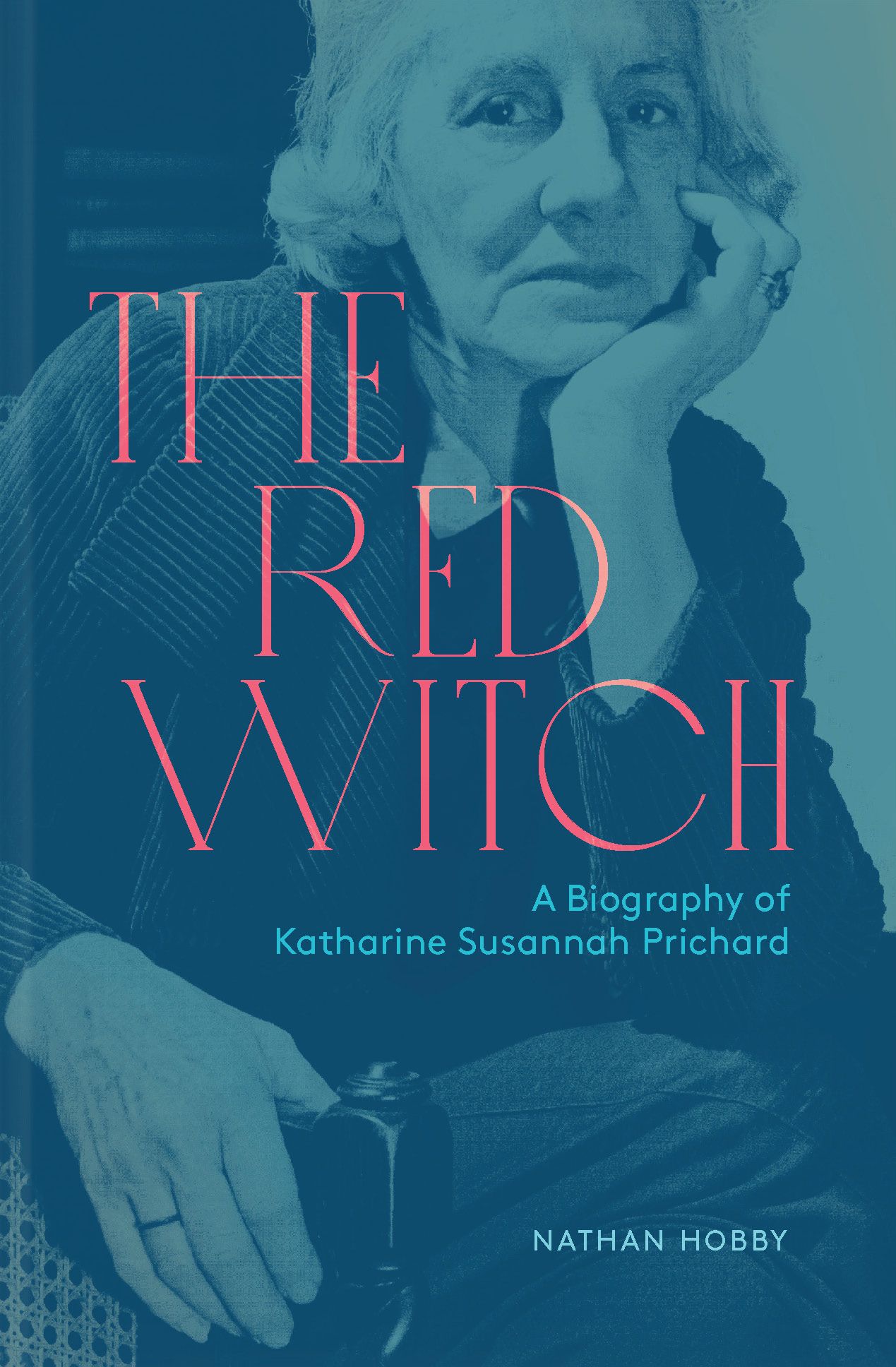
Here’s the cover for my biography of Katharine Susannah Prichard! The Red Witch is now available for pre-order from the publisher’s website ahead of the 3 May 2022 release in hardback and ebook – https://www.mup.com.au/books/the-red-witch-hardback. It’s still five months away, but feeling much closer with this. I’m so pleased it will be published in hardback and under the Miegunyah imprint of Melbourne University Publishing. The cover uses a 1949 photograph by D. Glass of Katharine in her sitting room at Greenmount. So happy with the design. I hope to speak about the book somewhere near you next year – will just have to see what Covid (and WA) does.

Remembering the Professor

Tags

,

In my suburb there’s a non-descript shopping centre café which smells a little greasy and sells quiche and bacon and eggs and is inexplicably busy, mostly with older people. It’s next to the bottle shop and every time I pass it I think of the professor because the last time I saw him, in 2003, he was seated at one of its outside tables waiting for his order. I called out his name and when I wasn’t sure he recognised me I reminded him of how I’d been in his classes and he brusquely assured me he remembered me. Was I an unwelcome intruder? I must have spoken to him for a while because I recall showing off to him that my novel had just won an award and would be published. He told me what a bad state publishing was in and how his own novel had been rejected. To my surprise, it was a thriller with some connection to 9/11. The other thing I remember telling him was that I’d recently moved into the area, into a haunted house. What I meant by that was that I was living in a rundown house from the 1950s full of traces of the people who had lived there before, from the vintage stinking carpets to the rusty bedframe in the backyard under the decaying tree-house. But I said it was haunted because I knew he was into parapsychology and there’s a stirrer in me that people are slow to recognise. He took the bait and said something like, ‘When you say haunted, I hope you realise there are many haunted houses in this city.’ If he elaborated—and I would have been hoping he did—I’ve forgotten what else he said.

Continue reading