Giving a sense of everyday life

I think biography should attempt to give a sense of how the subject has lived their everyday life. Not in exhaustive detail, but well chosen sketches. Most of the attention of the biography, of course, needs to be taken up by the more dramatic moments, but a sense of the everyday gives some context for the dramatic.

As in a novel, a key way to convey such a picture is in long sentences summing up a long period of time by observing the patterns. In his biography of his mother, Katharine Susannah Prichard, Ric Throssell does it well at this point:

…and somehow contrived to write among the distractions of the city and the realities of the present: the war, the pot-boiling chores still necessary to earn her living; the political commitments she had accepted; friends who called unendingly to talk of art and literature, of world affairs and industry, and the personal problems of love, marriage, children and the state of their health — friends among the men of power in industry and radical politics; those whose names were to fade into obscurity; young writers who later achieved recognition; the known and once-famous, who drifted with the years and disappeared; the unimportant, insignificant, unaccomplished men and women who earned Katharine’s affection by simply being what they were.

Ric Throssell,  (2012-05-23). Wild Weeds and Windflowers: The life and letters of Katharine Susannah Prichard (p. 120). Allen and Unwin. Kindle Edition.

I’ve started a new blog – A Biographer in Perth

I’ve been very interested in biography lately, and my reflections on that deserve their own home, given they are a little specialised. If you’re interested in my thoughts on the art of biography, please visit “A Biographer In Perth” – http://biographerinperth.wordpress.com/.

It’s been the experience of writing a novel about a biographer over the last five years which has sparked my interest in biography. I’ve realised it’s a genre with such potential, sitting between literature and history. It’s a genre which attempts to recover lost time, and to make the dead live again. Or perhaps it attempts to do neither of those things, but only to put in order the fragments of individual lives, the traces they’ve left behind. It’s a personal approach to the past, and involves assembling a narrative from the archives, testing the writer’s skills of synthesis, structure and theme. It seems a noble pursuit to me.

I will be continuing to update this blog with more general matters, and An Anabaptist in Perth with matters theological.

The biography of Hugo Throssell

Tags

, ,

107913-lieutenant-hugo-vivien-hope-throssell

The Price of Valour by John Hamilton (Pan MacMillan, 2012)

Hugo Throssell is a fascinating, tragic figure, well deserving of his own biography apart from his role as husband to one of Western Australia’s most important writers, Katharine Susannah Prichard. Indeed, they met in London during WW1 as two Australian celebrities in their respective fields. (The photo here is not of Prichard, but Throssell with an unidentified nurse.) Throssell was a war hero, Victoria Cross winner and son of a prominent conservative politician. The tension between this and his marriage to a communist writer is part of what drives this biography by John Hamilton.

Hamilton is a journalist by background, and has written two other books about World War I. He approaches Throssell as a military historian; in telling the story of Throssell’s life, it is the trench battles in World War I which receive the most attention. This is appropriate, because it is Throssell’s role as a war hero which made him famous, and the trauma of battle which would contribute greatly to his suicide in 1933.

Hamilton’s research is the greatest achievement of this book. He managed to track down the only (then) living person who could remember Throssell well, a niece who died at nearly 95 a year before the book was published. He finds official records which shed much light on so many aspects of Throssell’s life – not just his military service, but even a note from the Northam RSL requesting that the premier remove Throssell from his role as the soldier’s representative on the Soldiers Settlement Scheme (303).

It’s always an achievement in biography to revivify long lost events in ways that go beyond the bare official record, but don’t seem indulgent. One scene which comes vividly to life in this case is the description of the infamous event at Northam on Peace Day, 19 July 1919, when Throssell declared that the war had made him a socialist (286). ‘The crowd’s warmth toward the speaker gave way to a frozen, disbelieving silence.’

I was going to write that a second example was that of the grand opening of Throssell’s rodeo (330), which helped ruin him financially – but looking back, it is a lengthy quote from the local paper, The Swan Express, which brought it to life for me. It’s a device Hamilton uses often through the book, and I’m not sure what to make of it. The extended quotes are well chosen, and present the events in the language and outlook of the day, which is surely valuable. Yet is it ‘good’ method in a biography? I imagine it might be disallowed in a more academic biography. (On that note, although providing a thorough and helpful bibliography, Hamilton does not properly reference the quotes; another case of a convention of popular biography vs academic biography.)

Writing in The Canberra Times, reviewer Michael McKernan argues that the division of the book into ‘triumph’ (in World War I) and ‘tragedy’ (in his marriage) is an incorrect one – the war experiences were part of the tragedy, setting up what was to follow. Hamilton may not disagree – as a military historian he seems very aware of the cruelty and tragedy of war – but in another important sense, perhaps McKernan’s comment reveals fundamentally different ways of looking at the meaning of war.

For me, there are important underexplored questions in the account of Throssell’s tragedy. To what extent did his speech at Northam make him a pariah? His job with the soldier’s settlement scheme continued until 1930. Were the objections to his rodeo scheme related to his politics? The question may be unanswerable, and Hamilton has at least provided some good evidence. Another question – what was Throssell’s politics, and how did it relate to his entrepreneurial activities as a land developer, gold miner, and rodeo promoter?  And what was the state of Katharine and Hugo’s marriage when she left on her extended trip, going to stay for a time with her ex-lover and his new partner in Russia? Again, probably unanswerable, and I may be wrong to ask for further speculation than Hamilton provides.

Inside Llewyn Davis: existence as repetitive and unresolved

Tags

, , ,

insidellewyndavis

Spoiler Alert: this is a discussion of the film for those who have seen it, or will never see it, or don’t need to be surprised by a film.

Luna’s small screen #2 wasn’t even full for the 7:10pm Sunday sneak preview screening of the Coen Brothers’ new film, Inside Llewyn Davis. It should have been full; it’s a profound film, a bleak, existential film tempered by the Coens’ humour.

The film is like life: repetitive, with so many unresolved threads. It follows struggling, self-destructive folk singer Llewyn Davis from couch to couch across New York and to Chicago in 1961. The road trip to Chicago is a case in point. He hitches a ride with a mysterious beat poet and a madman played by John Goodman. After the beat poet is arrested, he leaves John Goodman overdosed in the car. We never return to the characters; there is no resolution or explanation – just like life. The scene of Llewyn driving back to New York through the night in the snow is beautiful. He sees the lights of Akron, where his two year old child lives, a child he has only just discovered exists. We see him contemplating turning off the road to visit, and in a lesser film, or at least in a more conventional film, he would have. But in this film, he keeps driving. He can only see a little way ahead, and the snow is drifting down. He hits a shape on the road; it looks like the cat he abandoned. Coincidence drives the film, but it’s coincidence that leads nowhere – Llewyn loses a ginger cat, finds a different ginger cat, and runs over a ginger cat in the course of the narrative. It has significance for him, but it doesn’t resolve anything.

Coen brothers’ canon is remarkable for its diversity and unity. There is something distinctive about their vision, whether they’re making a low-key musical drama or a brutal thriller. This film resembles most two of my favourites – The Man Who Wasn’t There (2001) and A Serious Man (2009) – a trilogy of films about loners up against a hostile world at different points in the twentieth century. We don’t have to like Llewyn or identify with him to see a brutal truth about the cruelty of life in his story, in his missed opportunities, in his self-destruction, in the fickleness of fate.

*

As a footnote, given it was a film driven by co-incidence, I felt a strange pleasure in the Coens using my surname for two of the characters – Elizabeth Hobby the middle-aged folk singer and her husband, the mysterious Mr Hobby who gives Llewyn a good punch in the face to bookend the film.

A biography of the city: David Whish-Wilson’s superb portrait of Perth

Tags

,

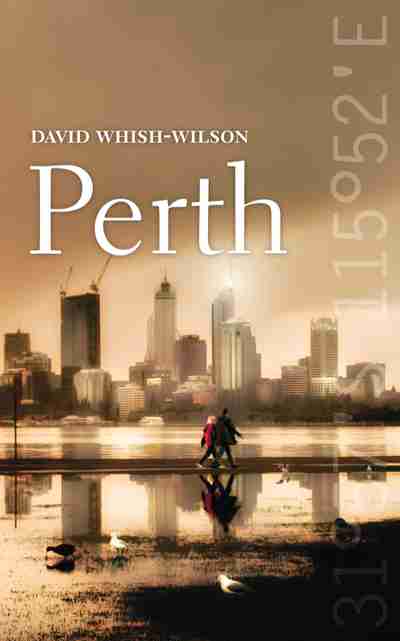
Perth-book-cover

David’s Whish-Wilson’s new book, Perth, combines memoir, history, geography, architecture and literature to create a rich biography of the city. It’s part of the ‘cities’ series from the publisher, New South.

Whish-Wilson begins with the story of Fanny Balbuk, an Aboriginal woman born in 1840 who reacted to white encroachment ‘by stubbornly continuing to follow the tracks of her ancestors’ (3), meaning she would walk through people’s yards and houses. It’s a fascinating story, but Whish-Wilson’s use of it shows some of his skill as a writer. He starts by recalling how he first heard the story in primary school, giving us a taste of how stories and mythologies are transmitted in Perth (an ongoing theme in the book). He quotes Daisy Bates to give a contemporaneous portrait of Fanny and then describes himself looking out over Perth, picturing her route and being reminded ‘that beneath the geometric frame of the modern city… there exists footpads worn smooth over millennia’ (4).

The book’s long chapters group a diverse range of material around the themes of ‘river’, ‘coast’, ‘plain’, and ‘light’. As an example, in “The Plain”, the focus is on suburbs, which leads to a fascinating overview of the history and architecture of different periods of suburbs, from the inner-suburbs out to Armadale and its place in Perth’s self-perception. The theme brings out the work of Tim Winton and Peter Cowan, the effect of suburban serial killers, and a couple of stories from his own life, finishing with a reflection on the future of Perth’s spread out suburbs in an age of climate change and water shortage. The structure is loose, and gives the work the quality of a wide-ranging conversation – which is both a strength and weakness.

I have learned so much about my own city reading this book. Whish-Wilson’s breadth of reading is remarkable, as is his eye for the fascinating story, image or anecdote. I discovered, for example, that Alan Bond’s offices in the top three floors of the Bond Tower lay vacant from for nearly a decade, and in 2009 they were found to still be in their original condition, ‘so that Bond’s desk, chair and boardroom table were invitingly advertised as part of the new lease’ (79).

This book captures the mythology of Perth, with a strong sense of its past, present and future.

Looking through the archive of JSB

Tags

,

I finally worked up the courage to look through the archive of one of my prospective biographees yesterday. It felt a little like they were bringing his body out, two boxes of his remains. (Biographer Martin Thomas makes this comparison in The Many Worlds of R.H. Mathews, the weight of his papers about Mathews roughly equal to that of a corpse.)

JSB’s archive was quite sterile. I was reminded of a fictional biographer’s comments:

Scientists often think differently from the rest of us as to what constitutes a good biography; a dry as dust account of the subject’s work and a few bald details as to dates of birth, marriage and death, suits them best. That this was Henry’s opinion soon emerges from an examination of those chests’ contents. They include a published copy of each one of his learned tomes, as well as papers from other haematologists… – Barbara Vine, The Blood Doctor p. 23.

The first document in the box was a defence of freemasonry. This was a major preoccupation of his. Much of the box was taken up by his typescripts of radio broadcasts on various general knowledge topics. The only letters were from after his death,  relating to his estate.

There was a list of everyone who attended his funeral in 1954. This could be a lead, come to think of it. There would surely be a couple of them alive still, people who might be able to provide memories of the man. There was also a list of each floral tribute received; it was a long list – the funeral must have been awash with flowers.

Lisa Mitchell, Nick Cave and several points in between: my favourite songs in 2013

1. Whipbird – Pretty for the Dirt

I discovered this delightful Brisbane folk band on Radio National’s Inside Sleeve. It’s a perfect mix of poetry, pop and violins. She sings, ‘Just remember I lay at the bottom of a lake / And you’re not such a stronger swimmer, boy.’ Hope they release an album in 2014.
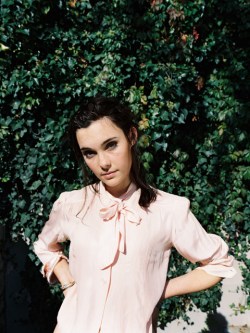
Lisa Mitchell2. Lisa Mitchell – Land Beyond the Front Door

I discovered this song waiting to leave a plane stuck on the tarmac. It made the delay worthwhile – thank you Virgin. I listened to more Lisa Mitchell than anyone else this year. Her quirky voice is sweet, playful and sadly happy.

3. Emilana Torrini – Autumn Sun

It’s not the Icelandic singer-songwriter’s best album, but I think this is one of her best songs, a beautiful ballad about fading youth which becomes a song about a fan who betrays her.

4. Lissie – Go Your Own Way

I will be quite happy to never see the Nicholas Sparks film preview for which this was the soundtrack. But it’s an achingly beautiful cover of the Fleetwood Mac song. I just wish I could get into the rest of Lissie’s work.

5. Deborah Conway and Willie Zygier – Book of Life

I thought Deborah Conway was just eager to get off Q and A when she suddenly stood up toward the end, but she was heading over to sing a song, and it’s a wonderful ballad with many years of pain and love in it. One of the few singers I liked as a ten year old in 1991 (“It’s Only the Beginning”) and like today twenty-two years later.
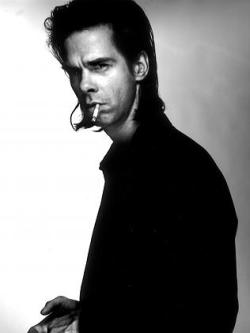
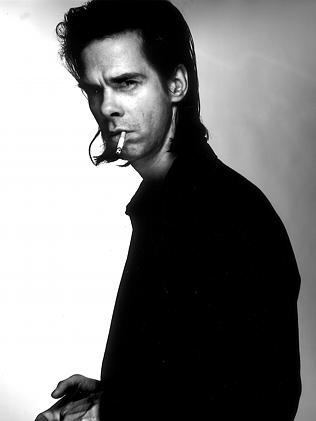
nickcave6. Nick Cave and the Bad Seeds – Push the Sky Away

It’s hard to pick out songs from Nick Cave’s new album, because it works so well as an album. It’s thankfully less heavy than their last release, back to the more introspective, slow rumbling I like best. It was a special thing to see them play in the amphitheatre in March.

7. Florence and the Machine – Bedroom Hymns

In the same movie session I fell for Lissie’s “Go Your Own Way”, I was also entranced by this song, the soundtrack to the preview for The Great Gatsby. It’s dark, catchy and haunting. It seemed perfect for the film; I was waiting for it eagerly all the way through when I went to see the film, only for it to never play – it was only in the preview. It’s also only a bonus track on the album, a strange choice, given I think it’s the finest track. The album itself doesn’t let up; the rest is just as intense, and perhaps less interesting.

8. David Bowie – Heat

In an album I haven’t got into, this track stands out, like an outtake from my favourite Bowie release, Heathen. It’s a surreal, ominous electronic epic.

9. The Innocence Mission – God is Love

Innocence Mission is the opposite of Florence and the Machine. An upbeat Catholic folk band with a husband and wife at its core, this song’s title sums it up.

10. Angus and Julia Stone – Living on a Rainbow

My friends were going on about these two years ago, and here I am coming very late to the party. Julia Stone sounds a lot like Lisa Mitchell, and this is a beautiful song.

Honourable mention: Adrian Crowley – Summer Haze Parade

Someone close to me told me to turn this off when I started playing it, because apparently he’s woefully tuneless. I wouldn’t know about; I just know he reminds me of Leonard Cohen on a good day.

You can find most of these songs on a Spotify list here.

From Lincoln to Little Dizzle: My favourite films in 2013

Tags

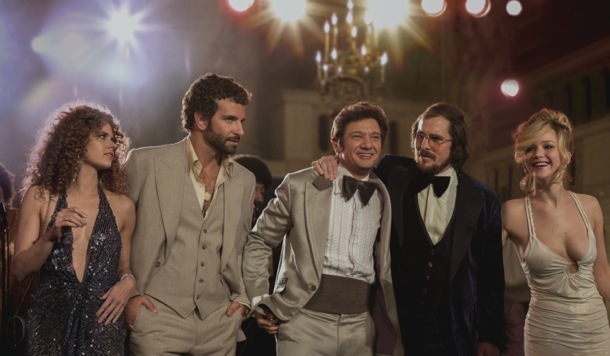
American Hustle

 New Films

1. American Hustle – a film of surprises, lit up by Amy Adams’ performance, with a script which knows how to use the conventions of drama while also being fresh and strange. The playful evocation of the seventies fascinated me.

2. Lincoln – the sort of serious drama I appreciate more and more as I get older. Review here.

3. The Great Gatsby – I thought at first the drama would be lost in the glitz, but in the second half, the film hits hard. Particularly devastating for me is the realisation that Daisy is not a good person.

4. The Turning – the adaptation of Tim Winton’s short story collection (my favourite work of his) misses the connections between the stories because each story is individually adapted by different creative teams, with different actors for the same characters. But this is also the film’s strength, a kaleidoscope of Australian talent around the theme of remembering the town you grew up in from middle age.

5. Mystery Road – this film noir set in the Australian outback makes my list on the proviso that I understand the ending next time I see it, because I was just confused. But it is an atmospheric clash of genre and setting as an Aboriginal detective returns to the town he grew up in to solve a murder mystery.

On DVD

1. Safety Not Guaranteed – a quirky drama-comedy about a reporter and his two sidekicks who go to answer a classified ad looking for people to accompany a time-traveller. It’s not about time travel at all; it’s about outsiders finding meaning in life. It stars one of my favourite TV actors (Aubrey Plaza) and is a surprise delight.

2. Seeking a Friend For the End of the World – a film which shares some of the same tone of Safety Not Guaranteed. It brings together two wonderful actors – Keira Knightley and Steve Carell (US Office) – wondering what to do when there’s only a couple of weeks left to live. It’s dark but funny and made me cry. A lot of critics didn’t like it; I respectfully disagree.

3. The Immaculate Conception of Little Dizzle – this is one of the strangest films I’ve ever seen, and makes it on the list for being so bewilderingly interesting. My wife saw it on the videostore shelf and thought it worth trying; I’m glad of her serendipitous find. It’s like Fight Club meets David Cronenberg. After becoming addicted to experimental cookies discarded in a lab, an anarchist cleaner obsessed with the meaning of life gives birth to a blue fish creature. Obviously not a film for everyone. Unfortunately, it ends suddenly and unconvincingly, but even that’s part of the charm – like a dream which you suddenly wake up from.

My favourite books of 2013

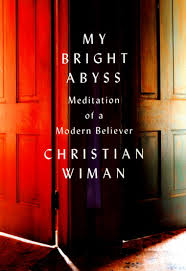
brightabyss

1. My Bright Abyss: Meditation of a Modern Believer / Christian Wiman

A beautiful memoir of faith, doubt, death and poetry. I feel he gets to the heart of our existential dilemma as well as anyone I’ve ever read. I noticed in The Australian that Tim Winton had this as one of his favourites of the year too. I wrote on it here.

2. The Many Worlds of R.H. Mathews: In Search of an Australian Anthropologist / Martin Thomas

The amateur anthropologist R.H. Mathews lacked all reflexivity; he would not yield any of his secrets to his biographer, Martin Thomas. So, like great biographical questers before him, Thomas makes a narrative of the quest itself. This being the theme of my thesis, I found it riveting and beautiful.

3. Unapologetic / Francis Spufford

Much like Wiman, Spufford writes beautifully about faith, which is all too rare. Review here.

4. Dear Life / Alice Munro

Reviewers were falling over themselves to pin new superlatives to Munro’s work even before she won the Nobel Prize this year. I completely agree with them: her short stories seem perfect to me. I read this collection on a bus through Italy, giving both the landscape the flavour of Munro and Munro the flavour of Italy. I can’t hold in my head all the marvels of this collection; I just went back to my copy and, flicking through, I was shocked at how much I had forgotten. One which sticks is “Amundsen”, a story about a young woman’s doomed affair with an asylum doctor; it has the scope and profundity of a novel—as do many of the others.

 5. The Aspern Papers / Henry James

If I was reading more fiction, I would spend a lot of time with Henry James, because my failed attempts to read his longer novels have still given me some hint of his brilliance, if only I had the perseverance. I read his novella, The Aspern Papers, on the plane between Melbourne and Perth, and it absorbed me. Set in Venice, it is the elegiac story of a biographer desperately trying to win over the aging lover of a late poet to gain access to his papers. I got to see Venice later in the year, and I kept thinking of Henry James and the biographer walking the same strange streets I was walking. ‘Just here—this is where it could have happened.’

A note to Mrs Brown found in a box of books

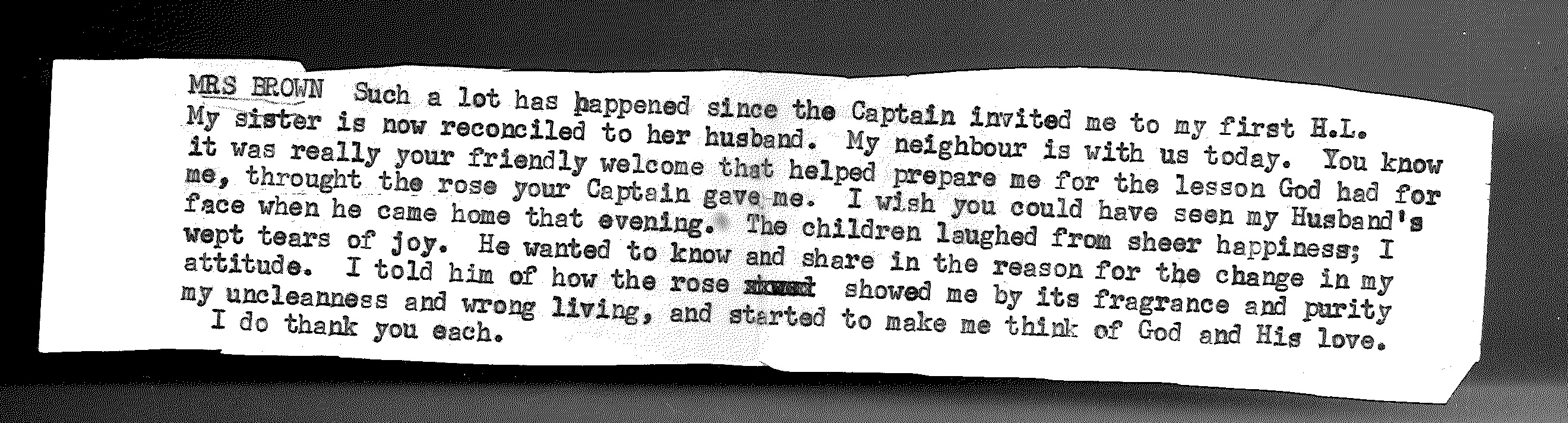
The other week I found this typed fragment in a box of books. I don’t know if it had fallen out of one of the books (which had belonged to an academic interested in the philosophy of science) or from the box which was borrowed from the library which had donated the books to my library.

Mrs-Brown-typed-fragment-in-bottom-of-donations-Dec2013-cropped

I can’t even work out the genre of this found object. It reads like a letter, but it is not presented like one. Maybe the writer was practicing for a card or letter they were to write by hand? But what was on the rest of the sheet of paper? Why cut it out?

In layout it looks almost like a stageplay. I searched in case it was the piece of a script, but Google doesn’t think so.

And then there’s the content. I would like to know what an ‘HL’ is. I wondered if the Captain was linked to the Salvation Army, given the conversion and holy living testimony (is that what HL stands for?). Most mysterious of all – the rose!

It feels precious to me, this ephemeral glimpse, as mysterious as it is, into someone else’s life.