The Imitation Game

Tags

,

imitation-game

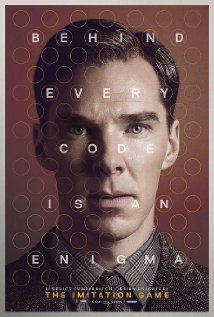
The sort of film I like: an intelligent historical drama. The Imitation Game tries to do a lot in telling the whole of Alan Turing’s life – the focus being on his time at Bletchley Park during World War Two, leading the team which would break the German Enigma code, but also narrating his awakening to his homosexuality as a misfit boy genius at boarding school, and his prosecution for indecency in the 1950s, contributing to his suicide in 1954. The film works well, capturing the difficulties of a misunderstood genius and the terrible days of WW2 for Britain as the Nazis bore down on them and the code-crackers felt the weight of the nation on them.

I’d just finished watching lead actor Benedict Cumberbatch in a WW1 drama, the brilliant BBC mini-series Parade’s End, where he plays a different misunderstood genius. Imitation Game suffers by comparison; it is not the sequel-in-spirit I might have hoped for. It is a far less subtle and intelligent film, with less complexity of character. Parade’s End plays each scene perfectly, not needing to bring things to a crisis each time to achieve true drama. It’s unfair to mark Imitation Game down by comparison, but inevitably I do, as the Turing code-breaking machine is saved at the very last minute, and the small canvas requires all sorts of shortcuts. Keira Knightley plays the second lead, Joan Clarke, superbly. She almost never appears in anything less than a very good film, and this is no exception. (Although I will never watch King Arthur or Domino.) If this film tries to achieve too much in two hours, who can fault that?

Across the genres: a slow reader’s favourite books in 2014

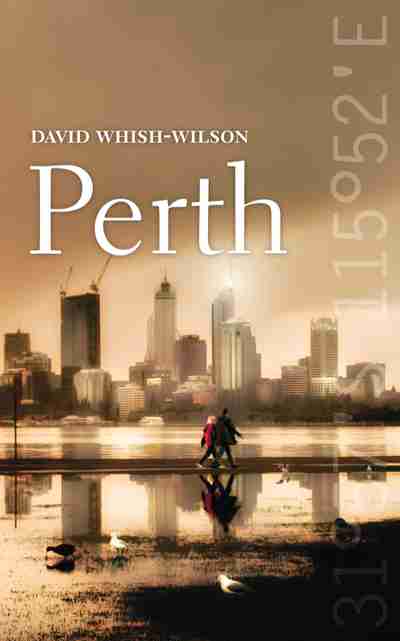
Perth-book-cover

Some book bloggers complain how they only managed to read seventy books this year, rather than their usual one hundred. I read thirty-nine, which is still more than I have managed the last few years. I’m the tortoise of book bloggers.

Most of my reading has been related to biography and/or Katharine Susannah Prichard (the subject of my PhD), and it’s harder to judge these books which I have to read in a somewhat task-orientated way. But I had such a delightful year of books. It brings me pleasure remembering the highlights.

  1. Perth / David Whish-Wilson – A portrait of the city. The best work of creative non-fiction I’ve read, a blend of memoir, history, biography, and landscape writing. My review.
  2. Wild Oats of Han / Katharine Susannah Prichard – I’ve read eleven books by Prichard this year, and they fit together as a body of work. But let me pick this one out as probably her most under-rated work, a delightful evocation of childhood as free-spirited Han comes to grips with the world. It’s the most distinct of her books, and it possibly suffered from being marketed as a children’s book, when it is not really. My review.
  3. What Happened to Sophie Wilder? / Christopher Beha – A contemporary American classic, a dark Graham Greene-ish novel about writing and faith. My review
  4. The Narrow Road to the Deep North / Richard Flanagan
    – Had to see what the Man Booker judges were so impressed by; I was impressed too. My review.
  5. Lila / Marilynne Robinson – A worthy companion novel to the other two set in Gilead. It is wise and hopeful while aware of the hardness of life in telling of one woman’s redemption. My review.
  6. Christina Stead: A Biography / Hazel Rowley – I hope to write a biography with some of the brilliance of this one, to balance historical and psychological insight with beautiful writing. My review.
  7. Unearthed / Tracy Ryan – Reading through these poems a second time, I was struck afresh by their power. My review.
  8. The Immortal Life of Henrietta Lacks / Rebecca Skloot
    – A non-fiction biographical quest, so superbly written. My review.
  9. The Invisible Woman / Claire Tomalin – unearthing the hidden story of Dickens’ mistress, Nelly Ternan. Claire Tomalin is my favourite biographer.
  10. Moving Among Strangers / Gabrielle Carey
    – I couldn’t put down this memoir in which Carey writes to family friend Randolph Stow just before he dies and uncovers lost stories of her family. My review.

Honourable mentions: A Wrong Turn at the Office of Unmade Lists / Jane Briony Rawson (my review); Reading by Moonlight: How Books Saved a Life / Brenda Walker; Secret River / Kate Grenville.

My favourite TV series of 2014

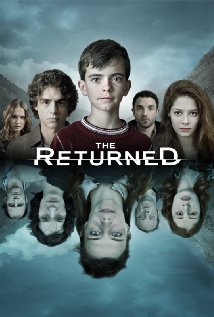
the-returned

It was the year of long-form drama for me and Nicole. To watch a story unfold an hour at a time, night after night – such a bigger canvas than a feature film, and an after-work addiction.

1. The Returned (series 1) – I have never seen anything like this French supernatural drama. To watch it is to be trapped inside a beautifully eerie dream, as the dead begin to return to a village.

2. True Detective (series 1) – An existential crime series about two detectives on the trail of a southern gothic murderer across decades. Really, the crimes are secondary – this is about the meaning of life, as Rusty philosophises to Marty and an unlikely friendship develops.

3. Parade’s End (mini-series) – A dense and super-intelligent adaptation of Ford Madox Ford’s novels, following a man of integrity through World War One, at war with a scheming wife and torn by his desire for a young suffragette. It is incredible.

4. House of Cards (series 1 and 2) – An excellent adaptation to the American context, with fascinating characters and enthralling political intrigue. I wrote about it here.

5. Fargo (series 1)Fargo the TV series is better than the film. It is dark and funny and suspenseful, and Billy Bob Thornton’s character could be the most interesting killer I’ve seen on television.

Honourable mentions – Rectify (series 1); The Fall (series 1); and Boardwalk Empire (series 1).

What was your favourite?

My favourite films of 2014

insidellewyndavis

1. Inside Llewyn Davis – A folk singer caught in an eternal recurrence of misfortune. Thanks for showing how beautifully cruel the world is, Coen brothers.  My review.

2. Pride – Uplifting drama about a group of homosexuals helping Welsh miners during a strike. Perfect filmmaking. My review.

3. Boyhood – Ten years in the life of a boy growing up, through the small tragedies and dramas of family life. I was disappointed at the time, but it stayed with me a long time. Important and affecting.

4. Interstellar – A flawed but fascinating science fiction film on a huge canvas across space and time. It moved and awed me. My review.

5. Her – A man in love with his operating system. It’s profound and nearly perfect, although it left me a little cold.

Indiana Jones in Gallipoli: Russell Crowe’s The Water Diviner

Tags

, , ,

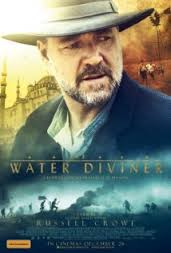
water-diviner

The Water Diviner starts promisingly, showing the final day of the Gallipoli campaign from the Turkish perspective as they charge the enemy trenches only to find the Australians retreating. In a time of much jingoism, we need to be reminded of the humanity of the ‘enemy’, and the strength of this film is that this is one of its major themes.

Unfortunately, it has a kernel of interesting drama wrapped up in ridiculous action-heroics, at times degenerating into Indiana Jones. Russell Crowe plays an Australian farmer, Joshua Connor, arriving in Turkey after World War One to bring back the bodies of his three sons. It paints Turkey by numbers, with an obligatory chase through a crowded market and a chase across rooftops (oh! it makes me groan to think of it), and even a massacre of an entire trainload of people, with the exception of Connor and his new Turkish friend, Major Hasan. It’s a film which overplays almost every scene, and neglects all the potential for adult drama. The difficult reconciliation between the Australian Connor and the Turkish Hasan is overshadowed by them being caught up in a new war with the Greeks. (It may be a historically plausible detail; that doesn’t make it a good plot decision.) In a rather mystical moment, Connor locates the bodies of his sons with his water divining skills. At this point one begins to wonder if he actually is a superhero in disguise. The mystery of the fate of the third son is under-explored and rushed through at the end. Again and again, it is a film which veers awkwardly between an attempt at adult drama, an action movie, and a romance.

It feels like a film financed by Channel Seven with James Packer as an executive producer… oh wait, it is! It’s a crowd-pleaser, and many will go away cheering. I do think it’s better that they cheer this, an Australian production with important themes, than an American equivalent.

Tragic Faith: Christopher Beha’s What Happened to Sophie Wilder?

Tags

, , ,

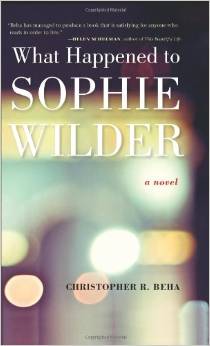
SophieWilder

It turns out my favourite novel of the year is the last one I will read in 2014, Christopher R. Beha’s What Happened to Sophie Wilder? (2012). (Imagine if your entire life worked out like that, and your greatest reading experience was on your deathbed? You would give new meaning to that cliche of not wanting to finish it, because once it was finished, you would be finished.)

It is the story of a talented writer in her twenties, Sophie Wilder, told by her lover, Charlie Blakeman. It creates a curious and often beautiful effect when a novel is narrated by the secondary character – think of Ford’s The Good Soldier –  and this novel does it so well in trying to answer the question posed by the title. Sophie is a tragic character to break a reader’s heart – and Charlie’s; she is a mystery to everyone, and untameable. She lives by her own code of authenticity, a dedicated and brilliant writer through her college years, only to make an unexpected conversion to Catholicism which comes to define her life. She comes in and out of Charlie’s life, forming him as a writer in their college years, only to leave him and marry another.

I have been trying to find the right set of comparisons to situate it as a novel. I thought of the elegant tale of a similar milieu in Donna Tartt’s The Secret History. I thought of Paul Auster’s world of orphans who make similarly mysterious lives for themselves. And finally, after I finished, I realised the most important point of comparison was Graham Greene, particularly The Heart of the Matter. It is a religious novel in the same way Greene wrote religious novels – with tragic religious dilemmas at their heart. This one occurs with Sophie taking on the care of her dying father-in-law. To contrast another religious writer, Marilynne Robinson would have written about this with a sense of grace triumphing even through tragedy. Not Beha; like Greene, the Catholicism of his novel is bleakly beautiful and tastes, ultimately, of death.

(Thank you to Simon Cox for putting me onto this novel, which I probably wouldn’t have encountered otherwise.)

Emails and Paper Trails

Great post at Historians Are Past Caring on the effect of hacking on the archive of the present. I’m going to trust in people continuing to leave revealing traces in every medium.

learnearnandreturn's avatarHistorians are Past Caring

There are two things I don’t understand about the Sony hack. First, why does anyone with the ability to accomplish such an impressive hack want to live in North Korea, when they could clearly sell their IT skills for millions in the global market?

And second, why are people such idiots that they continue to write stupid or outrageous comments, and put them in emails saved to the company’s mainframe?

View original post 542 more words

From white-washing to uncovering secrets: this week’s research quest for the history of biography

Tags

, , ,

My research quest this week has been to try to better explain the shift from respectful, white-washed biographies of the Victorian-era to the biographical preoccupation by the late-twentieth century with uncovering secrets. (It’s a question I have already addressed in my MA thesis, but I’m revisiting it as I revise a section of the thesis for publication.) As an example, Charles Dickens’ original 1870s biography by his friend John Forster did not mention Dickens’ long affair with the actor, Nelly Ternan. The secret was long out when the definitive story of Nelly was written in the 1990s, Claire Tomalin’s Invisible Woman. For some time now, the reading public has expected biographies to “tell the truth” about a person’s life, and not leave secrets out. My essay connects this shift to the rise of biographical quest fiction, such as A. S. Byatt’s Possession: A Romance (1990).

Not that much has been written on the history of biography. Those accounts which do trace its development over the twentieth century inevitably point to New Biography as the turning point – the triumvirate of Lytton Strachey, Virginia Woolf, and Harold Nicholson. Strachey’s Eminent Victorians appeared a few months before Armistice in 1918 and set about debunking the heroes of the Victorian age, and forging a new style of biography. While most scholars are perhaps too quick to label most biography since as post-Stracheyean, Robert Skidelsky (1988) makes a compelling contrarian case that contemporary biography does not resemble Strachey’s project at all. “What chiefly distinguishes the contemporary from the Victorian biography (apart from its greater professionalism) is its greater degree of explicitness about private life and its greater psychological penetration; neither of which, I think, were important aspects of Strachey’s original programme.” (9) Strachey himself wrote only from published sources, avoiding the problems of dealing with literary estates or the hard work of research. He called for brevity in biography, a few telling incidents, not the numbing accumulation of detail. A biography without archival research and of only a hundred or two hundred pages is not a common sight in today’s literary landscape. If Skidelsky is right, who can we look to in order to explain the biographical turn?

Freud is one candidate, but he was not someone for unearthing secret papers from the archives either. Long before The Da Vinci Code was Freud’s biography of Da Vinci, and it did not involve lost letters or diaries, but Freud re-intrepreting Da Vinci’s dreams and character. However, the mainstreaming of Freudian thought, of concepts like repression, is surely another piece of the puzzle.

Other candidates:

  • The rise of celebrity culture, and the expectation that we will know their private lives. The gossip pages spill over into even serious biographies.
  • Related to this, Skidelsky talks of a shift in motivation for writing biography – “not because they achieved great or unusual things, but because they led interesting or unusual lives.” (13).
  • A melding of Strachey’s interest in debunking heroes and other developments in culture and biography – the professionalisation (and increasing scholarliness) of biography; a return to the long biographies of the nineteenth century after a flirtation with Strachey’s brevity; the general tendency toward revisionism and suspicion.

It’s a pity Skidelsky pulled down Strachey as the model for contemporary biography so effectively without naming a replacement. But this is where I come in. Perhaps a clearer answer will emerge.

Skidelsky, Robert. “Only Connect: Biography and Truth.” In The Troubled Face of Biography, edited by Eric Homberger and John Charmley, 1–16. London: Macmillan, 1988.

The goldfields during the Great War and the aftermath: Katharine Susannah Prichard’s Golden Miles

Tags

, , , ,

golden-miles

Golden Miles (1946), the second in Katharine Susannah Prichard’s goldfields trilogy, spans 1914 to 1927 in the Western Australian goldfields, from the eve of World War One to the eve of the Great Depression. Sally Gough is the central character even more clearly than in The Roaring Nineties, and the rather untidy narrative takes her through a series of trials, with Paddy Cavan the nemesis lurking close to many of her misfortunes. At the beginning of the novel, she kicks him out of her boarding house for his gold stealing racket. He promises she will pay a high price; in one sense, the rest of the novel proves him true, even if he is only minimally directly responsible. The other way to sum up the disparate happenings of the novel is as the tales of the fate of Sally’s four sons coming to adulthood, each representing a different way of living in the world. All of this is against a bigger backdrop, as Sally’s son, Tom, reflects: “There were those sinister forces outside Sally, her home and her sons, always threatening the security of the small fort she had built for herself. No one lived alone in a world where war, disease and the ruthless struggle for wealth and power, swept thousands of little people like her into the maelstrom of economic and national crises.” (99)

Continue reading

I am the stranger: reading through the letters of Katharine Susannah Prichard

Tags

,

1934-slnsw

I’m reading through twenty-six years of weekly letters from Katharine Susannah to her son, Ric Throssell. There’s thousands of pages of handwriting to decipher, and if I did nothing else for a whole day’s work, it would take two days to get through one year. I have made it from 1943 to the end of 1947 in the first few weeks of the endeavour. With so much of her correspondence lost or destroyed, these letters are Katharine at her most revealing. Continue reading