The untold story of Critchley Parker Sr

Tags

, ,

My impression is that the history of journalists and newspapers in colonial Australia, and particularly Melbourne, is largely untapped. I wish someone had tracked more closely the movements of Frank “Critchley” Parker (1862-1944), as his life intersects in some significant ways with the childhood of Katharine Susannah Prichard. This is Critchley Parker Sr I’m talking about, as in recent times there has been interest in his son and his curious death; I’ll return to that. Continue reading

Certain Admissions: true crime as biography

Tags

, , , ,

certainadmissions

Certain Admissions: A Beach, A Body and a Lifetime of Secrets by Gideon Haigh (Penguin, 2015)

Certain Admissions is a gripping narrative of the murder of Beth Williams, her body found on a Melbourne beach in December 1949, and its aftermath. It becomes a biography of John Bryan Kerr, the young man convicted of the crime on the basis of a disputed confession, as well as an account of Haigh’s archival quest and an investigation of the many byways related to the case. It was the highest profile case of its time, perhaps due to Kerr’s charm and the salacious details of the crime. Continue reading

True North by Brenda Niall – some notes on biographical method

Tags

, , , , ,

true-north

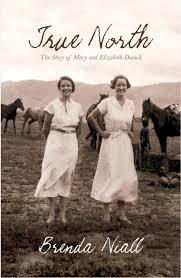
The metal bust of Mary Durack used to greet me each day at the entry to the Battye Collection during my year working at the State Library of WA in 2007. I saw it again yesterday, a couple of days after finishing Brenda Niall’s True North: The Story of Elizabeth and Mary Durack (Text, 2012). Busts make the people of the past seem so distant, but one of the achievements of this biography to make the Duracks feel quite alive again for a time. Continue reading

My Brilliant Career… now showing on my OTHER blog

As you may know, I have a separate biography blog, A Biographer in Perth, concerned with the life of Katharine Susannah Prichard and the art of biography, topics slightly more specialised than this present blog, which aims at a more general audience. But some topics fall between the stools, like perhaps Miles Franklin’s My Brilliant Career. You can read some stray thoughts on it from me, which add up to a partial review; and also a post on its connections with Katharine Susannah Prichard. There’s also a link on the other blog so you can follow it by email.

Katharine Susannah Prichard and My Brilliant Career: the world of a 17 year old in Federation Australia

Tags

,

brilliant-career

Katharine Susannah Prichard was seventeen in 1901 when My Brilliant Career was published, the same age as the main character, Sybylla. In a radio broadcast paying tribute to Franklin in 1944, Prichard remembered, “What a sensation it created! Most of the well known writers at that time were old, and here was a girl writing with vigour and realism which amazed everybody.”  Continue reading

Angst, class and racism in Possum Gully: some notes on Miles Franklin’s My Brilliant Career

Tags

, , ,

brilliant-career

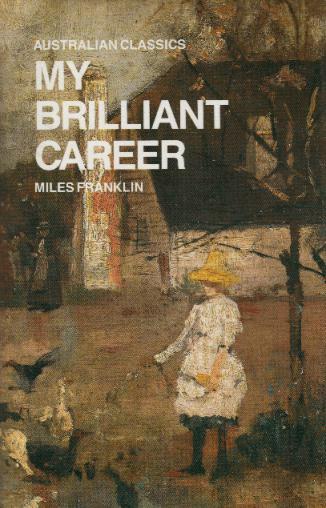
I’ve just finished reading Miles Franklin’s My Brilliant Career (1901), a novel still fresh and intriguing 114 years later. It covers a few years in the life of Sybylla, a determined young woman trying to break free of the restraints of poverty and the expectations of marriage in rural New South Wales during the drought of the 1890s . Jill Roe writes, “It was undoubtedly the literary event of 1901, the only significant Australian novel in the year of Federation; and by now it is more or less recognised that in Australia at the turn of the twentieth century, feminism and nationalism went together as radical forces.” (Stella Miles Franklin, epub edn, 133) Continue reading

Crow’s Breath – John Kinsella

Tags

, ,

crows-breath

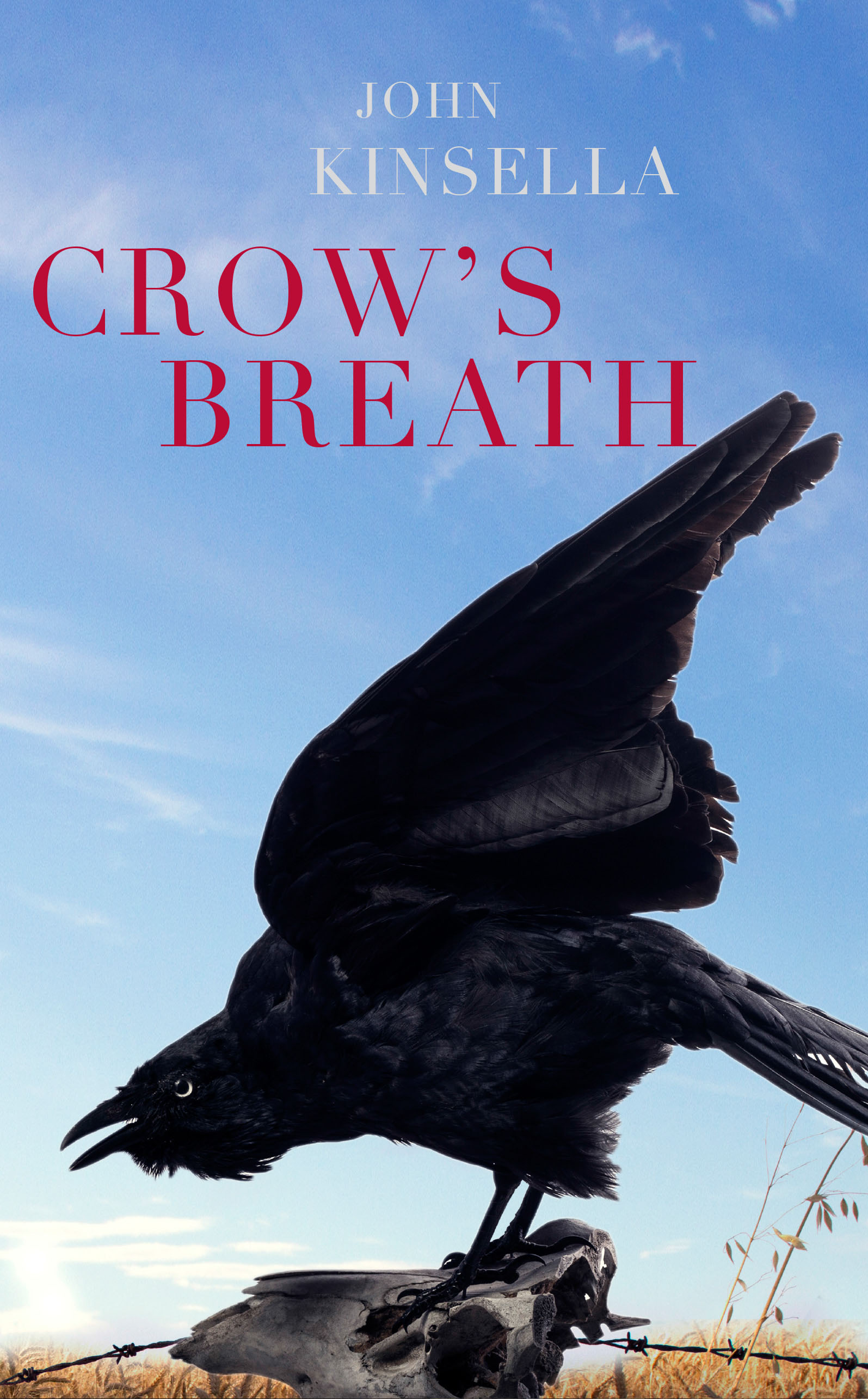
Crow’s Breath is John Kinsella’s fine new collection of twenty-seven short, intense stories. It’s centred around the wheatbelt of Western Australia, with forays west to Fremantle, south to Pemberton and north to Carnavon. In about the middle, a character travels to London in “Statue” and the stories after this move with expatriates to Ireland and the USA as well. A common thread is the exploration of Australianness, the different ways of Australians living in this country and out of it. Kinsella shows an ability to inhabit a rich diversity of Australian characters. Continue reading

Lost diaries

Tags

,

pepys2

The great diaries of Samuel Pepys weren’t discovered until a couple of centuries after his death. He expected them to be read one day, or at least his biographer Claire Tomalin thinks so. But they could have easily not been found and never been read. Imagine the diarist carefully recording their life, assuming they’ve preserved their days, only for them to be so terribly mistaken? The actual fate of their diaries is not the cherishment of future generations, but the moth or the flame. Continue reading

“I always went wrong in the same place, where the river splits toward the sea”

Tags

, ,

My song of the moment is Bill Callahan’s “Small Plane”, a singer new to me. It sounds like a song Leonard Cohen might have recorded between Songs from a Room and Songs of Love and Hate if he had a gentler heart. I was playing it a lot last week in the midst of revising my novel.  It’s a strange song, keeping quite strictly to its subject matter, the memories of flying a small plane with a lover or perhaps a parent. “You used to take me up; I watched and learned how to fly.” It reads as an extended metaphor which never fully declares itself, and thus stays elusive and richer. Continue reading