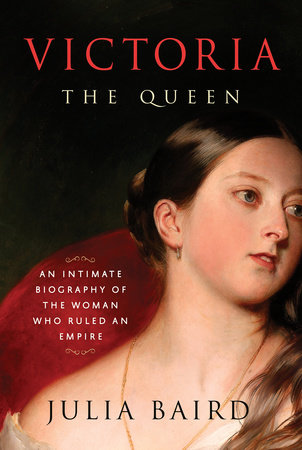
Victoria: The Queen by Julia Baird

Tags

,

9781400069880

We all have our notions of Queen Victoria, even as the Victorian age recedes further into the past. It’s an obscure song from Leonard Cohen which I’ve long associated with her:

Queen Victoria,
My father and all his tobacco loved you,
I love you too in all your forms,
The slim and lovely virgin floating among German beer,
The mean governess of the huge pink maps,
The solitary mourner of a prince.

Cohen was right: there are many Victorias, public and private, old and young. Few have lived a more documented or contested life, making her a formidable biographical subject. It didn’t stop ABC journalist Julia Baird taking on the challenge and after eight years of work, her Victoria: The Queen was published in November.

Victoria is a superb biography, the kind I aspire toward, compulsively readable and intelligent. The combination of journalist and historian – Baird has a PhD in the discipline –  is an ideal one for a biographer. She writes vividly, precisely, and wisely as she narrates the development of Victoria through life stages and how she became the different Victorias, some mythical, some misunderstandings, some true but in need of nuance. One of the surprises for me, for example, was to discover that Victoria began life as a Whig, opposed to the Tories; it was fascinating to see her political transformation as the politics of Britain changed over the century and she finished her life as the more expected ardent Tory, close to Disraeli and hating Gladstone. The “mean governess” is only part of the story, and a fun-loving, opinionated, passionate woman emerges in the biography. Some cautious biographers avoid interpretation let alone judgement; others are far too confident and dogmatic in their judgements. Baird is a courageous and wise interpreter of her subjects. “Victoria’s passionate fits came and went, but Albert’s anger was white, cold, and enduring. He was willing to inflict pain on his wife.” She captures the complexity of Victoria’s character, her goodness and her faults in an evenhanded way.

The biography is structurally accomplished in its combination of the chronological and thematic. Each chapter takes us forward a little in the span of Victoria’s long life, but has its own mini-narrative ranging over the span of a particular incident, theme, or relationship. It’s one of the difficult and essential things to get right in biographies; biographies which are too strictly chronological tend to fall apart as narratives, constantly broken up with the next development in the myriad of “subplots” that are developing in any subject’s life at any time.

Most chapters begin with a scene, a fraught process in biography as there is rarely enough sensory detail to build up a scene purely out of historically verifiable material. Thus in chapter 11, Victoria’s wedding, Victoria is lying in bed before the wedding. “She closed her eyes and thought of the preparations humming across the city.” The preparations she imagines are all historically sourced, although in this case the device feels a little clumsy to me. However, it’s probably more a question of what the reader finds permissible in biography than anything else. Some other scenes work perfectly and it’s part of the biography’s appeal that Baird has used the approach.

I am in admiration of Baird’s grasp of nineteenth century British (and wider) history. To read the biography is to be given an accessible primer in the period, as Victoria was involved in everything from the social upheaval resulting from industrialisation to the Crimean War to the emergence of a unified Germany. Baird shows great skill in narrating complex historical events in a way which is gripping but not simple.

The amount of research involved in any biography is immense, but this book must have involved more than most. The volume of primary and secondary material is huge. Despite redactions, burnings, and the losses of time, many of Victoria’s letters and diaries remain, and that is only the first layer of material. The biographer has to be on top of it all and then have the instincts for what is important and how their reconfigurations and reinterpretations will add something new. One of Baird’s great discoveries – found in a doctor’s diary – is an account of Victoria and her confidante, John Brown, peeking under each other’s clothes. The temptation is to trumpet the revelation, but Baird avoids this completely, narrating her breakthrough material in a straightforward way and letting it speak for itself. I admire that, and would have allowed her considerable more trumpeting.

I really enjoy Julia Baird’s hosting of  ABC TV’s the Drum, where she brings out the best from her guests and steers the conversation well. (I’ve often wondered at her politics, given she comes from Liberal Party royalty but doesn’t seem conservative in outlook; turns out her Twitter profile tells all, at least for those better-read than I was: she is a “Mugwump.”) It was interesting to hear her on Philip Adams’ Late Night Live in the guest chair, speaking passionately and articulately about her subject, showing a different side of her character. She spoke then of the challenge of accessing the royal archives and how it was only the intervention of the former governor-general which secured her access. But her obstacles were even greater than that: she wrote movingly last year about living in the shadow of death after a cancer diagnosis, only to come through. I hope she continues to write for the New York Times and host the Drum, but most of all I hope she continues as a biographer.
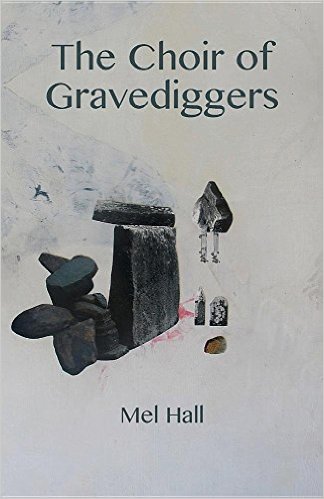
 

The Choir of Gravediggers by Mel Hall

Tags

,

choir-gravediggers

Any novel under 70,000 words tends to get called a novella, which I think is a misnomer. The true novella – say, 15,000 to 40,000 words – is a rare beast; publishers won’t tend to touch it, despite the fact it has the reading time roughly equivalent to watching a film. Kudos, then, to Ginninderra Press, an independent Adelaide-based publisher, who have published a true novella in The Choir of Gravediggers, 48 pages long, by my friend, the Western Australian Mel Hall.

The Choir of Gravediggers has a frame narrative – a kind of biographical quest – as the narrator looks through the documents and photos that remain of her flamboyant father, Charles Truelove, who ran the St Kilda Cemetery and a choir at the turn of the twentieth century before being plagued by scandals and disappearing. Choir has a zany, engaging narrative voice, by turns poetic, inquisitive, elegiac. Mel’s historical research is worn lightly, making the narrative sparkle with authentic detail as she evokes historical Melbourne. Choir compresses a big story into a small book. This reader would always rather a book which leaves too soon than one which stays too long, though it might be that this is one narrative suited to a 300 page novel. (As a defender of the novella form, I do hate to say this!) An afterword reveals the strong historical basis for the work – Charles Truelove was a historical figure; indeed, he was Mel’s great-great grandfather.


Happy 133rd birthday, Katharine Susannah

Tags

1915-ksp-appreciation-by-sumner-locke-everyladys-journal

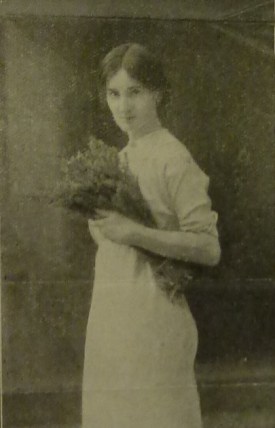
It’s Katharine Susannah’s birthday today. She’d be 133 years-old, were she alive. To me, she’s currently 27, as I’m in January 1911 with her. (She has aged ten biographical years since her last birthday.) I’m in this silent period of her life. I know of various things which happened to her, but there’s no primary personal material from the time itself. Her state of mind in October 1910 will remain a mystery to me. She left Melbourne for a “brief holiday” in Sydney, but ended up sailing to the USA, staying a few months, and then onto London, not returning home for five years. I have some theories, but I have to be rather tentative about it all. In celebration of her birthday, here’s a photo from 1915, low resolution, poor quality, but one which I only recently unearthed and which gives a different angle on the young Katharine Susannah Prichard. She’s carrying lavender; she had been cultivating an association with lavender for some years since playing the role of Sweet Lavender in a play in Yarram in 1904. The photo comes from “an appreciation by one of her friends,” Sumner Locke, in Everylady’s Journal, April 1915. Sumner Locke was the vibrant  young novelist who died in childbirth a couple of years later. It’s one of December’s tasks to uncover and tell of their friendship as two aspiring writers in pre-war London.

The Unknown Judith Wright

Tags

,

unknown-judith-wright

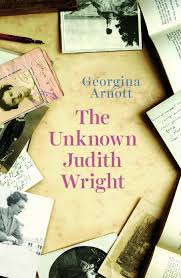
Georgina Arnott The Unknown Judith Wright (UWAP, September 2016) Review copy provided by the publisher.

Georgina Arnott’s The Unknown Judith Wright examines the first twenty-one years of Wright’s life. It reveals crucial aspects of the Australian poet’s life which have been obscured or misrepresented, particularly in the one full-length biography of Wright – Veronica Brady’s South of My Days (1998)  – and in Wright’s memoir, Half a Lifetime (1999). The first half of the book focuses on Wright’s ancestry and childhood. The second half focuses on Wright’s university years and their formative influence, downplayed by Wright and Brady. “The thrust of the Judith Wright life narrative, told with small variation by the subject herself and Veronica Brady,” writes Arnott, “is so strong that aberrant details, counter winds and inconsistencies have had a way of being left out.” (149) Arnott gets the tone just right in approaching the previous auto/biographical work on Wright. Even though she offers a significant reinterpretation of Wright, she does so with an obvious respect for the poet and not in a spirit of attack but of patient scholarship. Continue reading

Leonard Cohen: A Memoir

Tags

I loved Leonard Cohen most when he had fallen into neglect. The time at the turn of the century when he was still out of fashion. The men behind the counters of vinyl shops in Perth met his name with derision. “What would you want to listen to that for?” demanded the owner at the underground one in Fremantle who always checked what you were looking for as you came in. “Music to slit your wrists to!”   For a time, I played Cohen’s albums obsessively. The artists who mean the most to me always make me feel we share a special understanding. Of course, any sense of reciprocity in that is an illusion.

One of his verses gave me comfort in a break-up, even if the sentiments were aspirational rather than true.

I don’t mean to suggest
That I loved you the best
I can’t keep track of each fallen robin
I remember you well in the Chelsea Hotel
That’s all, I don’t think of you that often

I ordered his novel The Favourite Game, then only in print in Canada, and thought it a brilliant novel. I’ve been meaning to re-read, but I hesitate, because it’s no longer the right season to be reading it.

I wrote my second (failed) novel in thrall to him, calling my main character “Leo” in tribute. For a time, it was titled “The Revolution’s Pride” from a line in “Diamonds in the Mine.” His song “Famous Blue Raincoat” shaped the plot and the feel of that novel. It was the song I listened to more than any, and it seemed so perfectly sad and beautiful.

Yes, and Jane came by with a lock of your hair
She said that you gave it to her
That night that you planned to go clear
Did you ever go clear?

When I married a musician, she told me he didn’t sing in tune. I couldn’t really tell, but I wasn’t surprised. His songs were poetry, and they were a mood, and perhaps even a mode.

I never thought I’d see him play, but I did. It was at the Sandalford Winery on 7 February 2009. Just before I was due to leave – I was going alone – a parcel arrived. The courier must have been working overtime. It was my publisher, returning the manuscript of that failed second novel. It was, actually, the moment its failure became apparent after working with them on it for five years of back and forth. I felt like I’d been punched in the guts and I was miserable as I listened to Leonard Cohen on the grassy bank in the heat.

He was in fashion again – which I’m glad of, for his sake – and all the baby boomers of Perth were there to hear him. They were all big fans, they all knew the words to “Hallelujah.” I’d always imagined that I’d see Cohen in a dingy bar strumming his guitar solo, an intimate performance to a gathering of hardcore fans. This concert was the opposite of that, a huge line-up of musicians and dancers on stage transforming his sound.

Stuck in a traffic jam trying to leave in the hot dark, the radio had rolling coverage of massive bushfires in Victoria. I couldn’t believe the things they were saying there in the dark, whole towns burnt, so many people dead. It felt the world was coming to an end. Cohen’s contemporary, John Updike, had just died too. Updike and Cohen were always on this list in my head of heroes whose demise I await with dread. But Cohen lived on and I lived on and incredibly he even gave us three more albums. It’s only now that day has finally come and he joins that long list of celebrities who didn’t survive 2016. Perhaps it will always be remarked that the news of his death came as the world reeled from Trump’s election win. “Hey, that’s no way to say goodbye.” But it was. In public terms, he died as well as a man could. Thank you Leonard Cohen for all you gave us.

Dark Night by Martin Edmond: a review

Tags

,

darknight

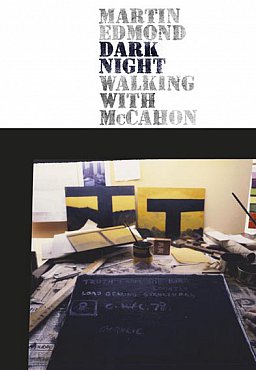
Dark Night: Walking with McCahon Martin Edmond (Auckland University Press, 2011)

Dark Night is a profound work of creative non-fiction. Edmond retraces – quite literally – the steps of the New Zealand painter, Colin McCahon, following the route he took as he had a breakdown and went missing in Sydney for a day and a night. It has elements of a biography of the late artist and criticism of his work; an autobiography of Edmonds; a narrative of Edmond’s observations of the streets and haunts of Sydney; and reflections on religion, art, history, and the authentic life. It is not a biographical quest in the archival sense I’m used to using the term; but it is a biographical quest of a different kind. The life of McCahon becomes a lens for Edmond to examine the world. He writes well, observing acutely while never over-writing, and with genuine insight into the questions of existence.

Cyril Cook & the Lost Letters of Katharine Susannah Prichard

Tags

Your KS #15: Cyril Cook & the Lost Letters of Katharine Susannah Prichard

Source: Your KS #15: Cyril Cook & the Lost Letters of Katharine Susannah Prichard | Katharine Susannah Prichard Writers’ Centre – home

One of the most interesting things to happen in my research this year has been the discovery of “lost” letters of Katharine Susannah Prichard and new insight into the circumstances of Cyril Cook’s 1950 thesis on Katharine. It was my AS Byatt’s Possession moment, and I wrote about it for the KSP Writers Centre newsletter; read about it on the KSPWC website!


Dirk Hartog’s plate and the Christ Church Grammar centenary: myth-making and official “history”

The Dodgy Perth team loves a good conspiracy. So we were delighted to find one about the upcoming 400th anniversary of Dirk Hartog’s trip to Western Australia, and the famous Hartog Plate which wil…

Source: Is the Hartog Plate a hoax? – Dodgy Perth

Today marks 400 years since the Dutch explorer Dirk Hartog was meant to have left a plate behind on an island off the coast of Western Australia. I was intrigued to read Dodgy Perth’s post a while back asking questions about the truth of the event – questions I did not hear asked on the radio coverage today as WA puts on a celebration.

Of course, outside the academy, anniversaries are an exercise in myth-making, not a chance to critically consider the original event. This is the irony of the state and institutional use of “history”.

Gallipoli is an obvious example, but on a much smaller scale, I’m reminded of Christ Church Grammar School in South Yarra, Melbourne. Katharine Susannah Prichard taught there in 1906 or 1907. An intriguing appendix to Colin Holden’s history, Crossing Divides, discusses the confusion around the foundation year of the school. The historical record clearly shows it was 1898, and yet in 1957:

A parish paper states that Christ Church Grammar School originated in an earlier school that functioned between 1859 and 1872, but gives no details and does not identify any historical source to back this claim. Then in 1976 the school treated that year as its centenary. Once again, no historical source was indicated to back up this identification.

I have this rather funny image of hundreds of schoolkids in 1976 dutifully engaging in “historical” busywork and ceremonies to celebrate the centenary, when it seems to have been completely made up. The past needs celebrating (or commiserating) and anniversaries should be marked, but all of it should be based on good history.

(And, by the way, if anyone connected to Christ Church is reading this, no-one’s answered the two emails I’ve sent to your school about Katharine Susannah Prichard. You should be excited to be connected to such a major writer!)