Crumble, neo-liberalism! Go Jeremy Corbyn!

Tags

,

There’s hope yet. The surge in the Labour Party vote under Jeremy Corbyn in the British election shows it. He had much of the parliamentary wing of his own party against him, sold on the idea that Labour should accept the gospel of neo-liberalism. He had against him all the money and power of Rupert Murdoch and the corporations that have pushed the Western world into a nasty society of privatisation, insecure employment, and inequality. The Sun newspaper, one of the most read tabloids in Britain, has a picture of him in a garbage bin:

Only a vote for the Conservatives — not Ukip, or any other — will help keep Corbyn and his sinister Marxist gang away from power… The result would be economic collapse and soaring unemployment, inflation, interest rates and home repossessions.

https://www.thesun.co.uk/news/3748893/the-sun-says-vote-conservative-dont-chuck-britain-corbyn/

On Twitter, the ABC’s Media Watch host, Paul Barry, called Corbyn the Cory Bernardi of the left a couple of days ago. Routinely, “moderate” commentators equate any politicians who reject neo-liberalism – like Bernie Sanders in the US and the Greens in Australia – as extremists, a symptom of a world gone mad as disturbing as Trump. But it is neo-liberalism that has created the troubles we now find ourselves in. It has promised wealth for everyone but it has only privatised everything and widened inequality. In the name of “efficiency” it’s told so many lies to line the pockets of the few. Neo-liberalism has messed up our economy and our society. Now it’s crumbling. The only hope is that in the ruins, social democracy prevails over right-wing populism.

Capote by Gerald Clarke

Tags

,

Capote

I knew Truman Capote (1924-1984) was a shallow, miserable man, so why did I read his biography? It’s not that I think you should only read the biographies of the virtuous, but I do have an aversion to people who idolise celebrity and lack depth, which would put Capote high on the list of those to avoid. Yet Clarke’s 1988 book is a landmark biography and (speaking of shallow) it was on special on Kindle.

It took Clarke thirteen years to write and it deserves its reputation. It reads so smoothly, so effortlessly in a way which only a great biographer can achieve and only then with much sweat. It follows Capote from his troubled childhood in Alabama and the wounds his selfish parents inflicted on him to his emergence as a literary wunderkind in New York and the successes of his early and mid-career to the tragic descent into writer’s block, alcoholism, and exile from the circles of the wealthy and celebrities he had moved in. It’s a tragedy and it’s told with a restraint, clarity, and insight which make it compelling. Only in the 2010 afterword does Clarke reveals his friendship with Capote during those longs years of decline, something which explains his sympathetic treatment of Capote and credulity toward his stories, even if there’s moments in the narrative where Clarke suggests Capote is making things up.

It’s also a biography built on interviews. Not unsurprisingly, it seems to me that biographers often divide by background – journalists (like Clarke) tend to write biographies about the living or recently dead built on interviews, while historians will tend to write biographies of those longer dead built on archival research. I am a little suspicious of dependency on interviews; I think they still need to be backed by solid archival research. (And in this case, Clarke has definitely done solid archival research as well.) For my own biography, I would like to have a historian’s respect for the archives and a journalist’s hunger for a great story.

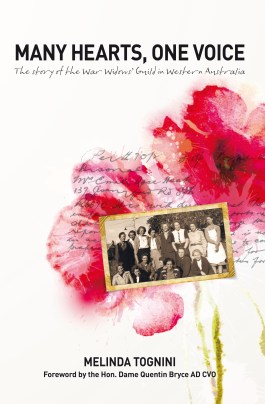
Melinda Tognini’s Many Hearts, One Voice: The Story of the War Widows’ Guild in Western Australia

Tognini-Many-Hearts

Melinda Tognini is one of the most generous writers I know – always looking to encourage other writers, to tell other people’s stories, and to begin conversations on her blog. I was thrilled that her book,  Many Hearts, One Voice: The Story of the War Widows’ Guild in Western Australia was finally published in 2015 by Fremantle Press, and embarrassed I am only reviewing it now.

The War Widows’ Guild began after World War Two as women whose husbands had been killed banded together for support and to advocate for recognition and benefits. The surprise for me reading Many Hearts is how hard these women had to fight for those things; I had wrongly assumed the Australian government would have been generous to them without any pressure. Instead, it is only through advocacy – by turns patient and noisy – that they have gained the support they now have. The book weaves the history of the organisation with the life stories of the women who have been a part of it. It places this in a wider historical context, things like the effects on the organisation of shifts in gender roles and society’s values, and new wars from Korea to Vietnam to Afghanistan.

Reading the book as a pacifist, it serves as a picture of the long shadow war casts over lives, the “many hearts” broken. While I doubt many of the widows share my pacifism, they are more aware than anyone of the cost of war. I was also struck by the significance of ritual for war widows. One of their continuing fights has been for recognition in ceremonies remembering the war dead, especially the opportunity to lay wreaths during these events. It speaks to the way in which, in a largely secular country, remembrance and the Anzac legend function as a civil religion. In such a system, it’s only right that war widows have a place of honour.

I’ve edited several organisational histories, which makes me appreciate even more Melinda’s achievement in Many Hearts. Organisations will tend to require detail (the names of many key players and often repetitive events); encourage cosiness or self-congratulatory anecdotes / memories; and discourage the writer from playing up drama and scandal. Melinda negotiates all these challenges very well within the conventions of the genre to create an engaging narrative. In every respect, it is so well-balanced. Balanced in its mix of the personal, the organisational, and the big picture; balanced in its use of oral history, archival documents, and newspaper reports; and balanced between respectfulness and truthfulness.

The book has been well published by Fremantle Press. Along with many photographs, I appreciate the reproduction of a number of key documents. It brings the reader into the history-writing process, allows them to glimpse the sources.

Many Hearts comes at the right time, when the origins of the organisation are still just within living memory. It is able to preserve the voices and experiences of women which otherwise would have been lost. At a talk Melinda gave at the War Widows’ headquarters, I had a sense of the excitement of the members that their story has been told.

Comic-book biography?

Tags

,

The Guardian has an interesting article today on the rise of “comic-book biographies”. It notes an important antecedent – Art Spiegelman’s Maus – which I read and enjoyed for a unit I was tutoring last year. That was the story of the author imagining his father’s unimaginable Holocaust story; it had elements of autobiography as well as biography.  This is different – comic-book treatment of key scenes in the lives of famous figures like Einstein. It sounds like a good thing, but more the equivalent of historical fiction than biography-proper. To the extent that the creators have moved beyond the historical evidence to imagine the scene more fully, they are fictionalising. It reminds me of my surprise / irritation that great biographies are often adapted as “biopics” rather than documentaries. I like biopics, but the filmic equivalent of a biography is surely the documentary, with its weaving together of sources rather than the fictionalised illusion of a fully-realised world offered by a feature film.

https://www.theguardian.com/books/2017/may/05/life-drawing-the-boom-in-comic-book-biographies

Predicting Trump? Louis Esson on the USA in 1917

Tags

,

I’ve just found a remarkable passage about the USA in a letter from the Australian playwright Louis Essson during his stay in New York to Vance Palmer (both friends of Katharine Susannah Prichard) dated February 16th 1917:

The country is not a democracy at all, but a plutocracy. The president has the power of a Kaiser, and all diplomacy is secret. The people haven’t a say in anything. Politically America is far behind Australia and in reality behind Britain or Germany. If a strong President arose, a Caesar or Cromwell, he could simply keep his position and make himself perpetual dictator. Labour has no strength here. At a recent strike at Bayonne the men were simply shot down, the authorities assisting Rockefeller.

What Esson didn’t foresee was that exactly a century later it hasn’t taken a Caesar or Cromwell but a reality TV star – the PT Barnum of our day – to take the country into apocalyptic times.

Dispelling any smugness I might have about the superior insights of the Australian left in 1917, Esson then veers into appalling racism, quite typical of the time: “Some terrible thing will happen here, which I hope will be spared Australia. I feel sure Australia must be kept white and have severe immigration laws.”


Haxby’s Circus: Lisa’s review and origins

Tags

,

Lisa Hill of ANZ Litlovers has reviewed  Katharine Susannah Prichard’s novel, Haxby’s Circus (1930). It’s a sympathetic and astute review, giving a good sense of its themes and characters.

It comes the same week I’ve been writing about Haxby’s Circus in my biography. In the comments on Lisa’s review, Fay Kennedy mentions the origins of the novel in an incident when Katharine was at her brother’s surgery comforting a trapeze artist with a broken back. She writes about it in her autobiography, Child of the Hurricane. The incident was reported in a number of newspaper digitised on Trove, including the last paragraph in this article “District News” Cohuna Farmer’s Weekly (Vic), 23 November 1917, 3:


Perrys-circus

It comes right in the middle of the second conscription campaign, and an intense time in Katharine’s life. So much happened in Katharine’s life in 1917 – two deaths, a broken heart, and political development. It’s been a big month trying to cover it all.

My childhood career as an archaeologist: Westerly Crossings

Tags

Westerly-Crossings

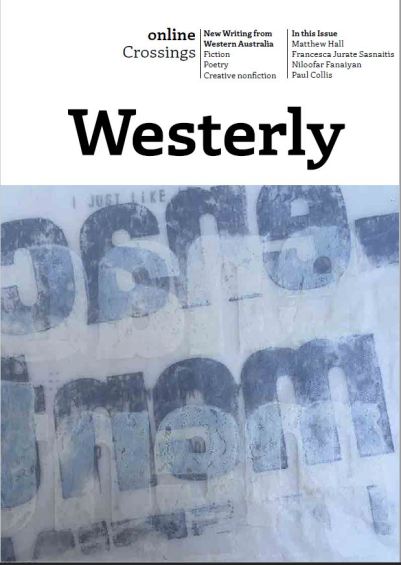
I have a two-page memoir called “Archaeologist” in the new special issue of Westerly. It’s a free download in pdf or epub from https://westerlymag.com.au/issues/westerly-crossings/.

Editors Amy Hilhorst (UWA) and Owen Bullock (University of Canberra) write in the introduction:

This special issue of Westerly is a collaboration between the creative writing students of the University of Western Australia (UWA), and those from the International Poetry Studies Institute (IPSI), based at the University of Canberra (UC). It aims to showcase and celebrate the creative and critical work conducted by current or recent postgraduates, and undergraduates, at these two institutions. Reaching across the Nullarbor from west to east, this issue offers a snapshot of some of the best writing from the respective corners of Australia. In curating this material together, we aim to foreground the connections and contrasts in the stories of our students. These short stories, novel excerpts, essays and poems have been commissioned by co-editors who are also completing postgraduate study. It is, then, an issue for students and by students, and aims to give readers an insight into the exceptional standard of work being written in the postgrad study rooms, shared offices and library carrels of UWA and UC.

I’m looking forward to reading the other contributions. Many of the UWA writers are part of the Words and Thoughts postgrad creative writing group with me.

I wrote my piece just after my son was born in 2015. I was suddenly taken with a desire to remember my childhood. I was originally imagining an entire book-length memoir of occupations I have dreamed of / abandoned / actually done, including not just archaeologist, but the Phantom, lawyer, pastor, novelist, counterhand, librarian, and biographer. But I only wrote the first one; its another book that I’m not going to write just yet.

Welcome to nathanhobby.com

Welcome to my new look blog! It’s had a coat of paint but I’m also merging my two blogs – hence the new title. It feels good to have things under the same roof. Here’s the final post from the old blog:

Nathan Hobby's avatarA Biographer in Perth

Abandoned_House_-_panoramio Photo: “Abandoned House” mrfreson, Wikimedia commons.

Starting this separate blog seemed like a good idea at the time. It was January 2014 and I was writing a lot about the art of biography on my original blog, nathanhobby.wordpress.com. It was quite specialised and I thought that (a) it might bore readers who came for other things and (b) if I started a new blog it might help me connect to other biographers and readers of biographies.

As it turns out, I don’t have time to maintain two blogs and most of the readers of this blog would probably enjoy or at least tolerate the things I write on my other blog. So the blogs have merged, and I’ve exported everything on this blog to my new address, https://nathanhobby.com. My two blogs, “The Annotations of Nathan Hobby” and “A Biographer in Perth”, have become one: “Nathan Hobby, a biographer in Perth:…

View original post 87 more words

Old Growth by John Kinsella

Tags

,

old-growth

John Kinsella Old Growth 254pp Transit Lounge, 2017. Review copy supplied by publisher.

John Kinsella’s new short story collection, Old Growth, is a wondrously Western Australian book, centred on the wheatbelt with regular trips to Fremantle, the suburbs around Bicton on the south of the river, and up to Geraldton. Yet its pleasures are not just in its sense of place, but its capturing of so many different ordinary lives lived in these places. Continue reading