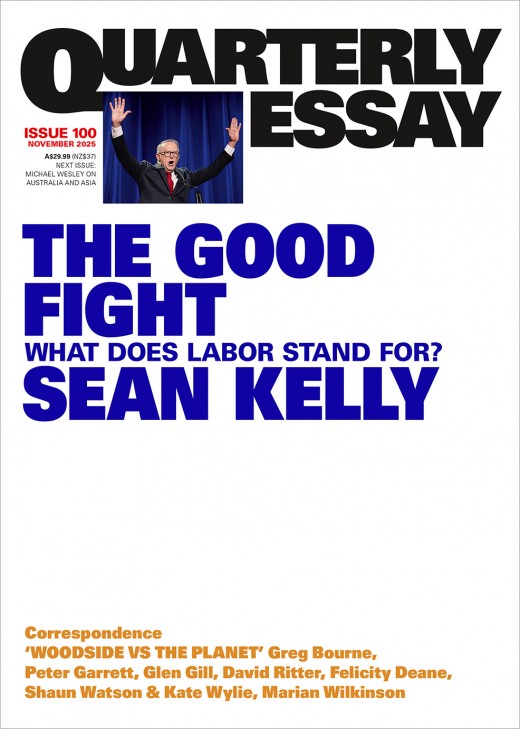
What a treasure Quarterly Essay is. Great Australian essayists engaging with politics and culture in style. The 100th quarterly essay is by Sean Kelly, who wrote my favourite book about Australian politics, The Game: A Portrait of Scott Morrison. In this new book, The Good Fight: What does Labor stand for? he is engaging with an ally, Anthony Albanese, and I can imagine the anguish as an insider turned freelance writer must say the hard things. As always, Kelly brings a literary sensibility, starting with Kafka and ending with Ferrante.
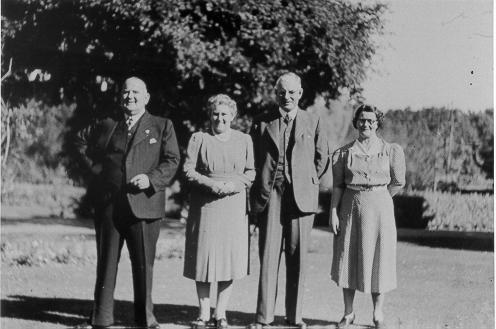
Hector Harrison (1902-1978) was a prominent Presbyterian minister who led St Andrew’s Church in Canberra from 1940 until his death. He was friendly with Prime Minister John Curtin and Fred Whitlam, father of Gough Whitlam, who was a member of his congregation. There’s a striking scene from Harrison’s oral history at the National Library recounted in Dr Margaret McLeod’s new biography: Harrison is giving Whitlam senior a lift home from the 4th July celebrations at the American Embassy in 1945 and Whitlam reveals that the editor of the Canberra Times had just told him John Curtin wouldn’t last the night. Harrison walked across the paddocks to the Lodge and was, eventually, admitted to see Curtin, hours before his death. At Curtin’s request, Harrison conducted the funeral.
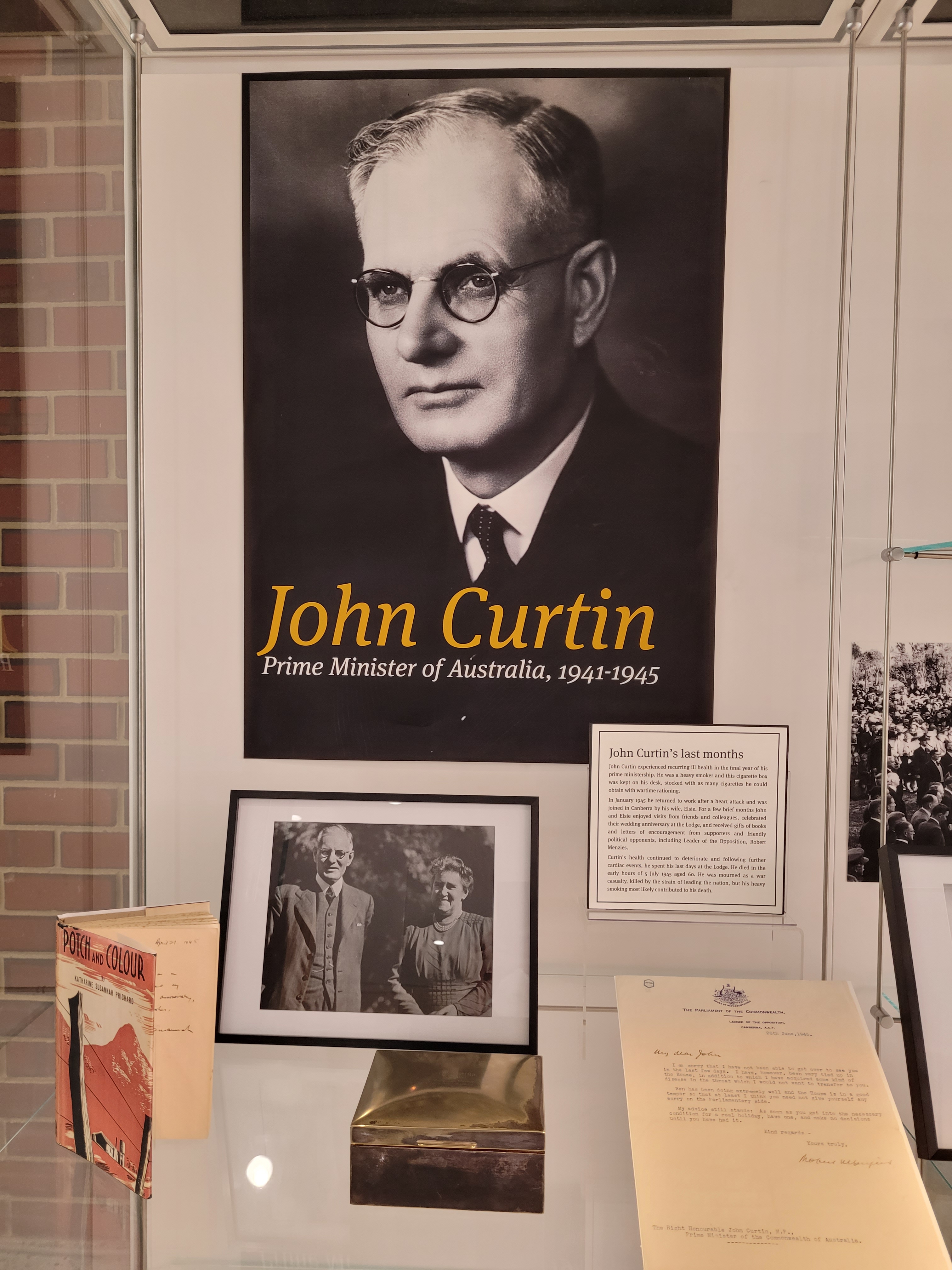
Prime Minister John Curtin died 80 years ago on 5 July 1945 in an upstairs bedroom at the Lodge. He’d been taken up to the bedroom by stretcher on 22 May after leaving a small private hospital in Canberra. He never came back down those stairs. He died in his sleep at 4am with a nurse named Marjorie Sirl by his side. His wife Elsie was in an adjoining room, unable to sleep.
Or was she? The newspaper accounts of the time seem to have all used the same press release (I haven’t been able to find it in the archives though) which stated Elsie was also by his side when he died. But Elsie wrote a short memoir of Curtin as a series of articles published in Perth’s Daily News in 1950 and she states that the nurse came to her room to tell her he was dead. I trust her own account, five years after the event, over the reporting at the time which would not have come directly from her or Sirl. It’s a small detail but it dramatically changes the picture of Curtin’s last moment.
I’ve been writing my account of Curtin’s last months and death in my biography. Not because I’ve nearly finished – far from it – but I was working on an exhibition on this theme at work and so it seemed a good time to immerse myself in this period at home in my research.
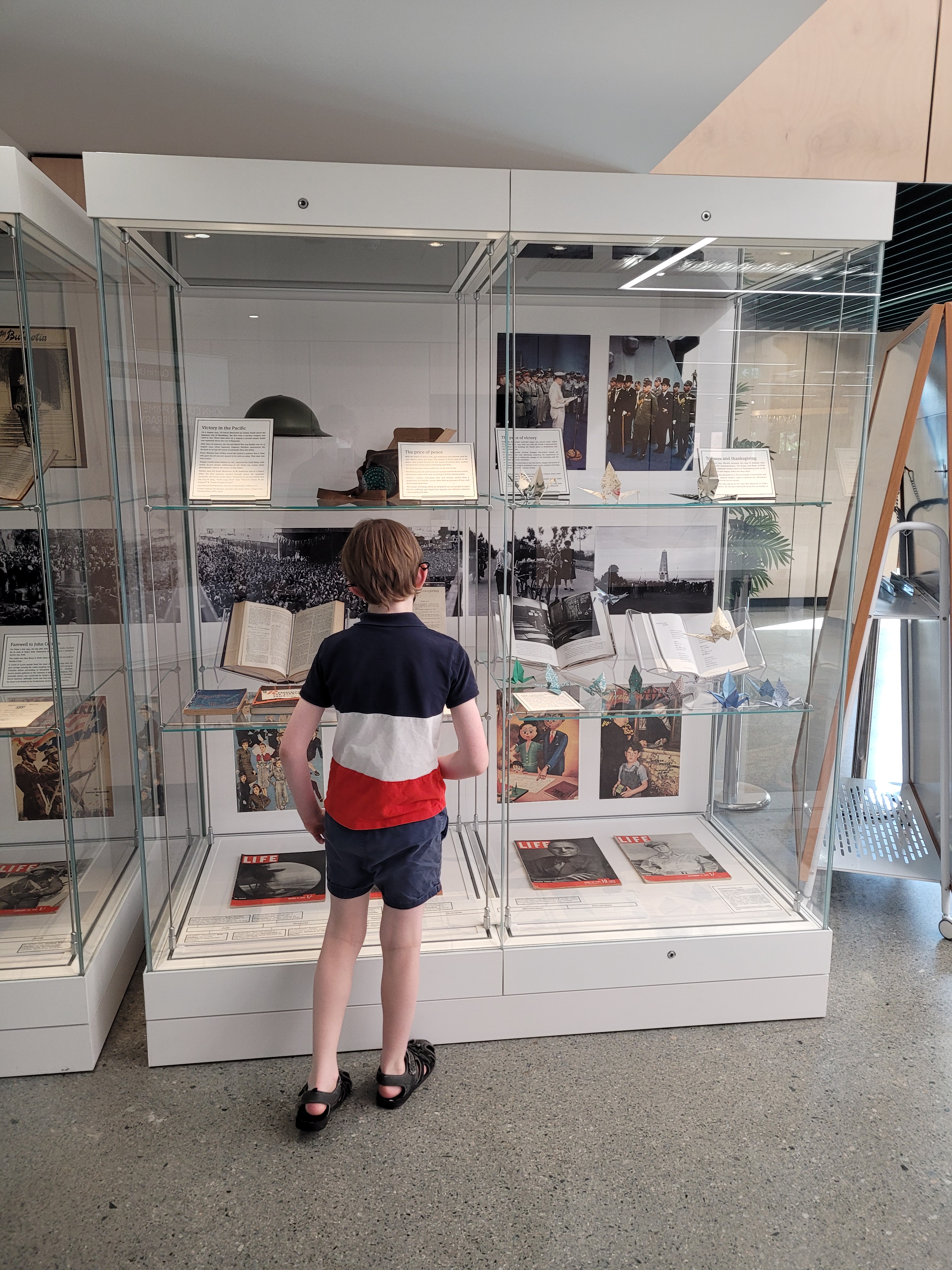
For many weeks, my son asked me each day what I was doing at work, and each day the answer was the same: the exhibition! His anticipation built and I was relieved when I could finally tell him it was installed. (How long can it possibly take to do one exhibition?) Last weekend, I took him and the rest of the family to Curtin University to see it. Curated by the special collections co-ordinator, Sally Laming, and I, ‘1945: The Price of Peace’ commemorates the death of John Curtin and the end of the Second World War. The title is taken from the words of John Curtin in parliament a few months before his death: ‘There is a price the world must pay for peace … I shall not attempt to specify the price, but it does mean less nationalism, less selfishness, less race ambition.’
When Kim E. Beazley (father of the Labor leader) died in 2007, he left behind the manuscript of a memoir, Father of the House. It was published posthumously by Fremantle Press in 2009, edited by the wonderful Janet Blagg, who also worked on my first book. Beazley emerges in the pages of this memoir as a principled politician, and an uneasy Laborite. He succeeded John Curtin as the federal member for Fremantle after Curtin’s death in 1945; he was only 26 and he was to remain in parliament though the entire winter of opposition for Labor from 1949 to 1972, before finally retiring in 1977.
I talked about John Curtin’s briefcase for a short video on Curtin University Library’s Instagram account. It’s one of the treasures held in the John Curtin Prime Ministerial Library. You can view it here.
There’s also a video from my talk about Katharine Susannah Prichard to Glen Eira Libraries, organised by Glen Eira Historical Society. It includes a reading of a ‘deleted scene’ about her childhood in Caulfield from my biography.
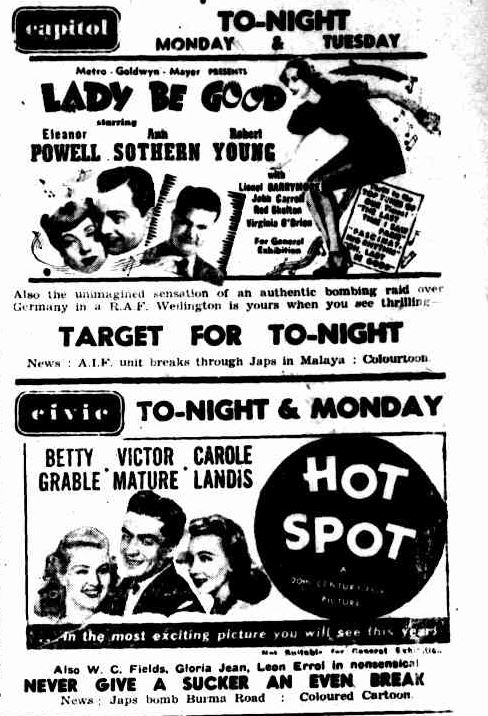
Could a Canberra cinema in 1942 have projected a message asking if the prime minister was there? This was a key question I had in assessing the story by John Burton that Curtin went missing on 21 February 1942 just as a crucial reply needed to sent to Churchill. I was thinking I must find someone with this kind of knowledge, but I hadn’t even thought of where to start yet. Then, arriving in my inbox, was the answer! Reader of this blog, Michael Piggott AM, had kindly asked Dr Ray Edmondson for me, and he gave a detailed answer:
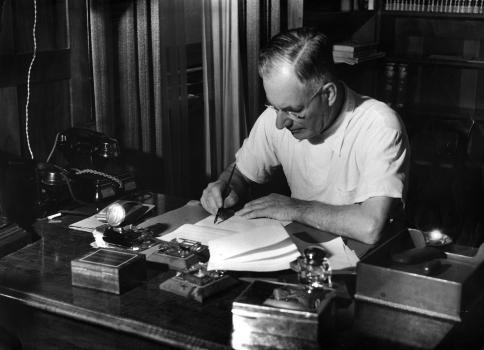
Picture: John Curtin in 1941. John Curtin Prime Ministerial Library, JCPML00376/133.
An update on my previous post. To recap, I thought I’d found two independent sources for the legend that on 21 February 1942, in the middle of the ‘cable war’ with Churchill about where returning Australian troops were to be sent, John Curtin went missing and, in the words of Peter Fitzsimons’ column last week, ‘Frederick Shedden organised for messages to be put up on screens in the city’s theatres around Canberra, broadly saying, if you are the Prime Minister, phone home’. One source is a 1995 interview with John Burton, who had then been head of External Affairs, and the other is an unreferenced lengthy quote labelled ‘Shedden’s words’ in a speech by David Black in 1998. But examining these two sources side by side, they are far too similar to be independent of each other. The sequence is exactly the same, the incidents included are exactly the same, and a couple of phrases are nearly verbatim.
John Curtin is in the news – Albo gave him a mention. Peter FitzSimons’ Anzac Day column today repeats the yarn that in the middle of the tense ‘cable war’ with Winston Churchill in February 1942, Curtin went missing and ‘Frederick Shedden organised for messages to be put up on screens in the city’s theatres around Canberra, broadly saying, if you are the Prime Minister, phone home’.
This legend is both intriguing and dubious sounding. John Edwards is not convinced about it in John Curtin’s War. He mentions it only as an endnote: ‘Though it has often been written, I am unconvinced of the accuracy of the story that Curtin was lost in the hills, and Shedden had advertisements for him placed in Canberra cinemas. It has the ring of a good yarn, especially the cinema ads, but is unlikely.’ (location 8195)