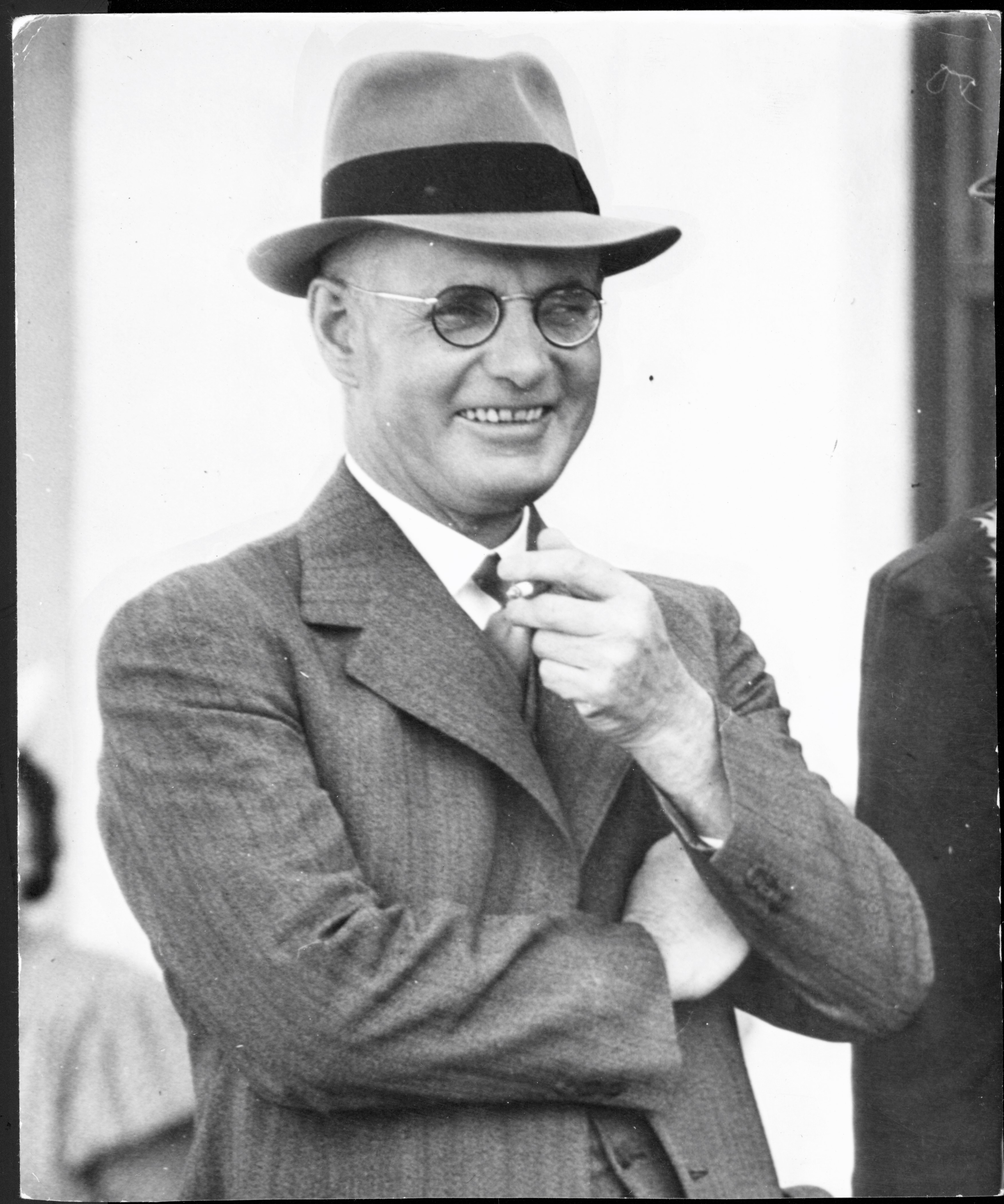
John Curtin is in the news – Albo gave him a mention. Peter FitzSimons’ Anzac Day column today repeats the yarn that in the middle of the tense ‘cable war’ with Winston Churchill in February 1942, Curtin went missing and ‘Frederick Shedden organised for messages to be put up on screens in the city’s theatres around Canberra, broadly saying, if you are the Prime Minister, phone home’.
This legend is both intriguing and dubious sounding. John Edwards is not convinced about it in John Curtin’s War. He mentions it only as an endnote: ‘Though it has often been written, I am unconvinced of the accuracy of the story that Curtin was lost in the hills, and Shedden had advertisements for him placed in Canberra cinemas. It has the ring of a good yarn, especially the cinema ads, but is unlikely.’ (location 8195)
After much hesitation and over-thinking, I plunged into starting my new book one day in July last year. Progress has been slow until recent weeks – I’ve been unwell since I got covid again in September. But now it’s coming together – I think this book has momentum, I think it’s going to work.
I have a wonderful day job, working in the John Curtin Prime Ministerial Library, looking after our John Curtin collection and the other special collections of Curtin University Library. An upcoming highlight of my job is a rare opportunity to guide tour groups through the Curtin Family Home in Cottesloe. John Curtin, prime minister of Australia from 1941 to 1945, and his wife Elsie had the house built in 1923 and four generations of the family lived on there until 1998. It was purchased by the government and is looked after by the National Trust of Western Australia. Most of the year it is available to stay in as an Airbnb – but as part of the Australian Heritage Festival, it will be open for tours on 18 and 19 April.
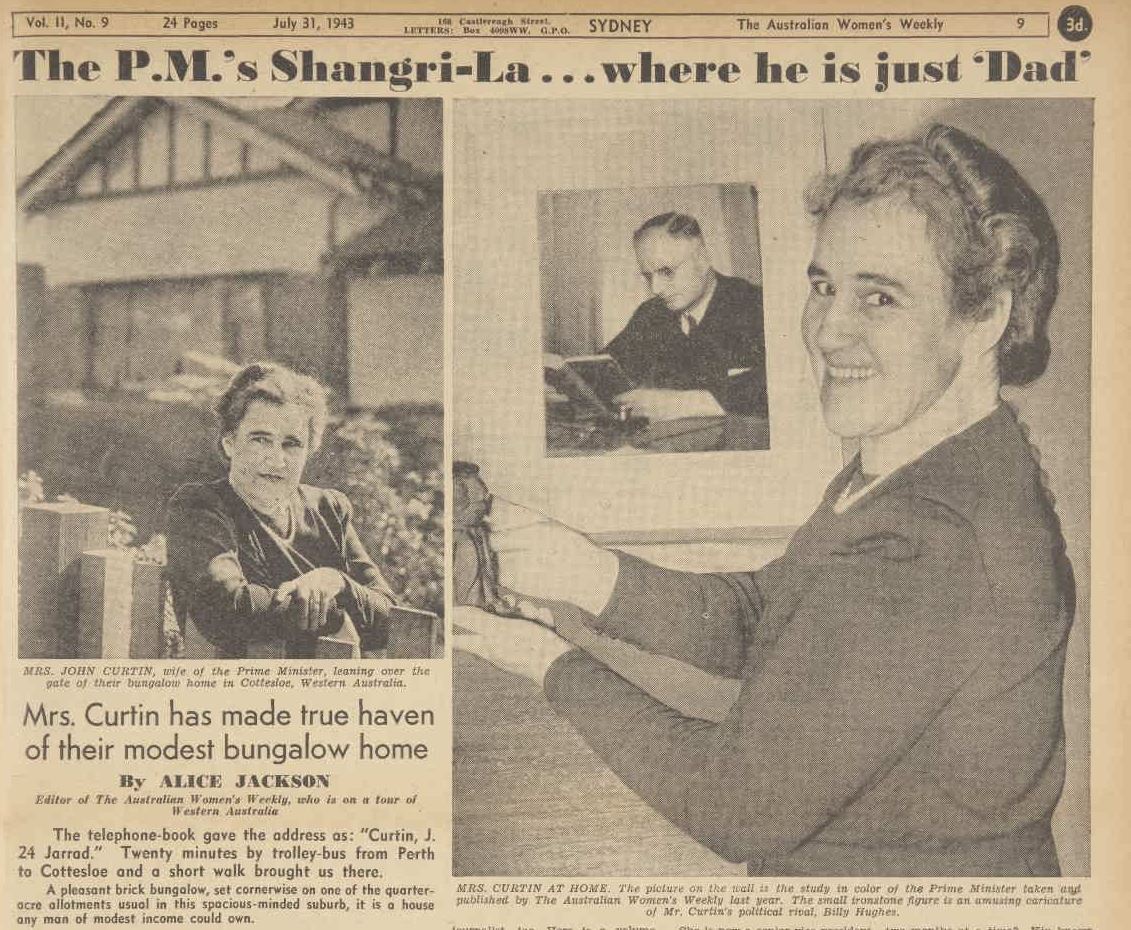
The house retains much of the feel of how it would have been in John Curtin’s day. ‘Shangri-La’ was an earthly paradise in the Himalayas in James Hilton’s novel Lost Horizon (1933). The Curtin Family Home isn’t that even in a metaphorical sense; the subheading of the Women’s Weekly article above is more true than the headline – ‘Mrs Curtin has made a true haven of their modest bungalow home’. The modesty of the house speaks to John Curtin and his prime ministership. He was a true believer with a vision of a better world who lived simply in accordance with his beliefs. He led by example in the austerity drive through the Second World War with Elsie as the face of the campaign and people knew of his sincerity and integrity. Yet being prime minister was difficult on the family, and some of the complexities show through in the depictions of life in the Curtin Family Home left by his children. Our tour uses oral histories, photographs, objects and contemporaneous glimpses in newspapers and letters to create a picture of a life both typical of the 1920s to 1940s in many ways and atypical in some important ways. It will give a sense of an ordinary extraordinary family and the strangeness of a prime minister hailing from this suburban house in Cottesloe.

 Nathan Hobby, a biographer in Perth