• About
  • The Red Witch: A Biography of Katharine Susannah Prichard
  • My novel: The Fur

Nathan Hobby, a biographer in Perth

~ The lives of John Curtin & Katharine Susannah Prichard, the art of biography, and other things

Nathan Hobby, a biographer in Perth

Category Archives: books

The biography of Hugo Throssell

18 Saturday Jan 2014

Posted by Nathan Hobby in book review, Katharine Susannah Prichard

≈ 1 Comment

Tags

Hugo Throssell, Victoria Cross, Western Australia

107913-lieutenant-hugo-vivien-hope-throssell

The Price of Valour by John Hamilton (Pan MacMillan, 2012)

Hugo Throssell is a fascinating, tragic figure, well deserving of his own biography apart from his role as husband to one of Western Australia’s most important writers, Katharine Susannah Prichard. Indeed, they met in London during WW1 as two Australian celebrities in their respective fields. (The photo here is not of Prichard, but Throssell with an unidentified nurse.) Throssell was a war hero, Victoria Cross winner and son of a prominent conservative politician. The tension between this and his marriage to a communist writer is part of what drives this biography by John Hamilton.

Hamilton is a journalist by background, and has written two other books about World War I. He approaches Throssell as a military historian; in telling the story of Throssell’s life, it is the trench battles in World War I which receive the most attention. This is appropriate, because it is Throssell’s role as a war hero which made him famous, and the trauma of battle which would contribute greatly to his suicide in 1933.

Hamilton’s research is the greatest achievement of this book. He managed to track down the only (then) living person who could remember Throssell well, a niece who died at nearly 95 a year before the book was published. He finds official records which shed much light on so many aspects of Throssell’s life – not just his military service, but even a note from the Northam RSL requesting that the premier remove Throssell from his role as the soldier’s representative on the Soldiers Settlement Scheme (303).

It’s always an achievement in biography to revivify long lost events in ways that go beyond the bare official record, but don’t seem indulgent. One scene which comes vividly to life in this case is the description of the infamous event at Northam on Peace Day, 19 July 1919, when Throssell declared that the war had made him a socialist (286). ‘The crowd’s warmth toward the speaker gave way to a frozen, disbelieving silence.’

I was going to write that a second example was that of the grand opening of Throssell’s rodeo (330), which helped ruin him financially – but looking back, it is a lengthy quote from the local paper, The Swan Express, which brought it to life for me. It’s a device Hamilton uses often through the book, and I’m not sure what to make of it. The extended quotes are well chosen, and present the events in the language and outlook of the day, which is surely valuable. Yet is it ‘good’ method in a biography? I imagine it might be disallowed in a more academic biography. (On that note, although providing a thorough and helpful bibliography, Hamilton does not properly reference the quotes; another case of a convention of popular biography vs academic biography.)

Writing in The Canberra Times, reviewer Michael McKernan argues that the division of the book into ‘triumph’ (in World War I) and ‘tragedy’ (in his marriage) is an incorrect one – the war experiences were part of the tragedy, setting up what was to follow. Hamilton may not disagree – as a military historian he seems very aware of the cruelty and tragedy of war – but in another important sense, perhaps McKernan’s comment reveals fundamentally different ways of looking at the meaning of war.

For me, there are important underexplored questions in the account of Throssell’s tragedy. To what extent did his speech at Northam make him a pariah? His job with the soldier’s settlement scheme continued until 1930. Were the objections to his rodeo scheme related to his politics? The question may be unanswerable, and Hamilton has at least provided some good evidence. Another question – what was Throssell’s politics, and how did it relate to his entrepreneurial activities as a land developer, gold miner, and rodeo promoter?  And what was the state of Katharine and Hugo’s marriage when she left on her extended trip, going to stay for a time with her ex-lover and his new partner in Russia? Again, probably unanswerable, and I may be wrong to ask for further speculation than Hamilton provides.
A biography of the city: David Whish-Wilson’s superb portrait of Perth

10 Friday Jan 2014

Posted by Nathan Hobby in book review, Western Australia

≈ 3 Comments

Tags

non-fiction, Perth

Perth-book-cover

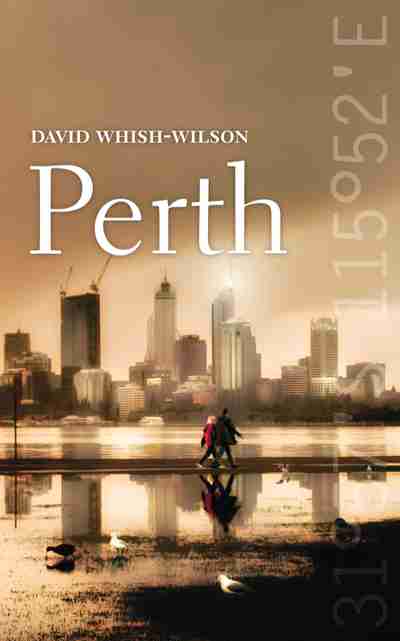
David’s Whish-Wilson’s new book, Perth, combines memoir, history, geography, architecture and literature to create a rich biography of the city. It’s part of the ‘cities’ series from the publisher, New South.

Whish-Wilson begins with the story of Fanny Balbuk, an Aboriginal woman born in 1840 who reacted to white encroachment ‘by stubbornly continuing to follow the tracks of her ancestors’ (3), meaning she would walk through people’s yards and houses. It’s a fascinating story, but Whish-Wilson’s use of it shows some of his skill as a writer. He starts by recalling how he first heard the story in primary school, giving us a taste of how stories and mythologies are transmitted in Perth (an ongoing theme in the book). He quotes Daisy Bates to give a contemporaneous portrait of Fanny and then describes himself looking out over Perth, picturing her route and being reminded ‘that beneath the geometric frame of the modern city… there exists footpads worn smooth over millennia’ (4).

The book’s long chapters group a diverse range of material around the themes of ‘river’, ‘coast’, ‘plain’, and ‘light’. As an example, in “The Plain”, the focus is on suburbs, which leads to a fascinating overview of the history and architecture of different periods of suburbs, from the inner-suburbs out to Armadale and its place in Perth’s self-perception. The theme brings out the work of Tim Winton and Peter Cowan, the effect of suburban serial killers, and a couple of stories from his own life, finishing with a reflection on the future of Perth’s spread out suburbs in an age of climate change and water shortage. The structure is loose, and gives the work the quality of a wide-ranging conversation – which is both a strength and weakness.

I have learned so much about my own city reading this book. Whish-Wilson’s breadth of reading is remarkable, as is his eye for the fascinating story, image or anecdote. I discovered, for example, that Alan Bond’s offices in the top three floors of the Bond Tower lay vacant from for nearly a decade, and in 2009 they were found to still be in their original condition, ‘so that Bond’s desk, chair and boardroom table were invitingly advertised as part of the new lease’ (79).

This book captures the mythology of Perth, with a strong sense of its past, present and future.

My favourite books of 2013

31 Tuesday Dec 2013

Posted by Nathan Hobby in books, lists

≈ Leave a comment

brightabyss

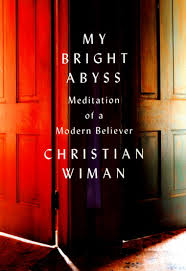
1. My Bright Abyss: Meditation of a Modern Believer / Christian Wiman

A beautiful memoir of faith, doubt, death and poetry. I feel he gets to the heart of our existential dilemma as well as anyone I’ve ever read. I noticed in The Australian that Tim Winton had this as one of his favourites of the year too. I wrote on it here.

2. The Many Worlds of R.H. Mathews: In Search of an Australian Anthropologist / Martin Thomas

The amateur anthropologist R.H. Mathews lacked all reflexivity; he would not yield any of his secrets to his biographer, Martin Thomas. So, like great biographical questers before him, Thomas makes a narrative of the quest itself. This being the theme of my thesis, I found it riveting and beautiful.

3. Unapologetic / Francis Spufford

Much like Wiman, Spufford writes beautifully about faith, which is all too rare. Review here.

4. Dear Life / Alice Munro

Reviewers were falling over themselves to pin new superlatives to Munro’s work even before she won the Nobel Prize this year. I completely agree with them: her short stories seem perfect to me. I read this collection on a bus through Italy, giving both the landscape the flavour of Munro and Munro the flavour of Italy. I can’t hold in my head all the marvels of this collection; I just went back to my copy and, flicking through, I was shocked at how much I had forgotten. One which sticks is “Amundsen”, a story about a young woman’s doomed affair with an asylum doctor; it has the scope and profundity of a novel—as do many of the others.

 5. The Aspern Papers / Henry James

If I was reading more fiction, I would spend a lot of time with Henry James, because my failed attempts to read his longer novels have still given me some hint of his brilliance, if only I had the perseverance. I read his novella, The Aspern Papers, on the plane between Melbourne and Perth, and it absorbed me. Set in Venice, it is the elegiac story of a biographer desperately trying to win over the aging lover of a late poet to gain access to his papers. I got to see Venice later in the year, and I kept thinking of Henry James and the biographer walking the same strange streets I was walking. ‘Just here—this is where it could have happened.’

The “Self-Invented Man”: Debunking a Victorian Hero

04 Monday Nov 2013

Posted by Nathan Hobby in biographies, book review

≈ Leave a comment

Tags

Henry Morton Stanley, reading report, Victoriana

image

Dark Safari: The Life Behind the Legend of Henry Morton Stanley John Bierman (Sceptre, 1990)

Abandonment, rejection, betrayal. These were the themes that haunted the inner life of the swaggering, assertive little man known to the world as Henry Morton Stanley… For Stanley, a mere mask was insufficient protection; he fabricated for himself a suit of armour, which it has taken almost a century to penetrate. (Opening paragraph)

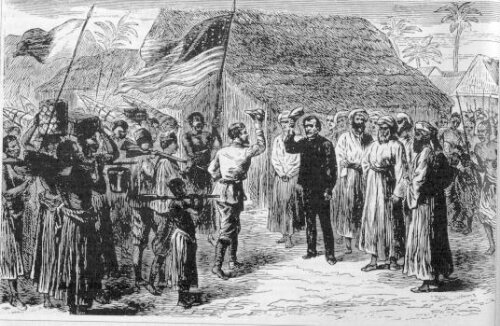
Henry Morton Stanley was famously the journalist who “found” the missionary explorer David Livingstone. He is a classic subject for the debunking-a-Victorian-hero genre, because – if Bierman is to be believed – Morton was a compulsive liar, a storyteller who invented versions of his life to suit his purposes.
I’m only part-way through the book, but want to offer some initial reactions to its first part, “Self-Invented Man”. The book was a serendipitous find in a booksale; I was only vaguely aware of Stanley as a historical figure, but I am fascinated by the possibilities of Victorian biography. It exists outside the lifespan of anyone alive today (bar the handful of people born before 1900), so it is an archival genre of biography, yet it almost feels in touching distance: the world of the Victorians was a world my grandparents were familiar with, even if they didn’t directly live in it.

Bierman writes well, with requisite wit. He has just the right tone to write Stanley’s story. He has also chosen a fascinating subject.

The gift Stanley left his biographer was an autobiography and other writings which are demonstrably false. Early sections of Bierman’s biography read as an extended commentary on Stanley’s autobiography. A key passage of Stanley’s account is presented and then debunked. As one example, Stanley presents himself as a youthful hero in the children’s workhouse, standing up to the tyrannical master, a rebel campaigning for justice. Bierman finds a contradiction in Stanley’s own account – why, then, was Stanley left in charge of the other children when the master was away? – and deploys corroborating evidence (interviews with other inmates, the workhouse records themselves) to argue the reality was that Stanley was actually the teacher’s pet.

Unlike a biography I recently finished (that of South Australian author, Matilda Evans) Bierman has a wealth of material to work with, and I find the debunking process gripping. The contradictions and fabrications in Stanley’s account reveal so much about the subject’s character and the age in which he lived.

The choice of subject is surely paramount for the biographer. There are so many historical figures who cry out for attention, and yet before embarking on a biography of them, the question probably has to be: what traces have they left behind? What raw materials are there to work with? (Unless, perhaps, the greatest biographer can coax blood from a stone and produce a great biography of a subject who has left little behind. It would have to be a convincingly and fascinatingly speculative account.)

Some Thoughts on Alister McGrath’s Biography of C.S. Lewis

18 Wednesday Sep 2013

Posted by Nathan Hobby in biographies, book review

≈ 1 Comment

Tags

C.S. Lewis, Christian writing

I’ve just finished McGrath’s C.S. Lewis: A Life, a book in which  my interests in biography, theology and literature converge.
I’ve had an uneasy relationship with Lewis. I was brought up on The Chronicles of Narnia. The crude 1970s cartoon version of The Lion, The Witch and The Wardrobe was the only video provided for children to watch at several church camps when I was young. For my eighth birthday, my parents bought me the set of books in a boxset (not a common thing; I didn’t own that many books as a child – it was always the libraries); they were a precious possession, and I enjoyed them a lot – although never quite as much as I perhaps felt I should. I went onto to read the Space trilogy as a teenager, but avoided his Christian writings, probably partly because of one over-zealous youth group leader who had only ever read C.S. Lewis and made him sound incredibly dull to me by steering every conversation back to him. Lewis was also just too obvious a choice for me with my dual interest in theology and literature. Yet a couple of years ago, I was blown away by the brilliance of The Great Divorce, one of the best books on eschatology I have ever read, and since then my interest in him has been strengthened.
McGrath’s research is excellent and he is insightful in telling the story of Lewis’s life. Yet his style is precisely wrong for his subject, and it is a failing which drags the book down for me. The problem is one of over-clarity, not only over-simple, pedestrian prose, but constant signposting of every transition (too many ‘to which we now turn’s at the end of each section) and repetitions which grow tiresome. It may well be an attempt to make the book as readable as possible, and it probably succeeds in doing that, but although McGrath writes of the poetry in Lewis’s writing and its beauty, there is little of it in this account of Lewis.
Lewis was long dead before I began reading him; his work comes to the present generations as an established whole. It was of so much value to learn of the development of each book chronologically, of how each book emerged from a particular period of Lewis’s life. The hodge-podge of Lewis I’ve had in my reading – from late works to early works and in between and back again – muddles the sense of a mind not fixed with one position but developing and changing. For example, it was interesting to learn of how his two books on suffering – The Problem of Pain and A Grief Observed – were written at very different times of his life, one a theoretical apology, and the other an emotional account of his own reaction to his wife’s death.
I knew so little of Lewis’s life before reading this biography, and the complexities of it were gripping. I found myself wishing McGrath was just a little more interested in scandal, although he certainly presents the scandalous aspects in a plain-spoken way. Lewis had the strangest relationship with a wife-mother figure, Mrs Moore. I’m sure others have explored it in greater length, and McGrath gives an adequate account, but it is bizarre and seems to have been so crucial to the type of life he lived. McGrath presents Lewis’s eventual wife, Joy Davidman, as a conniving woman, and it is another strange story. McGrath minimises the attempts to get inside Lewis’s head, but I think he should have tried some more. One of the problems, no doubt, is the reticence Lewis would have shown in print about his unusual relationships with women.
Structurally, it all seems to be over so quickly, but that’s the inevitable experience of a biography which is not the size of a brick. Perhaps it was only a question of how engrossed I was, but the second half of his life seemed to be covered in too little detail, perhaps because McGrath’s attention shifted to Lewis’s published work.
Which brings me to a question of biographical method and structure. The book stalled for me in Part Three – ‘Narnia’. McGrath breaks off his narrative of Lewis’s life to offer a rather basic overview of the themes and significance of Narnia. It seems a contravention of the book’s own internal parameters. I think the book would be stronger as a biography if the discussion of Narnia was more deeply rooted in the biographical, even if that meant not saying things McGrath regards as important.
My complaints aside, McGrath has deepened my interest in Lewis and written a good popular-level biography. It would be an interesting exercise to compare the companion release, a more academic account of Lewis – but I’ll probably leave that to others.

Redmond Barry and some preliminary reflections on the art of biography

01 Thursday Aug 2013

Posted by Nathan Hobby in biographies, book review

≈ 2 Comments

redmond-barry

In thinking what I might write next, I’m weighing up biography as a literary form at the moment. I’m not sure how to do that. The danger is that each biography I read has me judging the whole form by its merits.

Today I finished Ann Galbally’s Redmond Barry: An Anglo-Irish Australian (Melbourne University Press, 1995). Barry (1813-1880) emigrated to Australia as a young man, and was a towering figure in Melbourne’s early years as a judge, university chancellor, library-founder, cultural emissary. Yet he’s probably best remembered for sentencing Ned Kelly to death and dying himself days after Kelly. Gallaby treats Ned Kelly’s trial in four pages. Given it was only a couple of weeks in a whole life, perhaps it’s a logical decision. Yet I would have given it many more pages, because of its dramatic potential and the place of Kelly in Australian cultural memory.

I suspect I’m interested by things which are not the focus of conventional biographies. One example: I’m fascinated by the memorialisation and legacy of a biographee – what shadow do they cast over the world after their death? There is some of this in Barry. A funny anecdote told about him in The Age sixty years after his death; words attributed to him in folklore; that fact that today there remains his coat of arms that he himself had placed in an unobtrusive spot above a hall he helped get built. But I wanted more.

I don’t yet know if the fact that this biography didn’t grip me was due to the limits of the genre itself, or the shortcomings of this particular biography. I felt that as a narrative it was flat, and far too bound by maintaining a steady rhythm of chronology. Barry spent this year in this way, and then the next one in this way. There was not enough narrative shaping of his life, not enough sense of the heights and lows, not enough drama created.

Perhaps I carry the baggage of my background in fiction. The biography should not be in too much debt too the novel. And then there is the problem of the expectations of biography after Freud: that it reveal the biographee’s secrets and their sex life. Barry does both, which is why I’m surprised I didn’t find it more engaging, despite it being well-researched, both sympathetic and critical, and the prose having an unobtrusive appropriateness. (I remember cringing right through the overwritten prose of Belle Costa Greene’s biography, An Illuminated Life.) Barry had an affair with a married woman on the ship over to Australia, and the whole ship became aware of it, including the husband. Remarkably, Barry himself records some of the details. This is the sort of insight I thought the 19th century historical record would generally completely lack. And yet it is made less interesting than it could have been.

I also felt as I read that the sort of biography I would want to write would illuminate the particular events of the biographee’s life by far more explanation of social and cultural norms of the time. Where we couldn’t get particular insight into the biographee’s life, we would gain general insight. How common was it for a respectable church-going judge to keep a consort he would not marry and have children with her? How does it fit into Victorianism? It would make for a far-bigger book, and it could get boring; it would need to be done well.

I must make clear that as history and probably even as biography, this is a good book. It just happens to be the particular instance of my initial interrogation of the genre.

Barry turned 200 this year, and a panel called “Redmond Barry: Visionary or Scoundrel” was held at the State Library of Victoria.


WA Premier’s Book Awards – not so Western Australian

09 Tuesday Jul 2013

Posted by Nathan Hobby in books, Western Australia

≈ Leave a comment

The shortlist for the WA Premier’s Book Awards has just been announced. I was disappointed to realise that all Australian writers are now eligible to enter. (It probably changed some time ago – I’ve been out of the loop.) This may sound horribly parochial, but there are many national book awards; there are few opportunities for Western Australian writers to be recognised. The inevitable result is that the top few writers in the country will receive extra accolades, and the local writers who could have been given a boost will be overlooked.

On the other hand, I am so glad we have WA-based book awards, and I hope they continue to get funding and attention.

The best books I read in 2012

07 Monday Jan 2013

Posted by Nathan Hobby in lists, reading

≈ 1 Comment

I had a reading drought in 2012. No clear favourite, no book which even blew me away – and yet I still discovered some interesting and worthy ones. I have been scared I’ve been losing my love of reading, but I cured that re-reading an old favourite, Siri Hustvedt’s What I Loved, which I finished when I couldn’t sleep on New Year’s Day. She reminded me in that novel of why I read, the pleasures and insights I hope to have, after I was so disheartened at feeling unable to finish three novels in a row.

1. Promised Lands / Jane Rogers (1996)
I wonder how much attention this received when it came out; it deserves to be read, as it is excellent. The frame story is that of a historian, Stephen, a failed idealistic school teacher now writing the story of William Dawes, part of Australia’s First Fleet in 1788. Kate Grenville wrote about Dawes in The Lieutenant, which I haven’t read, but the two books would make an interesting comparison.

2. The Sense of An Ending / Julian Barnes (2011)
I’m not sure it deserved the Man Booker Prize, but it certainly got my attention – a simply written story of a man looking back on his life and failed love that plays with the reader’s mind.

3. The Quest for Corvo: An Experiment in Biography / A.J.A. Symons (1934)
This the nonfiction antecedent for the biographical-quest genre I have been writing about and in. Symons goes in search of an obscure writer, ‘Baron Corvo’, a strange man who burned everyone who tried to help him.

4. Winter Journal / Paul Auster (2012)
Perhaps it is just for fans. But he’s my favourite writer, so this memoir certainly captivated me. Auster writes a memoir of his body, detailing his illnesses, scars, memories, and listing the address of every place he has ever lived. (He leaves his current address vague.)

5. Accordion Crimes / Annie Proulx (1996)

6. Too Much Happiness / Alice Munro (2009)

7. 11/22/63 / Stephen King (2011)

8. Ice / Louis Nowra (2008)


What was the best book you read in 2012?

Torie O’Shea, you’re nasty: my encounter with a ‘cosy’ novel

28 Sunday Oct 2012

Posted by Nathan Hobby in book review

≈ Leave a comment

Tags

Americana, biographical quest genre, cosy fiction, empathy, genealogical fiction, Jonathan Franzen, popular fiction, suicide

Researching a dissertation, I’ve ended up reading some things I wouldn’t normally read. That can be a good thing, although my experience reading some popular fiction has been an unhappy one so far. At the moment, I’m pursuing the idea of ‘genealogical fiction’, and came across the Torie O’Shea series, about a genealogist, written by Rett Macpherson. Several of the blurbs on the back cover proclaim the series as a masterpiece of the ‘cosy’; another says ‘a slice of Americana as warm and comforting as apple pie a la mode’, with the Americana bit being true and the second half being true for a particular type of reader in America’s mid-west, I’m sure.

The one I’m reading is Thicker Than Water, and it’s actually better than another ‘cosy’ novel about a biographer I tried to read. I had found Torie O’Shea annoying but not objectionable. Every twenty pages she proclaims her need for ‘caffeine and sugar’ (in that order), and downs a Dr Pepper. I think this is her ‘quirk’ – it creates character, presumably. One of the blurbs claims there is a ‘characteristic blend of wit and sarcasm’, but for me it’s about as witty as listening to middle-class, middle-aged people banter in a supermarket, and laugh exaggeratedly.

I could forgive this – humour is a taste, and I bet fans of Torie O’Shea don’t find Jonathan Franzen funny – even and especially though he writes in the same milieu. What horrified me was a scene late in the book where Torie O’Shea decides to visit an acquaintance, Leigh, in hospital who has failed in a suicide attempt.

First, Torie and her husband

made a few jokes about my mother winning a year’s supply of bagels. In fact, I think Rudy and I sort of overdid it on the bagel jokes, and suddenly there was an awkward silence. That very thing I wanted to avoid. (177)

At this point, I was glad Torie wasn’t visiting me in hospital regaling me with her banter. But Leigh misjudges her audience and asks them if she will go to hell if she commits suicide. This already makes them uneasy, and the final straw comes when Leigh adds ‘I just don’t see the point [of life].’ To this, Torie narrates:

Time was up. I couldn’t do this one second longer. We said good-bye and wished her well…. Finally Rudy said, “Why did we come to visit her, again?”

“Rudy.”

“That was God-awful, Torie. Absolutely horrible.”

“With my position in town, and especially with our new inheritance – not to mention we’re her landlords – it’s sort of expected of us.”

“Are you serious?”

“It comes with the territory, Rudy. Get used to it.” (177-178)

End of section. There are no authorial hints that Torie and her husband have failed terribly in the empathy stakes, no censure from another character, nothing to make me conclude anything other than the fact that readers are meant to share Torie’s frustration with this ‘unstable’ woman and congratulate her on at least making an effort and telling a few bagel jokes.

I have a few chapters to go. Perhaps the priest character who was conveniently waiting in the confessional several chapters ago will reappear and tell Torie how nasty she is. But I’m not counting on it. ‘Cosy’ is only cosy for those on the inside of the American dream.

A Biographical Quest of Australian Immortalities: Ice by Louis Nowra

05 Friday Oct 2012

Posted by Nathan Hobby in book review

≈ 1 Comment

Tags

biographical quest genre, Library of Babel, louis nowra

In Ice, A 19th century entrepreneur is obsessed with overcoming death, after losing his father at two and his beloved first wife a year into their marriage. In the present day, a man writes the entrepeneur’s biography from the notes left by his comatose wife, hoping the story he has created will jolt her to consciousness. It’s disturbing for me to discover that a prominent Australian writer has already published a novel on similar themes to the one I’m writing. From a purely selfish point of view, you’ll forgive me for being glad Ice is not definitive enough to preclude another novel with resemblances of theme and milieu.

Nowra’s 2008 novel was shortlisted for the Miles Franklin, but had mixed reviews. I think the criticisms are valid, but I was still fascinated by its Australian treatment of death and immortalities in the Victorian era.  David Free (Quadrant, December 2009: p.23) is insightful about the novel’s flaws:

This stinginess with dialogue is connected to Nowra’s central vice: his practice of summarising the events of his story rather than dramatising them. His unit of conveying information isn’t the scene, but the drab prose précis. Again, this seems a bizarre technical sacrifice for a novelist to make. If reading a novel about an historical figure sounds like a more enticing proposition than reading a 300-page encyclopaedia entry about him, that’s because we expect the novelist to render his narrative in vivid scenes, to roll up his sleeves and plunge into the business of fictional evocation. Nowra not only doesn’t do this; he doesn’t even seem to try.

In trying to cover 58 years in the life of the central character, Malcolm McEacharn, summary is the default mode. It doesn’t read exactly like an encyclopedia or even a conventional biography, because we are brought inside Malcolm and other character’s minds; but it does read like fiction which is not fully imagined.

[SPOILER ALERT] Yet it’s crammed with fascinating plot developments, ‘tall-tales’, as one reviewer wrote, building on the actual life of Malcolm McEacharn. The iceberg Malcolm tows into Sydney Harbour at the beginning of the novel has, at its core, a preserved sailor. Malcolm attends seances to find his dead wife; collects bottled foetuses of every creature; digs up the bones of his father.

← Older posts
Newer posts →

Enter your email address to follow this blog and receive notifications of new posts by email.

Join 287 other subscribers

Nathan on Twitter

My Tweets

Categories

  • academic (9)
  • archives and sources (10)
  • autobiographical (62)
  • biographers (10)
  • biographical method (28)
  • biographical quests (18)
  • biographies (21)
    • political biography (2)
  • biographies of living subjects (2)
  • biographies of writers, artists & musicians (12)
  • biographies of writers, artists and musicians (20)
  • biography as a literary form (9)
  • biography in fiction (2)
  • biography in the news (2)
  • books (236)
    • authors (19)
    • book review (173)
    • reading (23)
  • Covid (2)
  • creative nonfiction (11)
  • daily life (2)
  • Daily Prompt (2)
  • death (21)
  • digital humanities (3)
  • family history (1)
  • fiction (8)
  • film and television biographies (5)
  • film review (48)
  • found objects (3)
  • historical biographies (1)
  • history (20)
  • In the steps of KSP (4)
  • John Curtin (12)
  • Katharine Susannah Prichard (114)
    • Glimpses of KSP (7)
    • My KSP biography (31)
      • deleted scenes (1)
  • Katharine Susannah Prichard's associates and connections (16)
  • Katharine Susannah Prichard's writings (34)
  • libraries (5)
  • life (20)
  • link (23)
  • links (41)
  • lists (28)
  • local history and heritage (1)
  • media (4)
  • memes and urban myths (1)
  • memoirs (10)
  • meta (2)
  • music (18)
  • news (9)
  • news and events (43)
  • obituary (1)
  • Old writing found on a floppy disk (1)
  • poetry (5)
  • politics and current affairs (26)
    • climate change (1)
  • prologues and introductions (2)
  • psychological aspects of biography (3)
  • quotes (22)
  • R.I.P. (10)
  • reading report (3)
  • religion (1)
  • religious biography (1)
  • research (5)
  • role of the biographer within the biography (2)
  • Series: A-Z of Katharine Susannah Prichard (26)
  • Series: Corona Diary (1)
  • Series: Saturday 10am (14)
  • Series: Short Stories (2016) (6)
  • Series: The Tourist (2013) (6)
  • Series: Thursday 3pm feature posts (2009) (35)
  • structure of biographies (3)
  • technology and the digital world (2)
  • television (4)
  • the nature of biography (4)
  • this blog (10)
  • Uncategorized (33)
  • Western Australia (26)
  • writing (41)

Archives

Recent Comments

Nathan Hobby's avatarNathan Hobby on Katharine’s birthday tou…
Nathan Hobby's avatarNathan Hobby on Review – The Good Fight:…
Nathan Hobby's avatarNathan Hobby on Katharine’s birthday tou…
David J. Gilchrist's avatarDavid J. Gilchrist on Katharine’s birthday tou…

Bookmarks

  • Adventures in Biography
  • ANZ LitLovers LitBlog
  • Bernice Barry
  • It only goes up to your knees
  • Jane Bryony Rawson
  • Jenn Plays Recorder
  • Katharine Susannah Prichard Writers' Centre
  • Laura Sewell Matter: Essayist and Biographer
  • Mutually said: Poets Vegan Anarchist Pacifist
  • Resident Judge
  • Speaking Thylacine
  • The Australian Legend
  • Timothy Parkin Poetry
  • Treefall Writing – Melinda Tognini
  • Whispering Gums
  • Wrapped up in books: the home of Guy Salvidge

Top Posts

  • Paul Auster's Moon Palace : an overview
  • 'Red Witch': my speech on Tuesday
  • Letter to my newborn daughter
  • Link to my radio interview
  • The Joy of Knowledge Encyclopedia

Blog Stats

  • 220,279 hits

Tag Cloud

9/11 19th century 33 1920s 1921 1930s 1950s 1970s 1971 1981 2000s 2004 2011 2015 2017 20000 Days on Earth A.S. Byatt Aboriginals activism Adam Begley Adrian Mole adultery afterlife Agatha Christie Alan Hollinghurst Alberto Manguel Alfred Deakin Amazing Grace Americana Amy Grant An American Romance Andre Tchaikowsky Andrew McGahan angela myers anne fadiman Anne Rice Arabian Nights archives art arts funding A Serious Man Ash Wednesday ASIO atheism Atonement Australia Australian film Australian literature Australian Short Story Festival autism autobiography autodidact Barbara Vine beach Belle Costa da Greene Bell Jar best best-of Bible Big Issue Bill Callahan biographical ethics biographical quest genre biographies birthday birthdays Black Opal Bleak House Blinky Bill blogging blogs Blue Blades Bodega's Bunch bog Booker book launch booksale Borges Brenda Niall Brian Matthews Brian McLaren Britney Spears Burial Rites Burke and Wills buskers C.S. Lewis C.S. Lewis canon capitalism Carol Shields Carson McCullers Catcher in the Rye Catholicism celebrities Charles Dickens Charlie Kaufman childhood Child of the Hurricane children's books Choir of Gravediggers Christianity Christian writing Christina Stead Christmas Christopher Beha Cinque Terra Claire Tomalin classics cliches climate change Coen brothers coincidence Collie Collyer coming of age Communism concert Condensed Books consumerism Coonardoo Cormac McCarthy Corrections cosy fiction Dara Horn David Copperfield David Ireland David Marr David Suchet death Death of a president definition demolition Dennis LeHane dentist diaries divorce doctorow Doctor Who documentaries donald shriver Don DeLillo Don DeLillo Donna Mazza Donna Tartt Don Watson Dostovesky doubt drama dreams of revolution Drusilla Modjeska E.M. Forster ebooks editing Eichmann Eisenstein Elizabeth Kostova email empathy ensmallification existentialism faith Falling Man fame families fantasy fiction film and television folk football Frank Barscombe Fremantle Press G.K. Chesterton Gabrielle Carey Gallipoli genealogical fiction Genesis Geoff Nicholson George W. Bush Gerald Glaskin Gilead Golden Miles Goldfields Trilogy Graham Greene grandad great novels Greenmount Guinness World Records Guy Salvidge Hannah Arendt Hannah Kent Hans Koning Hans Koningsberger Harper Lee Haxby's Circus Hazel Rowley He-Man headers heaven Heidegger hell Henrietta Lacks Henry Morton Stanley Herman Hesse heroes Hey Dad! historical fiction history Holden Caulfield holidays Homer & Langley Home Song Stories House of Cards House of Zealots house of zealots Hugo Throssell humour Ian McEwan In between the sheets Indonesia Infamous Inside Llewyn Davis interstellar interview Intimate Strangers Invisible Ireland ISBNs Ishiguro itunes J.D. Salinger J.M. Coetzee J.S. Battye Janet Malcolm Jennifer Egan JFK JFK assassination Joanna Rakoff Joel Schumacher John Burbidge John Fowles John Howard John Kinsella John Updike John Updike Jonathan Franzen journal writing JSB Judgment Day Julia Baird Julian Barnes Kafka Kalgoorlie Kate Grenville Katherine Mansfield Kevin Brockmeier King's Park KSP Writers' Centre language last ride Laurie Steed Left Behind Leonard Cohen Leo Tolstoy Libra Library of Babel Library of Babel Lila Lily and Madeleine links Lionel Shriver lionel shriver lists literary fiction literature Lleyton Hewitt lost book Louisa Louisa Lawson Louis Esson louis nowra love letter Lubbock Lytton Strachey Madelaine Dickie Man Booker man in the dark Margaret Atwood Margaret River Press Marilynne Robinson mark sandman meaning of life Melbourne Mel Hall meme memorialisation memory MH17 Michael Faber Mike Riddell Miles Franklin mining boom missionaries moleskine Moon Palace morphine Mother Teresa movies Music of Chance My Brilliant Career names Napoleon Narnia narrative Narrow Road to the Deep North Narziss and Goldmund Natalie Portman Nathaniel Hobbie national anthem Nick Cave Nina Bawden non-fiction nonfiction noughties novelists novels obituaries obscurity On Chesil Beach Parade's End Paris Hilton Passion of the Christ past patriotism Paul Auster Paul de Man Perth Perth Writers Festival Peter Ackroyd Peter Cowan Writers Centre phd Philip K. Dick Philip Seymour Hoffman pierpontmorgan poetry slam politics popular fiction popular science Possession postapocalyptic postmodernism Pride prophetic imagination publications Pulp Purity Queen Victoria Rabbit Angstrom radio Radio National Randolph Stow rating: 5/10 rating: 6/10 rating: 7/10 rating: 8/10 rating: 9/10 rating: 10/10 ratings reading fiction autobiographically reading report Rebecca Skloot recap red wine reincarnation juvenile fiction rejection review - music reviewing rewriting Richard Flanagan Richard Ford Rick Moody Roaring Nineties Robert Banks Robert Hughes Robert Silverberg Robert Wadlow Robinson Crusoe Rolf Harris romance Rome ruins Russell Crowe Ruth Rendell Sarah Murgatroyd scalpers science fiction Science of Sleep secondhand books Secret River sermon illustration sex short stories Silent Woman Simone Lazaroo Simpsons Siri Hustvedt slavery Smashing Pumpkins social interactions social justice some people i hate sources South Australia souvenirs speculation speech speeches sport status anxiety Stephen Lawhead Stranger's Child subtitles Subtle Flame Sue Townsend suicide Surprised By Hope Suzanne Falkiner Sylvia Plath Synecdoche TAG Hungerford Award tapes teabags Ted Hughes The Children Act The Cure The Fur The Imitation Game theology The Pioneers The Revolutionary Thomas Disch Thomas Hardy Thomas Henry Prichard Thomas Mann thriller time Tim La Haye Tim Winton Tolstoy Tom Wright top 10 Towering Inferno Tracy Ryan Trove Truman Capote tshirts TS Spivet Twelve Years a Slave underrated writers Underworld unwritten biographies urban myth USA vampires Venice Victoria Cross Victoriana Victorian era Victorianism Victoria Park video Voltron w Wake in Fright Walkabout Walter M. Miller war War and Peace war on terror Water Diviner Wellington St Bus Station Westerly Western Australia West Wing What Happened to Sophie Wilder? Whitlams wikipedia Wild Oats of Hans William Wilberforce Winston Churchill Witches of Eastwick Working Bullocks workshop World War One writers writing Writing NSW youth Zadie Smith Zeitgeist Zelig

Enter your email address to follow this blog and receive notifications of new posts by email.

Join 287 other subscribers

Pages

  • About
  • My novel: The Fur
  • The Red Witch: A Biography of Katharine Susannah Prichard

Categories

  • academic (9)
  • archives and sources (10)
  • autobiographical (62)
  • biographers (10)
  • biographical method (28)
  • biographical quests (18)
  • biographies (21)
    • political biography (2)
  • biographies of living subjects (2)
  • biographies of writers, artists & musicians (12)
  • biographies of writers, artists and musicians (20)
  • biography as a literary form (9)
  • biography in fiction (2)
  • biography in the news (2)
  • books (236)
    • authors (19)
    • book review (173)
    • reading (23)
  • Covid (2)
  • creative nonfiction (11)
  • daily life (2)
  • Daily Prompt (2)
  • death (21)
  • digital humanities (3)
  • family history (1)
  • fiction (8)
  • film and television biographies (5)
  • film review (48)
  • found objects (3)
  • historical biographies (1)
  • history (20)
  • In the steps of KSP (4)
  • John Curtin (12)
  • Katharine Susannah Prichard (114)
    • Glimpses of KSP (7)
    • My KSP biography (31)
      • deleted scenes (1)
  • Katharine Susannah Prichard's associates and connections (16)
  • Katharine Susannah Prichard's writings (34)
  • libraries (5)
  • life (20)
  • link (23)
  • links (41)
  • lists (28)
  • local history and heritage (1)
  • media (4)
  • memes and urban myths (1)
  • memoirs (10)
  • meta (2)
  • music (18)
  • news (9)
  • news and events (43)
  • obituary (1)
  • Old writing found on a floppy disk (1)
  • poetry (5)
  • politics and current affairs (26)
    • climate change (1)
  • prologues and introductions (2)
  • psychological aspects of biography (3)
  • quotes (22)
  • R.I.P. (10)
  • reading report (3)
  • religion (1)
  • religious biography (1)
  • research (5)
  • role of the biographer within the biography (2)
  • Series: A-Z of Katharine Susannah Prichard (26)
  • Series: Corona Diary (1)
  • Series: Saturday 10am (14)
  • Series: Short Stories (2016) (6)
  • Series: The Tourist (2013) (6)
  • Series: Thursday 3pm feature posts (2009) (35)
  • structure of biographies (3)
  • technology and the digital world (2)
  • television (4)
  • the nature of biography (4)
  • this blog (10)
  • Uncategorized (33)
  • Western Australia (26)
  • writing (41)

Archives

Recent Comments

Nathan Hobby's avatarNathan Hobby on Katharine’s birthday tou…
Nathan Hobby's avatarNathan Hobby on Review – The Good Fight:…
Nathan Hobby's avatarNathan Hobby on Katharine’s birthday tou…
David J. Gilchrist's avatarDavid J. Gilchrist on Katharine’s birthday tou…

Bookmarks

  • Adventures in Biography
  • ANZ LitLovers LitBlog
  • Bernice Barry
  • It only goes up to your knees
  • Jane Bryony Rawson
  • Jenn Plays Recorder
  • Katharine Susannah Prichard Writers' Centre
  • Laura Sewell Matter: Essayist and Biographer
  • Mutually said: Poets Vegan Anarchist Pacifist
  • Resident Judge
  • Speaking Thylacine
  • The Australian Legend
  • Timothy Parkin Poetry
  • Treefall Writing – Melinda Tognini
  • Whispering Gums
  • Wrapped up in books: the home of Guy Salvidge

Top Posts

  • Paul Auster's Moon Palace : an overview
  • 'Red Witch': my speech on Tuesday
  • Letter to my newborn daughter
  • Link to my radio interview
  • The Joy of Knowledge Encyclopedia

Blog Stats

  • 220,279 hits

Tag Cloud

9/11 19th century 33 1920s 1921 1930s 1950s 1970s 1971 1981 2000s 2004 2011 2015 2017 20000 Days on Earth A.S. Byatt Aboriginals activism Adam Begley Adrian Mole adultery afterlife Agatha Christie Alan Hollinghurst Alberto Manguel Alfred Deakin Amazing Grace Americana Amy Grant An American Romance Andre Tchaikowsky Andrew McGahan angela myers anne fadiman Anne Rice Arabian Nights archives art arts funding A Serious Man Ash Wednesday ASIO atheism Atonement Australia Australian film Australian literature Australian Short Story Festival autism autobiography autodidact Barbara Vine beach Belle Costa da Greene Bell Jar best best-of Bible Big Issue Bill Callahan biographical ethics biographical quest genre biographies birthday birthdays Black Opal Bleak House Blinky Bill blogging blogs Blue Blades Bodega's Bunch bog Booker book launch booksale Borges Brenda Niall Brian Matthews Brian McLaren Britney Spears Burial Rites Burke and Wills buskers C.S. Lewis C.S. Lewis canon capitalism Carol Shields Carson McCullers Catcher in the Rye Catholicism celebrities Charles Dickens Charlie Kaufman childhood Child of the Hurricane children's books Choir of Gravediggers Christianity Christian writing Christina Stead Christmas Christopher Beha Cinque Terra Claire Tomalin classics cliches climate change Coen brothers coincidence Collie Collyer coming of age Communism concert Condensed Books consumerism Coonardoo Cormac McCarthy Corrections cosy fiction Dara Horn David Copperfield David Ireland David Marr David Suchet death Death of a president definition demolition Dennis LeHane dentist diaries divorce doctorow Doctor Who documentaries donald shriver Don DeLillo Don DeLillo Donna Mazza Donna Tartt Don Watson Dostovesky doubt drama dreams of revolution Drusilla Modjeska E.M. Forster ebooks editing Eichmann Eisenstein Elizabeth Kostova email empathy ensmallification existentialism faith Falling Man fame families fantasy fiction film and television folk football Frank Barscombe Fremantle Press G.K. Chesterton Gabrielle Carey Gallipoli genealogical fiction Genesis Geoff Nicholson George W. Bush Gerald Glaskin Gilead Golden Miles Goldfields Trilogy Graham Greene grandad great novels Greenmount Guinness World Records Guy Salvidge Hannah Arendt Hannah Kent Hans Koning Hans Koningsberger Harper Lee Haxby's Circus Hazel Rowley He-Man headers heaven Heidegger hell Henrietta Lacks Henry Morton Stanley Herman Hesse heroes Hey Dad! historical fiction history Holden Caulfield holidays Homer & Langley Home Song Stories House of Cards House of Zealots house of zealots Hugo Throssell humour Ian McEwan In between the sheets Indonesia Infamous Inside Llewyn Davis interstellar interview Intimate Strangers Invisible Ireland ISBNs Ishiguro itunes J.D. Salinger J.M. Coetzee J.S. Battye Janet Malcolm Jennifer Egan JFK JFK assassination Joanna Rakoff Joel Schumacher John Burbidge John Fowles John Howard John Kinsella John Updike John Updike Jonathan Franzen journal writing JSB Judgment Day Julia Baird Julian Barnes Kafka Kalgoorlie Kate Grenville Katherine Mansfield Kevin Brockmeier King's Park KSP Writers' Centre language last ride Laurie Steed Left Behind Leonard Cohen Leo Tolstoy Libra Library of Babel Library of Babel Lila Lily and Madeleine links Lionel Shriver lionel shriver lists literary fiction literature Lleyton Hewitt lost book Louisa Louisa Lawson Louis Esson louis nowra love letter Lubbock Lytton Strachey Madelaine Dickie Man Booker man in the dark Margaret Atwood Margaret River Press Marilynne Robinson mark sandman meaning of life Melbourne Mel Hall meme memorialisation memory MH17 Michael Faber Mike Riddell Miles Franklin mining boom missionaries moleskine Moon Palace morphine Mother Teresa movies Music of Chance My Brilliant Career names Napoleon Narnia narrative Narrow Road to the Deep North Narziss and Goldmund Natalie Portman Nathaniel Hobbie national anthem Nick Cave Nina Bawden non-fiction nonfiction noughties novelists novels obituaries obscurity On Chesil Beach Parade's End Paris Hilton Passion of the Christ past patriotism Paul Auster Paul de Man Perth Perth Writers Festival Peter Ackroyd Peter Cowan Writers Centre phd Philip K. Dick Philip Seymour Hoffman pierpontmorgan poetry slam politics popular fiction popular science Possession postapocalyptic postmodernism Pride prophetic imagination publications Pulp Purity Queen Victoria Rabbit Angstrom radio Radio National Randolph Stow rating: 5/10 rating: 6/10 rating: 7/10 rating: 8/10 rating: 9/10 rating: 10/10 ratings reading fiction autobiographically reading report Rebecca Skloot recap red wine reincarnation juvenile fiction rejection review - music reviewing rewriting Richard Flanagan Richard Ford Rick Moody Roaring Nineties Robert Banks Robert Hughes Robert Silverberg Robert Wadlow Robinson Crusoe Rolf Harris romance Rome ruins Russell Crowe Ruth Rendell Sarah Murgatroyd scalpers science fiction Science of Sleep secondhand books Secret River sermon illustration sex short stories Silent Woman Simone Lazaroo Simpsons Siri Hustvedt slavery Smashing Pumpkins social interactions social justice some people i hate sources South Australia souvenirs speculation speech speeches sport status anxiety Stephen Lawhead Stranger's Child subtitles Subtle Flame Sue Townsend suicide Surprised By Hope Suzanne Falkiner Sylvia Plath Synecdoche TAG Hungerford Award tapes teabags Ted Hughes The Children Act The Cure The Fur The Imitation Game theology The Pioneers The Revolutionary Thomas Disch Thomas Hardy Thomas Henry Prichard Thomas Mann thriller time Tim La Haye Tim Winton Tolstoy Tom Wright top 10 Towering Inferno Tracy Ryan Trove Truman Capote tshirts TS Spivet Twelve Years a Slave underrated writers Underworld unwritten biographies urban myth USA vampires Venice Victoria Cross Victoriana Victorian era Victorianism Victoria Park video Voltron w Wake in Fright Walkabout Walter M. Miller war War and Peace war on terror Water Diviner Wellington St Bus Station Westerly Western Australia West Wing What Happened to Sophie Wilder? Whitlams wikipedia Wild Oats of Hans William Wilberforce Winston Churchill Witches of Eastwick Working Bullocks workshop World War One writers writing Writing NSW youth Zadie Smith Zeitgeist Zelig

Blog at WordPress.com.

  • Subscribe Subscribed
    • Nathan Hobby, a biographer in Perth
    • Join 287 other subscribers
    • Already have a WordPress.com account? Log in now.
    • Nathan Hobby, a biographer in Perth
    • Subscribe Subscribed
    • Sign up
    • Log in
    • Report this content
    • View site in Reader
    • Manage subscriptions
    • Collapse this bar
 

Loading Comments...