• About
  • The Red Witch: A Biography of Katharine Susannah Prichard
  • My novel: The Fur

Nathan Hobby, a biographer in Perth

~ The lives of John Curtin & Katharine Susannah Prichard, the art of biography, and other things

Nathan Hobby, a biographer in Perth

Category Archives: autobiographical

Eyesore, I saw: memories of the Wellington St Bus Station

14 Friday Feb 2014

Posted by Nathan Hobby in autobiographical, Western Australia

≈ 6 Comments

Tags

demolition, Perth, Wellington St Bus Station

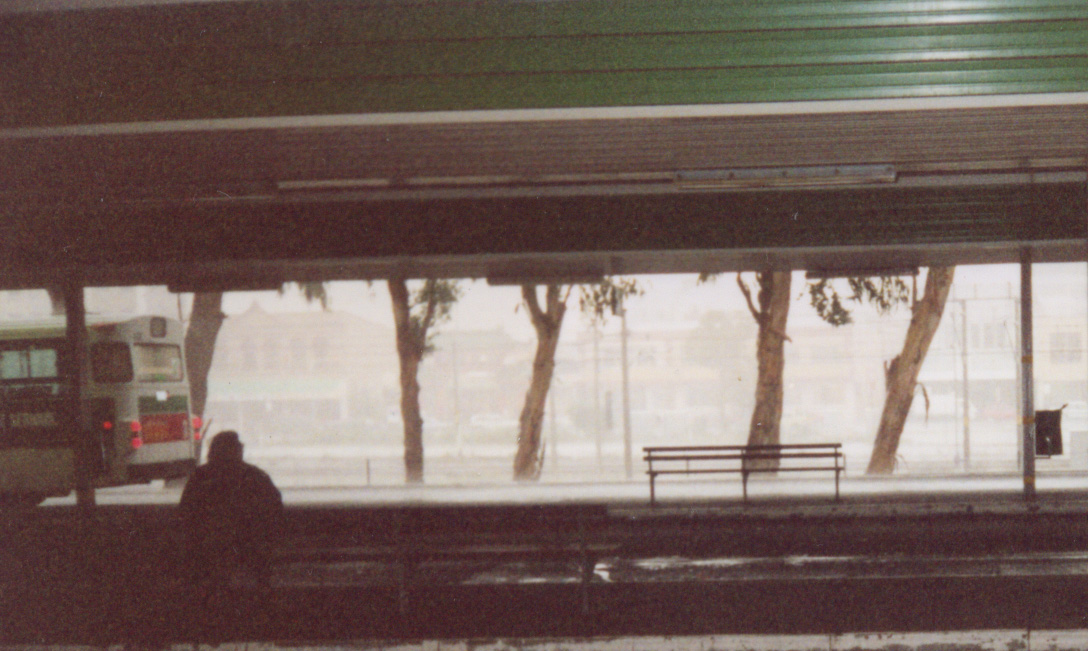
WellingtonStBusStation2001

They began demolishing the Wellington St Bus Station yesterday. I might be the only person sad about this, and in my case, it’s all for sentimental reasons. I’ve spent a lot of time at that bus station since I moved to Perth as an eighteen year old in 1999. It has been an ugly, dingy thing of concrete and tin all that time.

For the first time in ages, I caught a bus into the city a few Saturdays ago, forgot to get off at my stop, and ended up at the station. I didn’t even realise it was its final day, but it was an appropriate co-incidence. The kiosk I worked at for four years was shut up. The place was deserted. I walked through, and tried to breathe it all in for a last time.

The station was opened in 1973, a year which has seemed pivotal to me. The year the fur hit Western Australia in my novel, the year my favourite poet W.H. Auden died, the year my ex-girlfriend was born, the year Peter Parker’s girlfriend, Gwen Stacy died in the Amazing Spider-Man.

I worked in that little kiosk within the station every Saturday (except the week of Christmas) from 1999 to 2003. History will not remember it. It was a nondescript place, inexplicably named “R&J Gourmet Deli”, even though the owner’s name was Anne, and it sold nothing more gourmet than a ham and salad roll alongside every standard variety of cool drink and chocolate bar.

The photo above is taken from the counter. I’m glad I wrote on the back. ‘Sat 18/6/01 This morning at work it just started pouring. It was delicious, all that wet.’ That would have been a few weeks after my Ian Pop’s funeral, the first time I’d lost anyone.

I went through the gamut of emotions, cooped up in the kiosk all day each Saturday. It helped pit me against the world, working as everyone else seemed to be at leisure. I felt, in turn, depression and fascination with the world I observed.

It was the characters I remember most strongly. Victor was an elderly Burmese man, who wore an old suit and would come to buy a cup of tea each day. He was usually on his way to sit in a park or the cathedral and meditate on the teachings of Buddha and Jesus. He would take my hand and offer me his blessing, often repeating his favourite saying – ‘Better a day spent in virtue and meditation than a lifetime in vice.’ On my shelf I still have a little book he gave me one day of the sayings of Buddha.

There was another guy, I can’t remember his name, who was a relentlessly optimistic small time crook. He loved to show off to me, but in a rather unassuming way. He was a short guy, with a lot of swagger, a lot of friendliness, and an American baseball jacket. One day he declared he had a new girlfriend; she was fifteen, he proudly told me. The next week he said they were trying to get pregnant. I asked him if that was a good idea.

And then there was Gerry, the self-declared ‘world’s happiest bus driver’. He’d been a car dealer, lost the lot in the recession in the nineties, and blamed Keating, who he hated daily. But his therapist had helped him recover, and now he went around loudly driving buses, being very deliberately happy.

I would listen to Radio National and write poems on pie bags. I would breathe in the fumes, and get over two break-ups in those four years. I’d eat too much chocolate, and go from being a skinny kid to overweight. I knew exactly what I wanted in those years, everything was so very clear.
Forgetting to bcc, time travel to a different season

11 Friday Oct 2013

Posted by Nathan Hobby in autobiographical, technology and the digital world

≈ Leave a comment

Tags

email

Recently I got a mass-email from this guy who went overseas years ago. He forgot to do a blind carbon copy, and all the email addresses were visible – a snapshot of his address book from 2004 or so. It was time-travel, the sight of all these email addresses next to each other. A window to a season of my life. Everyone’s scattered now, all these young christian leftists brought together by the Iraq War protests. Do they even use these same addresses any more? You won’t ever catch them all in the same room again. Too many schisms, divorces, deconversions, metamorphoses. That’s what your twenties do to you.

*

You can tell things about people from their email addresses. Older people (Baby Boomers +) usually have ISP addresses – iinet, bigpond – and it’s usually in the name of the husband, even if the wife uses the account. (How many people sixty plus have you met with a gmail address?) People with a ‘hotmail’ address have had their address an awful long time. Attention-seekers have an attention-seeking email address. The great transition in my life, the change in epochs, was when I changed from ‘savageparade’ (it’s a quote from Rimbaud) to my name. I am pretty certain I changed personality at that moment.

The Tourist #6: The Soundtrack To My Holiday

07 Monday Oct 2013

Posted by Nathan Hobby in autobiographical, music, Series: The Tourist (2013)

≈ Leave a comment

Tags

buskers, Cinque Terra, The Cure

My music collection is on my laptop; I took with me my tablet, with just 150 of my 3778 songs. Who knew 150 songs would come to feel like so few, repeated again and again over the headphones and through the slivers of speakers? It feels like so few when I keep skipping half of them, and going back to the same few. Lisa Mitchell, “Land Beyond the Front Door”. Mazzy Star’s droning shoe gazing rock each time the coach guides put on their music. The comfort of Nick Cave’s title track “Push the Sky Away” without the rest of the album.

Then there were the buskers. Both times we walked to the basilica in Florence, the electric violinist was waiting for us in the square. She was trying to be Andre Rieu; my wife, a violist, hates Andre Rieu. In the busker’s own version of soulfully (sentimentally) she would play those overfamiliar classical pieces, and then throw in renditions of pop songs like Queen’s Bohemian Rhapsody. It was a kind of interesting torture standing in the queue.

I wanted to reward the buskers I thought were good. Above the ruins of the Roman Forum, a handful of Italians were playing catchy songs in their own language. I went up to put a Euro in their plate; the lead singer put his arm around me, wanting to know where I was from, and dragged me back, insisting my wife take a photo of me with them. He put his hat on me. She took the photo; I went to put a couple of Euros in his plate and escape, but his voice changed – it was 10 Euros for a photo! He was insistent, angry. We started walking away quickly; it was an unpleasant encounter, left me cautious of the buskers.

A musical highlight. In Cinque Terra, walking one morning between Vernazza and Monterosso along the cliffs, glorious saxophone music floated toward us. We came around the corner and the player, a man of seventy, was standing on a rock above the narrow, isolated path. I should have given him so much more than I did.

The other musical highlight. Arriving in Rome after a long day’s bus ride, late at night we venture out for a walk to the Pantheon, right near where we were staying. As we come to the massive ancient edifice, the Cure’s “Charlotte Sometimes” is playing so loudly, so freshly, the moment is so enchanted, that I tell my wife, “They’re playing a concert, right now, outside the Pantheon – we’ve stumbled on a free Cure concert!”. It seemed the sort of thing Robert Smith might do, but it does sound a little far-fetched, writing it down. It wasn’t the Cure, it was a taxi driver on his break, with an excellent sound system and the door of his taxi open. It was still magical, beholding the ancient pillars against the night sky to the sound of my favourite band, an unlikely but befitting soundtrack.

Sometimes I’m dreaming
Where all the other people dance
Sometimes I’m dreaming
Charlotte sometimes

The Tourist #4: The Pleasure of Ruins

17 Tuesday Sep 2013

Posted by Nathan Hobby in autobiographical, Series: The Tourist (2013)

≈ 2 Comments

Tags

childhood, Rome, ruins

 
image

  Sitting on my shelf at home is a book, bought at a booksale two or three years ago, I am looking forward to one day reading: ‘The Pleasure of Ruins’.
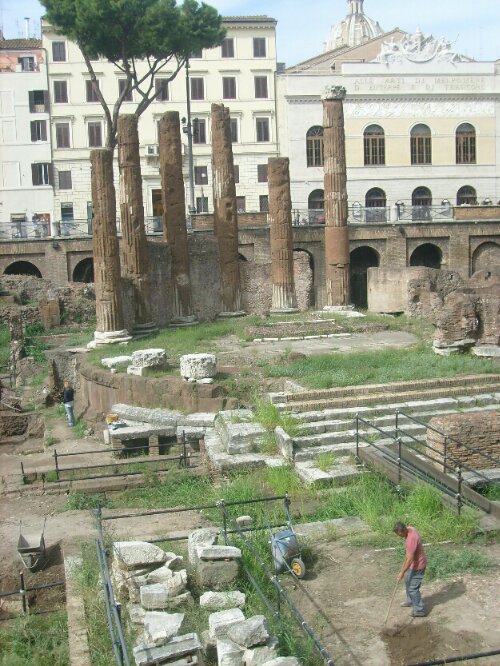
   We are staying in a medieval apartment a few hundred metres from ancient ruins of Rome, and we have spent today looking at them. We saw great marble pillars fashioned at the time of Christ, inscriptions which have lasted centuries, the skeletal remains of the grandeur of an empire, the bricks and broken stones of it.
   As a child, I thought I was fascinated by archaeology, but more than that I was fascinated by ruins. Today I realised the photos in books about ruins present an idyll which is not otainable in the real world. The viewer of ruins is an explorer cutting through the overgrown forest to come across the ruins, the first to lay eyes on them for centuries. From a perfect angle, in beautiful light, the ruins shimmer and fill the viewer with a kind of longing which is hard to explain.
The idyll of ruins is the quester contemplating the fate of Ozymandius in solitude and silence. The reality of Rome’s ruins is the viewer in a sea of tourists, all straining to have their ruins experience, or at least a good photo of them. The reality is iron bars and fences and signs and relentless sellers of novelty toys and souvenirs.

*

This is just an observation; the truth is that today my inner-six-year-old was elated, which is to say my whole self was elated, because I have never lost my love of ruins. (All three of my novels are partly about ruins. In ‘The Fur’, it is a whole state in ruins, the beauty of abandoned towns and houses in a plague. In ‘House of Zealots’, the ruins are obscured, but the whole novel was inspired by the mood of living in a rundown house from 1950 which was one step off being abandoned to squatters, a contemporary ruin. In ‘Immortalities’ the ‘ruins’ are the archival remains and traces which individual lives leave behind, waiting for the quester to piece them together. I wonder how different my interest in ruins would be if I lived in Europe where the ruins are ancient?)
I had my moments of contemplation jostling among the tourists, my moments of connection to the past. In fact, it was an overwhelming dose of ruins – it seems too much for one person to be allowed to experience in one day.

*

Wasn’t it the Romantic period when the beauty of ruins was recognised? (I will find out for sure when I finally read that book which awaits on my shelf back home.) Faux ruins were created, and others ‘improved’ to make them more picturesque. It is an instinct I fully understand. I hope they do not attempt to restore too many of the grand crumbling monuments and buildings I saw today – it is more poignant to see them as time has rendered them. Recover and preserve, but not to make them shiny and new. Leave the weeds growing out of the old bricks. Leave them with their sense of centuries which we cannot have ourselves.

The Tourist #1: Reflections on Photography and Tourism

08 Sunday Sep 2013

Posted by Nathan Hobby in autobiographical, Series: The Tourist (2013)

≈ Leave a comment

When I was a child, Dad’s advice used to be: make sure you have someone in the photograph; otherwise you might as well buy a postcard. His advice rested on the idea, perhaps, that each photo of a sight was interchangeable. In the age of the internet, it seems advice which needs updating.
But perhaps he was right – what does my photograph of the Eiffel Tower mean to people who are not me? Everyone knows what it looks like. For people who are interested in me, seeing me in the frame adds something to it; Dad’s advice holds up. And then perhaps if it’s artful or striking or unusual in some way it might be worth looking at on its own terms.
On the other hand, perhaps photos are not for others at all. Perhaps they are for the self – a record of where one has been, what one has seen. A prompt for memory, or probably more likely, they become a substitute for the memory itself. Or not quite either of these ways of saying it – perhaps we can say the photo becomes canonical for how the moment is remembered.

Continue reading →

The digging up of the time capsule

25 Monday Mar 2013

Posted by Nathan Hobby in autobiographical

≈ 3 Comments

Tags

childhood, memorialisation

In 1987 I was six and obsessed with archaeology. I created a kingdom in the front yard, burying clay mummies wrapped in cloth. I also wanted to find the present again in the future, and so I wrote the date in texta on pieces of paper and buried these. They did not last so well, but I am curious as to my instinct and my hope. Was I imagining that I was preserving that particular day by the act? Was I imagining that I was creating history or creating archaeology? Perhaps, perhaps.

I also went looking through the old newspapers in the woodbox. This was almost a room, a large space next to the woodfire. The old newspapers were piled in there. I always wished they were older than they were. What if I could go back to before I was born? Would I be into history then?

Perhaps the milieu fostered these obsessions. Between 1988 and 1990, my primary school was caught up in an atmosphere of commemoration. For the Bicentennial we all received two medallions, an amazing treasure to seven year olds. The history of the school was being written, just as our new building was rising up. When it came out, I read it quite obsessively, the story of these people now old or dead who once walked this same ground.

And then there was the time capsule, the ultimate expression of my obsessions. To be opened at the centenary of the school in 2013, it was an enchanted project. I remember the pressure of writing something that would sum up my life so far, giving an insight to my future self and the future world of what it had meant to go to Allanson Primary in 1990. I think Ms Leitch warned us to make sure we wrote in 2H pencil so that our words would not be lost to the future. In my memory, I wrote twenty or thirty pages for that time capsule; I felt embarrassed afterward for oversharing, including a list of every book I could remember reading. I included The Complete Work of Shakespeare when all I had done was fail at an attempt to read the opening pages of The Tempest when I was home sick from school. (My secret shame, that twenty-three years later I still find Shakespeare hard to understand.) Cheater! I wanted to be better than I was; a brilliant nine year old would be reading Shakespeare. I have often wondered of the other books on the list, the ones I actually read and have now forgotten. To read that precious list again would be to rediscover a large chunk of my life.

The year 2013 seemed so far away it would never come; I would be thirty-two! I have thought of the digging up of the time capsule quite often since it was buried. It was one of the few future events already set down, a precise date decreed on the plaque above the water fountain. Maybe whoever made these decisions should not have buried the capsule below a water fountain. I couldn’t quite believe it when the time-capsule came up full of water, our packet of stories turned into black compost. When I was nine, I still believed the grown ups wouldn’t let that happen.


On unwrapping my Moleskine notebook

20 Tuesday Nov 2012

Posted by Nathan Hobby in autobiographical

≈ 3 Comments

Tags

ISBNs, journal writing, moleskine

When I started keeping a journal, I used the cheapest exercise books I could find, 50c Newspower ones. I was fourteen, and the pages are now yellowed and brittle. I was allergic to aesthetics or quality then, function was all. I was also much poorer than I am now.

Today, my first Moleskine notebook arrived from Book Depository. At $16, it’s a lot less than you can buy it for in Australia. It truly is a beautiful notebook, properly bound and using acid-free paper. Will it inspire better words? Maybe; but I find it hard to write anything in my journal these days. Perhaps it is the fault of blogging. Perhaps I have lost the spiritual discipline of writing just for myself. (There are other factors.)

Two things struck me about my Moleskine notebook.

Firstly, it has an ISBN. I wonder what limits there are on ISBNs if a blank notebook can have one?

Secondly, it offers a conundrum to its owner with its front page saying ‘In case of loss please return to… As a reward: $…’

How much are our unique, private writings worth to us? I would say: they are priceless; they are worthless. There is nothing more wonderful and horrible for me than reading back over old journals. Sometimes I surprise myself; often I disappoint myself.

Perhaps one should write in it: ‘$1 (or $10?) for every page which is filled in’.  Perhaps one should write a great price in it, and then write to live up to it.

Whatever I decide (and I shall probably leave it blank) I have at least decided my private writings are worth more than a 50c exercise book.

Account of an unremarkable day

13 Thursday Sep 2012

Posted by Nathan Hobby in autobiographical

≈ 6 Comments

I resolved not to turn on the television this morning. Breakfast television is an addiction which brings little pleasure, but narrows my world. To be sucked into the boredom of ABC News Breakfast (which has made even the bright Karina Carvalho dull) or into the inane banter of Channels 7 and 9 is to start the day with a sense that the world is less than it actually is. I did something else as I ate breakfast, or at least I think I did; I can’t actually remember.

Continuing my virtuous day, I rode my bike along the river for half an hour. I remember thinking the inevitable thought I often get, that exercise, like vitamin supplements, is unnatural and shows something is wrong with the way we live. Or maybe it was more existential: despite this beautiful day – which I promise you dear reader even gloomy me enjoyed – I am riding to an arbitrary point only to turn around and come back. There is a kind of futility in it, or else a kind of extravagance.

Surely one of the daily challenges of a sensitive person at work is the infectious vibes which go through the air. I catch everyone’s hostility or panic or sadness. And this is partly why work usually exhausts me. I thought today was going to be full of stress vibes, but it wasn’t, to my relief.

An old acquaintance stopped by my library; I hadn’t seen him in ten years. This happens often enough in the place I work. I live in the past a lot. Meeting people I once knew reanimates the past. It is, so often, difficult to give an account of intervening years.

And there we have four thoughts of this unremarkable day, recorded for once because blogs which freeze are sad, and my keyboard has gone rusty. Or not; I have been writing,  squeezing out of my soul 1000 new words on the novel a couple of times a week, and have nothing else to say, until I force myself.

My new theory on making my life as long as possible

17 Thursday Nov 2011

Posted by Nathan Hobby in autobiographical

≈ Leave a comment

Tags

time

I have this new theory that the way to make my life as long as possible is to move all the time. I say this because when I think back on my life I seem to divide it into chapters based on where I was living (or what job / church/ friends). This is possibly a consequence of reading too many novels, to the point where my memory is a contents page. If I remember back casually, the current chapter (four years in the same job, five years in the same house) seems to take up only the same amount of time as my mythical nine months in the hills, the primeval six months living on Canning Highway with Mitchell. (The illusion can be dispelled – to an extent – by reclaiming the time, thinking back over everything that occurred in that time.)


[Turning 30 #2] The End of Exceptionalism

01 Tuesday Mar 2011

Posted by Nathan Hobby in autobiographical

≈ Leave a comment

One thing I’ve learnt in my twenties is the end of exceptionalism. It’s probably a common delusion of youth to think oneself exempt from the laws, patterns, forces which shape everyone else. Unlike those weak people I will not put on weight, do anything I don’t want to do for the sake of money, stop listening to loud, aggressive music, suffer medical indignities, grow hairs on my chest, long to sit quietly at home watching television, save for a house, or fail in my burning but impractical ambitions.

The ultimate expression of exceptionalism is the refusal to believe in one’s mortality. As a small child, I assumed I would live to 100. I did better than everyone else in every other test; wasn’t it only fair I receive the best mark in that too? I was the Judge, Fox Clane, in Carson McCullers’ Clock Without Hands, whose mortality was inconceivable, even at the end of his life.

Immortality, that was what the Judge was concerned with. It was inconceivable to him that he would actually die. He would live to a hundred years if he kept to his diet and controlled himself – deeply he regretted the extra toast. He didn’t want to limit his time for just a hundred years, wasn’t there a South American Indian who had lived to be a hundred and fifty – and would a hundred and fifty years be enough? No. It was immortality he wanted. Immortality like Shakespeare, and if ‘push came to shovel’, even like Ben Jonson. In any case he wanted no ashes and dust for Fox Clane. (p.87)

The end of exceptionalism is inevitably tied to the dulling of idealism. They are not identical, but they tend to go together. Idealism has in its twenties the quality of believing that you can make things work that no-one else has made work or that you can solve problems no-one else has solved. I used to despise the way people lost their idealism as they got older. It wasn’t going to happen to me.

I have a small hope of coming through the end of exceptionalism, and the disappointments of the last years and  compromises I’ve made for various reasons, to a post-exceptionalist idealism, the kind of wise idealism which lives quietly for what is right while no longer burning with naive certainty that things will turn out right if only one believes hard enough.

I hate vagueness, and I’ve veered toward it in the last couple of paragraphs. Yet vagueness is sometimes the price of being public. (At other times the price is writing fiction.)

← Older posts
Newer posts →

Enter your email address to follow this blog and receive notifications of new posts by email.

Join 287 other subscribers

Nathan on Twitter

My Tweets

Categories

  • academic (9)
  • archives and sources (10)
  • autobiographical (62)
  • biographers (10)
  • biographical method (28)
  • biographical quests (18)
  • biographies (21)
    • political biography (2)
  • biographies of living subjects (2)
  • biographies of writers, artists & musicians (12)
  • biographies of writers, artists and musicians (20)
  • biography as a literary form (9)
  • biography in fiction (2)
  • biography in the news (2)
  • books (236)
    • authors (19)
    • book review (173)
    • reading (23)
  • Covid (2)
  • creative nonfiction (11)
  • daily life (2)
  • Daily Prompt (2)
  • death (21)
  • digital humanities (3)
  • family history (1)
  • fiction (8)
  • film and television biographies (5)
  • film review (48)
  • found objects (3)
  • historical biographies (1)
  • history (20)
  • In the steps of KSP (4)
  • John Curtin (13)
  • Katharine Susannah Prichard (114)
    • Glimpses of KSP (7)
    • My KSP biography (31)
      • deleted scenes (1)
  • Katharine Susannah Prichard's associates and connections (16)
  • Katharine Susannah Prichard's writings (34)
  • libraries (5)
  • life (20)
  • link (23)
  • links (41)
  • lists (28)
  • local history and heritage (1)
  • media (4)
  • memes and urban myths (1)
  • memoirs (10)
  • meta (2)
  • music (18)
  • news (9)
  • news and events (43)
  • obituary (1)
  • Old writing found on a floppy disk (1)
  • poetry (5)
  • politics and current affairs (26)
    • climate change (1)
  • prologues and introductions (2)
  • psychological aspects of biography (3)
  • quotes (22)
  • R.I.P. (10)
  • reading report (3)
  • religion (1)
  • religious biography (1)
  • research (5)
  • role of the biographer within the biography (2)
  • Series: A-Z of Katharine Susannah Prichard (26)
  • Series: Corona Diary (1)
  • Series: Saturday 10am (14)
  • Series: Short Stories (2016) (6)
  • Series: The Tourist (2013) (6)
  • Series: Thursday 3pm feature posts (2009) (35)
  • structure of biographies (3)
  • technology and the digital world (2)
  • television (4)
  • the nature of biography (4)
  • this blog (10)
  • Uncategorized (33)
  • Western Australia (26)
  • writing (41)

Archives

Recent Comments

amphisbaenathoroughly79c20f19aa's avataramphisbaenathoroughl… on John Curtin’s vision…
Nathan Hobby's avatarNathan Hobby on John Curtin’s vision…
karenlee thompson's avatarkarenlee thompson on John Curtin’s vision…
Nathan Hobby's avatarNathan Hobby on John Curtin’s vision…

Bookmarks

  • Adventures in Biography
  • ANZ LitLovers LitBlog
  • Bernice Barry
  • It only goes up to your knees
  • Jane Bryony Rawson
  • Jenn Plays Recorder
  • Katharine Susannah Prichard Writers' Centre
  • Laura Sewell Matter: Essayist and Biographer
  • Mutually said: Poets Vegan Anarchist Pacifist
  • Resident Judge
  • Speaking Thylacine
  • The Australian Legend
  • Timothy Parkin Poetry
  • Treefall Writing – Melinda Tognini
  • Whispering Gums
  • Wrapped up in books: the home of Guy Salvidge

Top Posts

  • Paul Auster's Moon Palace : an overview
  • A biographical dilemma: trying to sell a trilogy, or not
  • About
  • Memory and Mortality in Gnomesville
  • Imagining dispossession: Kate Grenville's The Secret River

Blog Stats

  • 234,515 hits

Tag Cloud

9/11 19th century 33 1920s 1921 1930s 1950s 1970s 1971 1981 2000s 2004 2011 2015 2017 20000 Days on Earth A.S. Byatt Aboriginals activism Adam Begley Adrian Mole adultery afterlife Agatha Christie Alan Hollinghurst Alberto Manguel Alfred Deakin Amazing Grace Americana Amy Grant An American Romance Andre Tchaikowsky Andrew McGahan angela myers anne fadiman Anne Rice Arabian Nights archives art arts funding A Serious Man Ash Wednesday ASIO atheism Atonement Australia Australian film Australian literature Australian Short Story Festival autism autobiography autodidact Barbara Vine beach Belle Costa da Greene Bell Jar best best-of Bible Big Issue Bill Callahan biographical ethics biographical quest genre biographies birthday birthdays Black Opal Bleak House Blinky Bill blogging blogs Blue Blades Bodega's Bunch bog Booker book launch booksale Borges Brenda Niall Brian Matthews Brian McLaren Britney Spears Burial Rites Burke and Wills buskers C.S. Lewis C.S. Lewis canon capitalism Carol Shields Carson McCullers Catcher in the Rye Catholicism celebrities Charles Dickens Charlie Kaufman childhood Child of the Hurricane children's books Choir of Gravediggers Christianity Christian writing Christina Stead Christmas Christopher Beha Cinque Terra Claire Tomalin classics cliches climate change Coen brothers coincidence Collie Collyer coming of age Communism concert Condensed Books consumerism Coonardoo Cormac McCarthy Corrections cosy fiction Dara Horn David Copperfield David Ireland David Marr David Suchet death Death of a president definition demolition Dennis LeHane dentist diaries divorce doctorow Doctor Who documentaries donald shriver Don DeLillo Don DeLillo Donna Mazza Donna Tartt Don Watson Dostovesky doubt drama dreams of revolution Drusilla Modjeska E.M. Forster ebooks editing Eichmann Eisenstein Elizabeth Kostova email empathy ensmallification existentialism faith Falling Man fame families fantasy fiction film and television folk football Frank Barscombe Fremantle Press G.K. Chesterton Gabrielle Carey Gallipoli genealogical fiction Genesis Geoff Nicholson George W. Bush Gerald Glaskin Gilead Golden Miles Goldfields Trilogy Graham Greene grandad great novels Greenmount Guinness World Records Guy Salvidge Hannah Arendt Hannah Kent Hans Koning Hans Koningsberger Harper Lee Haxby's Circus Hazel Rowley He-Man headers heaven Heidegger hell Henrietta Lacks Henry Morton Stanley Herman Hesse heroes Hey Dad! historical fiction history Holden Caulfield holidays Homer & Langley Home Song Stories House of Cards House of Zealots house of zealots Hugo Throssell humour Ian McEwan In between the sheets Indonesia Infamous Inside Llewyn Davis interstellar interview Intimate Strangers Invisible Ireland ISBNs Ishiguro itunes J.D. Salinger J.M. Coetzee J.S. Battye Janet Malcolm Jennifer Egan JFK JFK assassination Joanna Rakoff Joel Schumacher John Burbidge John Fowles John Howard John Kinsella John Updike John Updike Jonathan Franzen journal writing JSB Judgment Day Julia Baird Julian Barnes Kafka Kalgoorlie Kate Grenville Katherine Mansfield Kevin Brockmeier King's Park KSP Writers' Centre language last ride Laurie Steed Left Behind Leonard Cohen Leo Tolstoy Libra Library of Babel Library of Babel Lila Lily and Madeleine links Lionel Shriver lionel shriver lists literary fiction literature Lleyton Hewitt lost book Louisa Louisa Lawson Louis Esson louis nowra love letter Lubbock Lytton Strachey Madelaine Dickie Man Booker man in the dark Margaret Atwood Margaret River Press Marilynne Robinson mark sandman meaning of life Melbourne Mel Hall meme memorialisation memory MH17 Michael Faber Mike Riddell Miles Franklin mining boom missionaries moleskine Moon Palace morphine Mother Teresa movies Music of Chance My Brilliant Career names Napoleon Narnia narrative Narrow Road to the Deep North Narziss and Goldmund Natalie Portman Nathaniel Hobbie national anthem Nick Cave Nina Bawden non-fiction nonfiction noughties novelists novels obituaries obscurity On Chesil Beach Parade's End Paris Hilton Passion of the Christ past patriotism Paul Auster Paul de Man Perth Perth Writers Festival Peter Ackroyd Peter Cowan Writers Centre phd Philip K. Dick Philip Seymour Hoffman pierpontmorgan poetry slam politics popular fiction popular science Possession postapocalyptic postmodernism Pride prophetic imagination publications Pulp Purity Queen Victoria Rabbit Angstrom radio Radio National Randolph Stow rating: 5/10 rating: 6/10 rating: 7/10 rating: 8/10 rating: 9/10 rating: 10/10 ratings reading fiction autobiographically reading report Rebecca Skloot recap red wine reincarnation juvenile fiction rejection review - music reviewing rewriting Richard Flanagan Richard Ford Rick Moody Roaring Nineties Robert Banks Robert Hughes Robert Silverberg Robert Wadlow Robinson Crusoe Rolf Harris romance Rome ruins Russell Crowe Ruth Rendell Sarah Murgatroyd scalpers science fiction Science of Sleep secondhand books Secret River sermon illustration sex short stories Silent Woman Simone Lazaroo Simpsons Siri Hustvedt slavery Smashing Pumpkins social interactions social justice some people i hate sources South Australia souvenirs speculation speech speeches sport status anxiety Stephen Lawhead Stranger's Child subtitles Subtle Flame Sue Townsend suicide Surprised By Hope Suzanne Falkiner Sylvia Plath Synecdoche TAG Hungerford Award tapes teabags Ted Hughes The Children Act The Cure The Fur The Imitation Game theology The Pioneers The Revolutionary Thomas Disch Thomas Hardy Thomas Henry Prichard Thomas Mann thriller time Tim La Haye Tim Winton Tolstoy Tom Wright top 10 Towering Inferno Tracy Ryan Trove Truman Capote tshirts TS Spivet Twelve Years a Slave underrated writers Underworld unwritten biographies urban myth USA vampires Venice Victoria Cross Victoriana Victorian era Victorianism Victoria Park video Voltron w Wake in Fright Walkabout Walter M. Miller war War and Peace war on terror Water Diviner Wellington St Bus Station Westerly Western Australia West Wing What Happened to Sophie Wilder? Whitlams wikipedia Wild Oats of Hans William Wilberforce Winston Churchill Witches of Eastwick Working Bullocks workshop World War One writers writing Writing NSW youth Zadie Smith Zeitgeist Zelig

Enter your email address to follow this blog and receive notifications of new posts by email.

Join 287 other subscribers

Pages

  • About
  • My novel: The Fur
  • The Red Witch: A Biography of Katharine Susannah Prichard

Categories

  • academic (9)
  • archives and sources (10)
  • autobiographical (62)
  • biographers (10)
  • biographical method (28)
  • biographical quests (18)
  • biographies (21)
    • political biography (2)
  • biographies of living subjects (2)
  • biographies of writers, artists & musicians (12)
  • biographies of writers, artists and musicians (20)
  • biography as a literary form (9)
  • biography in fiction (2)
  • biography in the news (2)
  • books (236)
    • authors (19)
    • book review (173)
    • reading (23)
  • Covid (2)
  • creative nonfiction (11)
  • daily life (2)
  • Daily Prompt (2)
  • death (21)
  • digital humanities (3)
  • family history (1)
  • fiction (8)
  • film and television biographies (5)
  • film review (48)
  • found objects (3)
  • historical biographies (1)
  • history (20)
  • In the steps of KSP (4)
  • John Curtin (13)
  • Katharine Susannah Prichard (114)
    • Glimpses of KSP (7)
    • My KSP biography (31)
      • deleted scenes (1)
  • Katharine Susannah Prichard's associates and connections (16)
  • Katharine Susannah Prichard's writings (34)
  • libraries (5)
  • life (20)
  • link (23)
  • links (41)
  • lists (28)
  • local history and heritage (1)
  • media (4)
  • memes and urban myths (1)
  • memoirs (10)
  • meta (2)
  • music (18)
  • news (9)
  • news and events (43)
  • obituary (1)
  • Old writing found on a floppy disk (1)
  • poetry (5)
  • politics and current affairs (26)
    • climate change (1)
  • prologues and introductions (2)
  • psychological aspects of biography (3)
  • quotes (22)
  • R.I.P. (10)
  • reading report (3)
  • religion (1)
  • religious biography (1)
  • research (5)
  • role of the biographer within the biography (2)
  • Series: A-Z of Katharine Susannah Prichard (26)
  • Series: Corona Diary (1)
  • Series: Saturday 10am (14)
  • Series: Short Stories (2016) (6)
  • Series: The Tourist (2013) (6)
  • Series: Thursday 3pm feature posts (2009) (35)
  • structure of biographies (3)
  • technology and the digital world (2)
  • television (4)
  • the nature of biography (4)
  • this blog (10)
  • Uncategorized (33)
  • Western Australia (26)
  • writing (41)

Archives

Recent Comments

amphisbaenathoroughly79c20f19aa's avataramphisbaenathoroughl… on John Curtin’s vision…
Nathan Hobby's avatarNathan Hobby on John Curtin’s vision…
karenlee thompson's avatarkarenlee thompson on John Curtin’s vision…
Nathan Hobby's avatarNathan Hobby on John Curtin’s vision…

Bookmarks

  • Adventures in Biography
  • ANZ LitLovers LitBlog
  • Bernice Barry
  • It only goes up to your knees
  • Jane Bryony Rawson
  • Jenn Plays Recorder
  • Katharine Susannah Prichard Writers' Centre
  • Laura Sewell Matter: Essayist and Biographer
  • Mutually said: Poets Vegan Anarchist Pacifist
  • Resident Judge
  • Speaking Thylacine
  • The Australian Legend
  • Timothy Parkin Poetry
  • Treefall Writing – Melinda Tognini
  • Whispering Gums
  • Wrapped up in books: the home of Guy Salvidge

Top Posts

  • Paul Auster's Moon Palace : an overview
  • A biographical dilemma: trying to sell a trilogy, or not
  • About
  • Memory and Mortality in Gnomesville
  • Imagining dispossession: Kate Grenville's The Secret River

Blog Stats

  • 234,515 hits

Tag Cloud

9/11 19th century 33 1920s 1921 1930s 1950s 1970s 1971 1981 2000s 2004 2011 2015 2017 20000 Days on Earth A.S. Byatt Aboriginals activism Adam Begley Adrian Mole adultery afterlife Agatha Christie Alan Hollinghurst Alberto Manguel Alfred Deakin Amazing Grace Americana Amy Grant An American Romance Andre Tchaikowsky Andrew McGahan angela myers anne fadiman Anne Rice Arabian Nights archives art arts funding A Serious Man Ash Wednesday ASIO atheism Atonement Australia Australian film Australian literature Australian Short Story Festival autism autobiography autodidact Barbara Vine beach Belle Costa da Greene Bell Jar best best-of Bible Big Issue Bill Callahan biographical ethics biographical quest genre biographies birthday birthdays Black Opal Bleak House Blinky Bill blogging blogs Blue Blades Bodega's Bunch bog Booker book launch booksale Borges Brenda Niall Brian Matthews Brian McLaren Britney Spears Burial Rites Burke and Wills buskers C.S. Lewis C.S. Lewis canon capitalism Carol Shields Carson McCullers Catcher in the Rye Catholicism celebrities Charles Dickens Charlie Kaufman childhood Child of the Hurricane children's books Choir of Gravediggers Christianity Christian writing Christina Stead Christmas Christopher Beha Cinque Terra Claire Tomalin classics cliches climate change Coen brothers coincidence Collie Collyer coming of age Communism concert Condensed Books consumerism Coonardoo Cormac McCarthy Corrections cosy fiction Dara Horn David Copperfield David Ireland David Marr David Suchet death Death of a president definition demolition Dennis LeHane dentist diaries divorce doctorow Doctor Who documentaries donald shriver Don DeLillo Don DeLillo Donna Mazza Donna Tartt Don Watson Dostovesky doubt drama dreams of revolution Drusilla Modjeska E.M. Forster ebooks editing Eichmann Eisenstein Elizabeth Kostova email empathy ensmallification existentialism faith Falling Man fame families fantasy fiction film and television folk football Frank Barscombe Fremantle Press G.K. Chesterton Gabrielle Carey Gallipoli genealogical fiction Genesis Geoff Nicholson George W. Bush Gerald Glaskin Gilead Golden Miles Goldfields Trilogy Graham Greene grandad great novels Greenmount Guinness World Records Guy Salvidge Hannah Arendt Hannah Kent Hans Koning Hans Koningsberger Harper Lee Haxby's Circus Hazel Rowley He-Man headers heaven Heidegger hell Henrietta Lacks Henry Morton Stanley Herman Hesse heroes Hey Dad! historical fiction history Holden Caulfield holidays Homer & Langley Home Song Stories House of Cards House of Zealots house of zealots Hugo Throssell humour Ian McEwan In between the sheets Indonesia Infamous Inside Llewyn Davis interstellar interview Intimate Strangers Invisible Ireland ISBNs Ishiguro itunes J.D. Salinger J.M. Coetzee J.S. Battye Janet Malcolm Jennifer Egan JFK JFK assassination Joanna Rakoff Joel Schumacher John Burbidge John Fowles John Howard John Kinsella John Updike John Updike Jonathan Franzen journal writing JSB Judgment Day Julia Baird Julian Barnes Kafka Kalgoorlie Kate Grenville Katherine Mansfield Kevin Brockmeier King's Park KSP Writers' Centre language last ride Laurie Steed Left Behind Leonard Cohen Leo Tolstoy Libra Library of Babel Library of Babel Lila Lily and Madeleine links Lionel Shriver lionel shriver lists literary fiction literature Lleyton Hewitt lost book Louisa Louisa Lawson Louis Esson louis nowra love letter Lubbock Lytton Strachey Madelaine Dickie Man Booker man in the dark Margaret Atwood Margaret River Press Marilynne Robinson mark sandman meaning of life Melbourne Mel Hall meme memorialisation memory MH17 Michael Faber Mike Riddell Miles Franklin mining boom missionaries moleskine Moon Palace morphine Mother Teresa movies Music of Chance My Brilliant Career names Napoleon Narnia narrative Narrow Road to the Deep North Narziss and Goldmund Natalie Portman Nathaniel Hobbie national anthem Nick Cave Nina Bawden non-fiction nonfiction noughties novelists novels obituaries obscurity On Chesil Beach Parade's End Paris Hilton Passion of the Christ past patriotism Paul Auster Paul de Man Perth Perth Writers Festival Peter Ackroyd Peter Cowan Writers Centre phd Philip K. Dick Philip Seymour Hoffman pierpontmorgan poetry slam politics popular fiction popular science Possession postapocalyptic postmodernism Pride prophetic imagination publications Pulp Purity Queen Victoria Rabbit Angstrom radio Radio National Randolph Stow rating: 5/10 rating: 6/10 rating: 7/10 rating: 8/10 rating: 9/10 rating: 10/10 ratings reading fiction autobiographically reading report Rebecca Skloot recap red wine reincarnation juvenile fiction rejection review - music reviewing rewriting Richard Flanagan Richard Ford Rick Moody Roaring Nineties Robert Banks Robert Hughes Robert Silverberg Robert Wadlow Robinson Crusoe Rolf Harris romance Rome ruins Russell Crowe Ruth Rendell Sarah Murgatroyd scalpers science fiction Science of Sleep secondhand books Secret River sermon illustration sex short stories Silent Woman Simone Lazaroo Simpsons Siri Hustvedt slavery Smashing Pumpkins social interactions social justice some people i hate sources South Australia souvenirs speculation speech speeches sport status anxiety Stephen Lawhead Stranger's Child subtitles Subtle Flame Sue Townsend suicide Surprised By Hope Suzanne Falkiner Sylvia Plath Synecdoche TAG Hungerford Award tapes teabags Ted Hughes The Children Act The Cure The Fur The Imitation Game theology The Pioneers The Revolutionary Thomas Disch Thomas Hardy Thomas Henry Prichard Thomas Mann thriller time Tim La Haye Tim Winton Tolstoy Tom Wright top 10 Towering Inferno Tracy Ryan Trove Truman Capote tshirts TS Spivet Twelve Years a Slave underrated writers Underworld unwritten biographies urban myth USA vampires Venice Victoria Cross Victoriana Victorian era Victorianism Victoria Park video Voltron w Wake in Fright Walkabout Walter M. Miller war War and Peace war on terror Water Diviner Wellington St Bus Station Westerly Western Australia West Wing What Happened to Sophie Wilder? Whitlams wikipedia Wild Oats of Hans William Wilberforce Winston Churchill Witches of Eastwick Working Bullocks workshop World War One writers writing Writing NSW youth Zadie Smith Zeitgeist Zelig

Blog at WordPress.com.

  • Subscribe Subscribed
    • Nathan Hobby, a biographer in Perth
    • Join 287 other subscribers
    • Already have a WordPress.com account? Log in now.
    • Nathan Hobby, a biographer in Perth
    • Subscribe Subscribed
    • Sign up
    • Log in
    • Report this content
    • View site in Reader
    • Manage subscriptions
    • Collapse this bar
 

Loading Comments...