• About
  • The Red Witch: A Biography of Katharine Susannah Prichard
  • My novel: The Fur

Nathan Hobby, a biographer in Perth

~ The lives of John Curtin & Katharine Susannah Prichard, the art of biography, and other things

Nathan Hobby, a biographer in Perth

Author Archives: Nathan Hobby

The other Thomas Prichard: letting go of co-incidences

06 Thursday Nov 2014

Posted by Nathan Hobby in history, research

≈ Leave a comment

Tags

coincidence, Thomas Henry Prichard

I find a startling revelation about someone with my subject’s name. It’s the right time, it’s the right place, and it’s in line with certain things I know about the subject, but it’s shocking enough to entirely change the story of that person.

There are only two possibilities. This discovery is full of meaning. Or it has no meaning at all, because it’s not the right person. But if it’s not the right person, and it has no meaning at all, it feels like it should.

*

I’ve been researching Kattie’s father, Thomas Henry Prichard (1845-1907). He’s a fascinating figure, viewed next to his daughter – so very conservative, strongly opposed, for example, to a minimum wage, and a writer of modest talent compared to Kattie. He set out to make his fortune in Fiji around 1870, which was eventually where Kattie was born.

I was looking for something else about him when a “Thomas Prichard” suddenly came up in a brief discussion of the Daphne case in one book – he was the co-owner of an Australian ship which kidnapped one hundred islanders for the plantations of Fiji in 1869. The case was dismissed on a technicality, but led to new legislation specifically outlawing the practice. Was this how Prichard spent his youth? Was this one of the stories he avoided telling his daughter? It would make such a sensational story!

If it was true, which it wasn’t. The book in question led me back through so some dubious sources, the chain going back to a Pacific Island enthusiast’s website. All the best sources I could find, including contemporary newspaper reports, started it was William D. Pritchard, not a Thomas H. Prichard, who had been co-owner of that boat. Tom had nothing to do with it. It isn’t even particularly a co-incidence, although it is a sloppy mistake by the scholar.

But it still feels like it should have meaning. If it was a novel, finding out there was another character with the same name in such close proximity would mean much. Either a long lost relative in the 19th century, or a novel driven by the very randomness of the occurrence in the 1990s.

Perhaps one could write a new kind of history composed of co-incidences, near misses, and associations, a tangle of footnotes. I’m not sure what the point would be. It would really be a writer insisting, “this co-incidence is too amazing for me to have to admit it means nothing. I’m making it mean something by writing about it.”

I use this example, but it’s happening all the time, these plot developments that belong to a different story, a character not actually in my book, even if their namesake is. I have to let them go, all the co-incidences and near misses of history.
Film review: Pride

05 Wednesday Nov 2014

Posted by Nathan Hobby in film review

≈ 3 Comments

Tags

Pride

Pride, in cinemas now, tells the story of a small group of gay and lesbian activists who raise money for striking miners in Thatcher’s 1984 Britain and in their solidarity with a Welsh coalmining village, develop unlikely life-changing friendships. The previews play up the comedy, which is there, but this is actually drama first and foremost. Indeed, it is an example of the power of well-made drama, as it balances the individual challenges of the characters (coming out, developing confidence, seeking love) against the bigger scale political conflict. The universal acclaim for the film reflects its accomplished filmmaking. Each character is complex and interesting. The tone is just right, managing to inspire and move, while knowing when to pull back and avoid seeming over-earnest. One thing which isn’t even exactly a criticism, but an observation: it recreates the eighties so well that it would be easy to miss the way the film brings the contemporary near consensus on sexuality to that period, and makes the characters on the wrong side of history seem merely mean or stupid.  Perhaps related to that, the process of growing acceptance and eventual embrace among the Welsh villagers for the homosexuals is a microcosm of the same process among broader society over the the period since the film. This is a film which will inspire and challenge while audiences laugh and cry.

Fellow travellers: two blogs a little like this one

31 Friday Oct 2014

Posted by Nathan Hobby in links

≈ 1 Comment

Tags

biography blogs

There are not that many biographers’ blogs in the world, and I’ve been glad to come across two from Australia, both with interesting insights into the research process and the discipline of biography.

Adventures in Biography follows Michelle Scott Tucker as she writes a biography of Elizabeth Macarthur – in her spare time. Earlier this year, she had a chance to visit Elizabeth’s birth place and experience that strange sense of walking in the footsteps of your subject. There’s some great posts discussing books about biography and biographies themselves; I discovered today that “Bombay Anna” (fictionalised as the governess in The King and I) actually lived in Perth for a time.

The Resident Judge of Port Phillip follows PhD student Janine Rizzetti as she researches Justice John Walpole Willis through the nineteenth century from Melbourne to Upper Canada to British Guiana. I’ve had the uncanny sense of reading in Janine’s footsteps several times, as I check out what other people are writing about a book I’m reading, only to discover Resident Judge to be one of the top Google results. Her blog offers some great news and views on developments and conferences in the discipline of history, too. (I’m working out of English, yet biography is always in the overlap between the two disciplines.)

I have started a blogroll of links to these and other similar blogs on the sidebar.

Imagining dispossession: Kate Grenville’s The Secret River

31 Friday Oct 2014

Posted by Nathan Hobby in book review

≈ 1 Comment

Tags

Australian literature, historical fiction, Kate Grenville, Secret River

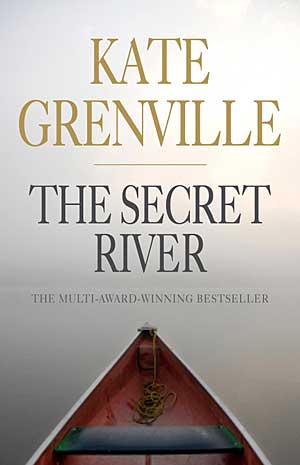
secret_river

Spoiler alert

I’ve come late to Kate Grenville’s acclaimed 2006 novel, The Secret River, but just ahead of the renewed attention which will accompany the screening of ABC’s two-part mini-series adaptation next year.

William Thornhill, the protagonist, struggles in grinding poverty in the London at the turn of the nineteenth century, working as a boatman on the Thames and sometimes stealing cargo to make ends meet. Transported as a convict to New South Wales with his wife Sal, he gains his freedom and carves out a new life, obsessed with owning and cultivating his own patch of land on the Hawkesbury River. His desire for that land contends against Sal’s competing desire to return to England and the presence of the Aborigines, semi-dispossessed, but refusing to leave.  The logic of plot demands that if he is to get what he wants, he must pay a price. The tension with the Aborigines culminates in a massacre by the whites of the men, women and children of the Aboriginal camp. One white pays with his life, but the price for Thornhill is different. His price is the nagging guilt he must live with for the rest of his life, and the loss of relationship with his son, his old friend, and the surviving Aborigine he once had an uneasy understanding with. He becomes a rich, successful man in the aftermath of the massacre and builds a great house over the cave paintings. “Sometimes, sitting in the parlour in the red velvet armchair, Thornhill thought of it underneath him, clear and sharp on the rock. He knew it was there, and his children might remember, but his children’s children would walk about on the floorboards and never know what was beneath their feet.” (316)

Of course, the irony is that even though his children’s children became good at forgetting, we who are several more generations down the line are finally remembering the price, the secret history of our colonisation, our acts of dispossessing and murder. The Secret River is a very intentional act of remembering, or imagining where there are gaps in memory. It made me see colonisation in a newly vivid light, no longer in abstractions or statistics. It is a worthy, important novel for that reason, but perhaps it’s also part of what prevents it from being a masterpiece, it being too consciously a moral novel, constrained by what it is trying to say.

Some miscellaneous thoughts:

  • The early section in London had me feeling the desired sympathy for the terrible of the working class in that time; but later a nagging question as to whether it was as unrelentingly impossible for most people as that – in this case, there are a Dickensian number of tragedies which befall them.
  • A compelling aspect of the novel is the way the Thornhills, having been oppressed, seize the opportunity to become oppressors, lording it over convict labourers and, ultimately, being willing to kill Aborigines.
  • There are patches of startling, beautiful prose, and yet only patches; from (my hazy, nine-year old) memory her earlier novel Idea of Perfection, was more consistently beautifully written.
  • The showdown between Sal’s desire to return to London and Thornhill’s desire to stay is built up expertly, yet its resolution is unconvincing. She just drops it, in the end, after hearing the Aborigines “won’t be a problem” any longer – yet the presence of Aborigines wasn’t the driving force.

Singer girls dreaming big: Violet in The Roaring Nineties

25 Saturday Oct 2014

Posted by Nathan Hobby in Katharine Susannah Prichard, Katharine Susannah Prichard's writings

≈ Leave a comment

Tags

Goldfields Trilogy, Roaring Nineties, youth

Given my biography is confined to Prichard’s early years (1883-1919), I am contemplating if any light can be shone on her early years from The Roaring Nineties (1946). One potential illumination is in the depiction of a minor character, the young Violet, who appears as a bartender in Chapter 30. She has put on hold her ambitions to be a singer to support her family; her father is a drunk who does not provide. This is not too far removed from Prichard’s situation at the end of school, when she gave up going to university to look after her sick mother, and then later provided for her family during her father’s bouts of depression. Sally is worried for Violet – is she destined to be ground down by the hard life of the goldfields and not shine like she’s meant to? Prichard does let Violet escape to pursue her dream and receive singing lessons in Melbourne, only to shatter it cruelly in Chapter 65, when Violet’s mother pretends to be ill to summon her back. Sally wonders what will become of her:

Nothing touched the core of Violet’s being, Sally imagined. It was wrapped in her dream of being a singer. She had maintained herself apart from the demoralizing influences about her because of it. The tragedy was that she should have been forced back among them… Sally had a presentiment of the doom hanging over the girl. She would be caught in the hungry life force surging beneath the surface of this race-course crowd. But Violet – her spirit would always demand something more than ephemeral excitement. (439)

Prichard would sing to her father in his final illness, she tells us in her autobiography, but the song went out of her soul after his death. The next year (1908) she would meet with the famous singing teacher Mathilde Marchesi, who demanded she stay and receive singing lessons; she didn’t, perhaps something she always regretted. The young woman on the cusp of maturity with much potential but at risk of being dragged down by other forces recurs throughout her work, Sophie the singer in Black Opal being particularly close to Violet’s character here. Sophie had a happy ending; we wait to see what will befall Violet in the next two volumes.

Gold Fever: Katharine Susannah Prichard’s The Roaring Nineties

24 Friday Oct 2014

Posted by Nathan Hobby in book review, Katharine Susannah Prichard, Katharine Susannah Prichard's writings

≈ 5 Comments

Tags

Aboriginals, Australian literature, gold rush, Goldfields Trilogy, Kalgoorlie, Roaring Nineties

The Roaring Nineties (1946) is the first volume of Katharine Susannah Prichard’s magnum opus, her goldfields trilogy. She spent a decade on the trilogy, regarding it as her finest achievement, and was deeply hurt by the mixed reception she received from critics (especially for the third volume, Winged Seeds). The trilogy is an epic telling the story of the Western Australian goldfields from the discovery of gold and spanning the decades which followed.

The novel is haunted by the presence of displaced and mistreated Aborigines, and begins with a short, violent story of an abduction of two Aboriginal women by prospectors before gold had even been discovered. It is Prichard at her finest, writing in spare and evocative prose. It is a remarkable reorientation of her novel, throwing off-balance this story of whites and their gold; today it would almost be expected, but in 1946 it shows historical insight ahead of its time. From here, the novel tells of the initial gold rush in the 1890s and the establishment of Coolgardie and Kalgoorlie Boulder. Prichard brings the dust, tents, excitement, and desperation alive in a way that historical studies cannot do. She researched this novel thoroughly and it shows; sometimes to the detriment of narrative, but mostly to help her create an authentic story. The historical background is never far from the story, forming a spine which moves the story along through a series of incidents, with a large cast of characters moving on and off the stage. It is Sally Gough who is closest to a protagonist, as she makes a living running a boarding house to compensate for her ineffectual aristocratic gambler of a husband, Morrie. The struggle between them is an ongoing aspect of the plot, as he gradually accepts her egalitarian ethos, both in class and gender terms. Sally’s insistence that she and Morrie should not elevate themselves above the others contrasts with Alf and Laura’s move up the class rankings, as mining becomes commercialised and Alf betrays his prospector roots to become a mine manager. The class struggle of the alluvial prospectors against the mining companies and the political establishment occupies much of the last third of book, and is the least engaging, often losing sight of the characters.

The novel is, rather loosely, a frame narrative, with the whole novel presented as the yarns of prospector Dinny Quinn about the early days of the goldfields. This device is used frequently in the early chapters, peters out, and is then revived toward the end of the book. Dinny is rarely central to the action, more an observer who knows all the characters.

Having read about some of the reception history of The Roaring Nineties, and the critical preoccupation of the time with rating it against and comparing it with her earlier work, what surprised me most about the novel is how very typically Prichardian it is. This novel has elements of almost all of her previous novels; it seems far less of a departure than Coonardoo or Intimate Strangers were. The foundation and growth of a community echoes The Pioneers. The depiction of the prospectors with their strong code of ethics (such as “roll ups” where disputes are settled) and their struggle against big companies is similar to the concerns of Black Opal. The mistreatment of Aboriginal women as temporary sexual partners brings Coonardoo to mind. The struggle of Sally Gough for her right to earn money and define herself apart from her husband echoes Haxby’s Circus and Intimate Strangers.

Advice to new biographers: interview with a biographer part 4

03 Friday Oct 2014

Posted by Nathan Hobby in biographers, biographical method, biographies of writers, artists and musicians

≈ Leave a comment

Tags

Gerald Glaskin, interview, John Burbidge


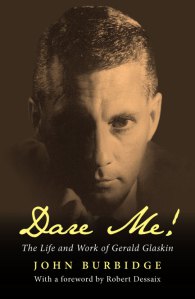
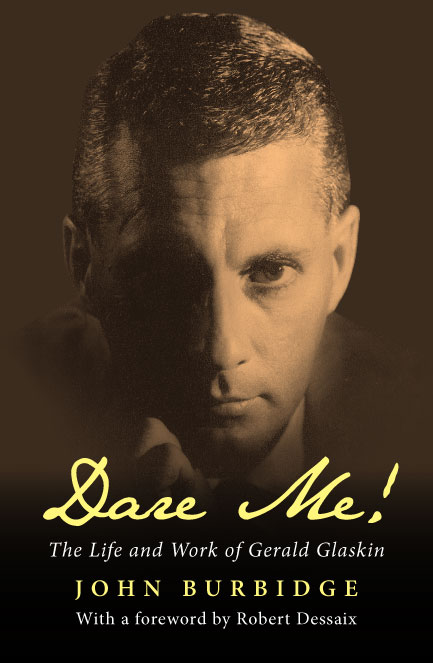
dare-me-cover

(This is the fourth and final in an interview series with John Burbidge, author of Dare Me! The Life and Work of Gerald Glaskin.)

Biographer-in-Perth: Any advice for a biographer starting out on the journey you’ve just taken?

John Burbidge: A few miscellaneous thoughts-

  • Try to secure a publisher and agent up front. I succeeded in neither, but not without trying. I had twelve rejections from publishers, including two from the same company but under different managements, before I struck gold. Finally, it was someone whom I had contacted in the course of my research who was interested in Glaskin and who had read my manuscript who introduced me to his publisher, who then became mine also. Lesson: Never underestimate the value of friends, associates and others who can open doors for you. Sometimes, you just need to ask them. Such people have been pivotal in my having two books published.
  • Try to secure funding up front or have some way of supporting yourself. Biographies can take years of work (this one took 13 off and on) and sometimes much travel (poor Nicholas Shakespeare went everywhere in the world that the peripatetic Chatwin did!). Again, I tried but didn’t succeed in getting any grants but I did have a partner who was a flight attendant so managed to get discounted air fares to cut costs, which helped a lot, especially with international travel.
  • Spread out your research as widely as possible, mixing interviews with a broad cross-section of people who knew your subject in various capacities, with library research, online research, etc. Don’t discount anything you come across but also don’t feel obliged to use it all either. There are always other places (other books, articles, interviews, etc.) where some fascinating tidbit might come in handy.
  • Once you’ve embarked on your literary biography, if you discover someone else is doing exactly the same, don’t be disenchanted. This happened to me and I nearly gave up on the whole enterprise. But others convinced me to stay with it. No two writers, even if they used the exact same material, will come up with the same biography.
  • Get feedback on your work as it progresses to help you fine tune it as much as you can. I did this several times with different people before I had manuscript ready to send to a publisher, and even after I did. Some people I paid and some did it gratis.
  • Try to have someone with some influence write a foreword, especially if you don’t have a very high profile. I was lucky in getting Robert Dessaix to play this role for me. My relationship with him was built over a number of years but once he read the manuscript and was excited about it, he was quite willing to do this, and more.
  • Get interviewees to sign releases at the time of the interviews or soon after. It is often difficult to go back later and secure these, especially if the interviewee has died!

Biographer-in-Perth: It’s been interesting and valuable for me to learn about John’s journey as a biographer. Thank you so much to John for sharing his thoughts. I know they will be of value to other biographers, as well as offering fascinating insights into a biographer’s work for readers of literary biography.

The works and the life: interview with a biographer part 3

02 Thursday Oct 2014

Posted by Nathan Hobby in biographers, biographical method, biographies of writers, artists and musicians, structure of biographies

≈ Leave a comment

Tags

Gerald Glaskin, interview, John Burbidge


dare-me-cover

(This is the third of four in an interview series with John Burbidge, author of Dare Me! The Life and Work of Gerald Glaskin.)

Biographer-in-Perth: What was your experience dealing with that perpetual dilemma of the literary biographer: deciding how to relate your subject’s writing to their life?

John Burbidge: Actually, it was not so difficult to relate his writing to his life because so much of it is quite autobiographical. He tended to write his fiction based on real-life experiences and locate his stories in places in which lived (Henrietta Drake-Brockman admonished him as a young boy for not doing this in his early short stories, and he never forgot it.). No End to the Way is perhaps the classic example of this, but it is also true of books like A Lion in the Sun, The Beach of Passionate Love, The Man Who Didn’t Count, A Bird in my Hands and others.

I decided to let theme guide me and tried to relate particular books to certain themes. When I did this, some works fell more easily into certain chapters than others, e.g. his trilogy on lucid dreaming clearly belonged in the chapter on dreams and Glaskin’s fascination with the paranormal. Of course, reading all his published and unpublished works was a prerequisite for this and took some time (Glaskin had more than 100 short stories published, as well as 20 books and a number of unpublished manuscripts as well.)

To help me manage this complex task, I created a chart that was a cross between a timeline and a matrix. Across the top of the page I listed all the chapters (as they emerged) that roughly corresponded to a chronology of his life. The side categories were Opening Quotation, Basic Premise, Key Elements and Related Books. Naturally, I moved things around a bit, merged columns, deleted others, and so on. Although it might appear to be a highly structured way of coming at a biography, I found it to be a useful framework that allowed for a lot of fluidity and kept me from drowning in the sea of data, opinions and ideas that swamp you when tackling another’s life and work.

I also created a life timeline for Glaskin to which I kept adding information as I came across it. Across the top, by year, was his age and place of residence and down the side were Events, People, Books Written, Books Published, and Other. It allowed me to keep the big picture in front of me as the details kept adding.

 Part 4 tomorrow: Advice for New Biographers.

Dealing with ‘Glaskinitis’: interview with a biographer part 2

01 Wednesday Oct 2014

Posted by Nathan Hobby in biographers, biographical method, biographies of writers, artists and musicians, psychological aspects of biography

≈ Leave a comment

Tags

Gerald Glaskin, interview, John Burbidge


dare-me-cover

(This is the second of four in an interview series with John Burbidge, author of Dare Me! The Life and Work of Gerald Glaskin.)

Biographer-in-Perth: I felt I could perceive your struggle to know what to do with the anger and bitterness in Gerald Glaskin’s personality. Did you find it difficult trying to keep on the right side of all the people you’d interviewed, and their varying opinions of him?

John Burbidge: I sometimes wonder if I gave undue emphasis to Glaskin’s more negative traits, but having talked with dozens of people and read hundreds of letters (his and others), I found it was something that came through very strongly and repeatedly, so I couldn’t ignore it.

One early reader of the manuscript and a close friend of Glaskin’s thought I had overplayed this aspect of his personality, at the expense of his more endearing and positive qualities. I took this advice to heart and tried to ensure that I presented a fair and balanced appraisal of the man. (I later deleted an entire chapter because it was essentially just another example of his belligerent nature, so it seemed redundant.) At the same time, I did not wish to downplay something that seemed to be a critical factor in answering a primary question of this biography, namely, what contributed to Glaskin’s poor reception as a writer in his home country?

During interviews, naturally I tried to remain impartial and let people say what they wanted, regardless of whether it was pro or con Glaskin. I had no axe to grind or theory to prove, but was simply trying to paint the most honest and comprehensive portrait of the man and his work that I could. One way I attempted to do this was to reach out to a broad cross-section of people who knew him in various capacities and at different times in his life, then put together the pieces of the puzzle as they revealed themselves. Most people came across as honest and upfront, but I sensed a few held back from revealing aspects of Glaskin’s life they didn’t wish me to know about. I accepted that as one of the limitations of interviewing and trusted that further research would help fill in the blanks, which it usually did.

When I came across the paradigm of ‘Glaskinitis’, I felt it was a breakthrough because it not only confirmed what I had perceived from many other sources but it put Glaskin’s more antagonistic traits in the wider context of a family behavioural pattern.

 Part 3 tomorrow: The Works and the Life.

Capturing life: interview with a biographer part 1

30 Tuesday Sep 2014

Posted by Nathan Hobby in Uncategorized

≈ Leave a comment

I’m excited to have a recently published biographer, John Burbidge, share his thoughts on literary biography in a four-part interview on A Biographer in Perth. Part 1 today.

Nathan Hobby's avatarA Biographer in Perth

dare-me-cover

At the Perth Writers’ Festival in February, I discovered John Burbidge’s Dare Me! The Life and Work of Gerald Glaskin,  the biography of a significant Perth writer often overlooked in his home country. I had the chance to introduce myself to John at the book-signing and he has generously agreed to answer my questions about literary biography to share on this blog. John’s answers – a series of four over the next four days – are splendid reflections on the theory and praxis of writing a biography. You can find more about Dare Me! on John’s website about Glaskin; find out about John’s other work as an editor and writer at http://www.wordswallah.com, including a page on his memoir, The Boatman, to be published in Australia later this year.

*

Biographer-in-Perth: I was struck by the way you opened with a thematic treatment of the beach in Glaskin’s life…

View original post 565 more words

← Older posts
Newer posts →

Enter your email address to follow this blog and receive notifications of new posts by email.

Join 287 other subscribers

Nathan on Twitter

My Tweets

Categories

  • academic (9)
  • archives and sources (10)
  • autobiographical (62)
  • biographers (10)
  • biographical method (28)
  • biographical quests (18)
  • biographies (21)
    • political biography (2)
  • biographies of living subjects (2)
  • biographies of writers, artists & musicians (12)
  • biographies of writers, artists and musicians (20)
  • biography as a literary form (9)
  • biography in fiction (2)
  • biography in the news (2)
  • books (236)
    • authors (19)
    • book review (173)
    • reading (23)
  • Covid (2)
  • creative nonfiction (11)
  • daily life (2)
  • Daily Prompt (2)
  • death (21)
  • digital humanities (3)
  • family history (1)
  • fiction (8)
  • film and television biographies (5)
  • film review (48)
  • found objects (3)
  • historical biographies (1)
  • history (20)
  • In the steps of KSP (4)
  • John Curtin (13)
  • Katharine Susannah Prichard (114)
    • Glimpses of KSP (7)
    • My KSP biography (31)
      • deleted scenes (1)
  • Katharine Susannah Prichard's associates and connections (16)
  • Katharine Susannah Prichard's writings (34)
  • libraries (5)
  • life (20)
  • link (23)
  • links (41)
  • lists (28)
  • local history and heritage (1)
  • media (4)
  • memes and urban myths (1)
  • memoirs (10)
  • meta (2)
  • music (18)
  • news (9)
  • news and events (43)
  • obituary (1)
  • Old writing found on a floppy disk (1)
  • poetry (5)
  • politics and current affairs (26)
    • climate change (1)
  • prologues and introductions (2)
  • psychological aspects of biography (3)
  • quotes (22)
  • R.I.P. (10)
  • reading report (3)
  • religion (1)
  • religious biography (1)
  • research (5)
  • role of the biographer within the biography (2)
  • Series: A-Z of Katharine Susannah Prichard (26)
  • Series: Corona Diary (1)
  • Series: Saturday 10am (14)
  • Series: Short Stories (2016) (6)
  • Series: The Tourist (2013) (6)
  • Series: Thursday 3pm feature posts (2009) (35)
  • structure of biographies (3)
  • technology and the digital world (2)
  • television (4)
  • the nature of biography (4)
  • this blog (10)
  • Uncategorized (33)
  • Western Australia (26)
  • writing (41)

Archives

Recent Comments

amphisbaenathoroughly79c20f19aa's avataramphisbaenathoroughl… on John Curtin’s vision…
Nathan Hobby's avatarNathan Hobby on John Curtin’s vision…
karenlee thompson's avatarkarenlee thompson on John Curtin’s vision…
Nathan Hobby's avatarNathan Hobby on John Curtin’s vision…

Bookmarks

  • Adventures in Biography
  • ANZ LitLovers LitBlog
  • Bernice Barry
  • It only goes up to your knees
  • Jane Bryony Rawson
  • Jenn Plays Recorder
  • Katharine Susannah Prichard Writers' Centre
  • Laura Sewell Matter: Essayist and Biographer
  • Mutually said: Poets Vegan Anarchist Pacifist
  • Resident Judge
  • Speaking Thylacine
  • The Australian Legend
  • Timothy Parkin Poetry
  • Treefall Writing – Melinda Tognini
  • Whispering Gums
  • Wrapped up in books: the home of Guy Salvidge

Top Posts

  • Paul Auster's Moon Palace : an overview
  • The Joy of Knowledge Encyclopedia
  • The 28th, 29th, and 30th prime ministers: a memoir
  • Thornton McCamish's Our Man Elsewhere
  • Closing down: a walk along Albany Highway

Blog Stats

  • 235,172 hits

Tag Cloud

9/11 19th century 33 1920s 1921 1930s 1950s 1970s 1971 1981 2000s 2004 2011 2015 2017 20000 Days on Earth A.S. Byatt Aboriginals activism Adam Begley Adrian Mole adultery afterlife Agatha Christie Alan Hollinghurst Alberto Manguel Alfred Deakin Amazing Grace Americana Amy Grant An American Romance Andre Tchaikowsky Andrew McGahan angela myers anne fadiman Anne Rice Arabian Nights archives art arts funding A Serious Man Ash Wednesday ASIO atheism Atonement Australia Australian film Australian literature Australian Short Story Festival autism autobiography autodidact Barbara Vine beach Belle Costa da Greene Bell Jar best best-of Bible Big Issue Bill Callahan biographical ethics biographical quest genre biographies birthday birthdays Black Opal Bleak House Blinky Bill blogging blogs Blue Blades Bodega's Bunch bog Booker book launch booksale Borges Brenda Niall Brian Matthews Brian McLaren Britney Spears Burial Rites Burke and Wills buskers C.S. Lewis C.S. Lewis canon capitalism Carol Shields Carson McCullers Catcher in the Rye Catholicism celebrities Charles Dickens Charlie Kaufman childhood Child of the Hurricane children's books Choir of Gravediggers Christianity Christian writing Christina Stead Christmas Christopher Beha Cinque Terra Claire Tomalin classics cliches climate change Coen brothers coincidence Collie Collyer coming of age Communism concert Condensed Books consumerism Coonardoo Cormac McCarthy Corrections cosy fiction Dara Horn David Copperfield David Ireland David Marr David Suchet death Death of a president definition demolition Dennis LeHane dentist diaries divorce doctorow Doctor Who documentaries donald shriver Don DeLillo Don DeLillo Donna Mazza Donna Tartt Don Watson Dostovesky doubt drama dreams of revolution Drusilla Modjeska E.M. Forster ebooks editing Eichmann Eisenstein Elizabeth Kostova email empathy ensmallification existentialism faith Falling Man fame families fantasy fiction film and television folk football Frank Barscombe Fremantle Press G.K. Chesterton Gabrielle Carey Gallipoli genealogical fiction Genesis Geoff Nicholson George W. Bush Gerald Glaskin Gilead Golden Miles Goldfields Trilogy Graham Greene grandad great novels Greenmount Guinness World Records Guy Salvidge Hannah Arendt Hannah Kent Hans Koning Hans Koningsberger Harper Lee Haxby's Circus Hazel Rowley He-Man headers heaven Heidegger hell Henrietta Lacks Henry Morton Stanley Herman Hesse heroes Hey Dad! historical fiction history Holden Caulfield holidays Homer & Langley Home Song Stories House of Cards House of Zealots house of zealots Hugo Throssell humour Ian McEwan In between the sheets Indonesia Infamous Inside Llewyn Davis interstellar interview Intimate Strangers Invisible Ireland ISBNs Ishiguro itunes J.D. Salinger J.M. Coetzee J.S. Battye Janet Malcolm Jennifer Egan JFK JFK assassination Joanna Rakoff Joel Schumacher John Burbidge John Fowles John Howard John Kinsella John Updike John Updike Jonathan Franzen journal writing JSB Judgment Day Julia Baird Julian Barnes Kafka Kalgoorlie Kate Grenville Katherine Mansfield Kevin Brockmeier King's Park KSP Writers' Centre language last ride Laurie Steed Left Behind Leonard Cohen Leo Tolstoy Libra Library of Babel Library of Babel Lila Lily and Madeleine links Lionel Shriver lionel shriver lists literary fiction literature Lleyton Hewitt lost book Louisa Louisa Lawson Louis Esson louis nowra love letter Lubbock Lytton Strachey Madelaine Dickie Man Booker man in the dark Margaret Atwood Margaret River Press Marilynne Robinson mark sandman meaning of life Melbourne Mel Hall meme memorialisation memory MH17 Michael Faber Mike Riddell Miles Franklin mining boom missionaries moleskine Moon Palace morphine Mother Teresa movies Music of Chance My Brilliant Career names Napoleon Narnia narrative Narrow Road to the Deep North Narziss and Goldmund Natalie Portman Nathaniel Hobbie national anthem Nick Cave Nina Bawden non-fiction nonfiction noughties novelists novels obituaries obscurity On Chesil Beach Parade's End Paris Hilton Passion of the Christ past patriotism Paul Auster Paul de Man Perth Perth Writers Festival Peter Ackroyd Peter Cowan Writers Centre phd Philip K. Dick Philip Seymour Hoffman pierpontmorgan poetry slam politics popular fiction popular science Possession postapocalyptic postmodernism Pride prophetic imagination publications Pulp Purity Queen Victoria Rabbit Angstrom radio Radio National Randolph Stow rating: 5/10 rating: 6/10 rating: 7/10 rating: 8/10 rating: 9/10 rating: 10/10 ratings reading fiction autobiographically reading report Rebecca Skloot recap red wine reincarnation juvenile fiction rejection review - music reviewing rewriting Richard Flanagan Richard Ford Rick Moody Roaring Nineties Robert Banks Robert Hughes Robert Silverberg Robert Wadlow Robinson Crusoe Rolf Harris romance Rome ruins Russell Crowe Ruth Rendell Sarah Murgatroyd scalpers science fiction Science of Sleep secondhand books Secret River sermon illustration sex short stories Silent Woman Simone Lazaroo Simpsons Siri Hustvedt slavery Smashing Pumpkins social interactions social justice some people i hate sources South Australia souvenirs speculation speech speeches sport status anxiety Stephen Lawhead Stranger's Child subtitles Subtle Flame Sue Townsend suicide Surprised By Hope Suzanne Falkiner Sylvia Plath Synecdoche TAG Hungerford Award tapes teabags Ted Hughes The Children Act The Cure The Fur The Imitation Game theology The Pioneers The Revolutionary Thomas Disch Thomas Hardy Thomas Henry Prichard Thomas Mann thriller time Tim La Haye Tim Winton Tolstoy Tom Wright top 10 Towering Inferno Tracy Ryan Trove Truman Capote tshirts TS Spivet Twelve Years a Slave underrated writers Underworld unwritten biographies urban myth USA vampires Venice Victoria Cross Victoriana Victorian era Victorianism Victoria Park video Voltron w Wake in Fright Walkabout Walter M. Miller war War and Peace war on terror Water Diviner Wellington St Bus Station Westerly Western Australia West Wing What Happened to Sophie Wilder? Whitlams wikipedia Wild Oats of Hans William Wilberforce Winston Churchill Witches of Eastwick Working Bullocks workshop World War One writers writing Writing NSW youth Zadie Smith Zeitgeist Zelig

Enter your email address to follow this blog and receive notifications of new posts by email.

Join 287 other subscribers

Pages

  • About
  • My novel: The Fur
  • The Red Witch: A Biography of Katharine Susannah Prichard

Categories

  • academic (9)
  • archives and sources (10)
  • autobiographical (62)
  • biographers (10)
  • biographical method (28)
  • biographical quests (18)
  • biographies (21)
    • political biography (2)
  • biographies of living subjects (2)
  • biographies of writers, artists & musicians (12)
  • biographies of writers, artists and musicians (20)
  • biography as a literary form (9)
  • biography in fiction (2)
  • biography in the news (2)
  • books (236)
    • authors (19)
    • book review (173)
    • reading (23)
  • Covid (2)
  • creative nonfiction (11)
  • daily life (2)
  • Daily Prompt (2)
  • death (21)
  • digital humanities (3)
  • family history (1)
  • fiction (8)
  • film and television biographies (5)
  • film review (48)
  • found objects (3)
  • historical biographies (1)
  • history (20)
  • In the steps of KSP (4)
  • John Curtin (13)
  • Katharine Susannah Prichard (114)
    • Glimpses of KSP (7)
    • My KSP biography (31)
      • deleted scenes (1)
  • Katharine Susannah Prichard's associates and connections (16)
  • Katharine Susannah Prichard's writings (34)
  • libraries (5)
  • life (20)
  • link (23)
  • links (41)
  • lists (28)
  • local history and heritage (1)
  • media (4)
  • memes and urban myths (1)
  • memoirs (10)
  • meta (2)
  • music (18)
  • news (9)
  • news and events (43)
  • obituary (1)
  • Old writing found on a floppy disk (1)
  • poetry (5)
  • politics and current affairs (26)
    • climate change (1)
  • prologues and introductions (2)
  • psychological aspects of biography (3)
  • quotes (22)
  • R.I.P. (10)
  • reading report (3)
  • religion (1)
  • religious biography (1)
  • research (5)
  • role of the biographer within the biography (2)
  • Series: A-Z of Katharine Susannah Prichard (26)
  • Series: Corona Diary (1)
  • Series: Saturday 10am (14)
  • Series: Short Stories (2016) (6)
  • Series: The Tourist (2013) (6)
  • Series: Thursday 3pm feature posts (2009) (35)
  • structure of biographies (3)
  • technology and the digital world (2)
  • television (4)
  • the nature of biography (4)
  • this blog (10)
  • Uncategorized (33)
  • Western Australia (26)
  • writing (41)

Archives

Recent Comments

amphisbaenathoroughly79c20f19aa's avataramphisbaenathoroughl… on John Curtin’s vision…
Nathan Hobby's avatarNathan Hobby on John Curtin’s vision…
karenlee thompson's avatarkarenlee thompson on John Curtin’s vision…
Nathan Hobby's avatarNathan Hobby on John Curtin’s vision…

Bookmarks

  • Adventures in Biography
  • ANZ LitLovers LitBlog
  • Bernice Barry
  • It only goes up to your knees
  • Jane Bryony Rawson
  • Jenn Plays Recorder
  • Katharine Susannah Prichard Writers' Centre
  • Laura Sewell Matter: Essayist and Biographer
  • Mutually said: Poets Vegan Anarchist Pacifist
  • Resident Judge
  • Speaking Thylacine
  • The Australian Legend
  • Timothy Parkin Poetry
  • Treefall Writing – Melinda Tognini
  • Whispering Gums
  • Wrapped up in books: the home of Guy Salvidge

Top Posts

  • Paul Auster's Moon Palace : an overview
  • The Joy of Knowledge Encyclopedia
  • The 28th, 29th, and 30th prime ministers: a memoir
  • Thornton McCamish's Our Man Elsewhere
  • Closing down: a walk along Albany Highway

Blog Stats

  • 235,172 hits

Tag Cloud

9/11 19th century 33 1920s 1921 1930s 1950s 1970s 1971 1981 2000s 2004 2011 2015 2017 20000 Days on Earth A.S. Byatt Aboriginals activism Adam Begley Adrian Mole adultery afterlife Agatha Christie Alan Hollinghurst Alberto Manguel Alfred Deakin Amazing Grace Americana Amy Grant An American Romance Andre Tchaikowsky Andrew McGahan angela myers anne fadiman Anne Rice Arabian Nights archives art arts funding A Serious Man Ash Wednesday ASIO atheism Atonement Australia Australian film Australian literature Australian Short Story Festival autism autobiography autodidact Barbara Vine beach Belle Costa da Greene Bell Jar best best-of Bible Big Issue Bill Callahan biographical ethics biographical quest genre biographies birthday birthdays Black Opal Bleak House Blinky Bill blogging blogs Blue Blades Bodega's Bunch bog Booker book launch booksale Borges Brenda Niall Brian Matthews Brian McLaren Britney Spears Burial Rites Burke and Wills buskers C.S. Lewis C.S. Lewis canon capitalism Carol Shields Carson McCullers Catcher in the Rye Catholicism celebrities Charles Dickens Charlie Kaufman childhood Child of the Hurricane children's books Choir of Gravediggers Christianity Christian writing Christina Stead Christmas Christopher Beha Cinque Terra Claire Tomalin classics cliches climate change Coen brothers coincidence Collie Collyer coming of age Communism concert Condensed Books consumerism Coonardoo Cormac McCarthy Corrections cosy fiction Dara Horn David Copperfield David Ireland David Marr David Suchet death Death of a president definition demolition Dennis LeHane dentist diaries divorce doctorow Doctor Who documentaries donald shriver Don DeLillo Don DeLillo Donna Mazza Donna Tartt Don Watson Dostovesky doubt drama dreams of revolution Drusilla Modjeska E.M. Forster ebooks editing Eichmann Eisenstein Elizabeth Kostova email empathy ensmallification existentialism faith Falling Man fame families fantasy fiction film and television folk football Frank Barscombe Fremantle Press G.K. Chesterton Gabrielle Carey Gallipoli genealogical fiction Genesis Geoff Nicholson George W. Bush Gerald Glaskin Gilead Golden Miles Goldfields Trilogy Graham Greene grandad great novels Greenmount Guinness World Records Guy Salvidge Hannah Arendt Hannah Kent Hans Koning Hans Koningsberger Harper Lee Haxby's Circus Hazel Rowley He-Man headers heaven Heidegger hell Henrietta Lacks Henry Morton Stanley Herman Hesse heroes Hey Dad! historical fiction history Holden Caulfield holidays Homer & Langley Home Song Stories House of Cards House of Zealots house of zealots Hugo Throssell humour Ian McEwan In between the sheets Indonesia Infamous Inside Llewyn Davis interstellar interview Intimate Strangers Invisible Ireland ISBNs Ishiguro itunes J.D. Salinger J.M. Coetzee J.S. Battye Janet Malcolm Jennifer Egan JFK JFK assassination Joanna Rakoff Joel Schumacher John Burbidge John Fowles John Howard John Kinsella John Updike John Updike Jonathan Franzen journal writing JSB Judgment Day Julia Baird Julian Barnes Kafka Kalgoorlie Kate Grenville Katherine Mansfield Kevin Brockmeier King's Park KSP Writers' Centre language last ride Laurie Steed Left Behind Leonard Cohen Leo Tolstoy Libra Library of Babel Library of Babel Lila Lily and Madeleine links Lionel Shriver lionel shriver lists literary fiction literature Lleyton Hewitt lost book Louisa Louisa Lawson Louis Esson louis nowra love letter Lubbock Lytton Strachey Madelaine Dickie Man Booker man in the dark Margaret Atwood Margaret River Press Marilynne Robinson mark sandman meaning of life Melbourne Mel Hall meme memorialisation memory MH17 Michael Faber Mike Riddell Miles Franklin mining boom missionaries moleskine Moon Palace morphine Mother Teresa movies Music of Chance My Brilliant Career names Napoleon Narnia narrative Narrow Road to the Deep North Narziss and Goldmund Natalie Portman Nathaniel Hobbie national anthem Nick Cave Nina Bawden non-fiction nonfiction noughties novelists novels obituaries obscurity On Chesil Beach Parade's End Paris Hilton Passion of the Christ past patriotism Paul Auster Paul de Man Perth Perth Writers Festival Peter Ackroyd Peter Cowan Writers Centre phd Philip K. Dick Philip Seymour Hoffman pierpontmorgan poetry slam politics popular fiction popular science Possession postapocalyptic postmodernism Pride prophetic imagination publications Pulp Purity Queen Victoria Rabbit Angstrom radio Radio National Randolph Stow rating: 5/10 rating: 6/10 rating: 7/10 rating: 8/10 rating: 9/10 rating: 10/10 ratings reading fiction autobiographically reading report Rebecca Skloot recap red wine reincarnation juvenile fiction rejection review - music reviewing rewriting Richard Flanagan Richard Ford Rick Moody Roaring Nineties Robert Banks Robert Hughes Robert Silverberg Robert Wadlow Robinson Crusoe Rolf Harris romance Rome ruins Russell Crowe Ruth Rendell Sarah Murgatroyd scalpers science fiction Science of Sleep secondhand books Secret River sermon illustration sex short stories Silent Woman Simone Lazaroo Simpsons Siri Hustvedt slavery Smashing Pumpkins social interactions social justice some people i hate sources South Australia souvenirs speculation speech speeches sport status anxiety Stephen Lawhead Stranger's Child subtitles Subtle Flame Sue Townsend suicide Surprised By Hope Suzanne Falkiner Sylvia Plath Synecdoche TAG Hungerford Award tapes teabags Ted Hughes The Children Act The Cure The Fur The Imitation Game theology The Pioneers The Revolutionary Thomas Disch Thomas Hardy Thomas Henry Prichard Thomas Mann thriller time Tim La Haye Tim Winton Tolstoy Tom Wright top 10 Towering Inferno Tracy Ryan Trove Truman Capote tshirts TS Spivet Twelve Years a Slave underrated writers Underworld unwritten biographies urban myth USA vampires Venice Victoria Cross Victoriana Victorian era Victorianism Victoria Park video Voltron w Wake in Fright Walkabout Walter M. Miller war War and Peace war on terror Water Diviner Wellington St Bus Station Westerly Western Australia West Wing What Happened to Sophie Wilder? Whitlams wikipedia Wild Oats of Hans William Wilberforce Winston Churchill Witches of Eastwick Working Bullocks workshop World War One writers writing Writing NSW youth Zadie Smith Zeitgeist Zelig

Blog at WordPress.com.

  • Subscribe Subscribed
    • Nathan Hobby, a biographer in Perth
    • Join 287 other subscribers
    • Already have a WordPress.com account? Log in now.
    • Nathan Hobby, a biographer in Perth
    • Subscribe Subscribed
    • Sign up
    • Log in
    • Report this content
    • View site in Reader
    • Manage subscriptions
    • Collapse this bar
 

Loading Comments...