
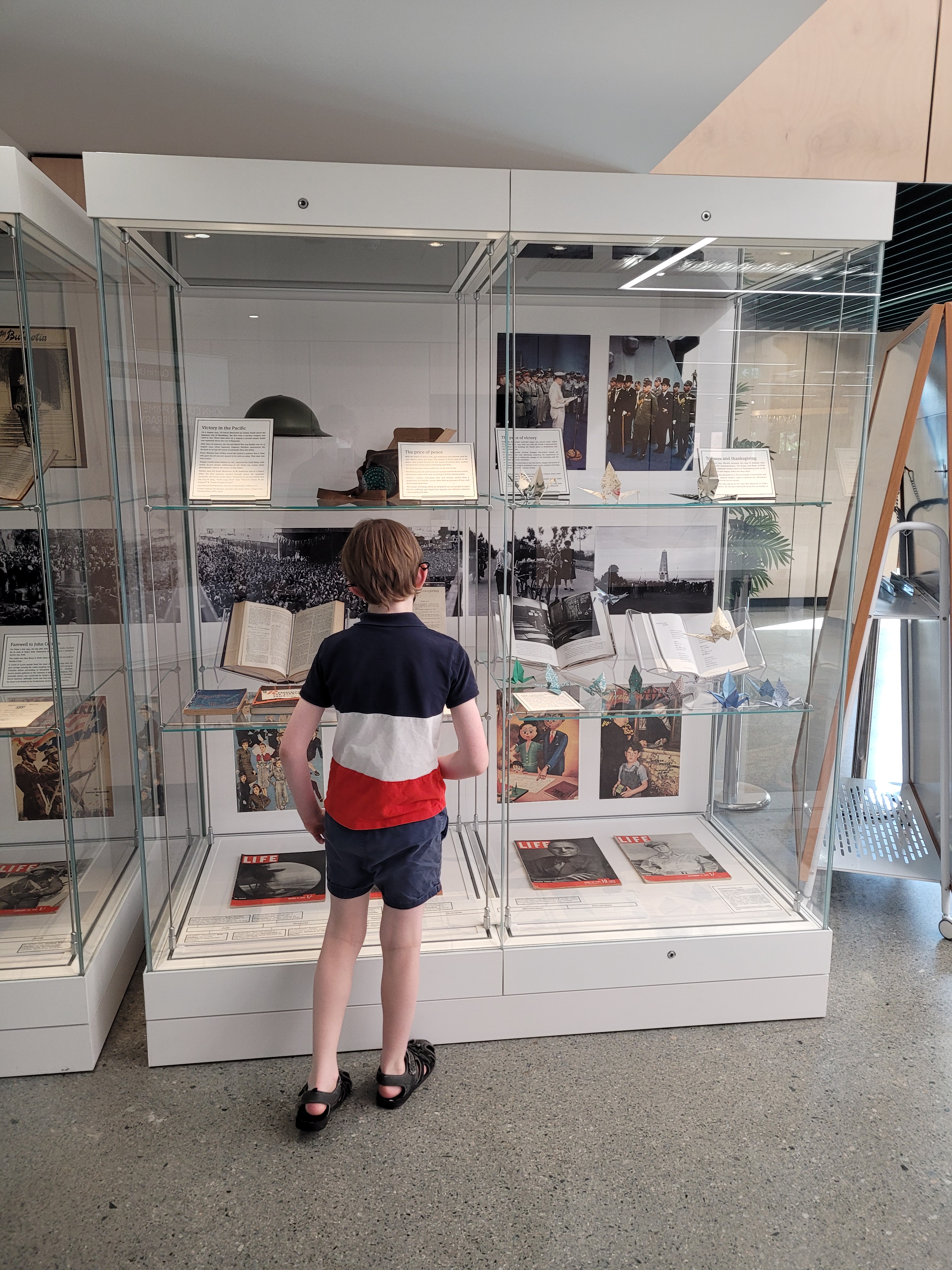
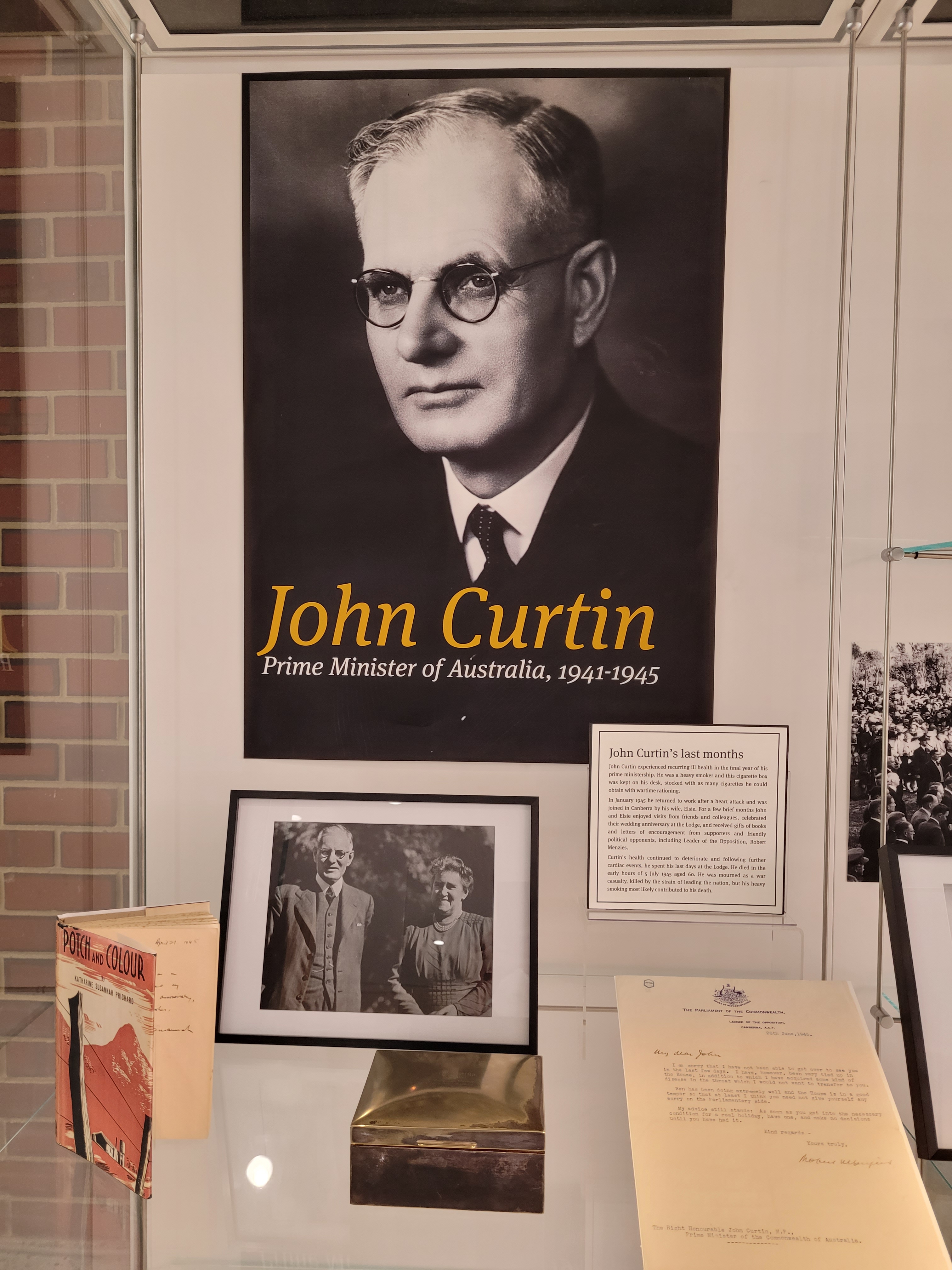
For many weeks, my son asked me each day what I was doing at work, and each day the answer was the same: the exhibition! His anticipation built and I was relieved when I could finally tell him it was installed. (How long can it possibly take to do one exhibition?) Last weekend, I took him and the rest of the family to Curtin University to see it. Curated by the special collections co-ordinator, Sally Laming, and I, ‘1945: The Price of Peace’ commemorates the death of John Curtin and the end of the Second World War. The title is taken from the words of John Curtin in parliament a few months before his death: ‘There is a price the world must pay for peace … I shall not attempt to specify the price, but it does mean less nationalism, less selfishness, less race ambition.’
My favourite items from the exhibition:
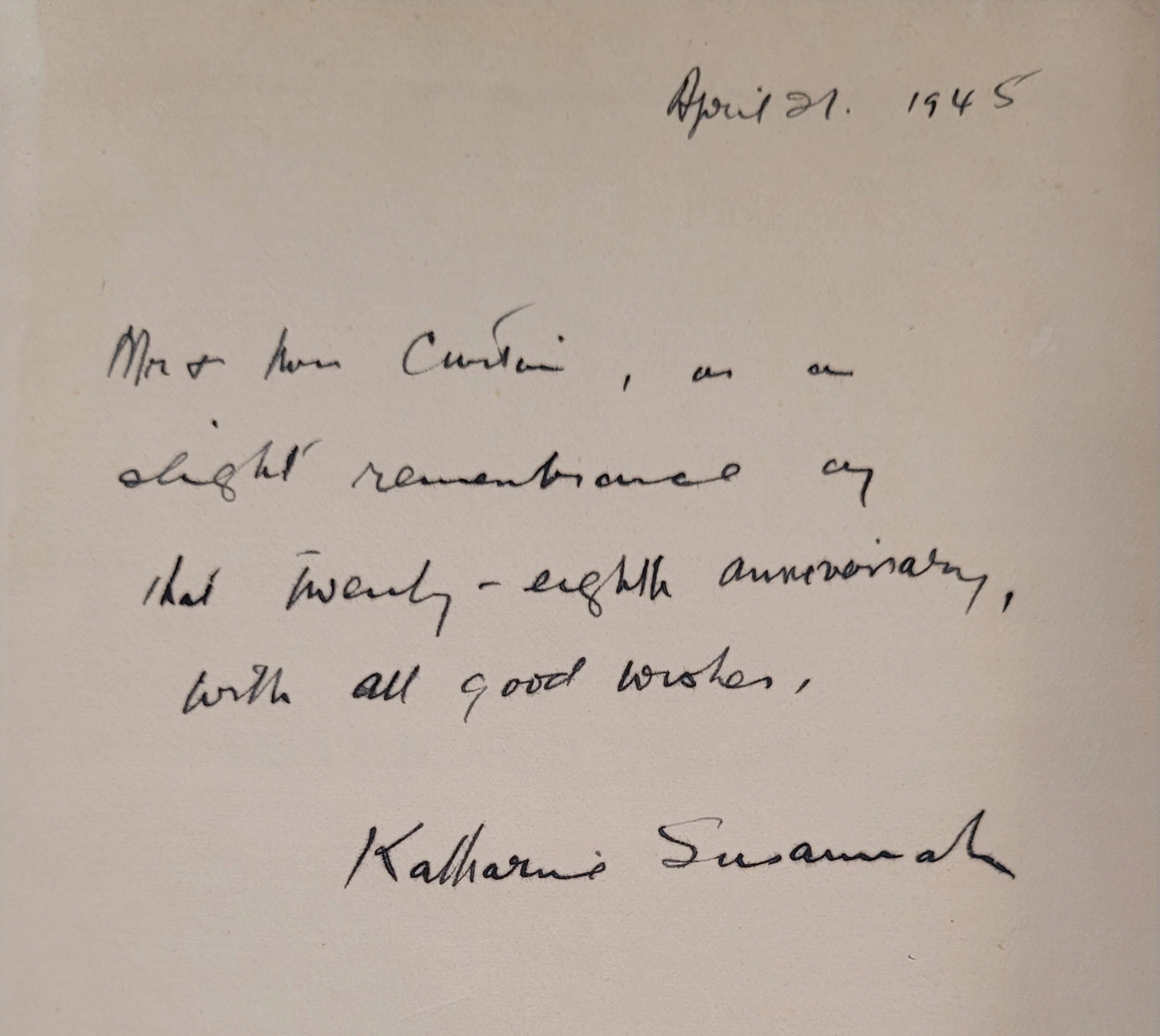
- An inscribed copy of Katharine Susannah Prichard’s short story collection, Potch and Colour, sent to the Curtins as a wedding anniversary gift. ‘April 21 1945, Mr & Mrs Curtin, as a slight remembrance of that twenty-eighth anniversary, with all good wishes, Katharine Susannah’. It’s unlikely Curtin read the book; he was suffering heart disease and was admitted to Allawah Private Hospital with congestion of the lungs on 30 April. I want to write one day about the relationship between KSP and Curtin. He had to be careful of associating too closely with a notorious communist, but they had been close for a time from 1919 to about 1921 before their paths diverged. I’ve never come across a word of criticism of Curtin from KSP, even though she had harsh words for many other Laborites and he governed a long way from the agenda of his radical days. (JCPML00453/13)
- A cordial letter sent to John Curtin from Robert Menzies, leader of the opposition. ‘My advice still stands,’ writes Menzies. ‘As soon as you get into the necessary condition for a real holiday, have one, and make no decisions until you have had it.’ The date is 28 June 1945, one week before Curtin died. Everyone thought Curtin’s great battle was whether he could hang onto the prime ministership, but his condition was far worse than most knew and his battle was actually to live at all. It also reflects the understanding of heart disease at the time – that it was caused by stress and cured by rest. (JCPML00401/52)
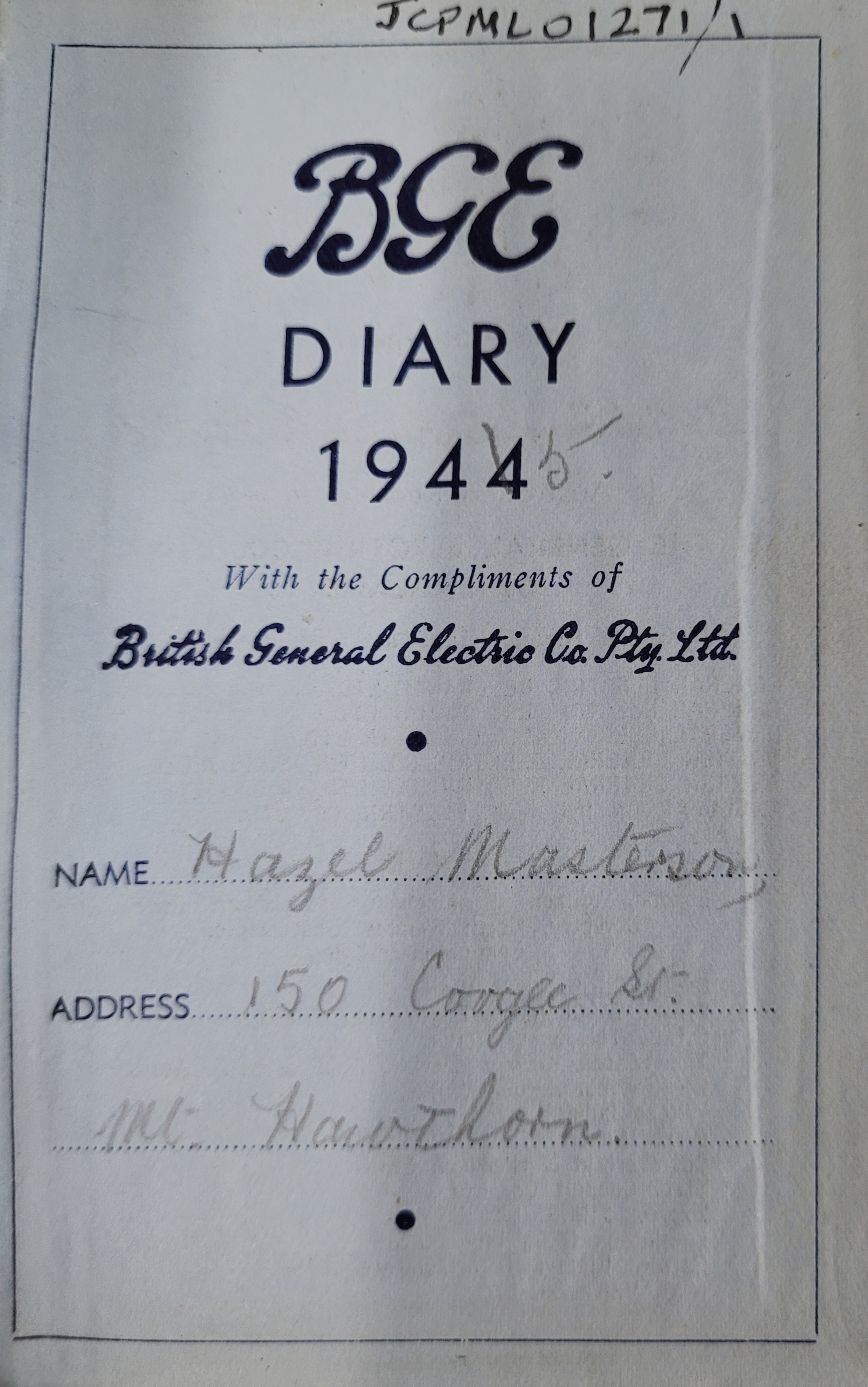
- A diary entry by 16 year-old Hazel Masterson in which she records being at a dance as rumours of the Japanese surrender ripple through in August 1945. The preoccupations of a teenage girl give such a different perspective on a world event and what it felt to be living through the moment. It’s appropriate in that time of austerity that she is re-using a 1944 diary and has to correct the dates to make them match the day. She would, of course, later become Hazel Hawke. (JCPML01271/1)
There is a post about the exhibition on the Curtin University Library website here. You can see the exhibition 7 days a week at Curtin University’s T.L. Robertson Library on Level 3 near the Reading Room.
 Nathan Hobby, a biographer in Perth
How fascinating, Nathan!
I wish I could go to the Curtin Exhibition – but no plans for a while yet to visit Perth.
It looks great! Congratulations.
Cheers, Denise
LikeLike