Forms of Christian fiction # 2: the Jesus-like character

Tags

, , , , , ,

240px-narnia_aslan.jpeg

What: This form of Christian fiction will tend to have a contemporary setting. It’s a subgenre of allegorical Christian fiction, but I wanted to deal with it first. The author retells elements of the story of Jesus, particularly through a Jesus like figure. Depending on the author’s take on the significance of Jesus, we get different aspects of his life coming through – the atonement or his concern for the poor or his outsider status.

Eg: New Zealander Mike Riddell tackles this form in his Insatiable Moon.  He was a theology lecturer at a Baptist theological college. And then, as he says on his website, the publication of this novel was contentious enough to force his resignation. Was it the extended (adulterous) sex scene involving the Jesus-like figure or was it just that the Jesus-ish character was insane? What Riddell gets so right in this novel is how confrontational Jesus would have been to the religious establishment. I suspect that that is the theme he would want us to take away.

In a completely different mode, C.S. Lewis creates a fantasy world in the Narnia books, with a Jesus like creature in the form of a lion – Aslan. Like Jesus, Aslan is sacrificed for the world’s sins. My friend Mark Hurst pointed out that Revelation pictures Jesus as a slain lamb rather than a lion. But then someone else responded saying that Aslan appears as a lamb later in the series. (I don’t remember that; I’m sure it’s true, though.)

If Stephen Lawhead’s Pendragon books are to be considered as an example of this form, then the Jesus-like character is King Arthur. The problem being that this Jesus leads his followers into battle so effectively they manage to kill all their enemies with swords. No turning the other cheek for these fellows! I loved these books when I was a teenager; they were a violent heroism sanctioned by my conservative Baptist church! I wonder what I’d think of them if I tried reading them now?

Dostovesky’s The Idiot is perhaps the most enduring example of the form. The saintly main character has no guile and society doesn’t know how to handle him. It’s so terrible – I didn’t manage to finish this book, either. (I have a terrible record of incompletion with long books, and particularly with Russian writers.)

Should I attempt this form? I started to write ‘no’, because Jesus is unique, and retelling the crucifixion or any other part of his life is tiresome. But then I realised that I’ve fallen into one of the traps I warn against – that of thinking that Jesus is so far above us we can’t emulate him. There is the uniqueness of Jesus, but that doesn’t stop there being Jesus-like figures who are following him faithfully and end up crucified, just like he warned. That would probably be my take on it.

In fact, I sort of did attempt this form in Dreams of Revolution (unpublished). The character of Melchizidek is Christ-like in bringing together a band of disciples who he feeds and teaches about the kingdom. And his name, well that’s kind of obvious… to theology students -Melchizidek being the priestly king of Salem who came from nowhere and, in the book of Hebrews, is seen as prefiguring Christ.  

Do you want to add some more examples you think I should have included?
Forms of Christian fiction #1: retelling the Bible as fiction

Tags

, , , , , , , ,

200px-thomas_mann_1937.jpg

I’m starting this series exploring forms of Christian fiction, mostly for my own edification, so I can work out how faith and writing and reading fit together better.

Retelling the Bible as fiction is one form of Christian fiction. I noticed that Walter Wangerin did it, and I bought one of his books. I keep meaning to read it, but for some reason I don’t feel compelled to. I like the idea in principle, though. A novelistic treatment of Bible stories.

Bible stories are always such bare bones accounts, with so little psychology. And what style they have isn’t too obvious for us thousands of years later.

The challenge is to flesh out the characters. To get inside their heads, and maybe God’s head, and turn the existing narrative into novel.

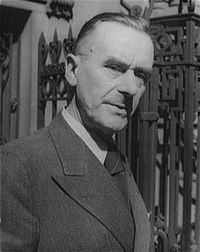
Thomas Mann (pictured) did it in his Joseph books,  which I found quite interesting. But not interesting to read past halfway through the first volume. (I know, I’m terrible, there’s so little Christian fiction I like! And Mann’s intention wasn’t even particularly Christian, but perhaps more modernist or literary. )

More recently, Anne Rice did it – with explicitly Christian motive – in her Jesus books. I will try to read them, but I know enough about Tim La Haye and Jerry Jenkins’ attempt to fictionalise Revelation – the Left Behind series – to never read them. (I have actually seen the film version, and the theology was worse than I could have anticipated – what with the antichrist being the one disarming America and feeding the poor.)

My problem with fictionalising the Bible is that I don’t like reading historical fiction, and I wouldn’t want to write it. I feel like the mind and culture of the Hebrews thousands of years ago is so difficult or even impossible to retrieve or appreciate. Or it at least finds its best form in the Scriptures as they stand.

Having said that, I think it is an excellent project to try to fictionalise the Bible. Maybe I need to motivate myself to read the attempts and to think about how I might try myself.

I’d be tempted to fictionalise one of the situations in the house churches that Paul wrote to. Probably Corinth, since 1 Corinthians is my favourite book of the Bible. Robert Banks did something like this in his book, “Going to church in the first century”. This booklet is explicitly theological in motivation – it wants to give people an idea of the first century house churches. But it is also readable and a very interesting intersection of fiction and theology.

Film review: The Science of Sleep

Tags

,

scienceofsleep.jpg

A brilliant film. A joyous, crazy film about a young man who has always confused dreams and reality and inhabits a world where the two merge. We see a world which works on the principles of his childish imagination, with cameras and cars made of cardboard, time machines which go forward or backward one second, and revenge fantasies lived out.

But at its heart, it’s a beautiful love story between Stephane the Dreaming Inventor and Stephanie the Shy Artist. One critic called it the year’s ultimate date movie, and Nicole and I concur.

Ian McEwan and the 2007 Booker shortlist

Tags

, , , ,

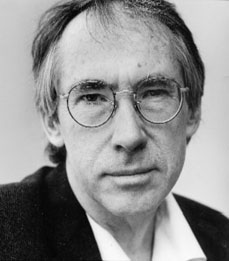
ian-mcewan.jpg

http://news.bbc.co.uk/2/hi/entertainment/6982091.stm

I’ve been enraptured with Ian McEwan since I discovered him last year (about twenty years after the rest of the world.) So I’m very glad he’s been shortlisted for the Man Booker prize with On Chesil Beach. It’s an excellent novel(la); one of the saddest I have ever read. I think it depicts the anxieties of newlyweds so well and shows the way the rest of one’s life hangs in the balance on one’s wedding night. Or at least the way it feels. I wonder what influence his own marriage breakdown had on his choice and treatment and themes.

Even if it wins,  the travesty which will remain is that Atonement didn’t win the Booker seven years ago. It is far, far superior to Peter Carey’s The True History of the Kelly Gang –  a good but fatuous and minor comic work. (And I say this as an Australian!)

I’m not alone in thinking that McEwan’s own Booker winner – Amsterdam – is one of his minor works. A very readable thriller with moments of intense insight spoilt by  a contrived ending.

Riot cops prepare for Sydney’s ‘worst-ever’ violence : thewest.com.au

Tags

,

Riot cops prepare for Sydney’s ‘worst-ever’ violence : thewest.com.au

I hate the way they’ve locked the whole of Sydney down. The establishment is throwing everything it can against the protestors. It has all the power and all the money, and it would dearly love there to be no voice of dissent. No-one to say to Bush and Howard: you have done evil!

Art for her own sake: Stephanie in the Science of Sleep

Tags

,

Stephanie’s character in The Science of Sleep has a lot to teach me.

She does art not to be famous or brilliant. Not to impress anyone.

Instead, she does art because it’s fun. She does art for herself and she doesn’t care if no-one else ever sees it.

She makes boats out of felt, and then water out of cellophane, and a forest which grows in the felt boat.

It is this sort of playfulness and enjoyment which fame destroys. Since I tasted success with my writing, I’ve cared too much about it being brilliant.

Film review : Home Song Stories

Tags

, , ,

home-song-stories-poster-0.jpg 

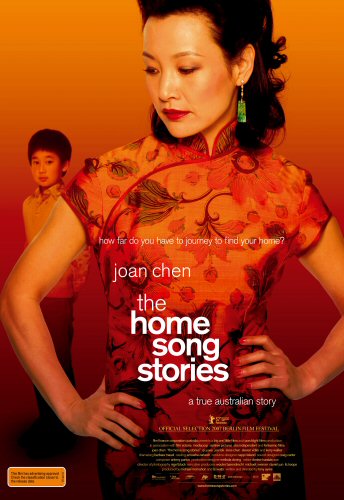
Home Song Stories is writer-director Tony Ayres’ personal excorcism of his troubled childhood with his selfish mother, a fading nightclub singer who constantly sought out new men to admire her and excite her.  At the end of the film, the narrator says that he and his sister don’t talk about their mother; they don’t know what to say. Maybe this film will make up for that.

It seems the story is very close to real events, with some minor changes – like moving the action from Perth to Melbourne. It seems that Screenwest just didn’t have enough money to fund this film beyond scripting! They should be funding lots of feature films – it’s the major art form of our time.

I’m guessing Arts Victoria stepped in with some money, on the condition that the action be moved to Melbourne. As a Western Australian, that makes me disappointed – we lose another one of our stories.

If you visit the Metro Cemeteries Board you can see the burial records for both Tony Ayres’ mother, Sue, and his stepfather, Bill Ayres (‘Uncle Bill’). Apparently she killed herself in their flat in Applecross. I think I’ll always think of her now if I’m driving along Canning Highway. What a sad story.

http://www.mcb.wa.gov.au/NameSearch/details.php?id=FC00005994

http://www.mcb.wa.gov.au/NameSearch/details.php?id=FC00004118 

Book review – Rick Moody: The Diviners

Tags

,

An ambitious, sprawling novel depicting America in the uncertainty of the disputed election of 2000 through the prism of the flurry around a mini-series project that is picked up and hyped throughout the media industry.

It is the same sort of book as James Joyce’s Ulysses – with constant literary innovation and such a wide range of voices and styles. Of course, it’s not nearly as good; the only passages that approach brilliance are those where Moody returns to his forte – the suburbs and the family.

But even where it isn’t brilliant, it is always good, entertaining, engaging and insightful. It finishes with a futile flourish, as the network CEO is assured by a judge in the disputed returns that the climate is right to crush the mini-series and everything it stands for; the future is reality TV, Republican and patriotic.

Book review – John Fowles : Daniel Martin

Tags

,

JF’s alternative title, The Englishman, would have been more appropriate. It is in one way a novel primarily about Englishness through the eyes of a middle aged humanist egotistic screenwriter.

It scares me how deeply flawed it is as a novel. Such an important writer could have such poor judgement? Didn’t anyone warn JF? Couldn’t he seem himself? Its major flaw is its boring wry dialogue between characters who don’t seem to be able to express anything more than a kind of bemused English banter. Hundreds of pages of this!

It gets better at the end in Egypt when Daniel and Jane finally express something deeper. More should have been made of Anthony’s character; the situation is potentially very interesting.

Book review – Ian McEwan: Saturday

Tags

,

An excellent novel which manages to show the state of the world through one man’s mind on one day. Perowne is a neurosurgeon; the Saturday in question is the day of the anti-war protests just before the invasion of Iraq. In his relationship to his family, a game of squash and a road-rage incident which turns into a home invasion by a thug, he feels and thinks about the state of the world and the state of his life.

McEwan’s prose has these moments of intense insight that are beautiful to read. He manages to write about what it’s like to listen to a certain piece of music, or the subtle feelings you might have waking in the middle of night and watching your wife sleep.

The final scene lifts the whole novel another notch, an inspired piece of writing with Henry Perowne looking out on the square at the end of the long Saturday and thinking about what will come in the future, the leaving of his children, the death of his mother and father-in-law; the terrorist attack that has to happen. He imagines another doctor standing looking out at the square in 1903, and how this doctor would not believe what was to happen in the next one hundred years.