My Top 10 Films of 2011

Tags

, , , ,

Unlike my antiquated novel list, these are films which were actually released in 2011.

10. Contagion –an effective, chilling account of the spread of a pandemic. Marks off for Jude Law’s annoying character.

9. I Love You Philip Morris – the most surprising film I saw all year; an offbeat, strange comedy about a man who keeps breaking out of prison.

8. True Grit – a Western by the Coen Brothers.

7. The Debt – stylish, quality thriller about the assassination of a concentration camp doctor.

6. Melancholia – a film I need to see again, but I don’t have the endurance required for it. The way von Trier shows the planet moving closer and closer until it engulfs the Earth is truly frightening. The whole film is disturbing.

5. Higher Ground – a woman begins to doubt the 1980s evangelical world she is immersed in. For anyone who knows the world and is willing to hold it up to the light, this will surely be engaging.

4. Black Swan – an intense thriller about an obsessive ballerina losing her grip on reality.

3. The Guard – black, black comedy about an Irish policeman with his own contrary code of honour. I laughed so hard at all the outrageous things he says and does.

2. Source Code – a man keeps up waking up inside someone else’s body in a train about to explode. A science fiction thriller which will probably come apart under scrutiny, but it gripped me like no other film this year.

1. Tree of Life – it’s difficult and sometimes boring, but it’s brilliant because it captures as much about the meaning of life as a film can hope to do. It also shows what it is to be a child, giving us an experience of life through a boy’s eyes.

Honourable mentions:

  • Ides of March – it really is very good and probably belongs in the top 10.
  • Voyage of the Dawntreader – far better than Prince Caspian, I enjoyed this Narnia film.
  • Anonymous – a likeable, loud historical conspiracy thriller about the ‘real’ author of Shakespeare’s plays.
  • We Need To Talk About Kevin – a fine adaptation of Lionel Shriver’s novel, but without its beauty or compulsion.
  • Incendies – melodramatic but fascinating drama.
  • The Eye of the Storm – an interesting attempt to film Patrick White.

The most underwhelming films of the year: 

  • Get Low – a boring, competent film about a hermit who stages his own funeral.
  • Red State – Kevin Smith bombs out with this crazy, rather pointless shoot ’em up.
The 10 Novels I Liked Best in 2011

Tags

, ,

The ten novels I liked best in 2011, one of which was actually published in 2011.

10. The Summer That Never Was / Peter Robinson

Once or twice a year, I want to be comforted by crime fiction, by a detective who sets things right, and importantly, Robinson writes page-turning, well-plotted fiction about Inspector Banks without the cringeworthy prose of others I’ve tried.

9. The Bloodstone Papers / Glen Duncan

A sharply written novel about an Anglo-Indian man and the legacy of his parents. Duncan is one of those precious writers who get to the essence of things, his sentences giving frequent small thrills of insight.

8.  The Historian / Elizabeth Kostova

Three generations of researchers at different times in the twentieth century search through archives across Europe for clues to the whereabouts of Dracula’s tomb. A bibliophilic thriller following its questers through ancient libraries and monasteries.

7.  Due Preparations for the Plague / Jeanette Turner-Hospital

Years later, the events around the hijacking of a plane and the deaths of all the adults aboard still haunt the child survivors and relatives. It starts so well that I thought this would be a brilliant novel about living in the aftermath of grief; her prose is distinctive and her characters fascinating. Yet the novel falls apart in the second half, the worst section being an excruciatingly unrealistic transcript of the victims’ final speeches.

6.  To Your Scattered Bodies Go / Philip Jose Farmer

The kind of science fiction I read as a teenager and I wish I still did more often. It is the first of the Riverworld sequence, as everyone who ever lives finds themselves resurrected in a strange world without explanation.

5. The Ghostwriter / John Harwood

A quaint and fascinating ghost story by the son of the poet Gwen Harwood. The prose is beautiful and the story a strange and unexpected one, as a shy librarian uncovers the truth about his mother’s past and his own mysterious penfriend.

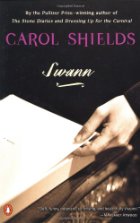
4. Swann: A Mystery / Carol Shields

Swann is simultaneously a sharp satire and an engaging drama about the minor industry of publishers, tourism, and academics which springs up around the poems of an untalented murdered farmer’s wife.

3. The Stranger’s Child / Alan Hollinghurst

I read this novel twice because I’m discussing it in my dissertation, and it holds up well. The changing reactions to a minor war poet’s work over the century after World War One are used to create a novel of the changing fabric of British society and its attitude toward remembering and toward homosexuality. It’s a big novel and yet also an intimate one.

2. Runaway / Alice Munro

These stories were perfect, and moved me deeply, yet months on I can’t remember them clearly, which is why I can’t give the collection the top spot.

1. The Poisonwood Bible / Barbara Kingsolver

I haven’t even finished this book yet; I’m listening to it on tape and I’m not in the car alone enough over the holidays. But I have nearly finished it and I declare it to be brilliant: the story of the daughters and wife of a missionary in Congo in the late 1950s and the long shadow that time casts over the lives of these women. Kingsolver’s achievement is immense, narrating the novel with five distinct, compelling voices, creating characters I feel I know and love.

Reading Bleak House

Tags

, , ,

All my reading friends will disown me, because I am enamored with ebooks. I love being able to read Dickens in bed – for free – without breaking my wrist. I love being able to flick between it and Eminent Victorians without changing books. I am lazy.

I’m amazed by the sophistication of Dicken’s narrative voice – I was expecting his narrative technique to be so primitive, yet I find a variety of voices and how convincingly he can write through the eyes of a young woman (Esther).

About 120 pages in, it’s interesting how episodic it is as a novel; I know Charles is in control, but he just keeps parading all these zany characters in front of the reader, characters who will have a small role in the overall plot, but not a significant one. He is psychologically profound, although a little overblown, as he skewers the crimes of the charitable of his day.

My new theory on making my life as long as possible

Tags

I have this new theory that the way to make my life as long as possible is to move all the time. I say this because when I think back on my life I seem to divide it into chapters based on where I was living (or what job / church/ friends). This is possibly a consequence of reading too many novels, to the point where my memory is a contents page. If I remember back casually, the current chapter (four years in the same job, five years in the same house) seems to take up only the same amount of time as my mythical nine months in the hills, the primeval six months living on Canning Highway with Mitchell. (The illusion can be dispelled – to an extent – by reclaiming the time, thinking back over everything that occurred in that time.)


Remembering Cecil: Memory in The Stranger’s Child

Tags

, , ,

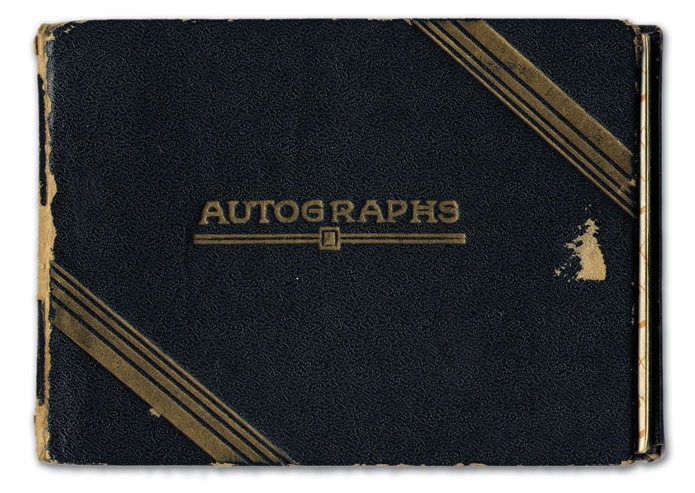
Memory (memories, remembering, memorializing…) is one of the key themes of Alan Hollinghurst’s novel The Stranger’s Child – the presence of the past in the present. It is 1913 in part one, “‘Two Acres’”, and an event occurs which will resonate across the decades in the rest of the book – the young poet Cecil Valance writes a poem, “Two Acres”, in the autograph album of sixteen year old Daphne, a poem which will be quoted by Winston Churchill during World War One and learned by generations of schoolchildren. The idea of an autograph album  is an interesting act of remembering. Daphne and Cecil reflect on it briefly, Cecil remarking on an autograph from a now-dead aviator and Daphne saying in reply:

‘He only sent it to me the week before his propeller broke. I’ve learned that you can’t wait with airmen. They’re not like other autographs. That’s how Olive lost Stefanelli.’ (p. 41)

Cecil remarks that in the light of this story he is anxious and it is ‘rather morbid’ but Daphne assures him that the other autographers are all still alive. His anxiety proves to be well-placed – he will die several years later in the war and the autograph album will be a part of the remembering of him. Equally ‘morbid’ will be the effigy of him built by his mother in the family chapel.

Both Daphne and her brother George had affairs with Cecil; the question of whether Daphne’s was a chaste one or not is never resolved in the novel, but we know George’s was certainly not. Both siblings will reflect in decades to come on the disproportionate attention given to Cecil and the public requirement of remembering him. In part two, set in the 1920s, when faced with the prospect of speaking to Cecil’s first biographer, George reflects:

It was awful that Cecil was dead, he’d been wonderful in many ways, and who knew what he might not have gone on to do for English poetry. Yet the plain truth was that months went past without his thinking of him. Had Cecil lived, he would have married, inherited, sired children incessantly. It would have been strange, in some middle-aged drawing-room, to have stood on the hearthrug with Sir Cecil, in blank disavowal of their sodomitical past. Was it even a past? – it was a few months, it was a moment. (155)

In part four, set in 1980, Daphne says something similar to a friend on the telephone in the midst of interviews with Cecil’s second biographer, ‘Really Cecil means nothing to me – I was potty about him for five minutes sixty years ago.’ (500)

Brushes with celebrity have to be relived over and over, as Daphne’s mother demonstrates back in part one, telling yet again the family anecdote about her encounter with Alfred Lord Tennyson on a ferry while on her honeymoon, with Daphne finishing it off for her; six decades later, Daphne will refer briefly to the same anecdote in the phone conversation previously mentioned. Anecdotes become entrenched and, Daphne reflects in old age,

‘He was asking for memories, too young himself to know that memories were only memories of memories. It was diamond-rare to remember something fresh.’ (496)

Tellingly, Daphne’s own ‘memoir’ is a series of stories about her encounters with famous people.

Memories, Hollinghurst reminds readers throughout the novel, cannot be trusted. In the final section, Paul Bryant disputes Dupont’s description of the colour of Peter Rowe’s Imp, claiming it was beige, not pea-green (541). A trivial difference; but we know that Paul Bryant has remembered wrongly – he notes the ‘pea-green’ Imp forty years earlier (307). If the incident has a function, it may be to call Paul’s memory into question, which is important as it Paul is the one exposing people’s lives as a biographer. Paul’s main source for the tell-all biography of Cecil is Daphne’s brother, George, and his memory is the least reliable of all; he has dementia. Yet dementia makes him extremely candid; unlike the other interviewees, he hides nothing, holds nothing back, telling Paul whatever he remembers. Hollinghurst introduces a further level of unreliability by presenting the interview with George as a diary entry reconstructed from memory by Paul soon after the event; the battery in his tape recorder had gone flat, meaning the interview was not recorded.

There are just some sketches around the theme of memory running through the novel. It is a useful approach; more than any other unity (except perhaps the character of Daphne), the novel has unity around the theme of memory. Indeed, perhaps a more obvious title for the novel would be Remembering Cecil.

Swann: A Mystery Vs the bioquest novel

Tags

Swann: A Mystery / Carol Shields (1987)

I’m writing a dissertation on aspects of the biographical quest, and so everything I’ve been reading has had to relate to that lately. In the biographical quest (bioquest) novel, a genre identified by Jon Thiem, a quester goes in search of the life of someone from the past, doing detective-like work through archives, documents and old haunts to come to grips with the secrets of the subject and in the process, being changed themselves.  The prototypical example is A.S. Byatt’s Possession: A Romance, published three years after Carol Shields’ Swann. Swann is not a typical example of the genre, but it stands in interesting overlap with it.

I’ve read three of Shields’ novels now, and in all three I have found her tone ambiguous – elusive, maddening and clever. She writes with a satirical edge, and yet it is not only satire, she follows enough realist conventions and has enough depth of representation to ensure that. Swann makes contemporary literary critics out to be ridiculous – but it doesn’t only do that. The first ever symposium devoted to the poet Mary Swann is being held, and we see events leading up to it through the eyes of each of the main players, before the symposium itself is presented as a movie script in the final part (a choice which did not make sense to me). The critics are busy reading all sorts of things into her work, detecting influences and praising her brilliance; a biographer is writing the story of her life. Yet the part-time librarian of the rural area where Swann lived and died knows better about the truth of her life – she was a poor, uneducated farmer’s wife who invested no deeper meanings in her work; when she wrote of the desire for a well, she wanted a well, not baptism, for example. She was murdered by her husband hours after delivering her manuscript to a journalist who ran a small press publishing rural poets in his spare time. The publisher’s wife accidentally used the original manuscript to wrap fishbones; many of the lines were scrambled and the two reconstructed the work the best they could, inevitably ‘improving’ it along the way.

In the bioquest, the secrets of the past are (imperfectly) revealed – there is optimism about the recoverability of facts and of the value of scholarship and the work of the biographer. The absence of this is what places Swann outside the genre, in my opinion. It is inevitably a continuum – gaps and silences are a feature of the genre; Swann is mainly about the gaps and silences.

I found it an engaging read, in that maddening way I mentioned. Shields has a lot of insight into people, even when she’s skewering them.

‘Her small repertoire of interjections’

Tags

,

‘Goodness!’ said Louisa – which alternated with ‘Horror!’ in her small repertoire of interjections, and was more or less interchangeable with it.
– Alan Hollinghurst, The Stranger’s Child (Picador, 2011) p. 129.

Do you ever start noticing people’s interjections? If you really start to listen to them, you might start getting annoyed at people. As a child I used to feel angry at the untruthfulness of them. They can rarely be taken literally, and as a child I felt words should be used precisely; I guess I still do. Hollinghurst captures this quirk of social interactions so well in this quote.

I get annoyed at myself when I find myself using interjections I don’t particularly like. My small repertoire is more chameleon like; I hear myself adapting to the people I’m with. It’s passed down the paternal line, this sympathetic adaption; once I was hiking with my dad and a surfer offered us a lift; Dad said, ‘That’d be cool mate.’

On finding a book from my childhood

Tags

, ,

The fiction shelves of Allanson Primary’s library took up one wall of the year 6/7 classroom. I don’t remember new books being added, but there must have been some. There were certainly never any books weeded in my years at school; if a book was in the library, you could count on it staying there.

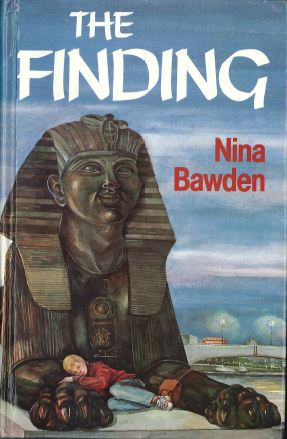
I was obsessed with Ancient Egypt from Year 1 to Year 3, and toward the end of this, a kind girl who liked me (I, too embarrassed, shrunk away) came up to me during library time with a book I hadn’t noticed before. It had a boy lying between the legs of the Sphinx. My momentary excitement was dulled when I realised it was a novel with nothing to do with Egypt; it was set in London, and the boy was found between the legs of the replica Sphinx. I cannot remember if I even took it out, let alone whether I read it – and yet I vividly remember the girl showing me the book .

For me, it’s the books which I half remember, the ones I can’t go back to because I can’t remember the title or even the author, which have a hold on me, ghosts on the edge of memory. The few favourite childhood books which survived household purges and I still own are precious, but do not haunt.

But this time I found a ghost, found it in an opshop on Saturday, for 50c, the same edition as the one from my childhood (there are six cover variations floating around the web, none of them this one). Its title returned to me when I saw it: The Finding by Nina Bawden. It was a withdrawn library book, from another public primary school, with a borrowing card stamped with dates around the time I borrowed it.

I remember liking the cover, but now the Sphinx looks like he’s alive and it just looks so… earnest.

The first few chapters have an eerie familiarity as I read them last night, so I probably did read it. It starts woefully, with one of those terrible sentences our teachers tried to make us write in creative writing in primary school:

On the day of his Finding, the mist lay on the river; a soft, white vapour drifting on the brown Thames, lazily stirred by the slow tide of the water into smoky tendrils and curls.

But it gets much better after this, with the strange appearance of a Pentecostal tent meeting catching me offguard.

I never knew anything about Nina Bawden as a child; she occupied a good section of shelf in the library, and in that sense seemed familar but we didn’t know if these authors on the shelves were alive or dead. Born in 1925, Bawden is still alive even today, but her husband died in a train crash early this century.

How To Live 200 Years

Tags

Hence, to sum up: The most rational modes of keeping physical decay or deterioration at bay, and thus retarding the approach of old age, are avoiding all foods rich in the earth salts, using much fruit, especially juicy, uncooked apples, and by taking daily two or three tumblerfuls of distilled water with about ten or fifteen drops of diluted phosphoric acid in each glassful.

– William Kinner, North American Review 1893

The Ghost Writer / John Harwood

Tags

The Ghost Writer (2004) begins in regional South Australia in the 1970s, as the narrator Gerard grows up lonely in an isolated town with a protective mother, Phyllis. Phyllis is protecting secrets, and the day Gerard snoops through her locked drawer to find an old magazine and a photograph is the last time his mother even speaks of her English childhood in a country house called Staplefield. Around the same time, Gerard receives a letter from a penfriend club and begins a passionate exchange of letters with an orphaned, paralysed English girl named Alice Jessup.

Gerard takes another chance and finds the old magazine still in the drawer; inside the magazine is a ghost story by his great-grandmother, Viola, reproduced in full in the novel. Gerard keeps pouring his heart out to Alice, his ‘invisible lover’; he saves up to visit her in England as a surprise, only to hear nothing from her when he gets there. She was sick in hospital, she tells him later, and we jump forward years, to find Gerard in his thirties, still living unhappily with his mother, and still hanging on the hope that an operation will allow Alice to walk, the condition she has placed on them being able to meet in person.

After his mother dies, Gerard makes another trip to England, this time advertising for anyone who knew of his mother or great-grandmother while he waits for Alice to be ready to see him. An elderly lady writes to him and he begins to uncover the family secrets which might explain his mother’s unhappiness. At the same time, he uncovers more of Viola’s secrets, which eerily presage events in the life of Phyllis and the sister Gerard didn’t even know she had.  The prophetic stories, the family secrets and the mysterious Alice finally all come together.

The Ghost Writer is suitably haunting, carrying in it the sadnesses and disappointments which span across generations, paralleled in and engulfed by the strange world of Viola’s stories. Gerard is a likeable if self-occupied loner and his voice is clear yet affecting. This novel moved me and mystified me.