Australian Short Story Festival

Later this month, I’m appearing on two panels at the inaugural Australian Short Story Festival, which runs from 21-23 October in Perth. Sue at Whispering Gums wrote about the festival last month. I’m appearing on “Voices from the West” at 11am on 22 October, with Bindy Pritchard and Donna Mazza, chaired by Charlotte Guest. Then at 3:30pm I’m on “The Importance of Structure” with Michelle Cahill and Vahri McKenzie, chaired by Susan Midalia. To celebrate the festival, and prepare for the panels, I’ll be blogging about short stories for the next three weeks – both here as I reflect on stories I have read and written and on my biography blog to contemplate the stories of Katharine Susannah Prichard.

Visible and invisible biographers: a quick response to David Marr

Tags

,

Sue at Whispering Gums has given a great overview of David Marr’s Seymour lecture, “Here I stand”. He focused on the biographer’s craft, and he said so many things of great relevance to me, but I’ll just engage this comment:

Marr spent four years (I think) on the project, meeting with [Patrick] White, visiting places he’d been, meeting people he knew, and so on, but he is not in the book. Editors today, he said, would “tell me to get in there”, to write of his adventures in research. He described this style as “quest biographies”, and he doesn’t (generally) like them. They “inflict their homework on readers”

I love biographical quests; they’re how I came to biography. For my Master’s thesis , I wrote a biographical quest novel (“The Remains”) and a dissertation on aspects of the genre, including the influence of its non-fiction counterparts. From AJA Symons Quest for Corvo to Laura Sewell Matter’s “Pursuing the Great Bad Novelist” and Rebecca Skloot’s The Immortal Life of Henrietta Lacks – and not forgetting Martin Edmonds Dark Night: Walking with McCahon, which I’ve just started – I’ve encountered some superb non-fiction biographical quests.  Continue reading

Troppo by Madelaine Dickie

Tags

, , ,

troppo

Troppo Madelaine Dickie (Fremantle Press, 2016)

I had the pleasure of meeting Madeline Dickie at the TAG Hungerford Award ceremony in March last year. It turns out she’s a good friend of a school friend of mine. She was announced as the winner that night and I’ve been looking forward to her novel coming out since.

Troppo’s first person narrator is Penny, an Australian in her early twenties who’s returned to Indonesia escaping the boredom of her career-focused older boyfriend, Josh, and the sterility of life in Perth. She lives for surfing, adventure, and the excitement of new people. “Risk,” Penny writes, “always make things sharper, throws into contrast the highs and lows, gives clarity. As a surfer, I know this, I’ve lived this. Living in Perth, like a sleepwalker, I’ve missed this.” Penny is drawn to a new man and is torn between her attraction to him and her loyalty to Josh. At the same time, she’s about to begin a new job at a resort run by Shane, an expat with a reputation as a psycho whose business is the focal point of growing tension between the “bules” and the locals. Continue reading

Two years in: an update on my Katharine Susannah Prichard biography

The two-year anniversary of the official start of my PhD passed by on 21 August. I had 20,000 words of the biography of Katharine Susannah Prichard written a year ago; I now have 40,000, which is a neat piece of symmetry. I’m imagining it’s going to be 80,000 words, but only if I can start reining myself in – I feared there wouldn’t be enough to say, but there’s always too much. I recently deleted a paragraph about the feud – which spilled into the local paper – between Katharine’s favourite teacher at Armadale State School and the bad-tempered headmaster. It represented several hours of research (some of it precious time in an interstate archive), but it really had to go. Other details are harder to let go of.  Continue reading

Shibboleth: a new short story collection

Tags

, , ,

shibboleth.jpg

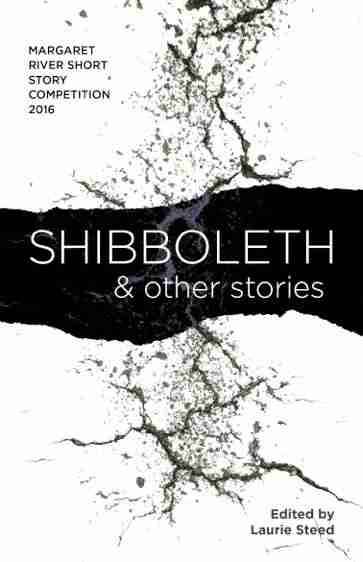
I had the honour of launching Shibboleth and Other Stories, edited by my friend Laurie Steed, in Perth last night. Here’s my launch speech.

Shibboleth Launch

Thursday 18 August 2016, Centre for Stories, Northbridge

Laurie Steed, the editor of Shibboleth and other stories, is one of the great ambassadors for the short story in Australia today. Another great ambassador is Ryan O’Neill, who tweets about short stories as if short story writers are a persecuted minority. Which is sometimes true. Here are some of his tweets:

  • “Not all awesome people write short stories, but all short story writers are awesome.”
  • “Endings are tough to pull off in short stories. Too neat and they seem artificial, too open and they are unsatisfying.”
  • “Before becoming a writer I analyzed the market to see what made the most money. Sadly, I’m awful at maths, so I became a short story writer.”

It’s a real achievement for Margaret River Press to bring out this fifth anthology from its competition. It shows commitment and patience, and has resulted in growing significance. This sort of stability in the literary scene is precious. There are many things writers need, but near the top of the list is opportunities to publish good work and reach an audience, hopefully beyond other writers. Congratulations to Caroline and John Wood and the rest of the team. Continue reading

Boundary-rider?: the early Katharine Susannah Prichard on the edge of fiction and autobiography

Tags

P1090511

I gave two papers on Katharine Susannah Prichard in July. The first was on 9 July at the Association for the Study of Australian Literature conference in Canberra and was called “History of a troubled autobiography: Katharine Susannah Prichard’s Child of the Hurricane”. I’m hoping to develop it further into a chapter of the critical section of my thesis and also as a standalone publication. It was a little scary presenting my paper to an audience of Australian literature academics, but they were generous in their responses and I think it went well. I have been encouraged toward some further reading in mid-century Marxist responses to auto/biography and Freudian thought.

My second paper was at the Limina postgraduate humanities conference at UWA on 29 July. The conference theme was “beyond boundaries,” and so I wrote a paper on the boundaries between fiction and autobiography in Katharine’s 1906 serial, “A City Girl in Central Australia.” I’d been looking at this serial for chapter six of my biography (“Outback: Tarella Station, 1905”), and it fitted neatly with some of the thinking I’d been doing for the paper on Child of the Hurricane. It’s pitched toward a general audience and I’m not reworking it for scholarly publication, so I present it here on my blog. Continue reading

My Review of Suzanne Falkiner’s ‘Mick: A Life of Randolph Stow’ | Westerly Magazine

Tags

, ,

Mick-cover-241x350-241x313

Mick fits very much at the ‘documentary biography’ end of the spectrum. It is a restrained, detailed biography, avoiding not just speculation but also, largely, interpretation, instead collating and arranging sources into a chronological account.

Source: A Review of Suzanne Falkiner’s ‘Mick: A Life of Randolph Stow’ | Westerly Magazine

If I start to feel I’ve not done enough this year at the halfway point, I can at least remind myself that I have read and reviewed Suzanne Falkiner’s 900 page biography of Randolph Stow – and now you can click the link above to see my review on the Westerly website! The actually amazing feat is that Falkiner wrote it in four years. (At least that’s what I wrote down from her speech at the beginning of the year.)

Probably every Western Australian whose ancestors arrived in the nineteenth century can claim a connection to Stow. I discovered a new one from reading the biography which did not make it into the review: he and I are from the same clan. My paternal grandmother was a  Sewell, and so was his mother, both descended from the two Sewell brothers who came out from England in the 1830s. I think Stow and my grandmother were fourth cousins. She wouldn’t have liked his books; she may well have been aware of the connection, as she knew more family history than she told.

On the other side of my family, as I’ve mentioned before, his grandmother boarded with my maternal grandmother’s family in Subiaco around the time of World War Two. I asked my (still living) Granny what she remembered of Stow’s grandmother, and she said that Mrs Stow would keep feeding the chickens rhubarb leaves, which really upset my Granny’s mother. (Oh, that’s getting confusing.) I’m afraid that’s the closest to a literary anecdote I can offer.

My colleague Heather Delfs responded to my tweet about my review of this 900 page book with “I hope the gist is ‘just no’. 900 pages seems excessive.” I’m torn on this issue. Stow is interesting and important enough to warrant 900 pages of the right kind, though 900 page biographies are enough to put me off, too. My KSP biography will run to 900 pages if I get to the end of her life. Crucially, I want to see it published in three volumes of about 300 pages, each with their own narrative trajectory. It’s the way I would prefer to read long biographies.

An Unsentimental Bloke: The Life and Work of C.J. Dennis by Philip Butterss

Tags

, ,

IMG_0499

One of the few books – or objects of any sort – to come down to me from my great-grandparents is this battered copy of C.J. Dennis’s Songs of the Sentimental Bloke. Why did it survive when nothing else did? It’s not a signed copy, it’s not even a first printing, but an eighteenth impression from 1918. Like many Australians, my great-grandparents  would have loved this book during the war and perhaps that’s why it survived. As a kid, I remember my bewilderment at the cupid drawings and the impenetrable slang it is written in.

I dug it out from my bookshelf for the first time in many years because I’ve been reading Philip Butterss’s An Unsentimental Bloke: The Life and Work of C.J. Dennis. Published in 2014, it won the 2015 National Biography Award. I’ve just returned from Canberra where I had the chance to hear Butterss speak at a National Centre for Biography seminar.

Butterss’s biography covers the whole of Dennis’s life with a careful briskness and an admirable clarity. It’s a different kind of biography to what I’m attempting, perhaps more concerned with setting his work in the context of life and conveying information than weaving a narrative and creating scenes. That’s partly a consequence of its conciseness and scope; the author also mentioned to me the limited number of personal papers to draw on. The discussion of Dennis’s literary works are well integrated and gave me a good sense of his poetry. Butterss argues convincingly for Dennis’s significance to Australian literature while also demonstrating the limitations of Dennis’s work.

C.J. Dennis (1876-1938) was contemporaneous with Katharine Susannah Prichard, who was seven years younger. I was struck by some parallels and points of comparison.

  • Both had their first big success in 1915 during World War One, Dennis with the publication of Sentimental Bloke and Katharine with The Pioneers. Both books were popular works a long way removed from the war. Both writers had tribute dinners organised for them at Cafe Francais in Melbourne to celebrate their success a few months apart. It would be fair to say Dennis never developed far beyond what he achieved with that book, returning to the same characters and milieu in subsequent works with diminishing returns. Although Katharine’s breakthrough book sold well, it wasn’t nearly as successful as Sentimental Bloke, and it left her more incentive to develop as a writer.
  • While World War One radicalised Katharine, moving her to embrace communism, it shifted Dennis the other way. He’d been a radical and worked for Labor politicians, but he became quite conservative in his later years. In Butterss’ account, it was wealth and success more than the war which affected him. If The Pioneers had made Katharine a fortune, would it have affected her politics?
  • Both wrote in the Dandenongs east of Melbourne during the war. Dennis worked on Sentimental Bloke in Kallista in the early part of the war, while in 1918 Katharine wrote Black Opal 10km south of there in Emerald. This is why they appear together on this writers’ monument in Emerald. 20160115_125644
  • Both were journalists with strong ties to the Herald and Weekly Times – but while Katharine worked for the paper before the war, Dennis worked for it after the war.

I don’t yet know if they ever met, but they probably did. They at least had a number of associates in common, including Louis Esson, Furnley Maurice, and E.J. Brady.

I found particularly interesting the chapters in the biography on Dennis’s posthumous reception – his ‘afterlives’. I hadn’t realised that he is actually marginal in the Australian canon, his popular poetry not generally embraced by critics. His popularity has had its ups and downs over the decades, but more downs in recent years, light verse just not resonating with the reading public. However, the biography itself, the first full-length critical study, has ensured he is now better remembered a century on from his great success.


Link: Katharine Susannah votes!

Just in time for the election, my column over on KSP Writers’ Centre website:

Those who find themselves sick of politics during this election campaign would have been wise to not admit it if they were visiting Katharine Susannah Prichard. Katharine’s old journalist friend, Freda Sternberg, was visiting in 1944 and said, “I’m not interested in politics.” Katharine snapped back, “No sane person is entitled to say that.” (KSP to Ric Throssell, 18 Sept. 1944)

Source: Katharine Susannah Prichard Writers’ Centre – home | Single Post