Katharine Susannah Prichard turned 142 yesterday. It’s her annual birthday celebration at the Katharine Susannah Prichard Writers’ Centre tomorrow, 6 December 2025, from 3pm to 6pm. I’ll be conducting a tour at about 4:45pm. Free tickets here.
If you’re looking for a Christmas present for someone into Australian literature or history, my biography of KSP, The Red Witch, is available at a ridiculously low price online from Readings at the moment. Get your copy here.
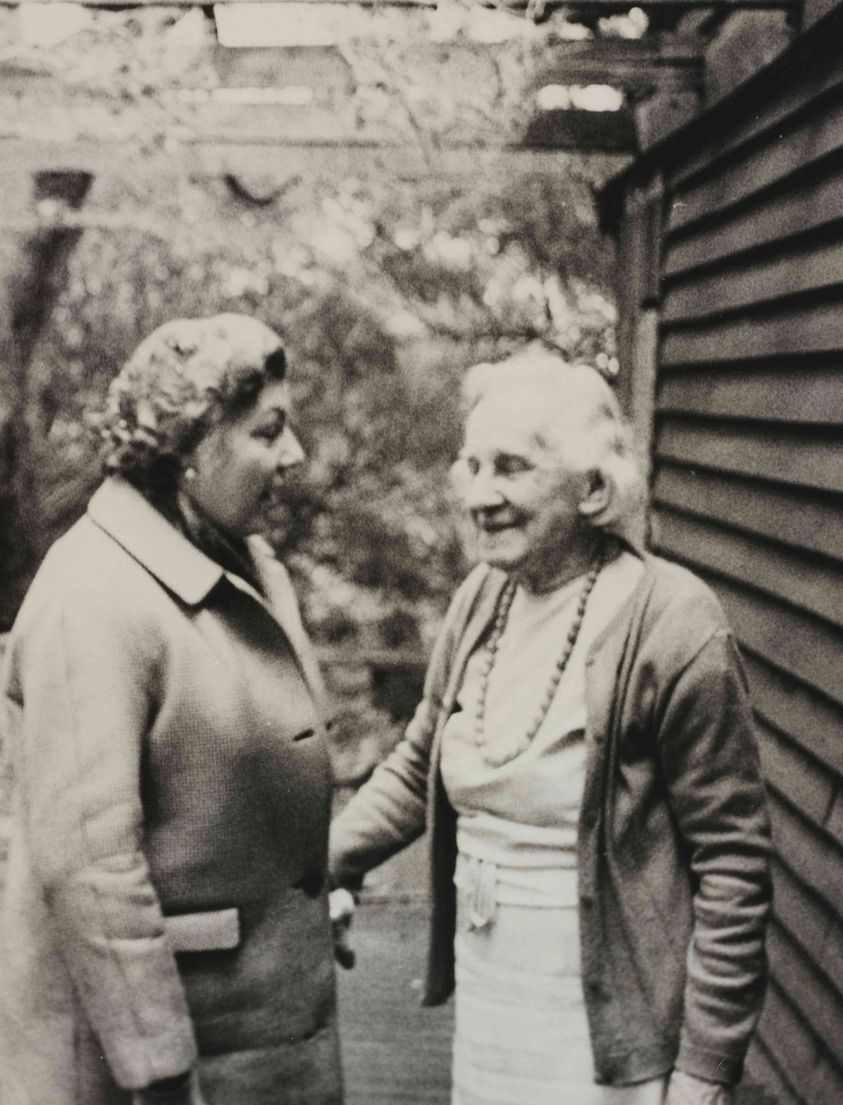
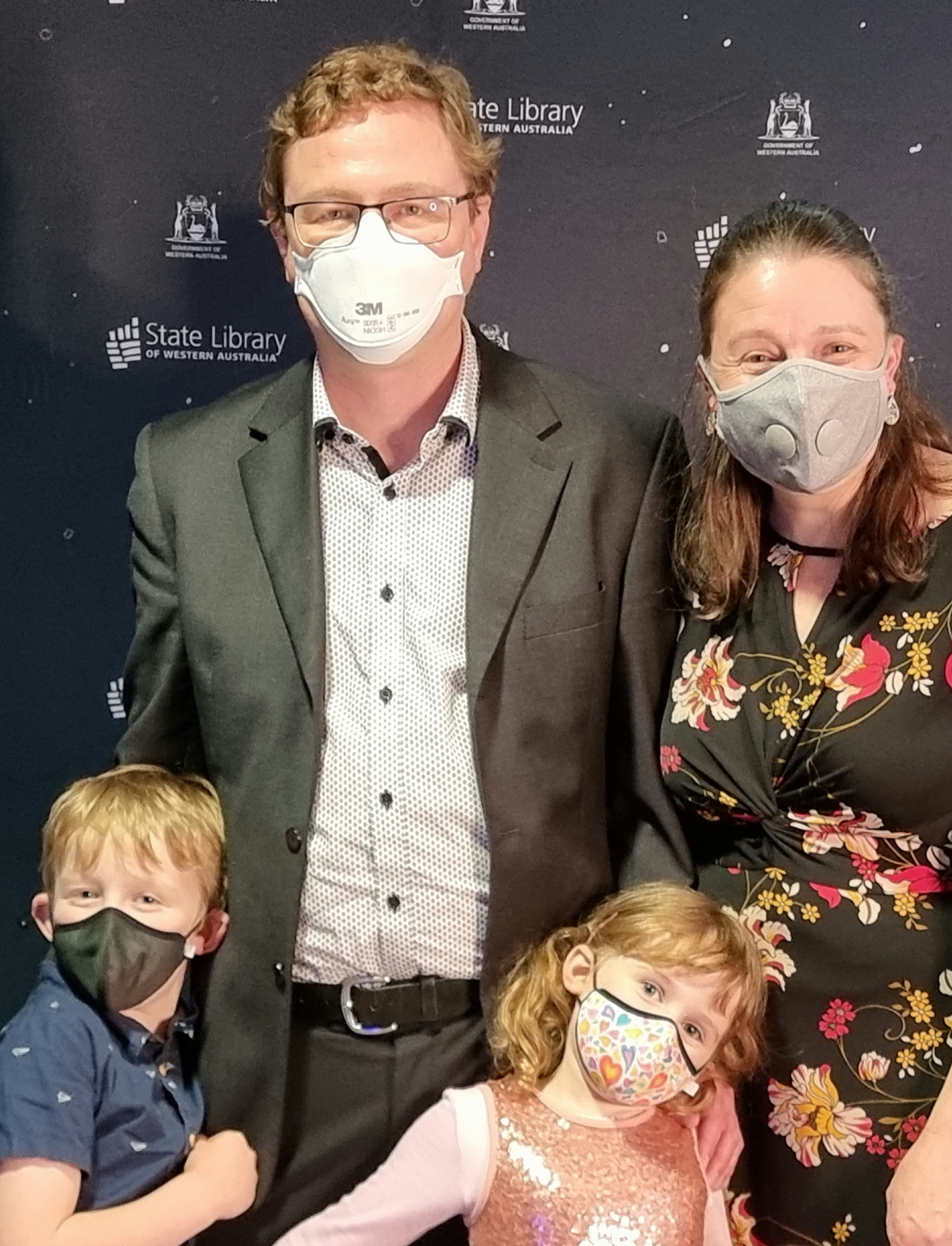
Photograph taken by John Gilchrist. Courtesy of SLWA.
My interview with Dr Gabriella Kelly-Davies about The Red Witch and the art of biography has just been released on the Biographers in Conversation podcast here. This podcast series is now in its third season and features Australian and international biographers. I am grateful to Gabriella for her commitment to biographers and her talents in drawing out insights about biographical choices, which extends the work she did in her PhD thesis and her own biography, Breaking Through the Pain Barrier: the extraordinary life of Dr Michael J. Cousins. If you’re interested in biography, I encourage you to subscribe to Biographers in Conversation.
I did a public speaking seminar last year at work, and I didn’t think it had made much difference – but listening to my interview, I eliminated my ‘ums’, which was a big focus of the seminar. Success!
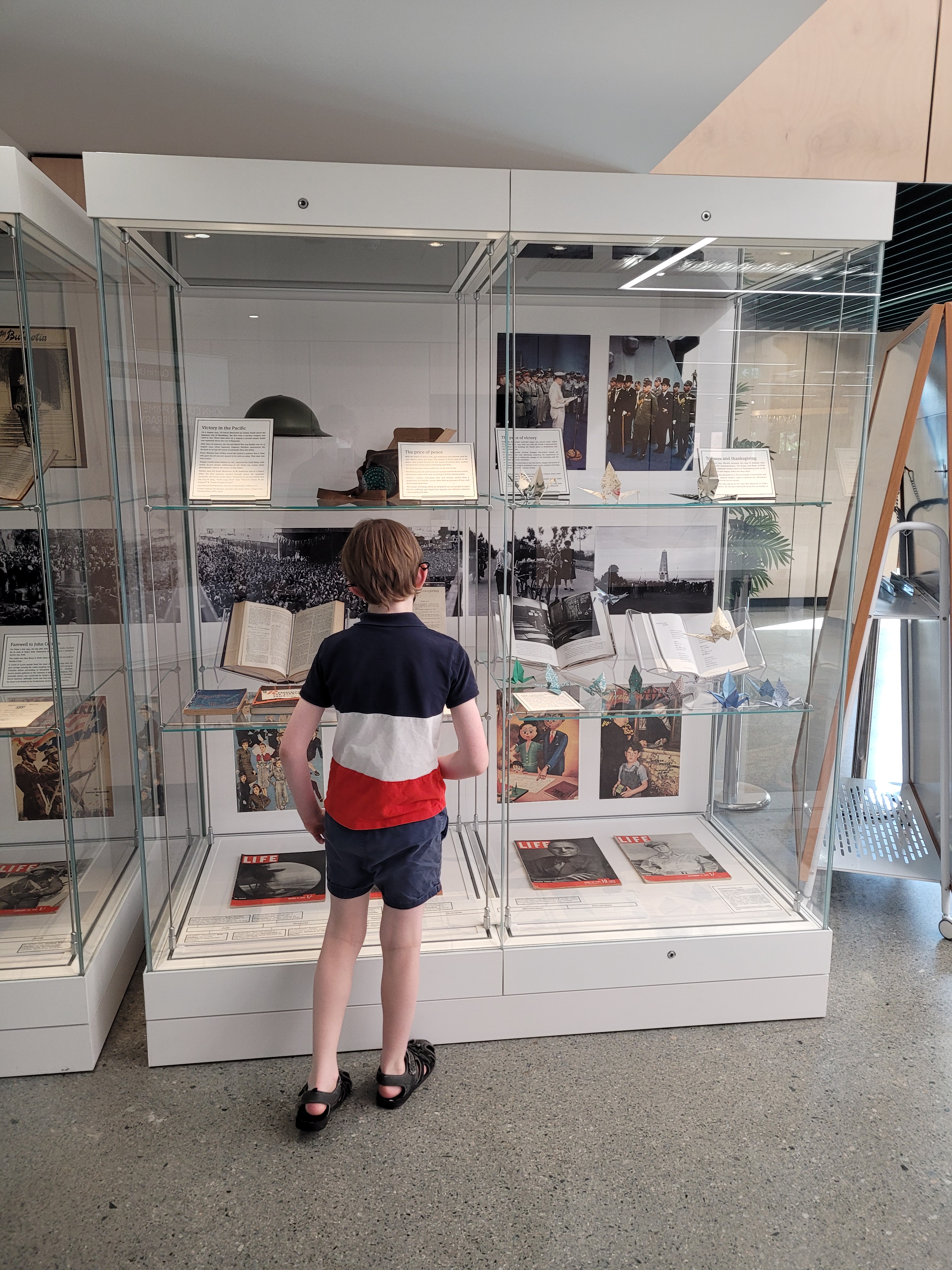
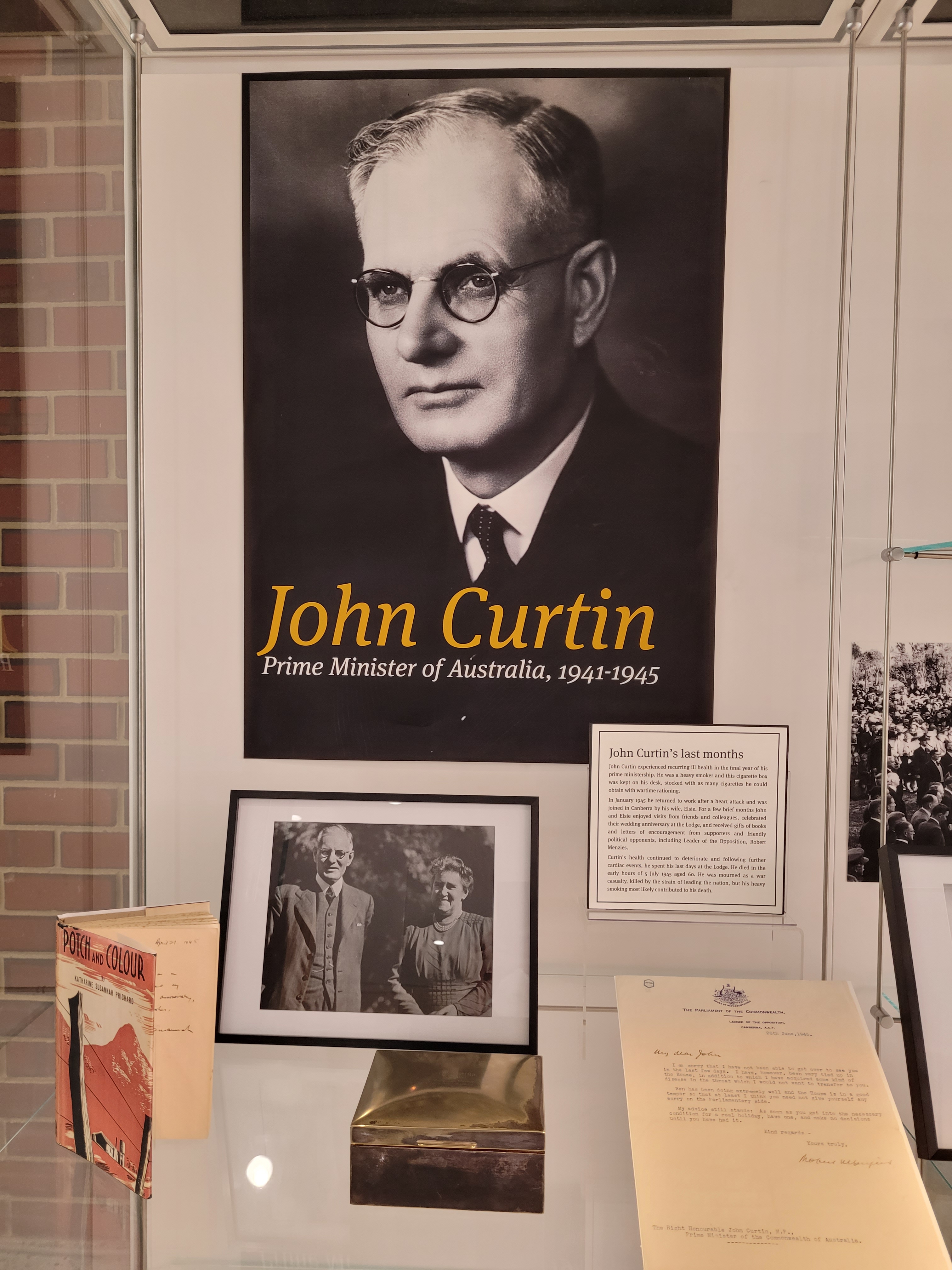
For many weeks, my son asked me each day what I was doing at work, and each day the answer was the same: the exhibition! His anticipation built and I was relieved when I could finally tell him it was installed. (How long can it possibly take to do one exhibition?) Last weekend, I took him and the rest of the family to Curtin University to see it. Curated by the special collections co-ordinator, Sally Laming, and I, ‘1945: The Price of Peace’ commemorates the death of John Curtin and the end of the Second World War. The title is taken from the words of John Curtin in parliament a few months before his death: ‘There is a price the world must pay for peace … I shall not attempt to specify the price, but it does mean less nationalism, less selfishness, less race ambition.’
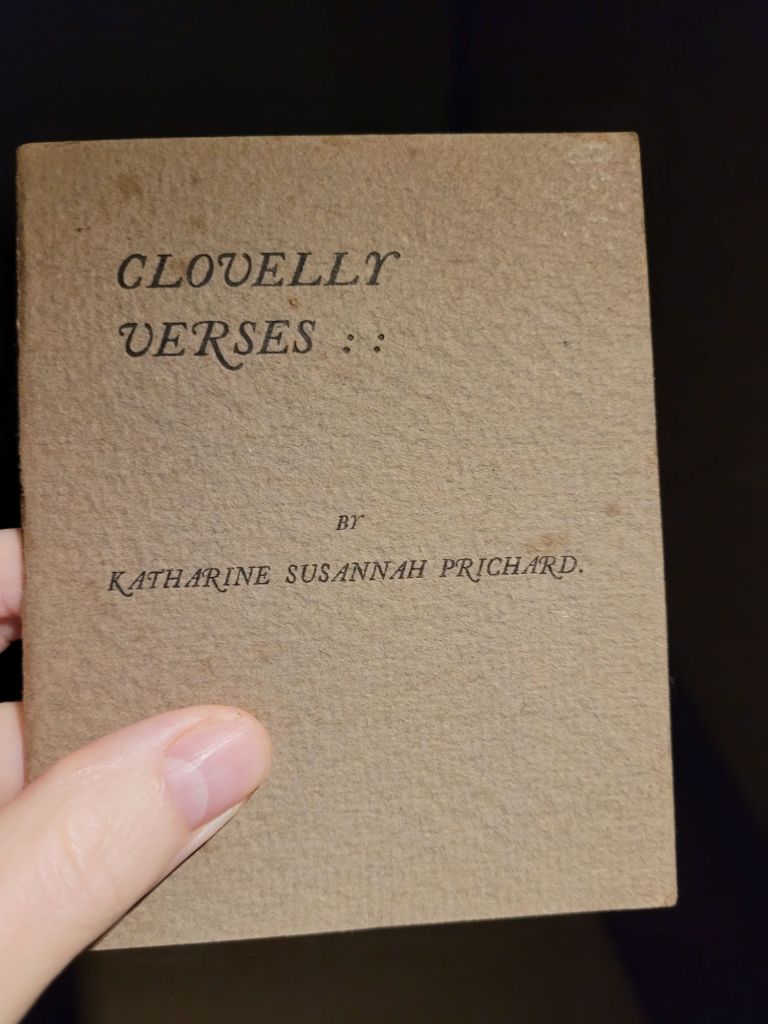
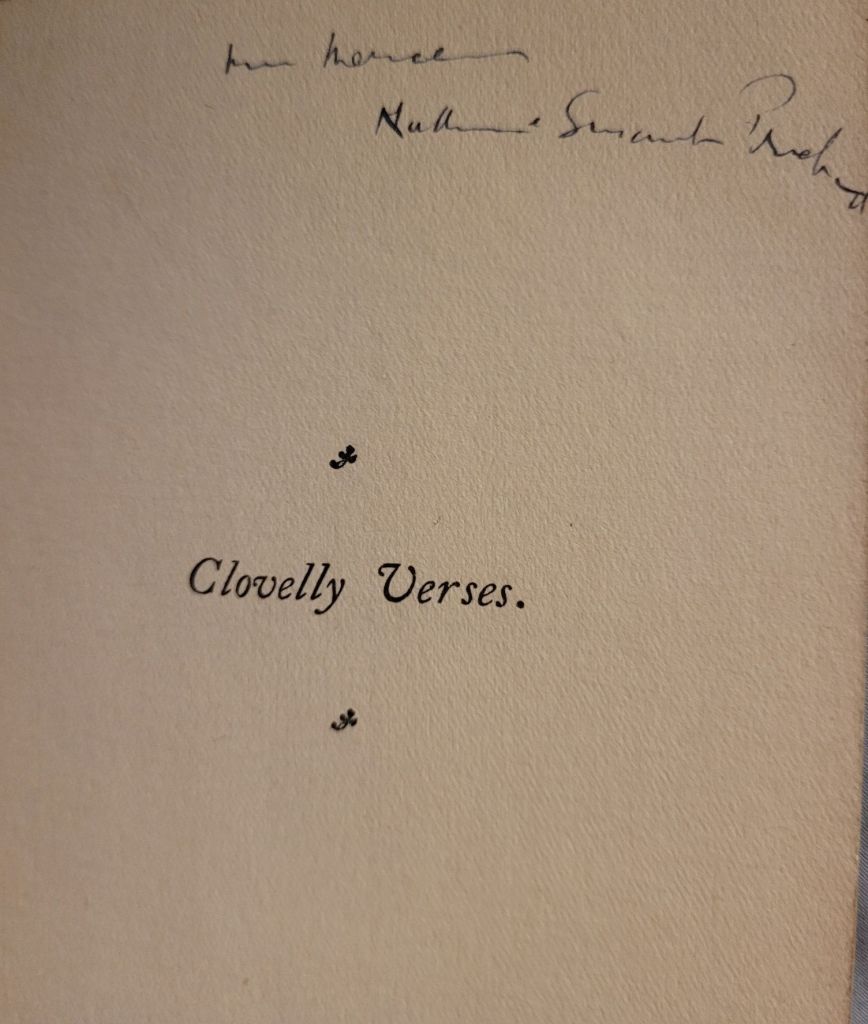
I’m only missing a few Katharine Susannah Prichard books from my collection and so these days filling in a gap is rare – and often expensive. I wasn’t expecting to come across a copy of Clovelly Verses, especially not at a price I could stretch to. But there it was in my Ebay alerts for $200.
Clovelly Verses was Katharine’s first book, a tiny pamphlet of conventional nature poems privately printed in 1913 while she was living in London. ‘Let me not forget / Each tiny floweret / Which in the hedgerow grows’. It was an undistinguished debut, if it could be considered that, but it pleased the dedicatee: her mother.
Katharine would hand copies out to friends and people she met. She gave one to the playboy socialist, Guido Baracchi, when she met him on the boat from Columbo to Australia in the last days of 1915. He thought it was brilliant and nearly 60 years later, after Katharine’s death, he told her son he would pay anything for a copy; his had been borrowed and not returned.
I’m not sure of this inscription in my copy – I think it will remain a mystery. Katharine has also made a couple of hand corrections to poems.
I’ve seen the book twice before. The first time, at the National Library, an uncatalogued copy was slipped in a file of other items. A secret copy to greet future researchers. The second was in a private library of the son of a friend of the family. It had a lengthy dedication and a letter from Katharine’s son slipped inside it.
A consequence of my acquisition: I’m now checking Ebay far too often, greeted by alerts from a seller eagerly relisting a 1980s KSP paperback each week.
I talked about John Curtin’s briefcase for a short video on Curtin University Library’s Instagram account. It’s one of the treasures held in the John Curtin Prime Ministerial Library. You can view it here.
There’s also a video from my talk about Katharine Susannah Prichard to Glen Eira Libraries, organised by Glen Eira Historical Society. It includes a reading of a ‘deleted scene’ about her childhood in Caulfield from my biography.
I’m talking about the lives of Katharine Susannah Prichard and her son, Ric Throssell, at 1pm, Saturday 4 May at the Katharine Susannah Prichard Writers Centre in Greenmount. Here’s a photo of my props! It’s a double act, with Professor Bobbie Oliver speaking about The Crime of Not Knowing Your Crime, Karen Throssell’s memoir of Ric’s battle against ASIO. It’s a rare chance to hear the story of Katharine and Ric in the house where they once lived. Karen’s book and my book, The Red Witch: A Biography of Katharine Susannah Prichard, will be on sale and afternoon tea is provided. You can book free tickets here.
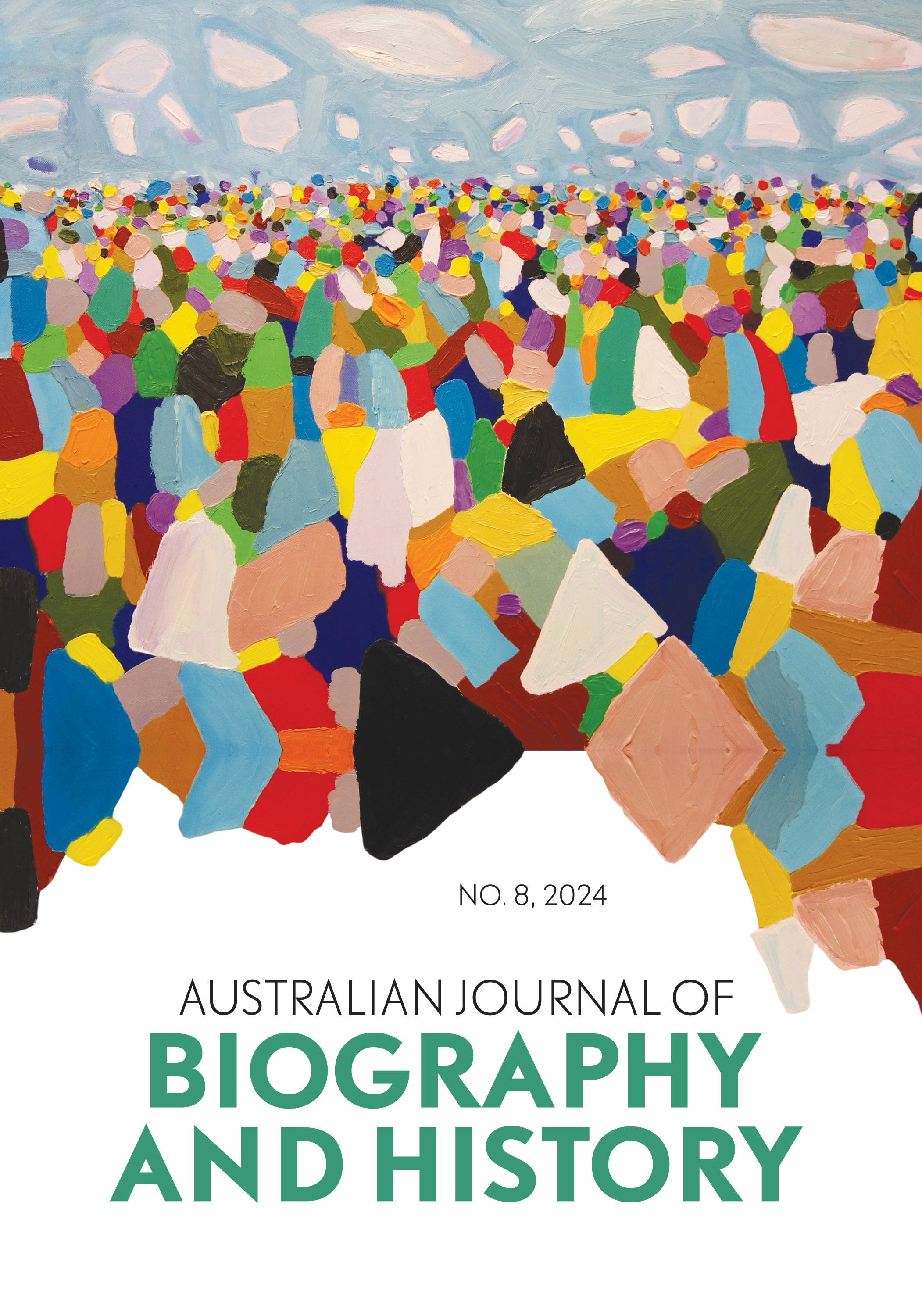
I’m glad reviews don’t come out all at once. The new issue of the Australian Journal of Biography and History has the most generous and engaged review by Dr Christina Spittel of my book, The Red Witch. Dr Spittel saw in my book so many things I was hoping readers would see. And her review shows such attention to the biographical process, its methods and ethics – a rare and wonderful thing! I’m so happy and grateful. You can read the review here. This new issue of AJBH is so full of interesting articles on biography and reviews of recent releases – the full open-access contents is here.
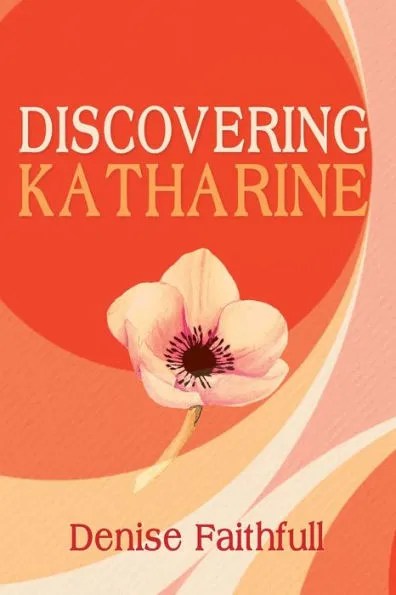
It was wonderful to launch Dr Denise Faithfull’s novel, Discovering Katharine, on 3 December at KSP Writers’ Centre Katharine’s Birthday celebration. Here’s my speech from the event.
In 2019, the 50th anniversary of Katharine Susannah Prichard’s death, I judged the fiction and non-fiction sections of a KSP Writers Centre competition in which entrants had to write something related to Katharine. One of the non-fiction entries I loved was an essay called ‘On Literary Pilgrimages’, by a person who had been visiting all the places associated with James Joyce and Katharine Susannah Prichard. Her pilgrimage had taken her to Emerald in Victoria, Launceston, Moscow, the Pilbara, Kalgoorlie, and Broome, as well as Greenmount, of course. I was amazed – here was a person who knew Prichard’s life and work intimately. I judged it anonymously and was very curious about who this writer was. When I turned in the results and found out who was behind it, I got a lovely surprise when I knew the name – Denise Faithfull.
In 2019 I was asked to write an essay for a literary journal for the fiftieth anniversary of Katharine Prichard’s death about her legacy in the light of criticisms of Coonardoo. The anonymous peer review was so discouraging and, to my mind, wrong-headed that I couldn’t revise it in an appropriate way. I’ve been meaning to publish it on my blog ever since, and now I finally am! Since 2019 some things have changed – notably, Working Bullocks and Intimate Strangers are back in print, thanks to the wonderful Untapped project. But the need to read Coonardoo in an informed way and to look beyond it to other works KSP wrote remains.
Writers don’t choose which books come to define them. ‘Coonardoo seems to be the most popular of my books’, Katharine Susannah Prichard said in a 1960 interview, but ‘others… I consider of more importance’. (de Berg) Coonardoo: The Well in the Shadow (1929) is a novel about the repressed love between Hugh, a Pilbara cattle-station owner, and Coonardoo, the Aboriginal woman who has grown up with him. Fifty years after Prichard’s death, and ninety years after Coonardoo’s publication, the problems with her best-known novel are increasingly apparent. ‘This is a story’, writes Eualeyai / Kamillaroi academic Larissa Behrendt, ‘about white sorrow, not black empowerment’. (Behrendt 94) Its representation of Aboriginal Australians, while ahead of its time in certain ways, was also very much of its time.
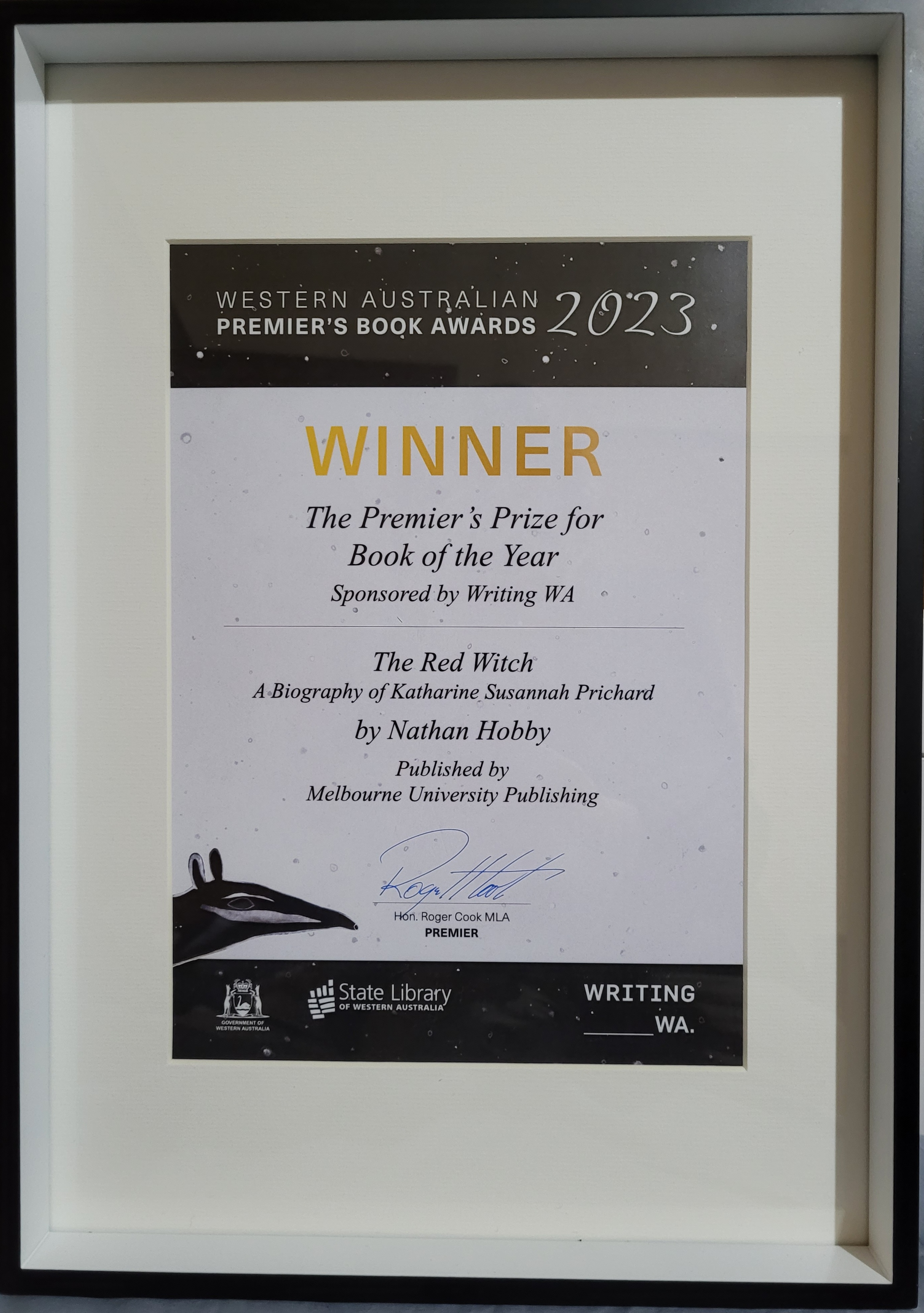
My mum comes from the Winning family, a rather unlikely Scottish surname ripe for puns. I think it might be too much pressure to have as a surname. My beloved grandad, Ian Winning, never won much. But I was winning last night. I am thrilled to have won the WA Premier’s Prize for Book of the Year for The Red Witch: A Biography of Katharine Susannah Prichard.



 Nathan Hobby, a biographer in Perth