• About
  • The Red Witch: A Biography of Katharine Susannah Prichard
  • My novel: The Fur

Nathan Hobby, a biographer in Perth

~ The lives of Katharine Susannah Prichard and John Curtin, the art of biography, and other things

Nathan Hobby, a biographer in Perth

Category Archives: biography

Detective, Historian, Storyteller: biography workshop in March

24 Tue Oct 2017

Posted by Nathan Hobby in biographical method, news and events

≈ 3 Comments

Tags

Peter Cowan Writers Centre

I had some good news today – Peter Cowan Writers’ Centre let me know my biography workshop will be a part of their 2018 program. It’ll be on Saturday 17 March, 1:30pm – 4:30pm. If you know anyone in Perth working on a biography, please let them know. I’ve got the feeling that developing and running this workshop will be a valuable experience for my own practice.

Detective, Historian, Storyteller: The Arts of the Biographer
A biographer needs many hats – detective, unearthing sources that reveal a life more fully; historian, analysing and putting these sources into context; and storyteller, weaving it all into a compelling narrative. This workshop introduces these roles of the biographer and gives practical tips and exercises to help you develop your skills.

Biographer pride

10 Tue Oct 2017

Posted by Nathan Hobby in autobiographical, biography as a literary form

≈ 13 Comments

Tags

shelfie

shelfie.jpg

Today, in an act of biographer pride, I brought together all my biographies from around the house onto one shelf, displacing a random selection that had been occupying this hall shelf unhappily for a couple of years. I had more important things to do, but I don’t regret it at all. I’m going to look at this diverse collection of biographies many times each day as I pass and it’s going to inspire me. My arrangement of books – the double-stacked shelf of fiction in another prominent place – will no longer reinforce the hierarchy the literary community tries to impose. Continue reading →

Link: Bill’s interview with a biographer

06 Fri Oct 2017

Posted by Nathan Hobby in biographers, link, Uncategorized

≈ 3 Comments

Over at “The Australian Legend”, Bill has an interesting interview with biographer Sarah Goldman, author of Caroline Chisholm: An Irresistible Force. I started out my biography in fear someone else would publish one on my subject before me; that actually happened to Goldman, and it was still okay, as she explains in answer to one of Bill’s questions.

Caroline Chisholm: An Irresistible Force by Sarah Goldman is the recently released biography of one of the most interesting and influential women in Australia’s early history. My review copy arrived with a letter suggesting Sarah would be happy to be interviewed, so I sent her some questions to which she has been kind enough to give extensive answers. I didn’t let on, but this is my first interview.

via Author Interview, Sarah Goldman — theaustralianlegend

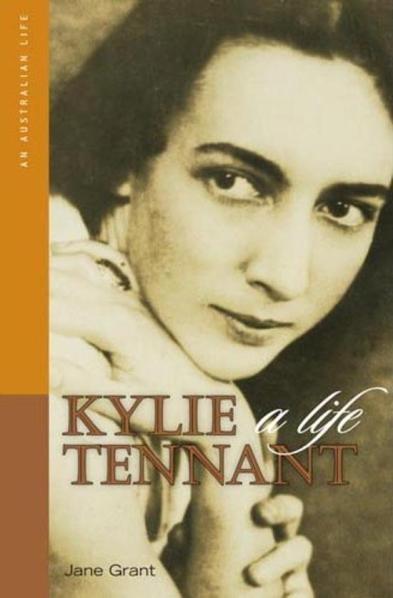
Jane Grant’s Kylie Tennant: A Life and the art of short biography

03 Tue Oct 2017

Posted by Nathan Hobby in biographical method, biographies of writers, artists & musicians, book review

≈ 6 Comments

Tags

Australian literature, Jane Grant, Kylie Tennant

Kylie-Tennant

What a character Kylie Tennant was. Her strength and distinctiveness leap out from the pages of Jane Grant’s biography, right from the opening where she walks 500 miles at age twenty during the Depression to visit her university friend Lewis Rodd. Impulsively, they marry.  Continue reading →

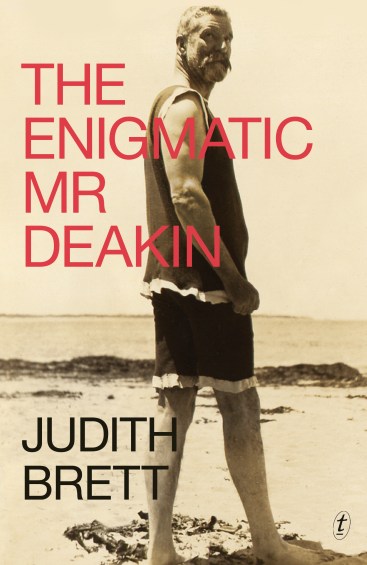
Summoning the spirit of Alfred Deakin: Judith Brett’s The Enigmatic Mr Deakin

21 Mon Aug 2017

Posted by Nathan Hobby in book review, political biography, politics and current affairs

≈ 18 Comments

Tags

Alfred Deakin, Judith Brett

enigmatic-deakin

Like many biographers, I have a list of possible future subjects. One of my ten names has been Australia’s second prime-minister, Alfred Deakin (1856-1919). While researching his interactions with Katharine Susannah Prichard, I found him a fascinating character. I was surprised that the only comprehensive biography appeared fifty years ago. But I’ve removed Deakin from my list because Judith Brett has written a superb account of his life in The Enigmatic Mr Deakin, out this month.

Brett begins her biography with a comparison to a more famous Victorian born two years earlier, Ned Kelly:

Deakin is remembered too, but not so vividly, more as a bearded worthy than a national icon. He was Australia’s most important prime minister in its first ten years after federation, but he sits uneasily as a representative Australian figure. He is too intellectual, too respectable, for the larrikin masculinity of the Australian legend… Deakin was never a mate. He didn’t swear and rarely drank. He didn’t play organised sport nor fight in the Great War…. In short, he was middle-class, well-educated, urbane and supremely self-confident, like the city and the colony in which he grew to manhood. (3)

Australia needs more heroes like this, and Brett lays out a strong case for his significance and his achievements, while always alert to the ambivalence which marks him and his legacy. Continue reading →

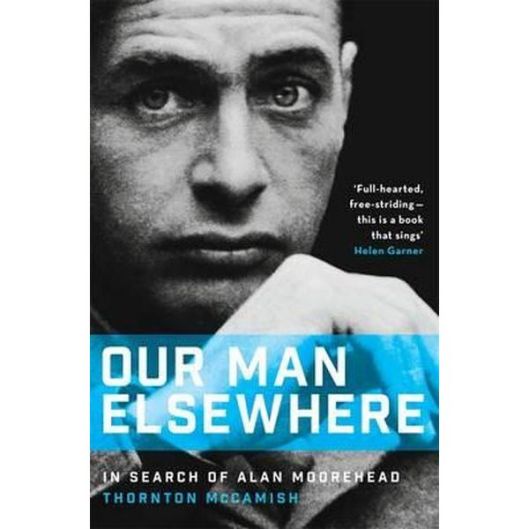
Thornton McCamish’s Our Man Elsewhere

24 Sat Jun 2017

Posted by Nathan Hobby in biographical quests, biography, book review

≈ 5 Comments

Tags

Alan Moorehead, Thornton McCamish


our-man-elsewhere

For the second year, I’m working on an annual bibliography and introduction to Australian literature with my supervisor and another co-author for the Journal of Commonwealth Literature. My focus is on non-fiction. I was surprised to find that in 2016 there were just five Australian literary biographies published, at least by our reckoning. Three of them came from UWA Publishing; the other two were both about mid-century middlebrow writers – Paul Brickhill (The Great Escape) and Alan Moorehead. The reviews for the biography of Moorehead (1910-1983) – Thornton McCamish’s Our Man Elsewhere: In Search of Alan Moorehead (Black Inc) – were so glowing about the writing itself that I just had to read it, despite barely having heard of Moorehead.

It truly is an excellent biography. It is a biographical quest as McCamish begins by describing the fever of obsession with Moorehead that came over him and asks why Australia’s most famous writer in the US and Britain in the 1960s has been so forgotten fifty years later. Some of the finest reflections on biography occur within biographical quests and McCamish’s were delightful. His account of looking through Moorehead’s papers at the National Library of Australia described my own experiences there so perfectly. In another scene, he captures so well the sense of the past, the thrill, the anxiety, and the prosaic elements of trying to find Moorehead’s house while on holiday in Italy with his wife and small children. Some quotes:

There isn’t much logic to the in-the-footsteps method. My idea was that if I followed the thread linking Moorehead’s words to the places where he wrote them, I might, with some intuitive effort, some narrowing of the eyes, get a fuller imaginative sense of what his world felt like. (124)

It was unsettling to meet the nieces. Years of document-sifting and note-taking hadn’t prepared me for the warmth of living memory. (148)

The photo of Moorehead with Churchill posed a question, one that is implicit in any book about a writer, but which I have managed to ignore till now. Was the life more interesting than the work? Or more specifically: had the life aged better than the books had? (202)

My Moorehead was constructed from the printed word, mostly, and my own preoccupations. But the actual man existed most truly in what people could remember of him; in what remained in fragile containers of memory. (206)

The focus, though, is on Moorehead’s life itself more than McCamish’s quest. McCamish describes the World War Two years in the most detail, the time when Moorehead turned his war journalism into a bestselling trilogy that made his name as a writer. He had a full, exciting life in the decades which followed, and yet McCamish captures so well an ennui always lurking in the background. It is a relatively short biography for an entire life at 351 pages, and the elements not pursued at length are his family and romantic lives. Moorehead’s wife, Lucy, is glimpsed as a fascinating character in her own right – crucial to his success – and we are only given limited insight into her feelings about his constant infidelity and long absences. With their children still alive, it would have been an area McCamish had to tread carefully.

This is a biography which gives a vivid sense of life and culture in the mid-twentieth century. It reflects in an indirect but profound way on what makes life meaningful and how the past is present – or not – today. It didn’t leave me with a strong desire to read Moorehead’s work but it did leave me with a strong desire to read whatever book McCamish writes next.

Capote by Gerald Clarke

27 Sat May 2017

Posted by Nathan Hobby in biographies of writers, artists & musicians, book review

≈ 5 Comments

Tags

Gerald Clarke, Truman Capote

Capote

I knew Truman Capote (1924-1984) was a shallow, miserable man, so why did I read his biography? It’s not that I think you should only read the biographies of the virtuous, but I do have an aversion to people who idolise celebrity and lack depth, which would put Capote high on the list of those to avoid. Yet Clarke’s 1988 book is a landmark biography and (speaking of shallow) it was on special on Kindle.

It took Clarke thirteen years to write and it deserves its reputation. It reads so smoothly, so effortlessly in a way which only a great biographer can achieve and only then with much sweat. It follows Capote from his troubled childhood in Alabama and the wounds his selfish parents inflicted on him to his emergence as a literary wunderkind in New York and the successes of his early and mid-career to the tragic descent into writer’s block, alcoholism, and exile from the circles of the wealthy and celebrities he had moved in. It’s a tragedy and it’s told with a restraint, clarity, and insight which make it compelling. Only in the 2010 afterword does Clarke reveals his friendship with Capote during those longs years of decline, something which explains his sympathetic treatment of Capote and credulity toward his stories, even if there’s moments in the narrative where Clarke suggests Capote is making things up.

It’s also a biography built on interviews. Not unsurprisingly, it seems to me that biographers often divide by background – journalists (like Clarke) tend to write biographies about the living or recently dead built on interviews, while historians will tend to write biographies of those longer dead built on archival research. I am a little suspicious of dependency on interviews; I think they still need to be backed by solid archival research. (And in this case, Clarke has definitely done solid archival research as well.) For my own biography, I would like to have a historian’s respect for the archives and a journalist’s hunger for a great story.

Comic-book biography?

06 Sat May 2017

Posted by Nathan Hobby in biography, links

≈ 4 Comments

Tags

comics, documentaries

The Guardian has an interesting article today on the rise of “comic-book biographies”. It notes an important antecedent – Art Spiegelman’s Maus – which I read and enjoyed for a unit I was tutoring last year. That was the story of the author imagining his father’s unimaginable Holocaust story; it had elements of autobiography as well as biography.  This is different – comic-book treatment of key scenes in the lives of famous figures like Einstein. It sounds like a good thing, but more the equivalent of historical fiction than biography-proper. To the extent that the creators have moved beyond the historical evidence to imagine the scene more fully, they are fictionalising. It reminds me of my surprise / irritation that great biographies are often adapted as “biopics” rather than documentaries. I like biopics, but the filmic equivalent of a biography is surely the documentary, with its weaving together of sources rather than the fictionalised illusion of a fully-realised world offered by a feature film.

https://www.theguardian.com/books/2017/may/05/life-drawing-the-boom-in-comic-book-biographies

A note about Humphrey McQueen’s Tom Roberts

07 Tue Feb 2017

Posted by Nathan Hobby in biographies of writers, artists & musicians, Uncategorized

≈ 4 Comments

Tags

Hugo Throssell, Humphrey McQueen, Tom Roberts

The great Australian artist Tom Roberts volunteered to serve in a London military hospital during the Great War. He ended up serving as an unofficial batman to Katharine Susannah Prichard’s future husband, Hugo Throssell, who was being treated for war wounds. I picked up Humphrey McQueen’s comprehensive 1996 biography of Roberts and found a lively account of their friendship. Another biography I wish I had the time to read. Each chapter has the name of a literary work from “Such is Life” to “The Good Soldier”. I love this acknowledgement at the back:

Paul Kelly for offering me a column in the Weekend Australian. The $585 I earned each week for two days work during the almost three years was the equivalent of a literary fellowship, without which this book would still not be completed. Rupert Murdoch let us get away with it until the week before the first draft went to the publishers.

One must always look for creative ways to fund the writing of a book.

Another note: McQueen’s great account of Roberts and Throssell is quoted or paraphrased at length in John Hamilton’s biography of Throssell Price of Valour without referencing. Mcqueen’s book does appear in the bibliography, but I don’t think that’s enough. Even “popular” biographies owe it to other writers and to the readers to acknowledge their sources fully.

Victoria: The Queen by Julia Baird

24 Sat Dec 2016

Posted by Nathan Hobby in book review, historical biographies

≈ 7 Comments

Tags

Julia Baird, Queen Victoria

9781400069880

We all have our notions of Queen Victoria, even as the Victorian age recedes further into the past. It’s an obscure song from Leonard Cohen which I’ve long associated with her:

Queen Victoria,
My father and all his tobacco loved you,
I love you too in all your forms,
The slim and lovely virgin floating among German beer,
The mean governess of the huge pink maps,
The solitary mourner of a prince.

Cohen was right: there are many Victorias, public and private, old and young. Few have lived a more documented or contested life, making her a formidable biographical subject. It didn’t stop ABC journalist Julia Baird taking on the challenge and after eight years of work, her Victoria: The Queen was published in November.

Victoria is a superb biography, the kind I aspire toward, compulsively readable and intelligent. The combination of journalist and historian – Baird has a PhD in the discipline –  is an ideal one for a biographer. She writes vividly, precisely, and wisely as she narrates the development of Victoria through life stages and how she became the different Victorias, some mythical, some misunderstandings, some true but in need of nuance. One of the surprises for me, for example, was to discover that Victoria began life as a Whig, opposed to the Tories; it was fascinating to see her political transformation as the politics of Britain changed over the century and she finished her life as the more expected ardent Tory, close to Disraeli and hating Gladstone. The “mean governess” is only part of the story, and a fun-loving, opinionated, passionate woman emerges in the biography. Some cautious biographers avoid interpretation let alone judgement; others are far too confident and dogmatic in their judgements. Baird is a courageous and wise interpreter of her subjects. “Victoria’s passionate fits came and went, but Albert’s anger was white, cold, and enduring. He was willing to inflict pain on his wife.” She captures the complexity of Victoria’s character, her goodness and her faults in an evenhanded way.

The biography is structurally accomplished in its combination of the chronological and thematic. Each chapter takes us forward a little in the span of Victoria’s long life, but has its own mini-narrative ranging over the span of a particular incident, theme, or relationship. It’s one of the difficult and essential things to get right in biographies; biographies which are too strictly chronological tend to fall apart as narratives, constantly broken up with the next development in the myriad of “subplots” that are developing in any subject’s life at any time.

Most chapters begin with a scene, a fraught process in biography as there is rarely enough sensory detail to build up a scene purely out of historically verifiable material. Thus in chapter 11, Victoria’s wedding, Victoria is lying in bed before the wedding. “She closed her eyes and thought of the preparations humming across the city.” The preparations she imagines are all historically sourced, although in this case the device feels a little clumsy to me. However, it’s probably more a question of what the reader finds permissible in biography than anything else. Some other scenes work perfectly and it’s part of the biography’s appeal that Baird has used the approach.

I am in admiration of Baird’s grasp of nineteenth century British (and wider) history. To read the biography is to be given an accessible primer in the period, as Victoria was involved in everything from the social upheaval resulting from industrialisation to the Crimean War to the emergence of a unified Germany. Baird shows great skill in narrating complex historical events in a way which is gripping but not simple.

The amount of research involved in any biography is immense, but this book must have involved more than most. The volume of primary and secondary material is huge. Despite redactions, burnings, and the losses of time, many of Victoria’s letters and diaries remain, and that is only the first layer of material. The biographer has to be on top of it all and then have the instincts for what is important and how their reconfigurations and reinterpretations will add something new. One of Baird’s great discoveries – found in a doctor’s diary – is an account of Victoria and her confidante, John Brown, peeking under each other’s clothes. The temptation is to trumpet the revelation, but Baird avoids this completely, narrating her breakthrough material in a straightforward way and letting it speak for itself. I admire that, and would have allowed her considerable more trumpeting.

I really enjoy Julia Baird’s hosting of  ABC TV’s the Drum, where she brings out the best from her guests and steers the conversation well. (I’ve often wondered at her politics, given she comes from Liberal Party royalty but doesn’t seem conservative in outlook; turns out her Twitter profile tells all, at least for those better-read than I was: she is a “Mugwump.”) It was interesting to hear her on Philip Adams’ Late Night Live in the guest chair, speaking passionately and articulately about her subject, showing a different side of her character. She spoke then of the challenge of accessing the royal archives and how it was only the intervention of the former governor-general which secured her access. But her obstacles were even greater than that: she wrote movingly last year about living in the shadow of death after a cancer diagnosis, only to come through. I hope she continues to write for the New York Times and host the Drum, but most of all I hope she continues as a biographer.


← Older posts
Newer posts →

Enter your email address to follow this blog and receive notifications of new posts by email.

Join 286 other subscribers.

Nathan on Twitter

My Tweets

Categories

  • academic (9)
  • archives and sources (10)
  • autobiographical (64)
  • biography (100)
    • biographers (10)
    • biographical method (27)
    • biographical quests (18)
    • biographies of living subjects (2)
    • biographies of writers, artists & musicians (12)
    • biographies of writers, artists and musicians (20)
    • biography as a literary form (9)
    • biography in fiction (2)
    • biography in the news (2)
    • film and television biographies (5)
    • historical biographies (1)
    • political biography (2)
    • prologues and introductions (2)
    • psychological aspects of biography (3)
    • religious biography (1)
    • role of the biographer within the biography (2)
    • structure of biographies (3)
    • the nature of biography (4)
  • books (236)
    • authors (19)
    • book review (173)
    • reading (23)
  • Covid (2)
  • creative nonfiction (11)
  • daily life (2)
  • Daily Prompt (2)
  • death (21)
  • digital humanities (3)
  • family history (1)
  • fiction (8)
  • film review (48)
  • found objects (3)
  • history (20)
  • John Curtin (8)
  • Katharine Susannah Prichard (144)
    • Glimpses of KSP (7)
    • In the steps of KSP (4)
    • Katharine Susannah Prichard's associates and connections (17)
    • Katharine Susannah Prichard's writings (34)
    • My KSP biography (31)
      • deleted scenes (1)
  • libraries (5)
  • life (21)
  • link (22)
  • links (41)
  • lists (28)
  • local history and heritage (1)
  • media (4)
  • memes and urban myths (1)
  • memoirs (10)
  • meta (2)
  • music (18)
  • news (9)
  • news and events (43)
  • obituary (1)
  • Old writing found on a floppy disk (1)
  • poetry (5)
  • politics and current affairs (26)
    • climate change (1)
  • quotes (22)
  • R.I.P. (10)
  • reading report (3)
  • religion (1)
  • research (5)
  • Series: A-Z of Katharine Susannah Prichard (26)
  • Series: Corona Diary (1)
  • Series: Saturday 10am (14)
  • Series: Short Stories (2016) (6)
  • Series: The Tourist (2013) (6)
  • Series: Thursday 3pm feature posts (2009) (35)
  • technology and the digital world (2)
  • television (4)
  • this blog (10)
  • Uncategorized (32)
  • Western Australia (26)
  • writing (41)

Archives

Recent Comments

Nathan Hobby's avatarNathan Hobby on Autographs
amphisbaenathoroughly79c20f19aa's avataramphisbaenathoroughl… on Autographs
Rae Kolb's avatarRae Kolb on Autographs

Bookmarks

  • Adventures in Biography
  • ANZ LitLovers LitBlog
  • Bernice Barry
  • It only goes up to your knees
  • Jane Bryony Rawson
  • Jenn Plays Recorder
  • Katharine Susannah Prichard Writers' Centre
  • Laura Sewell Matter: Essayist and Biographer
  • Mutually said: Poets Vegan Anarchist Pacifist
  • Resident Judge
  • Speaking Thylacine
  • The Australian Legend
  • Timothy Parkin Poetry
  • Treefall Writing – Melinda Tognini
  • Whispering Gums
  • Wrapped up in books: the home of Guy Salvidge

Top Posts

  • Angst, class and racism in Possum Gully: some notes on Miles Franklin's My Brilliant Career
  • The forgotten and the remembered: brief notes on the history of the Hodder & Stoughton £1000 Novel Competition
  • [Thursday 3pm #21] Belle Costa Da Greene : 'Girl Librarian'
  • [Thursday 3pm #4] The tragedy of Robert Wadlow, world's tallest man?
  • Summoning the spirit of Alfred Deakin: Judith Brett’s The Enigmatic Mr Deakin

Blog Stats

  • 254,353 hits

Tag Cloud

9/11 19th century 33 1920s 1921 1930s 1950s 1970s 1971 1981 2000s 2004 2011 2015 2017 20000 Days on Earth A.S. Byatt Aboriginals activism Adam Begley Adrian Mole adultery afterlife Agatha Christie Alan Hollinghurst Alberto Manguel Alfred Deakin Amazing Grace Americana Amy Grant An American Romance Andre Tchaikowsky Andrew McGahan angela myers anne fadiman Anne Rice Arabian Nights archives art arts funding A Serious Man Ash Wednesday ASIO atheism Atonement Australia Australian film Australian literature Australian Short Story Festival autism autobiography autodidact Barbara Vine beach Belle Costa da Greene Bell Jar best best-of Bible Big Issue Bill Callahan biographical ethics biographical quest genre biography birthday birthdays Black Opal Bleak House Blinky Bill blogging blogs Blue Blades Bodega's Bunch bog Booker book launch booksale Borges Brenda Niall Brian Matthews Brian McLaren Britney Spears Burial Rites Burke and Wills buskers C.S. Lewis C.S. Lewis canon capitalism Carol Shields Carson McCullers Catcher in the Rye Catholicism celebrities Charles Dickens Charlie Kaufman childhood Child of the Hurricane children's books Choir of Gravediggers Christianity Christian writing Christina Stead Christmas Christopher Beha Cinque Terra Claire Tomalin classics cliches climate change Coen brothers coincidence Collie Collyer coming of age Communism concert Condensed Books consumerism Coonardoo Cormac McCarthy Corrections cosy fiction Dara Horn David Copperfield David Ireland David Marr David Suchet death Death of a president definition demolition Dennis LeHane dentist diaries divorce doctorow Doctor Who documentaries donald shriver Don DeLillo Don DeLillo Donna Mazza Donna Tartt Don Watson Dostovesky doubt drama dreams of revolution Drusilla Modjeska E.M. Forster ebooks editing Eichmann Eisenstein Elizabeth Kostova email empathy ensmallification existentialism faith Falling Man fame families fantasy fiction film and television folk football Frank Barscombe Fremantle Press G.K. Chesterton Gabrielle Carey Gallipoli genealogical fiction Genesis Geoff Nicholson George W. Bush Gerald Glaskin Gilead Golden Miles Goldfields Trilogy Graham Greene grandad great novels Greenmount Guinness World Records Guy Salvidge Hannah Arendt Hannah Kent Hans Koning Hans Koningsberger Harper Lee Haxby's Circus Hazel Rowley He-Man headers heaven Heidegger hell Henrietta Lacks Henry Morton Stanley Herman Hesse heroes Hey Dad! historical fiction history Holden Caulfield holidays Homer & Langley Home Song Stories House of Cards House of Zealots house of zealots Hugo Throssell humour Ian McEwan In between the sheets Indonesia Infamous Inside Llewyn Davis interstellar interview Intimate Strangers Invisible Ireland ISBNs Ishiguro itunes J.D. Salinger J.M. Coetzee J.S. Battye Janet Malcolm Jennifer Egan JFK JFK assassination Joanna Rakoff Joel Schumacher John Burbidge John Fowles John Howard John Kinsella John Updike John Updike Jonathan Franzen journal writing JSB Judgment Day Julia Baird Julian Barnes Kafka Kalgoorlie Kate Grenville Katherine Mansfield Kevin Brockmeier King's Park KSP Writers' Centre language last ride Laurie Steed Left Behind Leonard Cohen Leo Tolstoy Libra Library of Babel Library of Babel Lila Lily and Madeleine links Lionel Shriver lionel shriver lists literary fiction literature Lleyton Hewitt lost book Louisa Louisa Lawson Louis Esson louis nowra love letter Lubbock Lytton Strachey Madelaine Dickie Man Booker man in the dark Margaret Atwood Margaret River Press Marilynne Robinson mark sandman meaning of life Melbourne Mel Hall meme memorialisation memory MH17 Michael Faber Mike Riddell Miles Franklin mining boom missionaries moleskine Moon Palace morphine Mother Teresa movies Music of Chance My Brilliant Career names Napoleon Narnia narrative Narrow Road to the Deep North Narziss and Goldmund Natalie Portman Nathaniel Hobbie national anthem Nick Cave Nina Bawden non-fiction nonfiction noughties novelists novels obituaries obscurity On Chesil Beach Parade's End Paris Hilton Passion of the Christ past patriotism Paul Auster Paul de Man Perth Perth Writers Festival Peter Ackroyd Peter Cowan Writers Centre phd Philip K. Dick Philip Seymour Hoffman pierpontmorgan poetry slam politics popular fiction popular science Possession postapocalyptic postmodernism Pride prophetic imagination publications Pulp Purity Queen Victoria Rabbit Angstrom radio Radio National Randolph Stow rating: 5/10 rating: 6/10 rating: 7/10 rating: 8/10 rating: 9/10 rating: 10/10 ratings reading fiction autobiographically reading report Rebecca Skloot recap red wine reincarnation juvenile fiction rejection review - music reviewing rewriting Richard Flanagan Richard Ford Rick Moody Roaring Nineties Robert Banks Robert Hughes Robert Silverberg Robert Wadlow Robinson Crusoe Rolf Harris romance Rome ruins Russell Crowe Ruth Rendell Sarah Murgatroyd scalpers science fiction Science of Sleep secondhand books Secret River sermon illustration sex short stories Silent Woman Simone Lazaroo Simpsons Siri Hustvedt slavery Smashing Pumpkins social interactions social justice some people i hate sources South Australia souvenirs speculation speech speeches sport status anxiety Stephen Lawhead Stranger's Child subtitles Subtle Flame Sue Townsend suicide Surprised By Hope Suzanne Falkiner Sylvia Plath Synecdoche TAG Hungerford Award tapes teabags Ted Hughes The Children Act The Cure The Fur The Imitation Game theology The Pioneers The Revolutionary Thomas Disch Thomas Hardy Thomas Henry Prichard Thomas Mann thriller time Tim La Haye Tim Winton Tolstoy Tom Wright top 10 Towering Inferno Tracy Ryan Trove Truman Capote tshirts TS Spivet Twelve Years a Slave underrated writers Underworld unwritten biographies urban myth USA vampires Venice Victoria Cross Victoriana Victorian era Victorianism Victoria Park video Voltron w Wake in Fright Walkabout Walter M. Miller war War and Peace war on terror Water Diviner Wellington St Bus Station Westerly Western Australia West Wing What Happened to Sophie Wilder? Whitlams wikipedia Wild Oats of Hans William Wilberforce Winston Churchill Witches of Eastwick Working Bullocks workshop World War One writers writing Writing NSW youth Zadie Smith Zeitgeist Zelig

Enter your email address to follow this blog and receive notifications of new posts by email.

Join 286 other subscribers.

Pages

  • About
  • My novel: The Fur
  • The Red Witch: A Biography of Katharine Susannah Prichard

Categories

  • academic (9)
  • archives and sources (10)
  • autobiographical (64)
  • biography (100)
    • biographers (10)
    • biographical method (27)
    • biographical quests (18)
    • biographies of living subjects (2)
    • biographies of writers, artists & musicians (12)
    • biographies of writers, artists and musicians (20)
    • biography as a literary form (9)
    • biography in fiction (2)
    • biography in the news (2)
    • film and television biographies (5)
    • historical biographies (1)
    • political biography (2)
    • prologues and introductions (2)
    • psychological aspects of biography (3)
    • religious biography (1)
    • role of the biographer within the biography (2)
    • structure of biographies (3)
    • the nature of biography (4)
  • books (236)
    • authors (19)
    • book review (173)
    • reading (23)
  • Covid (2)
  • creative nonfiction (11)
  • daily life (2)
  • Daily Prompt (2)
  • death (21)
  • digital humanities (3)
  • family history (1)
  • fiction (8)
  • film review (48)
  • found objects (3)
  • history (20)
  • John Curtin (8)
  • Katharine Susannah Prichard (144)
    • Glimpses of KSP (7)
    • In the steps of KSP (4)
    • Katharine Susannah Prichard's associates and connections (17)
    • Katharine Susannah Prichard's writings (34)
    • My KSP biography (31)
      • deleted scenes (1)
  • libraries (5)
  • life (21)
  • link (22)
  • links (41)
  • lists (28)
  • local history and heritage (1)
  • media (4)
  • memes and urban myths (1)
  • memoirs (10)
  • meta (2)
  • music (18)
  • news (9)
  • news and events (43)
  • obituary (1)
  • Old writing found on a floppy disk (1)
  • poetry (5)
  • politics and current affairs (26)
    • climate change (1)
  • quotes (22)
  • R.I.P. (10)
  • reading report (3)
  • religion (1)
  • research (5)
  • Series: A-Z of Katharine Susannah Prichard (26)
  • Series: Corona Diary (1)
  • Series: Saturday 10am (14)
  • Series: Short Stories (2016) (6)
  • Series: The Tourist (2013) (6)
  • Series: Thursday 3pm feature posts (2009) (35)
  • technology and the digital world (2)
  • television (4)
  • this blog (10)
  • Uncategorized (32)
  • Western Australia (26)
  • writing (41)

Archives

Recent Comments

Nathan Hobby's avatarNathan Hobby on Autographs
amphisbaenathoroughly79c20f19aa's avataramphisbaenathoroughl… on Autographs
Rae Kolb's avatarRae Kolb on Autographs

Bookmarks

  • Adventures in Biography
  • ANZ LitLovers LitBlog
  • Bernice Barry
  • It only goes up to your knees
  • Jane Bryony Rawson
  • Jenn Plays Recorder
  • Katharine Susannah Prichard Writers' Centre
  • Laura Sewell Matter: Essayist and Biographer
  • Mutually said: Poets Vegan Anarchist Pacifist
  • Resident Judge
  • Speaking Thylacine
  • The Australian Legend
  • Timothy Parkin Poetry
  • Treefall Writing – Melinda Tognini
  • Whispering Gums
  • Wrapped up in books: the home of Guy Salvidge

Top Posts

  • Angst, class and racism in Possum Gully: some notes on Miles Franklin's My Brilliant Career
  • The forgotten and the remembered: brief notes on the history of the Hodder & Stoughton £1000 Novel Competition
  • [Thursday 3pm #21] Belle Costa Da Greene : 'Girl Librarian'
  • [Thursday 3pm #4] The tragedy of Robert Wadlow, world's tallest man?
  • Summoning the spirit of Alfred Deakin: Judith Brett’s The Enigmatic Mr Deakin

Blog Stats

  • 254,353 hits

Tag Cloud

9/11 19th century 33 1920s 1921 1930s 1950s 1970s 1971 1981 2000s 2004 2011 2015 2017 20000 Days on Earth A.S. Byatt Aboriginals activism Adam Begley Adrian Mole adultery afterlife Agatha Christie Alan Hollinghurst Alberto Manguel Alfred Deakin Amazing Grace Americana Amy Grant An American Romance Andre Tchaikowsky Andrew McGahan angela myers anne fadiman Anne Rice Arabian Nights archives art arts funding A Serious Man Ash Wednesday ASIO atheism Atonement Australia Australian film Australian literature Australian Short Story Festival autism autobiography autodidact Barbara Vine beach Belle Costa da Greene Bell Jar best best-of Bible Big Issue Bill Callahan biographical ethics biographical quest genre biography birthday birthdays Black Opal Bleak House Blinky Bill blogging blogs Blue Blades Bodega's Bunch bog Booker book launch booksale Borges Brenda Niall Brian Matthews Brian McLaren Britney Spears Burial Rites Burke and Wills buskers C.S. Lewis C.S. Lewis canon capitalism Carol Shields Carson McCullers Catcher in the Rye Catholicism celebrities Charles Dickens Charlie Kaufman childhood Child of the Hurricane children's books Choir of Gravediggers Christianity Christian writing Christina Stead Christmas Christopher Beha Cinque Terra Claire Tomalin classics cliches climate change Coen brothers coincidence Collie Collyer coming of age Communism concert Condensed Books consumerism Coonardoo Cormac McCarthy Corrections cosy fiction Dara Horn David Copperfield David Ireland David Marr David Suchet death Death of a president definition demolition Dennis LeHane dentist diaries divorce doctorow Doctor Who documentaries donald shriver Don DeLillo Don DeLillo Donna Mazza Donna Tartt Don Watson Dostovesky doubt drama dreams of revolution Drusilla Modjeska E.M. Forster ebooks editing Eichmann Eisenstein Elizabeth Kostova email empathy ensmallification existentialism faith Falling Man fame families fantasy fiction film and television folk football Frank Barscombe Fremantle Press G.K. Chesterton Gabrielle Carey Gallipoli genealogical fiction Genesis Geoff Nicholson George W. Bush Gerald Glaskin Gilead Golden Miles Goldfields Trilogy Graham Greene grandad great novels Greenmount Guinness World Records Guy Salvidge Hannah Arendt Hannah Kent Hans Koning Hans Koningsberger Harper Lee Haxby's Circus Hazel Rowley He-Man headers heaven Heidegger hell Henrietta Lacks Henry Morton Stanley Herman Hesse heroes Hey Dad! historical fiction history Holden Caulfield holidays Homer & Langley Home Song Stories House of Cards House of Zealots house of zealots Hugo Throssell humour Ian McEwan In between the sheets Indonesia Infamous Inside Llewyn Davis interstellar interview Intimate Strangers Invisible Ireland ISBNs Ishiguro itunes J.D. Salinger J.M. Coetzee J.S. Battye Janet Malcolm Jennifer Egan JFK JFK assassination Joanna Rakoff Joel Schumacher John Burbidge John Fowles John Howard John Kinsella John Updike John Updike Jonathan Franzen journal writing JSB Judgment Day Julia Baird Julian Barnes Kafka Kalgoorlie Kate Grenville Katherine Mansfield Kevin Brockmeier King's Park KSP Writers' Centre language last ride Laurie Steed Left Behind Leonard Cohen Leo Tolstoy Libra Library of Babel Library of Babel Lila Lily and Madeleine links Lionel Shriver lionel shriver lists literary fiction literature Lleyton Hewitt lost book Louisa Louisa Lawson Louis Esson louis nowra love letter Lubbock Lytton Strachey Madelaine Dickie Man Booker man in the dark Margaret Atwood Margaret River Press Marilynne Robinson mark sandman meaning of life Melbourne Mel Hall meme memorialisation memory MH17 Michael Faber Mike Riddell Miles Franklin mining boom missionaries moleskine Moon Palace morphine Mother Teresa movies Music of Chance My Brilliant Career names Napoleon Narnia narrative Narrow Road to the Deep North Narziss and Goldmund Natalie Portman Nathaniel Hobbie national anthem Nick Cave Nina Bawden non-fiction nonfiction noughties novelists novels obituaries obscurity On Chesil Beach Parade's End Paris Hilton Passion of the Christ past patriotism Paul Auster Paul de Man Perth Perth Writers Festival Peter Ackroyd Peter Cowan Writers Centre phd Philip K. Dick Philip Seymour Hoffman pierpontmorgan poetry slam politics popular fiction popular science Possession postapocalyptic postmodernism Pride prophetic imagination publications Pulp Purity Queen Victoria Rabbit Angstrom radio Radio National Randolph Stow rating: 5/10 rating: 6/10 rating: 7/10 rating: 8/10 rating: 9/10 rating: 10/10 ratings reading fiction autobiographically reading report Rebecca Skloot recap red wine reincarnation juvenile fiction rejection review - music reviewing rewriting Richard Flanagan Richard Ford Rick Moody Roaring Nineties Robert Banks Robert Hughes Robert Silverberg Robert Wadlow Robinson Crusoe Rolf Harris romance Rome ruins Russell Crowe Ruth Rendell Sarah Murgatroyd scalpers science fiction Science of Sleep secondhand books Secret River sermon illustration sex short stories Silent Woman Simone Lazaroo Simpsons Siri Hustvedt slavery Smashing Pumpkins social interactions social justice some people i hate sources South Australia souvenirs speculation speech speeches sport status anxiety Stephen Lawhead Stranger's Child subtitles Subtle Flame Sue Townsend suicide Surprised By Hope Suzanne Falkiner Sylvia Plath Synecdoche TAG Hungerford Award tapes teabags Ted Hughes The Children Act The Cure The Fur The Imitation Game theology The Pioneers The Revolutionary Thomas Disch Thomas Hardy Thomas Henry Prichard Thomas Mann thriller time Tim La Haye Tim Winton Tolstoy Tom Wright top 10 Towering Inferno Tracy Ryan Trove Truman Capote tshirts TS Spivet Twelve Years a Slave underrated writers Underworld unwritten biographies urban myth USA vampires Venice Victoria Cross Victoriana Victorian era Victorianism Victoria Park video Voltron w Wake in Fright Walkabout Walter M. Miller war War and Peace war on terror Water Diviner Wellington St Bus Station Westerly Western Australia West Wing What Happened to Sophie Wilder? Whitlams wikipedia Wild Oats of Hans William Wilberforce Winston Churchill Witches of Eastwick Working Bullocks workshop World War One writers writing Writing NSW youth Zadie Smith Zeitgeist Zelig

Blog at WordPress.com.

  • Subscribe Subscribed
    • Nathan Hobby, a biographer in Perth
    • Join 286 other subscribers.
    • Already have a WordPress.com account? Log in now.
    • Nathan Hobby, a biographer in Perth
    • Subscribe Subscribed
    • Sign up
    • Log in
    • Report this content
    • View site in Reader
    • Manage subscriptions
    • Collapse this bar
Loading Comments...