• About
  • The Red Witch: A Biography of Katharine Susannah Prichard
  • My novel: The Fur

Nathan Hobby, a biographer in Perth

~ The lives of John Curtin & Katharine Susannah Prichard, the art of biography, and other things

Nathan Hobby, a biographer in Perth

Author Archives: Nathan Hobby

[Thursday 3pm #30] Tom attempts to throw some books out

22 Thursday Oct 2009

Posted by Nathan Hobby in books, Series: Thursday 3pm feature posts (2009)

≈ Leave a comment

Tags

Library of Babel

Extract #2 from novel-in-progress The Library of Babel

Over a rainy spring week, they packed their belongings in boxes. They had too much stuff; they had to keep going back for more boxes. There were so many things Tom only looked at each time he moved. He wondered if he should accept this or whether he should throw them out. Maybe it was what made moving worthwhile – it forced him to revisit objects, to reconnect with his past and the things he’d decided were worth keeping.

Then, sorting through the computer leads, half dead batteries, assorted pencil tins given as gifts by his mum which had accumulated in drawers, he revised his thinking. There were many things he hadn’t decided were worth keeping; they had just clung on to him like prickles and he had failed to throw them out, or he had some sense that they might be needed.

He got to the books which had outgrown his shelves and were doublestacked in places. The Sinclair Morgan Library’s problem in miniature. He put six in a pile to take to the opshop, four of them which he’d failed to read in ten years of having them and two which he’d read and hadn’t loved. He couldn’t find a single other book amongst his thousand that he was prepared to part with.

He began packing his thousand books in cardboard boxes. He was thinking about what qualified a book for keeping. If it was a favourite book, that obviously needed keeping. But also if it had lots of annotations – ticks on favourite passages, underlinings, comments, dates he started different chapters – those books qualified for keeping too, even if they weren’t favourites. Those books retained a record of the hours spent on them. He liked to think that reading back over the annotations enabled him to recall the reading experience, reanimating the time he had put into the book.

And then there were books that he thought he’d be going back to, reference books, difficult books which needed re-reading, classic books he needed to check things in or to have on his shelf for appearance’s sake. Maybe he was being too harsh on himself; it wasn’t that many people ever inspected his shelves. It was more likely it was for his own self-esteem; it told him that he was capable of reading Finnegan’s Wake and Moby Dick – one day.

Anita caught him in the lounge spending too long on the books and said, ‘Do you want me to do this for you?’

‘No,’ he said. She used to like reading till she married him. But she told him that his obsession with books had put her off them. As a kind of conscientious objection to his preoccupation, she was reading very little these days. It wasn’t working; he read as much as ever, but he felt lonely that he couldn’t talk books with her as much as they had when they were dating.

When he finally finished packing the books, pin and needles ran through his legs from crouching down so long. He picked up the pile of six discards to put them in a plastic bag, only to reconsider three, which he added to the last box. It barely seemed worth taking the three other books to the opshop, but he needed to make some gesture toward deaccumulation.

[Thursday 3pm #29] Janet Hobhouse and The Furies

15 Thursday Oct 2009

Posted by Nathan Hobby in book review, Series: Thursday 3pm feature posts (2009)

≈ 1 Comment

Janet Hobhouse died of ovarian cancer in 1991 in her forties. She didn’t finish editing The Furies, but it’s seen as her greatest work.  It deserves to be read.

Reviewers invariably treat it as autobiography rather than the novel it was published as, and it certainly has the feel of autobiography. The trajectory of the narrative has all the repetitiousness and random intrusions of life itself. It starts before the narrator is born, with the tangle of family that led to her:

That my mother, who viewed herself as as related to very few other beings in the universe, should have descended in a mere three generations from this world of wealth and kindness, this reliable multiplicity of connected others, this cohabitation of cousins, aunts, servants etc., says something about the speed of American life in this century, which cannot only provide a solitary immigrant with the means to create, in a matter of decades, a secure and well-populated dynasty, but can also, and at the same rate, take all these steps in reverse, reducing, as in our case, a huge, prosperous, civically active and internationally connected clan to a mere handful of desperate solitaries, operating like ball-bearings in outer space.

The book follows the narrator through childhood and adulthood, to the horror of her mother’s suicide and the sudden plunge into cancer. A postscript of apparent recovery; we know this wasn’t to last. It’s a book and a life with many tragedies. I felt the same as one reviewer who said to read this book is to get to know Janet Hobhouse, only to lose her. She seems like someone who would have been worth knowing.

Her prose has an unusual quality: confessional, honest without a hint of apology. Her story is compelling, giving the feel of life without even zooming in on many scenes, but capturing the flow of it.

(PS: Couldn’t help being delighted by the similarity of title and name to my novel. Hobhouse/Hobby – The Furies/ The Fur.)

[Thursday 3pm #28] The Hoarding Recluses: A Review of E.L. Doctorow’s “Homer and Langley”

08 Thursday Oct 2009

Posted by Nathan Hobby in book review, books, history, Series: Thursday 3pm feature posts (2009)

≈ 1 Comment

Tags

Collyer, doctorow, Homer & Langley

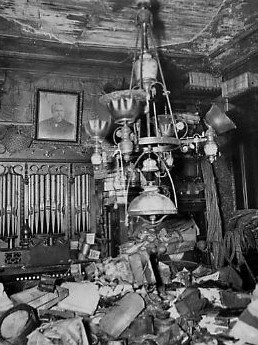
CollyerHomer and Langley Collyer were two hoarding recluses who suffered notorious celebrity, at least in New York City, in the 1940s as they fought against the power company, the bank, and the city council. They lived in a large house inherited from their parents and filled it with everything they could get their hands on. Homer was blind; Langley saved years of newspapers in massive piles (‘like cotton bales’ Doctorow imagines) in case Homer ever got his sight back and wanted to catch up on the news. By the end, the paranoid brothers had set traps around the house and could barely move through the narrow passageways between junk. They died within days of each other in 1947 and compulsive hoarding is named after them – Collyer Syndrome. According to Wikipedia, 103 tonnes of rubbish was removed from their house:

Items removed from the house included baby carriages, a doll carriage, rusted bicycles, old food, potato peelers, a collection of guns, glass chandeliers, bowling balls, camera equipment, the folding top of a horse-drawn carriage, a sawhorse, three dressmaking dummies, painted portraits, pinup girl photos, plaster busts, Mrs. Collyer’s hope chests, rusty bed springs, the kerosene stove, a child’s chair (the brothers were lifelong bachelors and childless), more than 25,000 books (including thousands about medicine and engineering and more than 2,500 on law), human organs pickled in jars, eight live cats, the chassis of the old Model T Langley had been tinkering with, tapestries, hundreds of yards of unused silks and fabric, clocks, fourteen pianos (both grand and upright), a clavichord, two organs, banjos, violins, bugles, accordions, a gramophone and records, and countless bundles of newspapers and magazines, some of them decades old.

From such promising source material in the hands of a masterful novelist, Homer & Langley disappointed me. It feels like a novel which never takes off. Narrated by Homer, it is an episodic account of his life from childhood to the late 1970s (Doctorow has the brothers live on several decades longer than they did in real life). A gangster and a group of hippies stay with the brothers at different times, and many others come into their lives for a little time only to leave again. Doctorow doesn’t stay with any of these characters long enough for their interactions with the Collyers to take on enough significance.

The other problem is the first person narration. It doesn’t suit the story Doctorow is telling. We need a narrator who can see the significance and full eccentricity of the Collyers, rather than one to whom their life is insignificant. We need fresh eyes – and Homer has no sight at all – to describe the wonders of the hoarded house.

Perhaps the conflict with the power company and banks would have been more compelling if there was a character representing one of them, an antagonist in ongoing conflict with the Collyers, instead of a couple of faceless stand-offs at the front door.

The charms of this novel are in Homer’s philosophy of the world and his mad projects.

He wanted to fix American life finally in one edition, what he called Collyer’s eternally current dateless newspaper, the only newspaper anyone would ever need. For five cents, Langley said, the reader will have a portrait in newsprint of our life on earth. The stories will not have overly particular details as you find in ordinary daily rags, because the real news here is of the Universal Forms of which any particular detail would be only an example. The reader will always be up to date, and au courant with what is going on. He will be assured that he reads the indispensable truths of the day including that of his own impending death, which will be dutifully recorded as a number in the blank box on the last page under the heading Obituaries. (p.49)

At moments like these, the novel brings to mind Paul Auster and the fascinating life projects of his characters.

I could find only one non-fiction book written about the Collyers; it’s called Ghosty men : the strange but true story of the Collyer brothers by Franz Lidz.

[Thursday 3pm #27] Quotes From The Library At Night

01 Thursday Oct 2009

Posted by Nathan Hobby in books, libraries, quotes, reading, Series: Thursday 3pm feature posts (2009)

≈ 3 Comments

Tags

Alberto Manguel

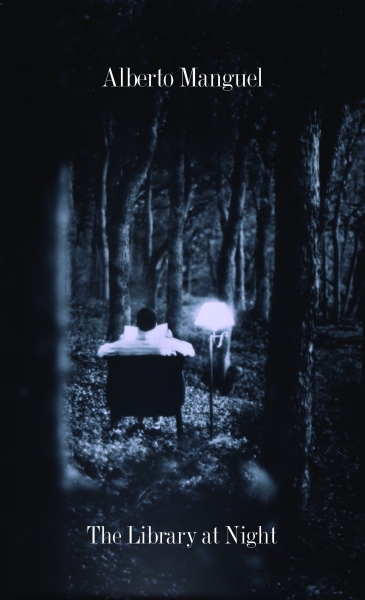
Library-at-NightAlberto Manguel’s The Library At Night examines books, reading and the library through a series of themes. It’s the sort of book where so much of it feels quotable that one is tempted to give up: the book resists being reduced, highlighted. Still, here’s some quotes I have pulled from it:

A library is an ever-growing entity; it multiplies seemingly unaided, it reproduces itself by purchase, theft, borrowings, gifts, by suggesting gaps through association, by demanding completion of sorts. (56)

During the day, I write, browse, rearrange books, put away my new acquisitions, reshuffle sections for the sake of space. Newcomers are made welcome after a period of inspection. If the book is second-hand, I leave all its markings intact, the spoor of previous readers, fellow-travellers who have recorded their passage by means of scribbled comments, a name on the fly-leaf, a bus ticket to mark a certain page. Old or new, the only sign I always try to rid my books of (usually with little success) is the price-sticker that malignant booksellers attach to the backs. These evil white scabs rip off with difficulty, leaving leprous wounds and traces of slime to which adhere the dust and fluff of ages, making me wish for a special gummy hell to which the inventor of these stickers would be condemned. (17)

And yet, however careful our reading, remembered texts often undergo curious changes; they fragment, shrivel up or grow unpredictably long. In my mental library, The Tempest is reduced to a few immortal lines, while a brief novel such as Juan Rulfo’s Pedro Paramo occupies my entire Mexican imaginary landscape. A couple of sentences by George Orwell in the essay “Shooting an Elephant” expand in my memory to several pages of description and reflection that I think I can actually see in my mind, printed on the page; of the lengthy medieval romance The Devoured Heart, all I can remember is the title. (197)

[Thursday 3pm #26] The Book of Life

24 Thursday Sep 2009

Posted by Nathan Hobby in death, Series: Thursday 3pm feature posts (2009), writing

≈ 6 Comments

Tags

death, Library of Babel

An extract from The Library of Babel

I was on the bus after work to visit Grandad when my mobile started vibrating in my pocket. Its urgency disturbed me: phones were always for bad news in my mind. This time I was right – it was Dad and he was calling to say Grandad had died a few minutes ago.

My voice turned to a whisper. I didn’t want these strangers on the bus knowing my business. I asked Dad if he was coping okay, a stupid question, but I didn’t know what else to say. He said he was okay. I told him I was nearly at the hospice.

The book I’d been reading sat forgotten on my lap. I felt cheated that I’d nearly got there, that I could have seen him one last time and I hadn’t. I looked all around me on the bus, and then I couldn’t get my eyes off the stupid advertisements on the inside walls. There was nowhere I could go without people trying to sell me stuff.

I wanted someone with me but I couldn’t bear to ring Anita. I didn’t want to say Grandad was dead. Spreading the news would make it seem more real. The best thing would be to tell no-one, and then, as far as the world was concerned, he would go on living.

I suddenly realised I had no grandparents left, then I reproached myself. I was being so selfish. The person I should be thinking about was Grandad. I wanted to think precisely of what had just happened to him, to get past the words to the event itself. His consciousness had been extinguished. As far as his body was concerned, he no longer existed.

Everyone always said how sad it was for the people left behind, but I was thinking how the real tragedy was for dead person. How could it be possible to die? For your mind to be thinking thoughts one moment, and then not thinking thoughts the next? How could it be possible to have a final thought?

He had a final thought, and no-one will ever even know what it was. Let alone what came next for him. I wondered if he had last words. No-one even cared about last words these days. People used to care about last words; they probably used to rehearse them, to make sure they had them right. Your last words were the culmination of your life.

I went a few stops past the hospice. It wasn’t like I was thinking very straight. Stepping off the bus into the dusk, I had to walk back along the highway. Bus shelter ads, fast food litter on the uneven slabs of the footpath and all the cars rushing past with such violence. The sun was gone and chill of the night was setting in. I needed to ring Anita, I still couldn’t bear to. This could be an ordinary Tuesday night, I could be going to a pub – not that I ever did, but wouldn’t it be such a comforting, ordinary thing to do tonight? – or going to see a cheap movie at the cinema. But these weren’t options tonight.

An innocuous blue sign pointed down a sidestreet to the hospice. It was a residential street, lined with trees. None of these people in their houses knew that a long had just ended in their street. It happened daily, people’s long life stories coming to an end in beds inside a building on their streets. Did they know how much was being lost around them?

Dad, Uncle Graham, Aunty Pat were gathered in the room where he had died. His body had already been taken away. The bed was empty and unmade. I gave everyone subdued hugs.

Dad asked in a low voice if I wanted to see his body. I said no. Even seeing the empty bed was too much. I hadn’t seen a dead body this far in my life and I didn’t want to start today.

On the beside table was an old paperback. I picked it up; a bookmark from his local library was stuck between pages 190 and 191. He only had a few chapters to go. While everyone was talking, I slipped the book into my bag.

That night, I sat in the lounge room until one a.m. reading the old paperback. It was A.J. Cronin’s autobiography, Adventure in Two Worlds. Uncle Graham had probably grabbed it from Grandad’s shelf. I wondered if Grandad had read it before, or if it had been one of those books he had bought at a garage sale and been meaning to get to for the last twenty years.

It was a cheap paperback edition from the 1960s, the cover declaring it an international bestseller. I disliked bestsellers, but I had sympathy for the forgotten bestsellers of the past. Their obsolescence was touching, as was their misplaced self-confidence. They encapsulated their time and its passing.

Grandad liked to read old paperbacks. Whether it was chosen for him or he chose it, it was a fitting book for his last read. It was a life story imbued with the same old-fashioned notion of common sense that Grandad lived by, and the same refusal to be subversive, crude or despairing. It starts out in typical autobiographical fashion, full of the young doctor’s struggles to succeed in the world. But as the doctor becomes a best-selling writer, the narrative becomes more and more choked with anecdotes until it seizes up altogether in sermons.

I got to Grandad’s bookmark and powered on past it, reading what he had never got to read and thinking how he would have loved the end of the book, as Cronin at the height of his powers looks back on a successful life in a self-congratulatory tone I found difficult.

I got to the last word and shut the book. The book was finished, Cronin was at the height of his powers and Grandad was dead. But Cronin wasn’t really at the height of his powers. I got onto the internet and looked him up. He’d died in 1981, twenty-nine years after he wrote the story of his life. The year I was born. His narrative had started in 1917 when he was 18, the year Grandad was born. The coincidences didn’t lead anywhere, were all vague, but they gave me a sense of appropriateness. The book was finished, the book was out of print, Grandad was dead but Cronin was dead too.

There should be a book for people to read on their deathbed which explains everything. So that you’ve got something to look forward to. The last book you read should be the one which makes sense of life. But what if you lived on too long, finished that book, and then had to start something else? What were the odds of dying at the right time, when you’ve just finished a book? It wasn’t good to leave a book unfinished when you died. Poor Grandad. At least I’d read it for him, that had to count for something.

I had thought that when I finished the book I would want to sleep, but I still felt dissatisfied. I wished I could write in my diary and capture the feelings and thoughts of the day, but I didn’t feel able to. I wanted to listen to the radio, but there was never anything good on that late and it would wake up Anita. She stirred as I came to bed and asked me if I was okay. I told her I was probably more okay than Dad and I was definitely more okay than Grandad.

[Thursday 3pm #25] Endpoint and other poems : a dispatch from the afterlife

17 Thursday Sep 2009

Posted by Nathan Hobby in book review, death, poetry, Series: Thursday 3pm feature posts (2009)

≈ Leave a comment

Tags

death, John Updike

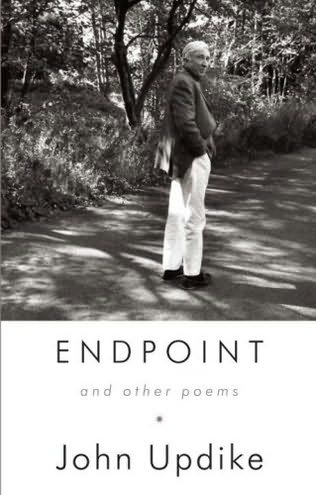
endpointReading John Updike’s final book, a collection of poems, is like receiving a dispatch from the afterlife.  The poems take us nearly up to the point of his death from lung cancer in January this year. He sent the manuscript off and then he died.

The cover photo has a poignancy to it, with its spontaneous, snapshot quality, the sombre ordinariness of it in its black and whiteness, and the sense that John is about to head off down a path we can’t follow him down, not yet.

The collection starts with the ‘Endpoint’ sequence that takes us through each of his last birthdays, starting with his seventieth in 2002, and then into his diagnosis and swift death. His thoughts range across his life, from childhood to old age, as he reflects on mortality, aging, memory. In 2005 he writes

A life poured into words – apparent waste
intended to preserve the thing consumed.
For who, in that unthinkable future
when I am dead, will read? (p.8)

In hospital, having learnt of his death he writes:

Must I do this, uphold the social lie
that binds us all together in blind faith
that nothing ends, not youth nor age nor strength,
as in a motion picture which, once seen,
can be rebought on DVD? My tongue
says yes; within, I lamely drown. (p. 23)

His final reflections are baldly honest.  His poetry is less ornate than his prose, and it makes him seem more vulnerable, frail. He has let me in on the final secret journey he took, which I only learned he had taken when his death was announced that hot, hot January day.

After the ‘Endpoint’ sequence, are pages and pages of other poems, as if to say John is not really dead, as if to say he’s still alive like he should be, like I thought he would be.

[Thursday 3pm #24] The cartoons of my childhood: nostalgia and disappointment

10 Thursday Sep 2009

Posted by Nathan Hobby in autobiographical, Series: Thursday 3pm feature posts (2009)

≈ 3 Comments

Tags

He-Man, Voltron

voltron

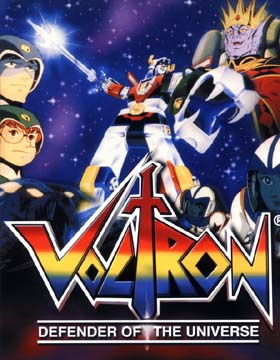
Have you ever tried going back to the cartoons of your childhood? I have, and it’s been a mix of nostalgia and disappointment. I can watch the same episodes again, but I can’t watch them with the same eyes.

I watched some episodes of He-Man and Voltron for the first time in twenty years this year. I was shocked how bad they were. They both offered incoherent, ludicrous story lines, combining visual elements likely to appeal to six year olds with no thought for consistency. He-Man features bare chested warriors with swords next to cyborgs all living in a castle and each episode fighting off a simplistic baddie called Skeletor who is a skeleton in a cloak. The castle is an important element: Voltron has it too, as five astronauts find hidden robot lions to save a princess from an evil alien king.

The backstory of Voltron is that the mighty Voltron robot was so powerful that a space-goddess (!) cast a spell on it, splitting it into five different coloured parts, which became robot lions as they fell to the ground, each one falling to an environment relevant to its colour – the green lion to the forest, the blue lion into the water, etc. It takes some keys buried in the king’s sarcophagus (and one stolen by ‘space-mice’) to reactivate the lions. But of course, the team learns that it has to join together into one big robot if it wants to win. It sounds remarkably well designed to sell toys. And it worked – we all wanted all the lions; my brother got the yellow one, and I the green one.

It’s no wonder children wrote terrible stories at school. The cartoons they watched were setting a terrible example. Although not all of them – I also rewatched a number of episodes from The Mysterious Cities of Gold, and it stood up much better. It used to be on at 5pm on ABC in the late 80s. It’s an epic story of lost orphans who are taken to South America to find the Mysterious Cities of Gold. It has a lot of moral ambiguity and complexity to some of its characters and it still managed to fill me with some sense of wonder.

I hate to think what will happen when I try to re-read the Famous Five. The only childhood book that has stayed with me into adulthood is John Christopher’s The Tripods Trilogy.

House of Zealots commended

03 Thursday Sep 2009

Posted by Nathan Hobby in news

≈ 1 Comment

Tags

House of Zealots

My unpublished second novel was commended in the SPCKA Young Christian Writer’s Awards last week. It’s an award for fiction or nonfiction with Christian themes by an Australian under 30. A wrap up of the shortlists and winners of SPCKA awards this year can be found here – http://spcka.org.au/2009ACBOYSouvenirRGB.pdf .

[Thursday 3pm #23] Possession: the novel and the film

03 Thursday Sep 2009

Posted by Nathan Hobby in book review, film review, Series: Thursday 3pm feature posts (2009)

≈ Leave a comment

Tags

A.S. Byatt, Possession

Novel: Possession: A Romance / A.S. Byatt (1990)
Film: Possession (2002)

The novel

I found Possession an engrossing novel. It is the story of two contemporary literary scholars – Roland Mitchell and Maud Bailey – who discover a secret affair between two (fictional) nineteenth century poets – Randolph Ash and Christobel LaMotte. The scholarly world is captured with all its interesting intrigues.

At one level, the novel’s title refers to questions of ownership over history and historical figures and their traces. The theme is illuminated by Roland Mitchell’s initial act of theft of a draft of a letter from Ash to LaMotte when he discovers it in a book Ash once owned. Mitchell feels it’s his discovery and he should ‘possess’ it; a feeling intensified as he enlists Maud’s help and they find themselves on the run from other Randolph Ash scholars, including the American collector Mortimer Cropper whose massive cheque-book allows him to ‘possess’ many Ash relics.

The word ‘possession’ also sums up the exploration of romance and relationships. In both the nineteenth century affair between Ash and LaMotte and the contemporary one between Roland and Maud, the lovers struggle with the nature of love. Is it about possessing the other?

The nineteenth century narrative is created purely through documents (with the exception of the epilogue) – including letters written by the lovers, diaries by their respective partners (Ash’s wife, LaMotte’s lesbian partner), and pages and pages of their poems. The poems read just like nineteenth century poems; an incredible achievement. But they bored me and I skipped over pages of them – I wanted to read a novel, not poems!

The film

The film version of Possession takes just 98 minutes to adapt a 511 page novel. It is both a simplification and a ‘greatest hits’ collection of scenes that on its own – without knowledge of the novel – lacks emotional power and significance. Trying to develop two parallel romances in different centuries in that short amount of time is impossible, and the film makers barely even try – Maud and Roland, the present day lovers, are reduced to one awkward encounter and then discussion of it.

The thriller element of the novel, with different parties pursuing the secret of Ash and LaMotte is only lightly used in the film, a strange decision given its cinematic potential. The film-makers do use the dramatic grave robbing climax, but in a truncated and disappointing scene which doesn’t make much sense. Roland Mitchell wrestles the box from Cropper and takes it away to look at it with Maud, no more ethical than Cropper himself.

The most disconcerting aspect of the film is the casting of big jawed hunk Aaron Eckhart as the supposedly shy and bookish unemployed scholar Roland Mitchell. In the book his girlfriend calls him ‘Mole’, a name no-one would apply to Aaron Eckhart’s character. Probably to appeal to the American audience, he has also become American, when his Englishness was so central to his character in the novel.

[Thursday 3pm #22] Sports culture is oppressive

27 Thursday Aug 2009

Posted by Nathan Hobby in autobiographical, Series: Thursday 3pm feature posts (2009)

≈ 11 Comments

Tags

football, sport

Yesterday I felt oppressed by the dominance of sports culture in Australia. It was a meeting and we were making introductions and we had to say something interesting about ourselves. And most people’s ‘interesting thing’ was their sporting loyalty, some comment staking their loyalty and denigrating a different sports code or a rival team. What I hated the most was the raucous laughter which accompanied it. To me, it felt so unfunny and childish.

Usually I wouldn’t care much, but the mood I was in yesterday, it felt oppressive. It was made worse when someone explained to the visiting Englishman, ‘This is just Aussie humour’. And that made me think how sporting obsession is normalised and if you don’t fit it, you’re abnormal. Common ground is established by exploring one’s football loyalties. If you don’t care about the football… what sort of person are you?

Football team loyalty seems misguided to me. The players themselves swap teams. (Do they care who they’re playing for?)

Do I want everyone to start appreciating the arts more? What if you established initial common ground by giving your opinion on James Joyce or how moved you are or not by Beethoven?

Yes and no. As much as I feel oppressed by a raucous, crass, crude, unthinking, primitive culture of sport which elevates men (and only a few women) as national heroes for their ability to kick balls or swim fast, I wouldn’t actually like to be a part of the mainstream. I guess I relish my role as outsider and my shameful feelings of cultural superiority.

How about you?

← Older posts
Newer posts →

Enter your email address to follow this blog and receive notifications of new posts by email.

Join 287 other subscribers

Nathan on Twitter

My Tweets

Categories

  • academic (9)
  • archives and sources (10)
  • autobiographical (62)
  • biographers (10)
  • biographical method (28)
  • biographical quests (18)
  • biographies (21)
    • political biography (2)
  • biographies of living subjects (2)
  • biographies of writers, artists & musicians (12)
  • biographies of writers, artists and musicians (20)
  • biography as a literary form (9)
  • biography in fiction (2)
  • biography in the news (2)
  • books (236)
    • authors (19)
    • book review (173)
    • reading (23)
  • Covid (2)
  • creative nonfiction (11)
  • daily life (2)
  • Daily Prompt (2)
  • death (21)
  • digital humanities (3)
  • family history (1)
  • fiction (8)
  • film and television biographies (5)
  • film review (48)
  • found objects (3)
  • historical biographies (1)
  • history (20)
  • In the steps of KSP (4)
  • John Curtin (13)
  • Katharine Susannah Prichard (114)
    • Glimpses of KSP (7)
    • My KSP biography (31)
      • deleted scenes (1)
  • Katharine Susannah Prichard's associates and connections (16)
  • Katharine Susannah Prichard's writings (34)
  • libraries (5)
  • life (20)
  • link (23)
  • links (41)
  • lists (28)
  • local history and heritage (1)
  • media (4)
  • memes and urban myths (1)
  • memoirs (10)
  • meta (2)
  • music (18)
  • news (9)
  • news and events (43)
  • obituary (1)
  • Old writing found on a floppy disk (1)
  • poetry (5)
  • politics and current affairs (26)
    • climate change (1)
  • prologues and introductions (2)
  • psychological aspects of biography (3)
  • quotes (22)
  • R.I.P. (10)
  • reading report (3)
  • religion (1)
  • religious biography (1)
  • research (5)
  • role of the biographer within the biography (2)
  • Series: A-Z of Katharine Susannah Prichard (26)
  • Series: Corona Diary (1)
  • Series: Saturday 10am (14)
  • Series: Short Stories (2016) (6)
  • Series: The Tourist (2013) (6)
  • Series: Thursday 3pm feature posts (2009) (35)
  • structure of biographies (3)
  • technology and the digital world (2)
  • television (4)
  • the nature of biography (4)
  • this blog (10)
  • Uncategorized (33)
  • Western Australia (26)
  • writing (41)

Archives

Recent Comments

amphisbaenathoroughly79c20f19aa's avataramphisbaenathoroughl… on John Curtin’s vision…
Nathan Hobby's avatarNathan Hobby on John Curtin’s vision…
karenlee thompson's avatarkarenlee thompson on John Curtin’s vision…
Nathan Hobby's avatarNathan Hobby on John Curtin’s vision…

Bookmarks

  • Adventures in Biography
  • ANZ LitLovers LitBlog
  • Bernice Barry
  • It only goes up to your knees
  • Jane Bryony Rawson
  • Jenn Plays Recorder
  • Katharine Susannah Prichard Writers' Centre
  • Laura Sewell Matter: Essayist and Biographer
  • Mutually said: Poets Vegan Anarchist Pacifist
  • Resident Judge
  • Speaking Thylacine
  • The Australian Legend
  • Timothy Parkin Poetry
  • Treefall Writing – Melinda Tognini
  • Whispering Gums
  • Wrapped up in books: the home of Guy Salvidge

Top Posts

  • The Joy of Knowledge Encyclopedia
  • Anger and Love by Justina Williams
  • Paul Auster's Moon Palace : an overview
  • The forgotten and the remembered: brief notes on the history of the Hodder & Stoughton £1000 Novel Competition
  • Biography workshop on 17 March 2018

Blog Stats

  • 235,231 hits

Tag Cloud

9/11 19th century 33 1920s 1921 1930s 1950s 1970s 1971 1981 2000s 2004 2011 2015 2017 20000 Days on Earth A.S. Byatt Aboriginals activism Adam Begley Adrian Mole adultery afterlife Agatha Christie Alan Hollinghurst Alberto Manguel Alfred Deakin Amazing Grace Americana Amy Grant An American Romance Andre Tchaikowsky Andrew McGahan angela myers anne fadiman Anne Rice Arabian Nights archives art arts funding A Serious Man Ash Wednesday ASIO atheism Atonement Australia Australian film Australian literature Australian Short Story Festival autism autobiography autodidact Barbara Vine beach Belle Costa da Greene Bell Jar best best-of Bible Big Issue Bill Callahan biographical ethics biographical quest genre biographies birthday birthdays Black Opal Bleak House Blinky Bill blogging blogs Blue Blades Bodega's Bunch bog Booker book launch booksale Borges Brenda Niall Brian Matthews Brian McLaren Britney Spears Burial Rites Burke and Wills buskers C.S. Lewis C.S. Lewis canon capitalism Carol Shields Carson McCullers Catcher in the Rye Catholicism celebrities Charles Dickens Charlie Kaufman childhood Child of the Hurricane children's books Choir of Gravediggers Christianity Christian writing Christina Stead Christmas Christopher Beha Cinque Terra Claire Tomalin classics cliches climate change Coen brothers coincidence Collie Collyer coming of age Communism concert Condensed Books consumerism Coonardoo Cormac McCarthy Corrections cosy fiction Dara Horn David Copperfield David Ireland David Marr David Suchet death Death of a president definition demolition Dennis LeHane dentist diaries divorce doctorow Doctor Who documentaries donald shriver Don DeLillo Don DeLillo Donna Mazza Donna Tartt Don Watson Dostovesky doubt drama dreams of revolution Drusilla Modjeska E.M. Forster ebooks editing Eichmann Eisenstein Elizabeth Kostova email empathy ensmallification existentialism faith Falling Man fame families fantasy fiction film and television folk football Frank Barscombe Fremantle Press G.K. Chesterton Gabrielle Carey Gallipoli genealogical fiction Genesis Geoff Nicholson George W. Bush Gerald Glaskin Gilead Golden Miles Goldfields Trilogy Graham Greene grandad great novels Greenmount Guinness World Records Guy Salvidge Hannah Arendt Hannah Kent Hans Koning Hans Koningsberger Harper Lee Haxby's Circus Hazel Rowley He-Man headers heaven Heidegger hell Henrietta Lacks Henry Morton Stanley Herman Hesse heroes Hey Dad! historical fiction history Holden Caulfield holidays Homer & Langley Home Song Stories House of Cards House of Zealots house of zealots Hugo Throssell humour Ian McEwan In between the sheets Indonesia Infamous Inside Llewyn Davis interstellar interview Intimate Strangers Invisible Ireland ISBNs Ishiguro itunes J.D. Salinger J.M. Coetzee J.S. Battye Janet Malcolm Jennifer Egan JFK JFK assassination Joanna Rakoff Joel Schumacher John Burbidge John Fowles John Howard John Kinsella John Updike John Updike Jonathan Franzen journal writing JSB Judgment Day Julia Baird Julian Barnes Kafka Kalgoorlie Kate Grenville Katherine Mansfield Kevin Brockmeier King's Park KSP Writers' Centre language last ride Laurie Steed Left Behind Leonard Cohen Leo Tolstoy Libra Library of Babel Library of Babel Lila Lily and Madeleine links Lionel Shriver lionel shriver lists literary fiction literature Lleyton Hewitt lost book Louisa Louisa Lawson Louis Esson louis nowra love letter Lubbock Lytton Strachey Madelaine Dickie Man Booker man in the dark Margaret Atwood Margaret River Press Marilynne Robinson mark sandman meaning of life Melbourne Mel Hall meme memorialisation memory MH17 Michael Faber Mike Riddell Miles Franklin mining boom missionaries moleskine Moon Palace morphine Mother Teresa movies Music of Chance My Brilliant Career names Napoleon Narnia narrative Narrow Road to the Deep North Narziss and Goldmund Natalie Portman Nathaniel Hobbie national anthem Nick Cave Nina Bawden non-fiction nonfiction noughties novelists novels obituaries obscurity On Chesil Beach Parade's End Paris Hilton Passion of the Christ past patriotism Paul Auster Paul de Man Perth Perth Writers Festival Peter Ackroyd Peter Cowan Writers Centre phd Philip K. Dick Philip Seymour Hoffman pierpontmorgan poetry slam politics popular fiction popular science Possession postapocalyptic postmodernism Pride prophetic imagination publications Pulp Purity Queen Victoria Rabbit Angstrom radio Radio National Randolph Stow rating: 5/10 rating: 6/10 rating: 7/10 rating: 8/10 rating: 9/10 rating: 10/10 ratings reading fiction autobiographically reading report Rebecca Skloot recap red wine reincarnation juvenile fiction rejection review - music reviewing rewriting Richard Flanagan Richard Ford Rick Moody Roaring Nineties Robert Banks Robert Hughes Robert Silverberg Robert Wadlow Robinson Crusoe Rolf Harris romance Rome ruins Russell Crowe Ruth Rendell Sarah Murgatroyd scalpers science fiction Science of Sleep secondhand books Secret River sermon illustration sex short stories Silent Woman Simone Lazaroo Simpsons Siri Hustvedt slavery Smashing Pumpkins social interactions social justice some people i hate sources South Australia souvenirs speculation speech speeches sport status anxiety Stephen Lawhead Stranger's Child subtitles Subtle Flame Sue Townsend suicide Surprised By Hope Suzanne Falkiner Sylvia Plath Synecdoche TAG Hungerford Award tapes teabags Ted Hughes The Children Act The Cure The Fur The Imitation Game theology The Pioneers The Revolutionary Thomas Disch Thomas Hardy Thomas Henry Prichard Thomas Mann thriller time Tim La Haye Tim Winton Tolstoy Tom Wright top 10 Towering Inferno Tracy Ryan Trove Truman Capote tshirts TS Spivet Twelve Years a Slave underrated writers Underworld unwritten biographies urban myth USA vampires Venice Victoria Cross Victoriana Victorian era Victorianism Victoria Park video Voltron w Wake in Fright Walkabout Walter M. Miller war War and Peace war on terror Water Diviner Wellington St Bus Station Westerly Western Australia West Wing What Happened to Sophie Wilder? Whitlams wikipedia Wild Oats of Hans William Wilberforce Winston Churchill Witches of Eastwick Working Bullocks workshop World War One writers writing Writing NSW youth Zadie Smith Zeitgeist Zelig

Enter your email address to follow this blog and receive notifications of new posts by email.

Join 287 other subscribers

Pages

  • About
  • My novel: The Fur
  • The Red Witch: A Biography of Katharine Susannah Prichard

Categories

  • academic (9)
  • archives and sources (10)
  • autobiographical (62)
  • biographers (10)
  • biographical method (28)
  • biographical quests (18)
  • biographies (21)
    • political biography (2)
  • biographies of living subjects (2)
  • biographies of writers, artists & musicians (12)
  • biographies of writers, artists and musicians (20)
  • biography as a literary form (9)
  • biography in fiction (2)
  • biography in the news (2)
  • books (236)
    • authors (19)
    • book review (173)
    • reading (23)
  • Covid (2)
  • creative nonfiction (11)
  • daily life (2)
  • Daily Prompt (2)
  • death (21)
  • digital humanities (3)
  • family history (1)
  • fiction (8)
  • film and television biographies (5)
  • film review (48)
  • found objects (3)
  • historical biographies (1)
  • history (20)
  • In the steps of KSP (4)
  • John Curtin (13)
  • Katharine Susannah Prichard (114)
    • Glimpses of KSP (7)
    • My KSP biography (31)
      • deleted scenes (1)
  • Katharine Susannah Prichard's associates and connections (16)
  • Katharine Susannah Prichard's writings (34)
  • libraries (5)
  • life (20)
  • link (23)
  • links (41)
  • lists (28)
  • local history and heritage (1)
  • media (4)
  • memes and urban myths (1)
  • memoirs (10)
  • meta (2)
  • music (18)
  • news (9)
  • news and events (43)
  • obituary (1)
  • Old writing found on a floppy disk (1)
  • poetry (5)
  • politics and current affairs (26)
    • climate change (1)
  • prologues and introductions (2)
  • psychological aspects of biography (3)
  • quotes (22)
  • R.I.P. (10)
  • reading report (3)
  • religion (1)
  • religious biography (1)
  • research (5)
  • role of the biographer within the biography (2)
  • Series: A-Z of Katharine Susannah Prichard (26)
  • Series: Corona Diary (1)
  • Series: Saturday 10am (14)
  • Series: Short Stories (2016) (6)
  • Series: The Tourist (2013) (6)
  • Series: Thursday 3pm feature posts (2009) (35)
  • structure of biographies (3)
  • technology and the digital world (2)
  • television (4)
  • the nature of biography (4)
  • this blog (10)
  • Uncategorized (33)
  • Western Australia (26)
  • writing (41)

Archives

Recent Comments

amphisbaenathoroughly79c20f19aa's avataramphisbaenathoroughl… on John Curtin’s vision…
Nathan Hobby's avatarNathan Hobby on John Curtin’s vision…
karenlee thompson's avatarkarenlee thompson on John Curtin’s vision…
Nathan Hobby's avatarNathan Hobby on John Curtin’s vision…

Bookmarks

  • Adventures in Biography
  • ANZ LitLovers LitBlog
  • Bernice Barry
  • It only goes up to your knees
  • Jane Bryony Rawson
  • Jenn Plays Recorder
  • Katharine Susannah Prichard Writers' Centre
  • Laura Sewell Matter: Essayist and Biographer
  • Mutually said: Poets Vegan Anarchist Pacifist
  • Resident Judge
  • Speaking Thylacine
  • The Australian Legend
  • Timothy Parkin Poetry
  • Treefall Writing – Melinda Tognini
  • Whispering Gums
  • Wrapped up in books: the home of Guy Salvidge

Top Posts

  • The Joy of Knowledge Encyclopedia
  • Anger and Love by Justina Williams
  • Paul Auster's Moon Palace : an overview
  • The forgotten and the remembered: brief notes on the history of the Hodder & Stoughton £1000 Novel Competition
  • Biography workshop on 17 March 2018

Blog Stats

  • 235,231 hits

Tag Cloud

9/11 19th century 33 1920s 1921 1930s 1950s 1970s 1971 1981 2000s 2004 2011 2015 2017 20000 Days on Earth A.S. Byatt Aboriginals activism Adam Begley Adrian Mole adultery afterlife Agatha Christie Alan Hollinghurst Alberto Manguel Alfred Deakin Amazing Grace Americana Amy Grant An American Romance Andre Tchaikowsky Andrew McGahan angela myers anne fadiman Anne Rice Arabian Nights archives art arts funding A Serious Man Ash Wednesday ASIO atheism Atonement Australia Australian film Australian literature Australian Short Story Festival autism autobiography autodidact Barbara Vine beach Belle Costa da Greene Bell Jar best best-of Bible Big Issue Bill Callahan biographical ethics biographical quest genre biographies birthday birthdays Black Opal Bleak House Blinky Bill blogging blogs Blue Blades Bodega's Bunch bog Booker book launch booksale Borges Brenda Niall Brian Matthews Brian McLaren Britney Spears Burial Rites Burke and Wills buskers C.S. Lewis C.S. Lewis canon capitalism Carol Shields Carson McCullers Catcher in the Rye Catholicism celebrities Charles Dickens Charlie Kaufman childhood Child of the Hurricane children's books Choir of Gravediggers Christianity Christian writing Christina Stead Christmas Christopher Beha Cinque Terra Claire Tomalin classics cliches climate change Coen brothers coincidence Collie Collyer coming of age Communism concert Condensed Books consumerism Coonardoo Cormac McCarthy Corrections cosy fiction Dara Horn David Copperfield David Ireland David Marr David Suchet death Death of a president definition demolition Dennis LeHane dentist diaries divorce doctorow Doctor Who documentaries donald shriver Don DeLillo Don DeLillo Donna Mazza Donna Tartt Don Watson Dostovesky doubt drama dreams of revolution Drusilla Modjeska E.M. Forster ebooks editing Eichmann Eisenstein Elizabeth Kostova email empathy ensmallification existentialism faith Falling Man fame families fantasy fiction film and television folk football Frank Barscombe Fremantle Press G.K. Chesterton Gabrielle Carey Gallipoli genealogical fiction Genesis Geoff Nicholson George W. Bush Gerald Glaskin Gilead Golden Miles Goldfields Trilogy Graham Greene grandad great novels Greenmount Guinness World Records Guy Salvidge Hannah Arendt Hannah Kent Hans Koning Hans Koningsberger Harper Lee Haxby's Circus Hazel Rowley He-Man headers heaven Heidegger hell Henrietta Lacks Henry Morton Stanley Herman Hesse heroes Hey Dad! historical fiction history Holden Caulfield holidays Homer & Langley Home Song Stories House of Cards House of Zealots house of zealots Hugo Throssell humour Ian McEwan In between the sheets Indonesia Infamous Inside Llewyn Davis interstellar interview Intimate Strangers Invisible Ireland ISBNs Ishiguro itunes J.D. Salinger J.M. Coetzee J.S. Battye Janet Malcolm Jennifer Egan JFK JFK assassination Joanna Rakoff Joel Schumacher John Burbidge John Fowles John Howard John Kinsella John Updike John Updike Jonathan Franzen journal writing JSB Judgment Day Julia Baird Julian Barnes Kafka Kalgoorlie Kate Grenville Katherine Mansfield Kevin Brockmeier King's Park KSP Writers' Centre language last ride Laurie Steed Left Behind Leonard Cohen Leo Tolstoy Libra Library of Babel Library of Babel Lila Lily and Madeleine links Lionel Shriver lionel shriver lists literary fiction literature Lleyton Hewitt lost book Louisa Louisa Lawson Louis Esson louis nowra love letter Lubbock Lytton Strachey Madelaine Dickie Man Booker man in the dark Margaret Atwood Margaret River Press Marilynne Robinson mark sandman meaning of life Melbourne Mel Hall meme memorialisation memory MH17 Michael Faber Mike Riddell Miles Franklin mining boom missionaries moleskine Moon Palace morphine Mother Teresa movies Music of Chance My Brilliant Career names Napoleon Narnia narrative Narrow Road to the Deep North Narziss and Goldmund Natalie Portman Nathaniel Hobbie national anthem Nick Cave Nina Bawden non-fiction nonfiction noughties novelists novels obituaries obscurity On Chesil Beach Parade's End Paris Hilton Passion of the Christ past patriotism Paul Auster Paul de Man Perth Perth Writers Festival Peter Ackroyd Peter Cowan Writers Centre phd Philip K. Dick Philip Seymour Hoffman pierpontmorgan poetry slam politics popular fiction popular science Possession postapocalyptic postmodernism Pride prophetic imagination publications Pulp Purity Queen Victoria Rabbit Angstrom radio Radio National Randolph Stow rating: 5/10 rating: 6/10 rating: 7/10 rating: 8/10 rating: 9/10 rating: 10/10 ratings reading fiction autobiographically reading report Rebecca Skloot recap red wine reincarnation juvenile fiction rejection review - music reviewing rewriting Richard Flanagan Richard Ford Rick Moody Roaring Nineties Robert Banks Robert Hughes Robert Silverberg Robert Wadlow Robinson Crusoe Rolf Harris romance Rome ruins Russell Crowe Ruth Rendell Sarah Murgatroyd scalpers science fiction Science of Sleep secondhand books Secret River sermon illustration sex short stories Silent Woman Simone Lazaroo Simpsons Siri Hustvedt slavery Smashing Pumpkins social interactions social justice some people i hate sources South Australia souvenirs speculation speech speeches sport status anxiety Stephen Lawhead Stranger's Child subtitles Subtle Flame Sue Townsend suicide Surprised By Hope Suzanne Falkiner Sylvia Plath Synecdoche TAG Hungerford Award tapes teabags Ted Hughes The Children Act The Cure The Fur The Imitation Game theology The Pioneers The Revolutionary Thomas Disch Thomas Hardy Thomas Henry Prichard Thomas Mann thriller time Tim La Haye Tim Winton Tolstoy Tom Wright top 10 Towering Inferno Tracy Ryan Trove Truman Capote tshirts TS Spivet Twelve Years a Slave underrated writers Underworld unwritten biographies urban myth USA vampires Venice Victoria Cross Victoriana Victorian era Victorianism Victoria Park video Voltron w Wake in Fright Walkabout Walter M. Miller war War and Peace war on terror Water Diviner Wellington St Bus Station Westerly Western Australia West Wing What Happened to Sophie Wilder? Whitlams wikipedia Wild Oats of Hans William Wilberforce Winston Churchill Witches of Eastwick Working Bullocks workshop World War One writers writing Writing NSW youth Zadie Smith Zeitgeist Zelig

Blog at WordPress.com.

  • Subscribe Subscribed
    • Nathan Hobby, a biographer in Perth
    • Join 287 other subscribers
    • Already have a WordPress.com account? Log in now.
    • Nathan Hobby, a biographer in Perth
    • Subscribe Subscribed
    • Sign up
    • Log in
    • Report this content
    • View site in Reader
    • Manage subscriptions
    • Collapse this bar
 

Loading Comments...