• About
  • The Red Witch: A Biography of Katharine Susannah Prichard
  • My novel: The Fur

Nathan Hobby, a biographer in Perth

~ The lives of John Curtin & Katharine Susannah Prichard, the art of biography, and other things

Nathan Hobby, a biographer in Perth

Author Archives: Nathan Hobby

My Favourite Novels In 2010

14 Friday Jan 2011

Posted by Nathan Hobby in books, lists

≈ Leave a comment

What a year of novels! I found at least five I loved.

This list does not include the big pile of novels I discarded. So all of these had some merit, or I wouldn’t have finished them.

1. Gilead – Marilynne Robinson (2004), USA
It got even better this second time I read it, a novel which embodies grace and what it means to be alive. 10/10

2.  Freedom – Jonathan Franzen (2010), USA
It is a deeply perceptive novel. Franzen is smart and cynical, but he knows how to break my heart and then patch it up again with hope. He knows our inner worlds, and he also knows the outer political worlds. He seems to know everything. 10/10

3.  Never Let Me Go, Kazuo Ishiguro (2005) , Brit
A devastating tale of a dystopian childhood and youth. I’m still waiting for the film to be released in Australia. 9/10

4.  Home, Marilynne Robinson (2008) USA
The companion to Gilead; some will find it ‘slow-burning’, others ‘boring’, but I came to love it. 9/10

5.  Journey Through Space – Toby Litt (2009) USA
A ship travelling to the nearest habitable planet at 1/10th light speed, taking generations to get there – what an amazing concept. Litt covers the span well and the civilisation of the ship comes to symbolize the behaviour of humanity broadly. It is bleak and sad, but also fascinating and compelling. 9/10

6. Cold Mountain [audiobook] – Charles Frazer, Charles (1997) USA
A cruel ending sours an incredibly rich and beautiful account of the dark days of the Civil War.  8/10

7.  On Beauty – Zadie Smith, (2005), Brit
An engrossing drama-comedy set around a university. She perceives the young and old well, it seems to me. 8/10

8.  Rabbit at rest – John Updike (1990) USA,
It was a perfect book last time I read it; what changed? 8/10

9.  Howards End – E.M. Forster (1910) Brit, 8/10

10. The Final Solution [audiobook] – Michael Chabon (2002)
Delightful, wise descriptions of life are what this novella are about, rather than the detective story. Missed crucial aspects listening on tape – like the fact the ‘old man’ is, of course, Sherlock Holmes! 8/10

11.    The Bell Jar [audiobook] – Sylvia Plath (1962) USA, 8/10

12.    Solar – Ian McEwan (2010) Brit, 7.5/10

13.    Unless – Carol Shields (2003) Canada, 7/10

14.    Oranges are not the only fruit – Jeannette Winterston (1985), Brit, 7/10

15.    The Reincarnation of Peter Proud – Max Ehrlich  USA (1974)
There is a satisfying narrative symmetry to The Reincarnation. It begins with Peter Proud’s recurring dream from his previous life of being drowned in a lake at night by a woman named Marcia, and it ends with this same woman drowning Peter in his current life.  The plot is well structured. Peter Proud has disturbing, recurring dreams of his past life. He seeks answers from a sleep researcher, a clairvoyant and a ‘psi-researcher’ in order to recover his past. But the break-through comes when he sees footage on television from the town where used to live, and eventually tracks it down. Once he’s discovered who he was, he has two tasks to juggle: he finds his daughter and wife (Marcia) from his previous life and learns as much information he can from them; and he re-enacts each of the recurring dreams, as the re-enactment has some sort of psychological healing effect on him – it stops coming back. 7/10

16.    The American – Henry James (1877) USA, 7/10

17.    In A Dry Season – Peter Robinson (1999) Brit, 6.5/10

18.    The Lovely Bones [audiobook] – Alice Sebold (2002) USA, 6.5/10

19.    Sunset Park – Paul Auster (2010) USA, 6/10

20.    A Personal Matter – Kenzaburo Oe (1964) Japan, 6/10

21.    That eye, the sky – Tim Winton (1986) Aust, 6/10

22.    The Three Evangelists – Fred Vargas (2006) France, 6/10

23.    So Much For That – Lionel Shriver (2010) USA, 5/10

Murdering Stepmothers – Anna Haebich (2010) Australia (Unrated)

When We Were Orphans – Kazuo Ishiguro, Brit (Unrated)
Book Review – Paul Auster’s Sunset Park

18 Saturday Dec 2010

Posted by Nathan Hobby in Uncategorized

≈ 2 Comments

Alas, Paul Auster has fallen short this time.
If it’s an experiment, it’s an experiment which doesn’t work. We start off with Miles Heller, a man in his twenties running away from his past, and earning money by clearing away stuff people have left in repossessed houses. He likes to take photos of the things he’s left behind. I thought that was going somewhere, but I think Auster forgot about it.
Miles is forced to return to New York, and we end up reading chapters from the perspective of each of the housemates he is squatting with, as well as his estranged father.
It’s a novel chockful of Austeresque concerns, and yet it spreads way too thin without adequately developing any of them. To tell all the stories he begins in this novel, he would need to write a 900 page tome.
I wish Auster would finish what he starts. In many of the books he’s published in this flurry of the last ten years, he disrupts the narrative unnecessarily. If he achieved something by doing this, then by all means he should. But I feel that generally he has achieved very little.
I can’t generalise too much here; certain kinds of disruptions are part of Auster’s magic, but now they’re stopping him telling the story which seemed to be burning bright in his mind at first. (And yet in his previous novel, Invisible, I felt the frame narrative actually worked well.)
Side note: in almost every Auster novel, he features a protagonist who was born in 1947, his own year of birth. In this novel, it is Miles’s father who was born in that year. He’s moved onto the next generation; most of the characters are his children’s age.
Concluding note: it was enjoyable enough to read, especially when each chapter is taken on its own. Auster gets a chance to write at length about baseball, luck, loneliness and reconciliation. It just all adds up to less than it should.

[Book review] Cold Mountain

18 Saturday Dec 2010

Posted by Nathan Hobby in book review

≈ 1 Comment

Thirteen years after Charles Frazier’s American civil war novel was at the top of the bestseller list, I’ve finally read it. Or listened to it, actually. Frazier himself has been reading it to me in the car for several weeks now, and he has a beautiful voice, well suited to the story he has to tell.

In one strand of the story, I journeyed with Inman as he faced obstacle after obstacle on his way home to his fiancee, Ada. It had an episodic feel to it; no particular progression to the various encounters – they just happened, as he comes across friend and foe and in between. In the other strand of the story, Ada is helped to look after the farm she has inherited by the plucky Ruby. I loved Ada for her deep intelligence, impracticality and compassion.

[spoiler alert]

It’s a novel with the same kind of meditative beauty and innate violence as Cormac McCarthy’s work, but I thought Frazier’s world was a less cold one, that he had to give Ada and Inman the happy ending they deserved – that the reader deserves.

But he doesn’t. Inman returns to Ada only to be shot down, almost randomly, a few pages from the end. I don’t think Frazier should have done that, not even if the source history he was vaguely working from demanded it. It undercuts the long journey toward reunion that forms the rest of his novel. We know McCarthy’s world is cruel; we expect it. But your world, it seemed a little kinder.

Yet there are antecedents. So many moments of chance, and of good luck falling Inman’s way; maybe Frazier was only trying to balance things out. At one point Frazier is shot and even shallowly buried. Later, another character is also shot and left for dead. Both of them survive. Despite all the driving power of chance in the narrative, moments like these stretch credibility.

Yet it is a beautiful book, rightly canonised, which has much to say about life, as well as telling a familiar yet beautiful story.

He liked to listen to the babble of voices

09 Thursday Dec 2010

Posted by Nathan Hobby in autobiographical

≈ 5 Comments

Tags

radio

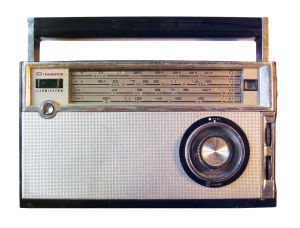
The radio is one of my comforts in this life.

My first radio was red and ran on batteries. I won it as a prize in a fundraising activity in Year 1. I don’t remember what we had to do, but I do remember the fear of asking people if they would give money to sponsor me balanced against the hope of winning the Brownes Dairy Pack or, if I cracked $50, the red radio. I do remember that Tammy raised several hundred dollars and got to meet Daryl Somers from Hey Hey It’s Saturday. We were all so jealous.

I used to love to listen to my red radio just for its novelty. Perhaps that’s how I got into football and cricket as a child. Listening to the broadcasts on my red radio, being just like Dad.

When I was about eight, Dad came home with a new tape player, and I inherited the old stereo, the one with the broken tape player but a working radio. It had short wave, which I thought was the most wonderful thing in the world.

I spent a long time roaming the short wave band, amazed to pick up signals from America and England. I found an American religious program once, which made me proud, because people I knew would always complain about how the radio and the tv were so anti-Christian. I told Mum excitedly, but she didn’t want to listen to the American religious program. She said there were a lot of strange Christians in America, which confused me, because the things they said sounded a lot like church.

The short wave signals were always fleeting. If I moved the radio in the wrong way, they would disappear. Even if I didn’t move the radio, the Earth would move, I suppose, and the signal would go.

I liked to go to sleep with the radio on, a friend in the dark, murmuring.
Growing up near Collie in the 80s and 90s, we had two stations on AM – ABC Local Radio and Radiowest – and one on FM, Classical FM. Perth was a wonderful place full of more radio stations than you could even think of. It wasn’t till after we moved to Bunbury that Triple J came.

For me and my brother, our teen years were a desperate struggle with Mum and Dad about music. We wanted our alternative rock music – The Smashing Pumpkins, Bush, Radiohead, Metallica for a while – on the radio and the tape player, in the car and in the kitchen. Mum liked quiet; Dad hated swearing. The war was long and unresolved. Triple J came close to a complete ban a number of times. I didn’t listen to the voices so much then, and the old radio had broken completely. But I did listen obsessively to Triple J. I remember listening to the entire Hottest 100 from start to finish when I was 17, and knowing every song. Oh, I was lonely, and horrified with myself by the end.

When did my addiction to Radio National begin? It’s come upon me slowly, but now I know every program on Radio National and I listen to it at all hours of the day and night. When I stopped going to uni – well, I never really stopped going to uni, but when my undergrad days ended – Radio National took up my education.

Milan Kundera knows what it is to love and need the radio, not the music but the talking:

Out of despair, out of nervousness, she turned on a little radio beside her pillow. To get back to sleep she wants to hear a human voice, some talk that will seize her thoughts, carry her off to another place, calm her down and put her to sleep; she switches from station to station but only music pours out from everywhere, sewage water music, fragments of rock, of jazz, of opera, and it’s world were she can’t talk to anybody because everybody’s singing and yelling, a world where nobody talks to her because everybody’s prancing around and dancing.
-Identity, p.124

A surveyor rang the other day, wanting to know about radio listening. My instinct was to hang up, but instead I did his survey, because I am addicted to radio. I could not do his survey very well, though. He almost grew exasperated with me, because every answer was ‘Radio National’ or ‘Newsradio’ or, reluctantly, because it is so middlebrow, ‘720 ABC Local Radio’. ‘But don’t you listen to any music on the radio?’ he asked. No, I should have told him, there is no station which plays Morphine, the Cure and Regina Specktor with no ads and no competitions. But he wanted to know who had the best competitions. I told him I hated those competitions SO MUCH. This is one thing I could still be passionate about. How DESPICABLE commercial radio is. How much I HATE commercial radio competitions. Never mind the music. It sounds so terrible too. Always holding a single emotional note of manufactured states of love or disappointment.

No, I live in Radio National, where everyone is serious, and everyone is thinking, all of the time. They talk to me about the state of the world. About politics, religion, identity, books and history. They do it all night and day. I weary of it sometimes, but I’m addicted, so I keep listening.

Sylvia Plath on tape

01 Monday Nov 2010

Posted by Nathan Hobby in book review

≈ Leave a comment

Tags

Bell Jar, tapes

This year we bought a car with a working tape player, and having played my Best of Leonard Cohen tape to death, I’ve started listening to books on tapes. The limited selection at the public library forces me to listen to things I might not have read in print, which is good. It also makes me realise how much driving I do, when I get through a nine hour audiobook in a bit over a week.

I finished Sylvia Plath’s The Bell Jar a couple of days ago, and I liked it a lot. Esther, the narrator, is far more spunky and interesting than I thought she would be. It’s a classic tale of adolescence; a comparison to Catcher in the Rye is inevitable but helpful. Bell Jar is set in 1953; Catcher in 1949; both are set in New York.  Esther (born 1934) and Holden (born 1933) must have nearly have crossed paths a few times in their lives. They might have really liked each other. They both end up in mental hospitals too.

It was strange to think Sylvia Plath was born the same year as my Granny: they are from different worlds, it wasn’t the same milieu, growing up in Eastern US and Perth. No hopes of college or poetry for my Granny. It’s as much about personalities, I guess.

The voice of the woman reading the tape was all wrong; she was old, and I hated it when she did men’s voices or foreign accents in this screwed up kind of voice.

How different is it, listening to a book versus reading it? You can’t control the speed – that’s significant; it keeps rolling on, regardless. My mind drifts and I miss things. I get through more, because I’m less likely to stop, fatigued by the page. But what about cognition?

An eerie thing, Esther surviving her suicide attempt to tell the story, and I feel there’s a kind of optimism to her life, but this feeling is tempered by the knowledge that Plath killed herself soon after the book was published.

Weeding and the meaning of life

04 Monday Oct 2010

Posted by Nathan Hobby in autobiographical, life

≈ 2 Comments

I was thinking on the weekend, it’s definitely easier to believe in a benevolent world on a sunny spring day. But just a few clouds, an overcast day – well, the world looks different. I get prone to a certain kind of ennui.

I pulled out some weeds on the weekend. This is becoming a more common occurence. I was once very resistant to pulling out weeds. Maybe it’s because I grew up on a 3 acre property, with probably nearly an acre devoted to well-tended gardens that seemed to consume my parents’ entire weekends. I didn’t want to become like that. But now I see houses with no garden and I think they’re ugly, depressing. I have begun to see why people spend time in gardens.

One of the problems was that there seemed to be nothing to do in gardens except gardening. As much as we put out chairs and tables in gardens, very few people just enjoy their garden. I certainly have trouble doing so.  If only I could sit still outside and read a book! But I’m very bad at this; never comfortable.

Another problem was my tendency – starting in childhood – to divide the world and its tasks into ‘meaningful’ and ‘unmeaningful’. Anything which was repetitive, like pulling out weeds which would grow back, tended to be put into the ‘unmeaningful’ basket. Never mind that everything in life really fits that basket. No wonder I had such unrealistic expectations of life I have spent my twenties disabusing myself of.

Kathleen Norris writes incisively of making one’s bed as an act of hospitality to yourself in Acedia and Me.  I now believe this in theory, though I still have trouble doing it. I’ve always had troubles with routines. I think one thing I’m learning to accept in life is routines. I’m learning to see them as usually necessary and sometimes good. Yet they lull me into my my boring self, that’s what I fear.

Because too often in recent years, people see the wrong side of me, or they see something that’s really only a part of me. Me in safe mode, a librarian not wanting to stand out for the wrong reasons. The struggle between standing out and not standing out. (This has something to do with the stalemate between 1 and 4 in my personality on the Enneagram, not that I’ve really looked into it.) I have come to detest in myself and others acts designed to stand out for their own sake, without substance, attempts to get attention. It’s easy to offend, especially if you dull your empathy with the roar of righteous indignation or ambition.  These days, I’ve resolved to only offend or stand out when I really have to.

Fear of offending has made me so careful what I write on my blogs. Oh, the things I used to write on those blogs which a failed server in the USA obliterated! Perhaps they have grown in my memory. But I was fearless, reckless, ready to tell everything to everyone. Perhaps this post marks the return of getting personal, as inoffensively as a gentle truthfulness allows.

[Book Review] Jonathan Franzen’s Freedom

21 Tuesday Sep 2010

Posted by Nathan Hobby in book review

≈ 6 Comments

Tags

Jonathan Franzen

Jonathan Franzen / Freedom (Fourth Estate 2010)

Let me fall over myself to be the next one to breathlessly call for the premature canonisation of this book. Franzen has written what might well be a masterpiece to sit neatly next to his previous masterpiece, 2001’s The Corrections. It is similar enough to satisfy all of us who wanted more of the same, and different enough to stand on its own as a major work.

It’s about a lot of things, but more than anything it is the novel of the marriage between Patty and Walter Berglund, and their attempt to live in the world of the noughties, more particularly the America of the noughties. At one crucial point Patty is reading War and Peace, and it’s a breaktakingly arrogant comparison for Franzen to invite, and yet one that is possibly justified. It doesn’t have the sweep of Tolstoy’s novel, but it spans the years and branches out to involve us deeply in the lives of secondary characters and make us care so much about them. And it has taken the pulse of a milieu so precisely, evoking what it’s meant to live in this crazy past decade, the Bush years, the Iraq War, the shadow of 9/11.

Patty has always lusted after Walter’s bad boy best-friend, Richard the alt-rocker. She has also set up her life in opposition to the ‘arty-farty’ New York bohemian lives of her family, and this is what drives her to excel at basketball and then marry Walter the Minnesotan environmental lawyer, disciplined, earnest and good. Walter’s problem is that he has always tried so hard to be good and despite succeeding splendidly at it, his life is not working out quite right. Patty is depressed and resentful, partly because he is so good, partly because their son Joey has abandoned her suffocating love and shacked up with the ‘white-trash’ girl next door. Adding to the pressure on Walter is the fact that he has taken up the cause of protecting an endangered species of bird and in doing so has ended up on the payroll of the very forces of greedy conservatives he set out to spend his life opposing.

The novel has a disorientating time structure and several shifts in narrative point of view. It starts out with a somewhat distant omniscient narrator relating the story of Walter and Patty through the 1990s, partly through the eyes of their neighbours, giving hints of much of the plot to be developed later on. Then we shift to Patty’s confession, written at the behest of her therapist in the early 2000s. She writes in the third person to distance herself a little, telling the story of her life as a kind of apology to Walter, calling it ‘Mistakes Were Made’. After this we have the actual core of the novel (just when we thought Patty’s confession might be that), a third person narration stretching from p.191-p.503 and telling the events of 2004, when everything comes to a head, through sections seen through both Walter’s eyes and those of his rebelling son Joey. There are two short epilogues, Patty’s conclusion to her confession written six years later, and then, giving the novel a symmetry, a third person narration rounding off Walter and Patty again told through the eyes of the neighbourhood.

It is a deeply perceptive novel. Franzen is smart and cynical, but he knows how to break my heart and then patch it up again with hope. He knows our inner worlds, and he also knows the outer political worlds. He seems to know everything.

10/10

Marilynne Robinson’s Gilead, second reflections

15 Wednesday Sep 2010

Posted by Nathan Hobby in books, quotes

≈ Leave a comment

Tags

Christian writing

I don’t re-read many novels, but I felt compelled to re-read Gilead after reading its companion novel, Home. I gave it 8/10 in January last year, but this time, I have recorded it as a 10/10. (Marilynne may wish to put this on the back cover of future reprints, but given she has every second reviewer around the world saying it is a masterpiece, she may not need my commendation.) And indeed, I don’t feel able to add to the wonderful reviewing and criticism already written about Gilead. It is a beautiful novel about living, dying, race and America. And faith. Here are some quotes I took from it.

“When this old sanctuary is full of silence and prayer, every book Karl Barth will ever write would not be a feather in the scales against it from the point of view of profundity, and I would not believe in Barth’s own authenticity if I did not also believe he would know and recognize the truth of that, and honor it, too.” (p.197)

You can spend forty years teaching people to be awake to the fact of mystery and then some fellow with no more theological sense than a jackrabbit gets himself a radio ministry and all your work is forgotten. I do wonder where it will end. (p.236)

But the fact is that his mind came from one set of books as surely as mine has come from another set of books. But that can’t be true. While I was at seminary I read every book he had ever mentioned and every book I thought he might have read, if I could put my hand on it and it wasn’t in German… Who knows where any mind comes from. It’s all mystery. (p.142)
– I found this particularly interesting. He’s reflecting on how his brother became an atheist while he carried on his father and grandfather’s business of being a preacher. Where does faith come from? Where does a worldview come from? To what extent is it a product of the books you read?

I believe that the old man did indeed have far too narrow an idea of what a vision might be. He may, so to speak, have been too dazzled by the great light of his experience to realize that an impressive sun shines on us all. Perhaps that is the one thing I wish to tell you. Sometimes the visionary aspect of any particular day comes to you in the memory of it, or it opens to you over time…. I believe there are visions that come to us only in memory, in retrospect. (p.104)

[Book Review] Home: Slow-burning and Wise

16 Monday Aug 2010

Posted by Nathan Hobby in book review

≈ 1 Comment

Tags

Christian writing

HomeHome by Marilynne Robinson (2008)

My rating: 4 of 5 stars

Home is a novel about what happens after the prodigal son returns to his father’s house. The setting is the small American town of Gilead and the year is 1956. The father is the frail old Reverend Boughton and his prodigal son is Jack, the alcoholic youngest son who abandoned a girl with a baby in his youth and hasn’t been home in twenty years. The jealous older brother of Jesus’ parable is transformed into the youngest daughter of the family, Glory. She is not jealous, either, but loving to her troubled brother, having returned home after being used for money by a no good ‘fiance’ for years.

It is a slow moving, unadorned novel, and the impatient reader won’t enjoy it or even finish it. Its pleasures are subtle ones, exact prose and slow burning, wise drama as Jack and Glory look warily and wearily for redemption in their own ways and as their father’s health deteriorates.

The characters have a sense of space in their lives, and this gives me another strange pleasure. Jack and Glory find themselves in a quiet town, in a quiet home with no particular commitments anywhere. They live in a kind of long school holiday, filling in their time with gardening, board-games and cooking. They aren’t particularly happy, yet I find myself slightly envying them.

The novel’s relationship to Robinson’s previous novel, Gilead (2004), is significant. Gilead is set in the same town at the same time, narrated by Boughton’s oldest friend, the Reverend John Ames. Gilead is a tale of generations, as Ames looks back on his father and grandfather and forward to his young son. Home is also about family, but is horizontal – a single nuclear family and its aftermath, rather than generations. The overlapping of characters and events between the novels is fascinating. I’m going straight back to re-read Gilead while it’s all fresh in my head.

View all my reviews >>

I hate advertising

17 Saturday Jul 2010

Posted by Nathan Hobby in Uncategorized

≈ 2 Comments

I hate advertising. A horrendous billboard has just gone up above the cinema near my house proclaiming ‘Pack More Into Your Mornings: Botica’s Bunch, Mix 94.5FM’. It has a photo of the bunch in question, a predictably middle-of-the-road threesome guaranteed to appeal to the broadest possible number of people.

But that phrase ‘pack more into your mornings’ irks me. What the hell does it mean? Pack more inane banter? Pack more lousy jokes? Pack more jokes about the differences between the sexes, about whose football team won, about celebrities? I don’t know, I haven’t listened, but I can imagine. If you really wanted to pack more into your mornings, you’d listen to Radio National, and be treated to in depth analysis of every political development over the past twenty-four hours. (A bit much for me, yet I keep doing it.) Imagine if there were billboards promoting Radio National instead of Mix FM?

Or imagine if instead of billboards and bus shelter ads trying to convince me to switch brands or spend more money, there was public art? Imagine every place you see advertising there was something meaningful or beautiful or both? Why the hell are we living like this?

Our culture is built around all these false dichotomies between almost identical options. Listen to 96FM or listen to 94.5FM. Watch the Today show or Sunrise, both with news, weather, celebrities, Hollywood gossip, quirky stories, live crosses. Watch Channel 7 News or watch Channel 9 news, Today Tonight or A Current Affair. Barrack for the Eagles or the Dockers… how can people seriously have arguments about football? Do they really think there is something intrinsically different about their football team in these days of nationalisation, of player trading and corporate sport, largely disconnected from place and community? Choose Hoyts or choose EVENT cinemas; when you get there choose the generic action movie or chickflick or comedy or drama of your choice, depending on the negotiation between you and your partner, because of course women like one sort of film and men like another type of film. Vote for Liberal, or vote for Labor, depending on whose hairstyle you like the best, according to who the media’s told you is better.

These are not true choices. We’re stuck on the surface, and I blame that damned billboard looming above the Windsor Cinema on Stirling Highway.

← Older posts
Newer posts →

Enter your email address to follow this blog and receive notifications of new posts by email.

Join 287 other subscribers

Nathan on Twitter

My Tweets

Categories

  • academic (9)
  • archives and sources (10)
  • autobiographical (62)
  • biographers (10)
  • biographical method (28)
  • biographical quests (18)
  • biographies (21)
    • political biography (2)
  • biographies of living subjects (2)
  • biographies of writers, artists & musicians (12)
  • biographies of writers, artists and musicians (20)
  • biography as a literary form (9)
  • biography in fiction (2)
  • biography in the news (2)
  • books (236)
    • authors (19)
    • book review (173)
    • reading (23)
  • Covid (2)
  • creative nonfiction (11)
  • daily life (2)
  • Daily Prompt (2)
  • death (21)
  • digital humanities (3)
  • family history (1)
  • fiction (8)
  • film and television biographies (5)
  • film review (48)
  • found objects (3)
  • historical biographies (1)
  • history (20)
  • In the steps of KSP (4)
  • John Curtin (13)
  • Katharine Susannah Prichard (114)
    • Glimpses of KSP (7)
    • My KSP biography (31)
      • deleted scenes (1)
  • Katharine Susannah Prichard's associates and connections (16)
  • Katharine Susannah Prichard's writings (34)
  • libraries (5)
  • life (20)
  • link (23)
  • links (41)
  • lists (28)
  • local history and heritage (1)
  • media (4)
  • memes and urban myths (1)
  • memoirs (10)
  • meta (2)
  • music (18)
  • news (9)
  • news and events (43)
  • obituary (1)
  • Old writing found on a floppy disk (1)
  • poetry (5)
  • politics and current affairs (26)
    • climate change (1)
  • prologues and introductions (2)
  • psychological aspects of biography (3)
  • quotes (22)
  • R.I.P. (10)
  • reading report (3)
  • religion (1)
  • religious biography (1)
  • research (5)
  • role of the biographer within the biography (2)
  • Series: A-Z of Katharine Susannah Prichard (26)
  • Series: Corona Diary (1)
  • Series: Saturday 10am (14)
  • Series: Short Stories (2016) (6)
  • Series: The Tourist (2013) (6)
  • Series: Thursday 3pm feature posts (2009) (35)
  • structure of biographies (3)
  • technology and the digital world (2)
  • television (4)
  • the nature of biography (4)
  • this blog (10)
  • Uncategorized (33)
  • Western Australia (26)
  • writing (41)

Archives

Recent Comments

amphisbaenathoroughly79c20f19aa's avataramphisbaenathoroughl… on John Curtin’s vision…
Nathan Hobby's avatarNathan Hobby on John Curtin’s vision…
karenlee thompson's avatarkarenlee thompson on John Curtin’s vision…
Nathan Hobby's avatarNathan Hobby on John Curtin’s vision…

Bookmarks

  • Adventures in Biography
  • ANZ LitLovers LitBlog
  • Bernice Barry
  • It only goes up to your knees
  • Jane Bryony Rawson
  • Jenn Plays Recorder
  • Katharine Susannah Prichard Writers' Centre
  • Laura Sewell Matter: Essayist and Biographer
  • Mutually said: Poets Vegan Anarchist Pacifist
  • Resident Judge
  • Speaking Thylacine
  • The Australian Legend
  • Timothy Parkin Poetry
  • Treefall Writing – Melinda Tognini
  • Whispering Gums
  • Wrapped up in books: the home of Guy Salvidge

Top Posts

  • Paul Auster's Moon Palace : an overview
  • The Joy of Knowledge Encyclopedia
  • The 28th, 29th, and 30th prime ministers: a memoir
  • Anger and Love by Justina Williams
  • Comic-book biography?

Blog Stats

  • 235,216 hits

Tag Cloud

9/11 19th century 33 1920s 1921 1930s 1950s 1970s 1971 1981 2000s 2004 2011 2015 2017 20000 Days on Earth A.S. Byatt Aboriginals activism Adam Begley Adrian Mole adultery afterlife Agatha Christie Alan Hollinghurst Alberto Manguel Alfred Deakin Amazing Grace Americana Amy Grant An American Romance Andre Tchaikowsky Andrew McGahan angela myers anne fadiman Anne Rice Arabian Nights archives art arts funding A Serious Man Ash Wednesday ASIO atheism Atonement Australia Australian film Australian literature Australian Short Story Festival autism autobiography autodidact Barbara Vine beach Belle Costa da Greene Bell Jar best best-of Bible Big Issue Bill Callahan biographical ethics biographical quest genre biographies birthday birthdays Black Opal Bleak House Blinky Bill blogging blogs Blue Blades Bodega's Bunch bog Booker book launch booksale Borges Brenda Niall Brian Matthews Brian McLaren Britney Spears Burial Rites Burke and Wills buskers C.S. Lewis C.S. Lewis canon capitalism Carol Shields Carson McCullers Catcher in the Rye Catholicism celebrities Charles Dickens Charlie Kaufman childhood Child of the Hurricane children's books Choir of Gravediggers Christianity Christian writing Christina Stead Christmas Christopher Beha Cinque Terra Claire Tomalin classics cliches climate change Coen brothers coincidence Collie Collyer coming of age Communism concert Condensed Books consumerism Coonardoo Cormac McCarthy Corrections cosy fiction Dara Horn David Copperfield David Ireland David Marr David Suchet death Death of a president definition demolition Dennis LeHane dentist diaries divorce doctorow Doctor Who documentaries donald shriver Don DeLillo Don DeLillo Donna Mazza Donna Tartt Don Watson Dostovesky doubt drama dreams of revolution Drusilla Modjeska E.M. Forster ebooks editing Eichmann Eisenstein Elizabeth Kostova email empathy ensmallification existentialism faith Falling Man fame families fantasy fiction film and television folk football Frank Barscombe Fremantle Press G.K. Chesterton Gabrielle Carey Gallipoli genealogical fiction Genesis Geoff Nicholson George W. Bush Gerald Glaskin Gilead Golden Miles Goldfields Trilogy Graham Greene grandad great novels Greenmount Guinness World Records Guy Salvidge Hannah Arendt Hannah Kent Hans Koning Hans Koningsberger Harper Lee Haxby's Circus Hazel Rowley He-Man headers heaven Heidegger hell Henrietta Lacks Henry Morton Stanley Herman Hesse heroes Hey Dad! historical fiction history Holden Caulfield holidays Homer & Langley Home Song Stories House of Cards House of Zealots house of zealots Hugo Throssell humour Ian McEwan In between the sheets Indonesia Infamous Inside Llewyn Davis interstellar interview Intimate Strangers Invisible Ireland ISBNs Ishiguro itunes J.D. Salinger J.M. Coetzee J.S. Battye Janet Malcolm Jennifer Egan JFK JFK assassination Joanna Rakoff Joel Schumacher John Burbidge John Fowles John Howard John Kinsella John Updike John Updike Jonathan Franzen journal writing JSB Judgment Day Julia Baird Julian Barnes Kafka Kalgoorlie Kate Grenville Katherine Mansfield Kevin Brockmeier King's Park KSP Writers' Centre language last ride Laurie Steed Left Behind Leonard Cohen Leo Tolstoy Libra Library of Babel Library of Babel Lila Lily and Madeleine links Lionel Shriver lionel shriver lists literary fiction literature Lleyton Hewitt lost book Louisa Louisa Lawson Louis Esson louis nowra love letter Lubbock Lytton Strachey Madelaine Dickie Man Booker man in the dark Margaret Atwood Margaret River Press Marilynne Robinson mark sandman meaning of life Melbourne Mel Hall meme memorialisation memory MH17 Michael Faber Mike Riddell Miles Franklin mining boom missionaries moleskine Moon Palace morphine Mother Teresa movies Music of Chance My Brilliant Career names Napoleon Narnia narrative Narrow Road to the Deep North Narziss and Goldmund Natalie Portman Nathaniel Hobbie national anthem Nick Cave Nina Bawden non-fiction nonfiction noughties novelists novels obituaries obscurity On Chesil Beach Parade's End Paris Hilton Passion of the Christ past patriotism Paul Auster Paul de Man Perth Perth Writers Festival Peter Ackroyd Peter Cowan Writers Centre phd Philip K. Dick Philip Seymour Hoffman pierpontmorgan poetry slam politics popular fiction popular science Possession postapocalyptic postmodernism Pride prophetic imagination publications Pulp Purity Queen Victoria Rabbit Angstrom radio Radio National Randolph Stow rating: 5/10 rating: 6/10 rating: 7/10 rating: 8/10 rating: 9/10 rating: 10/10 ratings reading fiction autobiographically reading report Rebecca Skloot recap red wine reincarnation juvenile fiction rejection review - music reviewing rewriting Richard Flanagan Richard Ford Rick Moody Roaring Nineties Robert Banks Robert Hughes Robert Silverberg Robert Wadlow Robinson Crusoe Rolf Harris romance Rome ruins Russell Crowe Ruth Rendell Sarah Murgatroyd scalpers science fiction Science of Sleep secondhand books Secret River sermon illustration sex short stories Silent Woman Simone Lazaroo Simpsons Siri Hustvedt slavery Smashing Pumpkins social interactions social justice some people i hate sources South Australia souvenirs speculation speech speeches sport status anxiety Stephen Lawhead Stranger's Child subtitles Subtle Flame Sue Townsend suicide Surprised By Hope Suzanne Falkiner Sylvia Plath Synecdoche TAG Hungerford Award tapes teabags Ted Hughes The Children Act The Cure The Fur The Imitation Game theology The Pioneers The Revolutionary Thomas Disch Thomas Hardy Thomas Henry Prichard Thomas Mann thriller time Tim La Haye Tim Winton Tolstoy Tom Wright top 10 Towering Inferno Tracy Ryan Trove Truman Capote tshirts TS Spivet Twelve Years a Slave underrated writers Underworld unwritten biographies urban myth USA vampires Venice Victoria Cross Victoriana Victorian era Victorianism Victoria Park video Voltron w Wake in Fright Walkabout Walter M. Miller war War and Peace war on terror Water Diviner Wellington St Bus Station Westerly Western Australia West Wing What Happened to Sophie Wilder? Whitlams wikipedia Wild Oats of Hans William Wilberforce Winston Churchill Witches of Eastwick Working Bullocks workshop World War One writers writing Writing NSW youth Zadie Smith Zeitgeist Zelig

Enter your email address to follow this blog and receive notifications of new posts by email.

Join 287 other subscribers

Pages

  • About
  • My novel: The Fur
  • The Red Witch: A Biography of Katharine Susannah Prichard

Categories

  • academic (9)
  • archives and sources (10)
  • autobiographical (62)
  • biographers (10)
  • biographical method (28)
  • biographical quests (18)
  • biographies (21)
    • political biography (2)
  • biographies of living subjects (2)
  • biographies of writers, artists & musicians (12)
  • biographies of writers, artists and musicians (20)
  • biography as a literary form (9)
  • biography in fiction (2)
  • biography in the news (2)
  • books (236)
    • authors (19)
    • book review (173)
    • reading (23)
  • Covid (2)
  • creative nonfiction (11)
  • daily life (2)
  • Daily Prompt (2)
  • death (21)
  • digital humanities (3)
  • family history (1)
  • fiction (8)
  • film and television biographies (5)
  • film review (48)
  • found objects (3)
  • historical biographies (1)
  • history (20)
  • In the steps of KSP (4)
  • John Curtin (13)
  • Katharine Susannah Prichard (114)
    • Glimpses of KSP (7)
    • My KSP biography (31)
      • deleted scenes (1)
  • Katharine Susannah Prichard's associates and connections (16)
  • Katharine Susannah Prichard's writings (34)
  • libraries (5)
  • life (20)
  • link (23)
  • links (41)
  • lists (28)
  • local history and heritage (1)
  • media (4)
  • memes and urban myths (1)
  • memoirs (10)
  • meta (2)
  • music (18)
  • news (9)
  • news and events (43)
  • obituary (1)
  • Old writing found on a floppy disk (1)
  • poetry (5)
  • politics and current affairs (26)
    • climate change (1)
  • prologues and introductions (2)
  • psychological aspects of biography (3)
  • quotes (22)
  • R.I.P. (10)
  • reading report (3)
  • religion (1)
  • religious biography (1)
  • research (5)
  • role of the biographer within the biography (2)
  • Series: A-Z of Katharine Susannah Prichard (26)
  • Series: Corona Diary (1)
  • Series: Saturday 10am (14)
  • Series: Short Stories (2016) (6)
  • Series: The Tourist (2013) (6)
  • Series: Thursday 3pm feature posts (2009) (35)
  • structure of biographies (3)
  • technology and the digital world (2)
  • television (4)
  • the nature of biography (4)
  • this blog (10)
  • Uncategorized (33)
  • Western Australia (26)
  • writing (41)

Archives

Recent Comments

amphisbaenathoroughly79c20f19aa's avataramphisbaenathoroughl… on John Curtin’s vision…
Nathan Hobby's avatarNathan Hobby on John Curtin’s vision…
karenlee thompson's avatarkarenlee thompson on John Curtin’s vision…
Nathan Hobby's avatarNathan Hobby on John Curtin’s vision…

Bookmarks

  • Adventures in Biography
  • ANZ LitLovers LitBlog
  • Bernice Barry
  • It only goes up to your knees
  • Jane Bryony Rawson
  • Jenn Plays Recorder
  • Katharine Susannah Prichard Writers' Centre
  • Laura Sewell Matter: Essayist and Biographer
  • Mutually said: Poets Vegan Anarchist Pacifist
  • Resident Judge
  • Speaking Thylacine
  • The Australian Legend
  • Timothy Parkin Poetry
  • Treefall Writing – Melinda Tognini
  • Whispering Gums
  • Wrapped up in books: the home of Guy Salvidge

Top Posts

  • Paul Auster's Moon Palace : an overview
  • The Joy of Knowledge Encyclopedia
  • The 28th, 29th, and 30th prime ministers: a memoir
  • Anger and Love by Justina Williams
  • Comic-book biography?

Blog Stats

  • 235,216 hits

Tag Cloud

9/11 19th century 33 1920s 1921 1930s 1950s 1970s 1971 1981 2000s 2004 2011 2015 2017 20000 Days on Earth A.S. Byatt Aboriginals activism Adam Begley Adrian Mole adultery afterlife Agatha Christie Alan Hollinghurst Alberto Manguel Alfred Deakin Amazing Grace Americana Amy Grant An American Romance Andre Tchaikowsky Andrew McGahan angela myers anne fadiman Anne Rice Arabian Nights archives art arts funding A Serious Man Ash Wednesday ASIO atheism Atonement Australia Australian film Australian literature Australian Short Story Festival autism autobiography autodidact Barbara Vine beach Belle Costa da Greene Bell Jar best best-of Bible Big Issue Bill Callahan biographical ethics biographical quest genre biographies birthday birthdays Black Opal Bleak House Blinky Bill blogging blogs Blue Blades Bodega's Bunch bog Booker book launch booksale Borges Brenda Niall Brian Matthews Brian McLaren Britney Spears Burial Rites Burke and Wills buskers C.S. Lewis C.S. Lewis canon capitalism Carol Shields Carson McCullers Catcher in the Rye Catholicism celebrities Charles Dickens Charlie Kaufman childhood Child of the Hurricane children's books Choir of Gravediggers Christianity Christian writing Christina Stead Christmas Christopher Beha Cinque Terra Claire Tomalin classics cliches climate change Coen brothers coincidence Collie Collyer coming of age Communism concert Condensed Books consumerism Coonardoo Cormac McCarthy Corrections cosy fiction Dara Horn David Copperfield David Ireland David Marr David Suchet death Death of a president definition demolition Dennis LeHane dentist diaries divorce doctorow Doctor Who documentaries donald shriver Don DeLillo Don DeLillo Donna Mazza Donna Tartt Don Watson Dostovesky doubt drama dreams of revolution Drusilla Modjeska E.M. Forster ebooks editing Eichmann Eisenstein Elizabeth Kostova email empathy ensmallification existentialism faith Falling Man fame families fantasy fiction film and television folk football Frank Barscombe Fremantle Press G.K. Chesterton Gabrielle Carey Gallipoli genealogical fiction Genesis Geoff Nicholson George W. Bush Gerald Glaskin Gilead Golden Miles Goldfields Trilogy Graham Greene grandad great novels Greenmount Guinness World Records Guy Salvidge Hannah Arendt Hannah Kent Hans Koning Hans Koningsberger Harper Lee Haxby's Circus Hazel Rowley He-Man headers heaven Heidegger hell Henrietta Lacks Henry Morton Stanley Herman Hesse heroes Hey Dad! historical fiction history Holden Caulfield holidays Homer & Langley Home Song Stories House of Cards House of Zealots house of zealots Hugo Throssell humour Ian McEwan In between the sheets Indonesia Infamous Inside Llewyn Davis interstellar interview Intimate Strangers Invisible Ireland ISBNs Ishiguro itunes J.D. Salinger J.M. Coetzee J.S. Battye Janet Malcolm Jennifer Egan JFK JFK assassination Joanna Rakoff Joel Schumacher John Burbidge John Fowles John Howard John Kinsella John Updike John Updike Jonathan Franzen journal writing JSB Judgment Day Julia Baird Julian Barnes Kafka Kalgoorlie Kate Grenville Katherine Mansfield Kevin Brockmeier King's Park KSP Writers' Centre language last ride Laurie Steed Left Behind Leonard Cohen Leo Tolstoy Libra Library of Babel Library of Babel Lila Lily and Madeleine links Lionel Shriver lionel shriver lists literary fiction literature Lleyton Hewitt lost book Louisa Louisa Lawson Louis Esson louis nowra love letter Lubbock Lytton Strachey Madelaine Dickie Man Booker man in the dark Margaret Atwood Margaret River Press Marilynne Robinson mark sandman meaning of life Melbourne Mel Hall meme memorialisation memory MH17 Michael Faber Mike Riddell Miles Franklin mining boom missionaries moleskine Moon Palace morphine Mother Teresa movies Music of Chance My Brilliant Career names Napoleon Narnia narrative Narrow Road to the Deep North Narziss and Goldmund Natalie Portman Nathaniel Hobbie national anthem Nick Cave Nina Bawden non-fiction nonfiction noughties novelists novels obituaries obscurity On Chesil Beach Parade's End Paris Hilton Passion of the Christ past patriotism Paul Auster Paul de Man Perth Perth Writers Festival Peter Ackroyd Peter Cowan Writers Centre phd Philip K. Dick Philip Seymour Hoffman pierpontmorgan poetry slam politics popular fiction popular science Possession postapocalyptic postmodernism Pride prophetic imagination publications Pulp Purity Queen Victoria Rabbit Angstrom radio Radio National Randolph Stow rating: 5/10 rating: 6/10 rating: 7/10 rating: 8/10 rating: 9/10 rating: 10/10 ratings reading fiction autobiographically reading report Rebecca Skloot recap red wine reincarnation juvenile fiction rejection review - music reviewing rewriting Richard Flanagan Richard Ford Rick Moody Roaring Nineties Robert Banks Robert Hughes Robert Silverberg Robert Wadlow Robinson Crusoe Rolf Harris romance Rome ruins Russell Crowe Ruth Rendell Sarah Murgatroyd scalpers science fiction Science of Sleep secondhand books Secret River sermon illustration sex short stories Silent Woman Simone Lazaroo Simpsons Siri Hustvedt slavery Smashing Pumpkins social interactions social justice some people i hate sources South Australia souvenirs speculation speech speeches sport status anxiety Stephen Lawhead Stranger's Child subtitles Subtle Flame Sue Townsend suicide Surprised By Hope Suzanne Falkiner Sylvia Plath Synecdoche TAG Hungerford Award tapes teabags Ted Hughes The Children Act The Cure The Fur The Imitation Game theology The Pioneers The Revolutionary Thomas Disch Thomas Hardy Thomas Henry Prichard Thomas Mann thriller time Tim La Haye Tim Winton Tolstoy Tom Wright top 10 Towering Inferno Tracy Ryan Trove Truman Capote tshirts TS Spivet Twelve Years a Slave underrated writers Underworld unwritten biographies urban myth USA vampires Venice Victoria Cross Victoriana Victorian era Victorianism Victoria Park video Voltron w Wake in Fright Walkabout Walter M. Miller war War and Peace war on terror Water Diviner Wellington St Bus Station Westerly Western Australia West Wing What Happened to Sophie Wilder? Whitlams wikipedia Wild Oats of Hans William Wilberforce Winston Churchill Witches of Eastwick Working Bullocks workshop World War One writers writing Writing NSW youth Zadie Smith Zeitgeist Zelig

Blog at WordPress.com.

  • Subscribe Subscribed
    • Nathan Hobby, a biographer in Perth
    • Join 287 other subscribers
    • Already have a WordPress.com account? Log in now.
    • Nathan Hobby, a biographer in Perth
    • Subscribe Subscribed
    • Sign up
    • Log in
    • Report this content
    • View site in Reader
    • Manage subscriptions
    • Collapse this bar
 

Loading Comments...