• About
  • The Red Witch: A Biography of Katharine Susannah Prichard
  • My novel: The Fur

Nathan Hobby, a biographer in Perth

~ The lives of John Curtin & Katharine Susannah Prichard, the art of biography, and other things

Nathan Hobby, a biographer in Perth

Author Archives: Nathan Hobby

The Tourist #2: What is the Meaning of Tourism?

09 Monday Sep 2013

Posted by Nathan Hobby in Series: The Tourist (2013)

≈ Leave a comment

   Two days ago, we found ourselves eating lunch in a carless Swiss village, 1300m altitude. It was a sunny afternoon and we ate facing a snow capped mountain, its top in a halo of light, as paragliders floated down into the valley. The tables were close to each other, and next to us were two aging English women, who lived up to a certain stereotype. At one point, the more talkative of the two said resignedly, ‘Oh well – we’ve crossed another one off the list, getting to here.’ (They also spoke of how early one could go upstairs for a Scotch, and when the bill came, a polite disagreement arose – ‘Mine was only twelve fifty.’ Unhappy wealthy widows forced to travel together?)
   These poor women felt an obligation to their tourism, a list mental or physical which must be ticked. As amusing as I found them, I believe the sense of obligation is usually present in tourism, albeit less pronounced. I know we have been tempted by guilt some days at the sights we have not seen, at the experiences we have not had. Perhaps, as much as anything, imagining the disbelief, disapproval even of others – ‘You went to Paris and didn’t see the Mona Lisa?’
   Of course, it’s silly, and I am determined to balance some sightseeing with leisurely eating and unashamed relaxing. Yet the feeling remains, and really it is to revisit the theme of my previous post on photography: tourism as consuming. At what point is a sight consumed? What sort of satisfaction does it bring?
   It is, of course, better to think of sights experienced rather than consumed. We see sights to experience them: to encounter something wondrous, quaint, inspiring, or at least interesting.
   Yet to confuse my use of the word ‘experience’ by returning to the tour bus full of young adults I mentioned last time, I think we could distinguish two different approaches to the meaning of tourism: tourism as sightseeing and tourism as experiences. The divide is generational, and it it is a blunt generalisation. But the same backpackers unmoved by the Swiss mountains and lakes were signing up to white water rafting and rope climbing. The attraction is not the sights, but activities. And events: the bus host told of the hordes about to descend on Munich for Oktoberfest, and the hordes who had just come from La Tomatina, the tomato throwing festival.  It would seem that tourism, for them, is tied up to experiencing events and activities – and probably just as much, backpacker culture itself. Not the culture of the place one is staying in, but the solidarity of being there with other young people finding themselves. (Of course, it is an illusion or conceit of tourism that we can ever experience anything as the locals experience it; I don’t know if it is more authentic to not even try or to be proud of the  little moments which seem authentic to us.)
  And now I leave this post unpolished in order to be in time for my reservation at Lucerne’s best restaurant. I have not even discussed food and its role in the meaning of tourism! 


The Tourist #1: Reflections on Photography and Tourism

08 Sunday Sep 2013

Posted by Nathan Hobby in autobiographical, Series: The Tourist (2013)

≈ Leave a comment

When I was a child, Dad’s advice used to be: make sure you have someone in the photograph; otherwise you might as well buy a postcard. His advice rested on the idea, perhaps, that each photo of a sight was interchangeable. In the age of the internet, it seems advice which needs updating.
But perhaps he was right – what does my photograph of the Eiffel Tower mean to people who are not me? Everyone knows what it looks like. For people who are interested in me, seeing me in the frame adds something to it; Dad’s advice holds up. And then perhaps if it’s artful or striking or unusual in some way it might be worth looking at on its own terms.
On the other hand, perhaps photos are not for others at all. Perhaps they are for the self – a record of where one has been, what one has seen. A prompt for memory, or probably more likely, they become a substitute for the memory itself. Or not quite either of these ways of saying it – perhaps we can say the photo becomes canonical for how the moment is remembered.

Continue reading →

Redmond Barry and some preliminary reflections on the art of biography

01 Thursday Aug 2013

Posted by Nathan Hobby in biographies, book review

≈ 2 Comments

redmond-barry

In thinking what I might write next, I’m weighing up biography as a literary form at the moment. I’m not sure how to do that. The danger is that each biography I read has me judging the whole form by its merits.

Today I finished Ann Galbally’s Redmond Barry: An Anglo-Irish Australian (Melbourne University Press, 1995). Barry (1813-1880) emigrated to Australia as a young man, and was a towering figure in Melbourne’s early years as a judge, university chancellor, library-founder, cultural emissary. Yet he’s probably best remembered for sentencing Ned Kelly to death and dying himself days after Kelly. Gallaby treats Ned Kelly’s trial in four pages. Given it was only a couple of weeks in a whole life, perhaps it’s a logical decision. Yet I would have given it many more pages, because of its dramatic potential and the place of Kelly in Australian cultural memory.

I suspect I’m interested by things which are not the focus of conventional biographies. One example: I’m fascinated by the memorialisation and legacy of a biographee – what shadow do they cast over the world after their death? There is some of this in Barry. A funny anecdote told about him in The Age sixty years after his death; words attributed to him in folklore; that fact that today there remains his coat of arms that he himself had placed in an unobtrusive spot above a hall he helped get built. But I wanted more.

I don’t yet know if the fact that this biography didn’t grip me was due to the limits of the genre itself, or the shortcomings of this particular biography. I felt that as a narrative it was flat, and far too bound by maintaining a steady rhythm of chronology. Barry spent this year in this way, and then the next one in this way. There was not enough narrative shaping of his life, not enough sense of the heights and lows, not enough drama created.

Perhaps I carry the baggage of my background in fiction. The biography should not be in too much debt too the novel. And then there is the problem of the expectations of biography after Freud: that it reveal the biographee’s secrets and their sex life. Barry does both, which is why I’m surprised I didn’t find it more engaging, despite it being well-researched, both sympathetic and critical, and the prose having an unobtrusive appropriateness. (I remember cringing right through the overwritten prose of Belle Costa Greene’s biography, An Illuminated Life.) Barry had an affair with a married woman on the ship over to Australia, and the whole ship became aware of it, including the husband. Remarkably, Barry himself records some of the details. This is the sort of insight I thought the 19th century historical record would generally completely lack. And yet it is made less interesting than it could have been.

I also felt as I read that the sort of biography I would want to write would illuminate the particular events of the biographee’s life by far more explanation of social and cultural norms of the time. Where we couldn’t get particular insight into the biographee’s life, we would gain general insight. How common was it for a respectable church-going judge to keep a consort he would not marry and have children with her? How does it fit into Victorianism? It would make for a far-bigger book, and it could get boring; it would need to be done well.

I must make clear that as history and probably even as biography, this is a good book. It just happens to be the particular instance of my initial interrogation of the genre.

Barry turned 200 this year, and a panel called “Redmond Barry: Visionary or Scoundrel” was held at the State Library of Victoria.


WA Premier’s Book Awards – not so Western Australian

09 Tuesday Jul 2013

Posted by Nathan Hobby in books, Western Australia

≈ Leave a comment

The shortlist for the WA Premier’s Book Awards has just been announced. I was disappointed to realise that all Australian writers are now eligible to enter. (It probably changed some time ago – I’ve been out of the loop.) This may sound horribly parochial, but there are many national book awards; there are few opportunities for Western Australian writers to be recognised. The inevitable result is that the top few writers in the country will receive extra accolades, and the local writers who could have been given a boost will be overlooked.

On the other hand, I am so glad we have WA-based book awards, and I hope they continue to get funding and attention.

Lost Perth

10 Monday Jun 2013

Posted by Nathan Hobby in history, Western Australia

≈ Leave a comment

Tags

time

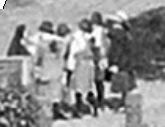
Lost Perth linked to a panorama photograph from the Perth Observatory in 1920, a wide shot of the city as it was on a particular day. To look over it, panning along as if it was something more than a photograph, is to step into a ghost city in black and white. The town of a century ago lives on, details trapped. I zoomed in as far as it would go and looked for people. For a long while, it seemed there were none, just long deserted stretches. And then I came to a huddle of people near the edge. It looks to me like a nun with some students – praying, talking, learning? They have no idea the moment is recorded from up on the hill. Perhaps one of the girls could still be alive, but probably not; she would have to be 110. Not far from that huddle are two figures in motion, blurs in the corner of the photo.

1920s-perth-nun-and-students

The digging up of the time capsule

25 Monday Mar 2013

Posted by Nathan Hobby in autobiographical

≈ 3 Comments

Tags

childhood, memorialisation

In 1987 I was six and obsessed with archaeology. I created a kingdom in the front yard, burying clay mummies wrapped in cloth. I also wanted to find the present again in the future, and so I wrote the date in texta on pieces of paper and buried these. They did not last so well, but I am curious as to my instinct and my hope. Was I imagining that I was preserving that particular day by the act? Was I imagining that I was creating history or creating archaeology? Perhaps, perhaps.

I also went looking through the old newspapers in the woodbox. This was almost a room, a large space next to the woodfire. The old newspapers were piled in there. I always wished they were older than they were. What if I could go back to before I was born? Would I be into history then?

Perhaps the milieu fostered these obsessions. Between 1988 and 1990, my primary school was caught up in an atmosphere of commemoration. For the Bicentennial we all received two medallions, an amazing treasure to seven year olds. The history of the school was being written, just as our new building was rising up. When it came out, I read it quite obsessively, the story of these people now old or dead who once walked this same ground.

And then there was the time capsule, the ultimate expression of my obsessions. To be opened at the centenary of the school in 2013, it was an enchanted project. I remember the pressure of writing something that would sum up my life so far, giving an insight to my future self and the future world of what it had meant to go to Allanson Primary in 1990. I think Ms Leitch warned us to make sure we wrote in 2H pencil so that our words would not be lost to the future. In my memory, I wrote twenty or thirty pages for that time capsule; I felt embarrassed afterward for oversharing, including a list of every book I could remember reading. I included The Complete Work of Shakespeare when all I had done was fail at an attempt to read the opening pages of The Tempest when I was home sick from school. (My secret shame, that twenty-three years later I still find Shakespeare hard to understand.) Cheater! I wanted to be better than I was; a brilliant nine year old would be reading Shakespeare. I have often wondered of the other books on the list, the ones I actually read and have now forgotten. To read that precious list again would be to rediscover a large chunk of my life.

The year 2013 seemed so far away it would never come; I would be thirty-two! I have thought of the digging up of the time capsule quite often since it was buried. It was one of the few future events already set down, a precise date decreed on the plaque above the water fountain. Maybe whoever made these decisions should not have buried the capsule below a water fountain. I couldn’t quite believe it when the time-capsule came up full of water, our packet of stories turned into black compost. When I was nine, I still believed the grown ups wouldn’t let that happen.


A good man compromising: a review of Lincoln

04 Monday Mar 2013

Posted by Nathan Hobby in film review

≈ 2 Comments

lincoln

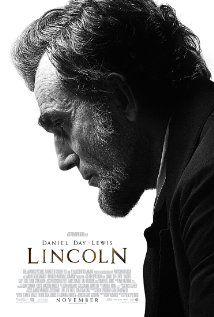
Lincoln covers the last period of Abraham Lincoln’s life as he attempts to pass an amendment through Congress abolishing slavery before a Civil War peace treaty makes such a prospect impossible. It is a riveting dilemma: peace vs the end of slavery. Daniel Day Lewis’s Lincoln is a complex messiah and, more than anything, a good man. His compassion for people and his wisdom shine through in a superb performance.

It is also a film extolling compromise. The sort of compromise that would lead Lincoln to approve buying votes, playing games with words and truth, and which leads the idealistic radical Stevens to finally deny racial equality to help the amendment pass. If the message is that the end justifies the means, it is a message I disagree with. But as much as a message it is drama of the best kind: a portrait of good people torn by impossible dilemmas.


The secret history of second-hand books

22 Tuesday Jan 2013

Posted by Nathan Hobby in found objects, libraries, link

≈ Leave a comment

Tags

Library of Babel

It is a joy to discover someone who shares your quaint pleasures. I love to find ephemera in old books, a regular occurrence in my library. My theological librarian colleague Philip Harvey shares my interest. I sent him the passage in my new novel which touches on it, and I was chuffed that he quoted it in an excellent and wide-ranging post on the traces left behind in second-hand books. You can find it here.

I got a piece of my soul back

08 Tuesday Jan 2013

Posted by Nathan Hobby in music

≈ 4 Comments

I started listening to music again, properly, in the last year, and it makes me feel I got a piece of my soul back.

I’m not musical, but songs mean a lot to me.

Everyone’s musical, some people insist – usually kind musicians. That’s what she said at first; but then she heard me try to sing. I used to think it was because I wasn’t singing loudly enough; so I sang louder in Sunday School. The girl behind me – her name was Tasha – she said, Please stop singing. It was the first time she’d spoken to me. An early humiliation. I aced all the tests at school, but not the Instrumental Music Program. To my great horror but little surprise, it was two others from my year who went off to learn the trumpet.

I had an early crush on Amy Grant and her adult contemporary pop songs – some upbeat, others melancholy. This was 1991, I was ten, and I was weird, because adult contemporary was my thing – Amy Grant, Bryan Adams, Jimmy Barnes. (Strangely, I also spent hard-earned $21 – three months savings – on a MC Hammer tape which I never came to like. What was I thinking? I liked the Addams Family Groove at just the wrong moment. I’d heard he was a Christian, and thought my parents would be pleased; then I started singing a line I did not understand about a ‘glass dildo’. MC Hammer’s Christianity did not completely infuse his lyrics. I think I only recently, in this last move, got rid of that tape.)

I got back into music in year nine. Perhaps I was partly conforming, but I was also genuinely attracted to the anger of Metallica. It had little swearing, and so my parents were remarkably tolerant. Is it possible, at fourteen, to not regard lines like TIME AND SPACE NEVER ENDING /DISTURBING THOUGHTS, QUESTIONS PENDING /LIMITATIONS OF HUMAN UNDERSTANDING as being equally profound as the great poets?

My taste evolved, growing to the Smashing Pumpkins and then Nick Cave, Leonard Cohen, The Cure and Joy Division. I spent my childhood savings on a great five disc CD player when I moved out of home at eighteen. What a glorious machine it was! What deliberation deciding what soundtrack to my life to create before the days of itunes!

The CD player broke just before I got married, which is maybe just as well, because she’s a violist with a perfect ear who prefers silence and tells me L. Cohen is out of tune. It seemed to me Triple J stopped playing anything decent, too, that it had become overwhelmed by urban music, beats and gimmicks, and lost most of the alternative rock I liked. What’s more, I’d exhausted the eighties.

So there were lean years. But this last year, I’ve had a laptop which plays music quite well and been better connected to the internet, meaning I have bought too many songs on itunes. I have discovered new music on Radio National’s Inside Sleeve and occasionally Triple J. There’s this group of women singer-songwriters whose work my wife and I have come to like together – Holly Throsby, Regina Spektor, Sarah Blasko and recently Ane Brun and Lisa Mitchell.

The two albums I have had playing on relentless rotation (wait, this is an inept metaphor when I mean on itunes) as I write my novel are both by Mazzy Star. Their gently sad music makes me feel I’m underwater, or falling into a lull. It has a beautiful ache which never quite resolves. “Fade Into You” is representative – but then every song is. This sums them up well:

 Their fuzzy guitar workouts and plaintive folky compositions are often suffused in a dissociative ennui that is very much of the 1990s, however much their textures may recall the drug-induced states of vintage psychedelia.

Music for writing really, or perhaps a certain kind of dinner party.

*

In that first flush of music mania as a ten year old, I used to create a weekly (sometimes daily) top twenty – the songs I thought should be in there. Amy Grant’s “Every Heartbeat” broke every record by staying number one for twelve charts, even as it sank in the real chart. Now I have real, annual charts, the most played songs of the year that’s been. Yet it is distorted by background music on repeat. No chart is perfect. Here are the songs I played the most in 2012, one per album:

Song Artist Year Plays
1 Fade Into You Mazzy Star 1993 39
2 Warm Jet Holly Throsby 2008 29
3 Flowers in December Mazzy Star 1996 28
4 Hey Love Winterpark 2011 26
5 Undertow Ane Brun 2012 24
6 Silk Giselle 2012 23
7 The Last Party The Hampdens 2008 22
8 I Awake Sarah Blasko 2012 21
9 Get Free Major Lazer 2012 20
10 Youth in Trouble The Presets 2012 20

The best books I read in 2012

07 Monday Jan 2013

Posted by Nathan Hobby in lists, reading

≈ 1 Comment

I had a reading drought in 2012. No clear favourite, no book which even blew me away – and yet I still discovered some interesting and worthy ones. I have been scared I’ve been losing my love of reading, but I cured that re-reading an old favourite, Siri Hustvedt’s What I Loved, which I finished when I couldn’t sleep on New Year’s Day. She reminded me in that novel of why I read, the pleasures and insights I hope to have, after I was so disheartened at feeling unable to finish three novels in a row.

1. Promised Lands / Jane Rogers (1996)
I wonder how much attention this received when it came out; it deserves to be read, as it is excellent. The frame story is that of a historian, Stephen, a failed idealistic school teacher now writing the story of William Dawes, part of Australia’s First Fleet in 1788. Kate Grenville wrote about Dawes in The Lieutenant, which I haven’t read, but the two books would make an interesting comparison.

2. The Sense of An Ending / Julian Barnes (2011)
I’m not sure it deserved the Man Booker Prize, but it certainly got my attention – a simply written story of a man looking back on his life and failed love that plays with the reader’s mind.

3. The Quest for Corvo: An Experiment in Biography / A.J.A. Symons (1934)
This the nonfiction antecedent for the biographical-quest genre I have been writing about and in. Symons goes in search of an obscure writer, ‘Baron Corvo’, a strange man who burned everyone who tried to help him.

4. Winter Journal / Paul Auster (2012)
Perhaps it is just for fans. But he’s my favourite writer, so this memoir certainly captivated me. Auster writes a memoir of his body, detailing his illnesses, scars, memories, and listing the address of every place he has ever lived. (He leaves his current address vague.)

5. Accordion Crimes / Annie Proulx (1996)

6. Too Much Happiness / Alice Munro (2009)

7. 11/22/63 / Stephen King (2011)

8. Ice / Louis Nowra (2008)


What was the best book you read in 2012?

← Older posts
Newer posts →

Enter your email address to follow this blog and receive notifications of new posts by email.

Join 287 other subscribers

Nathan on Twitter

My Tweets

Categories

  • academic (9)
  • archives and sources (10)
  • autobiographical (62)
  • biographers (10)
  • biographical method (28)
  • biographical quests (18)
  • biographies (21)
    • political biography (2)
  • biographies of living subjects (2)
  • biographies of writers, artists & musicians (12)
  • biographies of writers, artists and musicians (20)
  • biography as a literary form (9)
  • biography in fiction (2)
  • biography in the news (2)
  • books (236)
    • authors (19)
    • book review (173)
    • reading (23)
  • Covid (2)
  • creative nonfiction (11)
  • daily life (2)
  • Daily Prompt (2)
  • death (21)
  • digital humanities (3)
  • family history (1)
  • fiction (8)
  • film and television biographies (5)
  • film review (48)
  • found objects (3)
  • historical biographies (1)
  • history (20)
  • In the steps of KSP (4)
  • John Curtin (13)
  • Katharine Susannah Prichard (114)
    • Glimpses of KSP (7)
    • My KSP biography (31)
      • deleted scenes (1)
  • Katharine Susannah Prichard's associates and connections (16)
  • Katharine Susannah Prichard's writings (34)
  • libraries (5)
  • life (20)
  • link (23)
  • links (41)
  • lists (28)
  • local history and heritage (1)
  • media (4)
  • memes and urban myths (1)
  • memoirs (10)
  • meta (2)
  • music (18)
  • news (9)
  • news and events (43)
  • obituary (1)
  • Old writing found on a floppy disk (1)
  • poetry (5)
  • politics and current affairs (26)
    • climate change (1)
  • prologues and introductions (2)
  • psychological aspects of biography (3)
  • quotes (22)
  • R.I.P. (10)
  • reading report (3)
  • religion (1)
  • religious biography (1)
  • research (5)
  • role of the biographer within the biography (2)
  • Series: A-Z of Katharine Susannah Prichard (26)
  • Series: Corona Diary (1)
  • Series: Saturday 10am (14)
  • Series: Short Stories (2016) (6)
  • Series: The Tourist (2013) (6)
  • Series: Thursday 3pm feature posts (2009) (35)
  • structure of biographies (3)
  • technology and the digital world (2)
  • television (4)
  • the nature of biography (4)
  • this blog (10)
  • Uncategorized (33)
  • Western Australia (26)
  • writing (41)

Archives

Recent Comments

amphisbaenathoroughly79c20f19aa's avataramphisbaenathoroughl… on John Curtin’s vision…
Nathan Hobby's avatarNathan Hobby on John Curtin’s vision…
karenlee thompson's avatarkarenlee thompson on John Curtin’s vision…
Nathan Hobby's avatarNathan Hobby on John Curtin’s vision…

Bookmarks

  • Adventures in Biography
  • ANZ LitLovers LitBlog
  • Bernice Barry
  • It only goes up to your knees
  • Jane Bryony Rawson
  • Jenn Plays Recorder
  • Katharine Susannah Prichard Writers' Centre
  • Laura Sewell Matter: Essayist and Biographer
  • Mutually said: Poets Vegan Anarchist Pacifist
  • Resident Judge
  • Speaking Thylacine
  • The Australian Legend
  • Timothy Parkin Poetry
  • Treefall Writing – Melinda Tognini
  • Whispering Gums
  • Wrapped up in books: the home of Guy Salvidge

Top Posts

  • Paul Auster's Moon Palace : an overview
  • The Joy of Knowledge Encyclopedia
  • The 28th, 29th, and 30th prime ministers: a memoir
  • Comic-book biography?
  • The untold story of Critchley Parker Sr

Blog Stats

  • 235,202 hits

Tag Cloud

9/11 19th century 33 1920s 1921 1930s 1950s 1970s 1971 1981 2000s 2004 2011 2015 2017 20000 Days on Earth A.S. Byatt Aboriginals activism Adam Begley Adrian Mole adultery afterlife Agatha Christie Alan Hollinghurst Alberto Manguel Alfred Deakin Amazing Grace Americana Amy Grant An American Romance Andre Tchaikowsky Andrew McGahan angela myers anne fadiman Anne Rice Arabian Nights archives art arts funding A Serious Man Ash Wednesday ASIO atheism Atonement Australia Australian film Australian literature Australian Short Story Festival autism autobiography autodidact Barbara Vine beach Belle Costa da Greene Bell Jar best best-of Bible Big Issue Bill Callahan biographical ethics biographical quest genre biographies birthday birthdays Black Opal Bleak House Blinky Bill blogging blogs Blue Blades Bodega's Bunch bog Booker book launch booksale Borges Brenda Niall Brian Matthews Brian McLaren Britney Spears Burial Rites Burke and Wills buskers C.S. Lewis C.S. Lewis canon capitalism Carol Shields Carson McCullers Catcher in the Rye Catholicism celebrities Charles Dickens Charlie Kaufman childhood Child of the Hurricane children's books Choir of Gravediggers Christianity Christian writing Christina Stead Christmas Christopher Beha Cinque Terra Claire Tomalin classics cliches climate change Coen brothers coincidence Collie Collyer coming of age Communism concert Condensed Books consumerism Coonardoo Cormac McCarthy Corrections cosy fiction Dara Horn David Copperfield David Ireland David Marr David Suchet death Death of a president definition demolition Dennis LeHane dentist diaries divorce doctorow Doctor Who documentaries donald shriver Don DeLillo Don DeLillo Donna Mazza Donna Tartt Don Watson Dostovesky doubt drama dreams of revolution Drusilla Modjeska E.M. Forster ebooks editing Eichmann Eisenstein Elizabeth Kostova email empathy ensmallification existentialism faith Falling Man fame families fantasy fiction film and television folk football Frank Barscombe Fremantle Press G.K. Chesterton Gabrielle Carey Gallipoli genealogical fiction Genesis Geoff Nicholson George W. Bush Gerald Glaskin Gilead Golden Miles Goldfields Trilogy Graham Greene grandad great novels Greenmount Guinness World Records Guy Salvidge Hannah Arendt Hannah Kent Hans Koning Hans Koningsberger Harper Lee Haxby's Circus Hazel Rowley He-Man headers heaven Heidegger hell Henrietta Lacks Henry Morton Stanley Herman Hesse heroes Hey Dad! historical fiction history Holden Caulfield holidays Homer & Langley Home Song Stories House of Cards House of Zealots house of zealots Hugo Throssell humour Ian McEwan In between the sheets Indonesia Infamous Inside Llewyn Davis interstellar interview Intimate Strangers Invisible Ireland ISBNs Ishiguro itunes J.D. Salinger J.M. Coetzee J.S. Battye Janet Malcolm Jennifer Egan JFK JFK assassination Joanna Rakoff Joel Schumacher John Burbidge John Fowles John Howard John Kinsella John Updike John Updike Jonathan Franzen journal writing JSB Judgment Day Julia Baird Julian Barnes Kafka Kalgoorlie Kate Grenville Katherine Mansfield Kevin Brockmeier King's Park KSP Writers' Centre language last ride Laurie Steed Left Behind Leonard Cohen Leo Tolstoy Libra Library of Babel Library of Babel Lila Lily and Madeleine links Lionel Shriver lionel shriver lists literary fiction literature Lleyton Hewitt lost book Louisa Louisa Lawson Louis Esson louis nowra love letter Lubbock Lytton Strachey Madelaine Dickie Man Booker man in the dark Margaret Atwood Margaret River Press Marilynne Robinson mark sandman meaning of life Melbourne Mel Hall meme memorialisation memory MH17 Michael Faber Mike Riddell Miles Franklin mining boom missionaries moleskine Moon Palace morphine Mother Teresa movies Music of Chance My Brilliant Career names Napoleon Narnia narrative Narrow Road to the Deep North Narziss and Goldmund Natalie Portman Nathaniel Hobbie national anthem Nick Cave Nina Bawden non-fiction nonfiction noughties novelists novels obituaries obscurity On Chesil Beach Parade's End Paris Hilton Passion of the Christ past patriotism Paul Auster Paul de Man Perth Perth Writers Festival Peter Ackroyd Peter Cowan Writers Centre phd Philip K. Dick Philip Seymour Hoffman pierpontmorgan poetry slam politics popular fiction popular science Possession postapocalyptic postmodernism Pride prophetic imagination publications Pulp Purity Queen Victoria Rabbit Angstrom radio Radio National Randolph Stow rating: 5/10 rating: 6/10 rating: 7/10 rating: 8/10 rating: 9/10 rating: 10/10 ratings reading fiction autobiographically reading report Rebecca Skloot recap red wine reincarnation juvenile fiction rejection review - music reviewing rewriting Richard Flanagan Richard Ford Rick Moody Roaring Nineties Robert Banks Robert Hughes Robert Silverberg Robert Wadlow Robinson Crusoe Rolf Harris romance Rome ruins Russell Crowe Ruth Rendell Sarah Murgatroyd scalpers science fiction Science of Sleep secondhand books Secret River sermon illustration sex short stories Silent Woman Simone Lazaroo Simpsons Siri Hustvedt slavery Smashing Pumpkins social interactions social justice some people i hate sources South Australia souvenirs speculation speech speeches sport status anxiety Stephen Lawhead Stranger's Child subtitles Subtle Flame Sue Townsend suicide Surprised By Hope Suzanne Falkiner Sylvia Plath Synecdoche TAG Hungerford Award tapes teabags Ted Hughes The Children Act The Cure The Fur The Imitation Game theology The Pioneers The Revolutionary Thomas Disch Thomas Hardy Thomas Henry Prichard Thomas Mann thriller time Tim La Haye Tim Winton Tolstoy Tom Wright top 10 Towering Inferno Tracy Ryan Trove Truman Capote tshirts TS Spivet Twelve Years a Slave underrated writers Underworld unwritten biographies urban myth USA vampires Venice Victoria Cross Victoriana Victorian era Victorianism Victoria Park video Voltron w Wake in Fright Walkabout Walter M. Miller war War and Peace war on terror Water Diviner Wellington St Bus Station Westerly Western Australia West Wing What Happened to Sophie Wilder? Whitlams wikipedia Wild Oats of Hans William Wilberforce Winston Churchill Witches of Eastwick Working Bullocks workshop World War One writers writing Writing NSW youth Zadie Smith Zeitgeist Zelig

Enter your email address to follow this blog and receive notifications of new posts by email.

Join 287 other subscribers

Pages

  • About
  • My novel: The Fur
  • The Red Witch: A Biography of Katharine Susannah Prichard

Categories

  • academic (9)
  • archives and sources (10)
  • autobiographical (62)
  • biographers (10)
  • biographical method (28)
  • biographical quests (18)
  • biographies (21)
    • political biography (2)
  • biographies of living subjects (2)
  • biographies of writers, artists & musicians (12)
  • biographies of writers, artists and musicians (20)
  • biography as a literary form (9)
  • biography in fiction (2)
  • biography in the news (2)
  • books (236)
    • authors (19)
    • book review (173)
    • reading (23)
  • Covid (2)
  • creative nonfiction (11)
  • daily life (2)
  • Daily Prompt (2)
  • death (21)
  • digital humanities (3)
  • family history (1)
  • fiction (8)
  • film and television biographies (5)
  • film review (48)
  • found objects (3)
  • historical biographies (1)
  • history (20)
  • In the steps of KSP (4)
  • John Curtin (13)
  • Katharine Susannah Prichard (114)
    • Glimpses of KSP (7)
    • My KSP biography (31)
      • deleted scenes (1)
  • Katharine Susannah Prichard's associates and connections (16)
  • Katharine Susannah Prichard's writings (34)
  • libraries (5)
  • life (20)
  • link (23)
  • links (41)
  • lists (28)
  • local history and heritage (1)
  • media (4)
  • memes and urban myths (1)
  • memoirs (10)
  • meta (2)
  • music (18)
  • news (9)
  • news and events (43)
  • obituary (1)
  • Old writing found on a floppy disk (1)
  • poetry (5)
  • politics and current affairs (26)
    • climate change (1)
  • prologues and introductions (2)
  • psychological aspects of biography (3)
  • quotes (22)
  • R.I.P. (10)
  • reading report (3)
  • religion (1)
  • religious biography (1)
  • research (5)
  • role of the biographer within the biography (2)
  • Series: A-Z of Katharine Susannah Prichard (26)
  • Series: Corona Diary (1)
  • Series: Saturday 10am (14)
  • Series: Short Stories (2016) (6)
  • Series: The Tourist (2013) (6)
  • Series: Thursday 3pm feature posts (2009) (35)
  • structure of biographies (3)
  • technology and the digital world (2)
  • television (4)
  • the nature of biography (4)
  • this blog (10)
  • Uncategorized (33)
  • Western Australia (26)
  • writing (41)

Archives

Recent Comments

amphisbaenathoroughly79c20f19aa's avataramphisbaenathoroughl… on John Curtin’s vision…
Nathan Hobby's avatarNathan Hobby on John Curtin’s vision…
karenlee thompson's avatarkarenlee thompson on John Curtin’s vision…
Nathan Hobby's avatarNathan Hobby on John Curtin’s vision…

Bookmarks

  • Adventures in Biography
  • ANZ LitLovers LitBlog
  • Bernice Barry
  • It only goes up to your knees
  • Jane Bryony Rawson
  • Jenn Plays Recorder
  • Katharine Susannah Prichard Writers' Centre
  • Laura Sewell Matter: Essayist and Biographer
  • Mutually said: Poets Vegan Anarchist Pacifist
  • Resident Judge
  • Speaking Thylacine
  • The Australian Legend
  • Timothy Parkin Poetry
  • Treefall Writing – Melinda Tognini
  • Whispering Gums
  • Wrapped up in books: the home of Guy Salvidge

Top Posts

  • Paul Auster's Moon Palace : an overview
  • The Joy of Knowledge Encyclopedia
  • The 28th, 29th, and 30th prime ministers: a memoir
  • Comic-book biography?
  • The untold story of Critchley Parker Sr

Blog Stats

  • 235,202 hits

Tag Cloud

9/11 19th century 33 1920s 1921 1930s 1950s 1970s 1971 1981 2000s 2004 2011 2015 2017 20000 Days on Earth A.S. Byatt Aboriginals activism Adam Begley Adrian Mole adultery afterlife Agatha Christie Alan Hollinghurst Alberto Manguel Alfred Deakin Amazing Grace Americana Amy Grant An American Romance Andre Tchaikowsky Andrew McGahan angela myers anne fadiman Anne Rice Arabian Nights archives art arts funding A Serious Man Ash Wednesday ASIO atheism Atonement Australia Australian film Australian literature Australian Short Story Festival autism autobiography autodidact Barbara Vine beach Belle Costa da Greene Bell Jar best best-of Bible Big Issue Bill Callahan biographical ethics biographical quest genre biographies birthday birthdays Black Opal Bleak House Blinky Bill blogging blogs Blue Blades Bodega's Bunch bog Booker book launch booksale Borges Brenda Niall Brian Matthews Brian McLaren Britney Spears Burial Rites Burke and Wills buskers C.S. Lewis C.S. Lewis canon capitalism Carol Shields Carson McCullers Catcher in the Rye Catholicism celebrities Charles Dickens Charlie Kaufman childhood Child of the Hurricane children's books Choir of Gravediggers Christianity Christian writing Christina Stead Christmas Christopher Beha Cinque Terra Claire Tomalin classics cliches climate change Coen brothers coincidence Collie Collyer coming of age Communism concert Condensed Books consumerism Coonardoo Cormac McCarthy Corrections cosy fiction Dara Horn David Copperfield David Ireland David Marr David Suchet death Death of a president definition demolition Dennis LeHane dentist diaries divorce doctorow Doctor Who documentaries donald shriver Don DeLillo Don DeLillo Donna Mazza Donna Tartt Don Watson Dostovesky doubt drama dreams of revolution Drusilla Modjeska E.M. Forster ebooks editing Eichmann Eisenstein Elizabeth Kostova email empathy ensmallification existentialism faith Falling Man fame families fantasy fiction film and television folk football Frank Barscombe Fremantle Press G.K. Chesterton Gabrielle Carey Gallipoli genealogical fiction Genesis Geoff Nicholson George W. Bush Gerald Glaskin Gilead Golden Miles Goldfields Trilogy Graham Greene grandad great novels Greenmount Guinness World Records Guy Salvidge Hannah Arendt Hannah Kent Hans Koning Hans Koningsberger Harper Lee Haxby's Circus Hazel Rowley He-Man headers heaven Heidegger hell Henrietta Lacks Henry Morton Stanley Herman Hesse heroes Hey Dad! historical fiction history Holden Caulfield holidays Homer & Langley Home Song Stories House of Cards House of Zealots house of zealots Hugo Throssell humour Ian McEwan In between the sheets Indonesia Infamous Inside Llewyn Davis interstellar interview Intimate Strangers Invisible Ireland ISBNs Ishiguro itunes J.D. Salinger J.M. Coetzee J.S. Battye Janet Malcolm Jennifer Egan JFK JFK assassination Joanna Rakoff Joel Schumacher John Burbidge John Fowles John Howard John Kinsella John Updike John Updike Jonathan Franzen journal writing JSB Judgment Day Julia Baird Julian Barnes Kafka Kalgoorlie Kate Grenville Katherine Mansfield Kevin Brockmeier King's Park KSP Writers' Centre language last ride Laurie Steed Left Behind Leonard Cohen Leo Tolstoy Libra Library of Babel Library of Babel Lila Lily and Madeleine links Lionel Shriver lionel shriver lists literary fiction literature Lleyton Hewitt lost book Louisa Louisa Lawson Louis Esson louis nowra love letter Lubbock Lytton Strachey Madelaine Dickie Man Booker man in the dark Margaret Atwood Margaret River Press Marilynne Robinson mark sandman meaning of life Melbourne Mel Hall meme memorialisation memory MH17 Michael Faber Mike Riddell Miles Franklin mining boom missionaries moleskine Moon Palace morphine Mother Teresa movies Music of Chance My Brilliant Career names Napoleon Narnia narrative Narrow Road to the Deep North Narziss and Goldmund Natalie Portman Nathaniel Hobbie national anthem Nick Cave Nina Bawden non-fiction nonfiction noughties novelists novels obituaries obscurity On Chesil Beach Parade's End Paris Hilton Passion of the Christ past patriotism Paul Auster Paul de Man Perth Perth Writers Festival Peter Ackroyd Peter Cowan Writers Centre phd Philip K. Dick Philip Seymour Hoffman pierpontmorgan poetry slam politics popular fiction popular science Possession postapocalyptic postmodernism Pride prophetic imagination publications Pulp Purity Queen Victoria Rabbit Angstrom radio Radio National Randolph Stow rating: 5/10 rating: 6/10 rating: 7/10 rating: 8/10 rating: 9/10 rating: 10/10 ratings reading fiction autobiographically reading report Rebecca Skloot recap red wine reincarnation juvenile fiction rejection review - music reviewing rewriting Richard Flanagan Richard Ford Rick Moody Roaring Nineties Robert Banks Robert Hughes Robert Silverberg Robert Wadlow Robinson Crusoe Rolf Harris romance Rome ruins Russell Crowe Ruth Rendell Sarah Murgatroyd scalpers science fiction Science of Sleep secondhand books Secret River sermon illustration sex short stories Silent Woman Simone Lazaroo Simpsons Siri Hustvedt slavery Smashing Pumpkins social interactions social justice some people i hate sources South Australia souvenirs speculation speech speeches sport status anxiety Stephen Lawhead Stranger's Child subtitles Subtle Flame Sue Townsend suicide Surprised By Hope Suzanne Falkiner Sylvia Plath Synecdoche TAG Hungerford Award tapes teabags Ted Hughes The Children Act The Cure The Fur The Imitation Game theology The Pioneers The Revolutionary Thomas Disch Thomas Hardy Thomas Henry Prichard Thomas Mann thriller time Tim La Haye Tim Winton Tolstoy Tom Wright top 10 Towering Inferno Tracy Ryan Trove Truman Capote tshirts TS Spivet Twelve Years a Slave underrated writers Underworld unwritten biographies urban myth USA vampires Venice Victoria Cross Victoriana Victorian era Victorianism Victoria Park video Voltron w Wake in Fright Walkabout Walter M. Miller war War and Peace war on terror Water Diviner Wellington St Bus Station Westerly Western Australia West Wing What Happened to Sophie Wilder? Whitlams wikipedia Wild Oats of Hans William Wilberforce Winston Churchill Witches of Eastwick Working Bullocks workshop World War One writers writing Writing NSW youth Zadie Smith Zeitgeist Zelig

Blog at WordPress.com.

  • Subscribe Subscribed
    • Nathan Hobby, a biographer in Perth
    • Join 287 other subscribers
    • Already have a WordPress.com account? Log in now.
    • Nathan Hobby, a biographer in Perth
    • Subscribe Subscribed
    • Sign up
    • Log in
    • Report this content
    • View site in Reader
    • Manage subscriptions
    • Collapse this bar
 

Loading Comments...