• About
  • The Red Witch: A Biography of Katharine Susannah Prichard
  • My novel: The Fur

Nathan Hobby, a biographer in Perth

~ The lives of John Curtin & Katharine Susannah Prichard, the art of biography, and other things

Nathan Hobby, a biographer in Perth

Author Archives: Nathan Hobby

Quote

It is a rar…

07 Saturday Dec 2013

Posted by Nathan Hobby in history, quotes

≈ Leave a comment

It is a rare gift to make the intrinsically dull interesting, to tell you things you thought you didn’t want to know in a compelling manner – imagine a biography of Charles Lamb, say, that dealt exclusively with his nine-to-five at the East India Office and you have the literary equivalent – and Knight has that gift in spades.
– David Crane, reviewing Roger Knight, Britain Against Napoleon in The Australian, sec: Review, 7/12/13, p.18.

The best book reviews give important insights into what makes writing work, and this is one of those moments. The book’s subject matter is the ‘government contracts and procurement’ and the ‘mechanics of trade and finance’ powering Britain’s war against Napoleon. I almost want to read it, just to see how these things are made interesting.

Can you think of other examples of what the reviewer is talking about, the dull made interesting?

The Lion, the Dalek, and the Book Depository: the Juxtapositions of Coincidence

22 Friday Nov 2013

Posted by Nathan Hobby in death

≈ Leave a comment

Tags

C.S. Lewis, coincidence, death, Doctor Who, JFK, memorialisation

The way we work, we wait for anniversaries to commemorate anything. It seems arbitrary; why not remember the things worth remembering spontaneously? That would never work. We need a roster of commemorations, something like the calendar of saints the church has. Since 9/11, the terrorist attacks has received a big annual commemoration, but already it has become smaller, except for the decade anniversaries. The last time anyone made a concerted commemoration of JFK’s assassination and the beginning of Doctor Who was ten years ago, and now their time has come again.

I like to make something of coincidences; it’s what drives the work of my favourite novelist, Paul Auster. The 22nd November 1963 was a day thick with coincidences. An hour before JFK was mortally wounded so publicly, C.S. Lewis had died quietly in his bedroom with only his brother around; twelve minutes before this, Aldous Huxley had also slipped quietly away. Lewis’s stepson tells of that day.   He learned of his stepfather’s death after news had broken of JFK’s death. Alister McGrath’s biography tells how Lewis was to be buried with few in attendance at the funeral. Christian apologist Peter Kreeft has written an expanded edition of Between Heaven and Hell, an imaginary posthumous conversation between Lewis, Huxley and Kennedy, three representative figures of the twentieth century.

But the anniversary the daily Google search page chooses to commemorate is that of Doctor Who – which doesn’t turn fifty until tomorrow, 23 November. The Doctor is a counterpoint to all those deaths, a messiah who can regenerate, who is not limited by space and time. Perhaps Kreeft should have added him to the conversation, but maybe that would just get silly.

The Monday after JFK was shot, Perth’s most infamous murderer, Eric Edgar Cooke went on trial. I remember the author of Broken Lives, the account of his murders, remarking that Cooke would have been sorely disappointed that his infamy was overshadowed by the death of JFK and then the death of his assassin, Lee Harvey Oswald. As much as that is true, Cooke’s years of terror shaped Perth far more than Kennedy”s death. Everyone who remembers that time in Perth has a story about Cooke, has a distinct memory of hot summer nights when they were suddenly too scared to leave the door open or sleep on the verandah.

I’ve read snide remarks by people sick of hearing about JFK’s assassination in these couple of weeks. Yet for me, it is endlessly fascinating, the quintessential American event. It brings together so many great American themes – presidential celebrity, criminal celebrity, the Cold War, the South vs the North, gun culture, and conspiracy theories. It has produced two novels I like immensely – Don DeLillo’s Libra and Stephen King’s 11/22/63.

The Doctor, JFK, C.S. Lewis, Aldous Huxley, Eric Edgar Cooke – such a bizarre and fascinating juxtaposition as only coincidence and history can serve up to us.

The “Self-Invented Man”: Debunking a Victorian Hero

04 Monday Nov 2013

Posted by Nathan Hobby in biographies, book review

≈ Leave a comment

Tags

Henry Morton Stanley, reading report, Victoriana

image

Dark Safari: The Life Behind the Legend of Henry Morton Stanley John Bierman (Sceptre, 1990)

Abandonment, rejection, betrayal. These were the themes that haunted the inner life of the swaggering, assertive little man known to the world as Henry Morton Stanley… For Stanley, a mere mask was insufficient protection; he fabricated for himself a suit of armour, which it has taken almost a century to penetrate. (Opening paragraph)

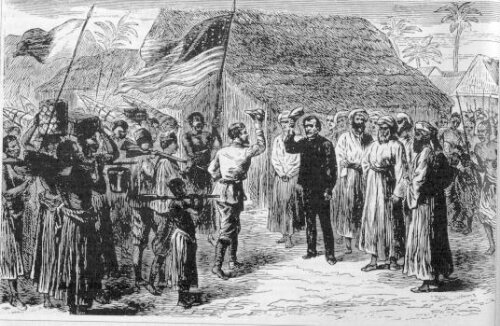
Henry Morton Stanley was famously the journalist who “found” the missionary explorer David Livingstone. He is a classic subject for the debunking-a-Victorian-hero genre, because – if Bierman is to be believed – Morton was a compulsive liar, a storyteller who invented versions of his life to suit his purposes.
I’m only part-way through the book, but want to offer some initial reactions to its first part, “Self-Invented Man”. The book was a serendipitous find in a booksale; I was only vaguely aware of Stanley as a historical figure, but I am fascinated by the possibilities of Victorian biography. It exists outside the lifespan of anyone alive today (bar the handful of people born before 1900), so it is an archival genre of biography, yet it almost feels in touching distance: the world of the Victorians was a world my grandparents were familiar with, even if they didn’t directly live in it.

Bierman writes well, with requisite wit. He has just the right tone to write Stanley’s story. He has also chosen a fascinating subject.

The gift Stanley left his biographer was an autobiography and other writings which are demonstrably false. Early sections of Bierman’s biography read as an extended commentary on Stanley’s autobiography. A key passage of Stanley’s account is presented and then debunked. As one example, Stanley presents himself as a youthful hero in the children’s workhouse, standing up to the tyrannical master, a rebel campaigning for justice. Bierman finds a contradiction in Stanley’s own account – why, then, was Stanley left in charge of the other children when the master was away? – and deploys corroborating evidence (interviews with other inmates, the workhouse records themselves) to argue the reality was that Stanley was actually the teacher’s pet.

Unlike a biography I recently finished (that of South Australian author, Matilda Evans) Bierman has a wealth of material to work with, and I find the debunking process gripping. The contradictions and fabrications in Stanley’s account reveal so much about the subject’s character and the age in which he lived.

The choice of subject is surely paramount for the biographer. There are so many historical figures who cry out for attention, and yet before embarking on a biography of them, the question probably has to be: what traces have they left behind? What raw materials are there to work with? (Unless, perhaps, the greatest biographer can coax blood from a stone and produce a great biography of a subject who has left little behind. It would have to be a convincingly and fascinatingly speculative account.)

Australia’s greatest temperance novelist: Matilda Jane Evans, aka Maud Jeanne Franc

27 Sunday Oct 2013

Posted by Nathan Hobby in biographies, history

≈ 7 Comments

Tags

19th century, Christian writing, South Australia

matilda-evans

Matilda Evans caught my attention when I was reading a history of Baptists in Australia. A brief profile talked of her significance as the first woman to have a novel published in South Australia (1859). In all, she published fourteen novels. She was a deaconness and married to a Baptist minister. I discovered a full-length biography of her had been published in 1994 – Our Own Matilda by Barbara Wall (Wakefield Press).

Alas, Matilda is a difficult biographical subject. Despite extensive research, Wall was only able to uncover a few letters written by her, and just one photograph. If she kept a diary, we do not have it. But even if she had kept one, I doubt Matilda could ever become a compelling biographical subject: Wall does her best to redeem her and the conventionality by which she lived and wrote, but can only do so much. A number of Matilda’s novels were temperance novels; all of them were favourites for Sunday School prizes, safe novels which inspired piety and respectable living. Of course, I’m missing Wall’s main point here: she takes to task the generations of male critics who have ignored or trivialised Matilda’s writing for these reasons. Wall insists – rightly – that the novels are fascinating social documents, providing insight into South Australian colonial life and the attitudes of her time. Yet from her own argument, Matilda’s writing will be of more interest to the historian than the literary critic.

The book is of interest to me for its insights into biographical method. What is the biographer to do when the subject does not reveal themselves? Wall attempts to fill the gaps by speculating on the basis of Matilda’s novels, drawing parallels to places and incidents to reconstruct Matilda’s likely experiences, fleshing out the bare facts provided by education records, obituaries and newspaper ads. It is a dangerous method, likely to be dismissed as invalid by some critics, but it seems fruitful and her suggestions reasonable.

Yet somehow, the analysis never quite brings Matilda and her world alive. As an example – and I probably place too much weight on death scenes – but for me they should usually be one of the stronger moments of the biography; there should be a way to convey some of the significance of a person’s life in their death, or at least to show how their death fitted their life. The death in this biography only shows the ordinariness of Matilda’s life and the lack of information about her:

She died on Friday, 22 October 1886, of peritonitis, and was buried on the following Sunday…

I’m sure the historical record can yield no more than this, so what more can I ask of the biographer? I’m not sure. But perhaps it could be juxtaposed with an analysis of how Matilda saw death in her novels. Perhaps something of the place of death in Victorian-era Australia. Perhaps some background on death by peritonitis at that time. Perhaps even some more speculation about the circumstances of her death, drawing on social histories of death. Perhaps none of this would work; I’m only trying to anticipate method when I come to write a biography of my own.

Matilda Evans is perhaps not so neglected as Wall fears – there is another book looking at her literature; a thesis written on her and two other S.A. women writers, and an entry for her in Australian Dictionary of Biography. Abebooks reveals that her books (which remained in print right up until the 1930s) are worth hundreds of dollars. Our Matilda itself is an excellent piece of research, and a good analysis of her life and literature, aware of the shortcomings of Matilda’s writings while open to their significance.

Forgetting to bcc, time travel to a different season

11 Friday Oct 2013

Posted by Nathan Hobby in autobiographical, technology and the digital world

≈ Leave a comment

Tags

email

Recently I got a mass-email from this guy who went overseas years ago. He forgot to do a blind carbon copy, and all the email addresses were visible – a snapshot of his address book from 2004 or so. It was time-travel, the sight of all these email addresses next to each other. A window to a season of my life. Everyone’s scattered now, all these young christian leftists brought together by the Iraq War protests. Do they even use these same addresses any more? You won’t ever catch them all in the same room again. Too many schisms, divorces, deconversions, metamorphoses. That’s what your twenties do to you.

*

You can tell things about people from their email addresses. Older people (Baby Boomers +) usually have ISP addresses – iinet, bigpond – and it’s usually in the name of the husband, even if the wife uses the account. (How many people sixty plus have you met with a gmail address?) People with a ‘hotmail’ address have had their address an awful long time. Attention-seekers have an attention-seeking email address. The great transition in my life, the change in epochs, was when I changed from ‘savageparade’ (it’s a quote from Rimbaud) to my name. I am pretty certain I changed personality at that moment.

The Tourist #6: The Soundtrack To My Holiday

07 Monday Oct 2013

Posted by Nathan Hobby in autobiographical, music, Series: The Tourist (2013)

≈ Leave a comment

Tags

buskers, Cinque Terra, The Cure

My music collection is on my laptop; I took with me my tablet, with just 150 of my 3778 songs. Who knew 150 songs would come to feel like so few, repeated again and again over the headphones and through the slivers of speakers? It feels like so few when I keep skipping half of them, and going back to the same few. Lisa Mitchell, “Land Beyond the Front Door”. Mazzy Star’s droning shoe gazing rock each time the coach guides put on their music. The comfort of Nick Cave’s title track “Push the Sky Away” without the rest of the album.

Then there were the buskers. Both times we walked to the basilica in Florence, the electric violinist was waiting for us in the square. She was trying to be Andre Rieu; my wife, a violist, hates Andre Rieu. In the busker’s own version of soulfully (sentimentally) she would play those overfamiliar classical pieces, and then throw in renditions of pop songs like Queen’s Bohemian Rhapsody. It was a kind of interesting torture standing in the queue.

I wanted to reward the buskers I thought were good. Above the ruins of the Roman Forum, a handful of Italians were playing catchy songs in their own language. I went up to put a Euro in their plate; the lead singer put his arm around me, wanting to know where I was from, and dragged me back, insisting my wife take a photo of me with them. He put his hat on me. She took the photo; I went to put a couple of Euros in his plate and escape, but his voice changed – it was 10 Euros for a photo! He was insistent, angry. We started walking away quickly; it was an unpleasant encounter, left me cautious of the buskers.

A musical highlight. In Cinque Terra, walking one morning between Vernazza and Monterosso along the cliffs, glorious saxophone music floated toward us. We came around the corner and the player, a man of seventy, was standing on a rock above the narrow, isolated path. I should have given him so much more than I did.

The other musical highlight. Arriving in Rome after a long day’s bus ride, late at night we venture out for a walk to the Pantheon, right near where we were staying. As we come to the massive ancient edifice, the Cure’s “Charlotte Sometimes” is playing so loudly, so freshly, the moment is so enchanted, that I tell my wife, “They’re playing a concert, right now, outside the Pantheon – we’ve stumbled on a free Cure concert!”. It seemed the sort of thing Robert Smith might do, but it does sound a little far-fetched, writing it down. It wasn’t the Cure, it was a taxi driver on his break, with an excellent sound system and the door of his taxi open. It was still magical, beholding the ancient pillars against the night sky to the sound of my favourite band, an unlikely but befitting soundtrack.

Sometimes I’m dreaming
Where all the other people dance
Sometimes I’m dreaming
Charlotte sometimes

The Tourist #5: Souvenirs

22 Sunday Sep 2013

Posted by Nathan Hobby in Series: The Tourist (2013)

≈ 4 Comments

Tags

memorialisation, souvenirs

image

A week ago, we were on the island of Murano, the island of Venice famous for its glass-making. A thousand shops on the tiny place sold glass ornaments; many of the cheaper ones were selling Chinese-made ones. Trinkets were made in factories in a different world and shipped to this island to sell to tourists to have their piece of Venetian memorabilia. It seemed a strange thing to do. The authentic shops, or the ones trying to seem so, had up signs declaring that there was no Chinese glass to be found in their shop. Overwhelmed yet underwhelmed, we left Murano without having purchased anything but a hot chocolate.
Souvenirs must have meant so much more in the nineteenth and twentieth centuries, as the possibility of travel opened up to so many more people, and each traveller was delighted to bring home a piece of the place they visited to remember it forever. But what do souvenirs mean in a globalised world when anything can be bought over the internet? And in our cluttered houses, with too much stuff, where no object can truly be treasured, only drowned out in the noise of our possessions.
We packed with no spare room in our bags at all. Our expectation was that we would bring home nothing but photographs, given our dislike of shopping and ideological disdain for souvenirs. Then, on the bus between cities, I was talking to an Australian couple who were collecting shot glasses from each city they visited; they showed me their latest from Lucerne. I said, “That’s going straight to the pool room!”; they laughed, but I’m not sure they got the reference. I was kind of jealous, imagining their cabinet full of slightly kitschy shot glasses to remember forever their great Europe trip. What was I going to have to show for my holiday? Did I really think my memories and photographs were enough?
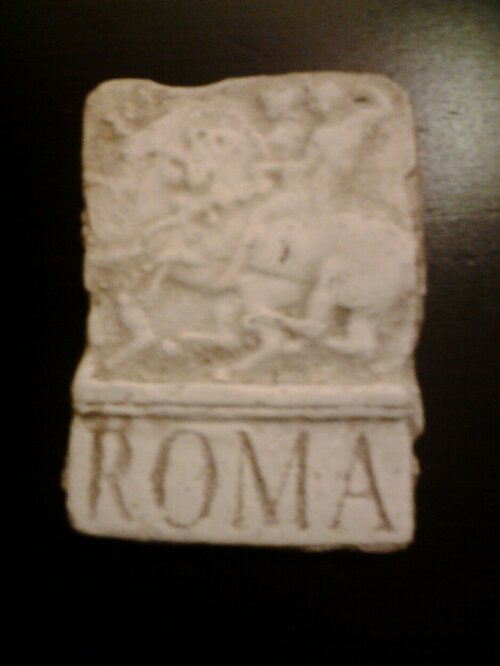
I’d missed four cities already, but next city, I bought a fridge magnet. It would hold up documents on our fridge, and remind me of the exotic places I had been with an iconic image of the place in question. Never mind where it was made. Never mind how tenuous the link between the image and my experience of the city. I decided I would join the souvenir game.
I have done this knowing there’s something despicable about souvenir stands. (There’s one every twenty metres in the Vatican, it’s the worst for them.) They remind us we are tourists. They remind us we are a herd. They remind us we trying to capture our moment, capture the place in a trinket, and that, really, we have failed.  And still, today, before I left Florence, I made sure I’d got another magnet.

Some Thoughts on Alister McGrath’s Biography of C.S. Lewis

18 Wednesday Sep 2013

Posted by Nathan Hobby in biographies, book review

≈ 1 Comment

Tags

C.S. Lewis, Christian writing

I’ve just finished McGrath’s C.S. Lewis: A Life, a book in which  my interests in biography, theology and literature converge.
I’ve had an uneasy relationship with Lewis. I was brought up on The Chronicles of Narnia. The crude 1970s cartoon version of The Lion, The Witch and The Wardrobe was the only video provided for children to watch at several church camps when I was young. For my eighth birthday, my parents bought me the set of books in a boxset (not a common thing; I didn’t own that many books as a child – it was always the libraries); they were a precious possession, and I enjoyed them a lot – although never quite as much as I perhaps felt I should. I went onto to read the Space trilogy as a teenager, but avoided his Christian writings, probably partly because of one over-zealous youth group leader who had only ever read C.S. Lewis and made him sound incredibly dull to me by steering every conversation back to him. Lewis was also just too obvious a choice for me with my dual interest in theology and literature. Yet a couple of years ago, I was blown away by the brilliance of The Great Divorce, one of the best books on eschatology I have ever read, and since then my interest in him has been strengthened.
McGrath’s research is excellent and he is insightful in telling the story of Lewis’s life. Yet his style is precisely wrong for his subject, and it is a failing which drags the book down for me. The problem is one of over-clarity, not only over-simple, pedestrian prose, but constant signposting of every transition (too many ‘to which we now turn’s at the end of each section) and repetitions which grow tiresome. It may well be an attempt to make the book as readable as possible, and it probably succeeds in doing that, but although McGrath writes of the poetry in Lewis’s writing and its beauty, there is little of it in this account of Lewis.
Lewis was long dead before I began reading him; his work comes to the present generations as an established whole. It was of so much value to learn of the development of each book chronologically, of how each book emerged from a particular period of Lewis’s life. The hodge-podge of Lewis I’ve had in my reading – from late works to early works and in between and back again – muddles the sense of a mind not fixed with one position but developing and changing. For example, it was interesting to learn of how his two books on suffering – The Problem of Pain and A Grief Observed – were written at very different times of his life, one a theoretical apology, and the other an emotional account of his own reaction to his wife’s death.
I knew so little of Lewis’s life before reading this biography, and the complexities of it were gripping. I found myself wishing McGrath was just a little more interested in scandal, although he certainly presents the scandalous aspects in a plain-spoken way. Lewis had the strangest relationship with a wife-mother figure, Mrs Moore. I’m sure others have explored it in greater length, and McGrath gives an adequate account, but it is bizarre and seems to have been so crucial to the type of life he lived. McGrath presents Lewis’s eventual wife, Joy Davidman, as a conniving woman, and it is another strange story. McGrath minimises the attempts to get inside Lewis’s head, but I think he should have tried some more. One of the problems, no doubt, is the reticence Lewis would have shown in print about his unusual relationships with women.
Structurally, it all seems to be over so quickly, but that’s the inevitable experience of a biography which is not the size of a brick. Perhaps it was only a question of how engrossed I was, but the second half of his life seemed to be covered in too little detail, perhaps because McGrath’s attention shifted to Lewis’s published work.
Which brings me to a question of biographical method and structure. The book stalled for me in Part Three – ‘Narnia’. McGrath breaks off his narrative of Lewis’s life to offer a rather basic overview of the themes and significance of Narnia. It seems a contravention of the book’s own internal parameters. I think the book would be stronger as a biography if the discussion of Narnia was more deeply rooted in the biographical, even if that meant not saying things McGrath regards as important.
My complaints aside, McGrath has deepened my interest in Lewis and written a good popular-level biography. It would be an interesting exercise to compare the companion release, a more academic account of Lewis – but I’ll probably leave that to others.

The Tourist #4: The Pleasure of Ruins

17 Tuesday Sep 2013

Posted by Nathan Hobby in autobiographical, Series: The Tourist (2013)

≈ 2 Comments

Tags

childhood, Rome, ruins

 
image

  Sitting on my shelf at home is a book, bought at a booksale two or three years ago, I am looking forward to one day reading: ‘The Pleasure of Ruins’.
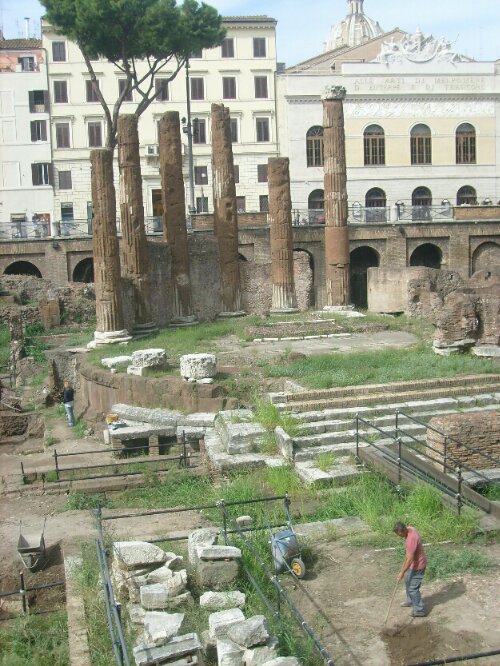
   We are staying in a medieval apartment a few hundred metres from ancient ruins of Rome, and we have spent today looking at them. We saw great marble pillars fashioned at the time of Christ, inscriptions which have lasted centuries, the skeletal remains of the grandeur of an empire, the bricks and broken stones of it.
   As a child, I thought I was fascinated by archaeology, but more than that I was fascinated by ruins. Today I realised the photos in books about ruins present an idyll which is not otainable in the real world. The viewer of ruins is an explorer cutting through the overgrown forest to come across the ruins, the first to lay eyes on them for centuries. From a perfect angle, in beautiful light, the ruins shimmer and fill the viewer with a kind of longing which is hard to explain.
The idyll of ruins is the quester contemplating the fate of Ozymandius in solitude and silence. The reality of Rome’s ruins is the viewer in a sea of tourists, all straining to have their ruins experience, or at least a good photo of them. The reality is iron bars and fences and signs and relentless sellers of novelty toys and souvenirs.

*

This is just an observation; the truth is that today my inner-six-year-old was elated, which is to say my whole self was elated, because I have never lost my love of ruins. (All three of my novels are partly about ruins. In ‘The Fur’, it is a whole state in ruins, the beauty of abandoned towns and houses in a plague. In ‘House of Zealots’, the ruins are obscured, but the whole novel was inspired by the mood of living in a rundown house from 1950 which was one step off being abandoned to squatters, a contemporary ruin. In ‘Immortalities’ the ‘ruins’ are the archival remains and traces which individual lives leave behind, waiting for the quester to piece them together. I wonder how different my interest in ruins would be if I lived in Europe where the ruins are ancient?)
I had my moments of contemplation jostling among the tourists, my moments of connection to the past. In fact, it was an overwhelming dose of ruins – it seems too much for one person to be allowed to experience in one day.

*

Wasn’t it the Romantic period when the beauty of ruins was recognised? (I will find out for sure when I finally read that book which awaits on my shelf back home.) Faux ruins were created, and others ‘improved’ to make them more picturesque. It is an instinct I fully understand. I hope they do not attempt to restore too many of the grand crumbling monuments and buildings I saw today – it is more poignant to see them as time has rendered them. Recover and preserve, but not to make them shiny and new. Leave the weeds growing out of the old bricks. Leave them with their sense of centuries which we cannot have ourselves.

The Tourist #3: Staying in a Haunted House

17 Tuesday Sep 2013

Posted by Nathan Hobby in death, Series: The Tourist (2013)

≈ Leave a comment

Tags

death, memorialisation, Venice

Friday was a long journey from Munich to Venice, finishing with a slow “vaporetto” (water bus) journey to the far end of Venice.

We had booked a place through airbnb; ‘urgent maintenance’ meant that at the last minute we were moved to a place in St Elena, the furthest edge of the island; it was a bigger, more expensive apartment, our host reassured us. He met us at the vaporetto stop and took us through a park loud with all the local children playing to the house.

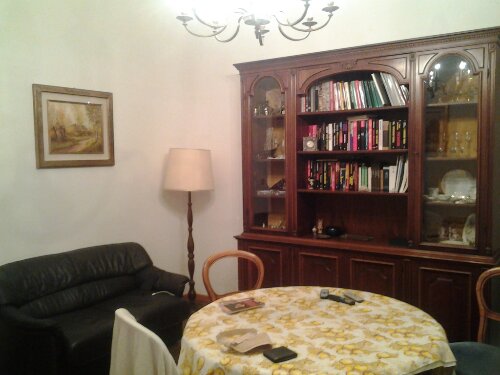
The apartment was a shrine to a dead man.

image

The dead man was a doctor, a paedetrician, a plaque in the entrance told us. Inside, the apartment was surely much as he left it when he died nearly ten years ago. A good collection of novels in Italian, frozen in the early noughties. Knick-knacks in the cabinet from his travels around the world – a boomerang, even. The atmosphere brought to mind the house of my dead grandparents, and that of my wife’s dead grandparents: the accretions of a life centred on the late 1950s. Old furniture mixed with new. A green kitchen with odd crockery and cutlery only years of living could produce. A smell of many years of living in that one place.

In the spare room, on the wall, his framed degree remains on display.

A tour guide told me there is no room to bury their dead on Venice. They take them out to an island and bury them there for a decade or two until the gravesite is required again and the bones are transferred to a communal ossuary.

Yet this doctor, even as he lies in the ground on the next island, has a great shrine right where he always lived. Tourists come and live in his shrine each week, as if on pilgrimage. The apartment awaits his return.

← Older posts
Newer posts →

Enter your email address to follow this blog and receive notifications of new posts by email.

Join 287 other subscribers

Nathan on Twitter

My Tweets

Categories

  • academic (9)
  • archives and sources (10)
  • autobiographical (62)
  • biographers (10)
  • biographical method (28)
  • biographical quests (18)
  • biographies (21)
    • political biography (2)
  • biographies of living subjects (2)
  • biographies of writers, artists & musicians (12)
  • biographies of writers, artists and musicians (20)
  • biography as a literary form (9)
  • biography in fiction (2)
  • biography in the news (2)
  • books (236)
    • authors (19)
    • book review (173)
    • reading (23)
  • Covid (2)
  • creative nonfiction (11)
  • daily life (2)
  • Daily Prompt (2)
  • death (21)
  • digital humanities (3)
  • family history (1)
  • fiction (8)
  • film and television biographies (5)
  • film review (48)
  • found objects (3)
  • historical biographies (1)
  • history (20)
  • In the steps of KSP (4)
  • John Curtin (13)
  • Katharine Susannah Prichard (114)
    • Glimpses of KSP (7)
    • My KSP biography (31)
      • deleted scenes (1)
  • Katharine Susannah Prichard's associates and connections (16)
  • Katharine Susannah Prichard's writings (34)
  • libraries (5)
  • life (20)
  • link (23)
  • links (41)
  • lists (28)
  • local history and heritage (1)
  • media (4)
  • memes and urban myths (1)
  • memoirs (10)
  • meta (2)
  • music (18)
  • news (9)
  • news and events (43)
  • obituary (1)
  • Old writing found on a floppy disk (1)
  • poetry (5)
  • politics and current affairs (26)
    • climate change (1)
  • prologues and introductions (2)
  • psychological aspects of biography (3)
  • quotes (22)
  • R.I.P. (10)
  • reading report (3)
  • religion (1)
  • religious biography (1)
  • research (5)
  • role of the biographer within the biography (2)
  • Series: A-Z of Katharine Susannah Prichard (26)
  • Series: Corona Diary (1)
  • Series: Saturday 10am (14)
  • Series: Short Stories (2016) (6)
  • Series: The Tourist (2013) (6)
  • Series: Thursday 3pm feature posts (2009) (35)
  • structure of biographies (3)
  • technology and the digital world (2)
  • television (4)
  • the nature of biography (4)
  • this blog (10)
  • Uncategorized (33)
  • Western Australia (26)
  • writing (41)

Archives

Recent Comments

amphisbaenathoroughly79c20f19aa's avataramphisbaenathoroughl… on John Curtin’s vision…
Nathan Hobby's avatarNathan Hobby on John Curtin’s vision…
karenlee thompson's avatarkarenlee thompson on John Curtin’s vision…
Nathan Hobby's avatarNathan Hobby on John Curtin’s vision…

Bookmarks

  • Adventures in Biography
  • ANZ LitLovers LitBlog
  • Bernice Barry
  • It only goes up to your knees
  • Jane Bryony Rawson
  • Jenn Plays Recorder
  • Katharine Susannah Prichard Writers' Centre
  • Laura Sewell Matter: Essayist and Biographer
  • Mutually said: Poets Vegan Anarchist Pacifist
  • Resident Judge
  • Speaking Thylacine
  • The Australian Legend
  • Timothy Parkin Poetry
  • Treefall Writing – Melinda Tognini
  • Whispering Gums
  • Wrapped up in books: the home of Guy Salvidge

Top Posts

  • Paul Auster's Moon Palace : an overview
  • The Joy of Knowledge Encyclopedia
  • The 28th, 29th, and 30th prime ministers: a memoir
  • Comic-book biography?
  • The untold story of Critchley Parker Sr

Blog Stats

  • 235,196 hits

Tag Cloud

9/11 19th century 33 1920s 1921 1930s 1950s 1970s 1971 1981 2000s 2004 2011 2015 2017 20000 Days on Earth A.S. Byatt Aboriginals activism Adam Begley Adrian Mole adultery afterlife Agatha Christie Alan Hollinghurst Alberto Manguel Alfred Deakin Amazing Grace Americana Amy Grant An American Romance Andre Tchaikowsky Andrew McGahan angela myers anne fadiman Anne Rice Arabian Nights archives art arts funding A Serious Man Ash Wednesday ASIO atheism Atonement Australia Australian film Australian literature Australian Short Story Festival autism autobiography autodidact Barbara Vine beach Belle Costa da Greene Bell Jar best best-of Bible Big Issue Bill Callahan biographical ethics biographical quest genre biographies birthday birthdays Black Opal Bleak House Blinky Bill blogging blogs Blue Blades Bodega's Bunch bog Booker book launch booksale Borges Brenda Niall Brian Matthews Brian McLaren Britney Spears Burial Rites Burke and Wills buskers C.S. Lewis C.S. Lewis canon capitalism Carol Shields Carson McCullers Catcher in the Rye Catholicism celebrities Charles Dickens Charlie Kaufman childhood Child of the Hurricane children's books Choir of Gravediggers Christianity Christian writing Christina Stead Christmas Christopher Beha Cinque Terra Claire Tomalin classics cliches climate change Coen brothers coincidence Collie Collyer coming of age Communism concert Condensed Books consumerism Coonardoo Cormac McCarthy Corrections cosy fiction Dara Horn David Copperfield David Ireland David Marr David Suchet death Death of a president definition demolition Dennis LeHane dentist diaries divorce doctorow Doctor Who documentaries donald shriver Don DeLillo Don DeLillo Donna Mazza Donna Tartt Don Watson Dostovesky doubt drama dreams of revolution Drusilla Modjeska E.M. Forster ebooks editing Eichmann Eisenstein Elizabeth Kostova email empathy ensmallification existentialism faith Falling Man fame families fantasy fiction film and television folk football Frank Barscombe Fremantle Press G.K. Chesterton Gabrielle Carey Gallipoli genealogical fiction Genesis Geoff Nicholson George W. Bush Gerald Glaskin Gilead Golden Miles Goldfields Trilogy Graham Greene grandad great novels Greenmount Guinness World Records Guy Salvidge Hannah Arendt Hannah Kent Hans Koning Hans Koningsberger Harper Lee Haxby's Circus Hazel Rowley He-Man headers heaven Heidegger hell Henrietta Lacks Henry Morton Stanley Herman Hesse heroes Hey Dad! historical fiction history Holden Caulfield holidays Homer & Langley Home Song Stories House of Cards House of Zealots house of zealots Hugo Throssell humour Ian McEwan In between the sheets Indonesia Infamous Inside Llewyn Davis interstellar interview Intimate Strangers Invisible Ireland ISBNs Ishiguro itunes J.D. Salinger J.M. Coetzee J.S. Battye Janet Malcolm Jennifer Egan JFK JFK assassination Joanna Rakoff Joel Schumacher John Burbidge John Fowles John Howard John Kinsella John Updike John Updike Jonathan Franzen journal writing JSB Judgment Day Julia Baird Julian Barnes Kafka Kalgoorlie Kate Grenville Katherine Mansfield Kevin Brockmeier King's Park KSP Writers' Centre language last ride Laurie Steed Left Behind Leonard Cohen Leo Tolstoy Libra Library of Babel Library of Babel Lila Lily and Madeleine links Lionel Shriver lionel shriver lists literary fiction literature Lleyton Hewitt lost book Louisa Louisa Lawson Louis Esson louis nowra love letter Lubbock Lytton Strachey Madelaine Dickie Man Booker man in the dark Margaret Atwood Margaret River Press Marilynne Robinson mark sandman meaning of life Melbourne Mel Hall meme memorialisation memory MH17 Michael Faber Mike Riddell Miles Franklin mining boom missionaries moleskine Moon Palace morphine Mother Teresa movies Music of Chance My Brilliant Career names Napoleon Narnia narrative Narrow Road to the Deep North Narziss and Goldmund Natalie Portman Nathaniel Hobbie national anthem Nick Cave Nina Bawden non-fiction nonfiction noughties novelists novels obituaries obscurity On Chesil Beach Parade's End Paris Hilton Passion of the Christ past patriotism Paul Auster Paul de Man Perth Perth Writers Festival Peter Ackroyd Peter Cowan Writers Centre phd Philip K. Dick Philip Seymour Hoffman pierpontmorgan poetry slam politics popular fiction popular science Possession postapocalyptic postmodernism Pride prophetic imagination publications Pulp Purity Queen Victoria Rabbit Angstrom radio Radio National Randolph Stow rating: 5/10 rating: 6/10 rating: 7/10 rating: 8/10 rating: 9/10 rating: 10/10 ratings reading fiction autobiographically reading report Rebecca Skloot recap red wine reincarnation juvenile fiction rejection review - music reviewing rewriting Richard Flanagan Richard Ford Rick Moody Roaring Nineties Robert Banks Robert Hughes Robert Silverberg Robert Wadlow Robinson Crusoe Rolf Harris romance Rome ruins Russell Crowe Ruth Rendell Sarah Murgatroyd scalpers science fiction Science of Sleep secondhand books Secret River sermon illustration sex short stories Silent Woman Simone Lazaroo Simpsons Siri Hustvedt slavery Smashing Pumpkins social interactions social justice some people i hate sources South Australia souvenirs speculation speech speeches sport status anxiety Stephen Lawhead Stranger's Child subtitles Subtle Flame Sue Townsend suicide Surprised By Hope Suzanne Falkiner Sylvia Plath Synecdoche TAG Hungerford Award tapes teabags Ted Hughes The Children Act The Cure The Fur The Imitation Game theology The Pioneers The Revolutionary Thomas Disch Thomas Hardy Thomas Henry Prichard Thomas Mann thriller time Tim La Haye Tim Winton Tolstoy Tom Wright top 10 Towering Inferno Tracy Ryan Trove Truman Capote tshirts TS Spivet Twelve Years a Slave underrated writers Underworld unwritten biographies urban myth USA vampires Venice Victoria Cross Victoriana Victorian era Victorianism Victoria Park video Voltron w Wake in Fright Walkabout Walter M. Miller war War and Peace war on terror Water Diviner Wellington St Bus Station Westerly Western Australia West Wing What Happened to Sophie Wilder? Whitlams wikipedia Wild Oats of Hans William Wilberforce Winston Churchill Witches of Eastwick Working Bullocks workshop World War One writers writing Writing NSW youth Zadie Smith Zeitgeist Zelig

Enter your email address to follow this blog and receive notifications of new posts by email.

Join 287 other subscribers

Pages

  • About
  • My novel: The Fur
  • The Red Witch: A Biography of Katharine Susannah Prichard

Categories

  • academic (9)
  • archives and sources (10)
  • autobiographical (62)
  • biographers (10)
  • biographical method (28)
  • biographical quests (18)
  • biographies (21)
    • political biography (2)
  • biographies of living subjects (2)
  • biographies of writers, artists & musicians (12)
  • biographies of writers, artists and musicians (20)
  • biography as a literary form (9)
  • biography in fiction (2)
  • biography in the news (2)
  • books (236)
    • authors (19)
    • book review (173)
    • reading (23)
  • Covid (2)
  • creative nonfiction (11)
  • daily life (2)
  • Daily Prompt (2)
  • death (21)
  • digital humanities (3)
  • family history (1)
  • fiction (8)
  • film and television biographies (5)
  • film review (48)
  • found objects (3)
  • historical biographies (1)
  • history (20)
  • In the steps of KSP (4)
  • John Curtin (13)
  • Katharine Susannah Prichard (114)
    • Glimpses of KSP (7)
    • My KSP biography (31)
      • deleted scenes (1)
  • Katharine Susannah Prichard's associates and connections (16)
  • Katharine Susannah Prichard's writings (34)
  • libraries (5)
  • life (20)
  • link (23)
  • links (41)
  • lists (28)
  • local history and heritage (1)
  • media (4)
  • memes and urban myths (1)
  • memoirs (10)
  • meta (2)
  • music (18)
  • news (9)
  • news and events (43)
  • obituary (1)
  • Old writing found on a floppy disk (1)
  • poetry (5)
  • politics and current affairs (26)
    • climate change (1)
  • prologues and introductions (2)
  • psychological aspects of biography (3)
  • quotes (22)
  • R.I.P. (10)
  • reading report (3)
  • religion (1)
  • religious biography (1)
  • research (5)
  • role of the biographer within the biography (2)
  • Series: A-Z of Katharine Susannah Prichard (26)
  • Series: Corona Diary (1)
  • Series: Saturday 10am (14)
  • Series: Short Stories (2016) (6)
  • Series: The Tourist (2013) (6)
  • Series: Thursday 3pm feature posts (2009) (35)
  • structure of biographies (3)
  • technology and the digital world (2)
  • television (4)
  • the nature of biography (4)
  • this blog (10)
  • Uncategorized (33)
  • Western Australia (26)
  • writing (41)

Archives

Recent Comments

amphisbaenathoroughly79c20f19aa's avataramphisbaenathoroughl… on John Curtin’s vision…
Nathan Hobby's avatarNathan Hobby on John Curtin’s vision…
karenlee thompson's avatarkarenlee thompson on John Curtin’s vision…
Nathan Hobby's avatarNathan Hobby on John Curtin’s vision…

Bookmarks

  • Adventures in Biography
  • ANZ LitLovers LitBlog
  • Bernice Barry
  • It only goes up to your knees
  • Jane Bryony Rawson
  • Jenn Plays Recorder
  • Katharine Susannah Prichard Writers' Centre
  • Laura Sewell Matter: Essayist and Biographer
  • Mutually said: Poets Vegan Anarchist Pacifist
  • Resident Judge
  • Speaking Thylacine
  • The Australian Legend
  • Timothy Parkin Poetry
  • Treefall Writing – Melinda Tognini
  • Whispering Gums
  • Wrapped up in books: the home of Guy Salvidge

Top Posts

  • Paul Auster's Moon Palace : an overview
  • The Joy of Knowledge Encyclopedia
  • The 28th, 29th, and 30th prime ministers: a memoir
  • Comic-book biography?
  • The untold story of Critchley Parker Sr

Blog Stats

  • 235,196 hits

Tag Cloud

9/11 19th century 33 1920s 1921 1930s 1950s 1970s 1971 1981 2000s 2004 2011 2015 2017 20000 Days on Earth A.S. Byatt Aboriginals activism Adam Begley Adrian Mole adultery afterlife Agatha Christie Alan Hollinghurst Alberto Manguel Alfred Deakin Amazing Grace Americana Amy Grant An American Romance Andre Tchaikowsky Andrew McGahan angela myers anne fadiman Anne Rice Arabian Nights archives art arts funding A Serious Man Ash Wednesday ASIO atheism Atonement Australia Australian film Australian literature Australian Short Story Festival autism autobiography autodidact Barbara Vine beach Belle Costa da Greene Bell Jar best best-of Bible Big Issue Bill Callahan biographical ethics biographical quest genre biographies birthday birthdays Black Opal Bleak House Blinky Bill blogging blogs Blue Blades Bodega's Bunch bog Booker book launch booksale Borges Brenda Niall Brian Matthews Brian McLaren Britney Spears Burial Rites Burke and Wills buskers C.S. Lewis C.S. Lewis canon capitalism Carol Shields Carson McCullers Catcher in the Rye Catholicism celebrities Charles Dickens Charlie Kaufman childhood Child of the Hurricane children's books Choir of Gravediggers Christianity Christian writing Christina Stead Christmas Christopher Beha Cinque Terra Claire Tomalin classics cliches climate change Coen brothers coincidence Collie Collyer coming of age Communism concert Condensed Books consumerism Coonardoo Cormac McCarthy Corrections cosy fiction Dara Horn David Copperfield David Ireland David Marr David Suchet death Death of a president definition demolition Dennis LeHane dentist diaries divorce doctorow Doctor Who documentaries donald shriver Don DeLillo Don DeLillo Donna Mazza Donna Tartt Don Watson Dostovesky doubt drama dreams of revolution Drusilla Modjeska E.M. Forster ebooks editing Eichmann Eisenstein Elizabeth Kostova email empathy ensmallification existentialism faith Falling Man fame families fantasy fiction film and television folk football Frank Barscombe Fremantle Press G.K. Chesterton Gabrielle Carey Gallipoli genealogical fiction Genesis Geoff Nicholson George W. Bush Gerald Glaskin Gilead Golden Miles Goldfields Trilogy Graham Greene grandad great novels Greenmount Guinness World Records Guy Salvidge Hannah Arendt Hannah Kent Hans Koning Hans Koningsberger Harper Lee Haxby's Circus Hazel Rowley He-Man headers heaven Heidegger hell Henrietta Lacks Henry Morton Stanley Herman Hesse heroes Hey Dad! historical fiction history Holden Caulfield holidays Homer & Langley Home Song Stories House of Cards House of Zealots house of zealots Hugo Throssell humour Ian McEwan In between the sheets Indonesia Infamous Inside Llewyn Davis interstellar interview Intimate Strangers Invisible Ireland ISBNs Ishiguro itunes J.D. Salinger J.M. Coetzee J.S. Battye Janet Malcolm Jennifer Egan JFK JFK assassination Joanna Rakoff Joel Schumacher John Burbidge John Fowles John Howard John Kinsella John Updike John Updike Jonathan Franzen journal writing JSB Judgment Day Julia Baird Julian Barnes Kafka Kalgoorlie Kate Grenville Katherine Mansfield Kevin Brockmeier King's Park KSP Writers' Centre language last ride Laurie Steed Left Behind Leonard Cohen Leo Tolstoy Libra Library of Babel Library of Babel Lila Lily and Madeleine links Lionel Shriver lionel shriver lists literary fiction literature Lleyton Hewitt lost book Louisa Louisa Lawson Louis Esson louis nowra love letter Lubbock Lytton Strachey Madelaine Dickie Man Booker man in the dark Margaret Atwood Margaret River Press Marilynne Robinson mark sandman meaning of life Melbourne Mel Hall meme memorialisation memory MH17 Michael Faber Mike Riddell Miles Franklin mining boom missionaries moleskine Moon Palace morphine Mother Teresa movies Music of Chance My Brilliant Career names Napoleon Narnia narrative Narrow Road to the Deep North Narziss and Goldmund Natalie Portman Nathaniel Hobbie national anthem Nick Cave Nina Bawden non-fiction nonfiction noughties novelists novels obituaries obscurity On Chesil Beach Parade's End Paris Hilton Passion of the Christ past patriotism Paul Auster Paul de Man Perth Perth Writers Festival Peter Ackroyd Peter Cowan Writers Centre phd Philip K. Dick Philip Seymour Hoffman pierpontmorgan poetry slam politics popular fiction popular science Possession postapocalyptic postmodernism Pride prophetic imagination publications Pulp Purity Queen Victoria Rabbit Angstrom radio Radio National Randolph Stow rating: 5/10 rating: 6/10 rating: 7/10 rating: 8/10 rating: 9/10 rating: 10/10 ratings reading fiction autobiographically reading report Rebecca Skloot recap red wine reincarnation juvenile fiction rejection review - music reviewing rewriting Richard Flanagan Richard Ford Rick Moody Roaring Nineties Robert Banks Robert Hughes Robert Silverberg Robert Wadlow Robinson Crusoe Rolf Harris romance Rome ruins Russell Crowe Ruth Rendell Sarah Murgatroyd scalpers science fiction Science of Sleep secondhand books Secret River sermon illustration sex short stories Silent Woman Simone Lazaroo Simpsons Siri Hustvedt slavery Smashing Pumpkins social interactions social justice some people i hate sources South Australia souvenirs speculation speech speeches sport status anxiety Stephen Lawhead Stranger's Child subtitles Subtle Flame Sue Townsend suicide Surprised By Hope Suzanne Falkiner Sylvia Plath Synecdoche TAG Hungerford Award tapes teabags Ted Hughes The Children Act The Cure The Fur The Imitation Game theology The Pioneers The Revolutionary Thomas Disch Thomas Hardy Thomas Henry Prichard Thomas Mann thriller time Tim La Haye Tim Winton Tolstoy Tom Wright top 10 Towering Inferno Tracy Ryan Trove Truman Capote tshirts TS Spivet Twelve Years a Slave underrated writers Underworld unwritten biographies urban myth USA vampires Venice Victoria Cross Victoriana Victorian era Victorianism Victoria Park video Voltron w Wake in Fright Walkabout Walter M. Miller war War and Peace war on terror Water Diviner Wellington St Bus Station Westerly Western Australia West Wing What Happened to Sophie Wilder? Whitlams wikipedia Wild Oats of Hans William Wilberforce Winston Churchill Witches of Eastwick Working Bullocks workshop World War One writers writing Writing NSW youth Zadie Smith Zeitgeist Zelig

Blog at WordPress.com.

  • Subscribe Subscribed
    • Nathan Hobby, a biographer in Perth
    • Join 287 other subscribers
    • Already have a WordPress.com account? Log in now.
    • Nathan Hobby, a biographer in Perth
    • Subscribe Subscribed
    • Sign up
    • Log in
    • Report this content
    • View site in Reader
    • Manage subscriptions
    • Collapse this bar
 

Loading Comments...