• About
  • The Red Witch: A Biography of Katharine Susannah Prichard
  • My novel: The Fur

Nathan Hobby, a biographer in Perth

~ The lives of John Curtin & Katharine Susannah Prichard, the art of biography, and other things

Nathan Hobby, a biographer in Perth

Author Archives: Nathan Hobby

The biographer as professional burglar: Janet Malcolm’s The Silent Woman

04 Friday Apr 2014

Posted by Nathan Hobby in biographies of writers, artists and musicians, research

≈ Leave a comment

Tags

biographical ethics, Janet Malcolm, Silent Woman, Sylvia Plath, Ted Hughes

In her landmark book in the field of biography, The Silent Woman (1993), Janet Malcolm investigates the biographers of Sylvia Plath. It is the reaction to a particular account of Plath’s life, Anne Stevenson’s Bitter Fame, that sparks her quest. Stevenson was pilloried in reviews for being too close to Ted Hughes, Plath’s estranged husband, or at least his ‘camp’.

Malcolm starts out with fighting words about biography:

The biographer at work, indeed, is like the professional burglar, breaking into a house, rifling through certain drawers that he has good reason to think contain the jewelry and money, and triumphantly bearing his loot away. The voyeurism and busybodyism that impel writers and readers of biography alike are obscured by an apparatus of scholarship designed to give the enterprise an appearance of banklike blandness and solidity. The biographer is portrayed almost as a kind of benefactor. He is seen as sacrificing years of his life to his task, tirelessly sitting in archives and libraries and patiently conducting interviews with witnesses. There is no length he will not go to, and the more his book reflects his industry the more the reader believes that he is having an elevating literary experience, rather than simply listening to backstairs gossip and reading other people’s mail. The transgressive nature of biography is rarely acknowledged, but it is the only explanation for biography’s status as a popular genre. (Kindle loc. 145-152)

Yet despite this polemic opening, Malcolm shows considerable empathy for all sides – including the biographers – in the ongoing dispute over Plath’s death and life. Her claims about biography are shown to be true in the case of some of Plath’s biographers, yet clearly not in others. What’s more, the case of Sylvia Plath would seem to me to be such an extreme test case in the ethics of biography that it shouldn’t be used to generalise about the whole. As much as the attentions of a biographer are a mixed blessing, most writers (in the case of literary biography) have sought public recognition for their writings, and for many this is partly a case of wanting readers to understand them, or at least some part of them. Whatever its crimes, biography also brings recognition to forgotten writers. When they are not writing about a sensational figure like Plath, they are often benefactors; I think of John Burbidge working for years on the life story of Gerald Glaskin, a Perth writer whose novels have been largely forgotten (Dare Me! 2014). He did it because he was interested in the man, and thought him worth remembering.

In Malcolm’s eyes, Stevenson’s “crime” was to ‘hesitate before the keyhole’ – to dare to question the entire biographical enterprise, by writing in her (Stevenson’s) preface of the need to be sensitive to Plath’s family. In the course of the narrative, Malcolm goes on to elucidate the terrible, suffocating effect Ted’s sister, Olwyn Hughes, had on Stevenson’s book. (While being, in theory, on the Hughes’s ‘side’.) This emerges as the true reason for the problems with Stevenson’s book; in the meantime, it seems Malcolm is not quite aware enough of the irony of her own judgements and depictions of various living people.

This all said, I think this is a superb book that deserves its status as a landmark in the history of biography. Even when Malcolm generalises and exaggerates, she does so in such a beautiful and provokingly important way. The ambiguities and questions she leaves us with are the treasures. I would hope the effect of the book is not to make writers shy away from the prospect of becoming biographers, but of doing so with a renewed appreciation of their responsibilities.

Writing beautifully, wearing research lightly: Rebecca Skloot’s achievements in her book on Henrietta Lacks

22 Saturday Mar 2014

Posted by Nathan Hobby in biographical method, biographical quests, book review, creative nonfiction, role of the biographer within the biography, structure of biographies

≈ 4 Comments

Tags

1950s, Henrietta Lacks, popular science, Rebecca Skloot, USA

Henrietta_Lacks_(1920-1951)

Rebecca Skloot’s The Immortal Life of Henrietta Lacks (Macmillan, 2010) is an exemplar of creative non-fiction, an intriguing combination of biographical quest and popular science. It was ten years in the writing, as Skloot lived off student loans and credit cards on her quest to follow the story of Henrietta Lacks, the black woman whose cancer cells were taken without her knowledge in 1951 and seem to be immortal, multiplying and living on for decades, and used in thousands of medical breakthroughs.

In her long acknowledgements, Skloot writes that one of her friends ‘taught me to care deeply about story structure’ (Loc 5157), and Immortal Life is indeed a brilliantly structured story. Through much of the book, Skloot alternates chapters retelling the life and afterlife of Henrietta and her cells with chapters recounting Skloot’s own quest through the late 1990s and 2000s to uncover the story. A simple but invaluable orienting device is a timeline indicator at the start of each chapter. Other biographies and histories should consider using it. While Skloot is in the action and gives a couple of biographical clues about herself in the prologue (‘I grew up white and agnostic’; she mentions a marriage and divorce during the writing of the book), for the rest of the book she remains restrainedly silent about her own life, except to the extent it directly affects the quest.

chapter-guide

From Chapter 29, it is Skloot herself who is at the centre of the afterlife of Henrietta and for the final eight chapters, the quest is recounted chronologically, with the focus on Skloot’s relationship with Henrietta’s daughter, Deborah, who has been deeply affected by the legacy of what happened to her mother, and the way her contribution to science has been long unacknowledged. She mentions in passing that an editor who “insisted I take the Lacks family out of the book was injured in a mysterious accident” (loc 217). While the troubles of the disadvantaged Lacks family and their attempts to deal with Henrietta’s legacy are so important to Skloot’s purpose and the achievements of the book, the editor may have been onto something, however misguided and extreme her remedy. Those final eight chapters almost feel they could be from a different book. The beautiful, understated writing of the rest of the book is overwhelmed by long sections of dialogue from Deborah and the others. It’s captured well, and it’s a story worth telling; I wonder, though, if it needed condensing and balancing.

One of the accomplishments of this book is the way Skloot wears a decade of research so lightly. There are no footnotes through the book, but notes on the sources for each chapter at the end. The book reads more like a novel than most biographies; Skloot has managed to find enough detail to show as much as she tells. Here is the opening paragraph of chapter one:

On January 29, 1951, David Lacks sat behind the wheel of his old Buick, watching the rain fall. He was parked under a towering oak tree outside Johns Hopkins Hospital with three of his children— two still in diapers—waiting for their mother, Henrietta. A few minutes earlier she’d jumped out of the car, pulled her jacket over her head, and scurried into the hospital, past the “colored” bathroom, the only one she was allowed to use. In the next building, under an elegant domed copper roof, a ten-and-a-half-foot marble statue of Jesus stood, arms spread wide, holding court over what was once the main entrance of Hopkins. No one in Henrietta’s family ever saw a Hopkins doctor without visiting the Jesus statue, laying flowers at his feet, saying a prayer , and rubbing his big toe for good luck. But that day Henrietta didn’t stop. (loc 239-245)

She interviewed David Lacks while he still alive, so some of the detail must come from him; she also references the research she did on segregation, and she visited the hospital, observing the Jesus statue and presumably the oak tree. But did she know he parked under it on that day? If she couldn’t be sure, was it an acceptable guess? I’m not sure, but I am in awe of the way her book manages to read as one that is simultaneously meticulously researched and beautifully written.

‘You came like the stars’ far light, already out’: a review of Tracy Ryan’s Unearthed

20 Thursday Mar 2014

Posted by Nathan Hobby in book review, death, poetry

≈ 1 Comment

Tags

death, divorce, Tracy Ryan

unearthed

Tracy Ryan, Unearthed (Fremantle Press, 2013)

Margaret Atwood once said, “A divorce is like an amputation; you survive, but there’s less of you.” I’ve always imagined this to be true, but my friend Tracy Ryan’s collection of poetry, Unearthed, depicts divorce not as an amputation but a haunting. In the first section of the collection, “Karlsruhe”, a series of connected poems follow a narrative of remembering. After fighting vivid dreams for two years, the narrator looks up her former husband only to discover he died two years ago. ‘You came like news on ships in former times / or like the stars’ far light, already out.’ (We know instantly when the famous die; but it is the unfamous people we were once close to who stop existing without us knowing, and that is a difficult thing.) The haunting, of course, is intensified.

A highlight to the book is the breadth of allusion and the appreciation of unusual words, an education for the reader worn lightly; I have learned new words like ‘aestivation’ (an animal’s state of dormancy) which illuminate love and loss in new ways.

The process of remembering and the sense of haunting is evoked not just by allusion to a wide range of literature, but also the new ways of relating to the past which technology brings. I like the poem “Dural Way” in which the narrator ‘stalks’ her own past on Google Street View and ‘what was unique, generic / into the garden once hidden / any browser may look / but hindsight is mine / alone.’

Then there are the memories around objects, something which has always fascinated me. In “Offertory”, there are ‘tomb objects’ which have survived the late lover, a hole-punch, a blue stapler, which are ‘small unexploded ordnance’. In “The Pawned Wedding Ring”, the narrator contemplates the fate of the eponymous ring, its history since.

Loss, of course, comes in many guises, and the section of the book is entitled “Other Elegy”, extending from elegy for lost friends to elegies for nature and finishing with a translation of Rainer Maria Rilke’s “Requiem for a Woman Friend”.

This is poetry that could draw in even those unaccustomed to poetry, accessible yet still with the density and surprises of language which makes poetry poetry.

The Hannah Arendt film: an undramatic misfire

16 Sunday Mar 2014

Posted by Nathan Hobby in film review

≈ 1 Comment

Tags

drama, Eichmann, Hannah Arendt, Heidegger

Hannah Arendt is a misfire of a film, an unfortunate squandering of so much dramatic potential. It tells the story of philosopher Arendt’s controversial reportage on the Eichmann trial of 1961, and her insistence that he was simply a mediocre man, following orders and unable to ‘think’ for himself. The subplot concerns her affair and troubled relationship with Nazi-sympathiser, the philosopher Heidegger. In both cases, the drama is lost in a series of flat, over-talky scenes. The Heidegger subplot needed far more development; but even the main plot does not become clear until the halfway mark. Throughout, the audience was tittering uneasily at some of the dialogue which (awkwardly) approached humour, because it just didn’t know how to take scenes which lacked both drama and comedy. The plot feels muddy, with developments that seem like they will be significant only to fizzle out. It’s a great pity, as the themes are worthy and the story significant.

KSP’s Black Opal: a saint and a singer in a utopia under threat

13 Thursday Mar 2014

Posted by Nathan Hobby in book review, Katharine Susannah Prichard, Katharine Susannah Prichard's writings

≈ 1 Comment

Tags

1921, Australian literature, autodidact, Black Opal, coming of age, Communism, Miles Franklin, sex

1934-slnsw

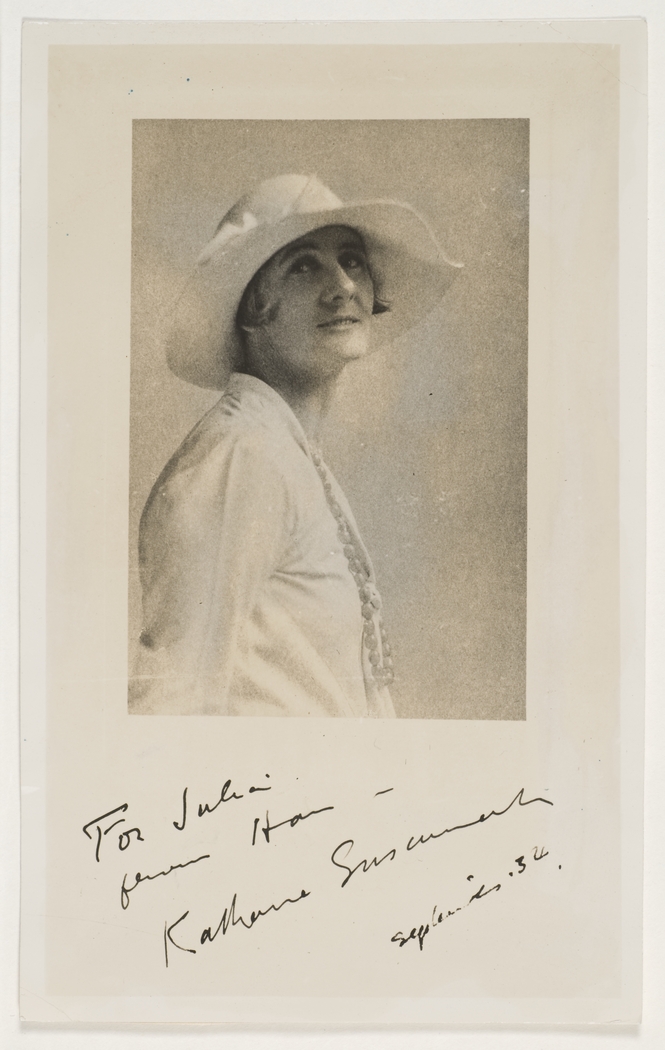
Katharine Susannah Prichard’s third published novel, Black Opal (1921), is set in the opal mining settlement of Fallen Star Ridge. It has two significant plot strands: the Ridge’s pure, beautiful Sophie coming into womanhood and torn between three men; and the attempt of an American to buy out the individual miners and commercialise operations.

Perhaps the truer title would be Fallen Star Ridge, as the novel is focused on the opal mining community itself as an ideal. Between the publication of her first novel, The Pioneers, and this one, KSP had committed to communism, and the influence is evident. In chapter VIII of part I, the narrative stops and KSP paints a picture of the workers’ utopia the settlement represents.

Ridge miners find happiness in the sense of being free men. They are satisfied in their own minds that it is not good for a man to work all day at any mechanical toil; to use himself, or allow anyone else to use him, like a working bullock. A man must have to time to think, leisure to enjoy being alive, they say.  (64-5)

To a man, Ridge miners have decided against allowing any wealthy man, or body of wealthy men forming themselves into a company, to buy up the mines, put the men on a weekly wage, and work them, as the opal blocks at Chalk Cliffs had been worked. (65)

The utopia is threatened first by missing opals (who stole from their brother?) and then an attempt by the American, John Armitage, to buy up the mines. As a kind of utopia, it is rendered convincingly, a plausible depiction of how people might have led a  co-operative existence a century ago in rural Australia.

Central to the utopia is Michael, a saintly autodidact who looks after the needy in the community and quietly dispenses wisdom. I can’t help wondering if KSP imagined a similar role for herself, if she was to ever find herself living within a workers’ community; she must have often wondered how to reconcile her bookishness with her commitment to the working class. The workers of the Ridge are not the anti-intellectuals one might assume:

Ridge folk were proud of Michael’s books, and strangers who saw his miscellaneous collection – mostly of cheap editions, old school books, and shilling, sixpenny, and penny publications of literary masterpieces, poetry, and works on industrial and religious subjects – did not wonder that it impressed Ridge folk; or that Michael’s knowledge of the world and affairs was so extensive. He had tracts, leaflets, and small books on almost every subject under the sun. (9)

At the beginning of the novel, Michael makes a promise to Sophie’s dying mother that he will make sure she does not leave the safety of the Ridge for the evils of the world beyond it. Trying to keep this promise is nearly his undoing; it is to no avail – Sophie leaves, which is nearly her undoing.

Spoilers Ahead Continue reading →

Thirty-three

05 Wednesday Mar 2014

Posted by Nathan Hobby in autobiographical, music

≈ 3 Comments

Tags

33, Pulp, Smashing Pumpkins

In the late nineties I was obsessed with The Smashing Pumpkins. (So was everyone, but not many like me – I lived by their songs, lodged as they were in my adolescent soul.) I have liked their hopeful-but-melancholic song “Thirty Three” since that time.

Tomorrow’s just an excuse away
So I pull my collar up and face the cold, on my own
The earth laughs beneath my heavy feet
At the blasphemy in my old jangly walk

Lately I have had this theory he must have been writing about turning thirty-three. It all seemed so true in my head. I was to finally understand the mood of the song, having reached his age. But I had it wrong. I just checked; Billy Corgan was born in 1967, making him just 28 when the album was released. These days, obscure song titles don’t seem as clever to me as they did back then.

Anyway, I don’t have to face the cold on my own, that’s not what thirty-three is about. That’s what being sixteen was for.

Jarvis Cocker of Pulp certainly wrote about being thirty-three, there’s no misinterpreting him in “Dishes”, his song about having the same initials as Jesus:

A man told me to beware of 33.
He said, “It was not an easy time for me” but I’ll get through even though
I’ve got no miracles to show you.

It wasn’t an easy time for Jesus, obviously, it being his last year on Earth. For several years I’ve thought that I’m not that old, given I was younger than Jesus. This defence is no longer open to me.

I have a lot of things I want to do this year. I feel like shouting Miss Brodie style, “I’m in my prime!”. Trying to enjoy it while I can.

Twelve Years A Slave – Or, The Passion of the Christ II

05 Wednesday Mar 2014

Posted by Nathan Hobby in film review

≈ Leave a comment

Tags

Ash Wednesday, Passion of the Christ, Twelve Years a Slave

12-years-a-slave-featurette

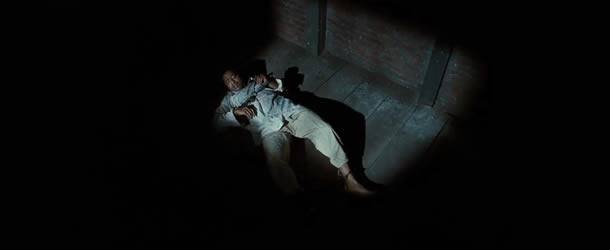
For my birthday, I went to see Twelve Years A Slave. But on reflection, maybe I really went because it’s Ash Wednesday, the first day of Lent –  the film reminded me most of all of Mel Gibson’s The Passion of the Christ. Both are important, worthy films, which involve a harrowing of the audience in the watching. You are asked as an audience to participate in the suffering of an innocent man – and in both cases, there is much extreme whipping.

Its great achievement is to give us a two hour taste of what it might have been to be a slave in the USA in the mid-nineteenth century. I wonder to what extent, though, it works as drama. There is very little hope in this film, and very little agency. It steers clear of the feel-good trajectory in which Solomon may have kept impressing his initial slave-owner to the point of achieving freedom. (It had to of course- I presume it was sticking to the outline of his real life account.) One by one, all his efforts to achieve his freedom come to naught. As a consequence, the rescue is really a kind of deus ex machina. Perhaps this is truer to life than dramatic form would demand. Perhaps it is not a drama so much as an example of a genre I shall dub ‘harrowings’.


Moving Among Strangers: Gabrielle Carey remembers the dead

05 Wednesday Mar 2014

Posted by Nathan Hobby in biographical quests, biographies of writers, artists and musicians, book review, memoirs

≈ 1 Comment

Tags

Gabrielle Carey, Randolph Stow, Western Australia

I couldn’t put down Gabrielle Carey’s memoir, Moving Among Strangers: Randolph Stow and My Family (UQP, 2013), so in one important sense, it is a successful book. Yet I was reading it most of all to learn more about the enigmatic Western Australian writer Stow, and on Stow the book intensifies the mystery of the man, whetting my appetite for more without satisfying.

Carey’s mother was friends with Stow when they were both young, and she wrote to him when her mother was dying. After a brief correspondence remembering the links between the families and mentioning some things Carey never knew about her own family, Stow retreated from further contact and died not long after. Carey attended the tribute held in his honour in Perth, and the trip prompted her to re-establish contact with the estranged Perth side of her family. She finds herself embarked on two quests: to understand the secret lives of her parents, and to understand the reason for Stow’s retreat to England to work a barman and publish very little in the last forty years of his life. The connection between the two strands does not always feel strong enough, or more that they seem such different goals. At one point Carey comments on what a messy person she is, and it is a messy book in some ways (in a good and bad way), delighting in co-incidence between the two quests and moving forward with a kind of stream of consciousness. It has the immediacy and pace of a quickly written book, and also some of the lack of polish.

Carey is careful to tell Stow’s associates that she is not his biographer (p. 207); ‘Stow already had an authorised biographer who had actually met him and interviewed him and had been working on his project for more than ten years. My book was something else, although I didn’t try to explain what. I wasn’t sure myself.’ I hope this book is only an appetiser for Roger Averill’s book, when it finally appears, and that it will be the successful account of Stow’s life which Stow deserves and the biographer no doubt deserves after so long invested in the project. (Earlier in the book, she briefly describes meeting Averill in the UWA Reid Cafe, and I couldn’t help imagining I could have been there, typing away on my laptop, not aware of the conversation going on nearby.)

Carey is indiscreet and opinionated, saying things many people would not put in print (‘I…deceived my last husband to have an affair with a younger man from my yoga class’), and perhaps her disarming honesty is part of the book’s appeal. Her judgements are often funny; sometimes grating, when she says something I don’t like, such as generalisations about Western Australia.

It feels to me that the real subject is Carey herself, and that is only a problem if one is wanting the real subject to be something else. I think I tend to find every memoir a little indulgent, which is probably largely an attitude I was brought up with. It might also be the attitude of a biographer, for whom the focus should be on the other, the historical subject one is recovering.

That said, I am fascinated by the genre of biographical quest, and this book has strong elements of it. The quest to uncover the truth of the subjects reveals things the protagonist never knew about their heritage and about their character. It leads them to exotic places (well, Perth, Geraldton and Old Harwich). Some of the story is told in the letters of the subjects. All these elements are present; it’s just that Carey is not trying to produce a true biography of either her mother or Stow, but a memoir of the quest itself. A book should never be judged by what it is not trying to be, and it really is an interesting book.

Benumbed by facts?

02 Sunday Mar 2014

Posted by Nathan Hobby in biographical method, biographies of writers, artists and musicians, book review, daily life

≈ Leave a comment

Tags

Miles Franklin

Reviewing Stella, Jill Roe’s massive biography of Miles Franklin (Fourth Estate, 2008), Sylvia Martin sums up a fascinating debate between two other reviewers:

A writer who has left some sort of a record of almost every day of her adult life would seem to be the perfect subject for a biographer, but it can prove to be a mixed blessing and I think it has here. In her mostly positive review, Goldsworthy argues that the ‘empiricist historian’ approach leads to a wealth of detail that can cause the reader to become ‘benumbed by facts’, an opinion to which Hergenhan takes exception, claiming that ‘[r]eaders will deeply feel the density of the representation of the living out of the life’…
(History Australia, 89.1, 2009)

Where there’s a scarcity of information on a subject, the biographer is forced to read the fragments deeply and make much of them. Where there’s the glut of information, as in this case, it’s harder to get to what really matters.

The full passage from Goldsworthy’s review is:

Roe’s approach to the art of biography is traditional and straightforward:  she  is  an  empiricist  historian  and  that  is her methodology. The book is a magnificent feat of exhaustive research, but that in itself has one major disadvantage: the reader must plough through lists of meetings that Franklin  went  to,  friends  she  visited, relatives  with  whom  she  corresponded  and  even,  at  one  point, the  specifications  of the  ship  on which  she  sailed  to  America. While these  catalogues go  some way towards conveying the dense texture of Franklin’s life, there is too  little  summary  and  pulling-together of the details; every now and then  the reader must simply stop,  benumbed  by  facts. (ABR, February 2009)

Sylvia Martin goes on to write:

Goldsworthy  wishes  the  biographer  had  delved  more  into  the  realm  of  speculation  and opinion; Hergenhan claims she ‘calculatingly stands back, leaving readers free to “speculate”’. Roe herself wrote in an earlier publication that ‘[a] strictly historical approach should go a long way to resolving the paradoxes’ of Miles Franklin’s life. But can such an approach, even if the ‘life’ is contextualised as thoroughly as this one is, make for a satisfying biography? Biography is a hybrid genre and the narrative strategies employed to shape the life in question as well as the biographer’s own interpretation of elements of that life are surely as important as accurate and meticulous historical research. To quote English biographer Hermione Lee: ‘[w]hether we think of biography as more like history or more like fiction, what we want from it is a vivid sense of the person’. Like the ABR reviewer, I longed for more breaking away from the chronology, more extended drawing together of patterns and connections, more sense of the peaks and troughs of Franklin’s life that tend to be flattened out in the daily record, more risk-taking from the biographer.

This idea of ‘breaking away from chronology’ is a key one for the biographer. The biographer has to see patterns that aren’t clear in the day to day detail, and know when to tie together events separated by time but linked by theme. The review also raises the issue of spending the right amount of time on the ‘peaks and troughs’, as against ‘ordinary time’, the less remarkable phases of someone’s life.

A lot of this, though, comes down to what readers are looking for in a biography – and for many, many readers, Jill Roe’s account was exactly what they were looking for.

The opening of Dare Me!

22 Saturday Feb 2014

Posted by Nathan Hobby in biographies of writers, artists and musicians, book review, prologues and introductions

≈ 2 Comments

Tags

beach, Gerald Glaskin, John Burbidge, Perth Writers Festival, Western Australia

Just released this month is a biography of the neglected Western Australian writer, Gerald Glaskin; it’s called Dare Me!, written by John Burbidge and published by Monash. Glaskin wrote one of Australia’s first openly gay novels; he died in 2000 in his seventies.

I’ve just read the opening chapter ahead of hearing Burbidge speak at the Perth Writers Festival. It’s very good. Instead of more typical openings, Burbidge calls the chapter “My Beautiful Beach” and relates several incidents from Glaskin’s life relating to his beloved Perth beaches. He would see the pine trees of Cottesloe coming home from abroad; he would body surf there, only to suffer an accident which would mar the rest of his years; he was to be charged with exposing himself on a Scarborough Beach, an incident which revealed much about his forceful character and the Perth of the 1960s; his grandmother was to let him live in her Safety Bay cottage for six months, where he wrote his first novel, which went on to considerable success. It’s a bold move; in the opening chapter, we already have the contours of his entire life laid out; we know that he will not be able to match his early successes, we know of his bitterness and his charms, we know something of his death in March 2000. It works, and it is all the more remarkable that it’s the biographer’s first biography.

← Older posts
Newer posts →

Enter your email address to follow this blog and receive notifications of new posts by email.

Join 287 other subscribers

Nathan on Twitter

My Tweets

Categories

  • academic (9)
  • archives and sources (10)
  • autobiographical (62)
  • biographers (10)
  • biographical method (28)
  • biographical quests (18)
  • biographies (21)
    • political biography (2)
  • biographies of living subjects (2)
  • biographies of writers, artists & musicians (12)
  • biographies of writers, artists and musicians (20)
  • biography as a literary form (9)
  • biography in fiction (2)
  • biography in the news (2)
  • books (236)
    • authors (19)
    • book review (173)
    • reading (23)
  • Covid (2)
  • creative nonfiction (11)
  • daily life (2)
  • Daily Prompt (2)
  • death (21)
  • digital humanities (3)
  • family history (1)
  • fiction (8)
  • film and television biographies (5)
  • film review (48)
  • found objects (3)
  • historical biographies (1)
  • history (20)
  • In the steps of KSP (4)
  • John Curtin (13)
  • Katharine Susannah Prichard (114)
    • Glimpses of KSP (7)
    • My KSP biography (31)
      • deleted scenes (1)
  • Katharine Susannah Prichard's associates and connections (16)
  • Katharine Susannah Prichard's writings (34)
  • libraries (5)
  • life (20)
  • link (23)
  • links (41)
  • lists (28)
  • local history and heritage (1)
  • media (4)
  • memes and urban myths (1)
  • memoirs (10)
  • meta (2)
  • music (18)
  • news (9)
  • news and events (43)
  • obituary (1)
  • Old writing found on a floppy disk (1)
  • poetry (5)
  • politics and current affairs (26)
    • climate change (1)
  • prologues and introductions (2)
  • psychological aspects of biography (3)
  • quotes (22)
  • R.I.P. (10)
  • reading report (3)
  • religion (1)
  • religious biography (1)
  • research (5)
  • role of the biographer within the biography (2)
  • Series: A-Z of Katharine Susannah Prichard (26)
  • Series: Corona Diary (1)
  • Series: Saturday 10am (14)
  • Series: Short Stories (2016) (6)
  • Series: The Tourist (2013) (6)
  • Series: Thursday 3pm feature posts (2009) (35)
  • structure of biographies (3)
  • technology and the digital world (2)
  • television (4)
  • the nature of biography (4)
  • this blog (10)
  • Uncategorized (33)
  • Western Australia (26)
  • writing (41)

Archives

Recent Comments

amphisbaenathoroughly79c20f19aa's avataramphisbaenathoroughl… on John Curtin’s vision…
Nathan Hobby's avatarNathan Hobby on John Curtin’s vision…
karenlee thompson's avatarkarenlee thompson on John Curtin’s vision…
Nathan Hobby's avatarNathan Hobby on John Curtin’s vision…

Bookmarks

  • Adventures in Biography
  • ANZ LitLovers LitBlog
  • Bernice Barry
  • It only goes up to your knees
  • Jane Bryony Rawson
  • Jenn Plays Recorder
  • Katharine Susannah Prichard Writers' Centre
  • Laura Sewell Matter: Essayist and Biographer
  • Mutually said: Poets Vegan Anarchist Pacifist
  • Resident Judge
  • Speaking Thylacine
  • The Australian Legend
  • Timothy Parkin Poetry
  • Treefall Writing – Melinda Tognini
  • Whispering Gums
  • Wrapped up in books: the home of Guy Salvidge

Top Posts

  • Paul Auster's Moon Palace : an overview
  • The 28th, 29th, and 30th prime ministers: a memoir
  • The Joy of Knowledge Encyclopedia
  • Comic-book biography?
  • The untold story of Critchley Parker Sr

Blog Stats

  • 235,192 hits

Tag Cloud

9/11 19th century 33 1920s 1921 1930s 1950s 1970s 1971 1981 2000s 2004 2011 2015 2017 20000 Days on Earth A.S. Byatt Aboriginals activism Adam Begley Adrian Mole adultery afterlife Agatha Christie Alan Hollinghurst Alberto Manguel Alfred Deakin Amazing Grace Americana Amy Grant An American Romance Andre Tchaikowsky Andrew McGahan angela myers anne fadiman Anne Rice Arabian Nights archives art arts funding A Serious Man Ash Wednesday ASIO atheism Atonement Australia Australian film Australian literature Australian Short Story Festival autism autobiography autodidact Barbara Vine beach Belle Costa da Greene Bell Jar best best-of Bible Big Issue Bill Callahan biographical ethics biographical quest genre biographies birthday birthdays Black Opal Bleak House Blinky Bill blogging blogs Blue Blades Bodega's Bunch bog Booker book launch booksale Borges Brenda Niall Brian Matthews Brian McLaren Britney Spears Burial Rites Burke and Wills buskers C.S. Lewis C.S. Lewis canon capitalism Carol Shields Carson McCullers Catcher in the Rye Catholicism celebrities Charles Dickens Charlie Kaufman childhood Child of the Hurricane children's books Choir of Gravediggers Christianity Christian writing Christina Stead Christmas Christopher Beha Cinque Terra Claire Tomalin classics cliches climate change Coen brothers coincidence Collie Collyer coming of age Communism concert Condensed Books consumerism Coonardoo Cormac McCarthy Corrections cosy fiction Dara Horn David Copperfield David Ireland David Marr David Suchet death Death of a president definition demolition Dennis LeHane dentist diaries divorce doctorow Doctor Who documentaries donald shriver Don DeLillo Don DeLillo Donna Mazza Donna Tartt Don Watson Dostovesky doubt drama dreams of revolution Drusilla Modjeska E.M. Forster ebooks editing Eichmann Eisenstein Elizabeth Kostova email empathy ensmallification existentialism faith Falling Man fame families fantasy fiction film and television folk football Frank Barscombe Fremantle Press G.K. Chesterton Gabrielle Carey Gallipoli genealogical fiction Genesis Geoff Nicholson George W. Bush Gerald Glaskin Gilead Golden Miles Goldfields Trilogy Graham Greene grandad great novels Greenmount Guinness World Records Guy Salvidge Hannah Arendt Hannah Kent Hans Koning Hans Koningsberger Harper Lee Haxby's Circus Hazel Rowley He-Man headers heaven Heidegger hell Henrietta Lacks Henry Morton Stanley Herman Hesse heroes Hey Dad! historical fiction history Holden Caulfield holidays Homer & Langley Home Song Stories House of Cards House of Zealots house of zealots Hugo Throssell humour Ian McEwan In between the sheets Indonesia Infamous Inside Llewyn Davis interstellar interview Intimate Strangers Invisible Ireland ISBNs Ishiguro itunes J.D. Salinger J.M. Coetzee J.S. Battye Janet Malcolm Jennifer Egan JFK JFK assassination Joanna Rakoff Joel Schumacher John Burbidge John Fowles John Howard John Kinsella John Updike John Updike Jonathan Franzen journal writing JSB Judgment Day Julia Baird Julian Barnes Kafka Kalgoorlie Kate Grenville Katherine Mansfield Kevin Brockmeier King's Park KSP Writers' Centre language last ride Laurie Steed Left Behind Leonard Cohen Leo Tolstoy Libra Library of Babel Library of Babel Lila Lily and Madeleine links Lionel Shriver lionel shriver lists literary fiction literature Lleyton Hewitt lost book Louisa Louisa Lawson Louis Esson louis nowra love letter Lubbock Lytton Strachey Madelaine Dickie Man Booker man in the dark Margaret Atwood Margaret River Press Marilynne Robinson mark sandman meaning of life Melbourne Mel Hall meme memorialisation memory MH17 Michael Faber Mike Riddell Miles Franklin mining boom missionaries moleskine Moon Palace morphine Mother Teresa movies Music of Chance My Brilliant Career names Napoleon Narnia narrative Narrow Road to the Deep North Narziss and Goldmund Natalie Portman Nathaniel Hobbie national anthem Nick Cave Nina Bawden non-fiction nonfiction noughties novelists novels obituaries obscurity On Chesil Beach Parade's End Paris Hilton Passion of the Christ past patriotism Paul Auster Paul de Man Perth Perth Writers Festival Peter Ackroyd Peter Cowan Writers Centre phd Philip K. Dick Philip Seymour Hoffman pierpontmorgan poetry slam politics popular fiction popular science Possession postapocalyptic postmodernism Pride prophetic imagination publications Pulp Purity Queen Victoria Rabbit Angstrom radio Radio National Randolph Stow rating: 5/10 rating: 6/10 rating: 7/10 rating: 8/10 rating: 9/10 rating: 10/10 ratings reading fiction autobiographically reading report Rebecca Skloot recap red wine reincarnation juvenile fiction rejection review - music reviewing rewriting Richard Flanagan Richard Ford Rick Moody Roaring Nineties Robert Banks Robert Hughes Robert Silverberg Robert Wadlow Robinson Crusoe Rolf Harris romance Rome ruins Russell Crowe Ruth Rendell Sarah Murgatroyd scalpers science fiction Science of Sleep secondhand books Secret River sermon illustration sex short stories Silent Woman Simone Lazaroo Simpsons Siri Hustvedt slavery Smashing Pumpkins social interactions social justice some people i hate sources South Australia souvenirs speculation speech speeches sport status anxiety Stephen Lawhead Stranger's Child subtitles Subtle Flame Sue Townsend suicide Surprised By Hope Suzanne Falkiner Sylvia Plath Synecdoche TAG Hungerford Award tapes teabags Ted Hughes The Children Act The Cure The Fur The Imitation Game theology The Pioneers The Revolutionary Thomas Disch Thomas Hardy Thomas Henry Prichard Thomas Mann thriller time Tim La Haye Tim Winton Tolstoy Tom Wright top 10 Towering Inferno Tracy Ryan Trove Truman Capote tshirts TS Spivet Twelve Years a Slave underrated writers Underworld unwritten biographies urban myth USA vampires Venice Victoria Cross Victoriana Victorian era Victorianism Victoria Park video Voltron w Wake in Fright Walkabout Walter M. Miller war War and Peace war on terror Water Diviner Wellington St Bus Station Westerly Western Australia West Wing What Happened to Sophie Wilder? Whitlams wikipedia Wild Oats of Hans William Wilberforce Winston Churchill Witches of Eastwick Working Bullocks workshop World War One writers writing Writing NSW youth Zadie Smith Zeitgeist Zelig

Enter your email address to follow this blog and receive notifications of new posts by email.

Join 287 other subscribers

Pages

  • About
  • My novel: The Fur
  • The Red Witch: A Biography of Katharine Susannah Prichard

Categories

  • academic (9)
  • archives and sources (10)
  • autobiographical (62)
  • biographers (10)
  • biographical method (28)
  • biographical quests (18)
  • biographies (21)
    • political biography (2)
  • biographies of living subjects (2)
  • biographies of writers, artists & musicians (12)
  • biographies of writers, artists and musicians (20)
  • biography as a literary form (9)
  • biography in fiction (2)
  • biography in the news (2)
  • books (236)
    • authors (19)
    • book review (173)
    • reading (23)
  • Covid (2)
  • creative nonfiction (11)
  • daily life (2)
  • Daily Prompt (2)
  • death (21)
  • digital humanities (3)
  • family history (1)
  • fiction (8)
  • film and television biographies (5)
  • film review (48)
  • found objects (3)
  • historical biographies (1)
  • history (20)
  • In the steps of KSP (4)
  • John Curtin (13)
  • Katharine Susannah Prichard (114)
    • Glimpses of KSP (7)
    • My KSP biography (31)
      • deleted scenes (1)
  • Katharine Susannah Prichard's associates and connections (16)
  • Katharine Susannah Prichard's writings (34)
  • libraries (5)
  • life (20)
  • link (23)
  • links (41)
  • lists (28)
  • local history and heritage (1)
  • media (4)
  • memes and urban myths (1)
  • memoirs (10)
  • meta (2)
  • music (18)
  • news (9)
  • news and events (43)
  • obituary (1)
  • Old writing found on a floppy disk (1)
  • poetry (5)
  • politics and current affairs (26)
    • climate change (1)
  • prologues and introductions (2)
  • psychological aspects of biography (3)
  • quotes (22)
  • R.I.P. (10)
  • reading report (3)
  • religion (1)
  • religious biography (1)
  • research (5)
  • role of the biographer within the biography (2)
  • Series: A-Z of Katharine Susannah Prichard (26)
  • Series: Corona Diary (1)
  • Series: Saturday 10am (14)
  • Series: Short Stories (2016) (6)
  • Series: The Tourist (2013) (6)
  • Series: Thursday 3pm feature posts (2009) (35)
  • structure of biographies (3)
  • technology and the digital world (2)
  • television (4)
  • the nature of biography (4)
  • this blog (10)
  • Uncategorized (33)
  • Western Australia (26)
  • writing (41)

Archives

Recent Comments

amphisbaenathoroughly79c20f19aa's avataramphisbaenathoroughl… on John Curtin’s vision…
Nathan Hobby's avatarNathan Hobby on John Curtin’s vision…
karenlee thompson's avatarkarenlee thompson on John Curtin’s vision…
Nathan Hobby's avatarNathan Hobby on John Curtin’s vision…

Bookmarks

  • Adventures in Biography
  • ANZ LitLovers LitBlog
  • Bernice Barry
  • It only goes up to your knees
  • Jane Bryony Rawson
  • Jenn Plays Recorder
  • Katharine Susannah Prichard Writers' Centre
  • Laura Sewell Matter: Essayist and Biographer
  • Mutually said: Poets Vegan Anarchist Pacifist
  • Resident Judge
  • Speaking Thylacine
  • The Australian Legend
  • Timothy Parkin Poetry
  • Treefall Writing – Melinda Tognini
  • Whispering Gums
  • Wrapped up in books: the home of Guy Salvidge

Top Posts

  • Paul Auster's Moon Palace : an overview
  • The 28th, 29th, and 30th prime ministers: a memoir
  • The Joy of Knowledge Encyclopedia
  • Comic-book biography?
  • The untold story of Critchley Parker Sr

Blog Stats

  • 235,192 hits

Tag Cloud

9/11 19th century 33 1920s 1921 1930s 1950s 1970s 1971 1981 2000s 2004 2011 2015 2017 20000 Days on Earth A.S. Byatt Aboriginals activism Adam Begley Adrian Mole adultery afterlife Agatha Christie Alan Hollinghurst Alberto Manguel Alfred Deakin Amazing Grace Americana Amy Grant An American Romance Andre Tchaikowsky Andrew McGahan angela myers anne fadiman Anne Rice Arabian Nights archives art arts funding A Serious Man Ash Wednesday ASIO atheism Atonement Australia Australian film Australian literature Australian Short Story Festival autism autobiography autodidact Barbara Vine beach Belle Costa da Greene Bell Jar best best-of Bible Big Issue Bill Callahan biographical ethics biographical quest genre biographies birthday birthdays Black Opal Bleak House Blinky Bill blogging blogs Blue Blades Bodega's Bunch bog Booker book launch booksale Borges Brenda Niall Brian Matthews Brian McLaren Britney Spears Burial Rites Burke and Wills buskers C.S. Lewis C.S. Lewis canon capitalism Carol Shields Carson McCullers Catcher in the Rye Catholicism celebrities Charles Dickens Charlie Kaufman childhood Child of the Hurricane children's books Choir of Gravediggers Christianity Christian writing Christina Stead Christmas Christopher Beha Cinque Terra Claire Tomalin classics cliches climate change Coen brothers coincidence Collie Collyer coming of age Communism concert Condensed Books consumerism Coonardoo Cormac McCarthy Corrections cosy fiction Dara Horn David Copperfield David Ireland David Marr David Suchet death Death of a president definition demolition Dennis LeHane dentist diaries divorce doctorow Doctor Who documentaries donald shriver Don DeLillo Don DeLillo Donna Mazza Donna Tartt Don Watson Dostovesky doubt drama dreams of revolution Drusilla Modjeska E.M. Forster ebooks editing Eichmann Eisenstein Elizabeth Kostova email empathy ensmallification existentialism faith Falling Man fame families fantasy fiction film and television folk football Frank Barscombe Fremantle Press G.K. Chesterton Gabrielle Carey Gallipoli genealogical fiction Genesis Geoff Nicholson George W. Bush Gerald Glaskin Gilead Golden Miles Goldfields Trilogy Graham Greene grandad great novels Greenmount Guinness World Records Guy Salvidge Hannah Arendt Hannah Kent Hans Koning Hans Koningsberger Harper Lee Haxby's Circus Hazel Rowley He-Man headers heaven Heidegger hell Henrietta Lacks Henry Morton Stanley Herman Hesse heroes Hey Dad! historical fiction history Holden Caulfield holidays Homer & Langley Home Song Stories House of Cards House of Zealots house of zealots Hugo Throssell humour Ian McEwan In between the sheets Indonesia Infamous Inside Llewyn Davis interstellar interview Intimate Strangers Invisible Ireland ISBNs Ishiguro itunes J.D. Salinger J.M. Coetzee J.S. Battye Janet Malcolm Jennifer Egan JFK JFK assassination Joanna Rakoff Joel Schumacher John Burbidge John Fowles John Howard John Kinsella John Updike John Updike Jonathan Franzen journal writing JSB Judgment Day Julia Baird Julian Barnes Kafka Kalgoorlie Kate Grenville Katherine Mansfield Kevin Brockmeier King's Park KSP Writers' Centre language last ride Laurie Steed Left Behind Leonard Cohen Leo Tolstoy Libra Library of Babel Library of Babel Lila Lily and Madeleine links Lionel Shriver lionel shriver lists literary fiction literature Lleyton Hewitt lost book Louisa Louisa Lawson Louis Esson louis nowra love letter Lubbock Lytton Strachey Madelaine Dickie Man Booker man in the dark Margaret Atwood Margaret River Press Marilynne Robinson mark sandman meaning of life Melbourne Mel Hall meme memorialisation memory MH17 Michael Faber Mike Riddell Miles Franklin mining boom missionaries moleskine Moon Palace morphine Mother Teresa movies Music of Chance My Brilliant Career names Napoleon Narnia narrative Narrow Road to the Deep North Narziss and Goldmund Natalie Portman Nathaniel Hobbie national anthem Nick Cave Nina Bawden non-fiction nonfiction noughties novelists novels obituaries obscurity On Chesil Beach Parade's End Paris Hilton Passion of the Christ past patriotism Paul Auster Paul de Man Perth Perth Writers Festival Peter Ackroyd Peter Cowan Writers Centre phd Philip K. Dick Philip Seymour Hoffman pierpontmorgan poetry slam politics popular fiction popular science Possession postapocalyptic postmodernism Pride prophetic imagination publications Pulp Purity Queen Victoria Rabbit Angstrom radio Radio National Randolph Stow rating: 5/10 rating: 6/10 rating: 7/10 rating: 8/10 rating: 9/10 rating: 10/10 ratings reading fiction autobiographically reading report Rebecca Skloot recap red wine reincarnation juvenile fiction rejection review - music reviewing rewriting Richard Flanagan Richard Ford Rick Moody Roaring Nineties Robert Banks Robert Hughes Robert Silverberg Robert Wadlow Robinson Crusoe Rolf Harris romance Rome ruins Russell Crowe Ruth Rendell Sarah Murgatroyd scalpers science fiction Science of Sleep secondhand books Secret River sermon illustration sex short stories Silent Woman Simone Lazaroo Simpsons Siri Hustvedt slavery Smashing Pumpkins social interactions social justice some people i hate sources South Australia souvenirs speculation speech speeches sport status anxiety Stephen Lawhead Stranger's Child subtitles Subtle Flame Sue Townsend suicide Surprised By Hope Suzanne Falkiner Sylvia Plath Synecdoche TAG Hungerford Award tapes teabags Ted Hughes The Children Act The Cure The Fur The Imitation Game theology The Pioneers The Revolutionary Thomas Disch Thomas Hardy Thomas Henry Prichard Thomas Mann thriller time Tim La Haye Tim Winton Tolstoy Tom Wright top 10 Towering Inferno Tracy Ryan Trove Truman Capote tshirts TS Spivet Twelve Years a Slave underrated writers Underworld unwritten biographies urban myth USA vampires Venice Victoria Cross Victoriana Victorian era Victorianism Victoria Park video Voltron w Wake in Fright Walkabout Walter M. Miller war War and Peace war on terror Water Diviner Wellington St Bus Station Westerly Western Australia West Wing What Happened to Sophie Wilder? Whitlams wikipedia Wild Oats of Hans William Wilberforce Winston Churchill Witches of Eastwick Working Bullocks workshop World War One writers writing Writing NSW youth Zadie Smith Zeitgeist Zelig

Blog at WordPress.com.

  • Subscribe Subscribed
    • Nathan Hobby, a biographer in Perth
    • Join 287 other subscribers
    • Already have a WordPress.com account? Log in now.
    • Nathan Hobby, a biographer in Perth
    • Subscribe Subscribed
    • Sign up
    • Log in
    • Report this content
    • View site in Reader
    • Manage subscriptions
    • Collapse this bar
 

Loading Comments...