• About
  • The Red Witch: A Biography of Katharine Susannah Prichard
  • My novel: The Fur

Nathan Hobby, a biographer in Perth

~ The lives of John Curtin & Katharine Susannah Prichard, the art of biography, and other things

Nathan Hobby, a biographer in Perth

Monthly Archives: September 2007

Some thoughts on Paul Auster’s Music of Chance

21 Friday Sep 2007

Posted by Nathan Hobby in book review, reading

≈ 2 Comments

Tags

Music of Chance, Paul Auster

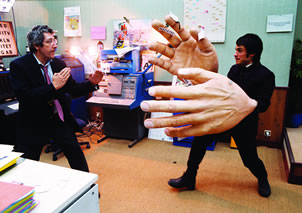
Image of The Music of Chance

The perfect book?

The first time I read it in 2001, every word seemed perfect. A beautiful parable without a word out of place. This time, it wasn’t perfect; some sentences jarred, the novel didn’t absorb me to the same degree.

I think a novel can only ever be perfect for a particular time and place. For one reading only.  And yet with this said, I still loved this novel.

Plot and commentary 

Compared to most novels, the plot is easy to remember; maybe this is why the term ‘parable’ seems appropriate. Here’s the plot with commentary (you might want to look away):

Jim Nashe comes into an inheritance just after his wife leaves him. He leaves his job as a firefighter and starts driving across America in a new car. He loves the freedom, encapsulated in the car with classical music at full volume.

But the money begins to run out when he picks up a hitch-hiker, a plucky young man named Jack Pozzi. Pozzi is a professional poker player, and he has a game the next night at the house of two eccentric millionaires who aren’t very good at cards. It should be easy money, and Nashe puts up his last $10 000 on a whim.

The millionaires are Flower and Stone, and they came into their money through a lottery win. I noticed for the first time the obvious parallelism – Flower and Stone forced into partnership because of good luck and, after they lose the money and then the car and then go into debt, Pozzi and Nashe forced into partnership because of bad luck.

Back up a moment. Stone has built a miniature city. It is a place of both whimsy and menace. Everything looks nostalgic, a little boy is eating an icecream on the street, but in the prison a prisoner is being executed by firing squad. There is a menacing justice in the miniature city.

(Nashe leaves the card room to look at the city; he picks out the tiny figures of Stone and Flower and keeps them. Later, Pozzi pinpoints this as the point when he started to lose. When Nashe smashed up the instruments of reality. Nashe responds by burning the two models. After this, things get worse.)

Flower and Stone extend the mixture of whimsy and menace to Nashe and Pozzi. To pay off their debt, they have to build a stone wall. The stones are the ruins of a castle the millionaires have transported from Europe. The menace comes when their supervisor begins to wear a gun and when they realise there is no way out – a huge fence blocks their way.

I’ve been thinking of Pozzi and Nashe building that wall. It’s a comforting image when I’m not enjoying work. (Which is quite a lot lately.)
 

The endings 

I find it fascinating that Auster has released into the world two official versions of the ending. In the book version, the story ends with Nashe driving into an oncoming truck when he is given a chance to drive his car again in celebration of finishing. There is little doubt that he is about to die.

In the film version, he survives the crash and is picked up the next morning by a passing driver (played by Paul Auster). It echoes strongly with Nashe picking up a badly bruised Pozzi earlier in the novel.
Book review: What I loved by Siri Hustvedt

15 Saturday Sep 2007

Posted by Nathan Hobby in book review

≈ 2 Comments

Tags

Paul Auster, rating: 10/10, Siri Hustvedt

This book ran me over with its restrained intensity, its insight, and its near-perfect execution. Here are my splattered thoughts from 2005 when I read it.

She is married to my favourite author, Paul Auster, and yet until now I have not read her. I may have to admit she is as good as him, or better. I wonder if they get insecure.

Indeed, it’s got the same themes as some of Auster’s work – two artistic couples pulling against each other, the love and friendship and lust, and (sometime) infidelities [a common source?] – and I’m thinking here particularly of Auster’s work in Leviathan, a companion novel in so many ways.

In fact, if Auster had put his name to What I Loved, I would have accepted without question that he’d written it.

But the book, her not him; indeed, I meet more people who have read her than him, and I may be jealous.

I wanted to write about the ironic couplings: she writes about Leo writing about Bill who has painted a picture of Violet which he calls ‘Self Portrait’. Leo/Siri comments how the title gets us thinking about the nature of selfhood, and how a portrait of another person of another gender could possibly be a self portrait. We the readers can add another level – how can Siri write so convincingly and reveal so much of her soul through the eyes of a male art critic (Leo) writing of his friendship with a male painter (Bill)?

I like the scope of the book; it isn’t a simple narrative, it has the breadth and complexity of life. It is twenty five years in the lives of the two couples, which are really two and a half couples, since Violet displaces Lucille, and then really it’s about their sons anyway, Matthew and Mark (I was expecting Luke and John, but the pun was only superficial, or only co-incidental.)

And the last section made the novel feel like a Brett Easton Ellis novel told from the pov of one of the sane characters. There is the same shifting identities, extremities of violence, sex and drugs. The same world, it seemed to me. Only in New York do these things happen, you see.

And it got me wondering as to whether Siri and Paul know Brett, and what they think of his work. Because they might hate it, or they might like it.

The crazed ‘artist’, Teddy Giles, and his favourite movie Psycholand (about a psychopath who goes from state to state in his private plane murdering a person in each city) made me think of him, wonder whether there was some injoke in operation here.

And the other novel it made me think of, just to complete a parallel literary couple, is Donna Tartt’s Secret History. There is the same sense of a middle class descent into the dark side, into madness. There is the same concern for art, life, meaning.

The title bears more thinking about. It is explained by Violet at the end where she asks what it is that she loved. Was it Mark or the idea of Mark? I feel like I haven’t understood Siri properly here. But the title sounds elegaic, sounds like the book feels, this beautiful remembrance of things past.

Once I got into this book – which did take ninety pages, but that had more to do with me than it – I found it compulsive, un-putt-downable. I cared and wondered about the fate of the characters – even the minor ones.

It should be made into a film, and by a great director. I think Sofia Coppola.

Press Council upholds complaint against The West Australian – ABC News (Australian Broadcasting Corporation)

14 Friday Sep 2007

Posted by Nathan Hobby in media, politics and current affairs, Western Australia

≈ Leave a comment

Press Council upholds complaint against The West Australian – ABC News (Australian Broadcasting Corporation)

This news item is strange absent from The West Australian’s website.

The finding against The West illustrates for me that the paper will do anything for high circulation and doesn’t care much about journalistic standards. It seems to me that under Paul Armstrong’s editorship, the paper has become more like a tabloid, a daily Sunday Times. What do you think?

I also hate the way a popup ad which takes a few second to kill hits me everytime I open the site. I know I could easily change my settings, but I bet they’re relying that people are lazy like me and keep forgetting to.

Forms of Christian fiction # 2: the Jesus-like character

10 Monday Sep 2007

Posted by Nathan Hobby in writing

≈ 2 Comments

Tags

C.S. Lewis, Christian writing, Dostovesky, Mike Riddell, Narnia, Stephen Lawhead, theology

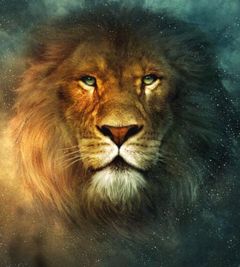
240px-narnia_aslan.jpeg

What: This form of Christian fiction will tend to have a contemporary setting. It’s a subgenre of allegorical Christian fiction, but I wanted to deal with it first. The author retells elements of the story of Jesus, particularly through a Jesus like figure. Depending on the author’s take on the significance of Jesus, we get different aspects of his life coming through – the atonement or his concern for the poor or his outsider status.

Eg: New Zealander Mike Riddell tackles this form in his Insatiable Moon.  He was a theology lecturer at a Baptist theological college. And then, as he says on his website, the publication of this novel was contentious enough to force his resignation. Was it the extended (adulterous) sex scene involving the Jesus-like figure or was it just that the Jesus-ish character was insane? What Riddell gets so right in this novel is how confrontational Jesus would have been to the religious establishment. I suspect that that is the theme he would want us to take away.

In a completely different mode, C.S. Lewis creates a fantasy world in the Narnia books, with a Jesus like creature in the form of a lion – Aslan. Like Jesus, Aslan is sacrificed for the world’s sins. My friend Mark Hurst pointed out that Revelation pictures Jesus as a slain lamb rather than a lion. But then someone else responded saying that Aslan appears as a lamb later in the series. (I don’t remember that; I’m sure it’s true, though.)

If Stephen Lawhead’s Pendragon books are to be considered as an example of this form, then the Jesus-like character is King Arthur. The problem being that this Jesus leads his followers into battle so effectively they manage to kill all their enemies with swords. No turning the other cheek for these fellows! I loved these books when I was a teenager; they were a violent heroism sanctioned by my conservative Baptist church! I wonder what I’d think of them if I tried reading them now?

Dostovesky’s The Idiot is perhaps the most enduring example of the form. The saintly main character has no guile and society doesn’t know how to handle him. It’s so terrible – I didn’t manage to finish this book, either. (I have a terrible record of incompletion with long books, and particularly with Russian writers.)

Should I attempt this form? I started to write ‘no’, because Jesus is unique, and retelling the crucifixion or any other part of his life is tiresome. But then I realised that I’ve fallen into one of the traps I warn against – that of thinking that Jesus is so far above us we can’t emulate him. There is the uniqueness of Jesus, but that doesn’t stop there being Jesus-like figures who are following him faithfully and end up crucified, just like he warned. That would probably be my take on it.

In fact, I sort of did attempt this form in Dreams of Revolution (unpublished). The character of Melchizidek is Christ-like in bringing together a band of disciples who he feeds and teaches about the kingdom. And his name, well that’s kind of obvious… to theology students -Melchizidek being the priestly king of Salem who came from nowhere and, in the book of Hebrews, is seen as prefiguring Christ.  

Do you want to add some more examples you think I should have included?

Forms of Christian fiction #1: retelling the Bible as fiction

10 Monday Sep 2007

Posted by Nathan Hobby in writing

≈ 4 Comments

Tags

Anne Rice, Bible, Christian writing, Left Behind, literature, Robert Banks, theology, Thomas Mann, Tim La Haye

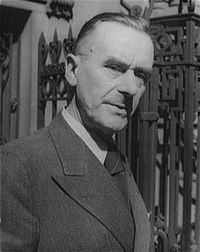
200px-thomas_mann_1937.jpg

I’m starting this series exploring forms of Christian fiction, mostly for my own edification, so I can work out how faith and writing and reading fit together better.

Retelling the Bible as fiction is one form of Christian fiction. I noticed that Walter Wangerin did it, and I bought one of his books. I keep meaning to read it, but for some reason I don’t feel compelled to. I like the idea in principle, though. A novelistic treatment of Bible stories.

Bible stories are always such bare bones accounts, with so little psychology. And what style they have isn’t too obvious for us thousands of years later.

The challenge is to flesh out the characters. To get inside their heads, and maybe God’s head, and turn the existing narrative into novel.

Thomas Mann (pictured) did it in his Joseph books,  which I found quite interesting. But not interesting to read past halfway through the first volume. (I know, I’m terrible, there’s so little Christian fiction I like! And Mann’s intention wasn’t even particularly Christian, but perhaps more modernist or literary. )

More recently, Anne Rice did it – with explicitly Christian motive – in her Jesus books. I will try to read them, but I know enough about Tim La Haye and Jerry Jenkins’ attempt to fictionalise Revelation – the Left Behind series – to never read them. (I have actually seen the film version, and the theology was worse than I could have anticipated – what with the antichrist being the one disarming America and feeding the poor.)

My problem with fictionalising the Bible is that I don’t like reading historical fiction, and I wouldn’t want to write it. I feel like the mind and culture of the Hebrews thousands of years ago is so difficult or even impossible to retrieve or appreciate. Or it at least finds its best form in the Scriptures as they stand.

Having said that, I think it is an excellent project to try to fictionalise the Bible. Maybe I need to motivate myself to read the attempts and to think about how I might try myself.

I’d be tempted to fictionalise one of the situations in the house churches that Paul wrote to. Probably Corinth, since 1 Corinthians is my favourite book of the Bible. Robert Banks did something like this in his book, “Going to church in the first century”. This booklet is explicitly theological in motivation – it wants to give people an idea of the first century house churches. But it is also readable and a very interesting intersection of fiction and theology.

Film review: The Science of Sleep

09 Sunday Sep 2007

Posted by Nathan Hobby in film review

≈ 1 Comment

Tags

rating: 10/10, Science of Sleep

scienceofsleep.jpg

A brilliant film. A joyous, crazy film about a young man who has always confused dreams and reality and inhabits a world where the two merge. We see a world which works on the principles of his childish imagination, with cameras and cars made of cardboard, time machines which go forward or backward one second, and revenge fantasies lived out.

But at its heart, it’s a beautiful love story between Stephane the Dreaming Inventor and Stephanie the Shy Artist. One critic called it the year’s ultimate date movie, and Nicole and I concur.

Ian McEwan and the 2007 Booker shortlist

09 Sunday Sep 2007

Posted by Nathan Hobby in books

≈ Leave a comment

Tags

Atonement, Booker, Ian McEwan, literature, On Chesil Beach

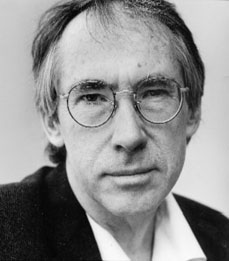
ian-mcewan.jpg

http://news.bbc.co.uk/2/hi/entertainment/6982091.stm

I’ve been enraptured with Ian McEwan since I discovered him last year (about twenty years after the rest of the world.) So I’m very glad he’s been shortlisted for the Man Booker prize with On Chesil Beach. It’s an excellent novel(la); one of the saddest I have ever read. I think it depicts the anxieties of newlyweds so well and shows the way the rest of one’s life hangs in the balance on one’s wedding night. Or at least the way it feels. I wonder what influence his own marriage breakdown had on his choice and treatment and themes.

Even if it wins,  the travesty which will remain is that Atonement didn’t win the Booker seven years ago. It is far, far superior to Peter Carey’s The True History of the Kelly Gang –  a good but fatuous and minor comic work. (And I say this as an Australian!)

I’m not alone in thinking that McEwan’s own Booker winner – Amsterdam – is one of his minor works. A very readable thriller with moments of intense insight spoilt by  a contrived ending.

Riot cops prepare for Sydney’s ‘worst-ever’ violence : thewest.com.au

09 Sunday Sep 2007

Posted by Nathan Hobby in politics and current affairs

≈ Leave a comment

Tags

Australia, politics

Riot cops prepare for Sydney’s ‘worst-ever’ violence : thewest.com.au

I hate the way they’ve locked the whole of Sydney down. The establishment is throwing everything it can against the protestors. It has all the power and all the money, and it would dearly love there to be no voice of dissent. No-one to say to Bush and Howard: you have done evil!

Art for her own sake: Stephanie in the Science of Sleep

04 Tuesday Sep 2007

Posted by Nathan Hobby in writing

≈ 1 Comment

Tags

art, Science of Sleep

Stephanie’s character in The Science of Sleep has a lot to teach me.

She does art not to be famous or brilliant. Not to impress anyone.

Instead, she does art because it’s fun. She does art for herself and she doesn’t care if no-one else ever sees it.

She makes boats out of felt, and then water out of cellophane, and a forest which grows in the felt boat.

It is this sort of playfulness and enjoyment which fame destroys. Since I tasted success with my writing, I’ve cared too much about it being brilliant.

Film review : Home Song Stories

02 Sunday Sep 2007

Posted by Nathan Hobby in film review, Western Australia

≈ 2 Comments

Tags

Australian film, Home Song Stories, Perth, rating: 7/10

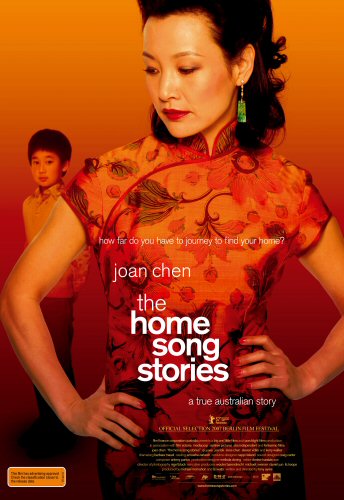
home-song-stories-poster-0.jpg 

Home Song Stories is writer-director Tony Ayres’ personal excorcism of his troubled childhood with his selfish mother, a fading nightclub singer who constantly sought out new men to admire her and excite her.  At the end of the film, the narrator says that he and his sister don’t talk about their mother; they don’t know what to say. Maybe this film will make up for that.

It seems the story is very close to real events, with some minor changes – like moving the action from Perth to Melbourne. It seems that Screenwest just didn’t have enough money to fund this film beyond scripting! They should be funding lots of feature films – it’s the major art form of our time.

I’m guessing Arts Victoria stepped in with some money, on the condition that the action be moved to Melbourne. As a Western Australian, that makes me disappointed – we lose another one of our stories.

If you visit the Metro Cemeteries Board you can see the burial records for both Tony Ayres’ mother, Sue, and his stepfather, Bill Ayres (‘Uncle Bill’). Apparently she killed herself in their flat in Applecross. I think I’ll always think of her now if I’m driving along Canning Highway. What a sad story.

http://www.mcb.wa.gov.au/NameSearch/details.php?id=FC00005994

http://www.mcb.wa.gov.au/NameSearch/details.php?id=FC00004118 

← Older posts

Enter your email address to follow this blog and receive notifications of new posts by email.

Join 287 other subscribers

Nathan on Twitter

My Tweets

Categories

  • academic (9)
  • archives and sources (10)
  • autobiographical (62)
  • biographers (10)
  • biographical method (28)
  • biographical quests (18)
  • biographies (21)
    • political biography (2)
  • biographies of living subjects (2)
  • biographies of writers, artists & musicians (12)
  • biographies of writers, artists and musicians (20)
  • biography as a literary form (9)
  • biography in fiction (2)
  • biography in the news (2)
  • books (236)
    • authors (19)
    • book review (173)
    • reading (23)
  • Covid (2)
  • creative nonfiction (11)
  • daily life (2)
  • Daily Prompt (2)
  • death (21)
  • digital humanities (3)
  • family history (1)
  • fiction (8)
  • film and television biographies (5)
  • film review (48)
  • found objects (3)
  • historical biographies (1)
  • history (20)
  • In the steps of KSP (4)
  • John Curtin (13)
  • Katharine Susannah Prichard (114)
    • Glimpses of KSP (7)
    • My KSP biography (31)
      • deleted scenes (1)
  • Katharine Susannah Prichard's associates and connections (16)
  • Katharine Susannah Prichard's writings (34)
  • libraries (5)
  • life (20)
  • link (23)
  • links (41)
  • lists (28)
  • local history and heritage (1)
  • media (4)
  • memes and urban myths (1)
  • memoirs (10)
  • meta (2)
  • music (18)
  • news (9)
  • news and events (43)
  • obituary (1)
  • Old writing found on a floppy disk (1)
  • poetry (5)
  • politics and current affairs (26)
    • climate change (1)
  • prologues and introductions (2)
  • psychological aspects of biography (3)
  • quotes (22)
  • R.I.P. (10)
  • reading report (3)
  • religion (1)
  • religious biography (1)
  • research (5)
  • role of the biographer within the biography (2)
  • Series: A-Z of Katharine Susannah Prichard (26)
  • Series: Corona Diary (1)
  • Series: Saturday 10am (14)
  • Series: Short Stories (2016) (6)
  • Series: The Tourist (2013) (6)
  • Series: Thursday 3pm feature posts (2009) (35)
  • structure of biographies (3)
  • technology and the digital world (2)
  • television (4)
  • the nature of biography (4)
  • this blog (10)
  • Uncategorized (33)
  • Western Australia (26)
  • writing (41)

Archives

Recent Comments

amphisbaenathoroughly79c20f19aa's avataramphisbaenathoroughl… on John Curtin’s vision…
Nathan Hobby's avatarNathan Hobby on John Curtin’s vision…
karenlee thompson's avatarkarenlee thompson on John Curtin’s vision…
Nathan Hobby's avatarNathan Hobby on John Curtin’s vision…

Bookmarks

  • Adventures in Biography
  • ANZ LitLovers LitBlog
  • Bernice Barry
  • It only goes up to your knees
  • Jane Bryony Rawson
  • Jenn Plays Recorder
  • Katharine Susannah Prichard Writers' Centre
  • Laura Sewell Matter: Essayist and Biographer
  • Mutually said: Poets Vegan Anarchist Pacifist
  • Resident Judge
  • Speaking Thylacine
  • The Australian Legend
  • Timothy Parkin Poetry
  • Treefall Writing – Melinda Tognini
  • Whispering Gums
  • Wrapped up in books: the home of Guy Salvidge

Top Posts

  • A note about Humphrey McQueen's Tom Roberts
  • Anger and Love by Justina Williams
  • Katharine Susannah Prichard's The Pioneers, redux part 1
  • Letter to my newborn daughter
  • The Joy of Knowledge Encyclopedia

Blog Stats

  • 235,738 hits

Tag Cloud

9/11 19th century 33 1920s 1921 1930s 1950s 1970s 1971 1981 2000s 2004 2011 2015 2017 20000 Days on Earth A.S. Byatt Aboriginals activism Adam Begley Adrian Mole adultery afterlife Agatha Christie Alan Hollinghurst Alberto Manguel Alfred Deakin Amazing Grace Americana Amy Grant An American Romance Andre Tchaikowsky Andrew McGahan angela myers anne fadiman Anne Rice Arabian Nights archives art arts funding A Serious Man Ash Wednesday ASIO atheism Atonement Australia Australian film Australian literature Australian Short Story Festival autism autobiography autodidact Barbara Vine beach Belle Costa da Greene Bell Jar best best-of Bible Big Issue Bill Callahan biographical ethics biographical quest genre biographies birthday birthdays Black Opal Bleak House Blinky Bill blogging blogs Blue Blades Bodega's Bunch bog Booker book launch booksale Borges Brenda Niall Brian Matthews Brian McLaren Britney Spears Burial Rites Burke and Wills buskers C.S. Lewis C.S. Lewis canon capitalism Carol Shields Carson McCullers Catcher in the Rye Catholicism celebrities Charles Dickens Charlie Kaufman childhood Child of the Hurricane children's books Choir of Gravediggers Christianity Christian writing Christina Stead Christmas Christopher Beha Cinque Terra Claire Tomalin classics cliches climate change Coen brothers coincidence Collie Collyer coming of age Communism concert Condensed Books consumerism Coonardoo Cormac McCarthy Corrections cosy fiction Dara Horn David Copperfield David Ireland David Marr David Suchet death Death of a president definition demolition Dennis LeHane dentist diaries divorce doctorow Doctor Who documentaries donald shriver Don DeLillo Don DeLillo Donna Mazza Donna Tartt Don Watson Dostovesky doubt drama dreams of revolution Drusilla Modjeska E.M. Forster ebooks editing Eichmann Eisenstein Elizabeth Kostova email empathy ensmallification existentialism faith Falling Man fame families fantasy fiction film and television folk football Frank Barscombe Fremantle Press G.K. Chesterton Gabrielle Carey Gallipoli genealogical fiction Genesis Geoff Nicholson George W. Bush Gerald Glaskin Gilead Golden Miles Goldfields Trilogy Graham Greene grandad great novels Greenmount Guinness World Records Guy Salvidge Hannah Arendt Hannah Kent Hans Koning Hans Koningsberger Harper Lee Haxby's Circus Hazel Rowley He-Man headers heaven Heidegger hell Henrietta Lacks Henry Morton Stanley Herman Hesse heroes Hey Dad! historical fiction history Holden Caulfield holidays Homer & Langley Home Song Stories House of Cards House of Zealots house of zealots Hugo Throssell humour Ian McEwan In between the sheets Indonesia Infamous Inside Llewyn Davis interstellar interview Intimate Strangers Invisible Ireland ISBNs Ishiguro itunes J.D. Salinger J.M. Coetzee J.S. Battye Janet Malcolm Jennifer Egan JFK JFK assassination Joanna Rakoff Joel Schumacher John Burbidge John Fowles John Howard John Kinsella John Updike John Updike Jonathan Franzen journal writing JSB Judgment Day Julia Baird Julian Barnes Kafka Kalgoorlie Kate Grenville Katherine Mansfield Kevin Brockmeier King's Park KSP Writers' Centre language last ride Laurie Steed Left Behind Leonard Cohen Leo Tolstoy Libra Library of Babel Library of Babel Lila Lily and Madeleine links Lionel Shriver lionel shriver lists literary fiction literature Lleyton Hewitt lost book Louisa Louisa Lawson Louis Esson louis nowra love letter Lubbock Lytton Strachey Madelaine Dickie Man Booker man in the dark Margaret Atwood Margaret River Press Marilynne Robinson mark sandman meaning of life Melbourne Mel Hall meme memorialisation memory MH17 Michael Faber Mike Riddell Miles Franklin mining boom missionaries moleskine Moon Palace morphine Mother Teresa movies Music of Chance My Brilliant Career names Napoleon Narnia narrative Narrow Road to the Deep North Narziss and Goldmund Natalie Portman Nathaniel Hobbie national anthem Nick Cave Nina Bawden non-fiction nonfiction noughties novelists novels obituaries obscurity On Chesil Beach Parade's End Paris Hilton Passion of the Christ past patriotism Paul Auster Paul de Man Perth Perth Writers Festival Peter Ackroyd Peter Cowan Writers Centre phd Philip K. Dick Philip Seymour Hoffman pierpontmorgan poetry slam politics popular fiction popular science Possession postapocalyptic postmodernism Pride prophetic imagination publications Pulp Purity Queen Victoria Rabbit Angstrom radio Radio National Randolph Stow rating: 5/10 rating: 6/10 rating: 7/10 rating: 8/10 rating: 9/10 rating: 10/10 ratings reading fiction autobiographically reading report Rebecca Skloot recap red wine reincarnation juvenile fiction rejection review - music reviewing rewriting Richard Flanagan Richard Ford Rick Moody Roaring Nineties Robert Banks Robert Hughes Robert Silverberg Robert Wadlow Robinson Crusoe Rolf Harris romance Rome ruins Russell Crowe Ruth Rendell Sarah Murgatroyd scalpers science fiction Science of Sleep secondhand books Secret River sermon illustration sex short stories Silent Woman Simone Lazaroo Simpsons Siri Hustvedt slavery Smashing Pumpkins social interactions social justice some people i hate sources South Australia souvenirs speculation speech speeches sport status anxiety Stephen Lawhead Stranger's Child subtitles Subtle Flame Sue Townsend suicide Surprised By Hope Suzanne Falkiner Sylvia Plath Synecdoche TAG Hungerford Award tapes teabags Ted Hughes The Children Act The Cure The Fur The Imitation Game theology The Pioneers The Revolutionary Thomas Disch Thomas Hardy Thomas Henry Prichard Thomas Mann thriller time Tim La Haye Tim Winton Tolstoy Tom Wright top 10 Towering Inferno Tracy Ryan Trove Truman Capote tshirts TS Spivet Twelve Years a Slave underrated writers Underworld unwritten biographies urban myth USA vampires Venice Victoria Cross Victoriana Victorian era Victorianism Victoria Park video Voltron w Wake in Fright Walkabout Walter M. Miller war War and Peace war on terror Water Diviner Wellington St Bus Station Westerly Western Australia West Wing What Happened to Sophie Wilder? Whitlams wikipedia Wild Oats of Hans William Wilberforce Winston Churchill Witches of Eastwick Working Bullocks workshop World War One writers writing Writing NSW youth Zadie Smith Zeitgeist Zelig

Enter your email address to follow this blog and receive notifications of new posts by email.

Join 287 other subscribers

Pages

  • About
  • My novel: The Fur
  • The Red Witch: A Biography of Katharine Susannah Prichard

Categories

  • academic (9)
  • archives and sources (10)
  • autobiographical (62)
  • biographers (10)
  • biographical method (28)
  • biographical quests (18)
  • biographies (21)
    • political biography (2)
  • biographies of living subjects (2)
  • biographies of writers, artists & musicians (12)
  • biographies of writers, artists and musicians (20)
  • biography as a literary form (9)
  • biography in fiction (2)
  • biography in the news (2)
  • books (236)
    • authors (19)
    • book review (173)
    • reading (23)
  • Covid (2)
  • creative nonfiction (11)
  • daily life (2)
  • Daily Prompt (2)
  • death (21)
  • digital humanities (3)
  • family history (1)
  • fiction (8)
  • film and television biographies (5)
  • film review (48)
  • found objects (3)
  • historical biographies (1)
  • history (20)
  • In the steps of KSP (4)
  • John Curtin (13)
  • Katharine Susannah Prichard (114)
    • Glimpses of KSP (7)
    • My KSP biography (31)
      • deleted scenes (1)
  • Katharine Susannah Prichard's associates and connections (16)
  • Katharine Susannah Prichard's writings (34)
  • libraries (5)
  • life (20)
  • link (23)
  • links (41)
  • lists (28)
  • local history and heritage (1)
  • media (4)
  • memes and urban myths (1)
  • memoirs (10)
  • meta (2)
  • music (18)
  • news (9)
  • news and events (43)
  • obituary (1)
  • Old writing found on a floppy disk (1)
  • poetry (5)
  • politics and current affairs (26)
    • climate change (1)
  • prologues and introductions (2)
  • psychological aspects of biography (3)
  • quotes (22)
  • R.I.P. (10)
  • reading report (3)
  • religion (1)
  • religious biography (1)
  • research (5)
  • role of the biographer within the biography (2)
  • Series: A-Z of Katharine Susannah Prichard (26)
  • Series: Corona Diary (1)
  • Series: Saturday 10am (14)
  • Series: Short Stories (2016) (6)
  • Series: The Tourist (2013) (6)
  • Series: Thursday 3pm feature posts (2009) (35)
  • structure of biographies (3)
  • technology and the digital world (2)
  • television (4)
  • the nature of biography (4)
  • this blog (10)
  • Uncategorized (33)
  • Western Australia (26)
  • writing (41)

Archives

Recent Comments

amphisbaenathoroughly79c20f19aa's avataramphisbaenathoroughl… on John Curtin’s vision…
Nathan Hobby's avatarNathan Hobby on John Curtin’s vision…
karenlee thompson's avatarkarenlee thompson on John Curtin’s vision…
Nathan Hobby's avatarNathan Hobby on John Curtin’s vision…

Bookmarks

  • Adventures in Biography
  • ANZ LitLovers LitBlog
  • Bernice Barry
  • It only goes up to your knees
  • Jane Bryony Rawson
  • Jenn Plays Recorder
  • Katharine Susannah Prichard Writers' Centre
  • Laura Sewell Matter: Essayist and Biographer
  • Mutually said: Poets Vegan Anarchist Pacifist
  • Resident Judge
  • Speaking Thylacine
  • The Australian Legend
  • Timothy Parkin Poetry
  • Treefall Writing – Melinda Tognini
  • Whispering Gums
  • Wrapped up in books: the home of Guy Salvidge

Top Posts

  • A note about Humphrey McQueen's Tom Roberts
  • Anger and Love by Justina Williams
  • Katharine Susannah Prichard's The Pioneers, redux part 1
  • Letter to my newborn daughter
  • The Joy of Knowledge Encyclopedia

Blog Stats

  • 235,738 hits

Tag Cloud

9/11 19th century 33 1920s 1921 1930s 1950s 1970s 1971 1981 2000s 2004 2011 2015 2017 20000 Days on Earth A.S. Byatt Aboriginals activism Adam Begley Adrian Mole adultery afterlife Agatha Christie Alan Hollinghurst Alberto Manguel Alfred Deakin Amazing Grace Americana Amy Grant An American Romance Andre Tchaikowsky Andrew McGahan angela myers anne fadiman Anne Rice Arabian Nights archives art arts funding A Serious Man Ash Wednesday ASIO atheism Atonement Australia Australian film Australian literature Australian Short Story Festival autism autobiography autodidact Barbara Vine beach Belle Costa da Greene Bell Jar best best-of Bible Big Issue Bill Callahan biographical ethics biographical quest genre biographies birthday birthdays Black Opal Bleak House Blinky Bill blogging blogs Blue Blades Bodega's Bunch bog Booker book launch booksale Borges Brenda Niall Brian Matthews Brian McLaren Britney Spears Burial Rites Burke and Wills buskers C.S. Lewis C.S. Lewis canon capitalism Carol Shields Carson McCullers Catcher in the Rye Catholicism celebrities Charles Dickens Charlie Kaufman childhood Child of the Hurricane children's books Choir of Gravediggers Christianity Christian writing Christina Stead Christmas Christopher Beha Cinque Terra Claire Tomalin classics cliches climate change Coen brothers coincidence Collie Collyer coming of age Communism concert Condensed Books consumerism Coonardoo Cormac McCarthy Corrections cosy fiction Dara Horn David Copperfield David Ireland David Marr David Suchet death Death of a president definition demolition Dennis LeHane dentist diaries divorce doctorow Doctor Who documentaries donald shriver Don DeLillo Don DeLillo Donna Mazza Donna Tartt Don Watson Dostovesky doubt drama dreams of revolution Drusilla Modjeska E.M. Forster ebooks editing Eichmann Eisenstein Elizabeth Kostova email empathy ensmallification existentialism faith Falling Man fame families fantasy fiction film and television folk football Frank Barscombe Fremantle Press G.K. Chesterton Gabrielle Carey Gallipoli genealogical fiction Genesis Geoff Nicholson George W. Bush Gerald Glaskin Gilead Golden Miles Goldfields Trilogy Graham Greene grandad great novels Greenmount Guinness World Records Guy Salvidge Hannah Arendt Hannah Kent Hans Koning Hans Koningsberger Harper Lee Haxby's Circus Hazel Rowley He-Man headers heaven Heidegger hell Henrietta Lacks Henry Morton Stanley Herman Hesse heroes Hey Dad! historical fiction history Holden Caulfield holidays Homer & Langley Home Song Stories House of Cards House of Zealots house of zealots Hugo Throssell humour Ian McEwan In between the sheets Indonesia Infamous Inside Llewyn Davis interstellar interview Intimate Strangers Invisible Ireland ISBNs Ishiguro itunes J.D. Salinger J.M. Coetzee J.S. Battye Janet Malcolm Jennifer Egan JFK JFK assassination Joanna Rakoff Joel Schumacher John Burbidge John Fowles John Howard John Kinsella John Updike John Updike Jonathan Franzen journal writing JSB Judgment Day Julia Baird Julian Barnes Kafka Kalgoorlie Kate Grenville Katherine Mansfield Kevin Brockmeier King's Park KSP Writers' Centre language last ride Laurie Steed Left Behind Leonard Cohen Leo Tolstoy Libra Library of Babel Library of Babel Lila Lily and Madeleine links Lionel Shriver lionel shriver lists literary fiction literature Lleyton Hewitt lost book Louisa Louisa Lawson Louis Esson louis nowra love letter Lubbock Lytton Strachey Madelaine Dickie Man Booker man in the dark Margaret Atwood Margaret River Press Marilynne Robinson mark sandman meaning of life Melbourne Mel Hall meme memorialisation memory MH17 Michael Faber Mike Riddell Miles Franklin mining boom missionaries moleskine Moon Palace morphine Mother Teresa movies Music of Chance My Brilliant Career names Napoleon Narnia narrative Narrow Road to the Deep North Narziss and Goldmund Natalie Portman Nathaniel Hobbie national anthem Nick Cave Nina Bawden non-fiction nonfiction noughties novelists novels obituaries obscurity On Chesil Beach Parade's End Paris Hilton Passion of the Christ past patriotism Paul Auster Paul de Man Perth Perth Writers Festival Peter Ackroyd Peter Cowan Writers Centre phd Philip K. Dick Philip Seymour Hoffman pierpontmorgan poetry slam politics popular fiction popular science Possession postapocalyptic postmodernism Pride prophetic imagination publications Pulp Purity Queen Victoria Rabbit Angstrom radio Radio National Randolph Stow rating: 5/10 rating: 6/10 rating: 7/10 rating: 8/10 rating: 9/10 rating: 10/10 ratings reading fiction autobiographically reading report Rebecca Skloot recap red wine reincarnation juvenile fiction rejection review - music reviewing rewriting Richard Flanagan Richard Ford Rick Moody Roaring Nineties Robert Banks Robert Hughes Robert Silverberg Robert Wadlow Robinson Crusoe Rolf Harris romance Rome ruins Russell Crowe Ruth Rendell Sarah Murgatroyd scalpers science fiction Science of Sleep secondhand books Secret River sermon illustration sex short stories Silent Woman Simone Lazaroo Simpsons Siri Hustvedt slavery Smashing Pumpkins social interactions social justice some people i hate sources South Australia souvenirs speculation speech speeches sport status anxiety Stephen Lawhead Stranger's Child subtitles Subtle Flame Sue Townsend suicide Surprised By Hope Suzanne Falkiner Sylvia Plath Synecdoche TAG Hungerford Award tapes teabags Ted Hughes The Children Act The Cure The Fur The Imitation Game theology The Pioneers The Revolutionary Thomas Disch Thomas Hardy Thomas Henry Prichard Thomas Mann thriller time Tim La Haye Tim Winton Tolstoy Tom Wright top 10 Towering Inferno Tracy Ryan Trove Truman Capote tshirts TS Spivet Twelve Years a Slave underrated writers Underworld unwritten biographies urban myth USA vampires Venice Victoria Cross Victoriana Victorian era Victorianism Victoria Park video Voltron w Wake in Fright Walkabout Walter M. Miller war War and Peace war on terror Water Diviner Wellington St Bus Station Westerly Western Australia West Wing What Happened to Sophie Wilder? Whitlams wikipedia Wild Oats of Hans William Wilberforce Winston Churchill Witches of Eastwick Working Bullocks workshop World War One writers writing Writing NSW youth Zadie Smith Zeitgeist Zelig

Blog at WordPress.com.

  • Subscribe Subscribed
    • Nathan Hobby, a biographer in Perth
    • Join 287 other subscribers
    • Already have a WordPress.com account? Log in now.
    • Nathan Hobby, a biographer in Perth
    • Subscribe Subscribed
    • Sign up
    • Log in
    • Report this content
    • View site in Reader
    • Manage subscriptions
    • Collapse this bar